A Thompson Peak Adventurer

Thompson Peak
Thompson Peak, 1952

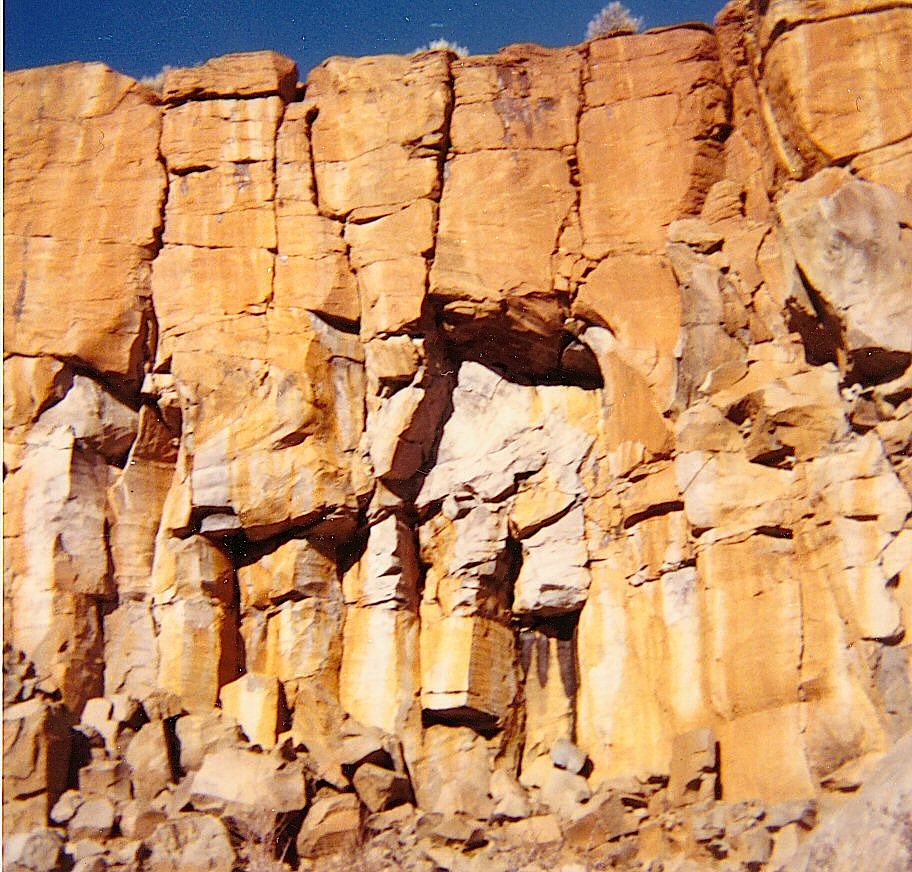
On Saturday morning, August 12, 1978, 23-year-old Marc Doener of Monterey had a very memorable experience at Thompson Peak, that rises above Janesville. Doener attempted to hang glide off the top of peak. It did not go as intended. He lost control as he started to jump, the glider flipped plunging him into a 3,000 foot descent. Amazing when the Search and Rescue team found him he only sustained minor injuries, including a sprained ankle, cuts and scratches.

Tim


The Naming of Lookout, Modoc County

Lookout, 1940

Naming of a locale can be an interesting tale, and Lookout is of no exception. For those not familiar with Lookout, it is located in Big Valley, on the Modoc County side, north of Bieber. It is for better or worse known the Leventon Blacksmith Shop and the 1901 Lookout Lynchings.

Near what would become Lookout is a small bluff above the Pit
River. The Indians had a camp there for several reasons, one of which it provided them a grand view of the area, i.e. a look out. Early Anglo settlers referred to it as Indian Look Out.

By 1874, a nucleus of a settlement had transpired. So much, in fact a post office was established named Riverside. It was short lived. In 1880, the Brownell Brothers who operated a general merchandise store in nearby Bieber, deemed it worthy enough to establish a second store at Riverside. According, to folklore, they had the fore runner of Burma Shave signs, and had signs posted “Look Out for our Store.”

The final version had to due with establishing a post office in 1879, as the Riverside was defunct.  According to one account, a committee of Bob Whitely, Samuel Breeding, John Marcus, Peter Robinson and W.D. Morris were assigned the task to come up with a name. They climbed the hill where the former Indian encampment was located and Breeding stated, “This makes a good look out.” Thus, the name Lookout was submitted to the postal authorities and Lookout became the name.

Finally, I want thank a friend and fellow colleague, the late Lois Potter who provided a bulk of the information. She worked hard to preserve the history of Big Valley.

Support this site and Subscribe today!

Susan River Log Slide

Bremner mill pond with the log slide in the background, (Susan River), 1891–Betty B. Deal

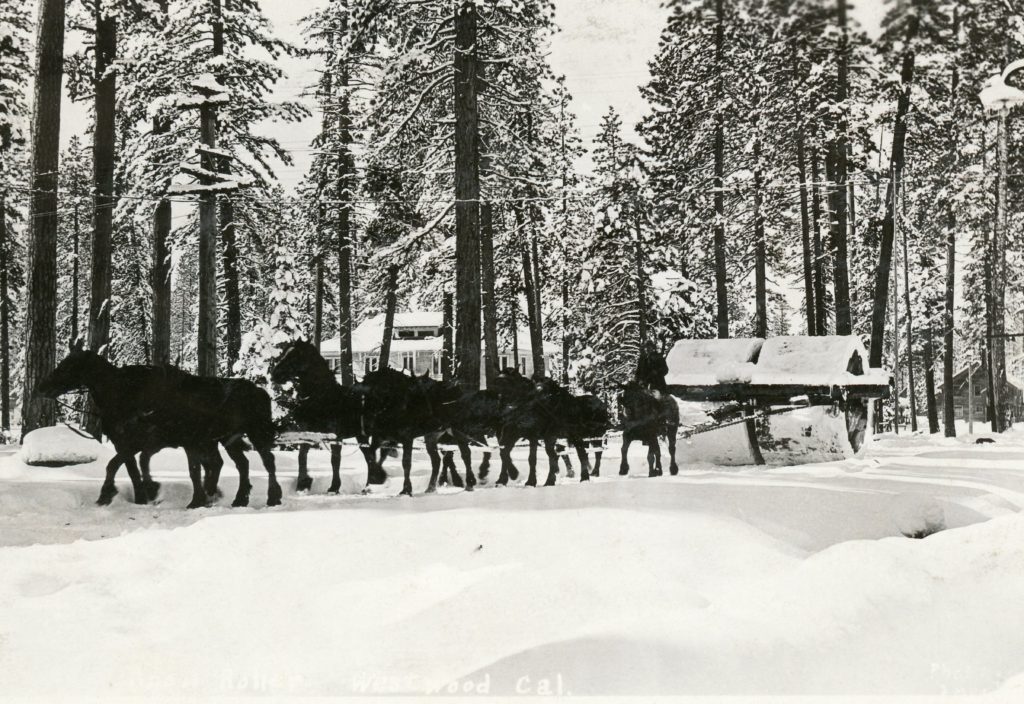
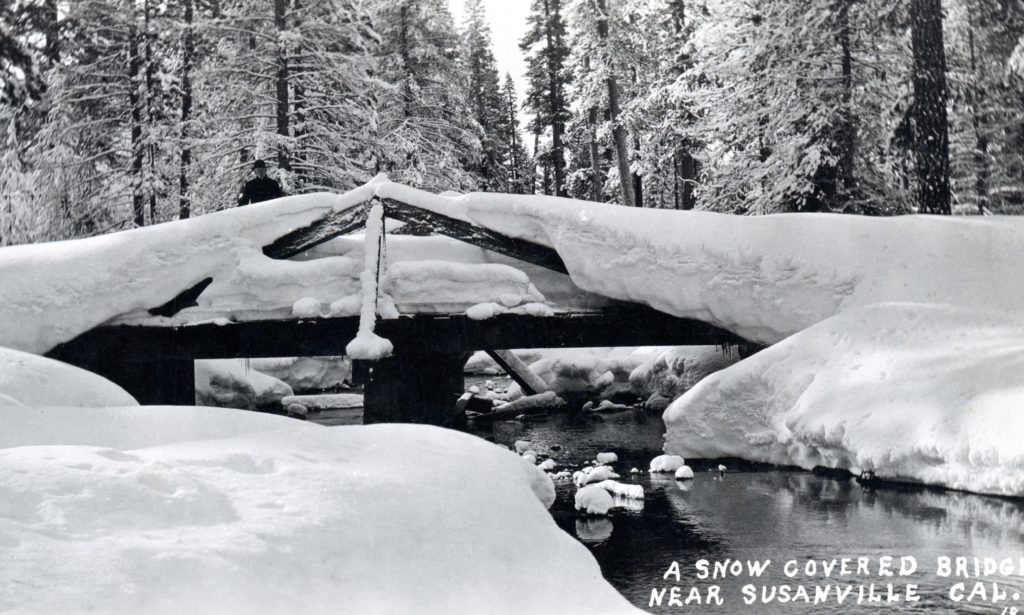
In 1888 when the Bremner dam and sawmill was constructed on the Susan River (two miles west of Susanville) it created a sizeable reservoir backing up water for over a mile. This was really beneficial in the spring months with high water flows, logs were cut and floated down the river to the mill.

On the north side rim of the canyon there was a heavy stand of pine timber. The dilemma how to log it? In the summer of 1891, some one came up with a solution. Because of the steep incline an impromptu dirt log slide was developed, and it worked!

Support

Honey Lake as a Fishery

Honey Lake, June 26, 2021—Larry Plaster

With Honey Lake now being transformed into a dry lake bed, its hard to imagine the lake as a fishery. In April 1875, Thomas J. Mulroney noted that remarkable numbers of white fish and suckers were coming up Baxter Creek from Honey Lake. In 1908, the California Board of the Fish and Game Commission stocked Honey Lake with blue gill, crappie and yellow perch. In 1912, it was reported the fish were thriving. In 1909, there was even an attempt to transfer black bass from Eagle Lake to Honey Lake.

On other hand, when the lake first went dry in 1859 it was reported  “Immense quantities of fish have been destroyed and are now decaying on the deserted bed. In 1887, a similar incident was reported when the lake dried up. A number of residents in the Buntingville area were taken ill from the “intolerable stench” of decaying fish. The Lassen Advocate reported on August 25, 1887; “Honey Lake is fast drying up and the stench from dead fish contaminates the air for miles around.”

Subscribe

The Indian Ruins of Eagle Lake

Indian ruins along Pine Creek, near Eagle Lake, 1938

While sifting through photographs for the coming years’ calendar I came across the above photograph. It is interesting that in the formal studies of the various Native American tribes of the region this encampment, probably only seasonal in nature, is never recognized. Most peculiar indeed. During the 1950s and 1960s the forest service noted it as an attraction at Eagle Lake, and even appeared on their maps. Ditto, as they did the same with the Eagle Lake ice caves, showing several different locations. Back to the Indian ruins. Not many people are aware of a little known fact that the Eagle Lake basin contains petroglyphs, which is rather unusual as well.

Tim

Dodge Reservoir, Lassen County

Dodge
A 1950s aerial of Dodge Reservoir.

Dodge Reservoir located in the northeastern part of Lassen County and has an interesting tale in its development. It would take twenty years from its inception to its completion. It began in 1889, when Albert L. Shinn* formed the Union Land & Stock Company. Shinn proposed that the water from Red Rock Creek could provide irrigation for the entire eastern Madeline Plains. The reservoir was originally named Lake Lockett, for the Company’s Civil Engineer, H.M. Lockett. In the early 1890s, the Union Land & Stock Company started the irrigation project but eventually construction ceased because of lack of funds and other problems. On December 9, 1907, Henry C. Dodge acquired an option to buy the Union Land & Stock Company’s failed Red Rock irrigation system. In 1909, Dodge formed the Madeline Valley Land & Irrigation Company to undertake this enterprise. In the fall of 1909, the Company contracted with August and Alfred Anderson to build the system. In December 1909, Dodge Reservoir was completed. In 1912, Henry C. Dodge died during an altercation in Reno, Nevada. Dodge’s two sons, Carl and Dana, continued with the family enterprise on the eastern Madeline Plains. On January 14, 1949, Bernys M. Dodge, the agent for the Dodge Brothers, sold the Dodge Ranch and Reservoir to George and Jean Smith.

When the fishing is good there, its really good and worth the trek.

*Shinn was part of the Shinn Ranch family,  became a well known attorney in the region and later Sacramento.

Subscribe

Sugru Hill and Reservoir

Haying on the Sugru Ranch, with Sugru Hill in the background, 1900–Robert E. Trussell

Most maps have incorrect spelling as Shugru. Few people know the name of this very visible small reservoir on Bass Hill opposite the entrance of the Bass Hill Landfill along Highway 395.

In 1874, Michael Sugru a native of Ireland, settled at the base when this area south Johnstonville was known then as Howard Flat. In 1909, Sugru’s son, James constructed a reservoir to hold run off water from Bass Hill to irrigate the family farm, directly below it—today it is the Egan Ranch. In 1943, Sugro sold the ranch to A. Simonson.

Tim

Hay Derricks

Haying at the Elledge Ranch, near Standish, 1900. Courtesy of Camilla Moody

One of the most unique and distinct pieces of agricultural equipment in the Intermountain West was the hay derrick. There were no standardized derrick. They were either hand made by the farmer’s or a neighbor. Besides the derrick, a buckrake, net settlers and derrick cart were utilized.

The stacker required talent, to make sure each corner was kept square. Keeping the hay stack uniformed was a must. If not, if one side became overloaded, the whole stack would collapse. Then there was the final touch. The top of the stock was rounded off to resemble a loaf of bread. This was an utmost necessity. The rounded top repelled rain and snow.

Hay stacks at the Lonkey Ranch, 1911. Today the ranch is known as Five Dot in the Willow Creek Valley.C.R. Caudle Collection

Support

Juniper Mine, Hayden Hill

Juniper Mine, 1920–Lola Tanner

Hayden Hill’s second largest producing mine is an interesting one. In its first four years, it had yielded some $400,000 in gold. Then the mine struggled encountering china clay deposits. The mine persevered over the years and in the early 1920s had a revival of sorts.  In all, it produced some $600,000 in bullion, about half of the Hill’s largest producer, the Golden Eagle Mine.

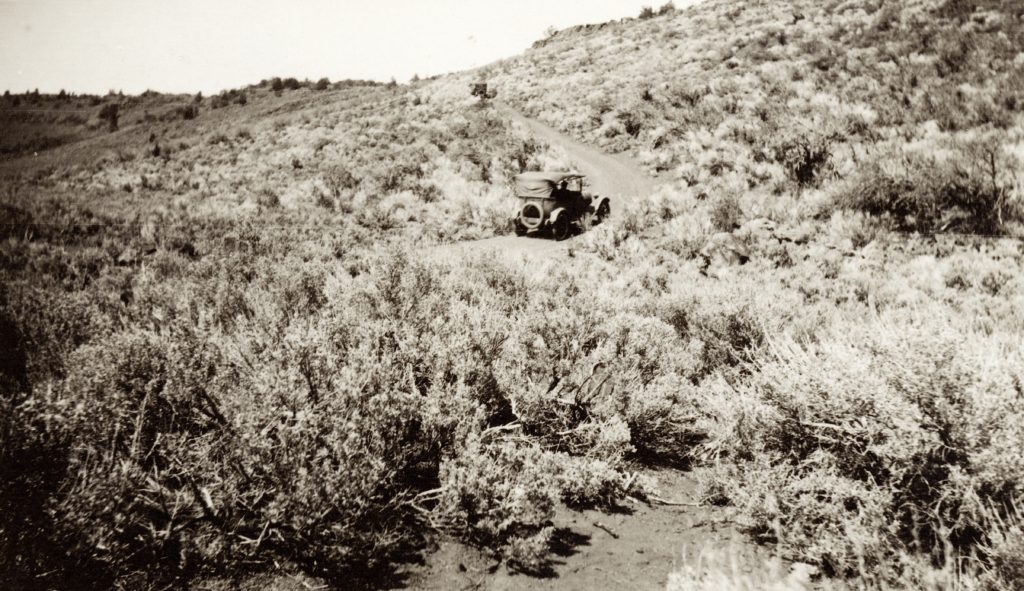
By 1930 the Juniper Mine had been abandoned. The building remained intact until 1956 when it was struck by lightning and burned down.

Juniper Mine truck, 1920–Lola Tanner

Tim


Susanville’s Brick Building Boom

Oakes and Philbrook’s furniture store under construction at 800 Main Street.

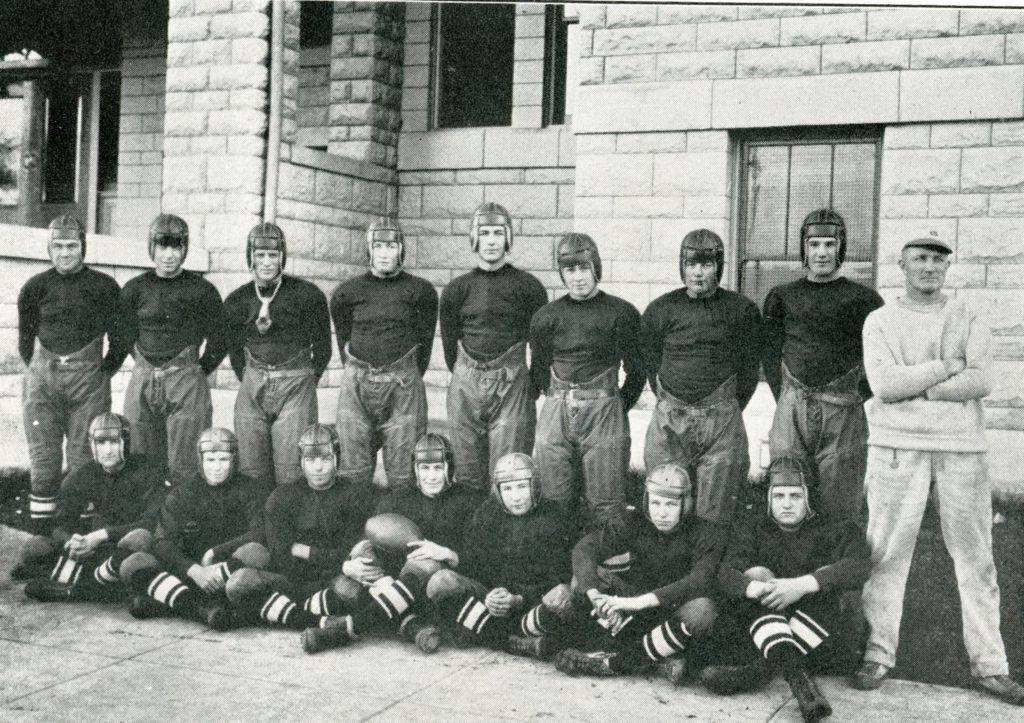
On June 6, 1900 a destructive fire wiped out a major portion of Susanville’s business district on the south side of Main Street from Roop to Union.  But prior to fire, the Susanville School District had hired Reno contractor C.E. Clough to construct a two-story brick school to replace the wooden one on Cottage Street at a cost of $12,500.

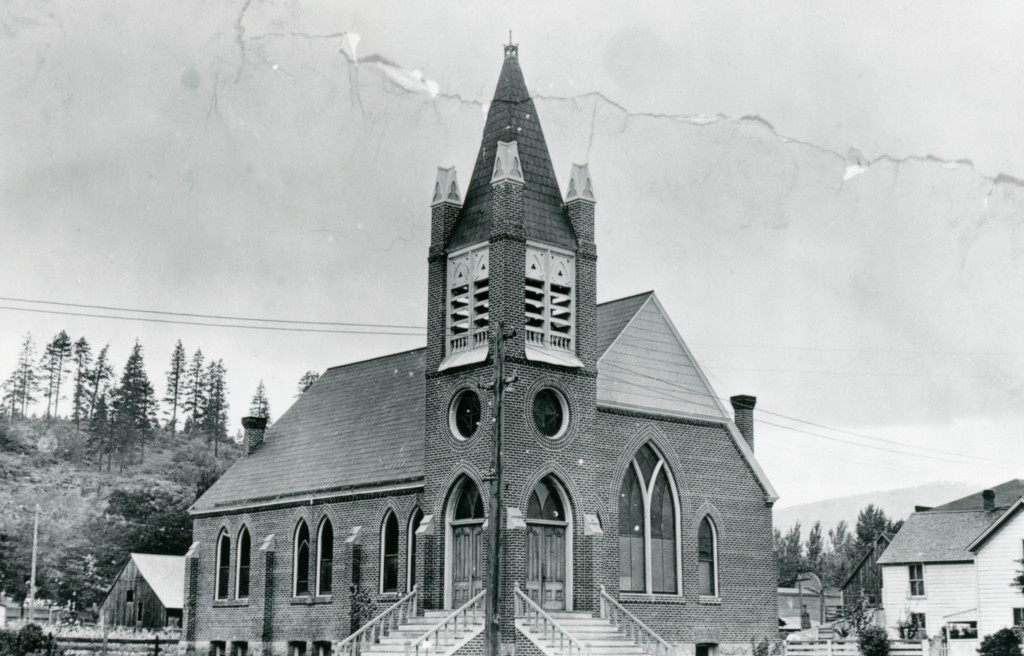
As noted yesterday, was the construction of Emerson’s three-story brick hotel. Clough kept really busy. On August 29, 1900 the Methodist Church hired him to build a brick church for the wooden destroyed earlier by fire at a cost of $4,739. Next up was Oakes & Philbrook Furniture Store at the southeast corner of Main and Gay Streets. That building along with the Methodist Church are the only two still remaining.

The Susanville Grammar School, nee Washington, as it appeared in 1948.

Donate

Exploring Lassen County's Past