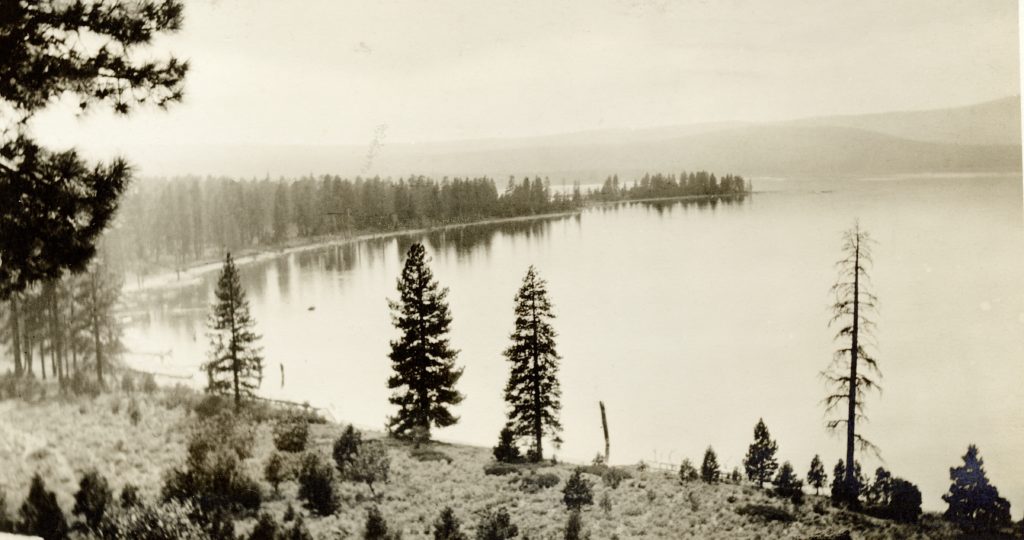
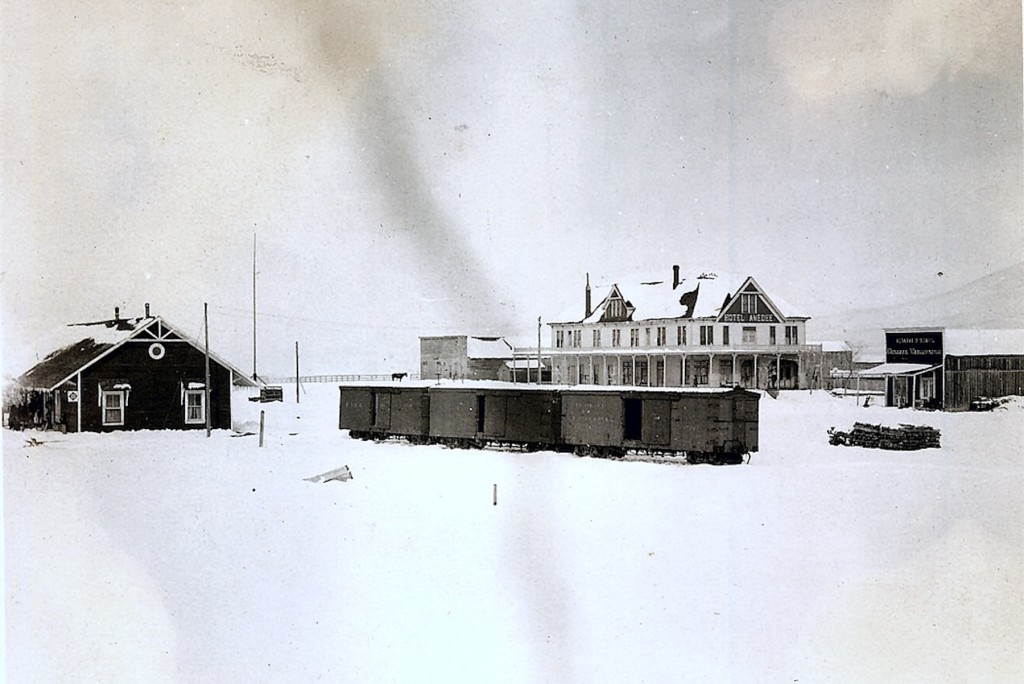
Susan River Canyon, looking towards Pigeon Cliffs, 1899
Can anyone enlighten me how Pigeon Cliffs, located in the Susan River Canyon, just west of Susanville received its name? When I was a youngster, I spent an incredible amount time exploring the Susan River Canyon. However, I never seen any pigeons at the cliffs. I have never come across any historical notations about the cliffs period. Another case in point, Inspiration Point never entered the local vernacular until the 1920s. Prior to that, it was the bluff behind Susanville.
A view of Gallatin Beach circa 1918. Courtesy of Wyn Wachhorst
In September 1913, construction of Malvena Gallatin’s summer home on the southeast corner of Eagle Lake was well underway. At that same time, her step-son, Albert Gallatin, Jr. hired Charles Caughell to survey bungalow sites on the lake’s south shore. He stated that the family had received requests from residents of San Francisco, as well as from Susanville. It was Gallatin’s intention not sell the lots, but rather give a 99 year lease. He also consulted with Lassen County Supervisor, L.R. Cady about the possibility of a new road to the south shore of Eagle Lake. Cady assured him he would do everything in his power to make it a reality. Neither the bungalow sites or road work transpired.
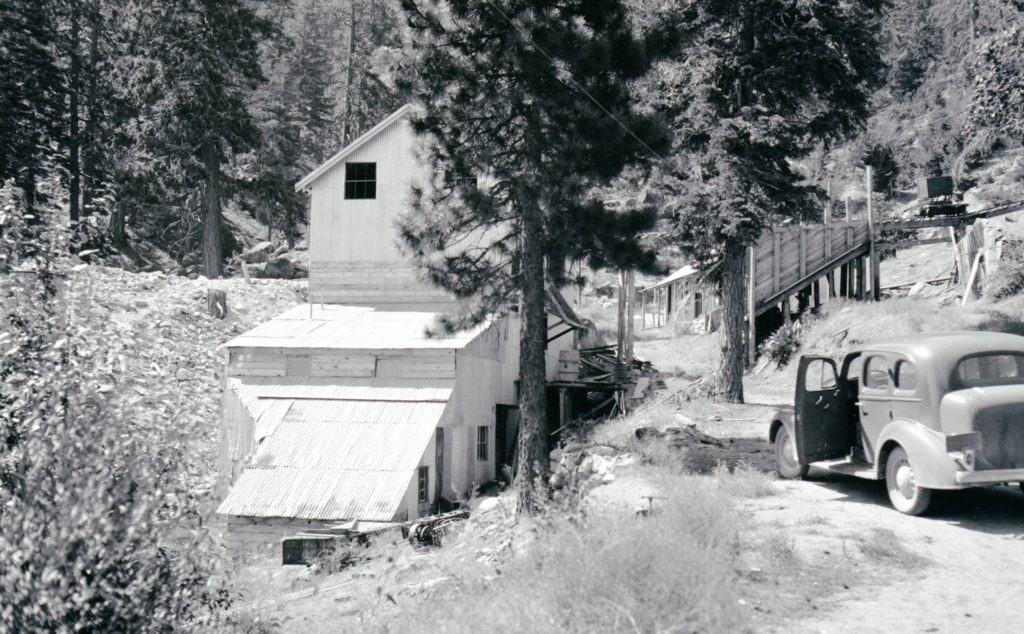
Old stamp mill at Susanville,Oregon 1978. Courtesy of Tom Armstrong
A long time ago, when I was first assisting Tom Armstrong on his research of the NCO Railroad, he told me about the “Other Susanville.” There is another Susanville, just up Highway 395 near John Day, Oregon. However, it has seen more livelier times.
It was a mining camp dating back to the mid-1860s, though its post office was established in 1901 in a dubious manner. Its biggest claim to fame was in 1913 and the discovery of the Armstrong nugget, that weighed 80.4 ounces and was believed to the largest of its kind found in Oregon. The nugget is on display at US Bank in Baker City, Oregon. After the 1930s, prosperity there dwindled and in 1952 the post office was closed. Today, its only inhabitants are prospectors during the summer, and a few curious seekers.
Well, it is that time of year again, when a few years back I made my debut at Susanville’s now defunct Riverside Hospital. As is customary, this one day I take the day off from regular duties.
Camp E, Fruit Growers Supply Company. Courtesy of Lola L. Tanner
Fruit Growers Supply Company had a total of eleven railroad logging camps on its Lassen Operation, west of Eagle Lake.. Technically, the longest operating, Camp 10, which closed in 1952, should have been named Camp 11. Then again, Fruit Growers had given consideration of a Camp 11, further north of Camp 10.
Anyhow, there were three camps that were quite small and operated for only one logging season during the 1920s. The first was Camp E at Merrill Flat. It was followed by tiny and peculiar Camp Y. Then there was Camp 9, which from most accounts only housed timber fallers, which was located on the Eagle Lake side of Antelope Mountain. Unlike the other camps that had portable wooden buildings these camps had canvas-wooden tents.
At the March 1926 meeting to the Lassen County Fish & Game Conservation league there were two interesting topics. It should be noted the League was an organization comprised of sportsmen to aid and support the county’s fish and game commission.
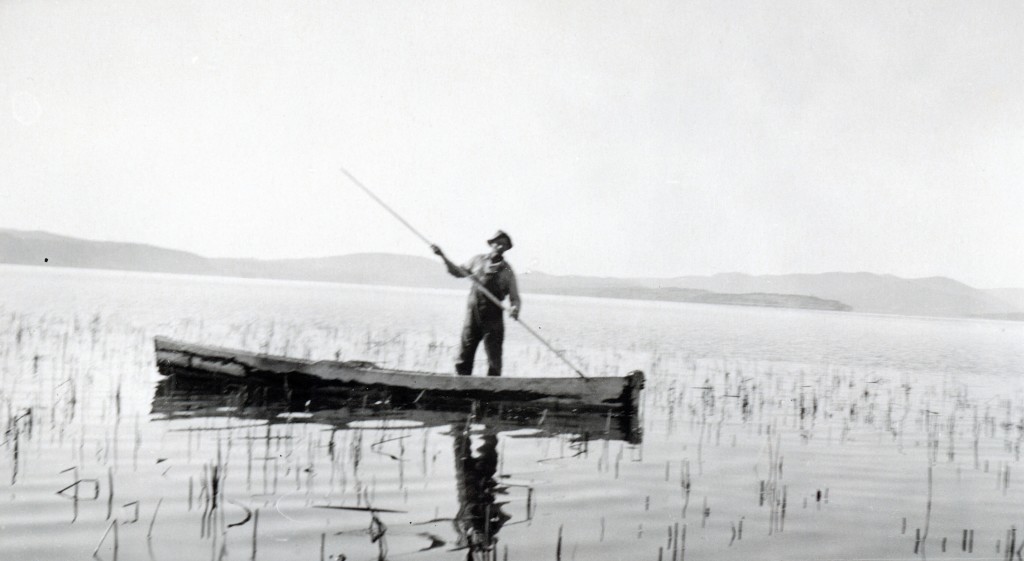
The first matter they approved the law to spear bass at Eagle Lake. Even though there was a ban of spear fishing of bass at Eagle Lake, it was ignored and not enforced.
The second issue concerned the Eagle Lake trout and the effects of drought and the Bly Tunnel lowering the lake. The local fish & game commission proposed an egg collection station at Pine Creek and establish a hatchery at nearby Willow Creek. This received enthusiastic support from the league.
The proposal was to intercept the trout during their annual spring run up Pine Creek with nets and fish traps to remove the eggs and then return the trout back to the lake. The commission stated there was a great amount of trout that perished each year with the drying up Pine Creek. With that in mind, the eggs would then be taken to the proposed Willow Creek hatchery and when the fish were sufficiently developed, be planted back into the lake.
These folks were ahead of their time. In 1958, the Wildlife Conservation Board allocated $38,810 for a fish trap/egg collection facility for Pine Creek.
Pine Creek, 1921. Courtesy of Lola L. Tanner
It should be noted the league had a membership fee of one dollar a year. The money raised to provide financial assistance to the fish and game commission.
Honey Lake Gold Mine, 1936. Courtesy of Jere Baker
The following account was provided by Jere Baker and originally appeared in Lassen County at 150.
In 1929 the Honey Lake Valley Gold Mining & Development Co. was incorporated. Two years prior to that event, Hilding Sundberg, a mining man from Oakland, California took possession of an abandoned gold mine called the Badger Group located some six miles southeast of Milford on the Diamond Mountain range at an elevation 6,000 feet. Sundberg began work on the property with a new cross-cut tunnel, reaching a small vein of gold 300 feet in. The property was incorporated in 1929 with Sundberg as the new president and general manager of the new company. A second tunnel was cut 720 feet into the mountain, 500 of which were driven along a ledge of gold ore. Assayed samples taken from tunnel no. 2 showed an average of $55.00 a ton. A third tunnel was started at the mining company’s base camp at the 5,000 foot level. Sundberg took a calculated risk that a horizontal tunnel driven far enough would reach the same vein of gold, whereby the entire body of ore could be mined by gravity at a much lower cost. Continue reading Honey Lake Gold Mine→
Amedee, January, 1916 courtesy of Marie Herring Gould
If anyone is so inclined that they would like to submit something of interest, you are more than welcome. Back in 2016, I included a piece by Jere Baker about the Honey Lake Gold Mine near Milford of the early 1930s. I am going to repost it tomorrow.
Baker’s tome might seem intimidating to some for its depth, his work was an excerpt about the life of his grandfather, C.F. Compton. Maybe you might have a short amusing anecdote to share. I will pass on a amusing one. Way back when, I would visit Alphozene Perry Wood Terril, granddaughter of Ben Leavitt (1835-1915). For those not familiar, Leavitt was an influential person in his time, his lasting legacy of many is the development of the irrigation system for Susan River. Alphozene shared this unique interesting tidbit about her well-known grandfather. On occasion she made his breakfast that consisted of two raw eggs poured into a glass with rock and rye whiskey. That is not the way I would want to start my day.
Sail Rock, Fort Sage Mountain, June 7, 2018
Not sure what to give that special someone, but want to keep the budget balanced too? Why not a gift subscription to tipurdy.org. At five dollars a month it is a bargain. You can decided whether for a month, quarter or even splurge for a year.
The recipient not only receives email notification six days a week, and sometimes seven, of the latest topic, and can always request a topic, too. Many subscribers can attest that it is a great way to start the morning.
In addition, don’t forget the 2022 calendar, and books, too!
Information on subscriptions is found right here. Have a question drop me a line at tim.purdy@icloud.com
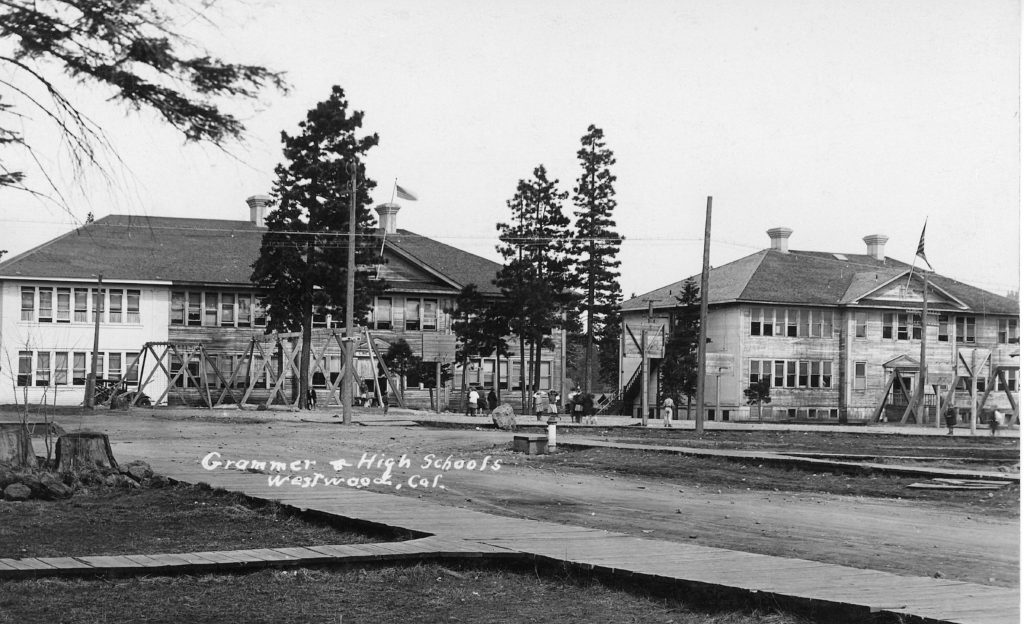
In 1914, Red River Lumber Company opened a private high school, that even included night courses for the benefit of the employees. In the fall of 1916, the high school was converted into a public one with an enrollment of forty students. Initially, the grammar and high school shared the same building, but with increasing enrollments it was determined the high school have a building of its own. In the fall of 1918, a new two-story high school was built adjacent to the grammar school. Dedication of the new high school did not occur until March 8, 1919. Red River paid for the construction of the high school, which normally residents of the school district would have passed a bond measure to do so. However, the State of California paid the teacher’s salaries.