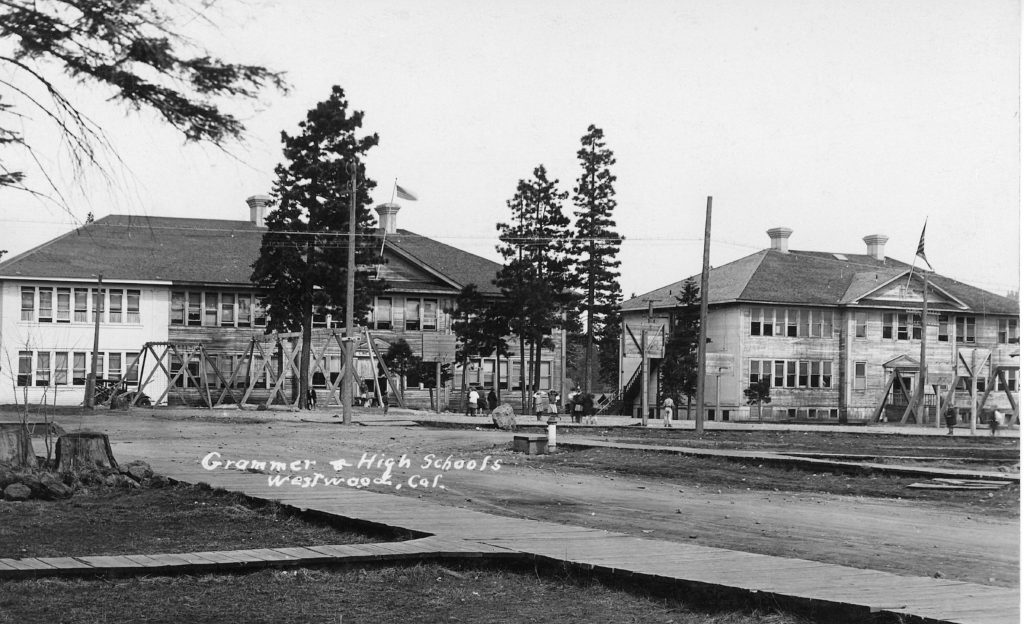
In 1914, Red River Lumber Company opened a private high school, that even included night courses for the benefit of the employees. In the fall of 1916, the high school was converted into a public one with an enrollment of forty students. Initially, the grammar and high school shared the same building, but with increasing enrollments it was determined the high school have a building of its own. In the fall of 1918, a new two-story high school was built adjacent to the grammar school. Dedication of the new high school did not occur until March 8, 1919. Red River paid for the construction of the high school, which normally residents of the school district would have passed a bond measure to do so. However, the State of California paid the teacher’s salaries.
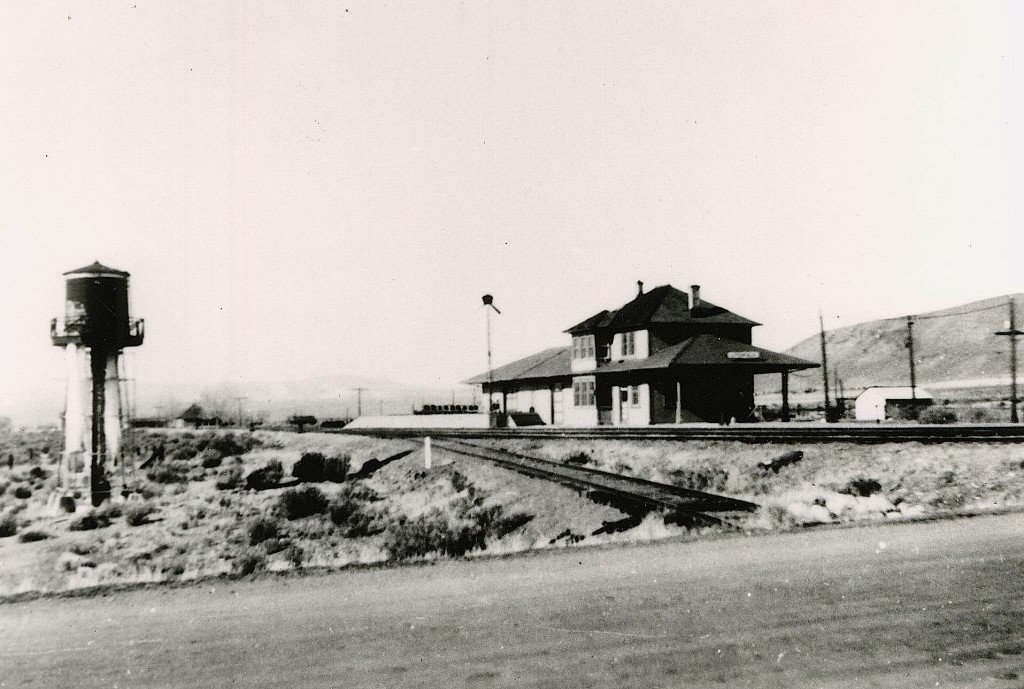
Litchfield Depot of the Fernley & Lassen Railroad, 1947. Courtesy of Camilla Moody
More progress has been made about the history of the Litchfield Depot. Bill Shippen, Jim Sweetser and Mike Yoakum were able to provide me with more information to make the search easier.
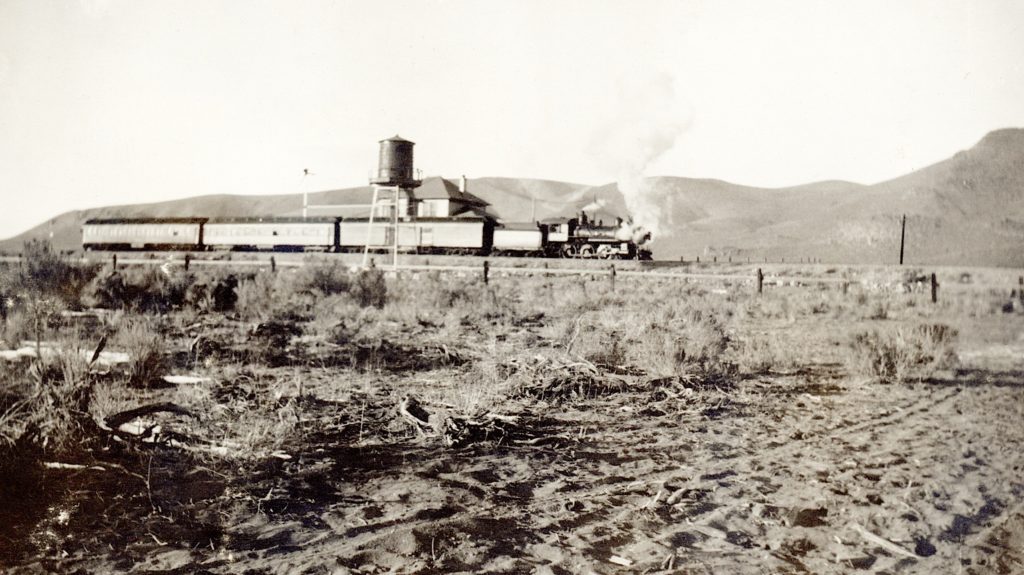
In October 1915, the Southern Pacific Railroad announced that a depot would be constructed at Litchfield. The company hired J.F. Steinman of Colfax as the contractor. The two-story structure would have living quarters on the second floor. The building’s dimensions 40 feet by 105 feet, with a platform 70 feet long. By Christmas it was in operation. In mid-January 1916, the water tower was completed.
Litchfield Depot, 1920–Lola Tanner
It appears the depot closed sometime between the fall of 1953 and the spring of 1954 and probably torn down in 1956.
The local veterans had a packed day for the 1938 Armistice, known today as Veterans Day. First and foremost was the annual parade from the Memorial Hall to the head of Main Street, were a plaque had been installed commemorating the soldiers of Lassen County who had fallen during the Great War, as it was known at the time, but later became known as World War I.
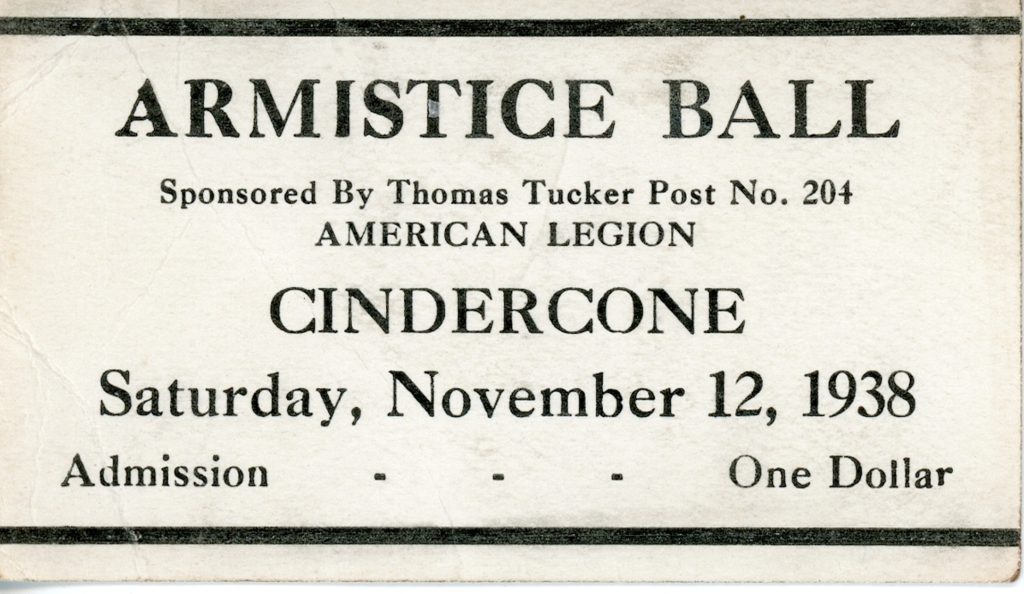
Following the parade, at noon time, a new flag pole dedication was held at the Lassen Union High School. Later in the afternoon a football game was held at the school between Lassen and Westwood. That evening a banquet was held honoring those who served in World War I. The next evening the Thomas Tucker Post of the American Legion sponsored a Armistice Ball, held at the Cindercone Dance Hall at Standish.
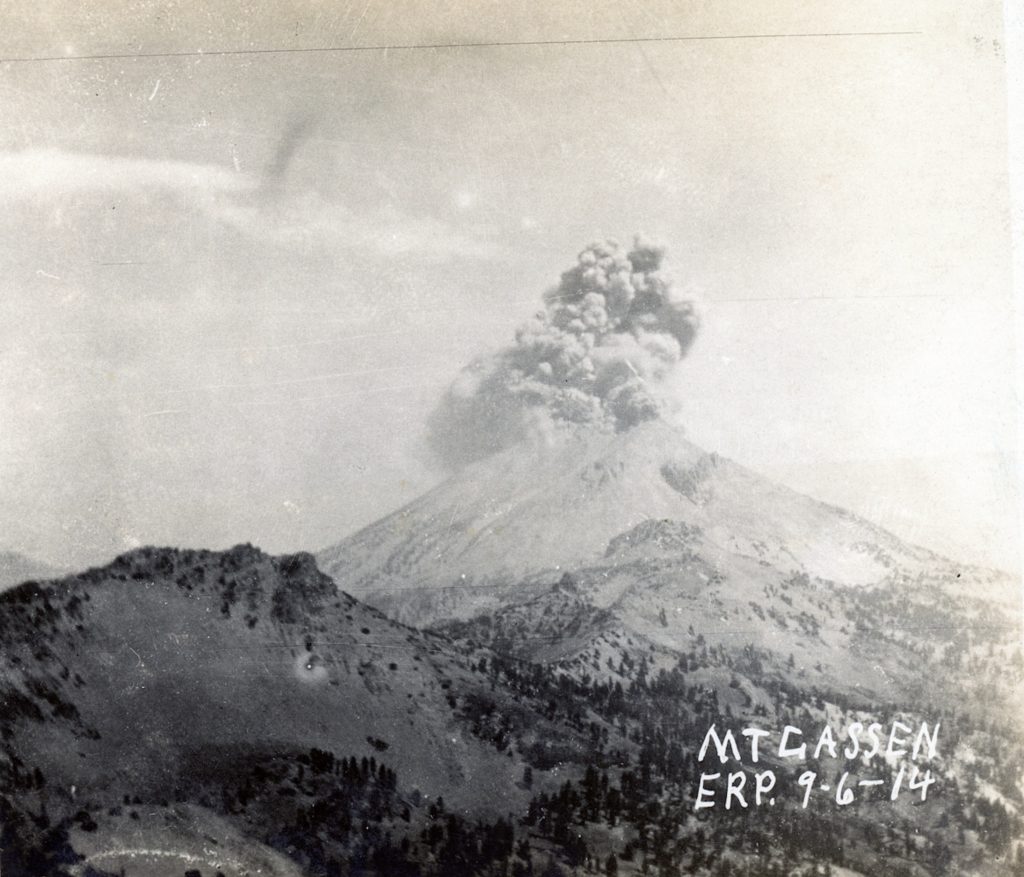
In the spring of 1914, when Lassen Peak came roaring back to life as an active volcano, it brought about a whole new set of issues, that had never been addressed.
In the fall of 1914, Francis M. Garner had a homestead on federal land some twenty miles west of Lassen Peak. Since the eruptions were constant, with no end in sight, Garner began to worry about his home. He feared it could be destroyed by volcanic ash and even worse lava. He wrote to the Government Land Office about his predicament. What Garner wanted to know, if he was forced to abandon his homestead, he wanted to know if an exchange could be made for other government land. If Garner received a reply from the Government Land Office, the contents are not known. On the other hand, while Garner’s homestead was never threatened, he did abandon his homestead.
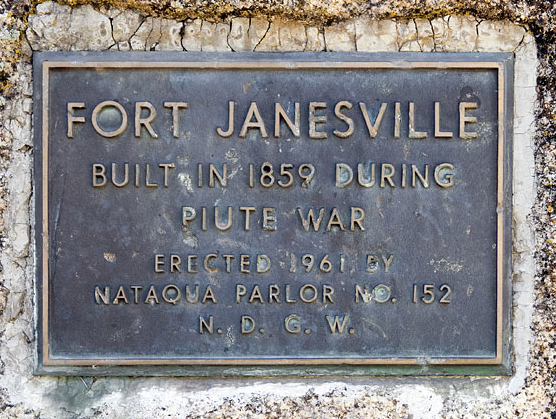
Native Daughter’s plaque for Fort Janesville site.It was actually built in 1860.
Yesterday, I wrote about the military presence in the region during the 1860s. There is a little follow up about how the locals took matters into their own hands so to speak. Those early day Honey Lakers were an independent lot. They had to. Their numbers so small, and far removed from the gold fields, they had no choice but to be resourceful and make do the best they could with their own resources.
Since military assistance was not reliable, Honey Lakers took matters into their own hands. Captain William Weatherlow usually was the one to form a posse when needed during the conflicts of the Indians and settlers. During the Pyramid Lake Indian War of 1860 the residents of Janesville built their own stockade for protection known as Fort Janesville. In 1864, a local militia was formed known as the Honey Lake Rangers which functioned similar to a National Guard Unit.
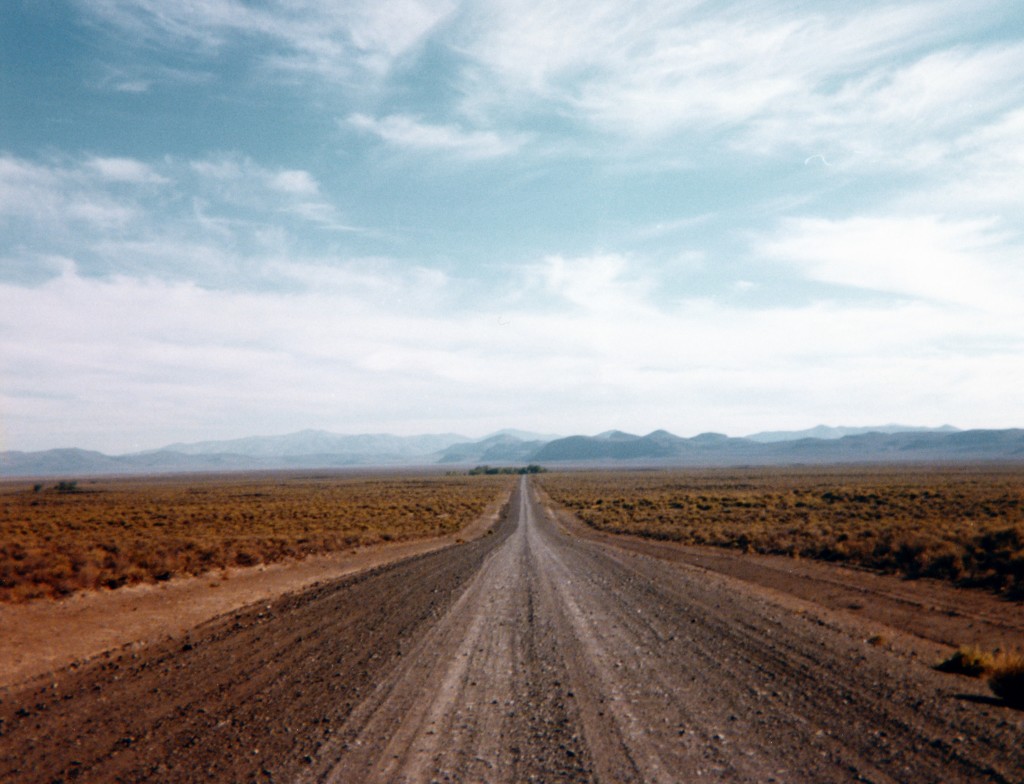
Smoke Creek Desert looking towards Sheepshead, fall, 1977
First of all, I want to acknowledge the late J.S. Thompson, who was not only a good friend, but one of his main interests was early Nevada military history that he graciously shared with me.
United States military presence in the Honey Lake Valley was sporadic during the Indian conflicts of the 1860s. Initially, Fort Crook, now Fall River Mills, during the 1850s was the nearest military outpost. In 1858, Fort Crook soldiers had an encounter with Pit River Indians at the northwest corner of Eagle Lake, but never ventured to the Honey Lake Valley.
Relations between the Native Americans and the Anglo settlers had deteriorated by1859. The murder of Edward Clapper and Peter Lassen in the spring of that year in the Black Rock Desert, did not help matters—the Indians rightfully/wrongfully were accused. Between that episode and increased traffic on the Nobles Emigrant Trail, the military made an appearance. During the summer of 1859, a military outpost known as Dragoon Bridge or Willow Creek Station was established along the Nobles Trail where it crosses Willow Creek in the Honey Lake Valley. These troops came from the San Francisco Presidio.
Tensions between the Anglos and the Indians did not improve. On January 13,1860 Dexter Demming was murdered by the Indians in Willow Creek Valley, north of Susanville. It was like a slow burning fuse that would ignite into the Pyramid Lake War of 1860. After Demming’s death the Honey Lakers petitioned California Governor Milton Lathom for military assistance. By the time their letter was received in Sacramento, Lathrom was out of office, he only served five days as governor!
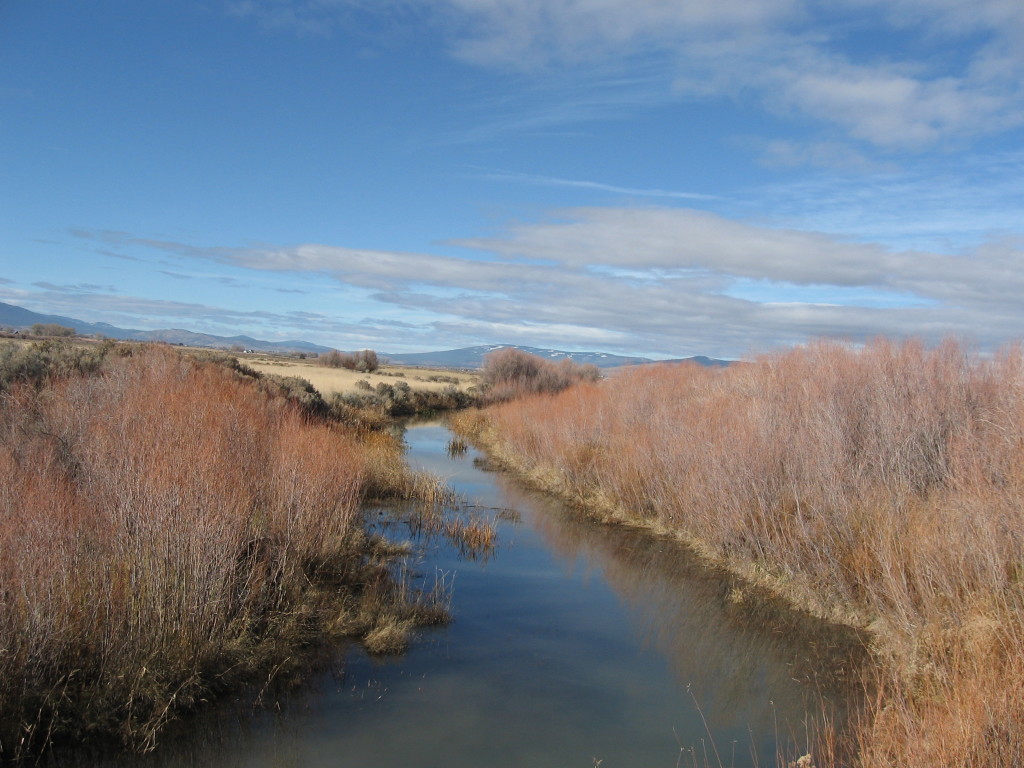
Not all was a loss. In the summer of 1860 the San Francisco Presidio sent troops to the Honey Lake Valley and established Soldiers Bridge along the Susan River near present day Litchfield.
Susan River, near the Soldier Bridge military site. November 19, 2015
In 1861, the area had no military presence. Things changed quickly with the mining discoveries of the Humboldt in Nevada and the quickest route was via the Nobles Emigrant Trail. This prompted military officials to establish a permanent military outpost at Smoke Creek near the California/Nevada border. The troops, it should be noted came from Fort Churchill, Nevada.
For whatever reasons a mobile military unit named Camp Johns established a base camp near Susanville in June 1864. They did a reconnaissance of the area to Modoc and Northwestern Nevada. The troops came from Fort Churchill and returned there in August. They were replaced with a new set of soldiers with the same mission, and the camp was renamed Susan. It lasted briefly, and the soldiers returned to Fort Churchill in October.
That was the end of actual physical military presence of the region until the establishment of the Sierra Army Depot in 1942. However, there were Camp McGarry and Fort aka Camp Sage that I will write about in future posts.
The water carnival at the Sunkist Lodge, 1921. Courtesy of Ed Standard
In 1921. Fruit Growers Supply Company built a cabin at the south shore of Eagle Lake. They named it Sunkist Lodge. It was built for the recreational needs of its employees. Even though Fruit Growers closed its Susanville operations in 1964, employees of Fruit Growers who worked at Burney, Hilt and Los Angeles still vacationed there.
Another view. Courtesy of Ed Standard
In 1921 and again in 1922, Fruit Growers sponsored a water carnival at Sunkist Lodge. This was a water competition between the three big mills—Fruit Growers, Lassen Lumber & Box Company and Red River Lumber Company. The event attracted large crowds of over a thousand in attendance. For the overflow camping, a new site was located and dubbed the Circus Grounds.
In 2019, Fruit Growers sold its Lassen Operation holdings to Sierra Pacific Industries. In 2021, Sierra Pacific has placed this parcel for sale.
In December 1955, the Southern Pacific Railroad track between Susanville and Westwood experienced severe damage from unusual winter flooding in the Susan River Canyon. Earlier that year, Fruit Growers Supply Company announced it was closing the sawmill at Westwood. With the closure of the mill, freight traffic from Westwood would be minimal, so the Southern Pacific decided it was not worth the cost to make the repairs and closed down that segment of the line between Westwood and Susanville.
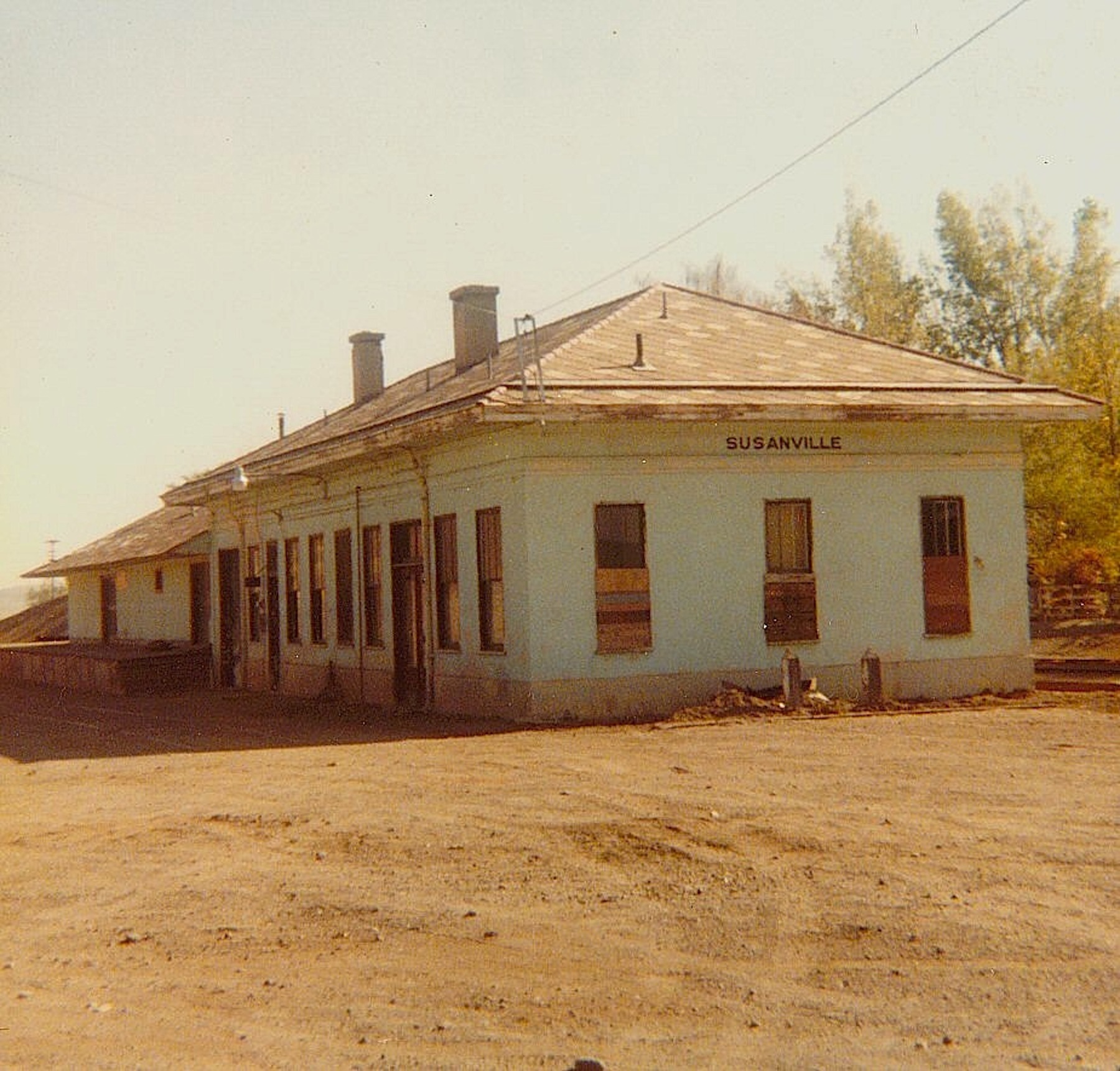
Two decades later, witnessed the slow decline of lumber shipments by rail with Susanville’s two remaining sawmills, Coin Lumber and Sierra Pacific Industries. It was just a matter of time when the railroad would shutter the Susanville Depot. That day came on October 12, 1979.
Susanville Depot, September 1978.
Subscribe and support this site for as little as five dollars a month.
The two largest mills, Fruit Growers and Red River maintained two type of winter log decks. Usually, normal logging operations ceased in November. Yet, to keep the mills operating throughout the winter, required to have a substantial amount of harvested timber. There was the log deck at millpond, and then a second one out in the woods. The latter was not brought into the mill until spring, since the winter mill supply was nearly exhausted. The log decks in the woods provide enough logs during the transition, since it would take some time when the logging camps opened in the spring, to provide a steady supply to the mill.
It should be noted the decked logs in the woods, were protected with heavy snows, thus preventing checking or blue stain.
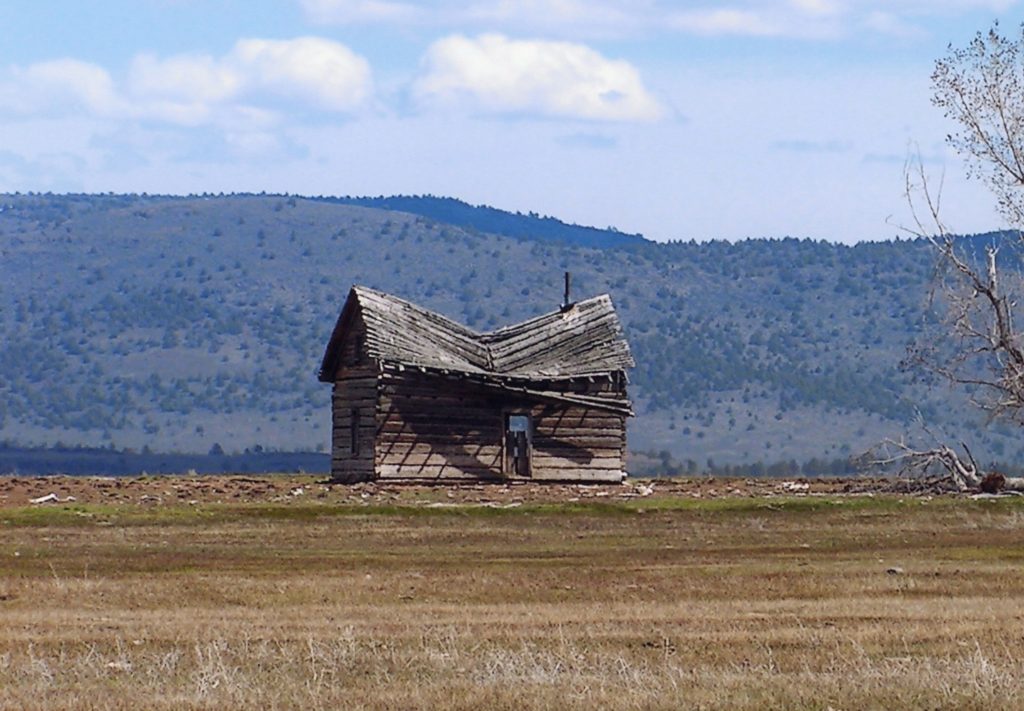
The old Jakobs homestead, Willow Creek Valley—Photograph by Darwin Solus
Those who frequently travel Highway 139 through Willow Creek Valley, just north of Susanville will easily recognize this landmark. Since the photograph was taken, the roof has collapsed. There was a time, that seasoned residents may recall there were two structures there.
In 1869, Adam Jakobs settled there. In 1898, he sold to Fall River Mills rancher, Frederick Knoch for $2,500. Knoch moved there with his wife, Helena, and their two youngest daughters, Mary and Lillie. According to family lore, Mary had a romantic interest with one of the McArthurs and her parents objected, hence the move. Mary eventually married, Willow Creek Valley, neighbor Edward Murrer. Next Lillie married Susanville rancher John “Fritz” Brockman. In 1902, with both daughters married, Knoch sold the place, and returned to Fall River Mills.
In the 1920s, Jessie Collier was the last person to reside there, and the buildings since abandoned, with only one standing.