A shallow lake, along Highway 44, with water that was found to be unfit to drink by the emigrants on the Lassen Trail. The travelers also found that Lassen’s Trail was not “fit” for travel either. According to the journal of Gorham Gates Kimball who was driving sheep to Idaho in 1865, it mentioned that Poison Lake ‘was so named from the effect of the bites of small red spiders which frequented the surface of the water.’ Apparently, merely washing your face and hands was enough to receive bites and experience red inflammation.
In 1916, William L. Wales, an engineer hired by the Honey Lake Valley Irrigation District, took the above photograph, as part of his exhaustive study to seek water. He proposed diverting annually 33, 962 acre feet from Butte Lake, (no one had ever filed a water right claim to it) . A canal would be constructed from Butte Creek to divert it to Poison Lake, thence onto to Pine Creek to Eagle Lake, through a tunnel there and onto the Honey Lake Valley. Very clever. However, the district was plagued with so many problems in the beginning that it never went past the initial study phase.
Spread the word, and encourage a friend to subscribe
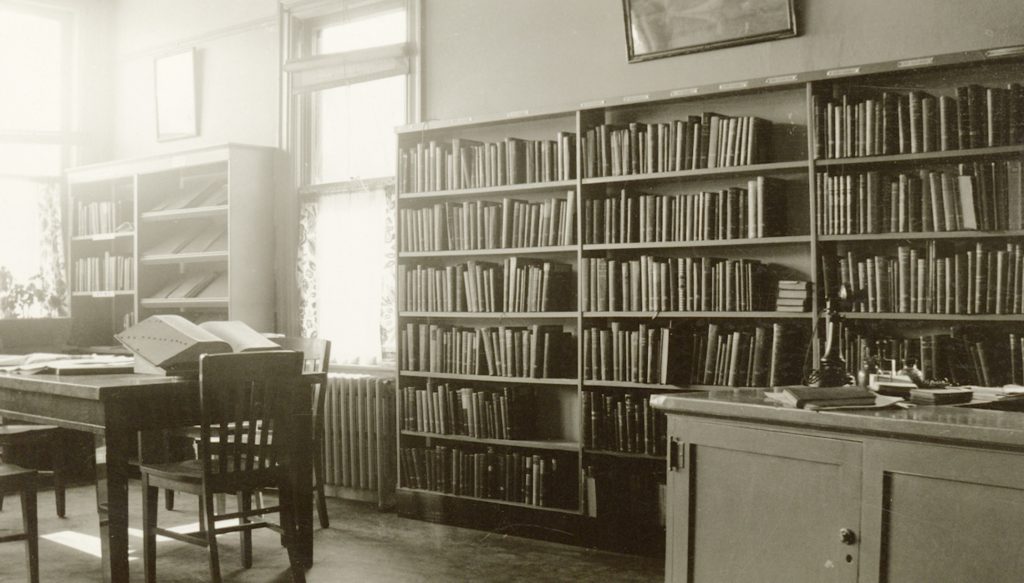
In 1915, the Lassen County Free Library was established. In 1917, Lenala Martin was hired as County Librarian, a post she would hold for four decades.
Lenala was bound and determined to make the library and its branches accessible to all Lassen County residents. Besides the main library in Susanville in 1921 there were a total 76 branches—42 in elementary schools and 34 community branches. The community branches were held in individual homes, such as the A.J. Hall family in Doyle. The custodians of these branches received a salary of $2.50 a month. The library had a total of 17, 171 bound volumes.
On October 7, 1907 citrus owners organized the Fruit Growers Supply Company, as a co-operative purchasing agent for the growers. This was due in part, as the growers were having a difficult time securing wooden boxes to ship citrus. Little did they know that within a few years they would be operating a sawmill and box factory at Hilt, Siskiyou County. This turned out to be beneficial. In 1919, with difficulty securing wooden boxes due in part of the conditions of World War I, they expanded and bought 41,000 acres of timberland in Lassen County and established a mill and box factory at Susanville.
In their 1947 annual Fruit Growers report they noted that Hilt had produced 896,824,000 board feet of lumber and the box factory consumed 729,445,000 board feet of lumber. At Susanville the total cut. was 1,597,990,000 feet of lumber and the box factory consumed a total of 902,128,000 feet of lumber.
An indicator of growth with their successful marketing of the Sunkist brand, in the first year they needed 6,628,000 boxes. Forty years later the number of boxes had escalated for 40 million.
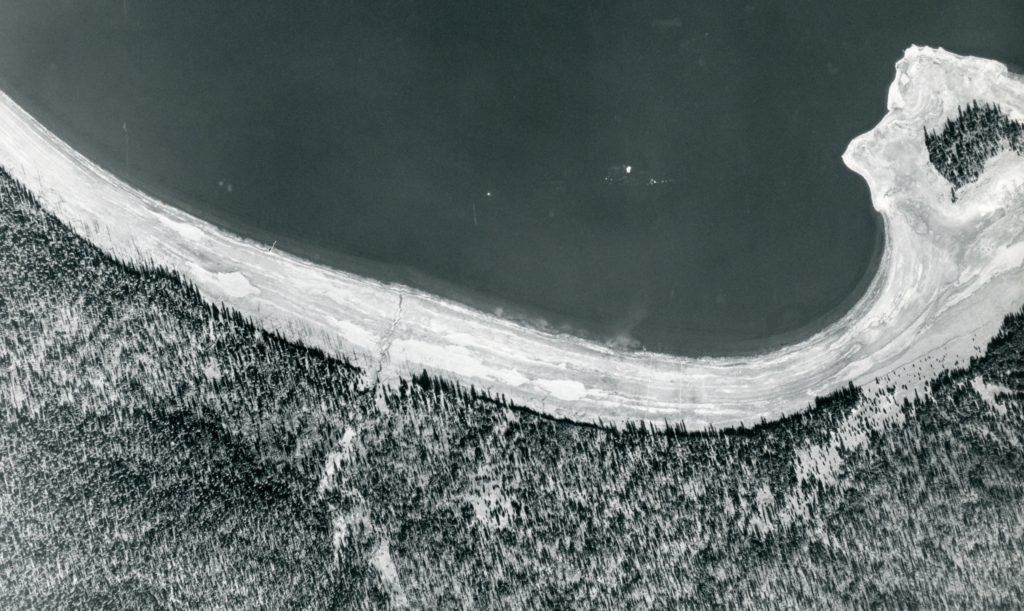
Forest service aerial of the south shore of Eagle Lake taken on 11/9/1941 from Flight No. 44—Hank Martinez
In the fall of 1941, the Lassen National Forest implemented the use of aerial photography as a tool to manage the forest’s resources. However, while the aerial mapping was completed, the outbreak of World War II suspended the work.
In February 1946, the project was brought back to life, to utilize the aerial photography taken five years ago. The forest service was pleased with the program. One of the many benefits, was that forest service personnel could conduct other kinds of field work than surveying during the summer. In the winter months, the aerials provided work for staff to plot out and design new roads, etc.
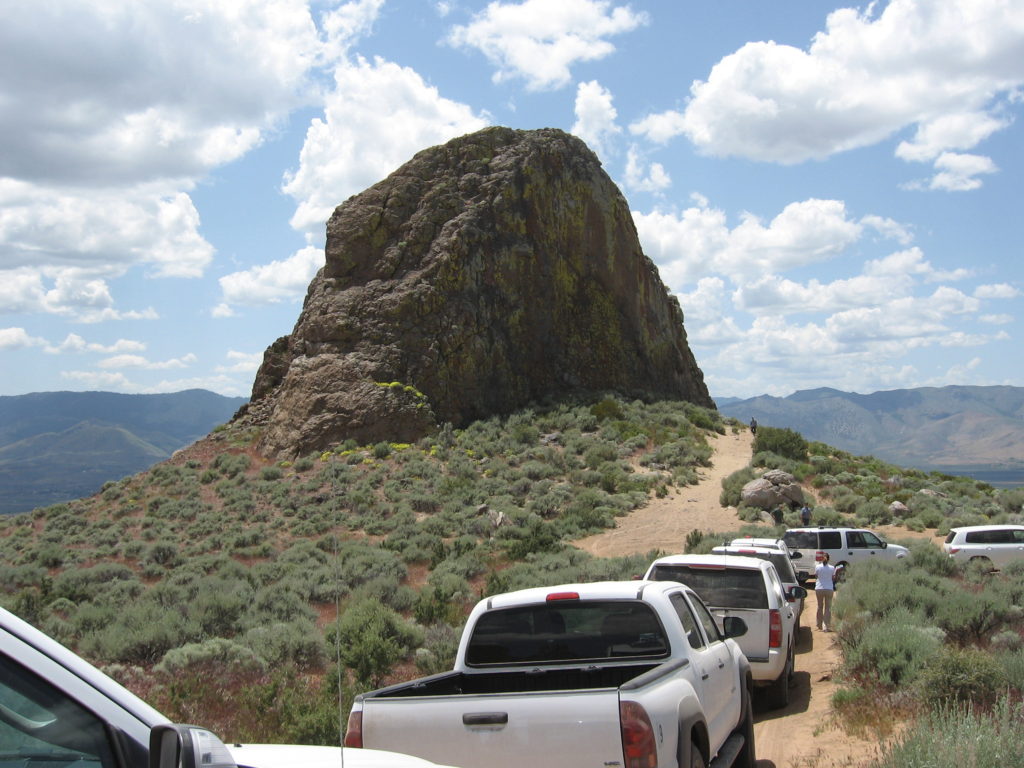
With the temperatures cooling down, some might want to check out eastern Honey Lake Valley. In particular there are two Off Road Vehicle Parks—Dry Valley and Fort Sage. The above photograph of Sail Rock is of one of many interesting natural features at the Fort Sage ORV Park. There is a nice campground, a perfect place for a picnic lunch.
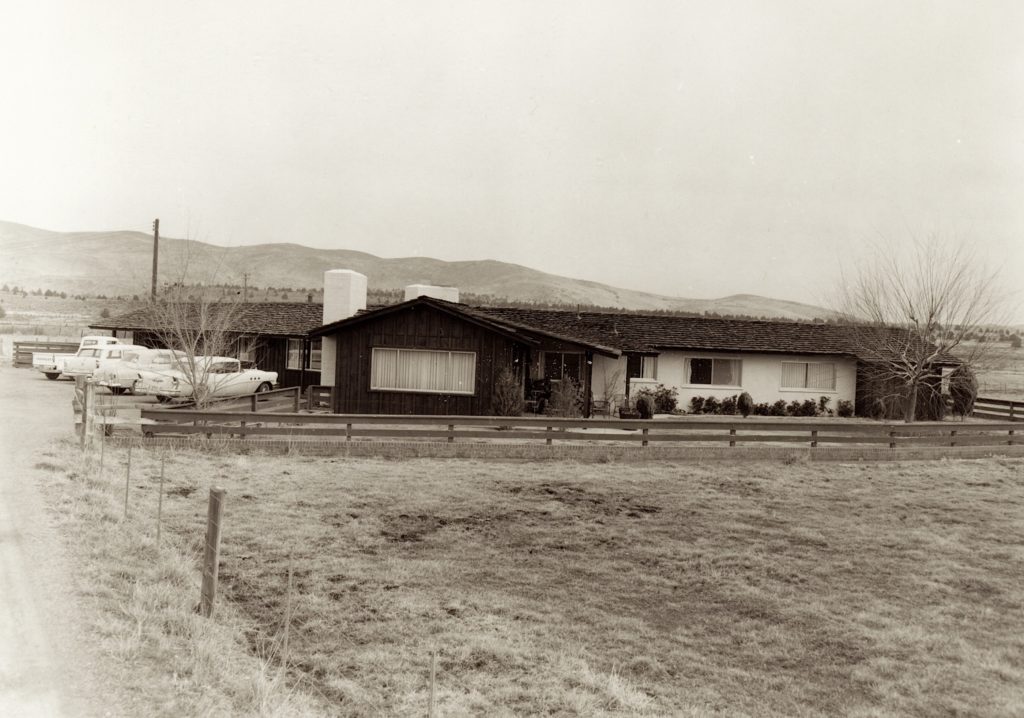
Originally known as the Susan River Ranch was located on Johnstonville Road a few miles east of Susanville. It was originally a part of the Bangham Ranch. In 1948 the property was acquired by Dale Soule. Construction of the house began in 1950 and over the course of time additional buildings were constructed. However, in time the property was too much for the Soules who had other business interests in Susanville to tend to. The next owner was Lawrence Holland and he owned until his death in 1969.
Susan River Ranch, 1958. Courtesy of Wendell V. Loughead
In 1973, Ray and Elberta Fraley purchased the ranch, who had spent many years in the Standish district. It was ideal for Ray as it just the perfect size for a semi-retirement ranch to raise his registered herd of Red Angus cattle. After Ray’s passing in 1979, Elberta sold the place. Its been through a number of owners over the years, and is no longer referred to as the Susan River Ranch.
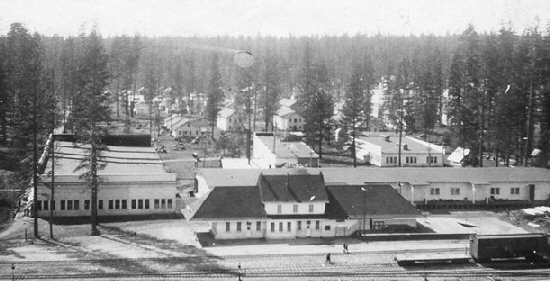
In 1912, witnessed the Red River Lumber Company’s westward expansion from Minnesota to California. The founder, T.B. Walker, turned the enterprise over to his four sons. The site selected at Mountain Meadows, Lassen County initially had no name. Rather peculiar in my thinking that a company is going to spend $3 million to build a mill and company town, and it does not even have name.
Fletcher Walker was in charge of the new town and would be its resident manager. On October 3, 1912 he wrote to the Red River board, i.e., his brother’s soliciting a name. In his letter he wrote:
“I have thought over the name TRRLCO, first letter each word and the abbreviation of company, and talked it over with Clinton and Della [Walker]. They are not very enthusiastic over the name but said it seems like a good business name and sounded pretty good. I have written you on several occasions mentioning the name, but up to present time have not had a very enthusiastic adopting of the name. It seems that unless someone else can come through with a better name that we should officially adopt it.”
There was a sense of urgency as they needed a name to submit an application to the postal authorities. Several names were bounced around including Fletcher’s favorite, “City of Trees.” That, too, was rejected, and the name of Westwood was decided, though it is not known who coined it.
In November 1931 a Lassen County Farm Bureau committee was formed to see how to make cuts to the expenses of Lassen County government. One of their first recommendations was to make the Lassen County Assessor personally inspect every tax payers property to make sure nothing escaped assessment.
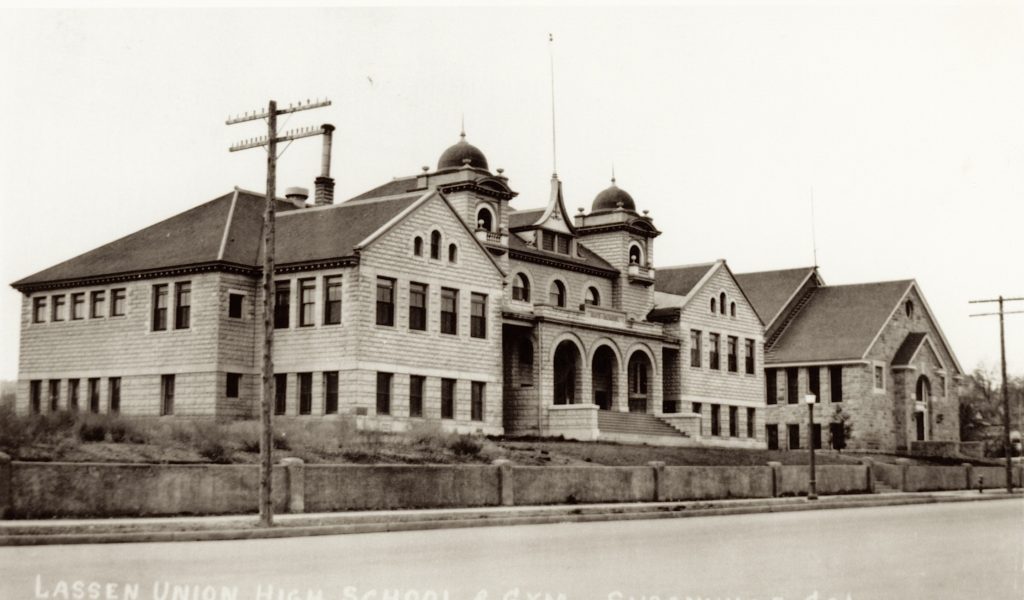
It was education they really set their sights on. J.H. Hunter of Westwood stated that 32 cents out of every state dollar went to education. It was Hunter’s opinion that colleges were turning out so many yearly graduates who could not find employment.
J.A. Pardee chimed in with his two-cents worth. He thought community colleges were a waste of time and money. Its was Pardee’s thought that a grammar and high school education was more than sufficient and that higher education was not necessary. Their consensus, “We are spending hundreds on ten-cent kids.”
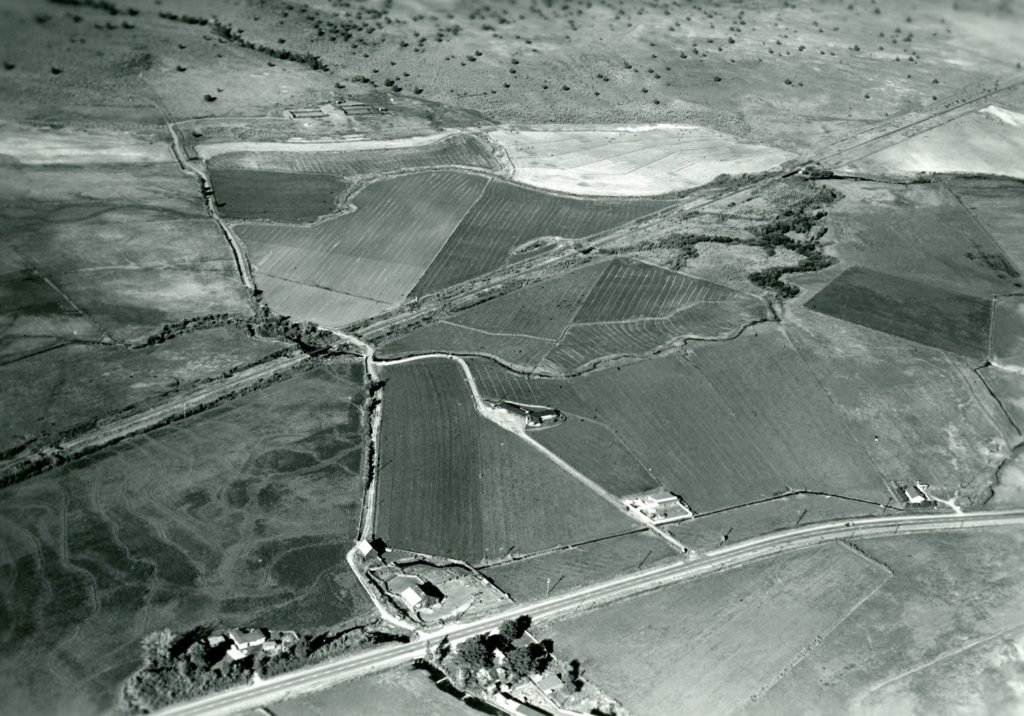
During the late 1950s, the Lassen Advocate held a contest for readers to ascertain a local ranch taken from an aerial view. This particular photograph was not featured, but the first person to identify will receive my 2022 calendar, due out later this month.
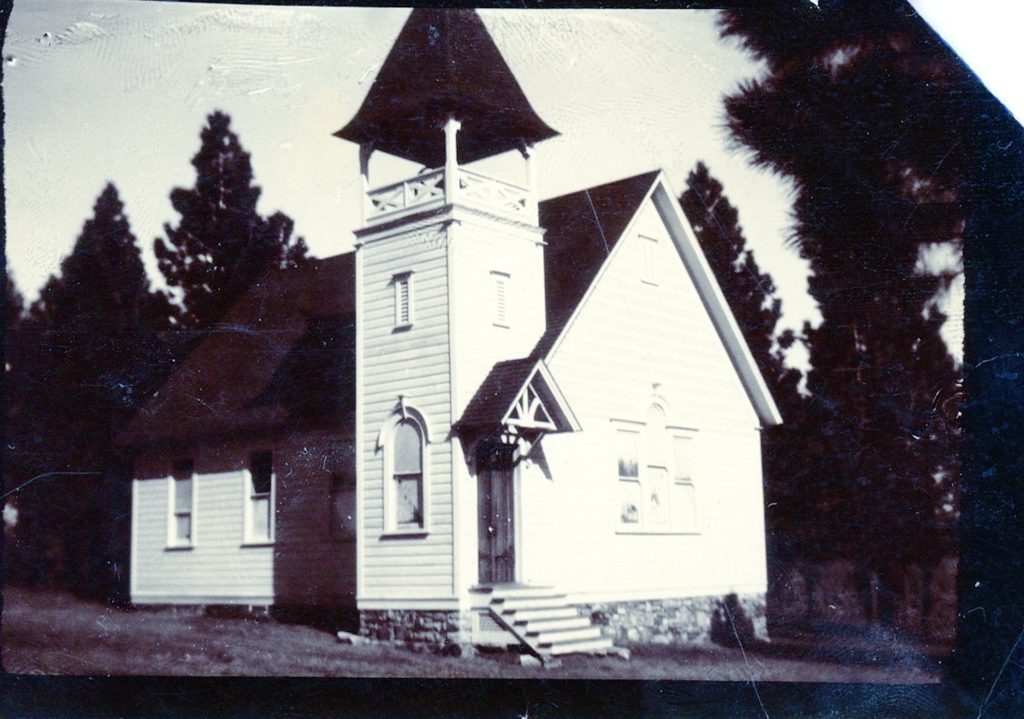
The Janesville Methodist Church had a very short time span, of just thirty years. By 1928, it had been abandoned. In January 1946, the Trustees of the Susanville Methodist Church, who had inherited the old church put it up for sale. The demand for buildings in the region was extremely high due to the conclusion of World War II. The trustees asked for bids to be submitted by February 4, 1946. Unfortunately, I have not been able to ascertain what transpired since then.

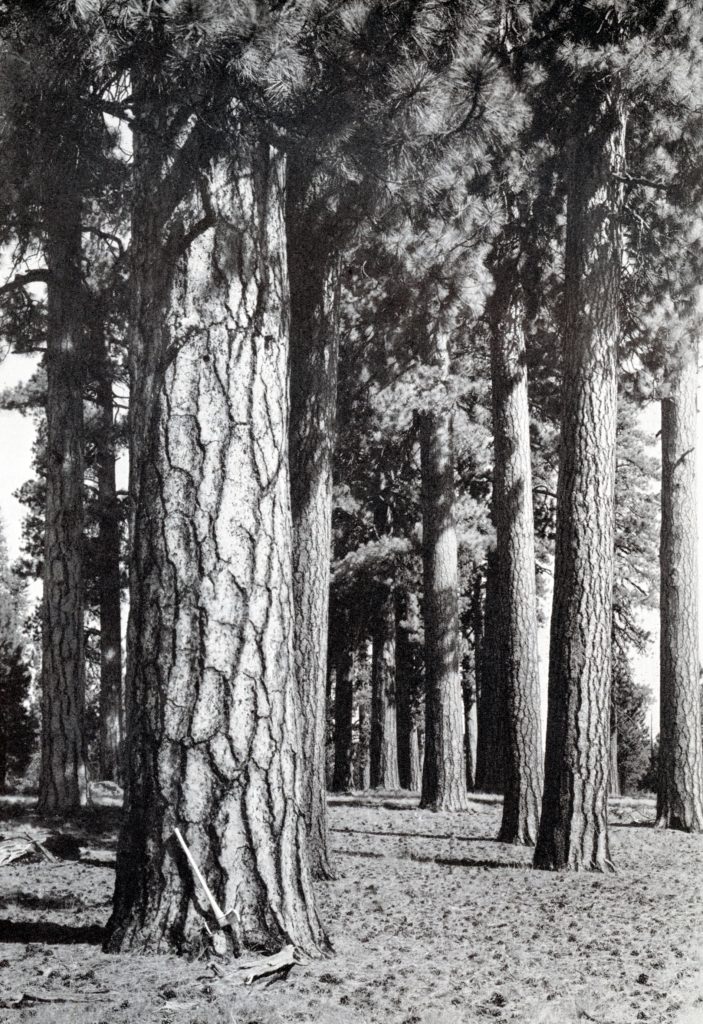
In 1916, William L. Wales, an engineer hired by the Honey Lake Valley Irrigation District, took the above photograph, as part of his exhaustive study to seek water. He proposed diverting annually 33, 962 acre feet from Butte Lake, (no one had ever filed a water right claim to it) . A canal would be constructed from Butte Creek to divert it to Poison Lake, thence onto to Pine Creek to Eagle Lake, through a tunnel there and onto the Honey Lake Valley. Very clever. However, the district was plagued with so many problems in the beginning that it never went past the initial study phase.
Spread the word, and encourage a friend to subscribe