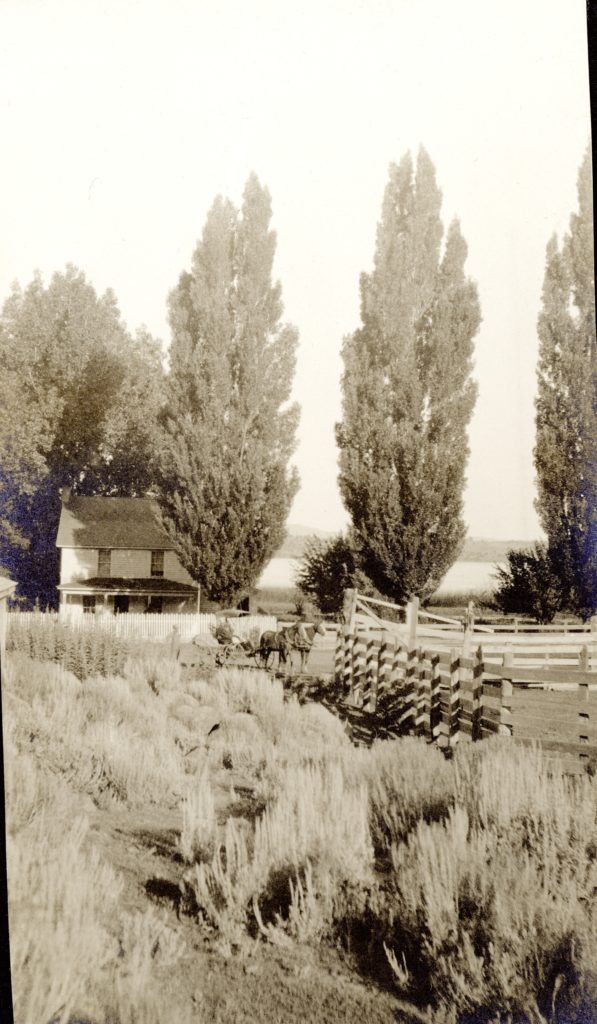
It was on May 4, 1961, when the Stone family sold their ranch at the north end of Eagle Lake to the Five Dot Land & Cattle Company. In 1926, Coit and Laura Stone had purchased the ranch from William and Roseanna Troxel. Apparently, none of the Troxel’s three sons wanted the Eagle Lake property.
It should be noted the Stone family retained their shoreline property on the northwest side of Eagle Lake. In October 1961 Stone’s Subdivision Unit 1 was placed on the market. The entire Stone’s Subdivision comprises 270 acres divided into 244 lots.
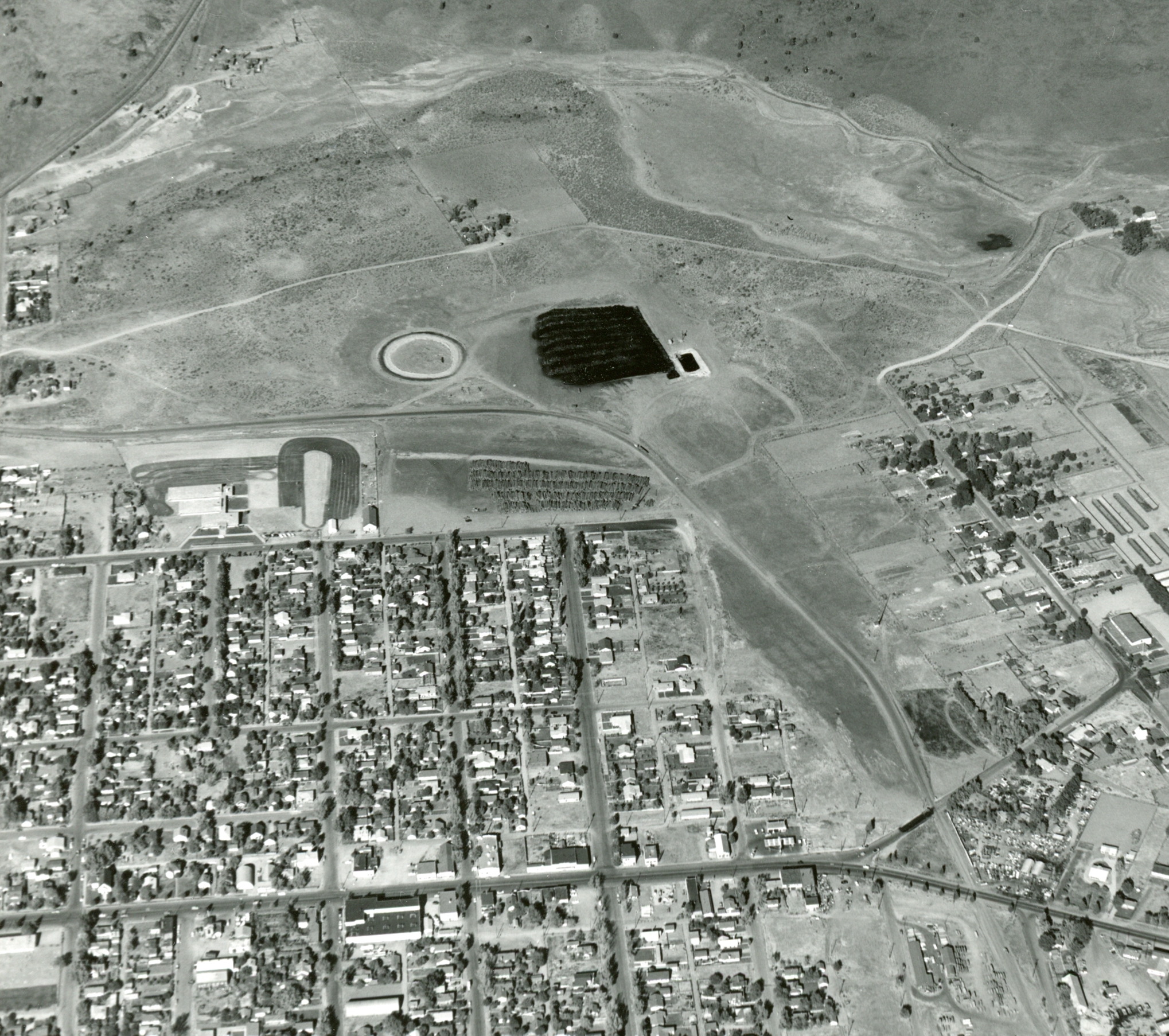
Northeast view of Susanville, circa 1950–Fred Lendman
Sometimes a picture is worth a thousand words, and other times ask a thousand words. This one falls under the latter. One person is sharing documents to enlighten all of us. Stay tuned.
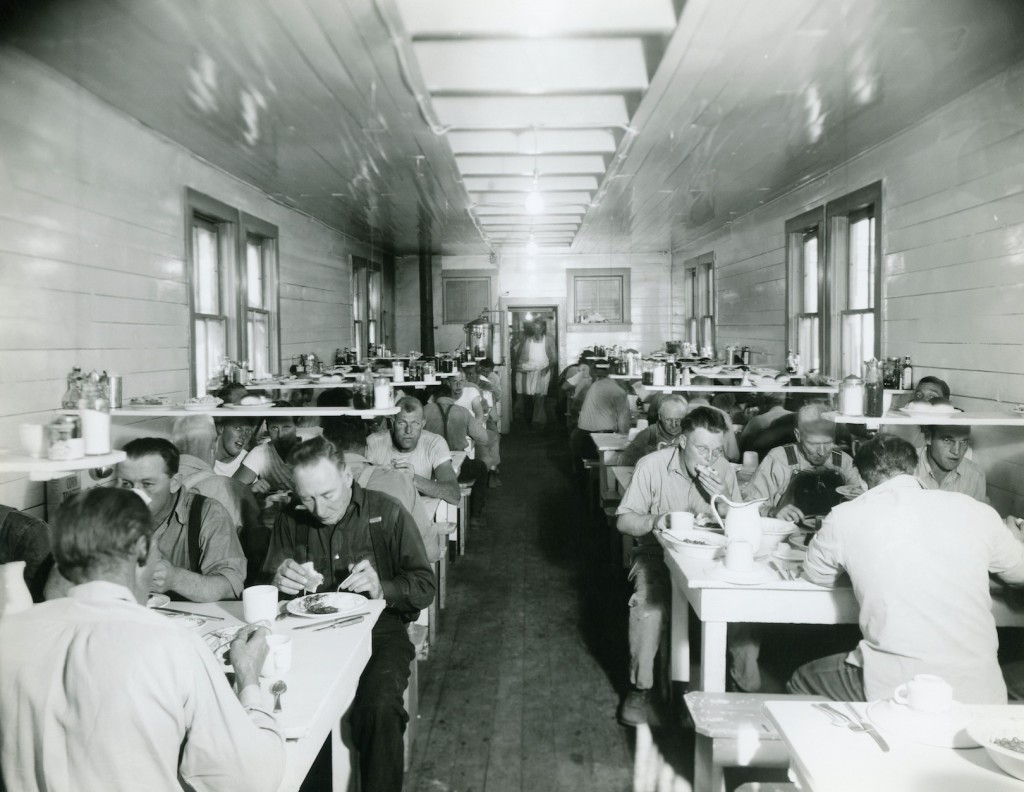
The cookhouse operations at logging camps were an expensive undertaking resulting in substantial losses for the lumber company. However, the food served in the logging camps played a pivotal role. Poorly fed loggers would move to a different logging company, and thereby impact the former company’s production.
In 1948, Fruit Growers Supply Company experimented at its Camp Harvey location (some twenty miles east of Poison Lake) by raising the price of a meal to one dollar. Complaints were loud and long. But now, instead of losing thirty-six cents per meal, they now lost only eight cents. The result was substantial and at the end of the year, Fruit Growers’ operating losses for the cookhouses at Camps Harvey and the newly opened Camp Stanford was $63,500.
Camp Harvey Dining Car
On May 2, 1949, Camps Harvey and Stanford opened for another season. In an effort to further reduce the cookhouse expenses, Fruit Growers leased them along with the commissaries, to H.S. Anderson Company for one dollar. Fruit Growers thought perhaps an outside company could handle the meals more efficiently. They would never find out the answer.
Just three weeks into the logging season all operations on the Harvey line shut down. The cookhouse crews, represented by Local 768 of the Bartenders and Culinary Workers Union, walked off the job in a wage and hour dispute with H.S. Anderson Company. As the weeks passed with no end of the strike in sight, Fruit Growers closed down Camp Harvey and Stanford permanently, as well as its Harvey railroad logging line.
During the late 1800s’, in the spring time there were always some entrepreneurs from Susanville who would take a wagon or two to Eagle Lake to catch the trout. Their haul of fish would weigh anywhere from 600 to 800 pounds. This they sold very quickly on the streets of Susanville at twenty-five cents a pound. In late April 1892, a fishing party left Susanville to do the annual harvest. They only came back with seven trout. They blamed their failed attempt that the water was too high. This practice came to an end in 1917 when California made it illegal to wholesale harvest of trout from lakes and streams.
Some things never change and politics and schools is one. I can verify this first hand, having served as a trustee on the Lassen College Board. The stories I could write about that ten year tenure—Mormon Massacre anyone?
Today’s story is about an odd short-lived or should I say a ghost school district in Big Valley—Pioneer. Its name is rather peculiar since a half dozen schools in that region had already been established.
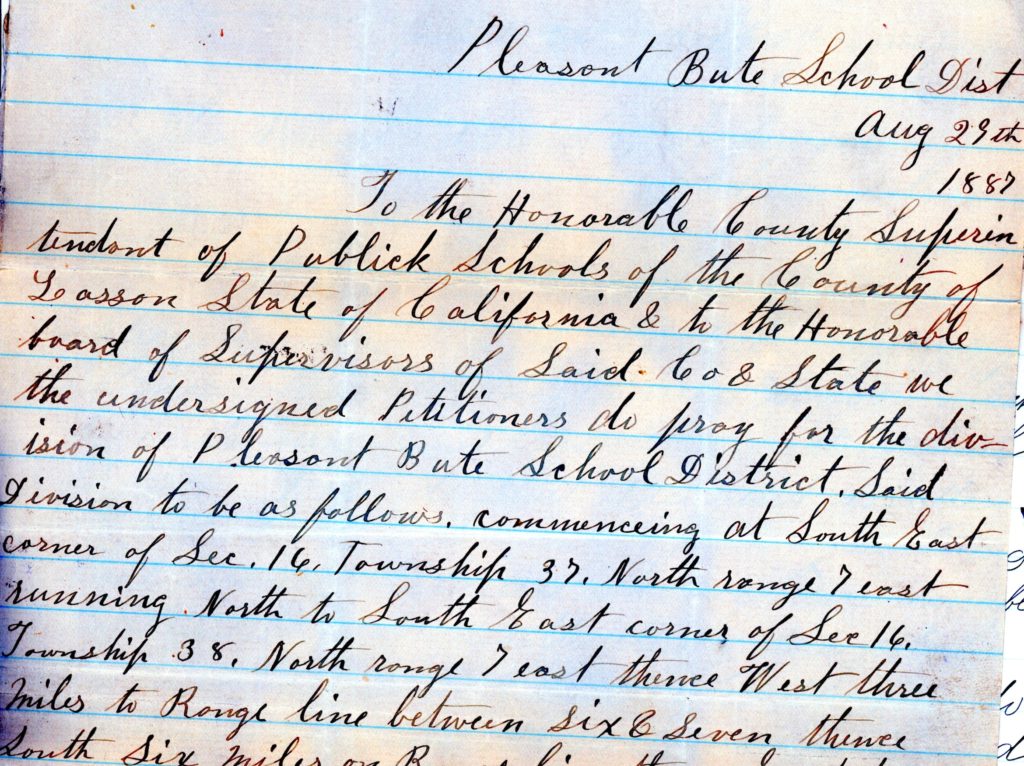
On August 23, 1887, residents on the west side of the Pleasant Butte School requested that a new district be established on the grounds: “The School House being so situated now that the greater portion of the Schollars in the Division we mention cannot attend the greater portion of the time on account of the Sloughs being full of water.” On September 27, 1887, Myra Parks, Lassen County Superintendent of Schools, informed the Lassen County Board of Supervisors that she personally inspected the conditions and recommended the Pioneer District be formed, that creating a new district would not be detrimental to Pleasant Butte. In October 1887, the request was granted.
Then things got weird. In January 1888, the Pleasant Butte School District residents on the east side petitioned the Board of Supervisors to rescind its action that had created the Pioneer School. They stated that the original petition provided “fake, fraudulent and misleading facts.” At the February 1888 meeting of the Board of Supervisors, approved their request and the Pioneer School District was abolished.
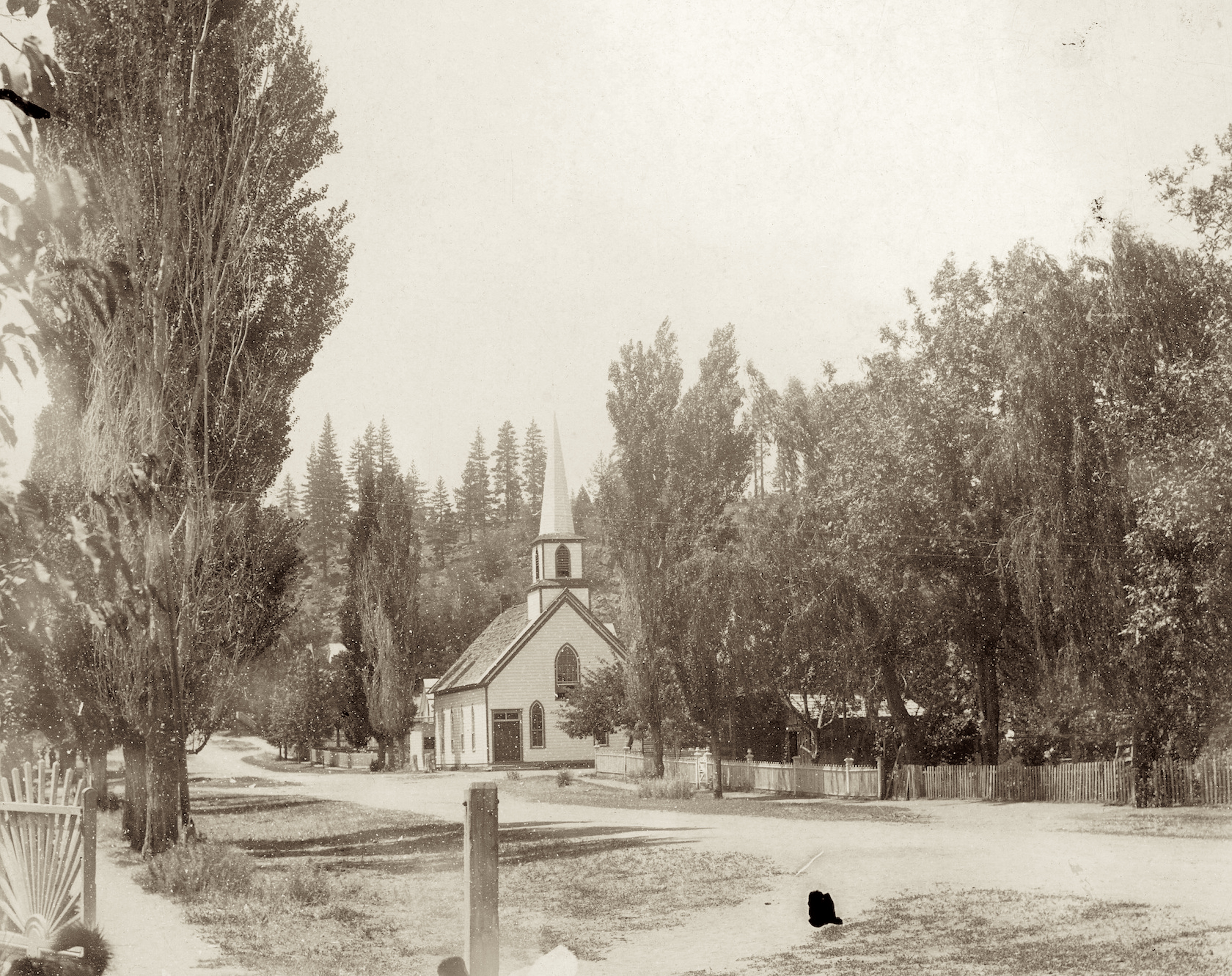
Susanville’s Methodist Church, circa 1896. Courtesy of Philip S. Hall
In 1911, Lassen County commissioned the Sunset Magazine Homeseekers Bureau to compile and publish 32 page booklet about the wonderful attributes of the area with the anticipation of the Fernley & Lassen Railroad. In the subheading “The County In General” I thought some might enjoy this observation.
”While this is a new country, and thinly populated, it is an error to conclude that it is not a civilized one, for law and order prevail here to an even greater extent than in many of the densely populated sections. Go where you will throughout the county, and nowhere will you find a locked door, by day or by night and the grass grows in the doorway of the jail. You will find everywhere, in both the towns and rural districts, good public schools, churches, a telephone in every home, daily mails, a prosperous happy people, and a hearty hospitable greeting; even the dogs will bark you a welcome, and come fawning to your feet in gladness at seeing you. In every town at every crossroads there is at least one hotel, not a Palace or a Fairmont, but a place where you can get a good bed in which to sleep, and at least plain substantial food, and wherefore you do not need to carry your blankets.”
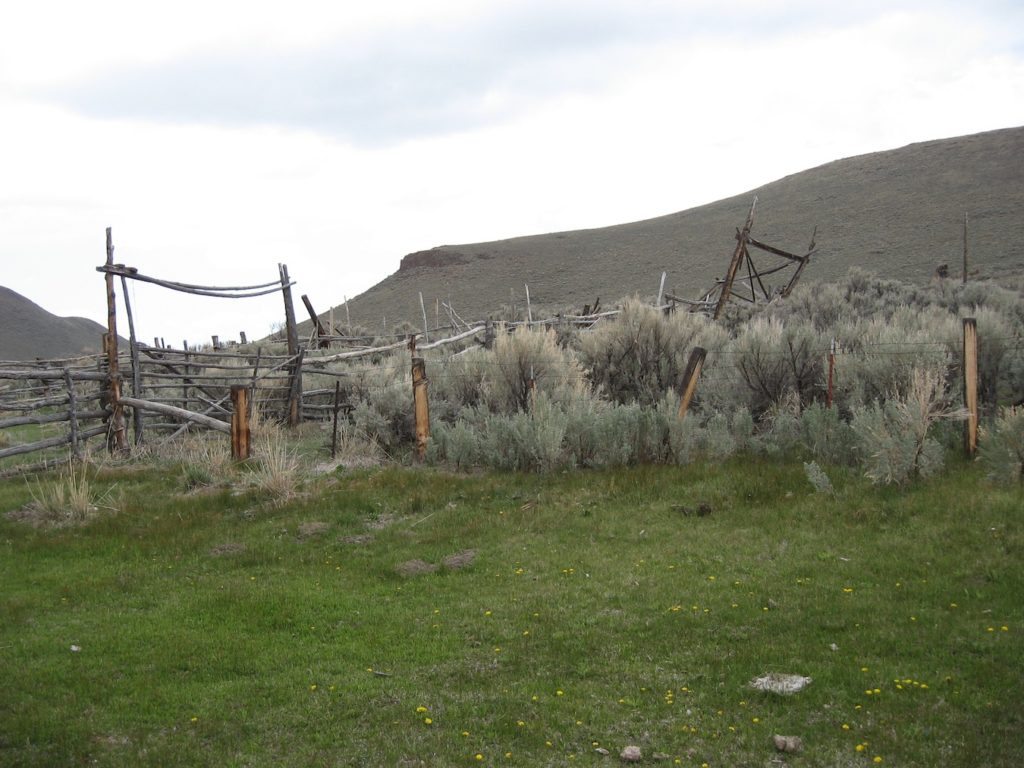
Summit Camp is an old livestock camp, located near the headwaters of Mahogany Creek, that is the stream that feeds Summit Lake—May 10, 2008
In May 2008, my dear friends, Derek and Pat Anderson invited me to partake in an expedition through Smoke Creek/Black Rock Deserts with a goal of High Rock Canyon. One day we spent exploring the Summit Lake area. It should be noted we made a base camp at Soldier Meadows Guest Ranch. Our departure was to be through High Rock Canyon, but due to certain difficulties, that was abandoned. To make a long story, even longer, I did research on Camp McGarry to give the owners at Soldier Meadows additional information to share with future guests.
Camp McGarry was so remote that it relied on the Susanville business community for all of its supplies. The following are excerpts from the Sage Brush newspaper, forerunner to the Lassen Advocate about the coming and goings out in that district. Its lengthy, so if you have no interest, feel free to skip. Continue reading More Camp McGarry→
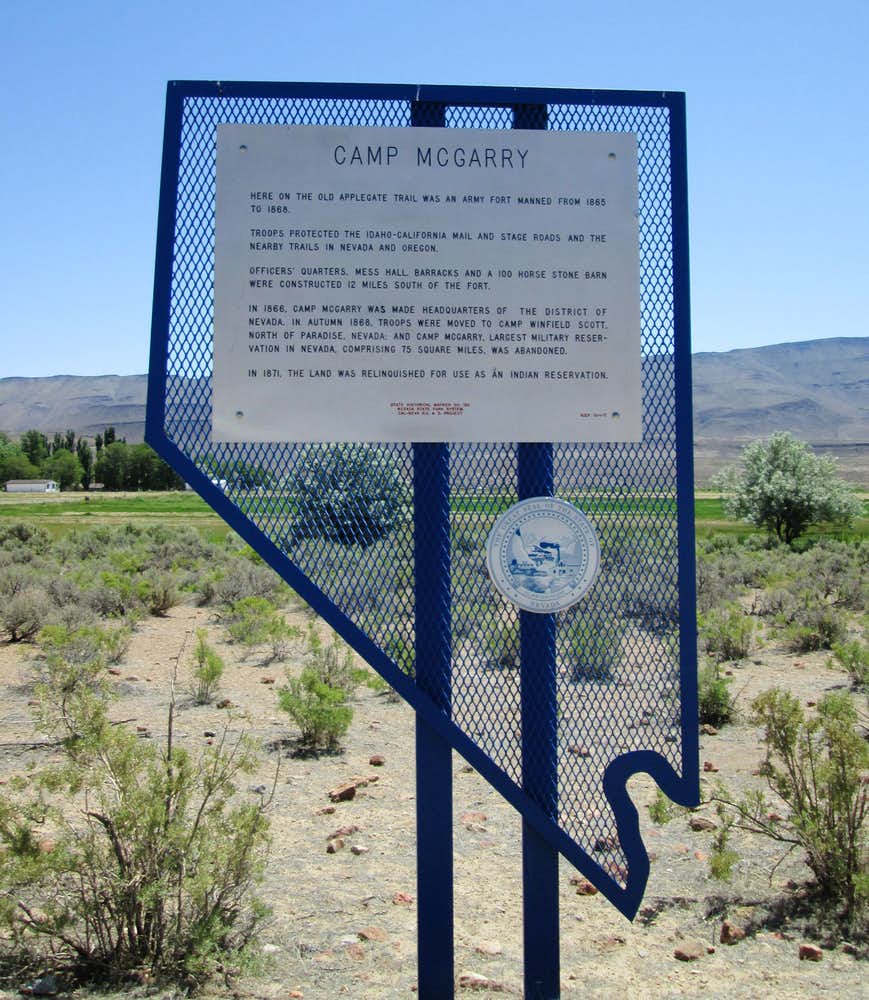
Nevada State Landmark, Camp McGarry at Soldier Meadows
Camp McGarry was a military outpost in remote far northwestern Nevada at Summit Lake. It was established on November 23, 1865 by the California Calvary. It has some unique attributes. It was named for Civil War hero, Brevet Brigadier General Edward
McGarry.
Contrary to popular belief that it was established for the protection emigrants of Lassen-Appelgate Trail, that was not the case at all. Its location was far removed from the Trail. It was for the protection of the mail route. The fastest way from San Francisco to the Idaho mines, was via Susanville, to Smoke Creek and Black Rock Deserts, then headed north via Summit Lake. On October 14, 1865, the Idaho-California Stage and Fast Freight was incorporated with its headquarters in Susanville. The incorporation papers states that the sole purpose was “to operate stage and fast freight from Chico, California via Puebla Valley to Ruby City and Boise, Idaho.” The Company was able to obtain the government’s lucrative tri-weekly mail route contract from Chico to Ruby City at $45,000 a year. The initial 427-mile trip from Chico to Idaho took three and a half days. It would be a short-lived operation. In 1868 the Central Pacific Railroad tracks were laid into Nevada reaching Winnemucca, and that reduced travel by half. On December 18, 1868 Camp McGarry was abandoned, the troops transferred to Camp Winfield Scott, at Paradise Valley, Nevada. On March 25, 1871 the military relinquished the Summit Lake territory and it was transferred to the U.S. Department of Interior. Today, a portion of it, is part of the Summit Lake Indian Reservation.
Camp McGarry was the largest Nevada military reserve with land comprising seventy-five square miles. An unusual feature there was the use of underground passages connecting the barn, mess hall, and barracks .
Another unusual trait, it had a summer and winter location. The harsh winter conditions at Summit Lake forced the camp to move to what become known as Soldier Meadows, just north of the Black Rock Desert. Remnants exist at both locations. However, Summit Lake site is not accessible to the public it being a part of the Summit Lake Indian Reservation. The southern encampment is now the headquarters of the Soldier Meadows Guest Ranch.
Truth to be told, the main story to accompany this photograph will probably not appear until this fall. However, there is significance to the image. It was a handful of first scans that I have done recently since my “fall from grace.” Recovery is slow, but sure, and progress is being made.
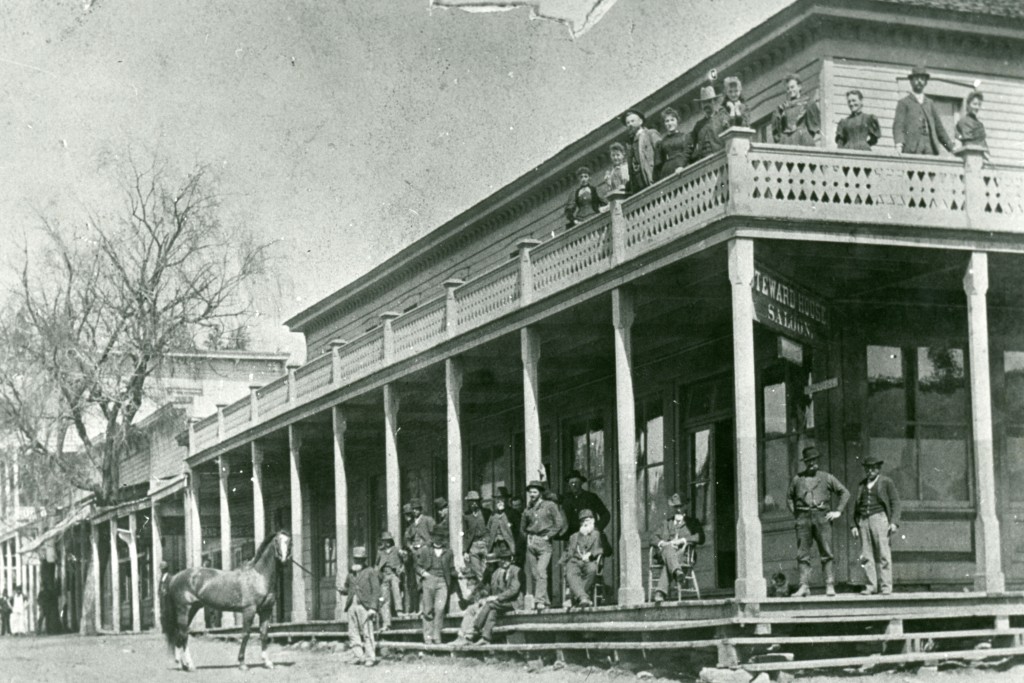
Susanville’s Stewart House, 1881. Courtesy of Dallas & Joyce Snider
In the spring of 1881, Alex Arnold, owner of the Susanville Water Works, made an offer to the business community for fire suppression. He proposed to install a six-inch pipeline from his holding tank at the west end of town run the entire length of the town’s Main Street at that time (Pine to Weatherlow). In addition, four or five fire hydrants would be installed. The estimated cost was $1,000. Arnold asked the businessmen to purchase it. In return, he would provide free labor to install the pipe and hydrants. In doing so, this would reduce insurance rates and they could quickly recover the costs. They bickered about the costs, and nothing was done.
Fast forward to 1884, after three disastrous fires, the Arnold pipeline proposal was resurrected. Even with the pipeline there was another fire suppression cost—equipment. A hand engine (hose cart), hose and cisterns would cost $800. In April 1884, a petition was submitted to the Lassen County Board of Supervisors to form a fire district for the Susanville Township. On May 6, 1884, the Susanville Fire District was formed.
One of the first order of business was a special election for a proposed tax assessment. That was held on May 24, 1884, and it was approved 67 to 9. By late fall, with money in hand, the Arnold pipeline proposal was in earnest. On January 5, 1885, was a historic day in the history of fire suppression for Susanville. The fire hydrants were in place and the hose cart arrived. It was time to test the new system. It worked. The water pressure from the pipeline allowed the volunteer firemen to shoot water over the two-story Steward House Hotel, the town’s tallest building.