The Arrival of Father Patrick J. Moran

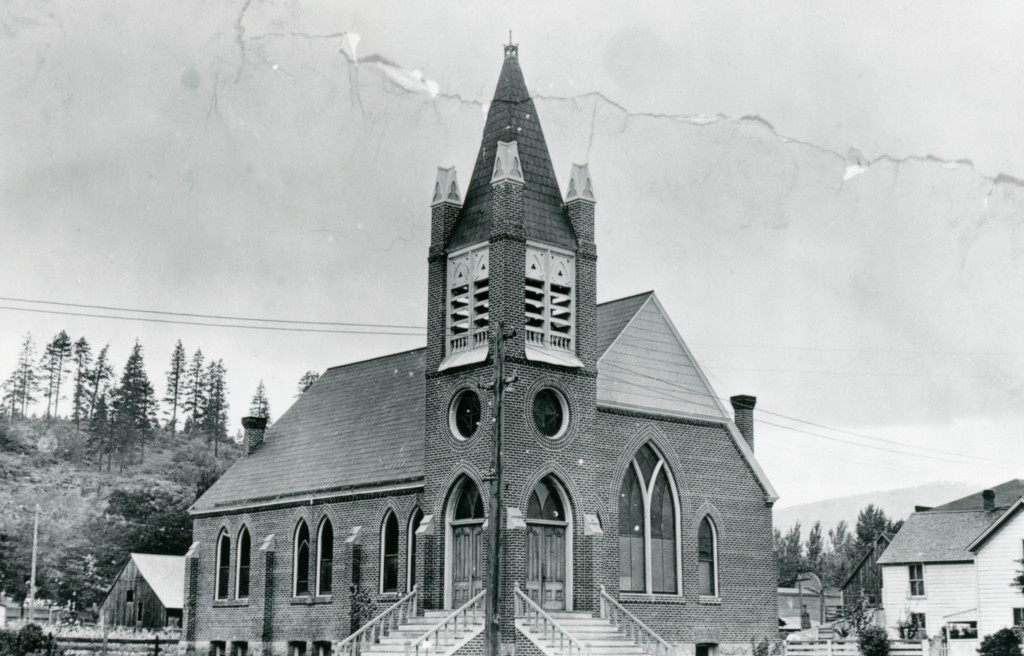
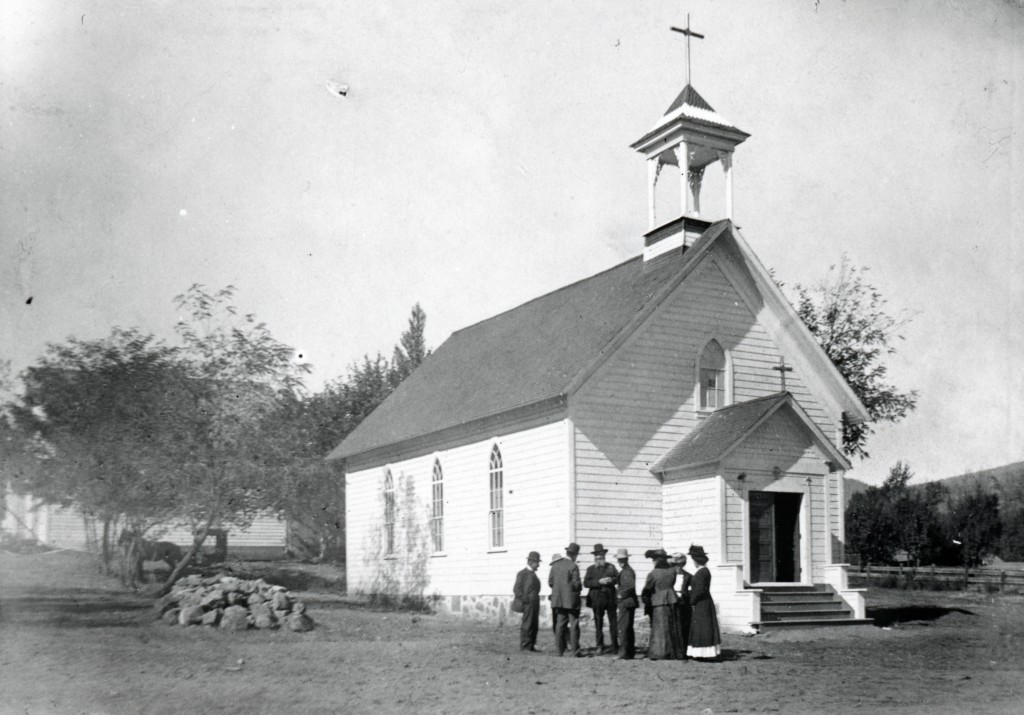
Sacred Heart Church
Sacred Heart Church, 1910

On December 2, 1938, Father Patrick J. Moran became the fourth priest at Susanville’s Sacred Heart Church.  A dynamic figure, he would leave an indelible mark over the next twenty-eight years.

Father Moran’s first crusade would be a vigorous campaign to raise funds to build a new church to replace the existing church that had been built in 1892. The existing church could no longer accommodate a flourishing parish.

Another problem with the old church it was cold and drafty in the winter months—with its only source of heat and ornate pot-belly wood stove.

The original altar at Sacred Heart, circa 1910. Courtesy of Milton Mallery

After Moran’s first winter, enough was enough. Father Moran had the following notice published in the Lassen Advocate on November 26, 1940:  “That weekday Masses will be celebrated each morning at the parish house during the cold months as it is impractical and unnecessary to heat the church each morning for the services. However, Sunday services would be held in the church.”

It would not be until 1949, when the new church was completed.
Subscribe

Will It Be A Blue Snow Winter?

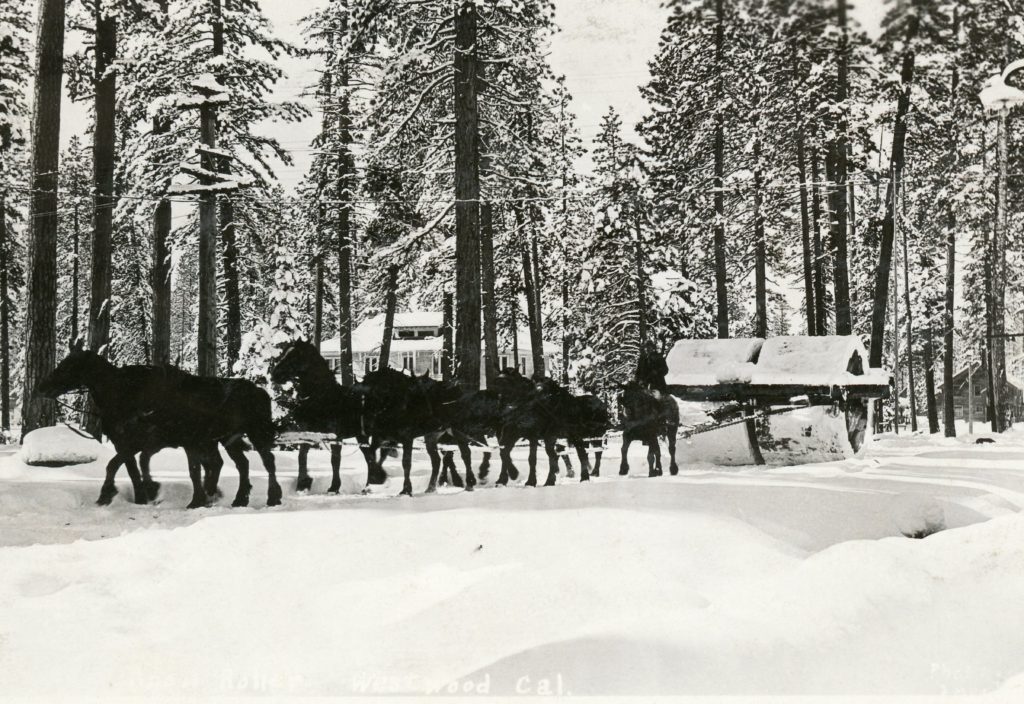
Red River’s snow roller in action. Courtesy of Calvin Sharp

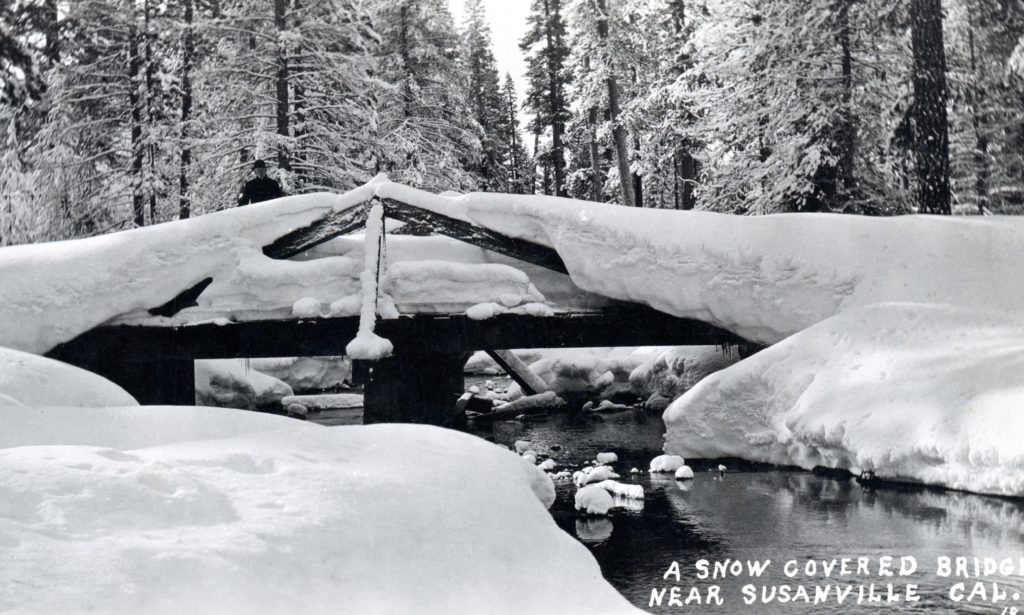
Any weather prognosticators out there? Meteorologically speaking December 1 marks the first day of winter. The winter of 1915-16 was brutal. Snowfall was heavy throughout the region, and it was unusually wet. One storm in January dumped over four feet in Susanville. It was necessary for the Southern Pacific Railroad to bring in a rotary snow plow to keep the rail line open between Susanville and Westwood. In Westwood, Red River came up with a contraption they called a snow roller to compress the snow. Once all the snowstorms subsided in early January, it turned bitter cold with long periods of below zero temperatures. Because of the water content in snow, Red River officials dubbed the condition as “Blue Snow.”

Support

Pigeon Cliffs Update

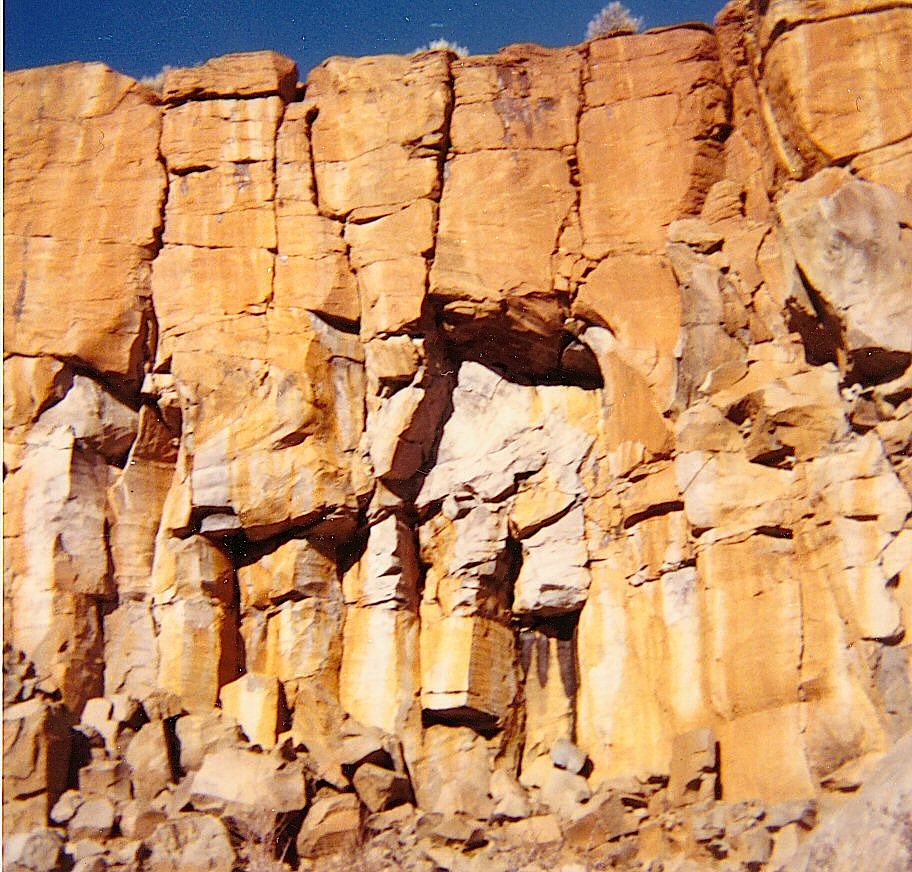
Pigeon Cliffs
Pigeon Cliffs, 1972

Terry Cobb provided a bit more insight on this topic. While he did not name the game warden,  that person was well known. . Seasoned residents, especially those fishermen and hunters, already know the identity of the game warden then—Elmer Doty. This man had an uncanny ability to detect anything suspicious and out of nowhere appear on the scene.

This is what Terry relayed to me: “In the fall of 1956 a friend and myself were fishing the Susan River above Hobo Camp when we were approached by a game warden. He asked us if we had seen someone shooting at the Rock Pigeons in the area. We remembered hearing gunfire earlier but had seen no one but we had at other times seen what we believed to be Pigeons flying to and from the river bottom and rail road tracks up to the rocky cliffs above our location.”

Tim

The Eagle Lake Road Challenge

Heartfailure Grade, Eagle Lake, 1921. Courtesy of Lola L. Tanner

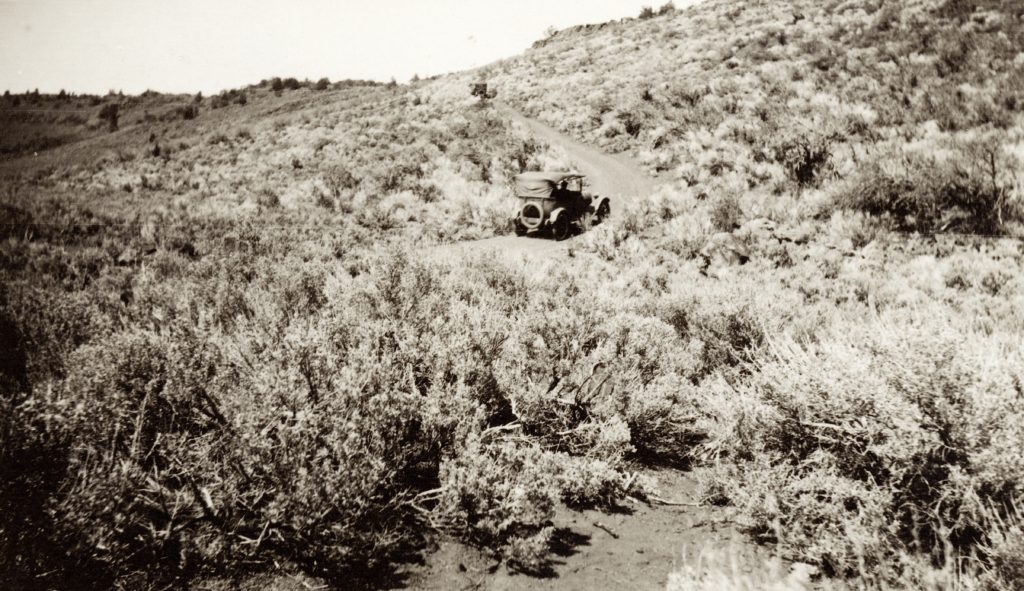
By 1920, Westwood residents made up a large segment of visitors to the south shore of Eagle Lake during the summer season. What they desired was the ability to drive to the north shore of the lake. There was a crude wagon road, between the south shore and Spaulding Tract, but it was not in any condition for automobile use.

Enter the Westwood Auto Club. This was an unusual organization created by the Red River Lumber Company. In many ways it served as a de-facto chamber of commerce. The auto club were  true to their name in road development and played an important role during the construction of Highway 36.

Eagle Lake trail to Gallatin Beach, 1914. Courtesy of Dolores Gasperoni

In the summer of 1921, the Westwood Auto Club led a group of Lassen County and Red River Lumber Company officials on a reconnaissance survey for a road to connect the north and south shores of Eagle Lake. All agreed that the obstacles could be easily overcome, with the only major outlay for a bridge to cross Pine Creek. On the other hand the over all cost would be minimal and Red River would assist with its equipment to make it possible. They all stressed the benefit of people to have access to various features along the lake, and shortly after this outing, work was slowly undertaken. In the 1940s, the road between the south shore and Spaldings was greatly improved when the Paul Bunyan Lumber Company was logging the west side of Eagle Lake.

Support

Spread the Word

Standish Water Company’s pumping plant on the east side of Honey Lake, 1911. C.R. Caudle collection

First of all, I am not a very good prostitute when it comes to self promotion whether it books or this website. As subscribers know well, I do not push subscriptions, and they are also voluntarily. This is just a simple request, if you know some one who might be interested, spread the word and with a little nudge encourage that friend to subscribe.

Thank you, and tomorrow, will resume the regularly scheduled programming.

Tim

An Old Fashioned Winter

At the conclusion of November 1931, Robert M. Cook, editor and publisher of the Lassen Mail embraced the early winter weather conditions. Cook reported that it had been cold and snowy all month, even a light snowfall on Thanksgiving. On November 22, the morning was a brisk nine degrees. Because of the cold temperatures and heavier than usual snowfall in the mountains, Cook thought that was the ideal scenario—the. solid frozen snowpack would be ideal next spring/summer to insure water for irrigation.

Tim

1-0-1 Ranch & Cemetery, 1978

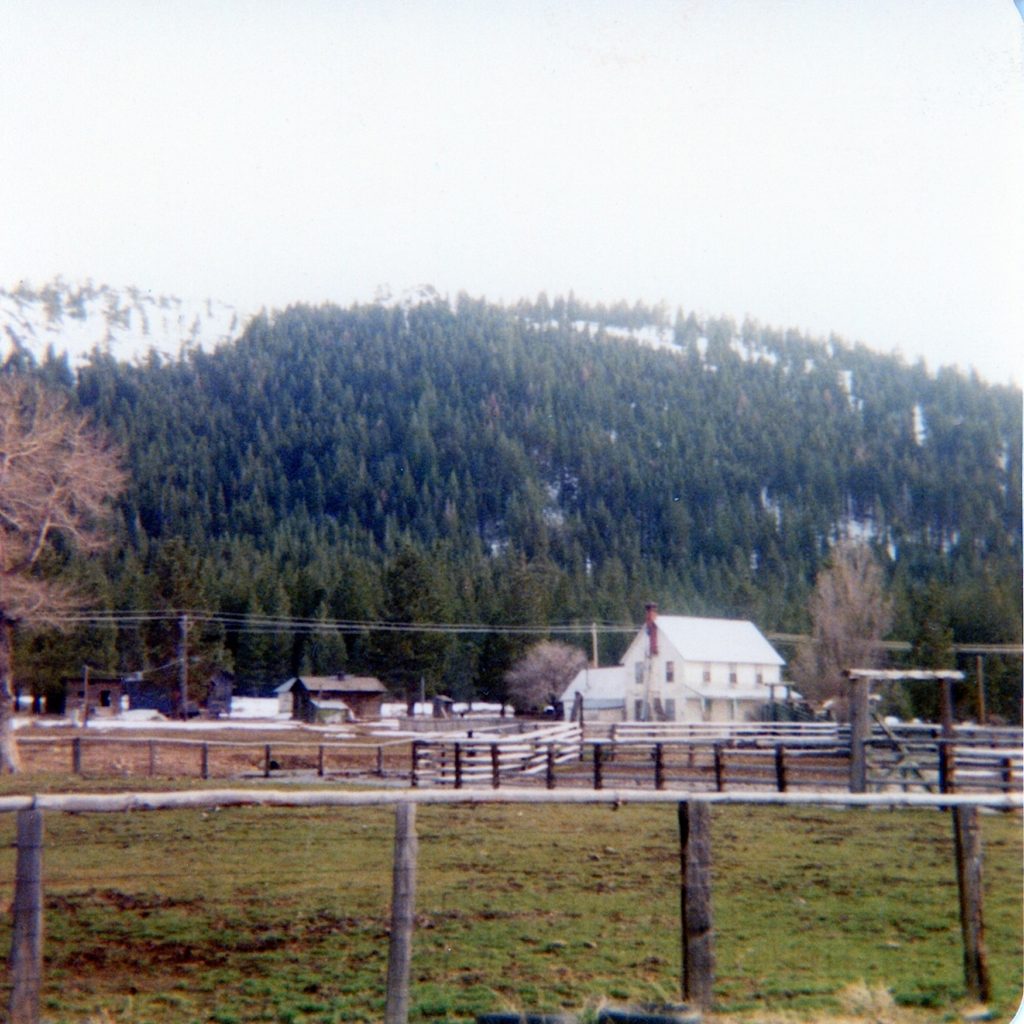
1-0-1 Ranch, March 18, 1978

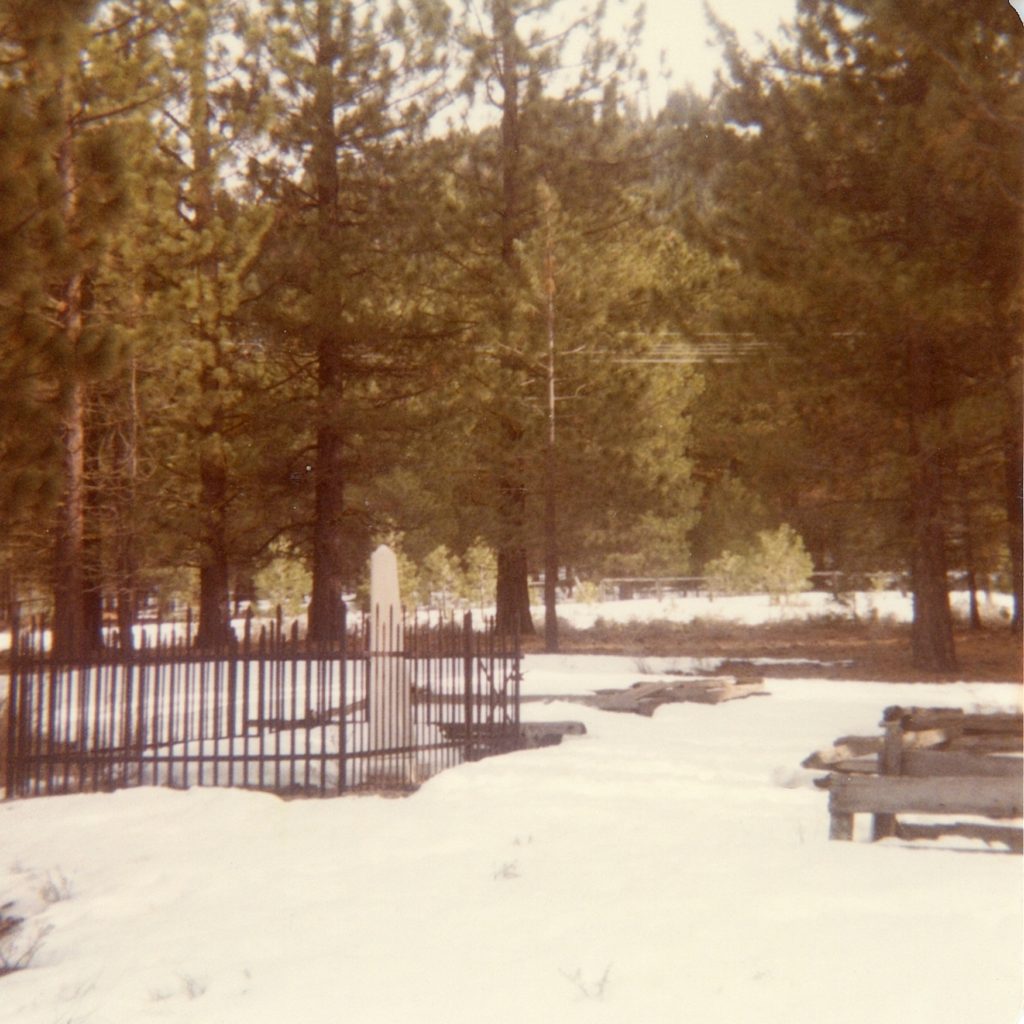
It being the day after Thanksgiving, I am experiencing a short attention span. While rummaging around in the photograph archives, I thought I would share these two photographs of 101 Ranch and the cemetery located there.  For those not familiar with the locale, it is just west of the Coppervale Ski Area and located  there is a office of Sierra Pacific Industries. I am not sure when the ranch house was torn down. It was one of those kind of blink of an eye moment, one day it was there and the next it was gone. The cemetery is a short distance from the former ranch house and it used to be visible from Highway 36, but now I and another person have not been able to spot it.

Cemetery at 1-0-1 Ranch, March 18, 1978

One of the individuals buried there is David “Pegleg” Johnson for whom Pegleg Mountain is named for.

Support

Men fix dinner for Women!

Methodist Church, 1905
Susanville’s Methodist Church, 1905

First of all, I hope no one finds this story offensive, there is literally a lot of “tongue and cheek” humor in the following newspaper article. After all, this was type of writing was common a century ago. With that mind, the following is from the Lassen Mail of October 20, 1926:

”The sale of indigestion tablets should take a big jump this week and antidotes for ptomaine poisoning and kindred stomach ill should be much in demand for the men of the Methodist Church are cooking a “big feed” for the women of the congregation this evening at the first get together meeting of the season. The women are rather dubious, but if for  nothing more than curiosity, there were will be no doubt a large crowd present. The massacre begins at 6:30 p.m.”

Happy Thanksgiving, Tim

Lassen College’s First Football Team

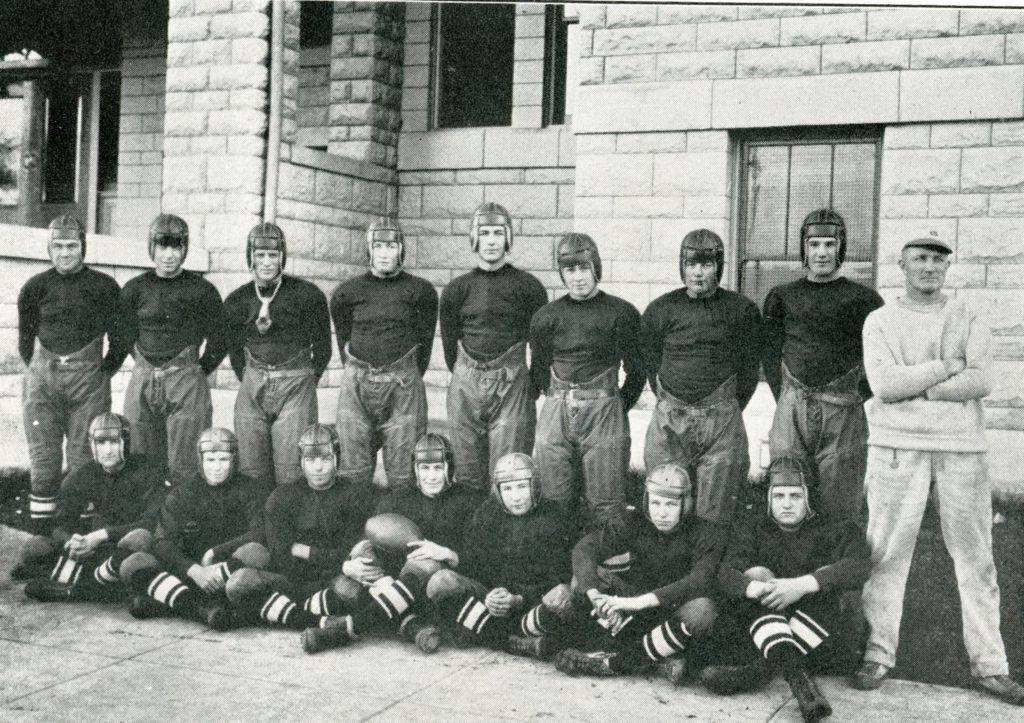
Lassen Union High School Football Team, 1926

In 1925, Lassen Union High School established a football team. Their first season was certainly rough around the edges. The playing of the game was so new to everyone, it would take time to slowly learn it.

On Armistice (Veteran’s) Day 1926, Lassen was scheduled to play Chico in Susanville, but the latter was not able to attend. Rather than cancel and disappoint the fans an impromptu team of Lassen Junior College was created. There was a wee bit of problem, the college’s student population was so small they did not have enough players to form a team. It was mutually agreed that some of the high school students could play on the college team. It was an entertaining game for the fans, and college won 12 to 8.

It should be noted during the late 1940s, Lassen College had a bona fide football team.

Tim

Susan River’s Pigeon Cliffs

Pigeon Cliffs, 1899
Susan River Canyon, looking towards Pigeon Cliffs, 1899

Can anyone enlighten me how Pigeon Cliffs, located in the Susan River Canyon, just west of Susanville received its name? When I was a youngster, I spent an incredible amount time exploring the Susan River Canyon.  However, I never seen any pigeons at the cliffs. I have never come across any historical notations about the cliffs period. Another case in point, Inspiration Point never entered the local vernacular until the 1920s. Prior to that, it was the bluff behind Susanville.

Pigeon Cliffs
Pigeon Cliffs, 1972

Tim

Exploring Lassen County's Past