A Progressive Westwood?

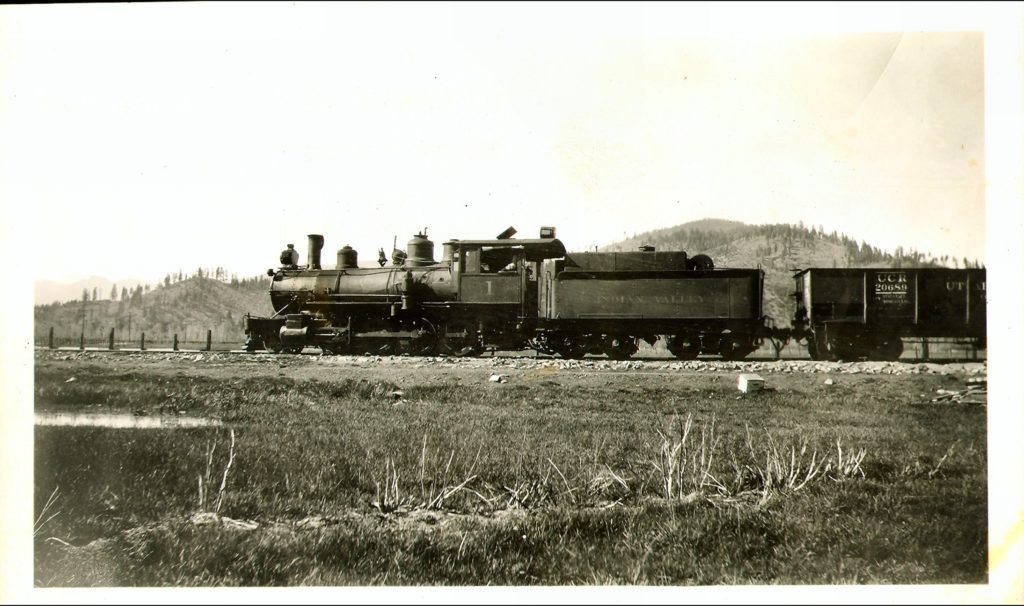
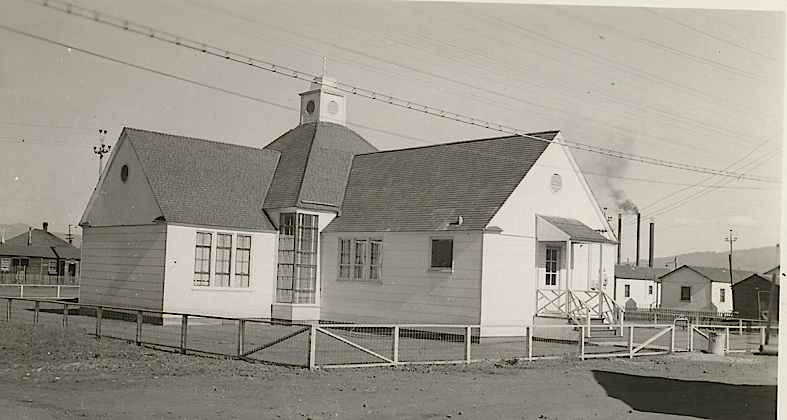
Westwood, 1931

One of things the Red River Lumber Company did not like about California was its politics. After the company established Westwood, it initially took a neutral stance to politics. That would change over time.

The Westwood Auto Club served as a de facto chamber of commerce for Red River. Since 1916, Californians voted on several bond measures to build a state highway system. By 1926 those funds had been exhausted and to the dismay of the residents of Northern California the majority of bond revenue was spent building highways in Southern California. In June a movement was on hand to place on the ballot a one cent per gallon gasoline tax to be used for highway construction. The Westwood Auto jumped on the bandwagon and led a vigorous petition drive to obtain signatures to place the matter on the ballot. It was widely supported and by the end of July enough signatures had been obtained to place the measure on the ballot, to be known as Proposition 4.

To date nearly $100 million had been spent in the last ten years for highway construction. It was estimated an addition $123 million was needed to complete the state highway system. Southern California had an initiative also on the ballot—Proposition 8. This was an effort to grab a major portion of road funds for the next twelve years. It turned into a North/South divide issue. Proposition 4 proponents worked hard and were successful. In Lassen County nearly 90% of the voters approved it.

Support

A City Born of Fire

The destroyed Knoch Building of the 1898 fire.

During Susanville’s early history the community was plagued by some devastating fires such as in 1882 and 1893. In each instance efforts were made to correct the situation, but to no avail. Then came fire of June 6, 1900 and everything changed. All the wooden structures on the south side of Main Street from Roop to Union were destroyed, some forty in all and the estimated loss at $100,000. It served as a catalyst for the incorporation movement for Susanville.

On June 13, 1900 a citizens meeting was held to discuss the legal requirements to incorporate the town.  After some debate it was decided to move forward. A petition was circulated and signed by sixty-five registered voters requesting the Lassen County Board of Supervisors to call for a special election to decide the incorporation issue. The board obliged. On August 15, 1900 the voters went to the polls and improved the incorporation by 61 to 20. Elected to serve as trustees were Charles Emerson, John Humphrey, Howard Meylert, Julien Pardee and John Riley. The first city council meeting was held on August 28, 1900.

Support

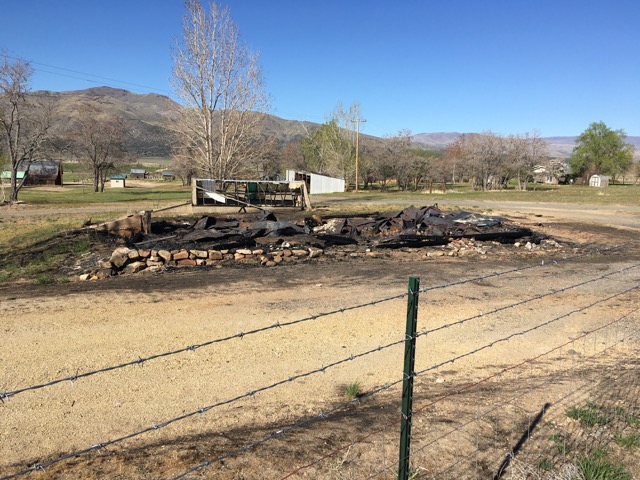
Gerlach, Nevada

Gerlach, 1914

With Burning Man taking place soon on the Black Rock Desert, the town of Gerlach receives a lot of attention due its close proximity. Some may wonder who was Gerlach.

Gerlach was named for German immigrant Louis Gerlach (1835-1921). He came to the United States in 1853, and in 1855, located at Stockton, California working as a butcher. He would later operate his own butcher shop. Gerlach then became affiliated with the Wagner Meat Company, that raised their own cattle, along with operating a slaughterhouse. This inspired Gerlach to branch out on his own in the cattle business. In 1884, he purchased Granite Creek Ranch, near the present town of Gerlach. As his operations grew, in 1892, he incorporated as the Gerlach Land & Cattle Company. His main focus was northern Washoe County, Nevada. In 1906, Gerlach acquired the Ward Land & Stock Company for $100,000. This included over 5,000 acres, and with it such places as Bare Ranch in Surprise Valley. Thus, a nucleus of an outpost was created at what is present day Gerlach. In 1909, the Western Pacific Railroad built its railroad through the area and established a station at Gerlach, and thus the formation of the community. After Gerlach’s death in 1921, his ranching empire was slowly dissolved.

Support

Everyone Loves A Parade!

American Legion Parade, Susanville 1926—Margaret Purdy

During August 16-21, 1926, Susanville was a festive place. It was the host of the statewide American Legion Convention. That was a tremendous feat by the local American Legion Post named after Thomas Tucker, a Maidu, and Susanville’s first casualty in World War I.

The community gave the some 3,000 attendees the proverbial red carpet treatment. Buildings were decorated with patriotic bunting or adorned with the American Flag, and some times both. Two parades were held that week. The first one was mid-week in the convention, which featured numerous floats, decorated cars and an assorted lot. There were the Santa Barbara Legionnaires, dubbed the “bathing beauties” with the men wearing gunny sacks, displaying their knobby knees. The second parade was a bit more dignified with the veterans marching down Main Street from the Elks Lodge to the newly constructed Veteran’s Memorial Building.

Tim

Antelope Lake’s Pioneer Cabin

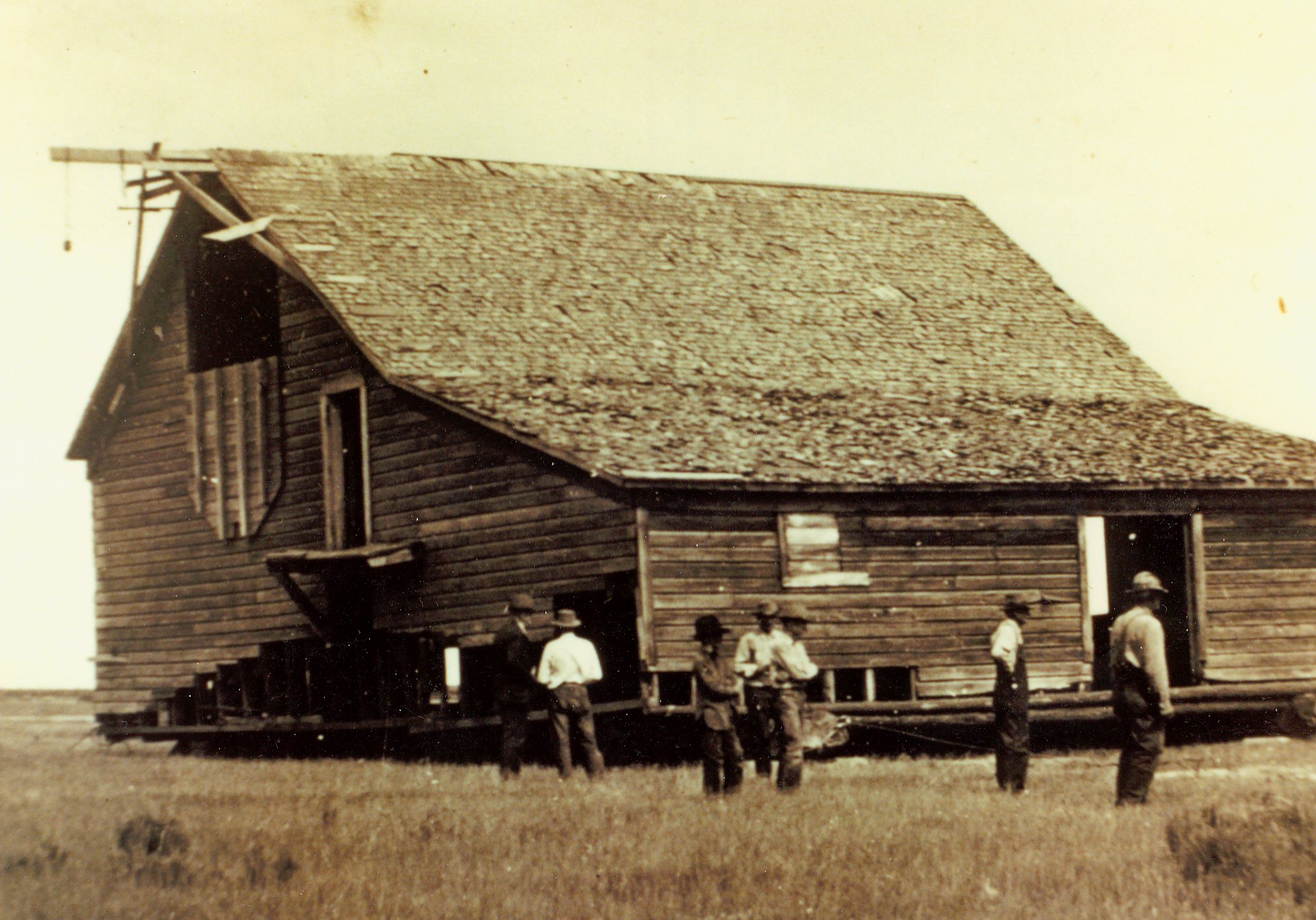
Antelope Lake, 2002

The designation of “Pioneer” to log cabins is such a misnomer. In many instances they get that designation from the recreational arm of a government agency, to lend some rustic aura to inspire visitors awe. The so-called Pioneer Cabin at Antelope Lake falls into that category. There are still a handful of similar cabins in the eastern segment of the  Plumas National Forest. These cabins were used during the summer months, primarily by Honey Lake ranchers who brought their livestock into the mountains for summer range.

The cabin at Antelope Lake origins are with Adelbert Torrey, who in the 1880s was residing at Buntingville. He would bring his dairy cows for the summer, for the abundant feed and water. Adjacent to the cabin Torrey built a water wheel used to process butter.  In 1888, Torrey sold the property to his Buntingville neighbor, Leonard Hicks.  It remained in the Hicks family until 1941 when it was sold Frank and Alma Flux. Flux had paid $3,000 for the 400-acre property. He stated the previous owner had sold the timber to Clover Valley Lumber Company for $20,000.  It appears from records of Susanville attorney, Harden “Finn” Barry that Flux sold the property in 1956, as a future reservoir site.

Support

Tuesday Tidbits

Westwood High School, circa 1925. Courtesy of Hank Martinez

Here it is the middle of August and it is already beginning of the school year. Seasoned readers will recall that school usually began right after Labor Day. The Westwood School year in 1928 started on. September 17.

Just a follow up on the Susanville/Durbin Nursery located on Richmond Road, at the present site of Diamond View School. When the Lassen National Forest leased the property from Lassen County beginning in July 1928, the rental fee was $80 a year.

Tim

Papoose Meadows Massacre – Version Three

Papoose Meadows, October 13, 2017

The third version appears in Asa Fairfield’s Pioneer History of Lassen County published in 1916. Unlike Version Two they share few similarities. One important fact, Dodge in Version Two has the main instigator as Joseph Hall, when Fairfield duly notes its Joe Hale. This is important, when Hale returned to Susanville concerning the Indian encampment he encountered, he had the forum to relay the news—he was half-owner of the Pioneer Saloon. It should be noted that Fairfield relied entirely that of William Dow, one of the participants.

In June 1866, when Joe Hale went in search of stray horses some ten miles west of Susanville he spotted a number of Indians who did not appear to be local. It had been well known, especially with the Indian Valley Maidu had been providing ammunition to the renegade band of Paiutes of Northern Washoe County. It was Hale’s opinion this ammunition would be used on a attack at Camp McGarry and relayed the same to the residents of Susanville when he returned.

The next day a posse of five men—William Dow, E.V. Spencer, Joe Hale, Byron Gray, Charles Drum—organized to break of up this ammunition exchange with the Indians.They followed the Indians tracks and spent their first night at Martin Springs, near present day McCoy Flat Reservoir. The next day they went up north to Champs Flat and spent the night there. The next day they went south along the west side of Eagle Lake. By the time they reached the south shore Dow and Gray  stopped to let the horses rest. The others carried on the pursuit and came across an Indian encampment at what would be known as Papoose Meadows.  According to Dow, the posse found the camp consisted of women from Indian Valley, and that the men had left camp to hunt. That night when the posse re-grouped it would attack either at night or towards dawn.

The next morning they did. Dow stated four Indian men were killed, one injured and escaped [Joaquin] and another fled with horses. This differs dramatically from Version Two. There is no reference to what happened to the Indian women, or whether ammunition was found or seized.

Subscribe


Some Early Susanville Airport History

Susanville Airport, early 1940s

On Tuesday morning, September 9, 1919, the first airplane flew over Susanville. Who the unknown aviator was has never been determined. It was believed by some to have been a Forest Service plane used to spot fires.

By the 1920s, pilots were regularly visiting Susanville. An impromptu airstrip was developed in the Milwood section, at the north end of Spring Street. By the late 1920s it had become apparent that an airport was needed. E.G. Scammon, Robert M. Cook and Charlie Bridges were appointed to a special aviation committee to locate  suitable site for an airport. They selected the Hanford Tract near Johnstonville. It met several criteria, as the property was inexpensive and required a small expenditure to construct an airport. In addition, there was plenty of open space for expansion and equally important few homes in the area. Aviators, on the other hand, complained that it was too far from Susanville. Yet, it met the approval of federal aviation officials.

On July 17, 1928, the Lassen County Board of Supervisors met in special session to discuss the airport. At the conclusion of the meeting it was agreed to purchase the property. On August 22, the County bought the 60-acre Hanford Tract from W.V. Warren for $1,700. In 1929, the City of Susanville bout 40 adjoining acres from May Hemler for $400 to extend the runway. On April 8, 1932 the County assigned all of its interest in the airport to the City.

The years 1931-32 witnessed significant changes at the airport. First was the oiling of the runways. That was followed by a fuel station and beacon light. In 1932, the City moved a two-room cottage on the premises. This was occupied a by a caretaker, whose main responsibilities were maintenance, i.e. no stray cattle on the runway and tending to the needs of the pilots who arrived at the airport.

In 1939, the Susanville Flying Club was organized, and it had a major impact on the airport. It employed the services of licensed flying instructor, Al Reese and flying lessons were now available. In 1940, additional improvements were made at the airport. That year Lassen Junior College offered civilian pilot training, with initial enrollment of twenty-two students. In September, the Civil Aeronautics Board rated Susanville seventh out of 183 California airports. The airport was earmarked with $371,000 for immediate improvements as part of the national defense program. In 1942, the U.S. Navy Department took control of the airport for flight training of cadets. The Navy retained control of the airport until the conclusion of World War II.

Support


Astor Pass, Nevada

Roop Siding
Roop Siding on the Fernely & Lassen Railroad just north of Pyramid Lake, April 1966. Courtesy of Gil Morrill

While yesterday we explored the early day fur trappers of the Hudson Bay Company and others of the 1820s and 1830s in the region there is a geographical feature named for John Jacob Astor. Astor Pass is more like a narrow canyon/valley that separates Honey Lake and Pyramid Lake. By the 1880s, it is well documented as Astor Pass, many attribute it to John Jacob Astor (1763-1848), who was a major American competitor in the fur trade with Hudson Bay.

Astor Pass came into prominence in 1912, providing an easy route for the Fernley &Lassen Railroad into the Honey Lake Valley via Pyramid Lake. In the pass, the railroad established Roop Siding.

While the rails have been removed interest in this locale has not gone by the wayside. In the 1970s, there was considerable interest in diatomaceous earth deposits—remnants of decomposed fish and organic matter of Lake Lahontan. This particular matter, if developed, was to be utilized as fertilizer. Since the early 2000s the area has been studied for potential geothermal resources.

Tim

Hudson Bay Company & Honey Lake Valley

Honey Lake Valley, 1938

While Peter Lassen gets credits for the first Anglo person to visit Honey Lake Valley, that is not the case. Hudson Bay fur trappers, by the 1820s, had made their presence in Northern California. By the early 1830s they were exploring Northeastern California—more specifically Lassen and Modoc Counties. In the fall of 1832, Chief Trader John Work led a large party where in they encountered Goose Lake. For the most part they would follow the Pit River. However, one group made an expedition over the Warner Mountains and made a reference of three lakes—Surprise Valley. Later expeditions came through and by 1840 the fur trappers had designated the Honey Lake Valley as Hot Springs Basin. On a related note, it was relayed to me that at one archeological site in Lassen County contained Hudson Bay implements of the1830s.

In July 1844, William Thomas Hamilton (1822-1908), member of a fur-trapping group, was one such early day visitor to Honey Lake. Hamilton wrote in his memoirs: “We reached a beautiful valley called to-day Honey Lake Valley, but at that time without a name. We remained here three months, enjoying ourselves as only men can who love the grandeur of nature. Our time was spent in exploring, hunting, fishing, reading and practicing with all arms.”

Subscribe

Exploring Lassen County's Past