Well, I now have eight years experience going digital. It has been an interesting journey so far. Of course, it has pitfalls from day to day operations, just with any endeavor—it goes with the territory.
One of the nice features with an online format is the ability to reach a far wider audience, especially since I keep the content free—no paywall.
Next year will be a critical one with the renewal of the host server. Hopefully, the rates will be reasonable.
Long before Lake Almanor was conceived Big Springs and Hamilton Branch were popular camping/fishing spots at the then Big Meadows. A portion of that would change in the early 1900s when Great Western Power Company began land acquisition there. The company issued a statement that all camping and/or recreational activities were prohibited on their land, though initially permits could be obtained That is a story for another time.
When the first phase of the construction of Lake Almanor was completed in 1914, a great deal of the activity was logging by the Red River Lumber Company who had a contract to remove the standing timber from the reservoir. One of Red River’s earliest and best known logging camps, was Camp 14 located near Hamilton Branch.
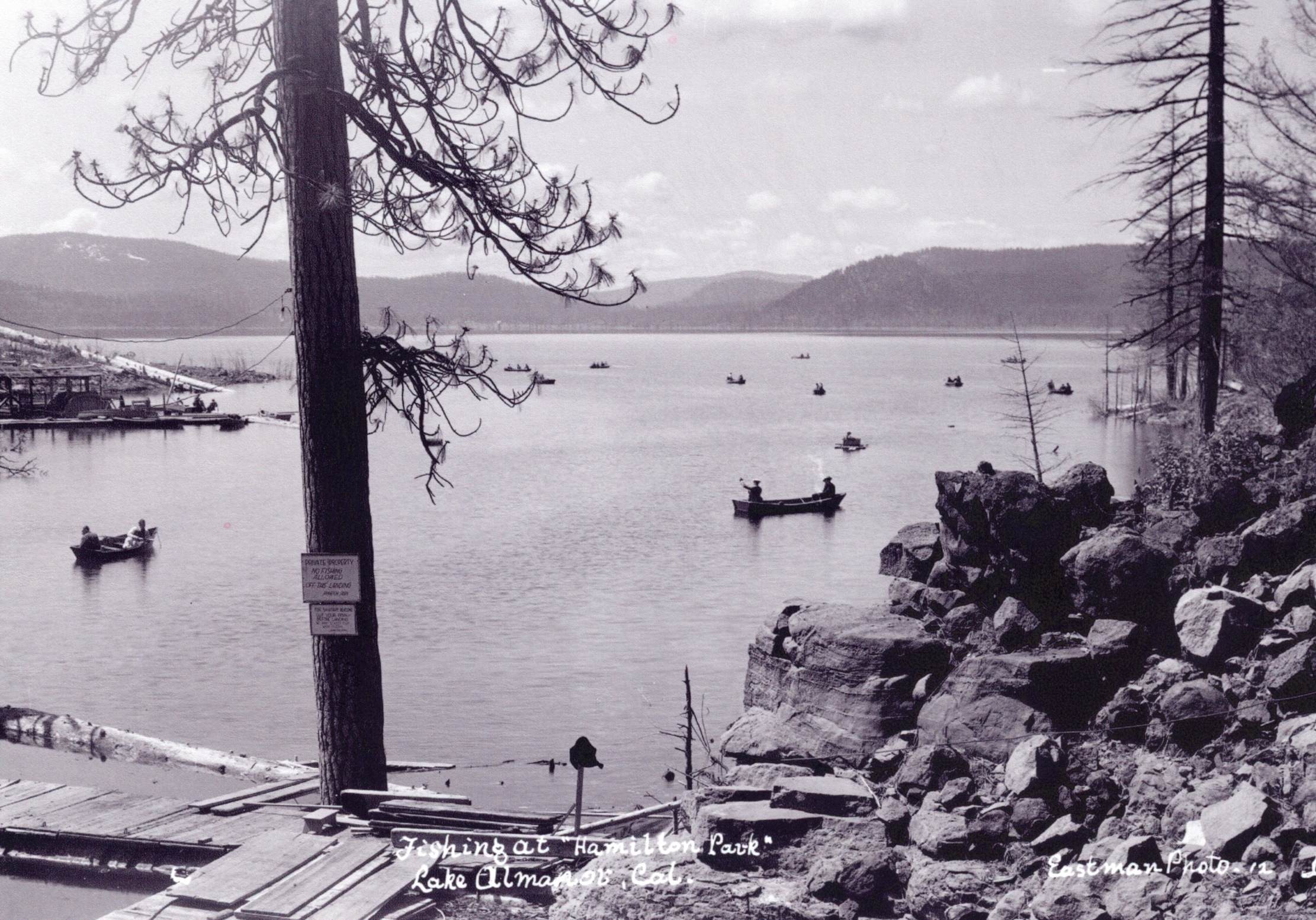
In 1923, J.N. Boshoff contacted Red River officials about converting a portion of abandoned Camp 32 at Hamilton Branch into a little resort. Red River agreed, seeing it as an opportunity to provide recreational opportunities for its employees and their families. Boshoff then converted some of the cabins at Camp 32 into bath houses for changing and others into overnight sleeping accommodations. He dubbed his new enterprise Hamilton Park. Boshoff leased the property from Red River for the next fourteen years. Hamilton Park eventually became known as Lassen View Resort.
The railroad giveth and the railroad taketh could easily describe Wendel. In 1996, the Union Pacific Railroad received permission to abandon an 85-mile segment of the railroad from Wendel to Likely. The railroad implemented a plan to demolish most of the buildings it owned there. Among the first buildings demolished were a two-story railroad section house and the foreman’s house. Also torn dorn was a local favorite, the 24-hour cafe known as the Milepost Inn, which provided meals and housing for railroad crews laying over between trips, but was open to the public.
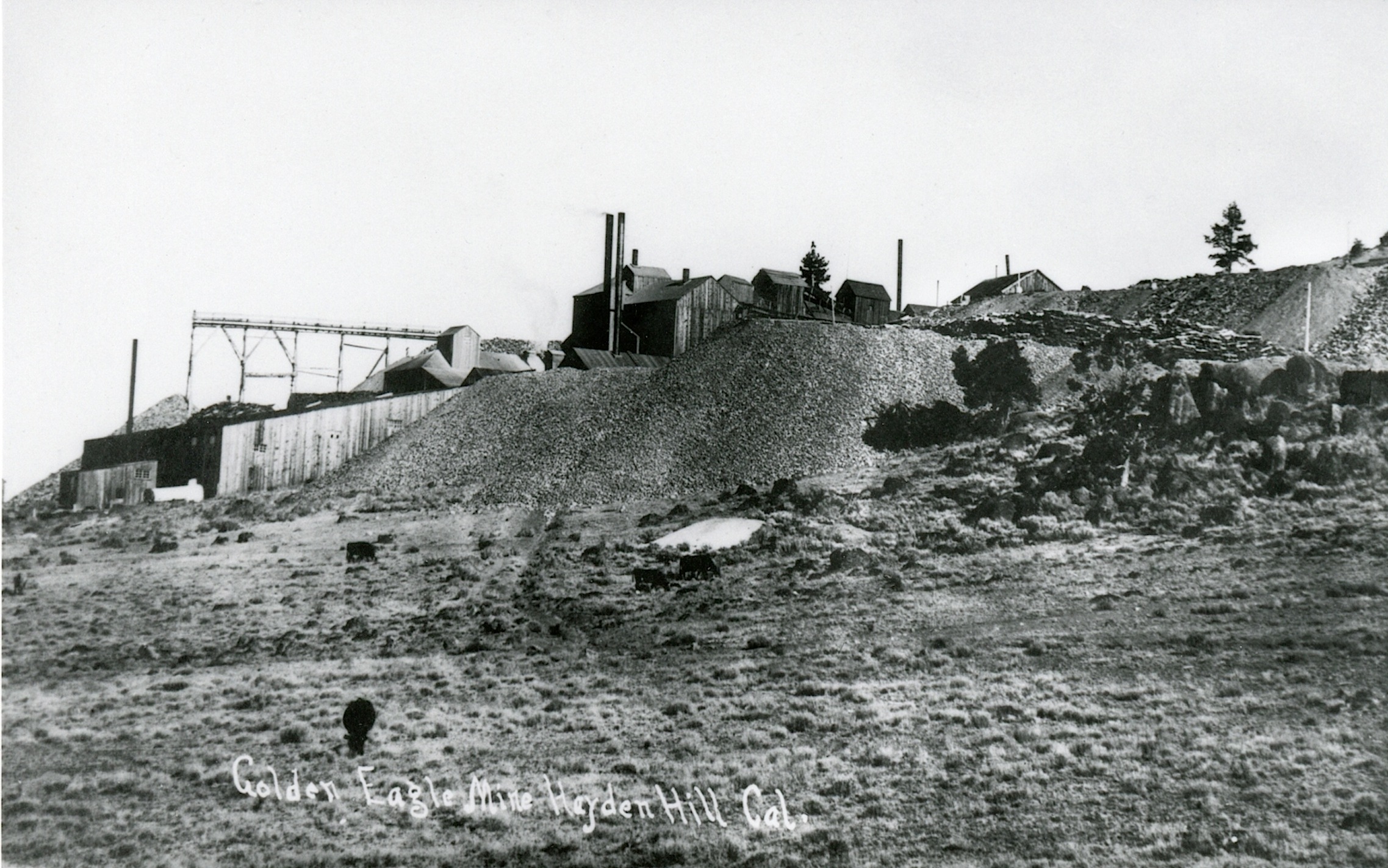
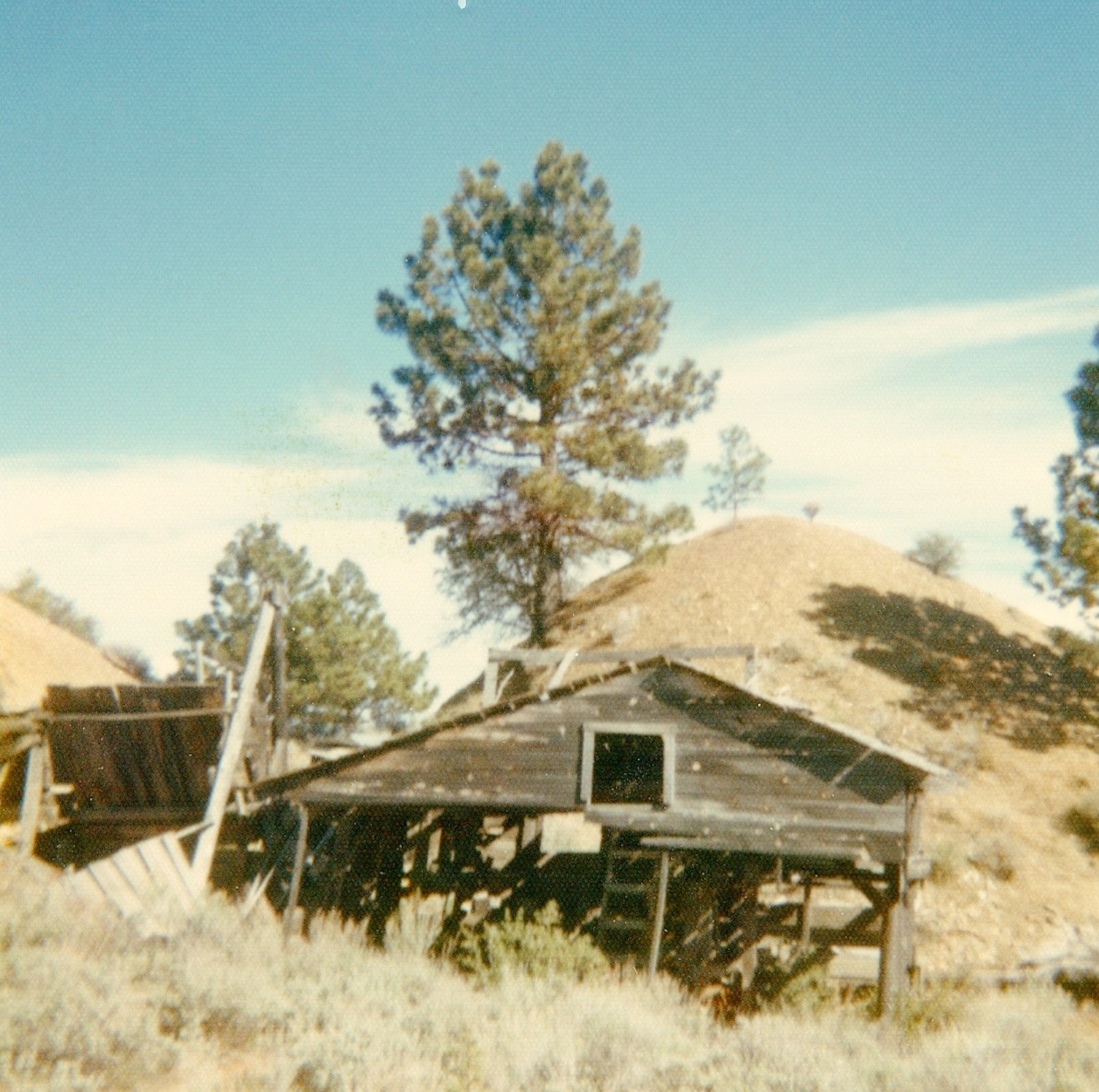
Golden Eagle Mine, Hayden Hill December 9, 1909—-Dallas & Joyce Snider
By 1900 it was becoming apparent that so-called “Wild West” had become to an end. In the early 1900s, in California, one was now required to go before the County Board of Supervisors to petition for a liquor license. If there was sufficient opposition, the Supervisors would deny the license. Thus, in the same county, one town would be “wet” and another one “dry.”
In 1902, T. Ed Driskell applied for a liquor license to operate a saloon at Hayden Hill, and it was granted. Times were quiet on the Hill (as it was referred) and therefore no opposition. By 1906, mining conditions were picking up and the mine operators opposed Driskell’s saloon. In mid-May 1907 the Golden Eagle Mine shut down, implying the problems associated with Driskell’s saloon. In reality there were a scarcity of miners to be found.
While the owners of Golden Eagle fought to revoke Driskell’s liquor license, the matter would resolve itself in a peculiar manner. On July 12, 1908, Driskell’s was found dead at his saloon. A Coroner’s Jury was assembled, the cause of death—alcohol poisoning.
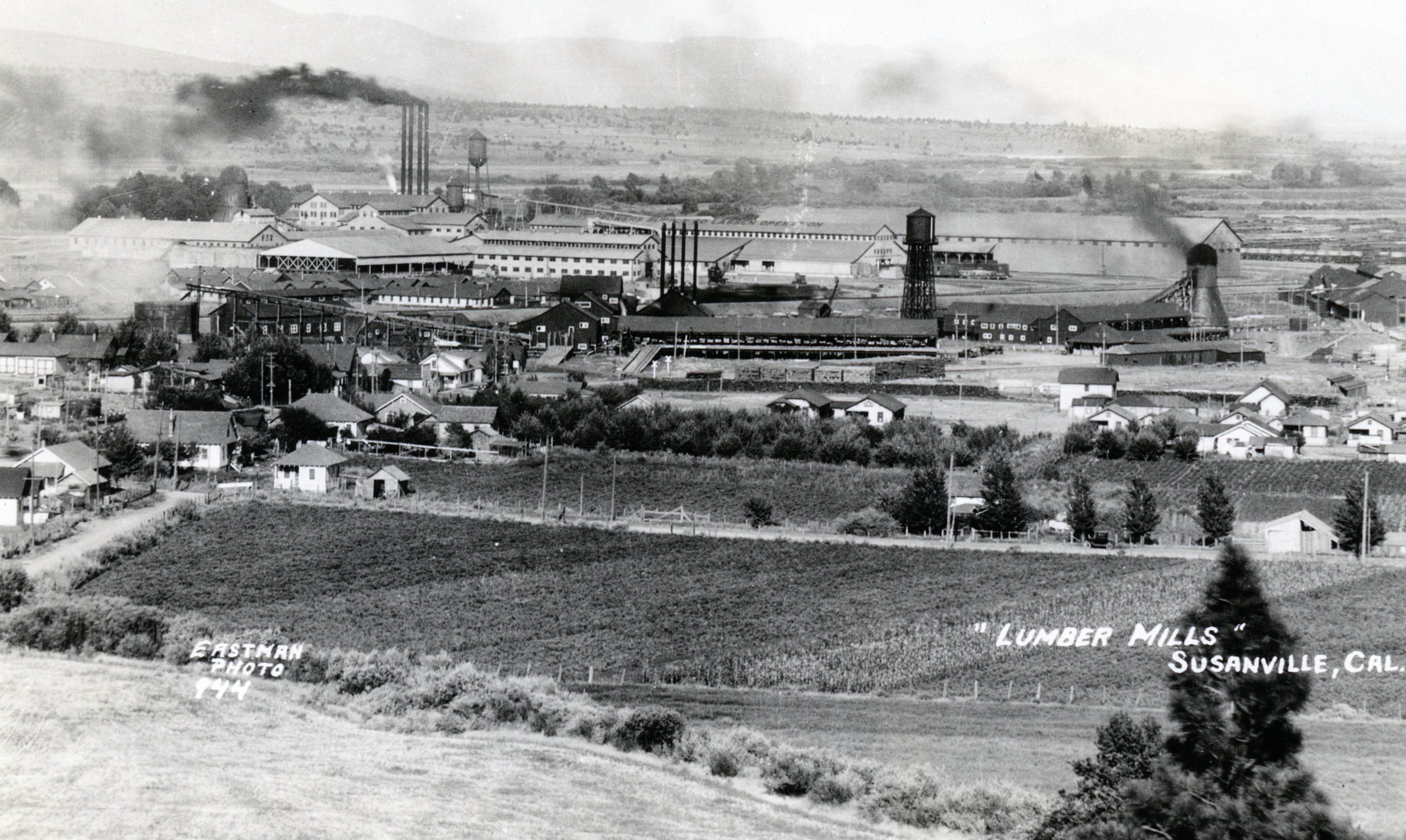
Fruit Growers and Lassen Lumber in their glory days.
Recently, someone wanted to know when the various large lumber mills closed. The first casualty occurred in 1953, when the last of the decked logs were milled at Lassen Lumber & Box Company. The sawmill was dismantled. However, Fruit Growers who bought Lassen Lumber in 1952, sold thirty acres including the box factory to the T&M Sash & Door Factory, operated by A.I. Lucero and Walter Wirth. The building was destroyed by a fire on April. 3, 1966.
Next on the chopping block was Fruit Growers plant in Westwood, which shut down during 1955/56. Fruit Growers had purchased it from the Red River Lumber Company in 1944. Next, in what was kind of an off shoot of Red River was the Paul Bunyan Lumber Company. The Susanville mill closed in 1967, though the company operated another facility in Anderson, Shasta County. One of the shorter lived operations was the Susanville Lumber Company that was established in 1941. In changed ownership several times and then was reincarnated at Coin Lumber. In 1979, it became Susanville Forest Products, a division of Jeld-Wen Corporation. They closed the mill in 1993.
Lastly, was Sierra Pacific Industries. They acquired the mill in 1963 from Fruit Growers Supply Company. Sierra Pacific closed its Susanville mill on May 3, 2004, thus marking an end of era, of a once predominant industry in Lassen County.
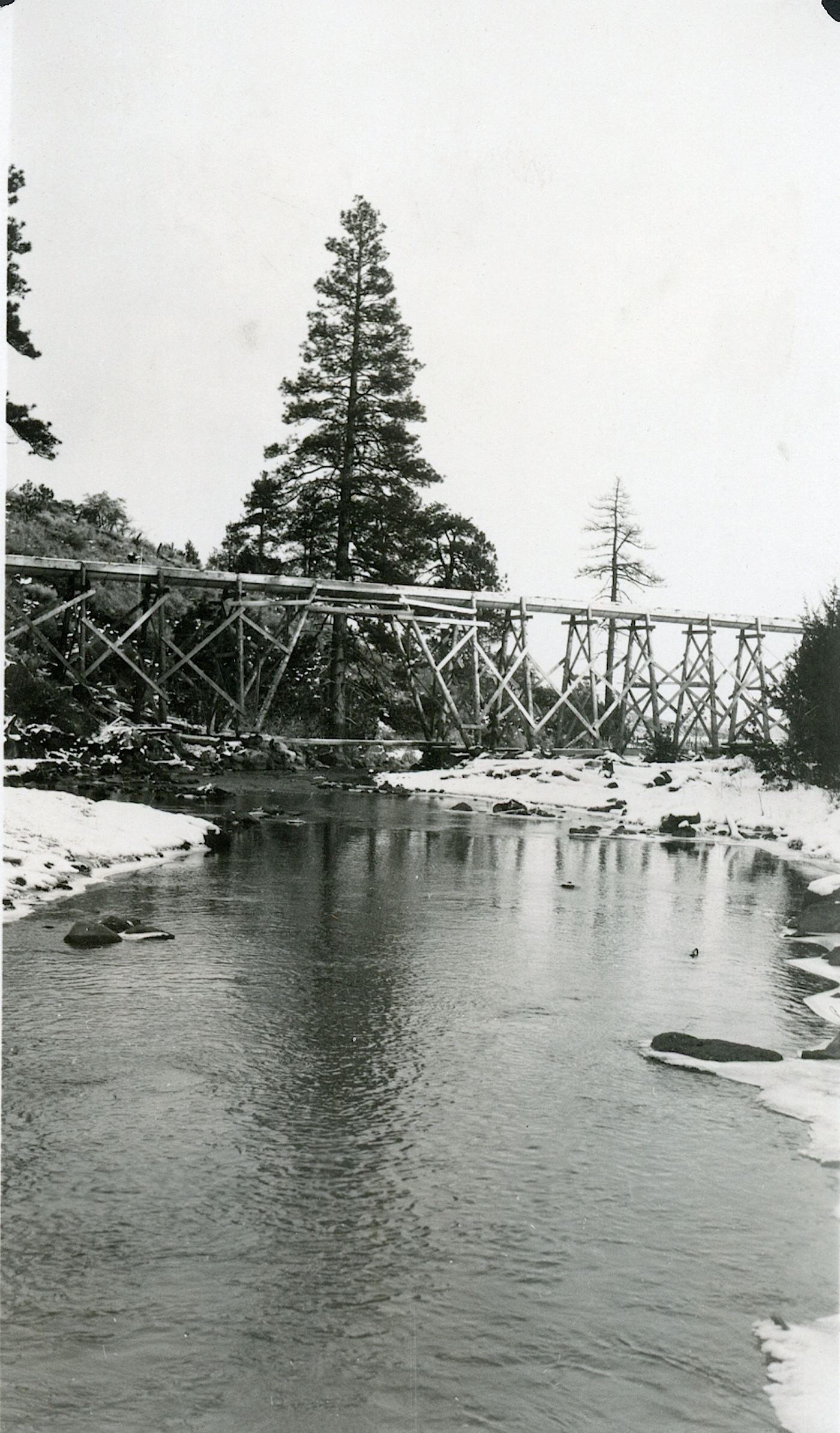
Here is a your Tuesday tidbit. This flume at the upper end of Willow Creek Valley was part of diversion of Willow Creek for the Murrer Ranch to convey the water into an irrigation ditch on the south side of the ranch, which then provides gravitational water flow for the fields.
Tim
I may use a different photograph of the flume for the 2024 calendar. Time will tell.
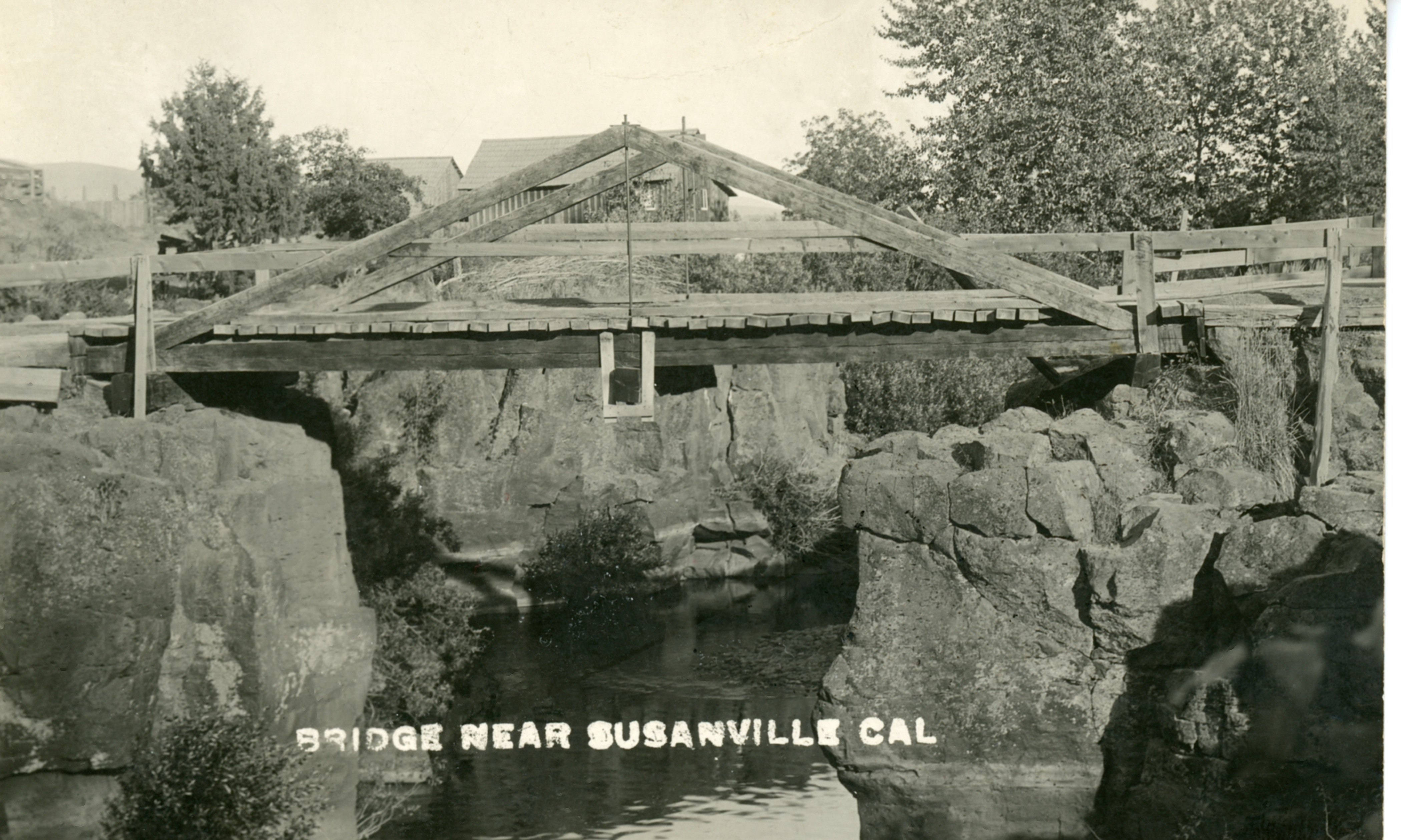
Richmond Road Bridge, circa 1910. Courtesy of Lola L. Tanner
One of the stranger side effects of the national prohibition had to do with a one time fish kill in the Susan River. There was the issue what do with the confiscated alcohol usually referred to as jackass brandy or “dago red” wine. In the summer of 1923, Lassen County Sheriff Carter seized 500 gallons of red wine at Westwood. He did not have ample room to store the evidence. He asked the District Attorney’s. Office for approval to dispose of it, which was granted. Carter instructed his deputy sheriff A.C. Hunsinger to bring a truck to the jail to dispose of the wine and it was poured into the Susan River. However, the wine killed some of the fish in the river. Game Warden W.J. “Spade” Lee was not pleased. He asked the Sheriff to find an alternative way to dispose of confiscated wine in the future.
From the 1890s through the 1920s, there was a colony movement in the American West. As readers may recall Standish was a planned utopian colony based on the beliefs of Myles Standish. When Litchfield came to being in 1913, the promoters took a much more subtle approach with its Litchfield Acres.
The next proposed colony, one comprised of Scandinavians to be located on the east shore of Honey Lake, south of Amedee. This was in 1915, Rosendal Minster was the promoter, He even named the settlement after him—Rosendale. Minster had a lease/option to purchase the lands and the pumping plant of the Standish Water Company. He then formed the Farmer’s Land Company to operate the holdings.. The properties were split into 40-acre tracts with a price range of $45 to $65 per acre. He was able to attract a handful of settlers. While Minster vigorously promoted the project, but due to debts he quickly accrued, he abandoned it the following year.
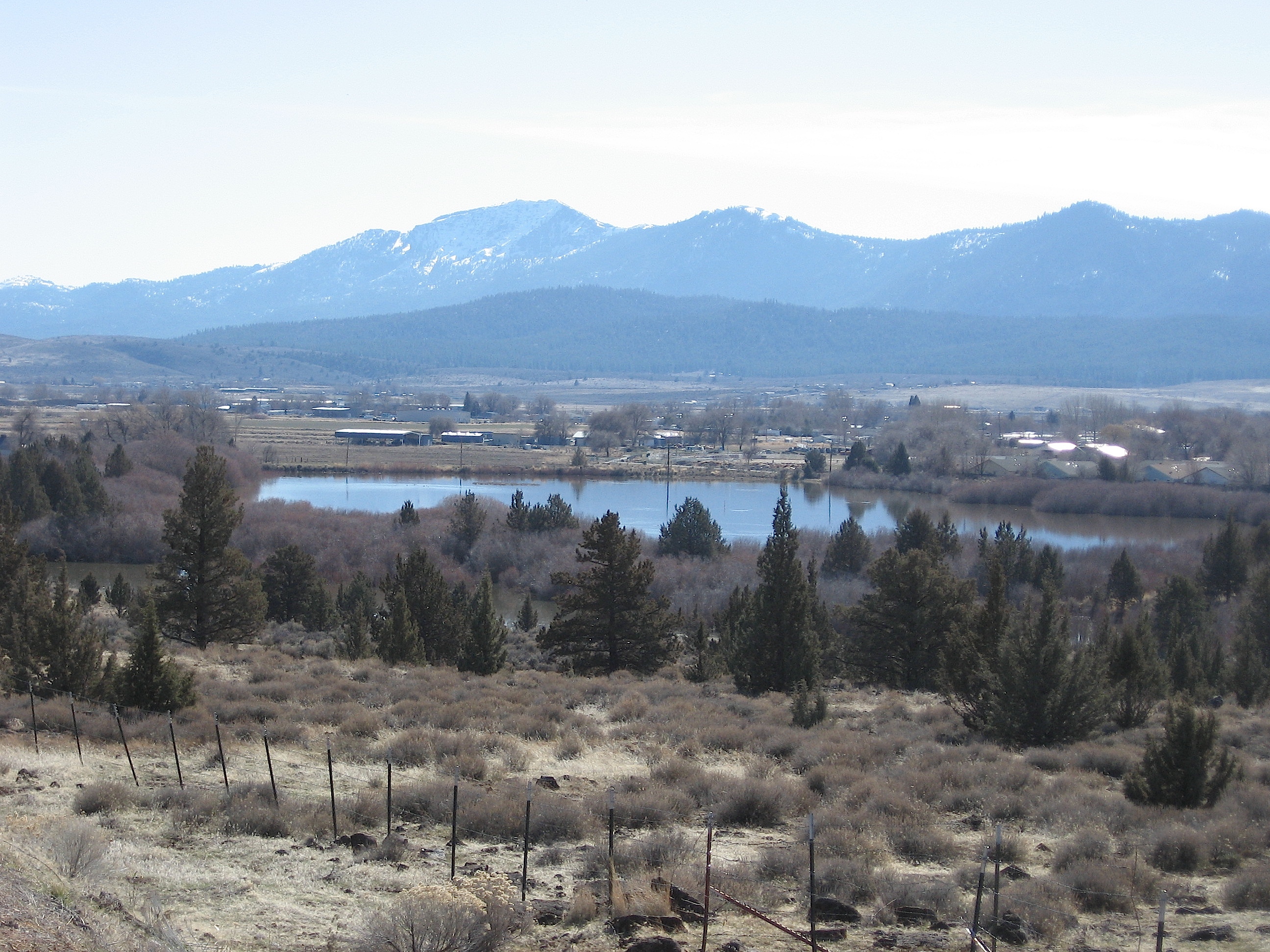
Barry Reservoir from Skyline Drive, February 13, 2016.
First of all, my apologies for last Saturday’s very incomplete post on ice skating on Barry Reservoir, just north of Susanville. In the 1960s and early 1970s it was popular for ice skating. I had started work on an article last summer, then it was side lined. When December arrived I still needed to do more research. However, Mother Nature thought I should be a shut in, providing lots of snow, some rain and cold temperatures to freeze everything solid, so there went my mobility. January was a repeat of December, so it has not been option for me to get out and about to do research. I am just waiting for the spring thaw, so I can resume research, as I have several other posts drafted, but still need to do some follow up research.
In a perfect world, if everything worked accordingly you normally receive your daily notification which includes a photograph and a few lines of the beginning of the post sometime between midnight and one a.m. One day it works and then for a few days it does not. On those days, I have to manually send a message with a link. Hope to get it resolved, which there are night owls who read the daily posts in the wee hours in the morning.
This is an experimental post, no need to reply. Yesterday, I tinkered with the problematic daily notification feature and it worked today. So I am going to see if this goes through as well.