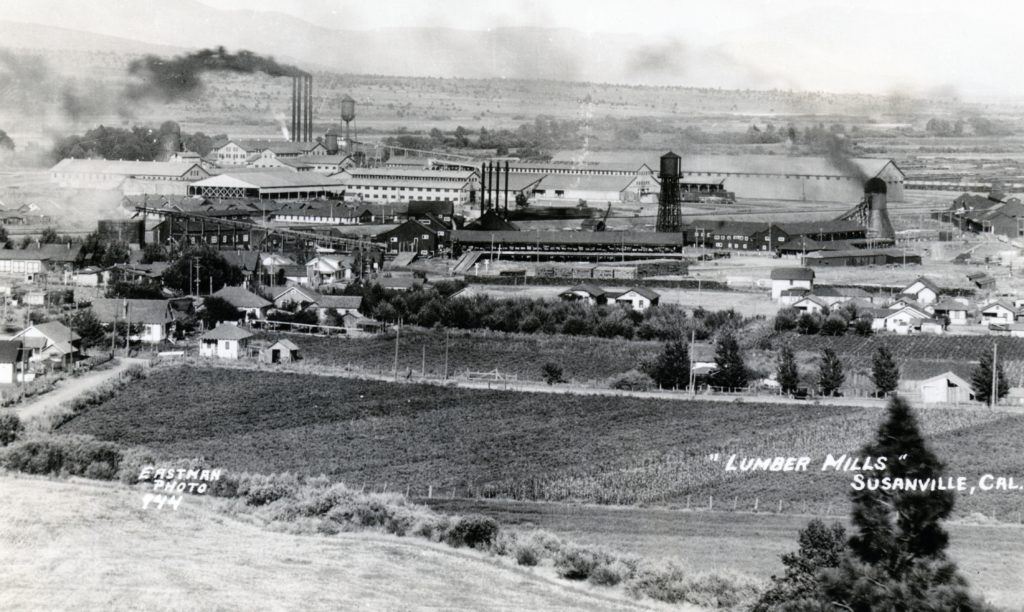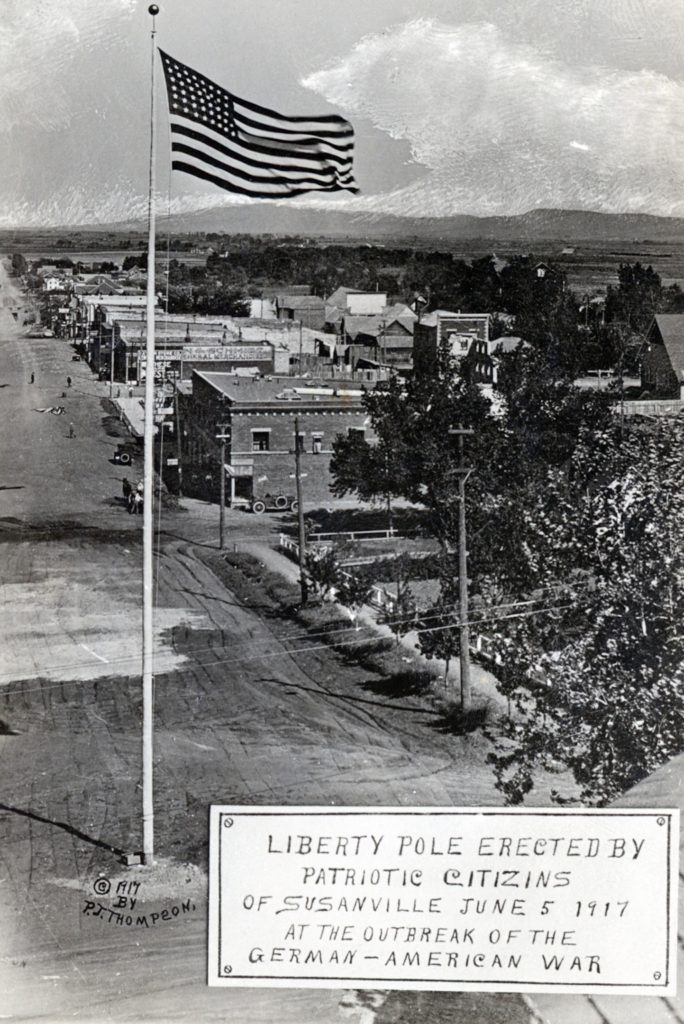
Susanville Propoganda, 1956

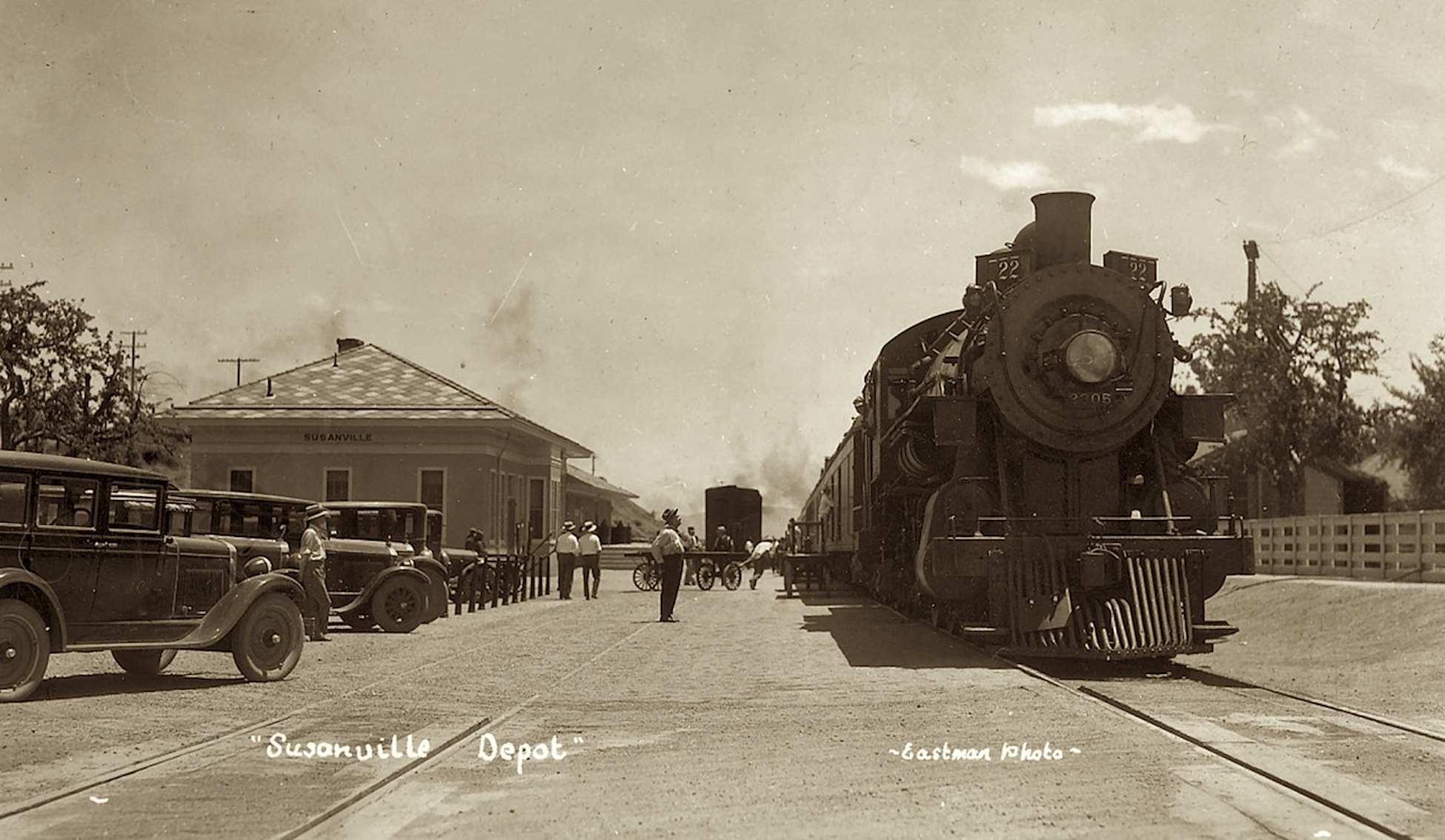
Susanville, circa 1950

The following is an interesting description Susanville that appeared in its 1956 business directory. Thought some might enjoy.

Welcome to Susanville—A City of Uncomplicated Living. A beautiful. modern little town nestling under the bluffs of Inspiration Point, surrounded on three sides by towering snow clad peaks, is bisected by the clear bubbling waters of the Susan River. Located on State Highway 36 at the intersection of U.S. Highway 395, 35 air miles west of the Nevada border and equidistant from the Oregon border and the elbow bend in California.

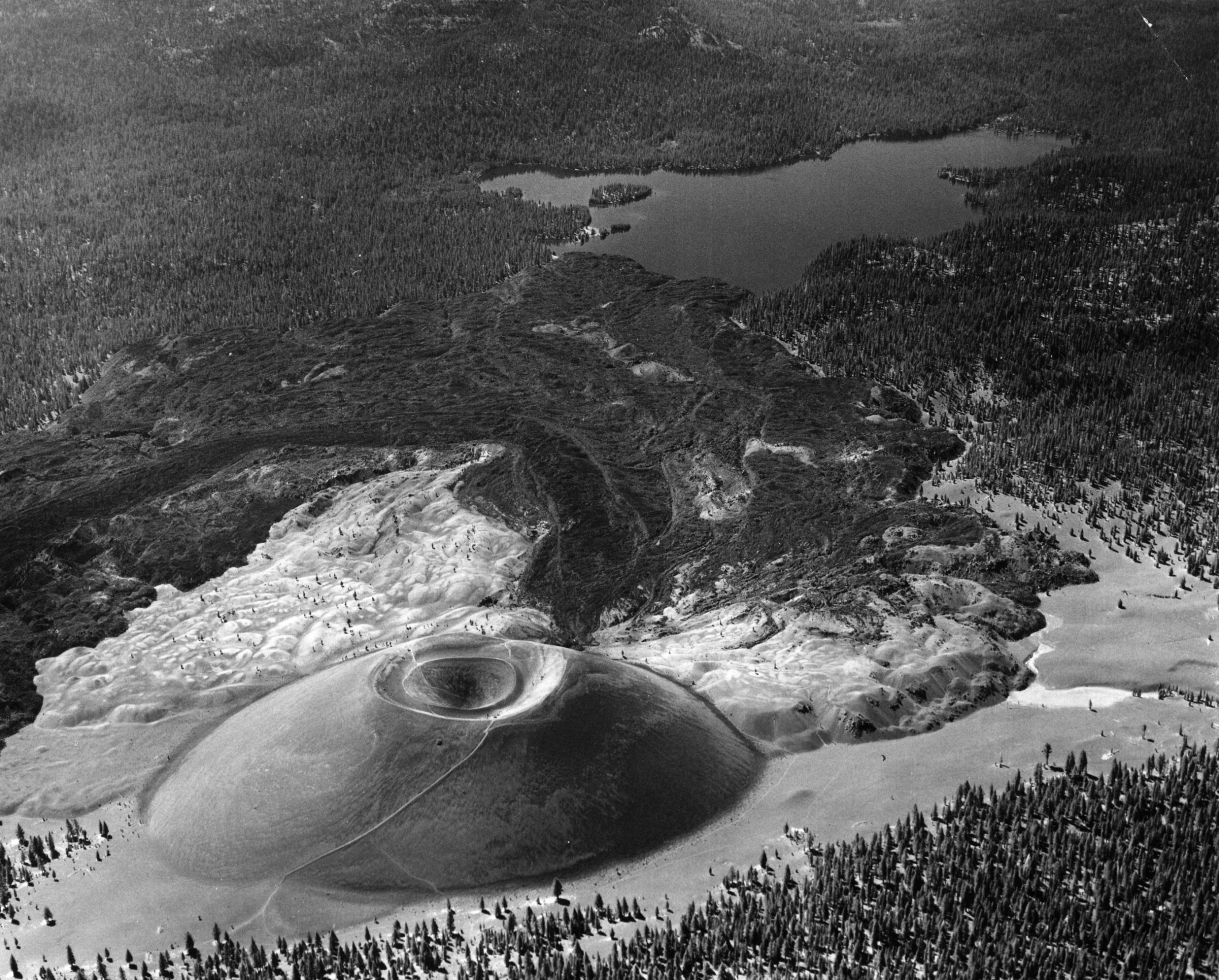
To the north, south and west of the city is the land that traveled Californians love. All the mystery, legend and folk lore of the romantic, the startling and the beautiful lies just over the hill from Susanville. You don’t have to wait to reach Lassen Volcanic National Park, nor the Feather River Canyon; as the fabulous wealth of breath-taking beauty that abounds in the myriad lakes, streams and timber bordered meadows start practically at our city limits.

To the southwest we have Honey Lake with its miles of green plain, beyond which lies the sage brush country Zane Grey loved to describe. We are doubly blessed with the wide open plains, and wide open mountain roads where we can pull off the road of any favored scenic spot.

Join us in this country where the water tastes like water and not like liquid from the test tube of a disgruntled chemist; a land where your nerves get a chance to breathe, and where your only road reads “Watch for Deer on the Highway.” That’s Susanville, California.

Tim

A Big Celebration

Honey Lake pumping plant, 1910–Prentice Holmes

In 1909, the Standish Water Company incorporated with ambitious plans to initially reclaim 4,000 acres of sagebrush lands on the east side of Honey Lake, just south of Amedee. Their water supply—Honey Lake. Not only they intended to construct a pumping plant, they did.

October 4, 1910, a beautiful Lassen County fall day, set the mood for the inauguration of the pumping plant. Early in the morning the crowd began arriving and by noon all parts of Honey Lake Valley represented. The Standish brass band, with their flag-draped wagon, added to the gala appearance of the occasion.

At one o’clock the whistle blew from the engine house of the plant. The crowd of spectators assembled on the banks of the wide canal awaiting the momentous event. The forthcoming water burst from the pipes to fill the canal and send the precious liquid through the parched soil. The historic event signaled a turning point in the reclamation work of Lassen County. The visitors were then invited to inspect the engine house and tour the lands and eleven miles of canals completed to date.

Dedication of the pumping plant, October 4, 1910–Prentice Holmes

In the Company’s first year 1,000 acres had been planted with sugar beets, with a successful harvest. The following year was a success, too. This changed in 1913, in one of those bureaucratic snafus. The Standish Water Company sold water to individuals who were homesteading on federal lands. Once those individuals met the government’s requirements they could acquire the land for a nominal fee. Disputes occurred, usually from neighbors. In this particular instant, Thomas Philbin contested John Ramsey’s request for a final proof for his 160 acre homestead. The United States Government Land Office (GLO) investigated Philbin’s claim, which they dismissed. However, when it was learned Ramsey’s source of water supply was Honey Lake, it raised a concern. The government forced the operation to shut down, until theState of California corrected its vague rules on appropriation of water from  lake with no outlet. The Standish Water Company never recovered and in 1915 sold to Rosendal Minster.

Donate

Historic House on the Market

The Miller House, Humbug Valley

If you want an Queen Anne Victorian house off the grid, the Miller House in Humbug Valley is on the market. For those not familiar, the valley is a bit south and west of Lake Alamanor, and was the site of the former town of Longville, a post is scheduled. In the early 1980s when it was on the market, the asking price was around $50,000. The current sale price is $475,000.

Tim


A Standish Entrepreneur

Standish, 1910–Esther McClelland

By 1900, Standish Colony was not developing the way the founders envisioned.  However, Buntingville merchant, Mike Phillips, from across the valley saw potential at Standish. He closed up shop there and moved to Standish.

Phillips first order of business was to open a store at Standish. Then he became the principal figure to organize the Standish Creamery. That was followed by building the town’s first hotel. When Phillips was at Buntingville he established a newspaper Buntingville Breezes. In 1903, he made an unsuccessful attempt to establish a newspaper at Standish.

In 1904, for reasons unknown, he sold his Standish properties. A.E. & Harriet Torrey bought the hotel. It should be noted that Harriet was Standish first postmaster. The creamery and store was sold to Susanville businessman Charles Emerson. Phillips relocated to Reno Nevada and never heard from again.

Tim

Lassen Willow Creek Water Company

Partial map of Lassen-Willow Creek Water Company’s proposed project. Courtesy of Betty Barry Deal

During the early 1900s, it appeared any attempt to tap Eagle Lake for irrigation were doomed, since previous proposals over water rights etc were being litigated. On the other hand, it did not stop entrepreneurs who dreamed there was incredible wealth to be mde to deliver that water supply.

Enter Lassen Willow Creek Water Company, (LWC) formed in 1905, and its composition of the company were well known locals—Ben Leavitt, W.H. Earl, Charles Emerson, James Elledge and B.F. Gibson. Before they formed, they knew they had a competitor, A.F. Dixon who had filed for tunnel and water rights on December 8, 1904. One of LWC’s obstacles was to obtain a tunnel right-of-way from the Government Land Office to bypass Dixon’s claim. The Company pronounced Eagle Lake as a reservoir and filed for water rights to every tributary and excess flood waters of Susan River. They declared that this water being held in the lake  as a storage reservoir.

This ingenious method of LWC to obtain the necessary right-of-way across public land was not to be resolved so easily. The LWC’s application for the tunnel right-of-way was rejected by the Government Land Office, as Dixon’s application had first priority. The Land Office wrote in its decision, “This office is of the opinion that it was never intended that a natural lake which is already a source of water supply. should be appropriated as a reservoir site.” The Land Office gave the LWC sixty days to appeal their decision.

A month later, the LWC filed a new tunnel right-of-way with the Land Office. They called it the Pine Creek Outlet Tunnel. Ultimately, the LWC decided to bypass the Land Office. They relocated their tunnel site, just north of Dixon. They secured the lands owned by the Cartwright Brothers. By mid-April 1906, shafts were being drilled  and work was being prepared on the tunnel’s entrance and outlet.

It appears LWC was making great progress. In June 1906 the company announced it had signed a contract with the Granite Rock Company to construct the mile-long tunnel. It was estimated to cost $500,000 and everything came to halt since LWC did not have the funds.  LWC’s demise occurred on June 7, 1910 when it sold its records and surveying equipment to E.N. Prouty for $900.

Donate

The Tragic Tale of Jose Nunes

Westwood’s Old Town. Courtesy of Hank Martinez

Once upon a time there was an old saying “boys will be boys.” I am not if that is case today with youngsters growing up in the digital age.

The Red River Lumber Company’s Westwood millpond was a scene of several tragedies. The millpond separated the communities of Old Town and Westwood. Old Town designated as such, for it was where everyone resided while the mill and town of Westwood was being constructed. A foot bridge was constructed across the millpond allowing those from Old Town easy access to Westwood. 

On Friday afternoon, October 1, 1926, 17-year-old Westwood High School student, Jose Nunez, was returning home in Old Town with other school companions. While crossing the footbridge someone in the group suggested they play “Follow the leader.”  Nunez was selected leader. He decided to jump off the footbridge and onto a
log, which rolled and he fell into the water. Nunez was pinned
underneath the logs unable to surface. When he did not immediately
reappear, two of his friends dived into the water, but were unable to
locate him. In the meantime, the call of help was made. Nunez’s body
by this time had been submerged for nearly fifteen minutes. It was
only with the aid of pike poles his body was located and pulled out of
the water. A doctor was present and attempted every means to
resuscitate him, but it was too late.

Tim


A Unique Financing Strategy

Main Street looking east, 1922—Jere Baker

Today, something on a lighter note, though the issue was a serious one. A century ago, the City leaders were a progressive lot. One item they sought was to have paved streets and sidewalks. This was an expensive proposition, and would be paid by a special tax assessment on the property owners. Of course, not every one was thrilled. However, one clever resident suggested that Susanville adopt the City of Redding’s policy of imposing heavy fines on speeders. A speeding ticket in that City cost $10. Since speeding was a problem in Susanville, the collection of hefty fines could easily pay for the sidewalks!

Tim

The Interesting Saga of the Mapes Ranch

Mapes Ranch, circa 1900–Madelyn Mapes Dahlstrom

Its been nearly a half a century since the Mapes family sold their well known ranch located east of Litchfield to the Five Dot Land & Cattle Company. Like the Dodge Ranch on the Madeline Plains, the Mapes Ranch still retains its name, even though no longer owed by the family.

Mapes Ranch
Mapes Ranch, with Shaffer Mountain in the background, 1906. Left to Right: James Riley, John Conlan, James Mapes and Charlie the blacksmith. Courtesy of Madelyn Mapes Dahlstrom

The ranch’s early history is interesting, once owned by the Shaffer Brothers in the 1860s—hence the origin of the name Shaffer Mountain. For a time it was owned by John D. Kelley and Hiram Winchell.  Dissolving their partnership was a bitter dispute that required litigation in the Lassen County Superior Court. On June 30, 1885 the ranch was sold at public auction. It was purchased by Sierra Valley rancher, George W.  Mapes for$11,000. The sale included all the livestock and farming equipment.

George hired his brother, Ira C. Mapes to manage the ranch. George was involved in a variety. of affairs including the Washoe County Bank. When the 1893 financial crisis hit, to protect his interest he transferred the Honey Lake property to Ira. It would take years for the economy to recover and in the meantime Ira passed away. Ira’s family refused to deed back the ranch to George. End of story.

Tim

Westwood Depot Closure

Westwood Depot

For some time I have been corresponding with a former resident, who also happens to be a rail fan. Timing can be everything, and he just happened at the Westwood Depot on the last day it operated. So I am working on this story. However, not to leave anything to chance, if there is any one out there that may know something on this topic, I would like to hear from you.

Tim

An Early Day Dentist Bill

Doctor Deacon’s dentist bill for the Emerson family 1903-04

Believe it or not, over a century ago many professional occupations such as dentist, doctors and lawyers struggled financially. While compiling the history of the northern California operations of Fruit Growers Supply Company, I met Tom Gilfoy who illustrated that aspect, In 1950-51, Tom attended Lassen Junior College. He would spend the next two summers working in woods for Fruit Growers Supply Company. He said he made more money during those summers, than he did his first few years as an attorney.

Anyhow, when I had request for information on the Emerson Ditch, I knew it would require sorting through the Emerson files in my archive. While I did locate information on the ditch, I found an assortment of interesting documents.

Dr. A.P. Deacon was a Susanville dentist in the early 1900s. His office was located on the first floor of the Lassen Street side in the Emerson Hotel. Like his fellow predecessor, Dr.J.G. Leonard, whose home would later become the Elks Lodge struggled with patients for payment of services rendered. This had a ripple effect wherein Deacon fell behind on his rent payments with C.E. Emerson. In 1904, he moved his practice to Willows, California and the prospects there were not any better. Unable to make a payment to Emerson, on August 31, 1905, Deacon wrote this letter;

”Friend Charley – Tomorrow is the date that the first of my notes [promissory] is due, but I am very sorry to say that I am unable to pay it at present. I will, however, send you whatever amount I can spare each month, until I am out of your debt. Thank you very much for your opinion of me, if some of the people up there would make an effort to pay me that I do to pay my bills, we would all get along much better. I have the highest regard for Dr. Dozier as a man could be, of course he had his faults, but then none of us are perfect, and I sincerely hope that he has cut out the booze and his former type of companions, and is doing well. Everything is quiet here, but the prospects are good. “

Support

Exploring Lassen County's Past