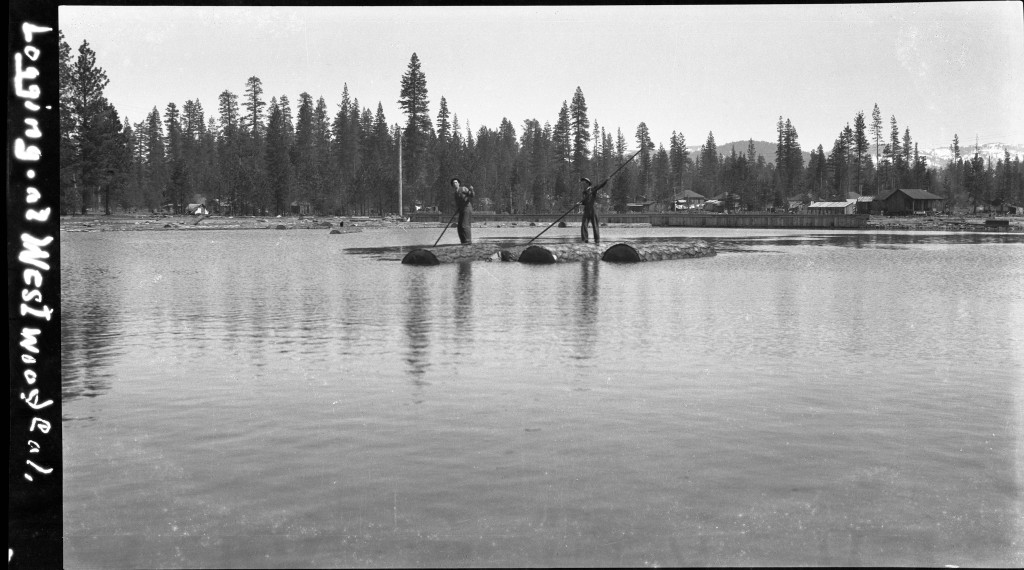
Millponds at lumber mills are a relic of the past. Those who have recollections, especially if living nearby can attest during the summer months of the odiferous stench from them. Continue reading Red River’s Massive Millpond
Millponds at lumber mills are a relic of the past. Those who have recollections, especially if living nearby can attest during the summer months of the odiferous stench from them. Continue reading Red River’s Massive Millpond
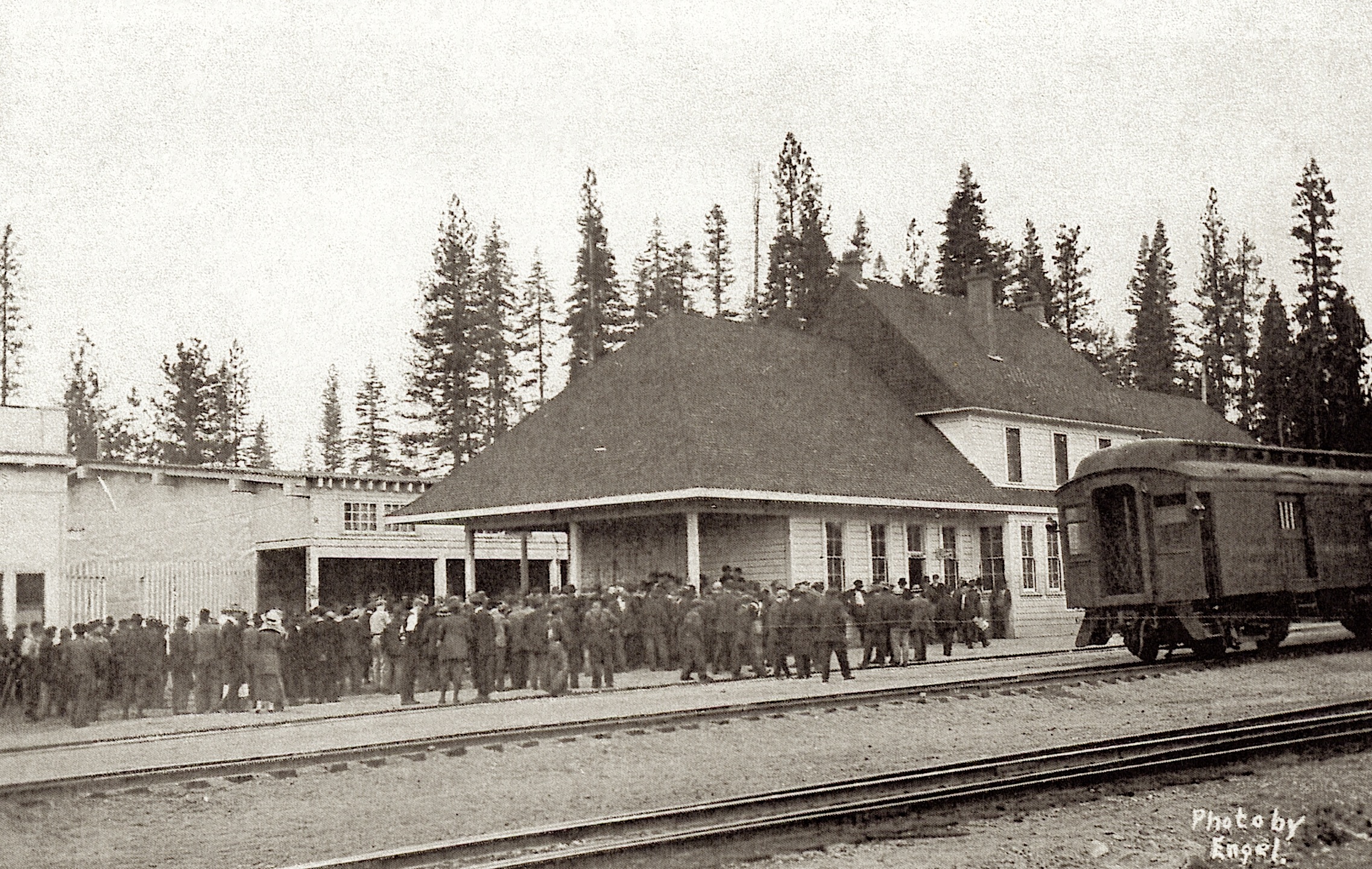
In the summer of 1955, Fruit Growers Supply Company announced it would close their mill at Westwood. Another important event happened that year when in December the region experienced severe flooding, causing tremendous damage to the railroad tracks between Susanville and Westwood. The Southern Pacific deemed it too costly to make the repairs to that section of the railroad with the pending mill closure.
However, with all this bad news, Westwood Depot had some salvation. It should be noted, the depot was utilized by the Western Pacific on its Highline route between Keddie and Klamath Falls. Oregon. Thus, the Westwood Depot remained opened, how long was any one’s guess.
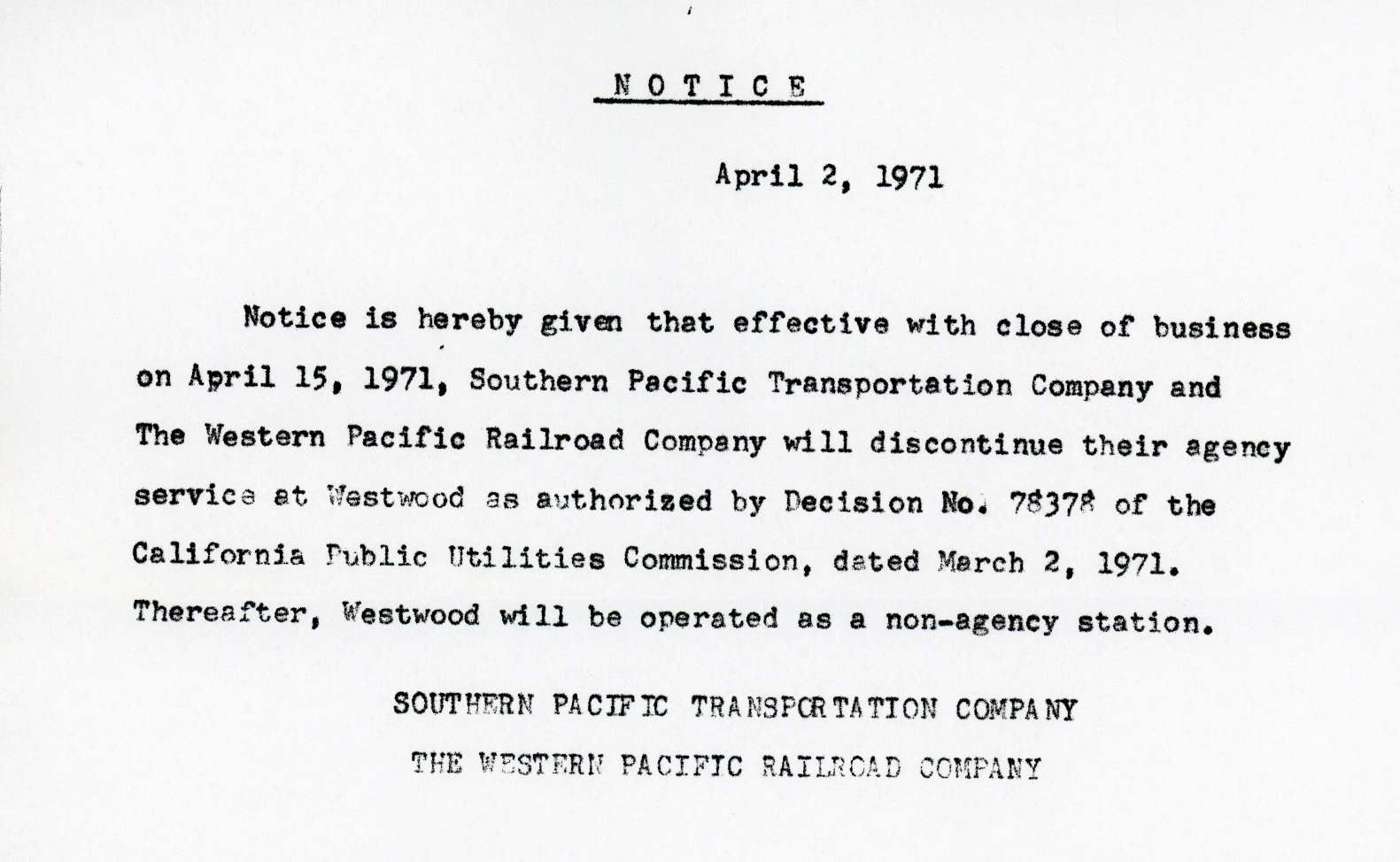
In the spring of 1971, it was announced that the Westwood Depot would close on April 15, 1971. Just by happenstance, two Lassen College students, Roy Lopez and David Martin, paid a visit to the depot late that afternoon of the final day. One of the duo’s first encounter was to witness the Southern Pacific’s trainmaster from Redding to remove the station’s clock. The remainder of time was spent visiting with the Depot’s agent, J.C. Hoxie. When Hoxie escorted them out, the door was locked for good from the public.
On a follow up, the Southern Pacific transferred Hoxie to Wendel. The depot stood vacant for several years and was finally dismantled in either 1975 or 1976, as I have conflicting data. If anyone has more information on that event, please let me know, so I can update this post.

By the fall of 1940, the day of reckoning was at hand as to the future of Red River Lumber Company’s Westwood Operation. . A decision had to be made. The responsibility fell on Ted Walker, the General Manager, to provide options for everyone in the family to consider. Some of his suggestions would no doubt seem radical to his grandfather, T.B.Walker, Red River’s founder. Ted wanted to get away from the company town image, and heaven forbid actually spruce up the town by painting the houses. Ted suggested they even allow the opening of the cocktail lounges, so Westwood would look like any other American community.
Clinton Walker agreed to the house-painting program on one condition that there was an appropriate increase in the rents to
offset the cost. In summation, Ted wrote: “In general, I believe we
will be far better off to get away from the idea of a closed, one man
company town as much and as quickly as is practicable. There was, no doubt, merit to the closed town idea at the time operations were
started. It was then practicable, legally, geographically and politically to control mercantile, labor and moral conditions to a substantial degree. None of these things can safely be controlled today. Practically all the benefits of a closed town set-up have been
eliminated by changing times, and all that remains is the unfavorable
reaction and publicity connected with an archaic and obsolete policy
and philosophy. “
Actually, it should be noted, the transformation of the company began in the the mid-1930s in which operations such as the Big Store were leased to concessionaires.
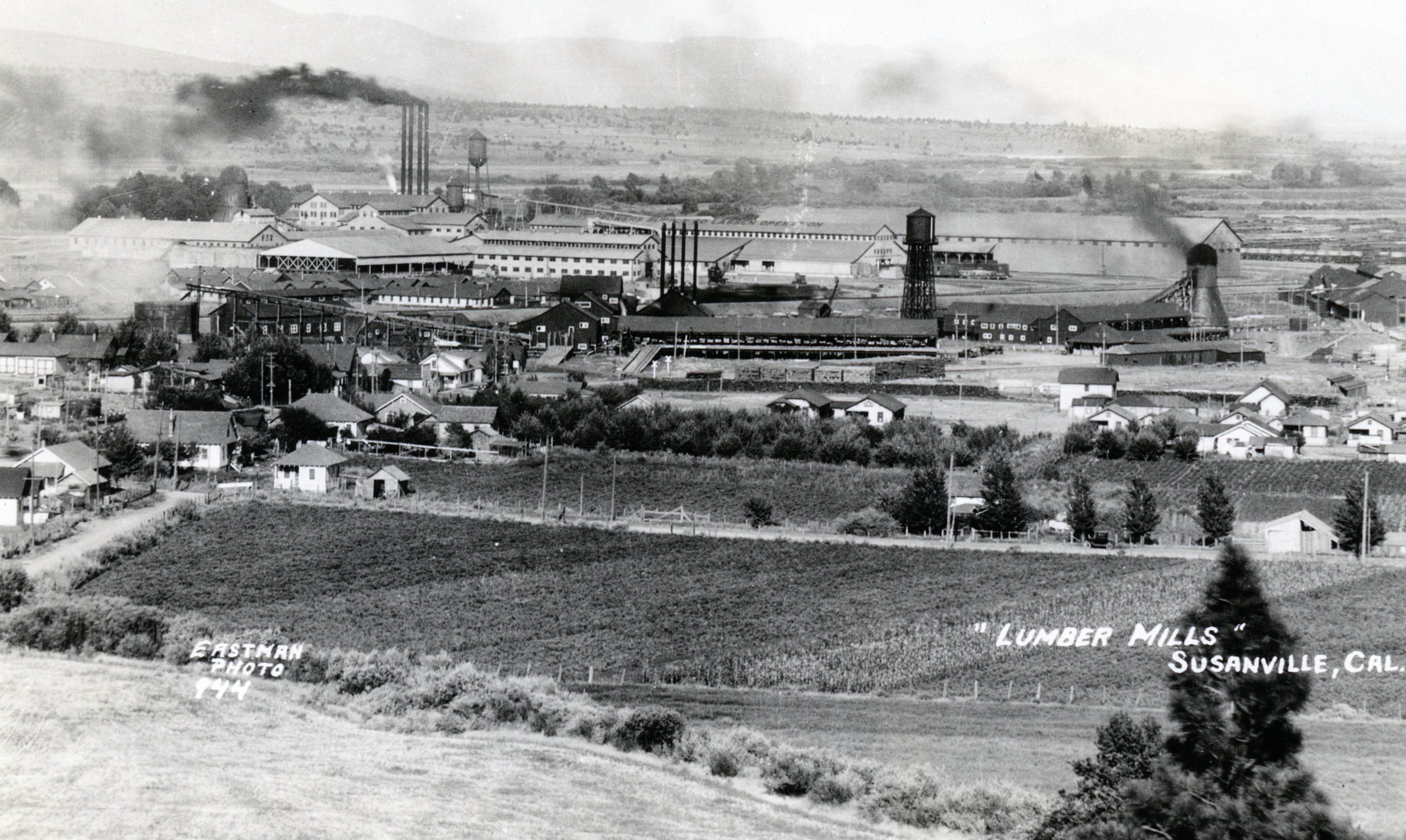
Recently, someone wanted to know when the various large lumber mills closed. The first casualty occurred in 1953, when the last of the decked logs were milled at Lassen Lumber & Box Company. The sawmill was dismantled. However, Fruit Growers who bought Lassen Lumber in 1952, sold thirty acres including the box factory to the T&M Sash & Door Factory, operated by A.I. Lucero and Walter Wirth. The building was destroyed by a fire on April. 3, 1966.
Next on the chopping block was Fruit Growers plant in Westwood, which shut down during 1955/56. Fruit Growers had purchased it from the Red River Lumber Company in 1944. Next, in what was kind of an off shoot of Red River was the Paul Bunyan Lumber Company. The Susanville mill closed in 1967, though the company operated another facility in Anderson, Shasta County. One of the shorter lived operations was the Susanville Lumber Company that was established in 1941. In changed ownership several times and then was reincarnated at Coin Lumber. In 1979, it became Susanville Forest Products, a division of Jeld-Wen Corporation. They closed the mill in 1993.
Lastly, was Sierra Pacific Industries. They acquired the mill in 1963 from Fruit Growers Supply Company. Sierra Pacific closed its Susanville mill on May 3, 2004, thus marking an end of era, of a once predominant industry in Lassen County.
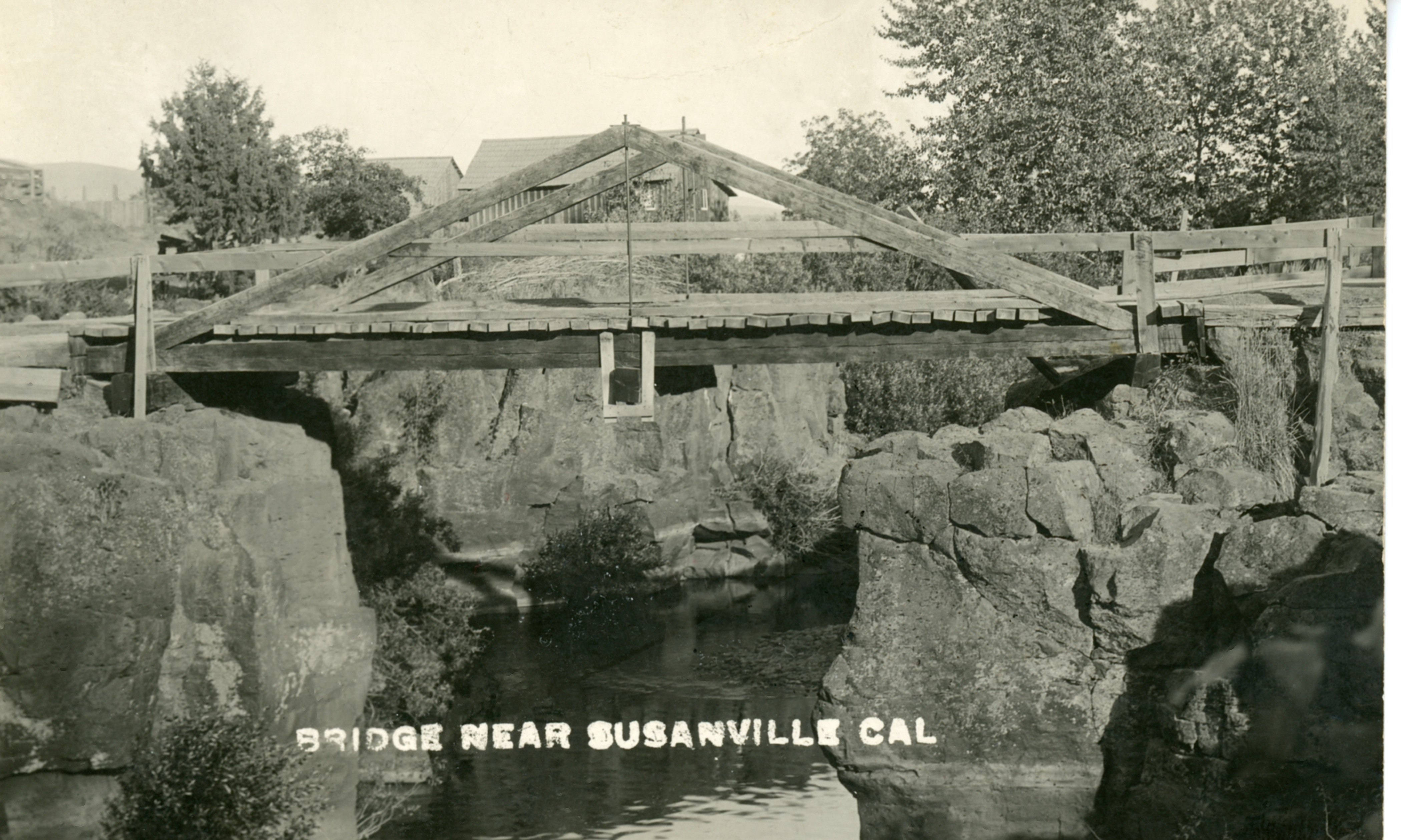
One of the stranger side effects of the national prohibition had to do with a one time fish kill in the Susan River. There was the issue what do with the confiscated alcohol usually referred to as jackass brandy or “dago red” wine. In the summer of 1923, Lassen County Sheriff Carter seized 500 gallons of red wine at Westwood. He did not have ample room to store the evidence. He asked the District Attorney’s. Office for approval to dispose of it, which was granted. Carter instructed his deputy sheriff A.C. Hunsinger to bring a truck to the jail to dispose of the wine and it was poured into the Susan River. However, the wine killed some of the fish in the river. Game Warden W.J. “Spade” Lee was not pleased. He asked the Sheriff to find an alternative way to dispose of confiscated wine in the future.
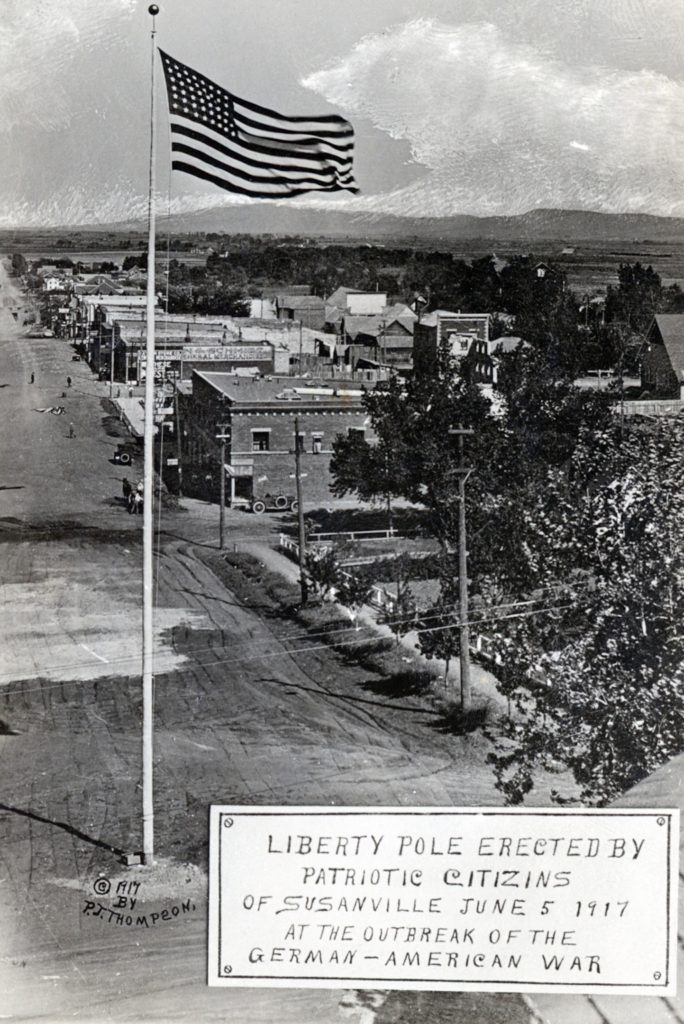
On Sunday, May 6, 1917 a Loyalty Day at Westwood was held. One of the features was a large American Flag was hoisted on top of the box factory. It was a prelude of the United States entry into World War I. As a number of Susanville residents were attendance at the Westwood event, they decided to move forward with their own “Liberty Pole.”
On Tuesday, June 5, 1917, a sixty-foot tall flag poll had already been placed at the west end of Susanville’s Main Street. It was time for a flag raising. It was low key affair—with the blare of a bugle and some lusty cheers when Old Glory was raised.
It should be noted, since that time, there has always been a flag pole at that location.
Tim
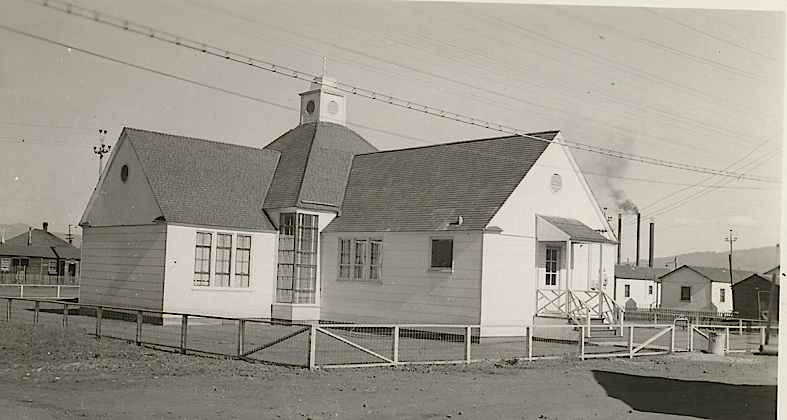
On March 9, 1940 the Church of the Latter Day Saints held groundbreaking ceremonies on corner of Ash and Fifth Streets, in Westwood. This was the last house of worship to be constructed under Red River Lumber Company’s tenure at Westwood.
The church was designed Caldwell and Richards, Los Angeles architects. After World War I, the LDS Church began to implement standardized plans. This particular church was the first to use this particular layout. The $9,000 church was built by volunteer labor and completed in four months.
In 1986, its congregation had grown, wherein they bought property in nearby Clear Creek and built a new church. In 1991, their old our church was acquired by Our Lady of Snows Catholic Church which they converted into a parish hall. However, with their new Lake Almanor church, it will be just a matter of time when this is placed on the market, and only time will dictate its fate.
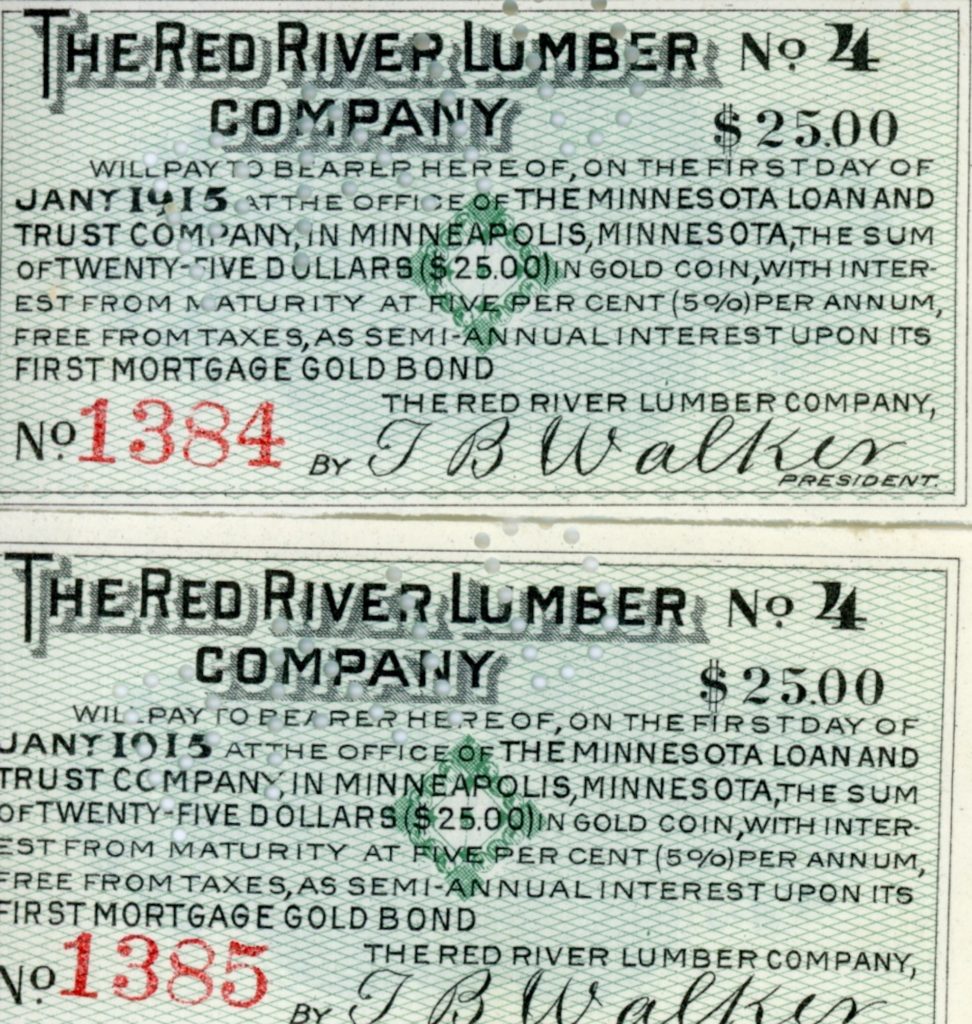
Red River Lumber Company’s California expansion was a very costly endeavor. While its founderT.B. Walker had amassed a great fortune, like many successful businessmen, he was constantly investing his profits in new enterprises, some good and others not. To purchase the California timberland conservative estimates place the cost at $3.7 million. However, not all of this came out of Walker’s pocket. To finance his cause, he enlisted the aid of a New York investor, Doctor John E. Andrus. Together, the two men formed the Waland Lumber Company—its name a derivative combining the names of Walker and Andrus. When Red River made the final decision to build its first California mill at Mountain Meadows, the Waland property was used as a collateral for bond issuance.
The initial cost to build Westwood was $3,528,300, nearly equal
as to what was spent on timberland acquisition. This only covered the costs incurred in 1913 and 1914, and the town and mill plant were far from being complete.
In 1913, Red River sold two million dollars in bonds to help pay for Westwood. The bonds were secured with a mortgage on 90,000 acres of Waland timber in Tehama and Shasta counties and experts placed a value on that timber at $6,100,000. The first payment of $50,000 was due on January 1,1916. The bonds had a life span of fifteen-years, but in 1928 a balloon payment of $950,000 was due! That obligation that would not be met, that was one of the dominoes of the downfall of Red River.

Once upon a time there was an old saying “boys will be boys.” I am not if that is case today with youngsters growing up in the digital age.
The Red River Lumber Company’s Westwood millpond was a scene of several tragedies. The millpond separated the communities of Old Town and Westwood. Old Town designated as such, for it was where everyone resided while the mill and town of Westwood was being constructed. A foot bridge was constructed across the millpond allowing those from Old Town easy access to Westwood.
On Friday afternoon, October 1, 1926, 17-year-old Westwood High School student, Jose Nunez, was returning home in Old Town with other school companions. While crossing the footbridge someone in the group suggested they play “Follow the leader.” Nunez was selected leader. He decided to jump off the footbridge and onto a
log, which rolled and he fell into the water. Nunez was pinned
underneath the logs unable to surface. When he did not immediately
reappear, two of his friends dived into the water, but were unable to
locate him. In the meantime, the call of help was made. Nunez’s body
by this time had been submerged for nearly fifteen minutes. It was
only with the aid of pike poles his body was located and pulled out of
the water. A doctor was present and attempted every means to
resuscitate him, but it was too late.
Tim
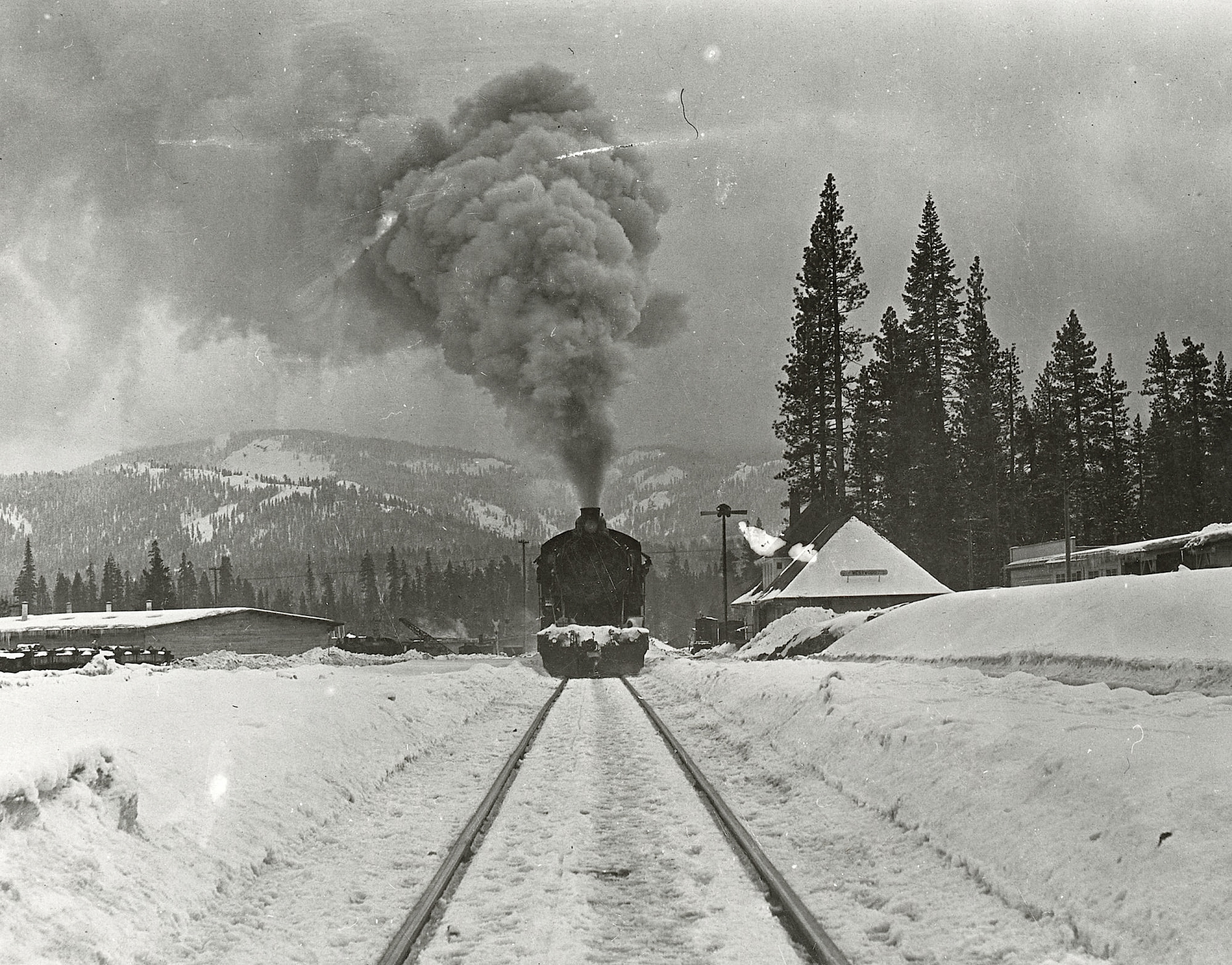
For some time I have been corresponding with a former resident, who also happens to be a rail fan. Timing can be everything, and he just happened at the Westwood Depot on the last day it operated. So I am working on this story. However, not to leave anything to chance, if there is any one out there that may know something on this topic, I would like to hear from you.
Tim