Once upon a time there was an old saying “boys will be boys.” I am not if that is case today with youngsters growing up in the digital age.
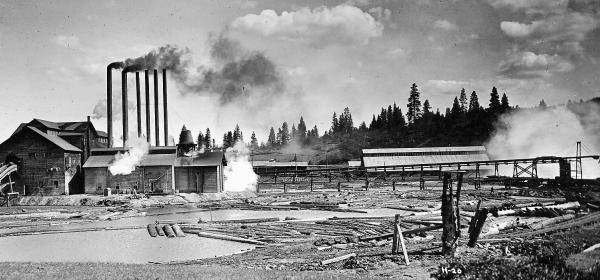
The Red River Lumber Company’s Westwood millpond was a scene of several tragedies. The millpond separated the communities of Old Town and Westwood. Old Town designated as such, for it was where everyone resided while the mill and town of Westwood was being constructed. A foot bridge was constructed across the millpond allowing those from Old Town easy access to Westwood.
On Friday afternoon, October 1, 1926, 17-year-old Westwood High School student, Jose Nunez, was returning home in Old Town with other school companions. While crossing the footbridge someone in the group suggested they play “Follow the leader.” Nunez was selected leader. He decided to jump off the footbridge and onto a
log, which rolled and he fell into the water. Nunez was pinned
underneath the logs unable to surface. When he did not immediately
reappear, two of his friends dived into the water, but were unable to
locate him. In the meantime, the call of help was made. Nunez’s body
by this time had been submerged for nearly fifteen minutes. It was
only with the aid of pike poles his body was located and pulled out of
the water. A doctor was present and attempted every means to
resuscitate him, but it was too late.
For some time I have been corresponding with a former resident, who also happens to be a rail fan. Timing can be everything, and he just happened at the Westwood Depot on the last day it operated. So I am working on this story. However, not to leave anything to chance, if there is any one out there that may know something on this topic, I would like to hear from you.
One of things the Red River Lumber Company did not like about California was its politics. After the company established Westwood, it initially took a neutral stance to politics. That would change over time.
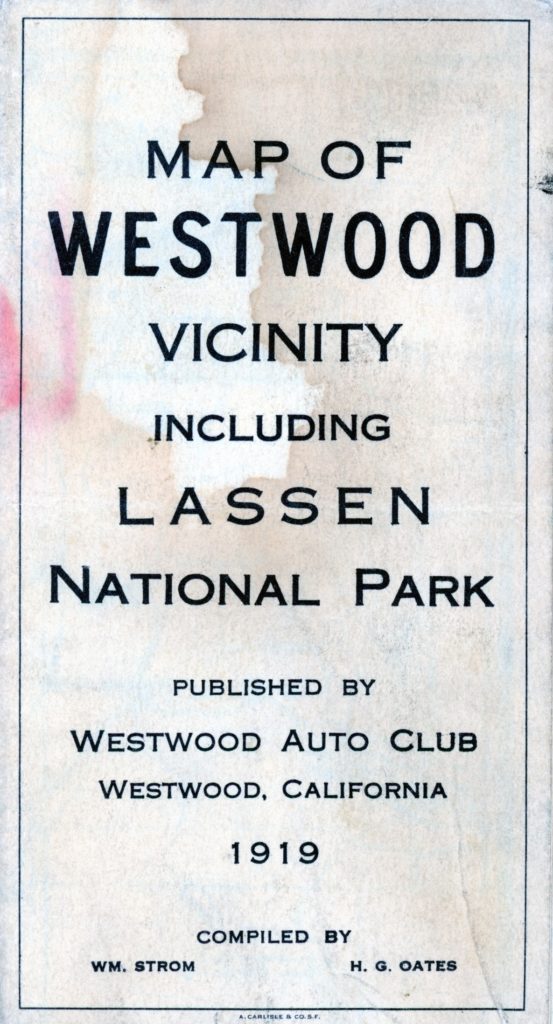
The Westwood Auto Club served as a de facto chamber of commerce for Red River. Since 1916, Californians voted on several bond measures to build a state highway system. By 1926 those funds had been exhausted and to the dismay of the residents of Northern California the majority of bond revenue was spent building highways in Southern California. In June a movement was on hand to place on the ballot a one cent per gallon gasoline tax to be used for highway construction. The Westwood Auto jumped on the bandwagon and led a vigorous petition drive to obtain signatures to place the matter on the ballot. It was widely supported and by the end of July enough signatures had been obtained to place the measure on the ballot, to be known as Proposition 4.
To date nearly $100 million had been spent in the last ten years for highway construction. It was estimated an addition $123 million was needed to complete the state highway system. Southern California had an initiative also on the ballot—Proposition 8. This was an effort to grab a major portion of road funds for the next twelve years. It turned into a North/South divide issue. Proposition 4 proponents worked hard and were successful. In Lassen County nearly 90% of the voters approved it.
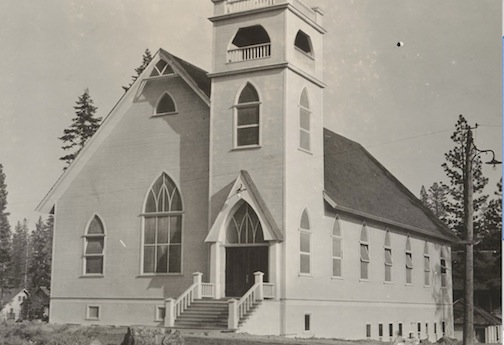
Red River Lumber Company’s town of Westwood was fairly well planned, but all the facilities built between 1912-14, a house of worship was not included. This was extremely odd when factoring in that T.B. Walker, founder of Red River was a devout member of the Methodist Church.
The spiritual needs, however, was not completely ignored. In October 1913, the Rev. Robert G. Green, a Methodist minister at Akeley, Minnesota, where Red River operated mill, was recruited to come to Westwood to oversee the social welfare of the community. Green found it to be challenge as to where to hold non-denominational services. Westwood’s first multi-purpose facility
was the Opera House, and it was there where Green delivered his Sunday sermons. One of the problems holding services in the Opera House was that Green had to compete with other parties who wanted to use the building, since it was the only facility dedicated to public gatherings. Green had been informed a church would be built after the Opera House was completed, but that did not happen.
By early 1917, the pressure was on for a church to be built. A committee had organized to solicit donations. They had plans for a building, not only for its seating capacity but that it should have a full basement to provide for a library, kitchen/dining rooms, and other rooms for sociable functions such as Y.M.C.A. meetings. After considerable debate it was determined that ideally the church should seat 600 churchgoers. Once the committee agreed to the building’s size, they were able to calculate the cost. They estimated a price tag of $8,700—with lumber the most expensive item at $4,000. The committee had secured $3,000 in pledges and pressure was placed on Red River on its “stingy” spending for its employees. Red River was also learning the hard way in a critical labor market, that to retain workers and their families concessions had to be made. Red River finally obliged.
In the summer of 1917 the church project moved forward with Red River donating the lumber and labor. The site selected was at 500 Cedar Street, which Rev. Green described as a rock pile strewn with empty beer and whiskey bottles. By November 1917 the new church was completed. Initially, it was a church with no name. Since it would serve the needs of variety denominations it was named The People’s Church. On Sunday May 19, 1918 dedication ceremonies were held with Dr. John Wilson, District Superintendent of the California-Nevada Methodist Conference officiating.
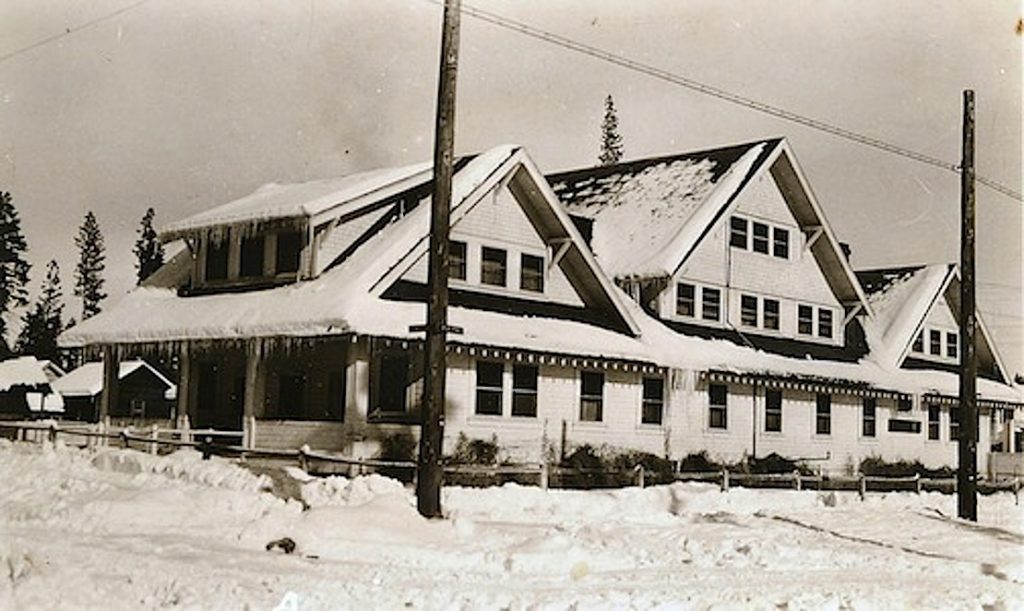
The other day while looking at real estate listing with Lands of America I came across some interesting properties available in Lassen County. One of which is the old Westwood Hospital. There have been a lot of proposals over the years, but nothing has ever materialized. The asking price is $175,000. Anyhow, I thought some might enjoy the agent’s property description.
“Don’t miss your chance to own a piece of history! The Historic Westwood Hospital was built in 1914 by the same Red River Logging Company that brought us the stories of Paul Bunyan and Babe the big blue ox. The Hospital features multiple wings of patient rooms, an elevator, a giant kitchen, multiple waiting rooms, large fireplace, a spacious third story apartment, and so many other fascinating features just waiting to be discovered. The hospital operated clear through the 1970s, and is a treasure trove of rich American and logging history. With possible funding available for the restoration of this once glorious building there is so much potential for just about anything you can imagine here. This incredible diamond in the ruff is located in the small town of Westwood California.”
Via CA-44 E to LassenContinue to Old StationContinue on CA-44 E to Lassen County48Turn right onto CA-36 W/Volcanic Legacy Scenic BywayContinue on Delwood St. Drive to Elm St.
The Westwood Auto Club was the oddest creation of the Red River Lumber Company’s operation at Westwood. Since Westwood was created as a company town one would expect that the community as a whole functioned a bit differently. On the other hand, Red River wanted Westwood to assimilate like the surrounding communities. Enter the Westwood Auto Club. It served as Red River’s de facto chamber of commerce. The Auto Club served as a booster organization of Red River products and civic pride as well.
On February 14, 1916 the auto club held its organizational meeting. Its first goal was to open the road over Fredonyer to Susanville, after all this was prior to the state highway system. On Sunday, April 9, 1916, the Auto Club organized a work party of one
hundred twenty-five to open Fredonyer, with Red River providing
equipment. A much smaller delegation from Susanville was recruited to work on the snow removal from their side of the mountain. The Susanville team was the first to reach the summit, for they had the added benefit that its side receives more sun exposure. Being of goodwill, the Susanville crowd began snow removal on the Westwood down slope. Once the two groups connected, everyone regrouped to the summit to celebrate their achievement. This became an annual event for the next several years.
Within a few short years the Westwood Auto Club saw its membership swell to nearly five hundred. Due to its size, the club felt they needed a place of their own. Upon due diligent search they found an empty building at 303 Ash Street, which had formerly housed kindergarten classes. On New Years Day 1921, after a complete remodel the club opened its doors to the membership.
The Auto Club was on a roll, and in the spring of 1921, it obtained a
lease from Red River to develop a park and campground at nearby Clear Creek. This was a popular picnic site, and the club maintained the park until the organization folded when Red River sold in 1944.
By the mid-1920s the organization had over 1200 members. Its biggest accomplishment came in 1929-30. The Auto Club lobbied hard with the California Division of Highways for the winter snow removal over Fredonyer.
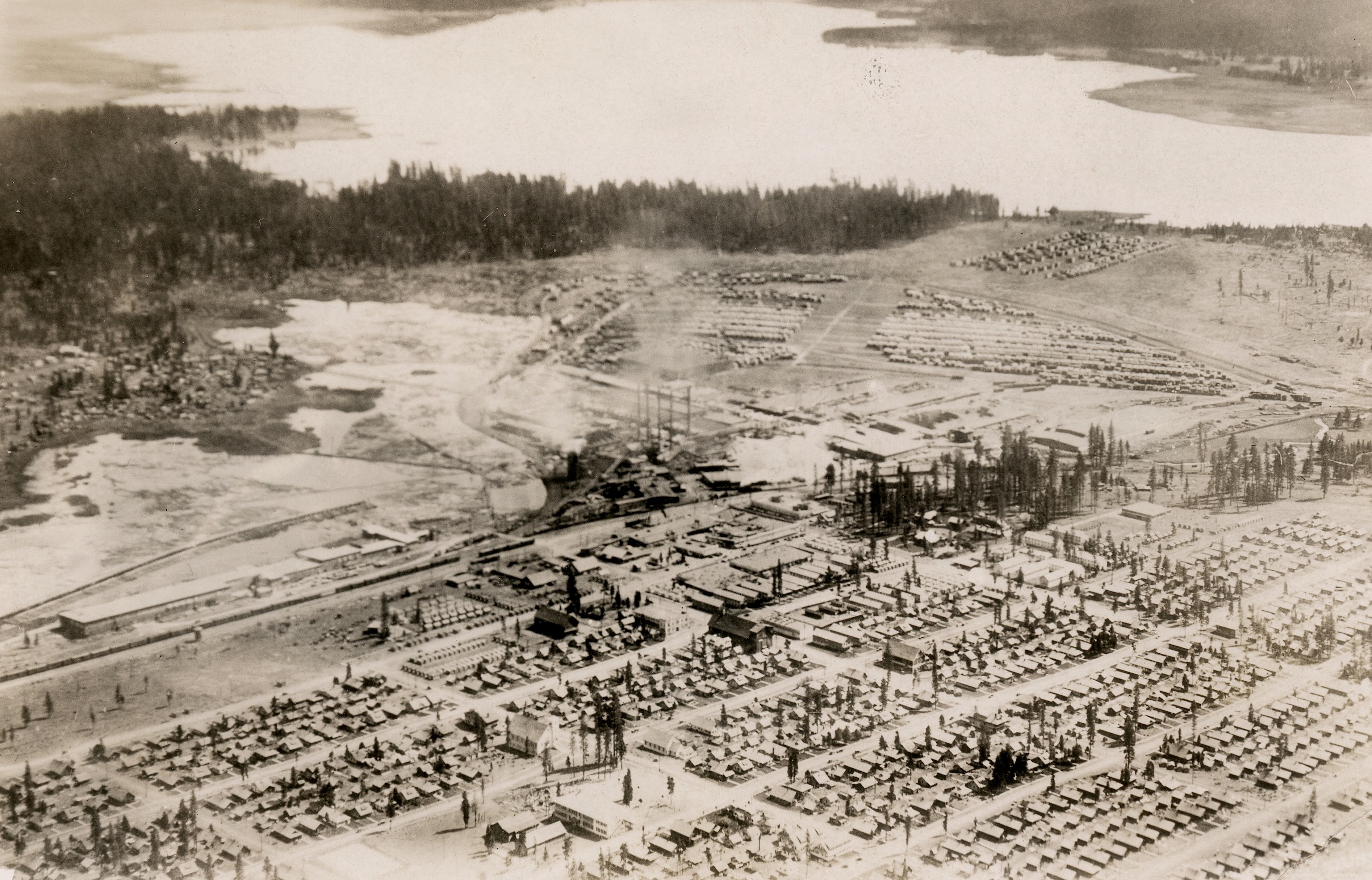
By 1914, Red River Lumber Company’s new company town was open for business. For years there had be lots of speculation while it kept buying vast amounts of timberland in Northern California. The press was eager to pay a visit and write about it. The Chico Record in August 1914 published an interesting article which was titled: “Is Westwood An Experiment? Away up in Lassen County, about twenty miles from Susanville, is the new town of Westwood, a city created within a year. It lies in the center of one of the largest and most valuable tracts of timberland in the United States, a tract of timber which until this year had never been touched by the ax or saw. Westwood is owned solely and exclusively by the Red River Lumber Company, which is but another name for Walker, the multi-millionaire of Minnesota, and his sons.
“Walker came into California a few years ago, and began to buy and
otherwise acquire timberlands in Shasta, Lassen, Butte and Plumas
counties, until it is said that he now owns one million acres of the
finest forests in the world. “With the building of the Southern Pacific railroad from Fernley into Lassen County came the opportunity to work these timber holdings and the Walkers grasped the opportunity. Alongside of a creek in the center of these holdings they established the town of Westwood, and are now completing their mills and factories. The mill is said to have the greatest capacity of any in the West, it being possible to cut one million feet of lumber a day, and at this rate it can be run for more than fifty years without exhausting the timber supply.
“Consequently Westwood is being built to endure. Water has been piped into the place from a point distant ten miles. A complete sewer system is being laid, streets and sidewalks built, streets well lighted, and several hundred residences built.
“Everything in Westwood is owned and controlled by the Walkers. No lots are sold and one cannot be bought. All the houses are rented to the employees, and the Walkers conduct a general merchandise store the equal of which is not found north of San Francisco. It contains everything for human needs from automobiles to a loaf of bread. An immense clubhouse is maintained, for Westwood has no saloons. A large moving picture theater is also conducted by Walkers, which on Sunday night is used as a church. If there is any profit to be made in Westwood, it is made by the Walkers, for no one else can do business there. It is stated, however, by most of the residents that prices are no higher then in other places, and in most instances they are lower.
“It will be interesting to note whether this ‘one-man’ town can be
made a success. It already contains about three thousand people for the Walker’s have on their payrolls about fifteen hundred employees. No one is asked to come to Westwood; there is no chamber of commerce seeking immigration. There are no properties for sale, hence no real estate agents. There is not even a newspaper.
“Doubtless in time there will arise dissatisfaction, for we are so
used to the competitive system in human affairs, that the average one is likely to resent the obligation to work for a man or company and in turn be compelled to live as the man or company directs and turn back most of his wages into channels that will carry them back to their source, even though in doing so a fair share is retained by the wage-earner.”
Since 1907, Fruit Growers Supply Company has had a presence in Northern California. It first began at Hilt in Siskiyou County. In 1919, it expanded to Susanville. In 1944, another expansion of the purchase of Westwood and equally important the Burney Tract in Shasta County. After the closure of Hilt in 1972, Fruit Growers was no longer operating any sawmills, the company owned some 400,000 acres of timberland in Northern California. In 2019, Fruit Growers began to liquidate, the first to go was the Burney Tract which was sold to Sierra Pacific Industries.
The water carnival at the Sunkist Lodge, Eagle Lake, 1921. Courtesy of Ed Standard
The next to go was the Lassen Tract. In 2020, it was also sold Sierra Pacific Industries.
Fruit Growers Mill at Hilt, 1919
Hilt, was of course, Fruit Growers first acquisition and it would be the last sold, which occurred in 2021. It was purchased by a firm known as New Forest based out of Sydney, Australia. Fruit Growers has focused on purchasing timberland in Oregon and Washington.
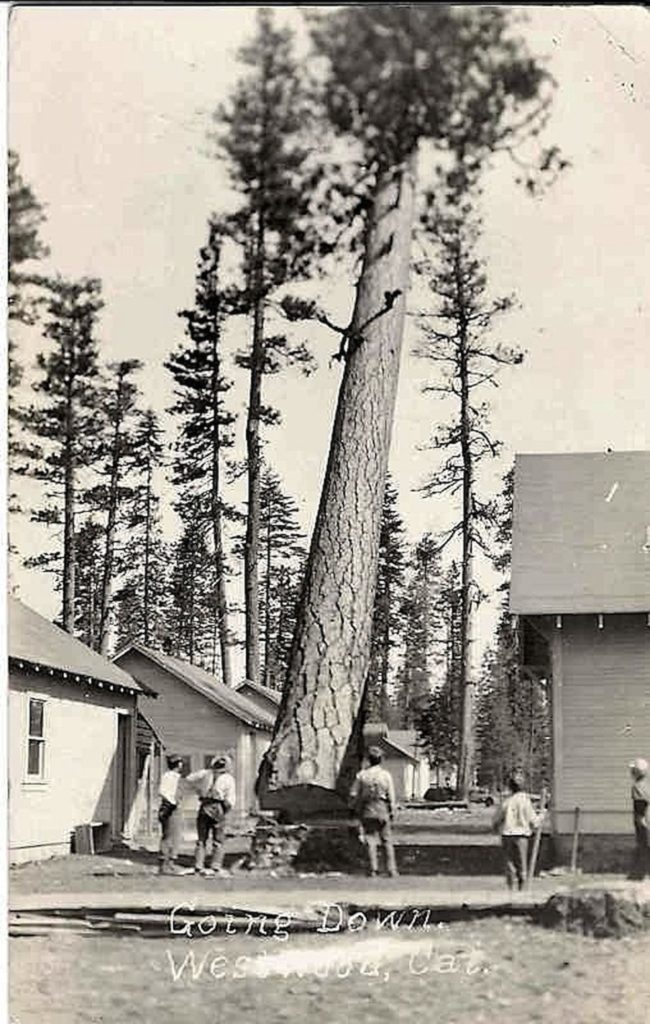
With the initial construction of Westwood in 1913, Fletcher Walker, Red River Lumber Company’s Resident Manager referred to the new community as the “City of Trees”. At that time, an order was issued not cut down any trees than necessary, just enough to clear building sites and streets. As one visitor to Westwood in 1913 noted, “The cottages are being built right among the pine trees, and the only clearance is where the trees have been cut to make way for the streets. The trees are so close together that one can only see a few houses at a time. Hence it is a city among the pines.”
No one was aware that the lofty pines would present a hazard until January 25,1914. The stormy weather began shortly after midnight and from all appearances was no different than any other storm the residents had endured. This all changed shortly before eleven o’clock in the morning. A ferocious windstorm struck the community. The gale force winds, while only lasting about five
minutes, wreaked havoc on Westwood and rattled the nerves of its
inhabitants. Over one hundred lofty pine trees snapped like kindling. One tree crashed on the roof of the cookhouse whose occupants were preparing the noon meal. A ten-room cottage under construction fell victim as well when a tree crashed into it, the force so great it tossed one of the carpenters into a snow bank. Several other cottages were destroyed, but luckily there were no other injuries. At two o’clock in the afternoon the residents gathered en mass at the Opera House to discuss what happened. A committee of three was selected to confer with Red River management to request all standing trees be removed immediately, as they felt threatened by them. So serious was their plea, should the company take no action many would quit and move elsewhere. Red River obliged and next morning removed a number of trees that they deemed posed a hazard.
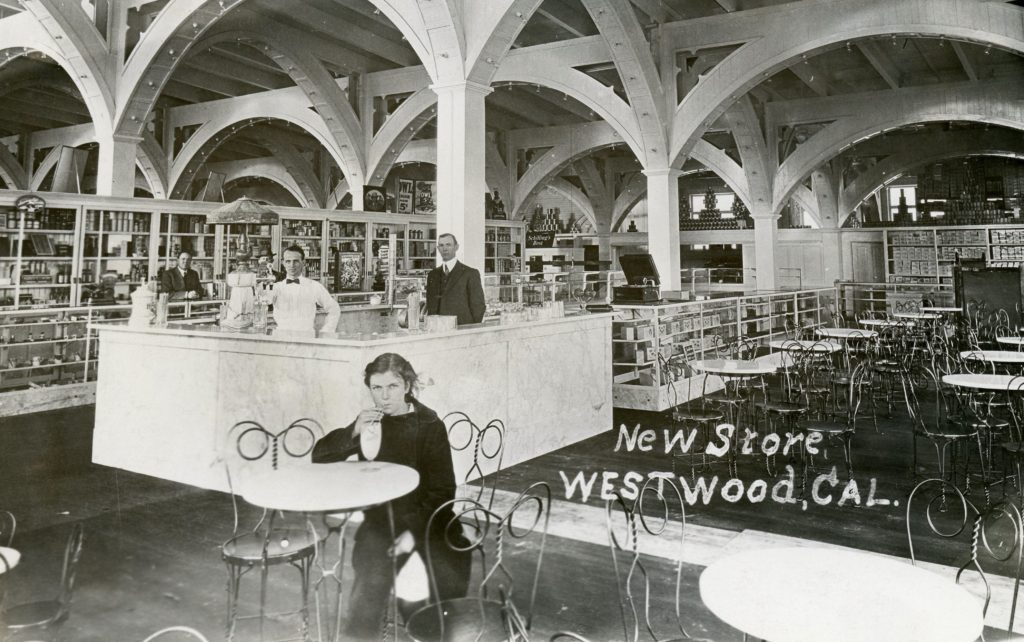
On December 24, 1914 was a major event in Westwood when the town’s Big Store opened for business. The Plumas National provided the following description of the event. :“A complete butcher shop, a drug store, grocery department, men’s furnishings, women’s goods, hardware and shoe departments are all under special heads, each of whom is a specialist in his line. Nineteen men are employed in the store at the present time.”
The soda fountain in the Big Store.
In February 1916, the Big Store got even bigger with another forty-foot addition. The facility could boast 73,125 square feet of retail space, with an additional 8,800 square feet utilized for offices and other purposes. It was the largest department store north of Sacramento.