Tag Archives: Susanville

Piute Logging Railroad – Part II

Flood waters from breached earthen fill trestle, April 1938. Courtesy of Betty B. Deal

Construction of the line was stalled during the early 1930s, while Red River went through its financial reorganization. Finally, in July 1933, construction began at the west end near Hog Flat. A station was established where the Piute line connected with the Southern Pacific, and named Blair, after Kenneth Walker’s wife. At Hog Flat, Red River established logging camp #2. That summer Red River logged eight million board feet of timber and sold it to Fruit Growers. The following year the line was extended further east to Big Springs, and Camp #8 was established.

The year 1935 was a pivotal one for the Piute. Early in the year it was announced Red River would complete the line to Susanville—a distance of twelve miles from its terminus at Worley Ranch to the Fruit Growers plant. Continue reading Piute Logging Railroad – Part II

The Piute Logging Railroad

Map of the line, showing spurs.

The completion of the Western Pacific’s highline in 1931 was not the only railroad development to make news. In the 1930s, Red River’s most unusual railroad logging line, the Piute, came to fruition—so named as it followed Piute Creek in its approach to Susanville.

Red River owned a large swath of timber west and north of Susanville. While they had already logged over its easily accessible timber in Mountain Meadows and Lake Almanor, the Piute line was not intended to service Westwood. The Piute was built to generate much needed revenue to sell timber to other parties, such as Fruit Growers and Lassen Lumber & Box. However, they had a back-up plan; should Red River’s timber sales fall flat, they could mill the timber at Westwood. Continue reading The Piute Logging Railroad

Tuesday Tidbit-Historic Homes For Sale

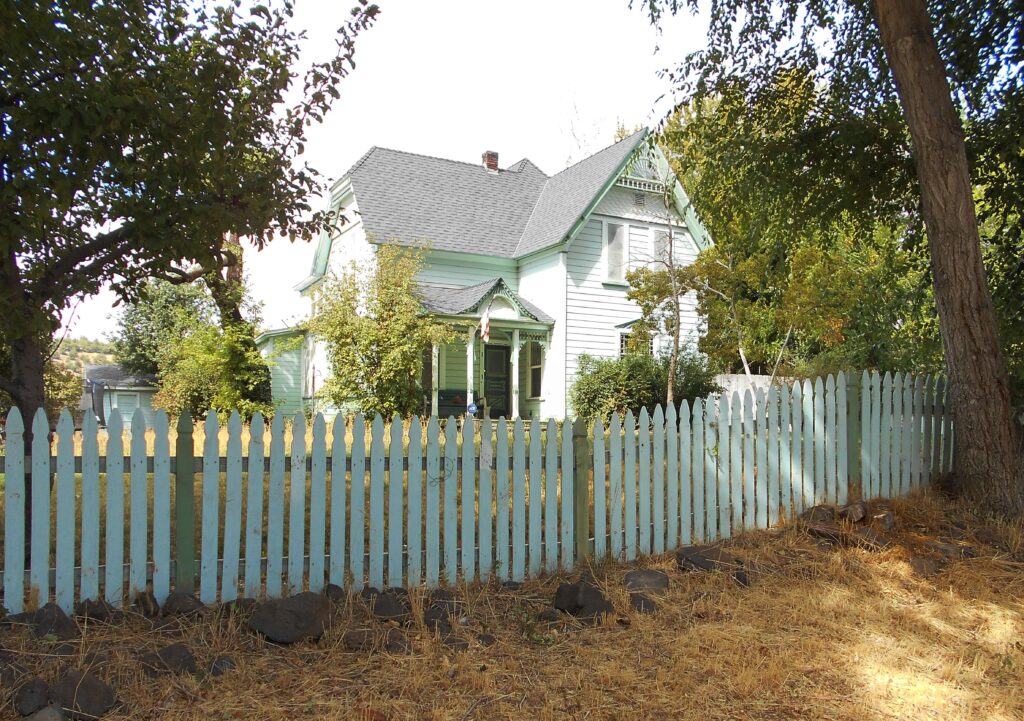
200 S. Roop St., Susanville, July 20, 2016. Courtesy of Annie Henriques Blank

Recently, three historic homes in Susanville are now on the market. There is the original McGowan residence on South Roop Street, picture above. It was built in 1924, for the president of the Lassen Lumber & Box Company.

The Taylor/Compton House, Weatherlow Street—Jere Baker

The Taylor residence on North Weatherlow Street, and subsequently owned Dr.C. Compton is now on the market. A short distance from that property is the original home of Thomas Hill built in 1913.

Tim

A Historic Day for Susanville

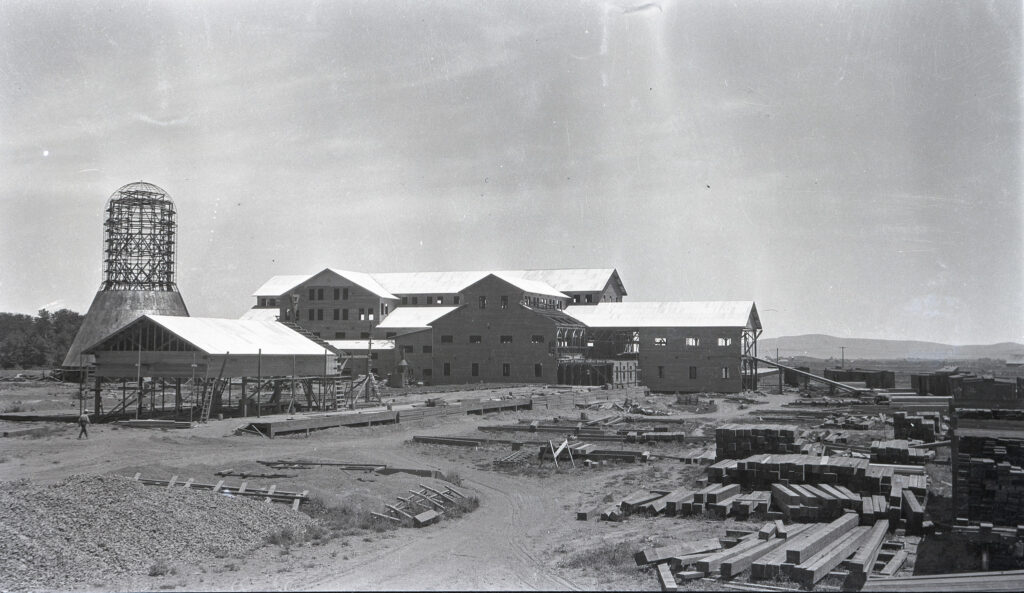
Fruit Growers Susanville plant under construction, 1920–Ed Standard

Saturday, April 16, 1921 was the dedication of Fruit Growers Supply Company’s new mill facility at Susanville. Of course, there was usual amount dignitaries on hand to celebrate the moment and give speeches. Thomas B. Dozier, a Fruit Growers’ attorney served as master of ceremonies. Dozier’s opening statement was simple, “We will supply the boxes from the Snowkist woods for shipment of Sunkist—all from California.”  Dozier informed those assembled that the California Fruit Growers Exchange (renamed Sunkist in 1951) represented 10,500 growers, who produced three-quarters of the citrus in the United States.

Continue reading A Historic Day for Susanville

Susanville’s “Bermuda Triangle”

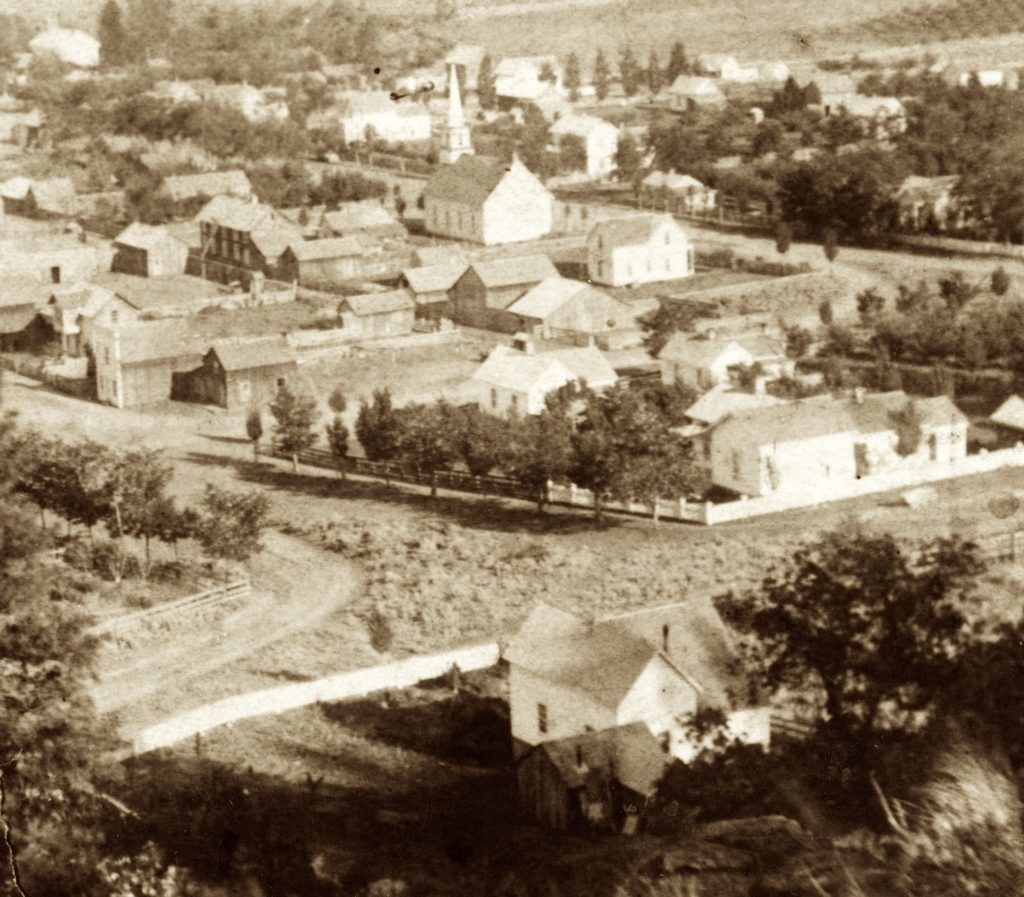
An 1886 view where the triangle has already developed. Courtesy of Bud Lesser

Not quite like the Bermuda Triangle, but it is an interesting piece of real estate, that really belongs to no one. Actually, the owner is the federal government, due to Roop’s carelessness. The Lassen County Assessor does not even recognize its existence of this parcel.

500 Block, Main Street, Susanville, 1911—C.R. Caudle Collection

The property in question, is located at the west end of Susanville’s Main Street, which people are familiar is the triangle piece of property in front of the Elk’s Lodge, with the diverging Pine Streets going in different directions, creating kind  of like  a “fork in the road.” Currently, a community Christmas tree is placed there and in years past various other Christmas displays.

By the 1890s the local newspapers wrote editorials criticizing that it was an ugly patch of unkept property at the head of Main Street.  Relief came in 1902, when the Mountain Echo Band constructed a bandstand there. Four years later, the bandstand had been neglected and received community scorn for it being an eyesore, and was torn down shortly thereafter.

This parcel truly came into existence in 1922 with the construction of Highway 36. For years, the City of Susanville maintained it, by water the mowing the lawn. The Monticola Club would plant flowers along the lawn’s edge.  Today it is a dry patch of scorched earth.

Subscribe!


Sacred Heart Church On The Move

Sacred Heart Church
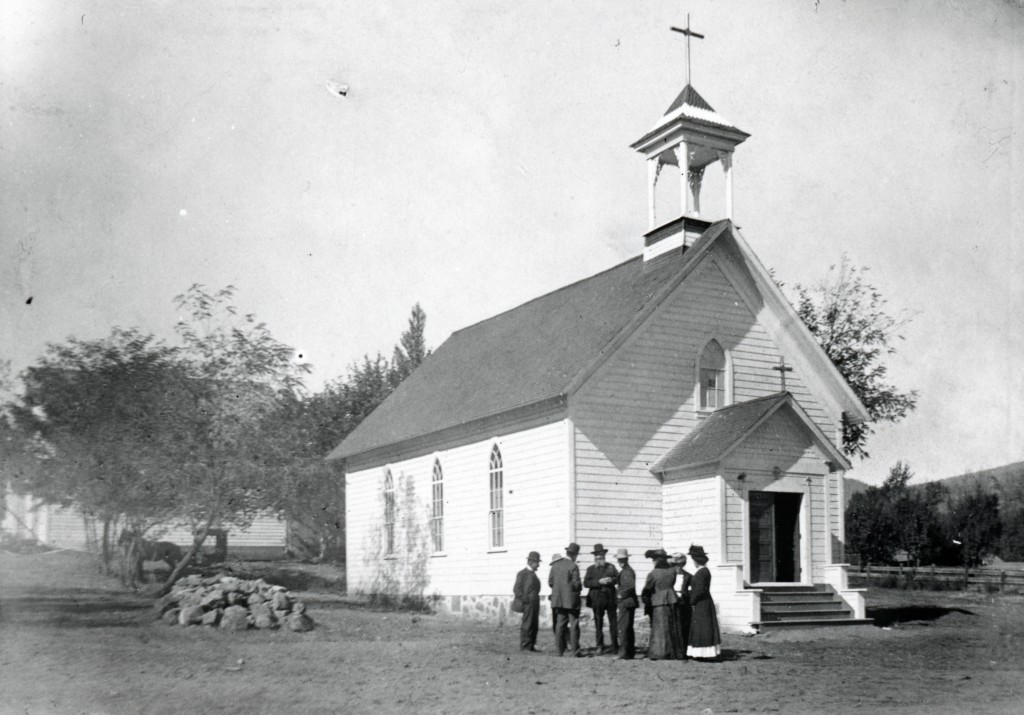
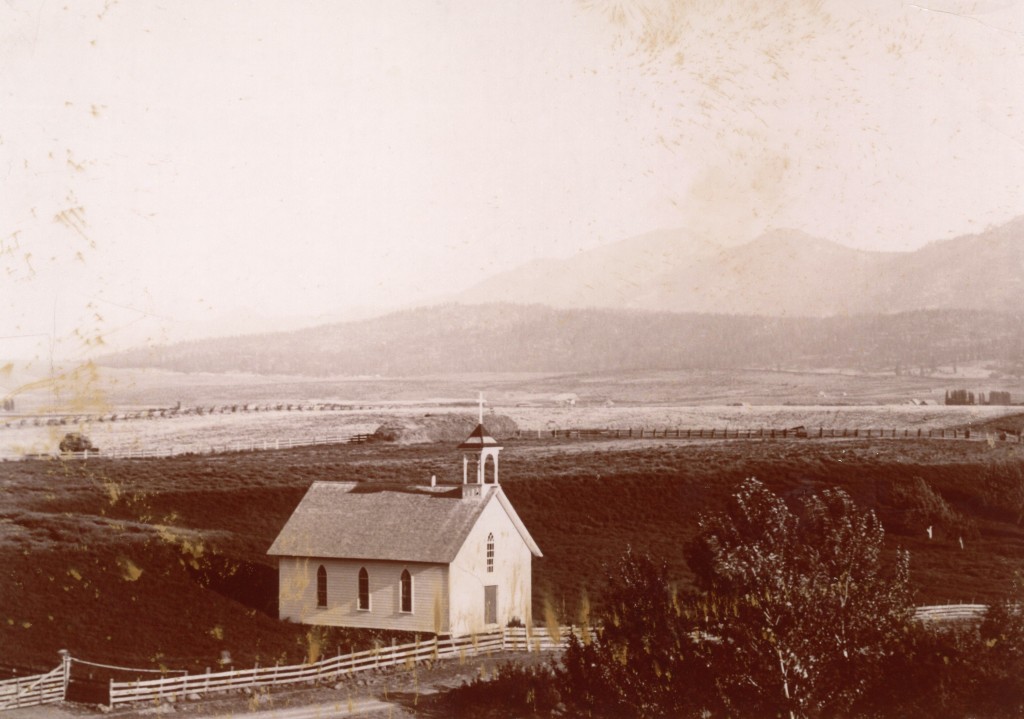
Sacred Heart Church, 1910, at the Union Street location.

In 1908, the Susanville rumor mill circulated that the catholics wanted to build a new church. Thats kind of odd, since the existing Sacred Heart Church had just only been built 1892. In reality, they wanted to move its existing church to a new location from its Richmond Road site. Since that location was somewhat out of the way, and it was prone to vandalism.

Antone Bantley was designated to locate and negotiate the purchase inside the Susanville’s City limits. Bantley found a site on the corner of Nevada and Union Streets. The church purchased it for $325 from the L.C. Stiles Estate.

On May 26, 1909 the Lassen Weekly Mail reported, “The work on moving the Catholic Church is progressing. It will be a week or ten days before it is finally landed on the new site, judging from the progress already made. “ During this era, the church did not have a resident priest and relied on a circuit rider. On October 24, 1909, Father Thomas Horgan celebrated Mass at the new location.

To Support, Please Subscribe 

Susanville’s McDow Street

L.D. McDow Residence. Courtesy of George McDow, Jr.

In 1875, Lafayette D. McDow constructed a house on what would later become of the southwest corner of Main and McDow Streets. McDow came to Lassen County in the 1860s, where he spent much of his time either operating a sawmill or mining on Diamond Mountain.

In 1920, McDow’s son, George and Russell Brownell subdivided property in the eastern portion of Susanville to be known as the Milwood Tract. Of course, McDow took the liberty to name the street after his family. His partner, Brownell did the same, when a street was named after him—Russell Avenue.

On June 28, 1928, the former McDow home was destroyed by fire. At that time, it was occupied by the J.A. Metz family. For Metz, the house was convenient, as he worked as the janitor of the nearby Lincoln School. This particular fire did not go unnoticed. It once again raised the annexation issue, since the outlying areas of Susanville were without fire protection. The battle was lost before it was begun, since opposition mounted with the main factor to become part of the city would raise taxes.It was not until 1947 when that area was annexed into the city.

Support

Lassen’s So Called Mobile Home Culture

Sacred Heart Church
Sacred Heart Church on Richmond Road, 1905. In 1909 it was moved to Union Street.

This post has nothing to do with manufactured homes. This, being Holy Week, my intent was to write the 1909 story of moving Sacred Heart Church to a different location, i.e. making it “mobile.” Numerous structures, locally, and mainly residential were moved from one location to another. This practice to this day, goes on nation wide.

Moving a house from South Lassen Street to. Foss Street, 1976

How it works today. A property owner has an old house, which is in the way of a planned development.  Instead of a paying costs for demolition, offers the house for sale, usually one dollar. Of course, there is a catch. To buy the house at that price, one has to pay the cost to move the structure to a new location.

Happy Easter to my friends, Hannah who lives in a 1920s mobile home and my friend Scott, with his architectural expertise, has to deal with my definition—eye roll please. Not intentional, but it may torment Scott, since I send a occasional message with a photograph of such structures.

Tim

A Short-Lived Knights of Columbus Council

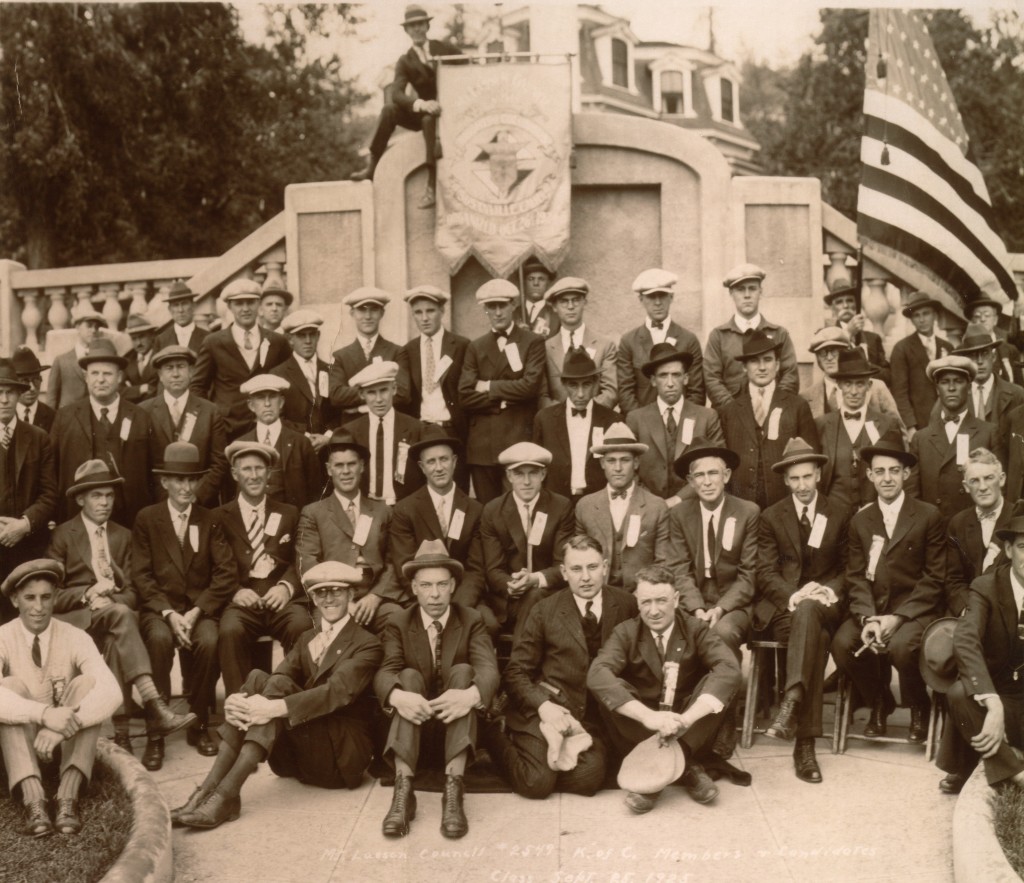
A portion of the local Knights of Columbus assembled at the Elk’s Lodge, 1924. Courtesy of Jean Kern

Any one who has ever been involved  with a organization, whether community oriented or fraternal, knows full well that they have a tendency to have peaks and valleys. However, there times when the organization reaches a low point and never recovers.

This was the case with Mount Lassen Council #2549 of the Knights of Columbus—Susanville’s first catholic organization.  Unfortunately, there is not a lot of records about this particular organization.  Its initial membership was 70, with men recruited from Susanville, Westwood, Quincy and Portola. Delegates from Chico, Los Angeles and Reno were on hand with the formation of Mount Lassen Council #2549 of the Knights of Columbus.  It was instituted on March 26, 1924.  After Mass was celebrated, the members paraded up Main Street from the Sacred Heart Church to the Elks Lodge to have their photograph taken. From there they went to the Knoch Hall were various degrees were conducted, and to organize the new council. The day was topped off with a banquet at the St. Francis Hotel.

Initially meetings were rotated between Susanville and Westwood. However, by 1930 interest in the organization had waned, and on the eve of its tenth anniversary of formation the chapter was dissolved.

Support

Tuesday Tidbit – T&A Update

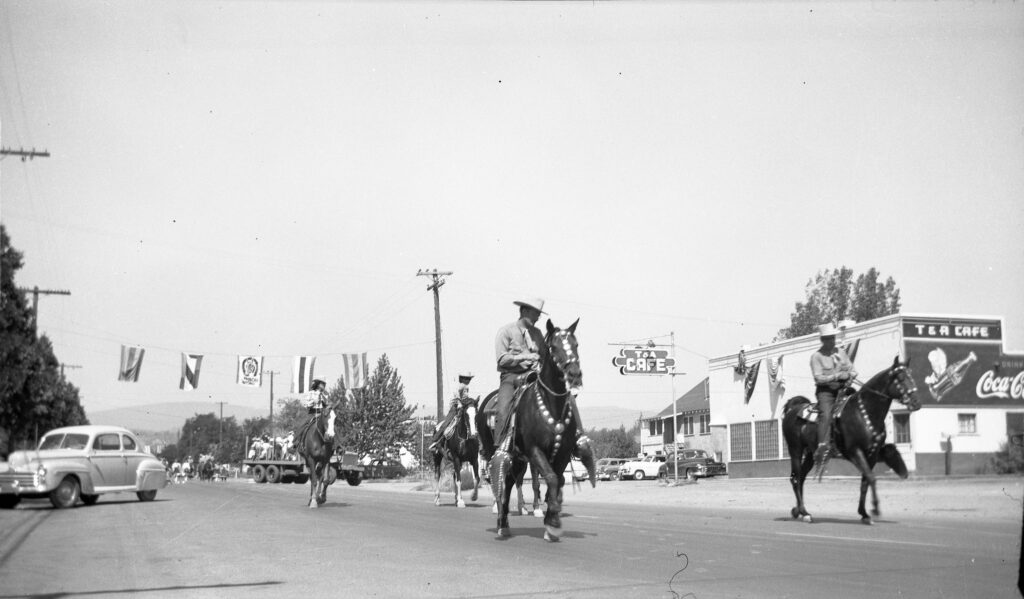
Lassen County Fair Parade, with the T&A in the background—Margaret Purdy

Note: I did come across this picture of the T&A, so I wanted to share.

Some one wanted to know about the history of Susanville’s T&A Lounge located on the corner of Main and Sacramento Streets. In 1939, my grandparents, Ira and Margaret Purdy bought the Main
Street frontage between Sacramento and Spring Streets. My grandfather had a gas station and garage on the corner of Main and Spring Streets. Ira sold the vacant lot on the corner of Main and Sacramento to Tony Tonin and Al Surian—hence the name T&A. It was a short lived partnership, but Surian’s son, Gino, still owns the establishment.

Tim