It is interesting to note in the early days of education there were private schools. In 1858, Malcom Scott opened a private school in Susanville then a mere hamlet. It was an on again and off operation. In 1863, the Susanville School District was formed and a public school became a reality.
In 1872, the first discussion was held to form a high school. It would take thirty years before it became reality. For awhile hope was on the horizon, when in 1875 Massillon Marstellar established the Susanville High School-a private institution. This school would continue to operate for six years when it finally closed its doors.
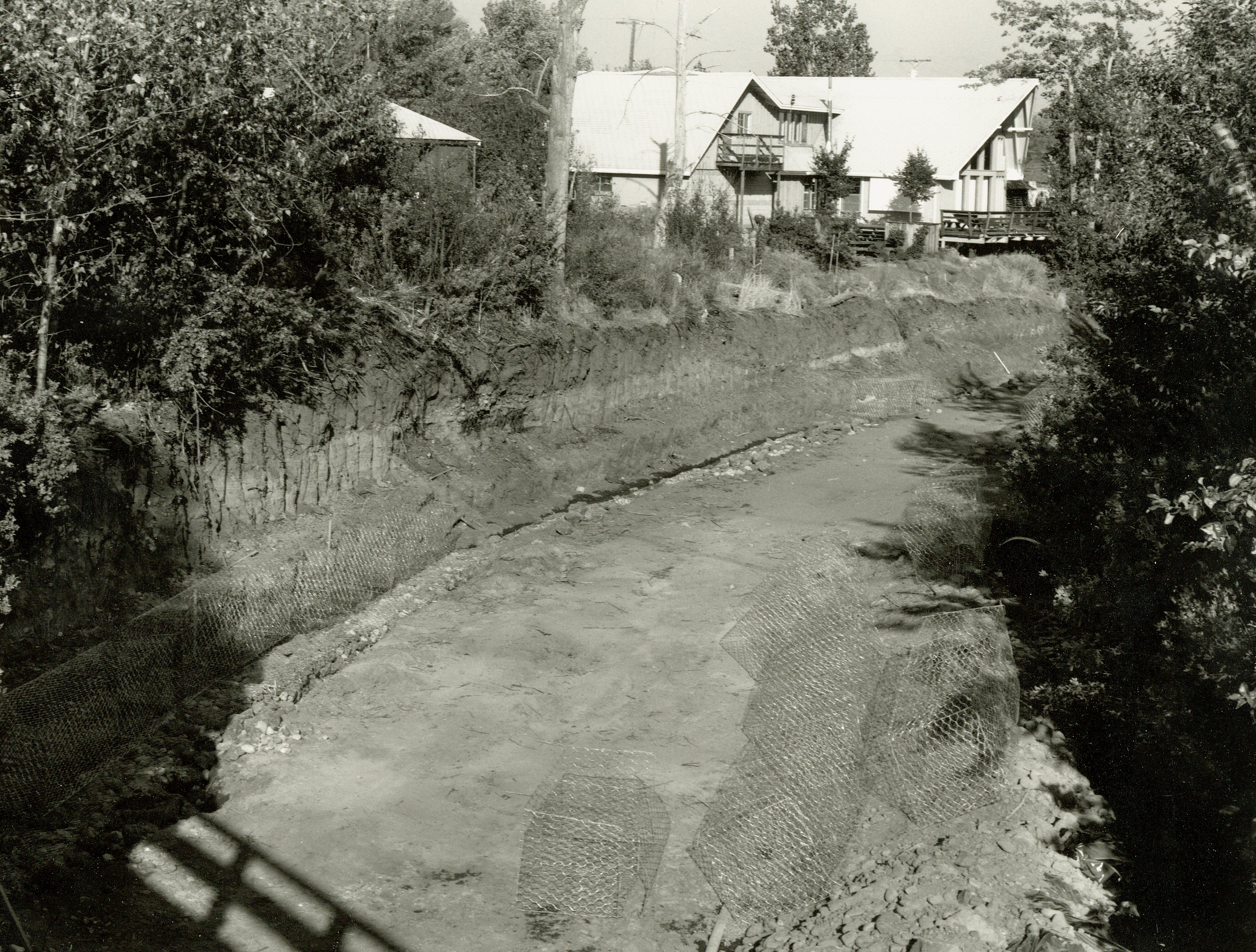
Susan River from the Carroll Street Bridge, 1981. Courtesy of Jim Cooper
While going through a photograph transfer file, in search of a particular photograph that I thought had been scanned, I came across this one of interest. By the way, for those inquiring minds, I never did find what I was looking for.
In the summer of 1981, gabions were installed along the north bank of Susan River just below the Carroll Street bridge to prevent further erosion of the bank. As one can easily see, there was not much water in the river to divert during the project.
Fruit Growers Supply Company had another issue besides the housing shortage when they opened their Susanville plant in 1921. Inflation had a been issue not just locally, but nationally. However, Susanville’s prices were higher than elsewhere. There were accusations that the local merchants were gouging consumers to take advantage of the tremendous population growth.
Fruit Growers employees complained. Did they ever. Fruit Growers even hired an undercover detective to investigate. It turned that yes, Susanville prices were high, but the local merchants were not gouging any one.
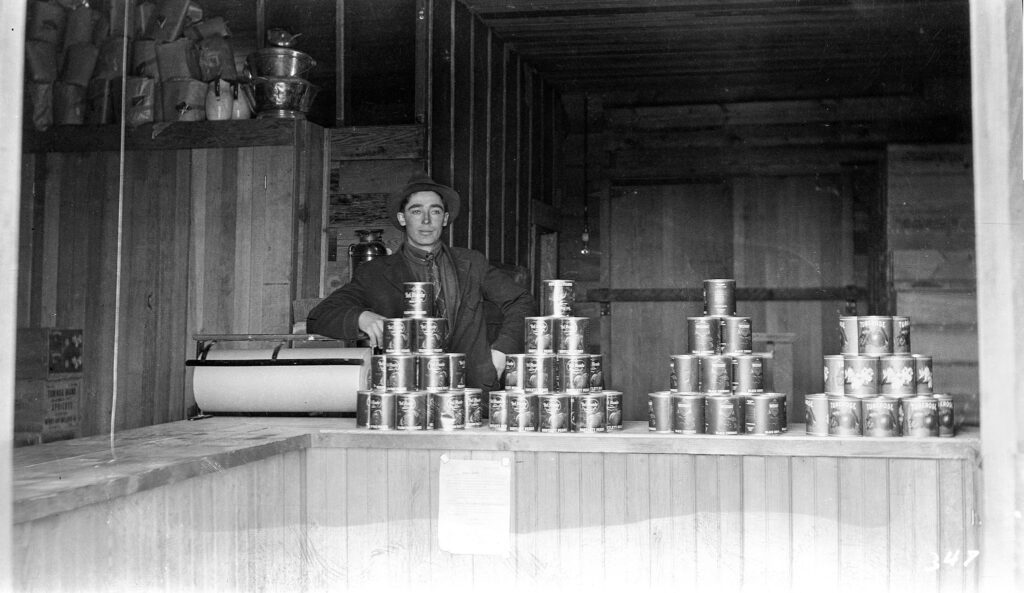
Fruit Growers Commissary, 1921–Ed Standard
Fruit Growers solution, they opened a commissary. It ws nothing fancy and carried the necessary staple items. The commissary opened on December 12, 1920 and the discount store was only available to Fruit Growers employees. Local Fruit Growers manager, S.M. Bump wrote in a memo “Merchants can exploit all they want.”
Over the ensuing years the commissary evolved and would eventually be open to the public. Its name became Sunkist Grocery. While the store no longer longer exists, the building does. It is now the Lassen Senior Center at 1700 Sunkist, Susanville.
Before there was the Great Depression of the 1930s, there was the 1893 Depression. The recovery from the latter was a slow process. Take for instance, the NCO Railroad remained stalled at Amedee for most of the 1890s. It was not until 1899 that the railroad finally began to extend its line northward to the Madeline Plains.
Standish, 1910–Prentice Holmes
The utopian community of Standish floundered since its beginning in 1897. While company officials stated their goal was to take a slow course, that proved disastrous. In 1901, Associated Colonies the organizers/promoters of Standish went bankrupt.
On the surface in 1900-1901it looked like was Susanville booming. Four major brick buildings were constructed, but that was partially in response to recovery of a major fire in June 1900 that took a huge chunk of the town’s business district.
One area that looked promising were the proposed railroads. There was the Marysville- Susanville Railway, the Oregon Short Line to name two. While the so-called paper railroads never materialized, they did have surveyors in region, thus adding to speculations.
A view of the water tanks from Inspiration Point, August 1936—C.H. Benneet Collection
Back in 2017, I briefly wrote about this topic. This time around, I have a better photograph. For nearly a century there were water tanks located at the base of Inspiration Point, that served as the town’s water supply. For those not familiar, the water source is Cady Springs located some three miles west in the Susan River Canyon. One of the interesting features about these old tanks, and the above picture highlights, is the fact that there were no covers on the tanks and remained that way as late as the early 1970s. These tanks no longer exist, and all that remains is the cement foundations.
Earlier this month , the Sierra Theater closed its doors. Its future is uncertain. The Susanville Symphony Society would like to see it converted into a performing arts center. That group has a request before the City of Susanville to appropriate a portion of the unallocated American Rescue Plan Act funds. No decision has been made by City officials pending a review of the Society’s plans.
In 1934 the Liberty Theater was condemned as state inspectors deemed it unsafe. The building was demolished. T&D Enterprises owner of the facility announced a new theater would be built on the site of the old one, to be named Sierra Theater. Construction on the concrete re-inforced theater began in October, and the owners noted it was earthquake proof, the first of its kind in Susanville. On Friday, March 8, 1935 a grand opening was held for $75,000 theater. The first showing was appropriately a film named, “The Whole Town’s Talking.”
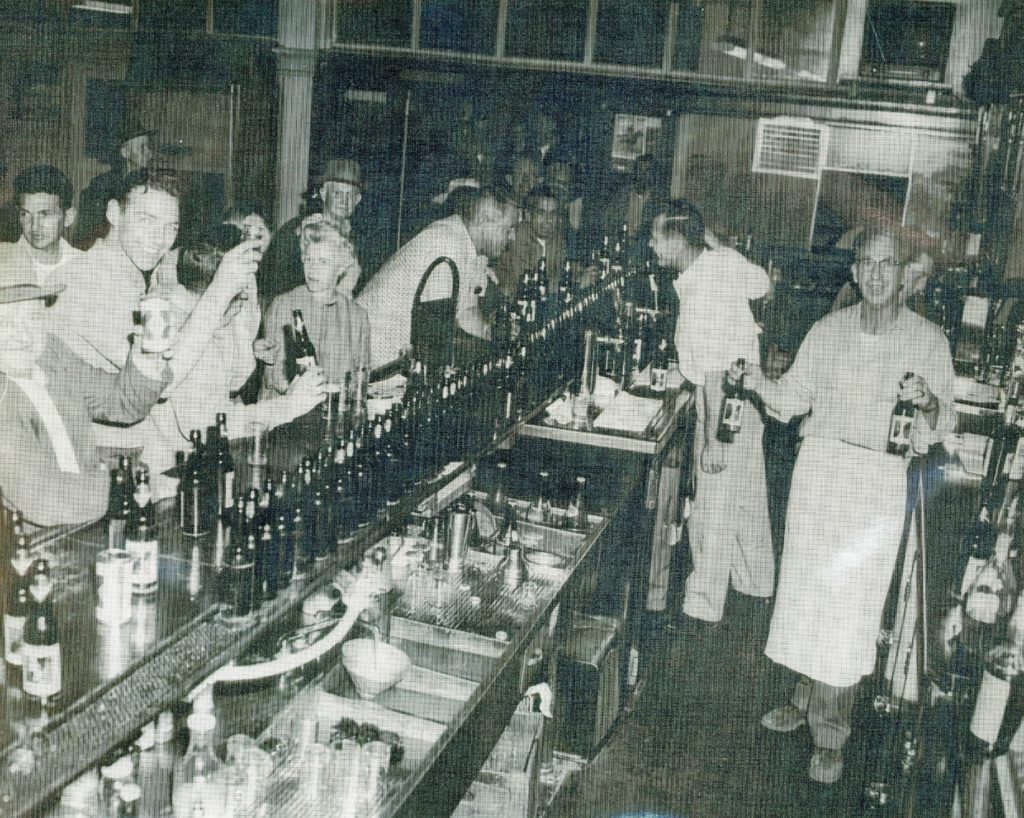
Yesterday, we explored how the taps ran dry on alcohol beverages. Even with the passage of the Volstead Act aka Prohibition, bootlegging was prevalent and the social experiment would eventually be doomed.
On April 7, 1933 beer was again was flowing in California as chipping away of the Volstead Act aka prohibition continued. There was a catch, however. Only establishments that served meals were eligible to serve beer. Many a former bar, installed lunch counters. In Susanville, it was debated what constituted a meal? Did a sandwich constitute a meal, to allow a person to drink beer all day if they wanted to? Whatever the case may be, that is why bar and restaurants go hand in hand.
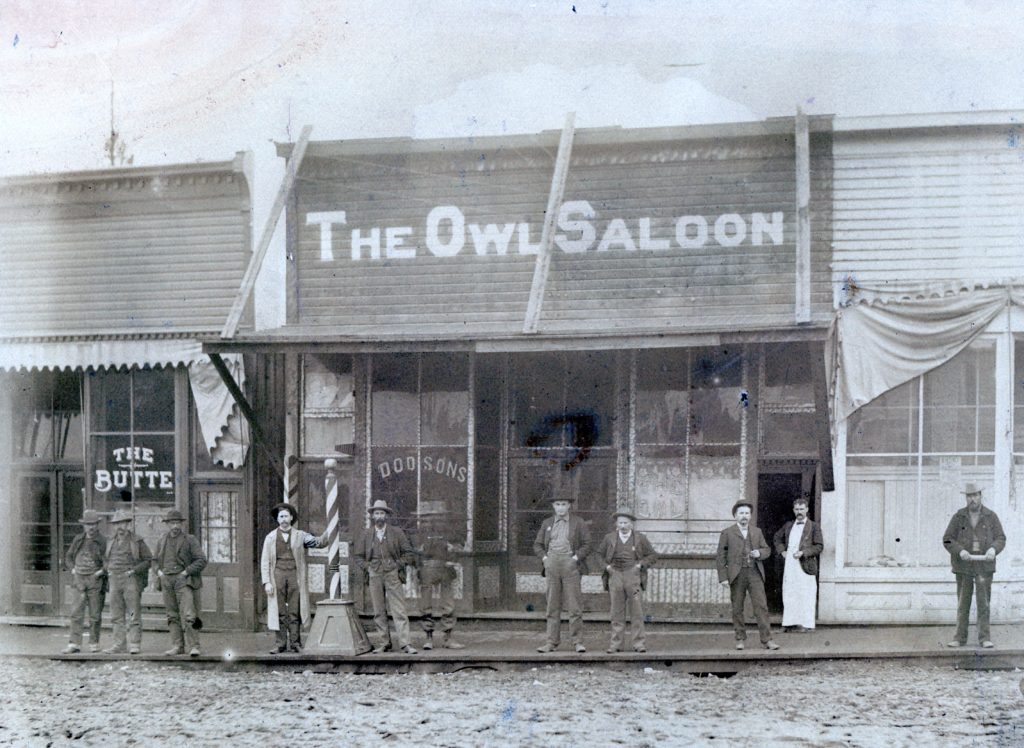
Susanville’s Owl Saloon circa 1907. Ironically, this establishment burned down only six weeks after Prohibition took effect in 1919. Courtesy of Del & Diane Poole
The temperance movement locally gained a foothold in the early 1880s, but never could gain any traction. In the late 1910s everything was about to change.
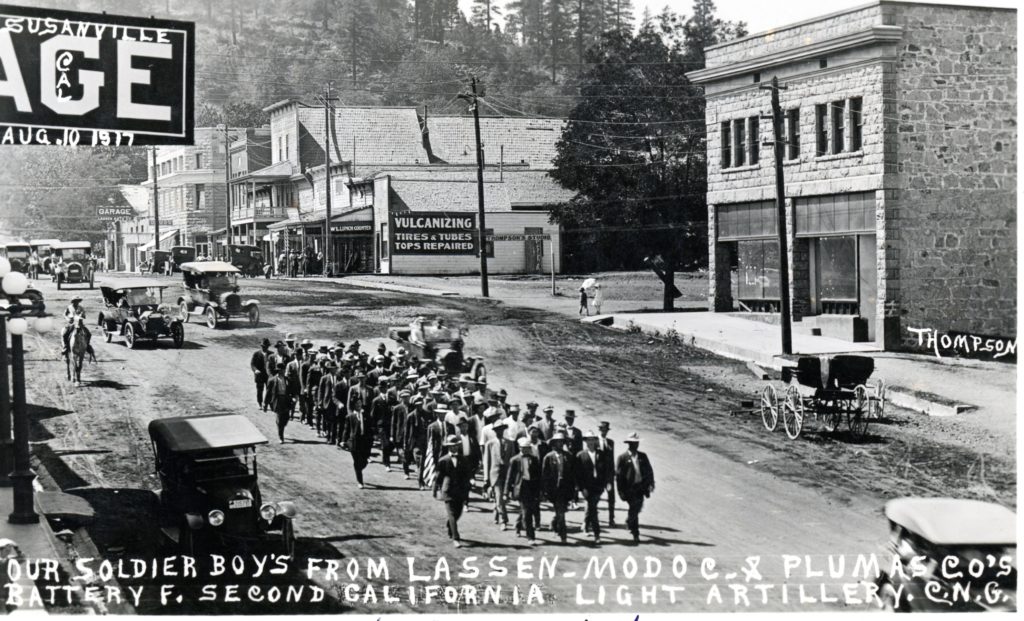
Lassen’s first draft of inductees,, August 10, 1917. D.M. Durst Collection
The first two times the town went dry were unusual circumstances. The first time was on August 7, 1917, at the request of the United States Army Draft Board. This was to accommodate the examining physicians. The doctors experienced a number of difficulties in examining inductees, since the majority of them arrived for physicals heavily intoxicated!
A year later the saloons were closed again, but this time by City of Susanville. The Spanish Influenza epidemic was the cause. There were over 300 cases of the flu in Susanville alone–roughly one-third of the population. The City held a special meeting on November 11, 1918, and it was voted three-to-two to close the saloons. The ban was effective immediately. On November 19, the City met again in special session to discuss the ban and it was lifted. It had been noted that there had been a decrease in flu cases
In 1919 witnessed the passage of the Volstead Act, also known as the Prohibition Act or the Eighteenth Amendment. June 30, 1919, was the last official day for the saloons to operate in Susanville. The Lassen Weekly Mail noted its observance; “The final obsequies for John Barleycorn in Susanville last Monday night was a very tame affair when compared with the scenes in other parts of the country. The saloons had disposed of practically all their stock before Monday and the supply of liquid refreshments was not very plentiful at the close. The doors were closed promptly at 12 o’clock.”
The saloon business was big business in Susanville. The city treasury was hit hard. The closing of these businesses city lost one-quarter of its revenue from licensing fees.
No doubt exciting times were on the horizon. The Lassen Lumber & Box Company was in full operation. Fruit Growers Supply Company’s mill was under construction. When completed Fruit Growers would employ some 1,500 people. Many of Fruit Growers new hires would be bringing their families, so the area was about to witness a huge population explosion. A lot of growing pains to contend with.
The City of Susanville continued with its progressive plan to continue to make improvements for the betterment of the community. The City Council held many special meetings to figure out a way to pave the streets, put in gutters and sidewalks. The paving of Main Street was a number one priority. The street was costly to maintain, especially on the city’s meager budget. A bond measure was out of the question at this time. The city deemed a special tax assessment to be levied over a period of years as the best method to proceed. On October 22,1920 the city awarded a contract to pave Main Street and build sidewalks to the Warren Construction Company for $191,256.20.
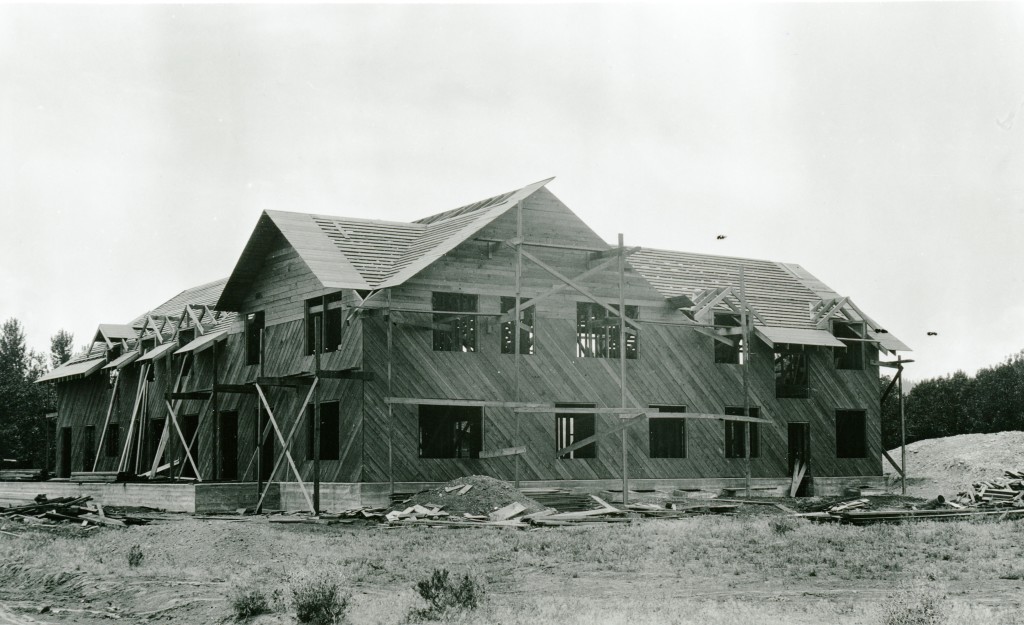
Fruit Growers Manager’s Residence under construction on what became part of River Street, Susanville, 1920–Ed Standard
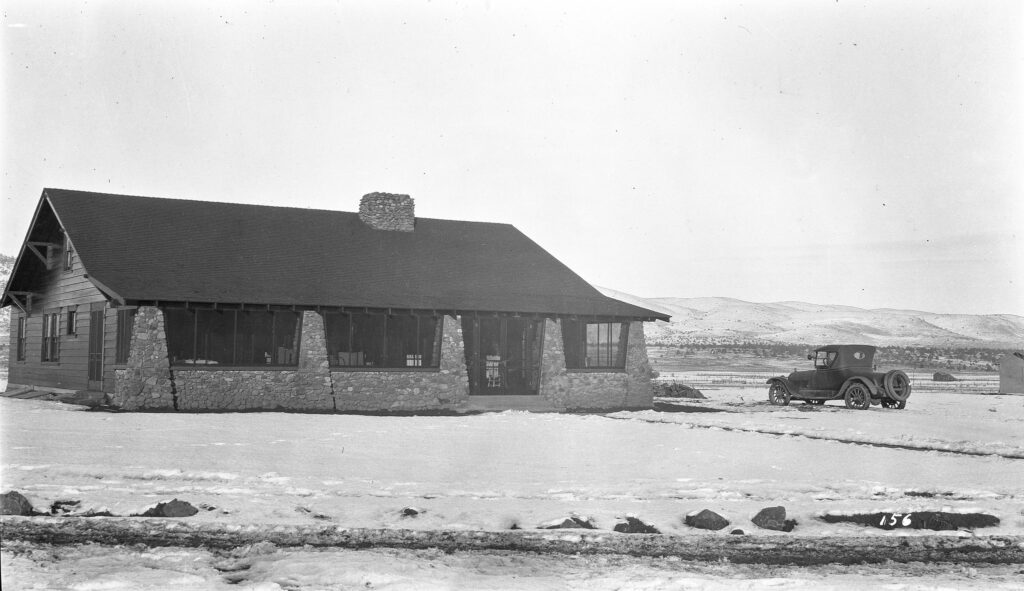
In 1922, Susanville’s Milwood Tract subdivision was created. There was one street that was somewhat of an after thought and evolved over the years—River Street. Even before Milwood Tract and that of River Street it was the location of Riverside Hospital and Fruit Growers Supply Company’s Resident Manager’s residence. River Street, initially began from Main Street, headed one block south, then made a hard right and at the intersection of South Fairfield merged with Riverside Drive. Later it was modified at the initial one block starting point became South Gilman Street. River Street at that intersection then extended west to McDow Street. It would even later be extended again to connect with South Ash Street.
Construction of Riverside Hospital, 1920. Courtesy of Ed Standard