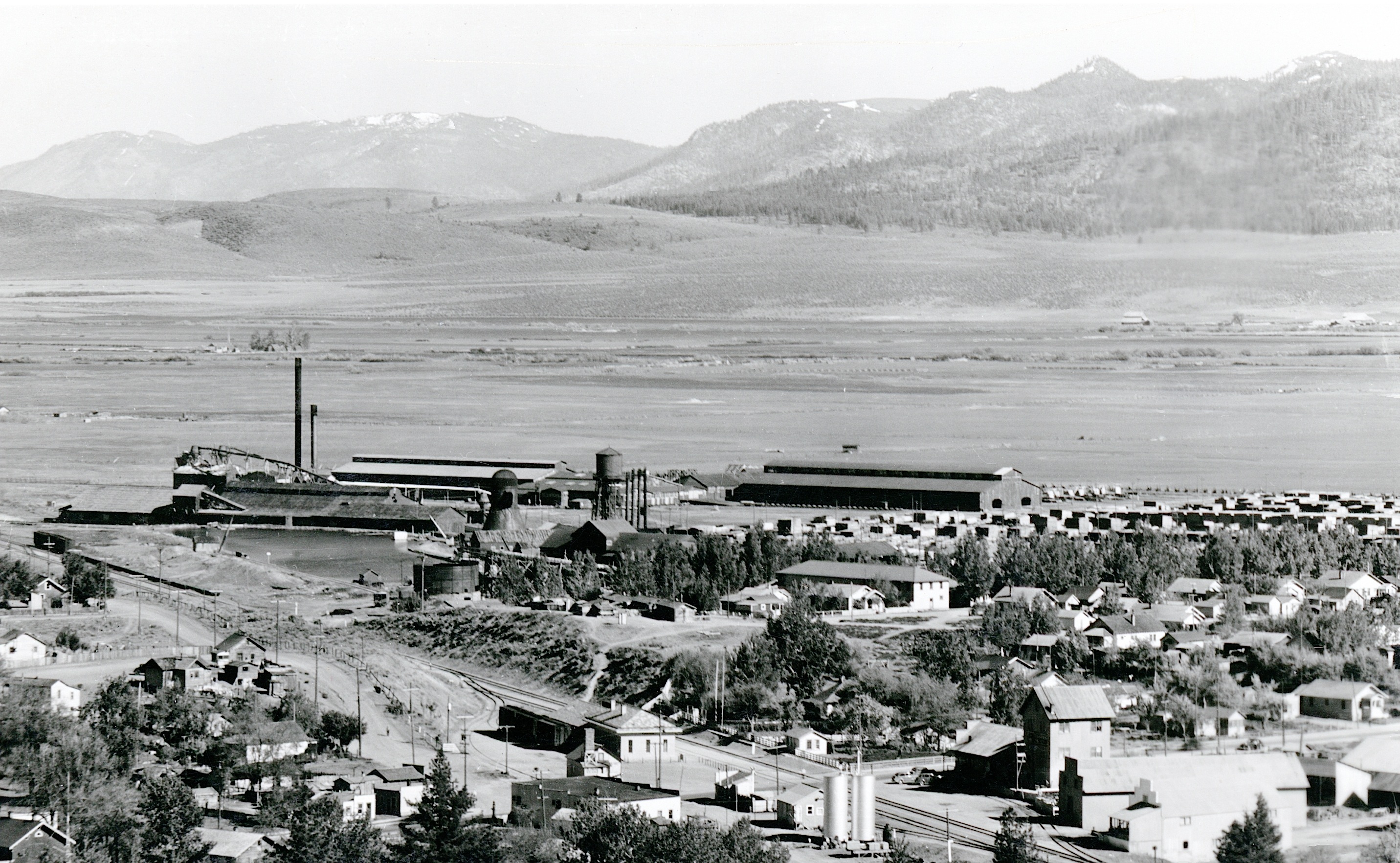
While I have wrote about Fruit Growers Supply Company and Red River Lumber Company and their operations, its time to include another major lumber mill, Lassen Lumber & Box Company Continue reading Lassen Lumber & Box Company
While I have wrote about Fruit Growers Supply Company and Red River Lumber Company and their operations, its time to include another major lumber mill, Lassen Lumber & Box Company Continue reading Lassen Lumber & Box Company
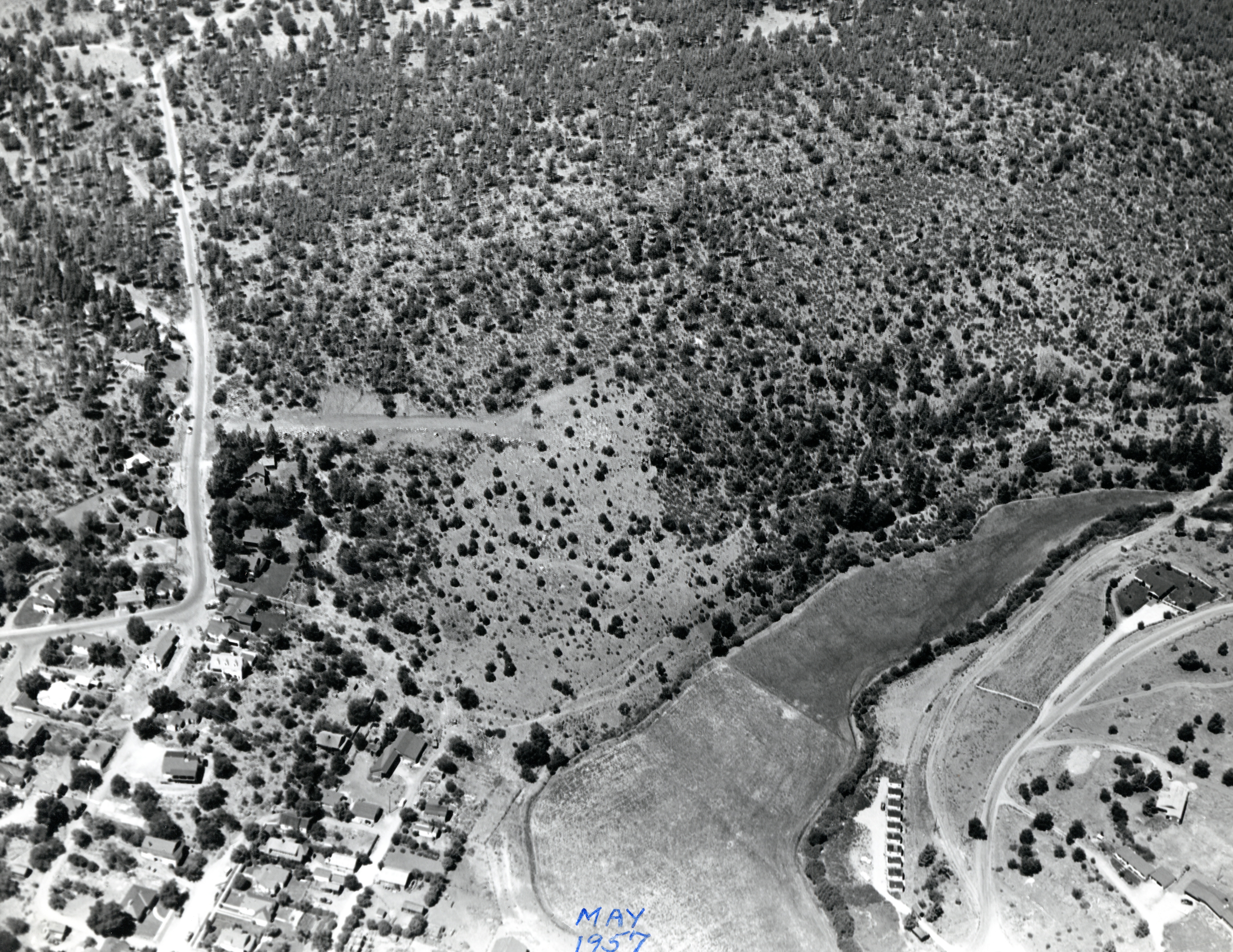
With the pending arrival of the railroad to Susanville in 1912, it started a frenzy of housing subdivisions. The first was Hill Long’s Long Addition. It was unique in many ways, it being one of the smallest and at that it was located inside the city limits. Continue reading Long’s Addition

In 1911, two missionaries, Elders Harry Janson and L.R. Halverson arrived in Susanville, though it appears their stay was brief. It was not until 1922, that the members of this church organized in Susanville. The initial families included those of Frederick Johnson, W.K. Davis, William Mortimer, Afton White, James C. White, John Heath and Peter F. Olsen.
Initial services were held in member’s homes. By 1924, their numbers had grown and they the hall in the Knoch Building for $2.50 a week. From there they moved to the Orpheum Theater and later to the OddFellows Hall.
On November 13, 1927, discussions were held to build a chapel. The site chosen was the northeast corner of Main and McDow Streets. On November 10, 1929, the church was dedicated by Heber J. Grant, President of the Church of Jesus Christ of Latter Day Saints
Thirty years later the members had outgrown the church. They selected a new site on Richmond Road. On November 5, 1961, groundbreaking ceremonies were held for the $300,000 chapel.
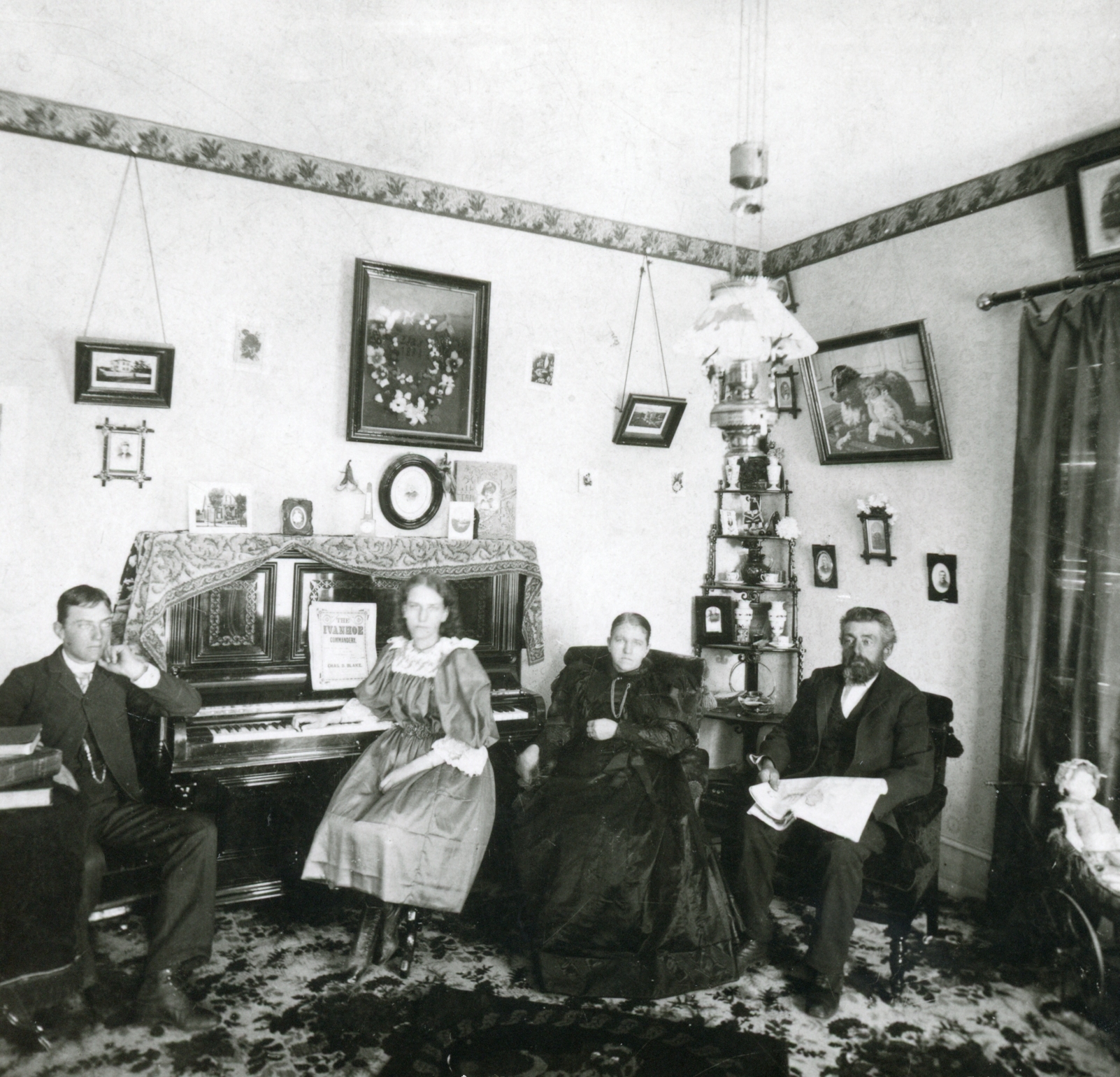
This being fair week, it is only fitting we salute the Jensen family. Two generations of Jensen’s had a major impact on the Lassen County Fair.
In the summer of 1922, A.R. “Bert” Jensen pushed the resurrection of a fair, the last one held was in 1902. Jensen recruited Russell Brownell, C.E. Lawson, L.E. DeForest and H.H. Ridells and formed the Lassen County Fair Association. Jensen offered the Association 20 acres of his ranch for a fairgrounds at a cost $2,750, though the group could pay him later—this is still the home of the Lassen County Fairgrounds. Continue reading Jurgen Jensen Family
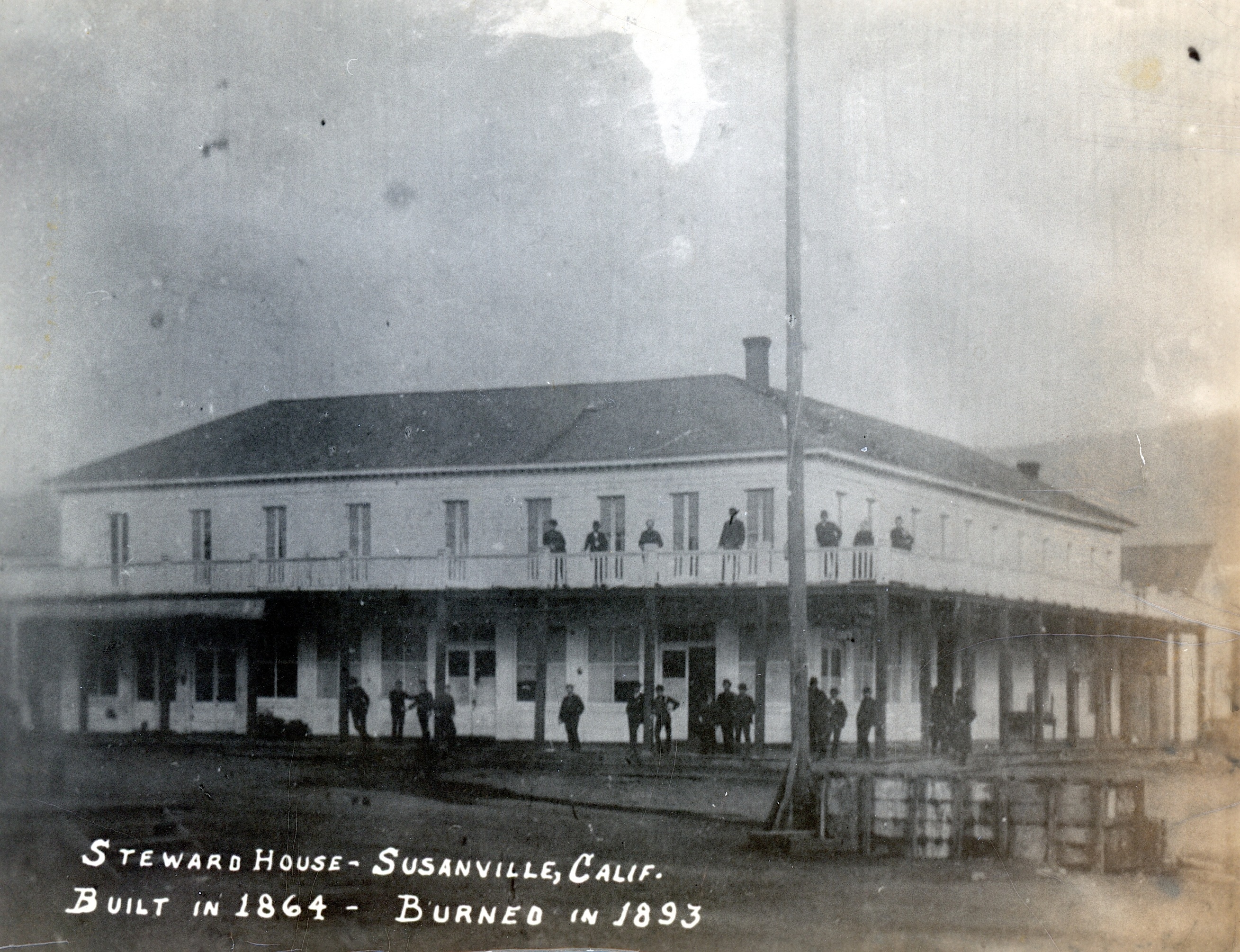
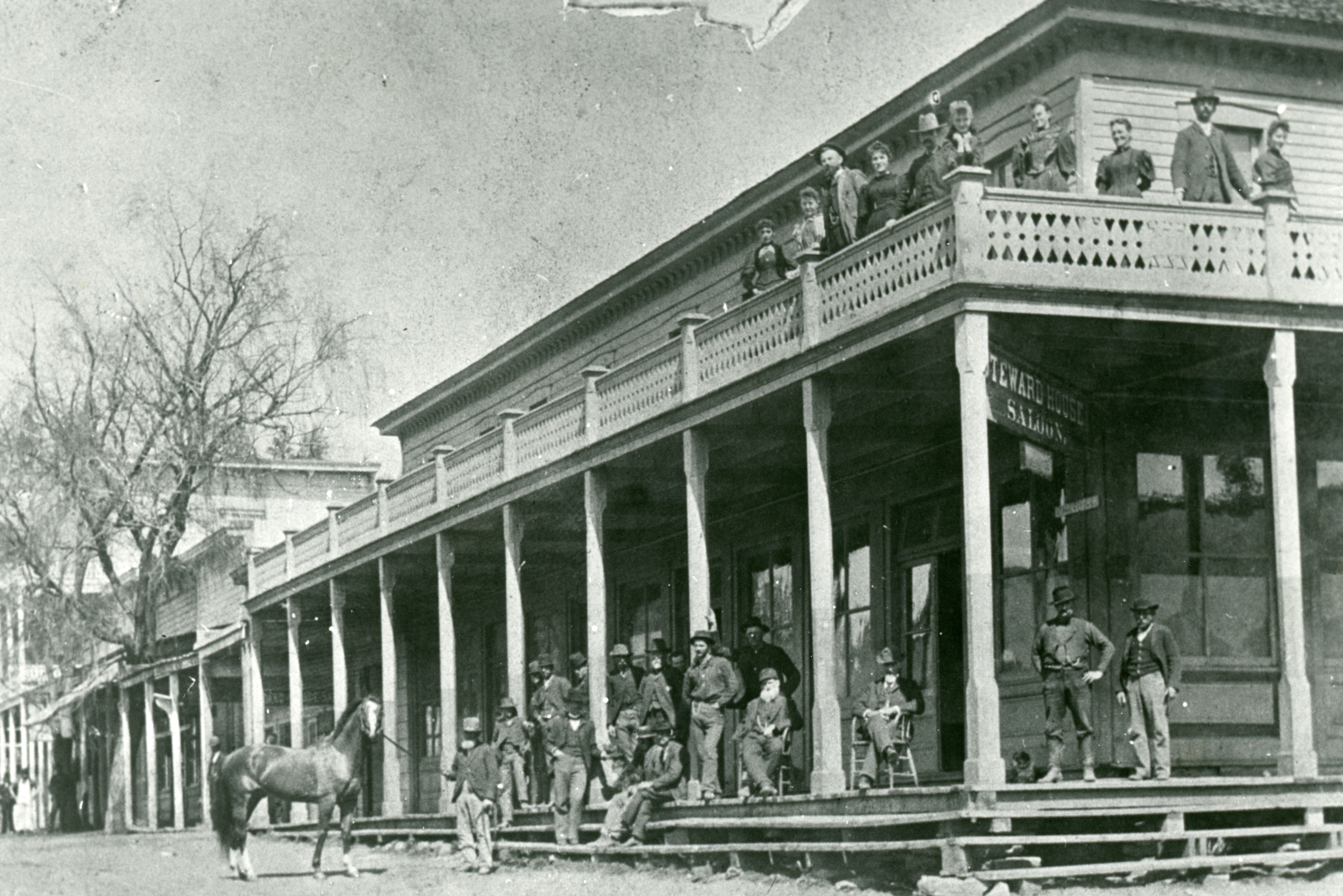
In the spring of 1864 work began on Susanville’s most elaborate structure to date, Jospeh and Lydia Steward’s two-story hotel on the northwest corner of Main and Gay Streets. It was advertised as, “This new and elegantly furnished hotel stands first in the State for comfort and accommodation for the traveling public, every room being well ventilated and neatly furnished. Even though Steward owned the hotel for less than a year, he sold to Miller & Kingsley for $7,256, the name never change with subsequent ownership.
On Tuesday night, July 18, 1893, a fire broke out in the rear of the Steward House and within minutes the entire building was engulfed in flames. Within a half hour, with erratic winds fanned the fire and the whole block were ablaze. The fire jumped Main Street and now the south side of the business district was on fire. In the end, it worst fire in Susanville’s history, the town’s entire business district was destroyed.
Support this site and subscribe today!
Today’s topic evolved from a trip to Susanville Supermarket last month. I thought I could manage a quick trip in and out and go on my merry way. Lo and behold, while trying to make my get away, I got lassoed. Anna Stewart who needed some information about Native American Veteran Thomas Tucker, that they want to feature in their newspaper ad, scheduled for July 7. I, of course, obliged.
Thomas Tucker was the first casualty from Susanville in World War I. Numerous records has him listed as the first Lassen County resident, but that distinction belongs to Westwood resident Clyde McKea who died almost two months earlier than Tucker. Continue reading A Living Memorial
Last month I wrote about the area’s first newspaper, the Richmond Times. The next newspaper, also a handwritten one, the Susanville Reporter. This paper made its debut in February 1861, with Andrew Ramsey at the helm. When the second issue made its debut, the paper changed hands with Isaac Roop, as editor. As the Butte Record noted Roop penned some amusing article such as, “A Hint to Parents,” Something to be Remembered,” and Uncle Sam and his boys.” It would not be for another four years, when the first locally printed newspaper was published—The Sage Brush.
Support this site and subscribe today!

It was originally named Smith Creek. In August 1854, Isaac Roop called it by that name, when he claimed the water rights to it and began construction of a ditch to divert its water. The Roop ditch was the original water supply for Susanville. In 1872, it was replaced by the Susanville Water Company’s ditch from Cady Springs. In November 1855, Moses Mason, the second person to file a land claim in the Honey Lake Valley, claimed 400 acres along what he too designated as Smith Creek. On September 12, 1856, Captain William Weatherlow took up Mason’s abandoned claim, noting that the creek there, formerly called Smith Creek, was now called Piute Creek. However, on April 15, 1857, when Atlas Fredonyer filed his claim to Isaac Roop’s property, he referred to the same stream as Smith Fork. Who Smith was is not known.

Susanville’s first hotel, if you could call it such was Cutler Arnold’s story and half structure of hewn logs. For two years, beginning in the Spring of 1857, it housed the town’s only dining establishment, meals costing seventy-five cents.
As the town progressed so did the accommodations. In 1860, Emanuel “Mike” Brannan built a two-story hotel on the northeast corner of Main and Lassen streets. It was a transitional period, as the days log structures were being placed with wooden framed ones. Brannan operated the hotel for the next four years, and due to some financial problems lost the hotel. Just as the Brannan House had replaced Arnold’s, Brannan’s was replaced by the superior Steward House in 1864.
The Brannan House did not fade away entirely. Its second floor was converted into lodge hall for the Masons and the Oddfellows. The first floor was used for a variety purposes including that of the post office and the government land office. In 1880, it was torn down and replaced by a new Oddfellows Hall.
Susanville’s first hospital was not built until 1883, and prior to that it was druggist that played a key role in medical care. In the summer of 1860, Dr. Zenas J. Brown arrived in Susanville and began dispensing drugs from a canvas tent. He met with commercial success and at 802 Main Street, he had an octagonal drug store built—which the locals gave him the nickname of Doctor Eight Square. The following year he was joined Dr. Robert F. Moody, and Moody would become sole proprietor of the firm within three years. Dr. Brown it should be noted introduced the first apple trees to the region, which at one time was a major export crop.
For indigent care, those person’s were housed in a local hotel, until they either recovered or not, which the county picked up the tab. For instance, in September 1864, Emanuel “Mike” Brannan, proprietor of the Brannan House, submitted a claim to the county in the amount of $75.31 for lodging, medical and burial expenses of John Tuskey.
Then there is Dr. Zetuz N. Spalding’s arrival to the region in 1857, and would later be the founder of the venerable Spalding Drug Store. One of Spalding’s earlier advertisements noted his many skills: “Z.N. Spalding, Physician, Surgeon and Accoucheur. Teeth extracted without pain, by use of Anaesthetics.”
On a final note, the Lassen County Historical Society’s April 2015 newsletter had a short piece on R.F. Moody. A little known fact, was Moody placed Lassen County’s first billboard back in the late 1870s on the Horse Lake Road. Carved in stone he advertised his Sagebrush Liniment.
Support this site and subscribe today!