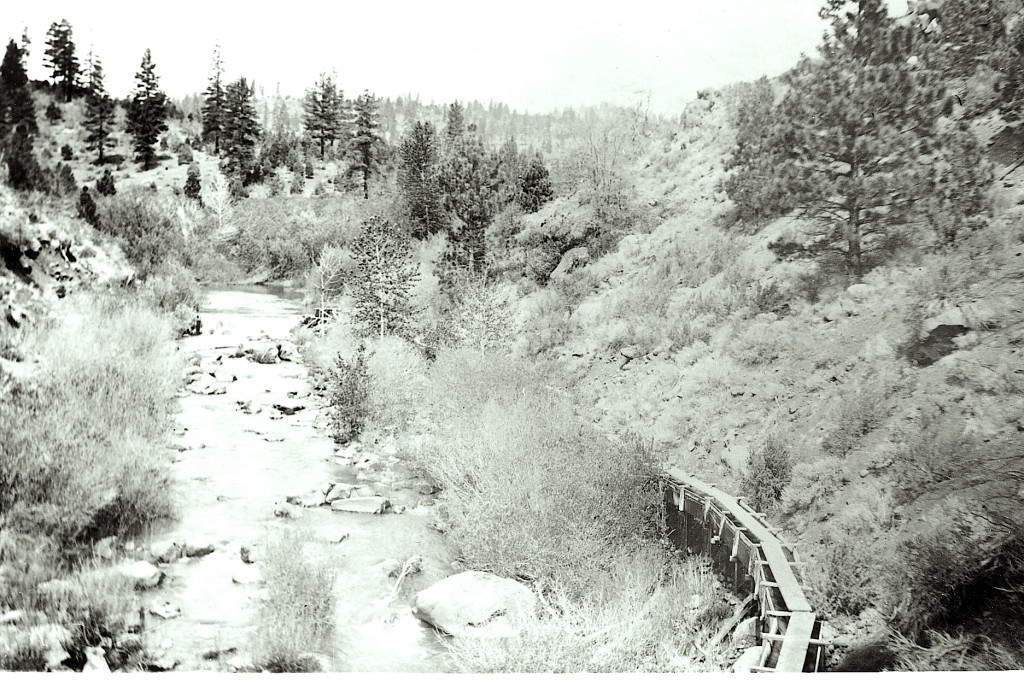
Eons ago, Richard Peterson of the University of Hawaii at Manoa contacted me in regards to published locally material on hot or mineral springs. Sadly, I informed him, that with exception of some stories of the Amedee Hot Springs during its heyday that such material was non-existent.
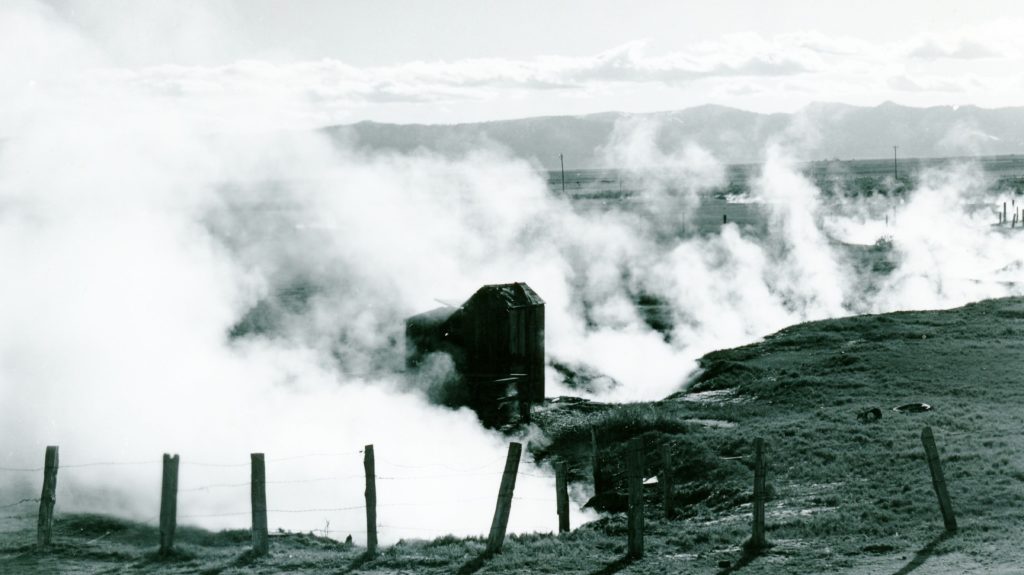
However, not to dissapoint him, I did some research to send along. As to Wendel Hot Springs, I informed that since 1856 some one has always tried to use these springs, initially for a steam bath. When James A. Wood had a homestead there in 1870s and 1880s he used the springs to heat his home. When the NCO Railroad arrived in 1899, they tried to use the water for the locomotive boilers, but quickly gave it up, as the minerals in the water clogged the boilers. I did mention that in the 1970s about Phil Gutman and the Hobo Wells Hyrdoponics company to grow tomatoes, but that is a story in itself.
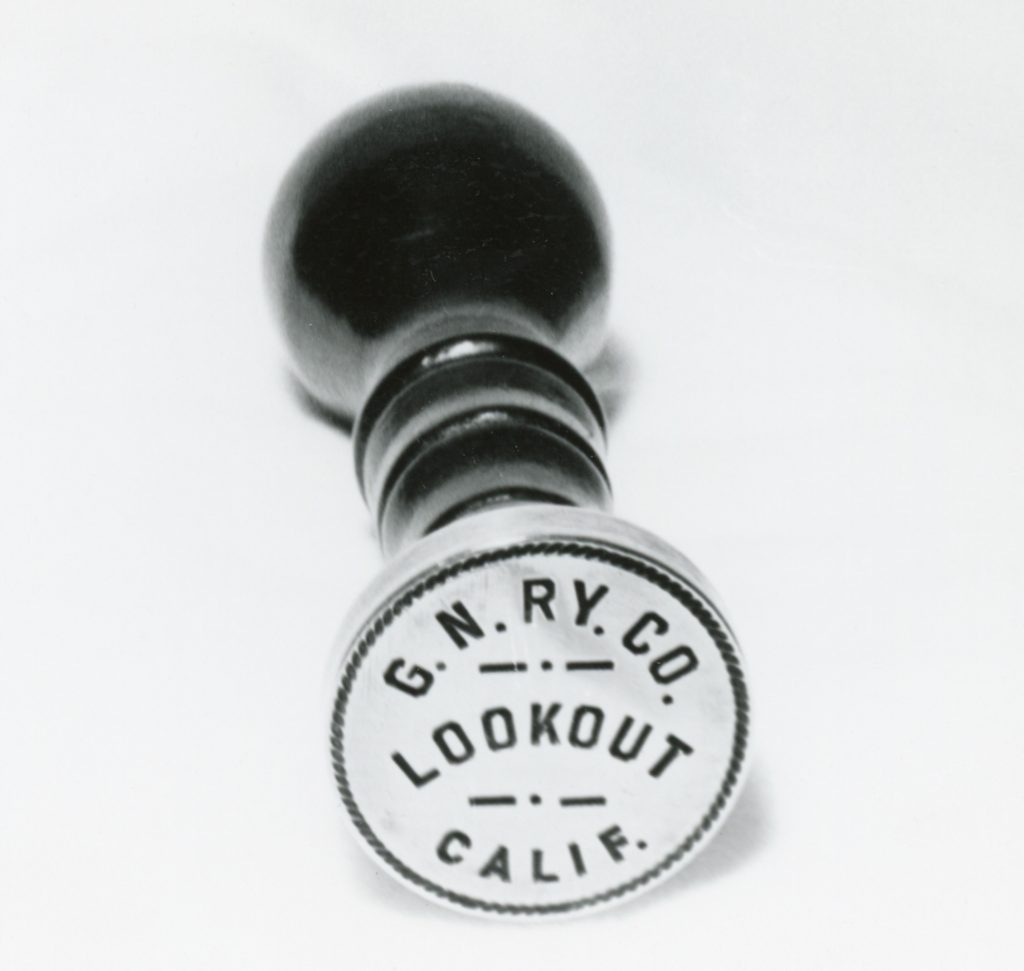
Lookout Junction, was located in southwestern Modoc County that connected the McCloud River Railroad to the Great Northern Railroad. The station opened in November, 1931 which handled freight. B.J. Neal served as the only agent from 1931 to 1959. I recommend Jeff Moore’s book “The McCloud River Railroads,” as it is a wealth information and there is a great deal of material about the Red River Lumber Company.
The railroad bed converted into a road at Camp Harvey. Courtesy of Hank Martinez
In 1942 this railroad logging line had its origins at Halls Flat, near Poison Lake, headed into an easterly direction towards Harvey Mountain. By 1949, its entire length was just a bit over forty miles ending near Slate Mountain. When the culinary workers at the two logging camps along the line—Harvey and Stanford—went on strike in the spring of 1949, Fruit Growers Supply Company who operated the line decided to shut it down permanently. It was not a drastic action as it appears. They were approaching the end of their timber. In addition, company officials, stated the remaining timber could be removed from and shipped from its Camp 10 line as it approached Upper Gooch Valley. After all, the Harvey line and Fruit Growers Main line that serviced Camp 10 were within two miles of each other.
Arthur Curtiss James of the Western Pacific Railroad driving in the golden spike—Courtesy of the Big Valley Museum
On November 10, 1931, a historic day was held in Bieber with the Golden Spike Ceremony connecting the Western Pacific and Great Northern Railroads. While intensive planning was done, one thing never considered, it turned out to be an extremely cold blustery day. Some attendees pondered which was worse the long winded speeches by dignitaries or the cold northerly winds. After Western Pacific Chairman Arthur C. James had driven in the golden spike, the crowds quickly dismantled the temporary wooden grandstand of make a huge bon fire.
It should be duly that on the twentieth anniversary Lucius Clegg and Charles Beebe of the Virginia & Truckee fame, did a re-enactment ceremony of the driving of a golden spike at Bieber.
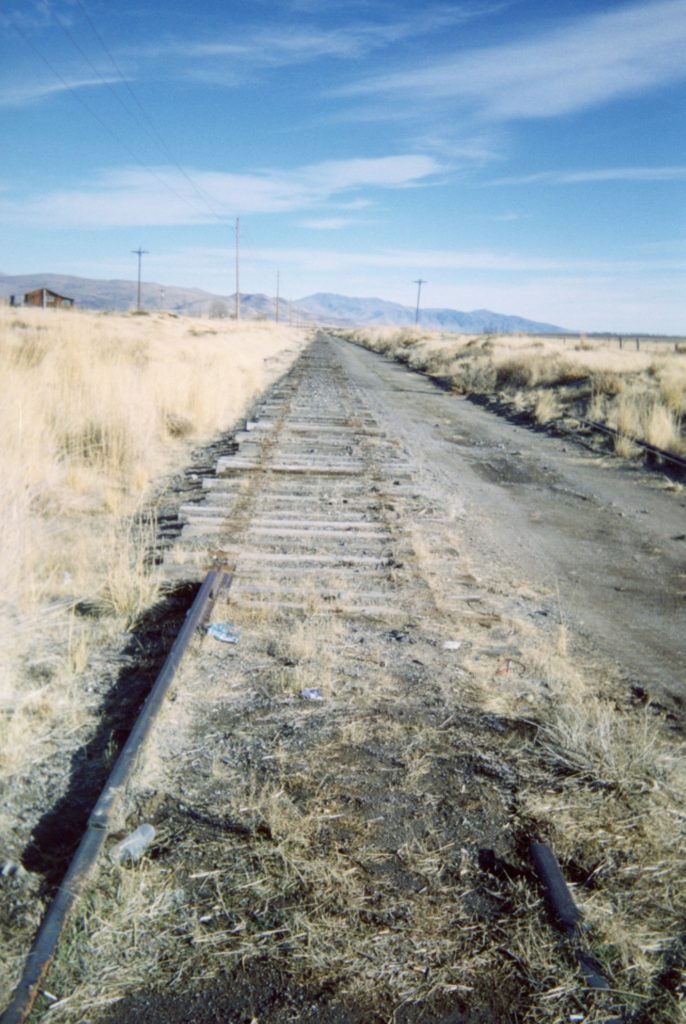
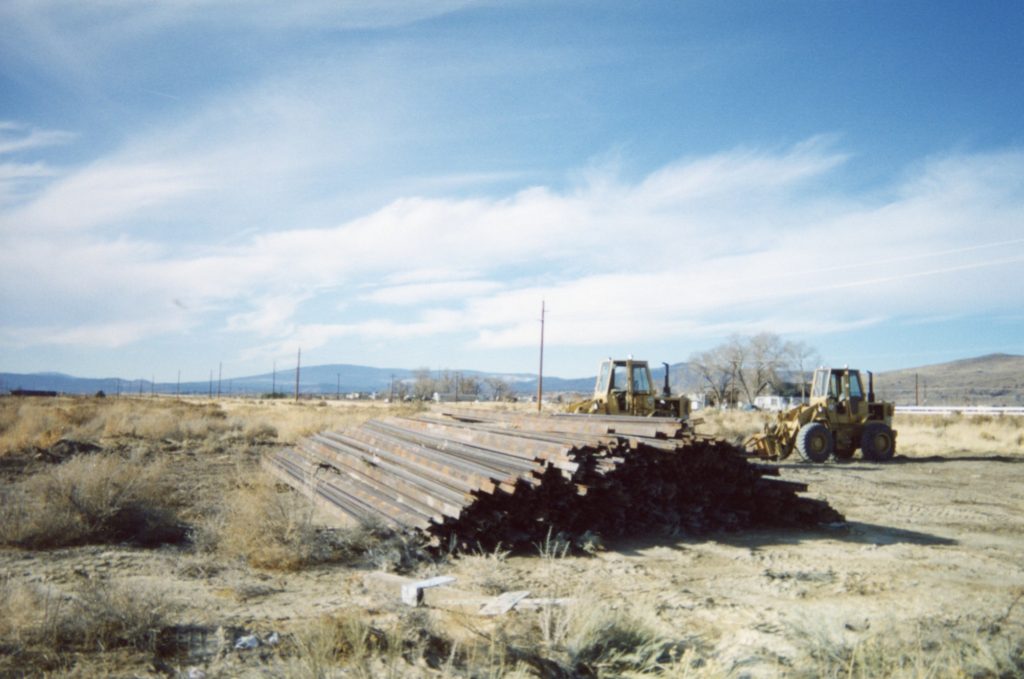
There is a bitter irony with ripping up this railroad line. The 124 mile railroad was built in a span of two years. To dismantle it took decades. In the fall of 2006, without any fanfare the segment of the railroad between Susanville and Wendel was ripped up.
Rails piled up at the defunct Leavitt Station, November 24, 2006
Since it is the holiday season and a portion of it focus on food, I thought some might find this story of interest.
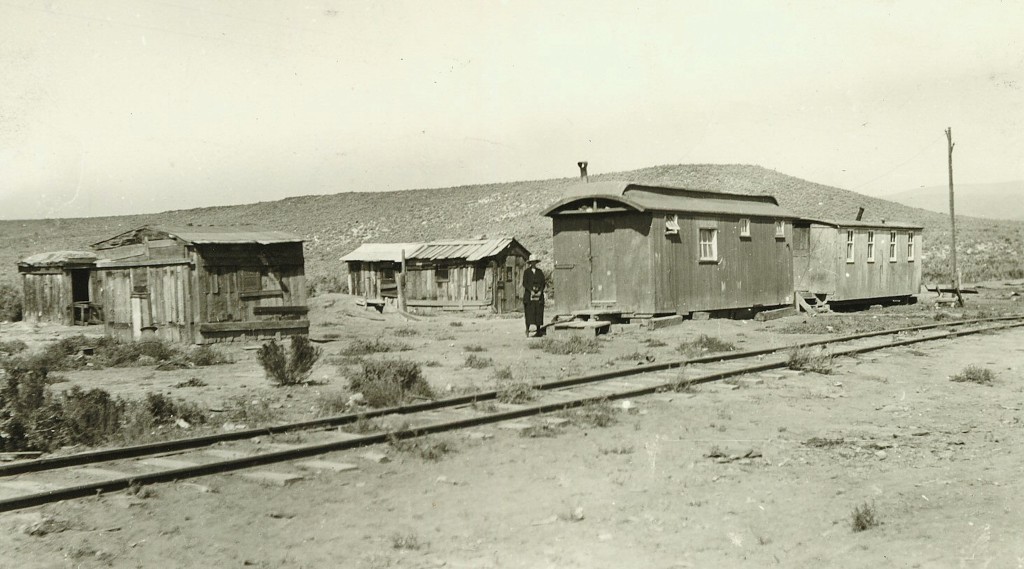
Now, let us venture to the tiny railroad outpost of Karlo in Secret Valley. In 1929, a scrappy ten-year-old by the name of Ed Allison arrived on the scene. Ed, in a sense, was an accidental visitor. He was originally living with his family in Sacramento. The family doctor thought he might have rheumatic fever and suggested Ed should live in a higher and drier climate. A family friend was Gilbert Menichetti who worked for the Southern Pacific Railroad at Karlo. It seemed an ideal location for Ed and off he went.
Upon his arrival the first order of business was to rent Ed a horse for him to attend the Secret Valley school several miles away. Of course this allowed him to explore the surroundings of his new home. For some reason, old time Secret Valley resident, Pete Biscar, of Biscar reservoir fame, took Ed under his tutelage. Biscar showed him many places, such as the petroglyphs in the canyon above the reservoir. Another feature that fascinated Ed was a particular lava cone. When one puts their ear down to it, one can hear a roaring noise—an underground river. Ed recalled that Gilbert Menichetti’s wife, Luella, was an excellent cook. Of course, Biscar was aware of that fact. Ed stated, “Biscar would bring sage hens that he shot in Secret Valley and bring them to her, because he knew she would process them to make ravioli. With that special ingredient, Biscar was always there at dinner time, for sage hen ravioli. He would be grinning ear to ear. They turned out to be very good. I don’t think really that sage hen ravioli was not that uncommon, but it was really good. At that time, when I was there the sage hen were plentiful.”
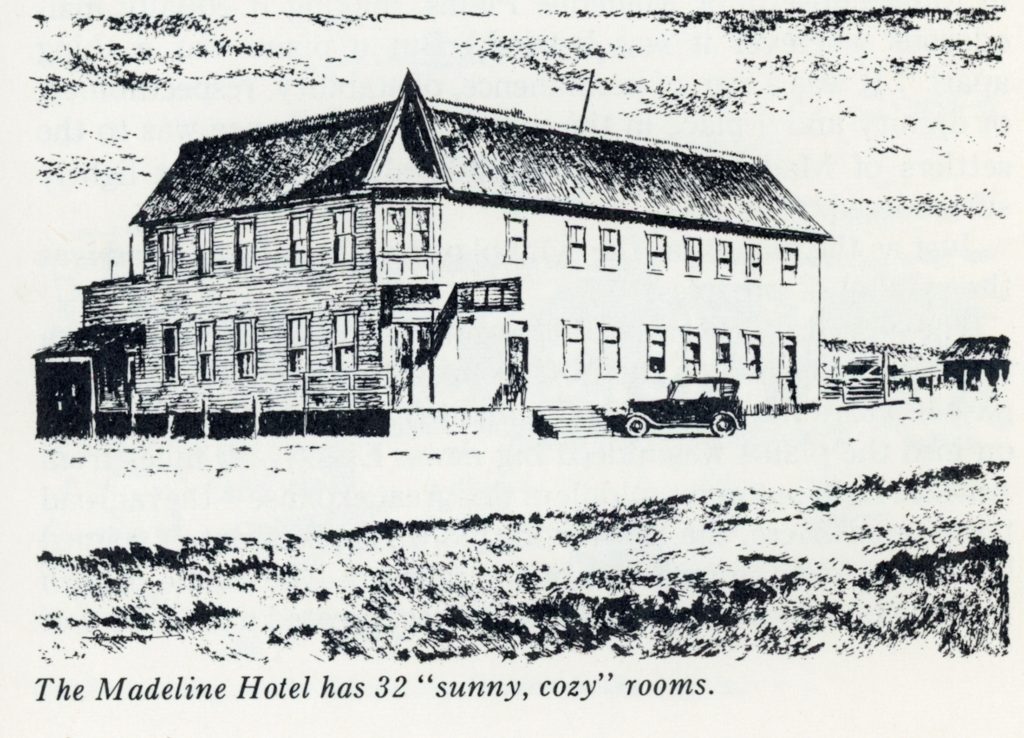
Today, while traveling Highway 395 one passes through the hamlet of Madeline, one of three communities to dot the Madeline Plains. A long time ago, it did experience its glory days. By the 1880s it was known as Van Loans stage stop and the Madeline Post Office was moved there in 1887 from its previous location in the Grasshopper Valley.
In 1902, the Nevada-California-Oregon Railroad (NCO) arrived at Van Loans and it became a hub of activity. No time was wasted in plotting out the Madeline townsite. Before the ink was dry on the Madeline subdivision map, Van Loan & Spargur built a two-story “L” shaped hotel to accommodate all the travelers arriving to check out the territory. The good times were short-lived and within fifteen years the town Madeline began to decline.
Susan River, 1899 just below Hobo Camp and prior to the construction of the railroad. Courtesy of Mary Dale Folsom
Hobo Camp is a popular recreational area on the Susan River, just a short distance west of Susanville. In 1913, it was referred to as the jungles or Jungletown when the Fernley & Lassen Railroad constructed its line through the area. It was a popular place for migrant workers to camp, and these homeless encampments back then were referred to as the “jungles.” For many years it was also known as Folsom Park, after M.O. Folsom, who owned the property at one time. In the 1950s, it was also referred to as Swedes Flat.
Lunch time at Dow Butte, August 21, 1953. Courtesy of Hank Martinez
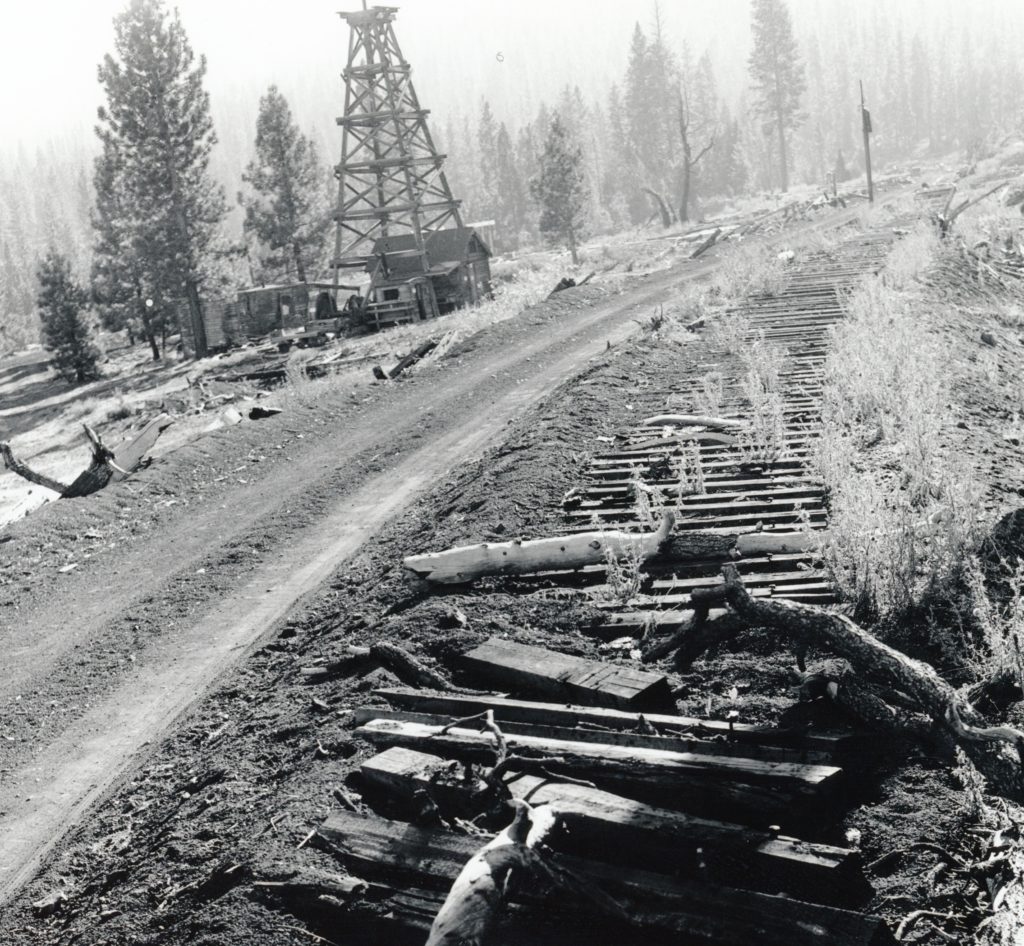
In April 1938 the Piute Railroad logging line sustained major damage from Desmond Meadows to Susanville. The Red River Lumber Company decided to abandon the line.
In 1945 a portion of the abandoned railroad line was resurrected as a log truck road. Red River was going through a dissolution process and Ken Walker took over the company’s Susanville mill, he renamed the Paul Bunyan Lumber Company. Days of railroad logging were on the wane. The abandoned Piute line provided the foundation for a truck logging road. One of the major benefits of a private road, one could bypass the weight limits imposed on county roads and state highways. On September 20, 1945 the first logging trucks made the inaugural voyage.
It should be noted this delighted Susanville’s Main Street merchants since they no longer had to contend with logging trucks interfering with their commerce.
For the casual observer who decides to make a detour off Highway 44, near Poison Lake in western Lassen County, to travel the dirt road north to Pittville, one will see a variety of sights along the way. One of the first encounters is that of Halls Flat, a small non-descript sagebrush covered flat surrounded by pine trees. Nothing to get excited about. In the late 1910s, Tehama County rancher, Walter Hall used this area for summer grazing—hence the name Halls Flat. Little did he know, that not too far in the distant future, this spot would be an amazing hub of activity.
It first began, in 1930, when the Interstate Commerce Commission approved the Highline or Inside Gateway that connected the Western Pacific Railroad from Keddie, California with the Great Northern Railroad at Klamath Falls, Oregon. This happen to coincide with the development of Lassen Volcanic National Park. The railroad would come close to the park’s eastern boundary. Lassen Park and Western Pacific had a courtship—the park was seeking a concessionaire, while the railroad hopefully would see increased passenger service.
Halls Flat could have played a pivotal role. Western Pacific would develop a resort at Manzanita Lake in the park. At Halls Flat a railroad station would be built. At this point, passengers would disembark and be shuttled by bus through the northern section of the park to their destination at Manzanita Lake to spend days recreating. To build the lodge at Manzanita along with other amenities was estimated at $275,000. Due to outside legal issues, the Western Pacific had to suddenly withdraw from the proposal.
While the proposed Lassen Park/Western Pacific Railroad deal did not pan out, the Western Pacific did not abandon Halls Flat. In 1931, when the Western Pacific constructed its Highline route they constructed a depot at Halls Flat. This was rather peculiar since not a single person resided for miles in the vicinity. Little did any one know that this would suddenly change and that in a few years there would be dramatic changes.
During the Great Depression of the 1930s, Lassen County would have two Civilian Conservation Camps, better known as the CCC. One was located at Halls Flat. The other was Secret Valley, northeast of Susanville. The Halls Flat CCC camp was established in 1933 and shut down in 1942. The camp provided a lot of manpower for the Lassen National Forest. Among the work done was grazing studies, range habitat improvement and some logging of pine beetle infested trees in the nearby Blacks Mountain Experimental Forest.