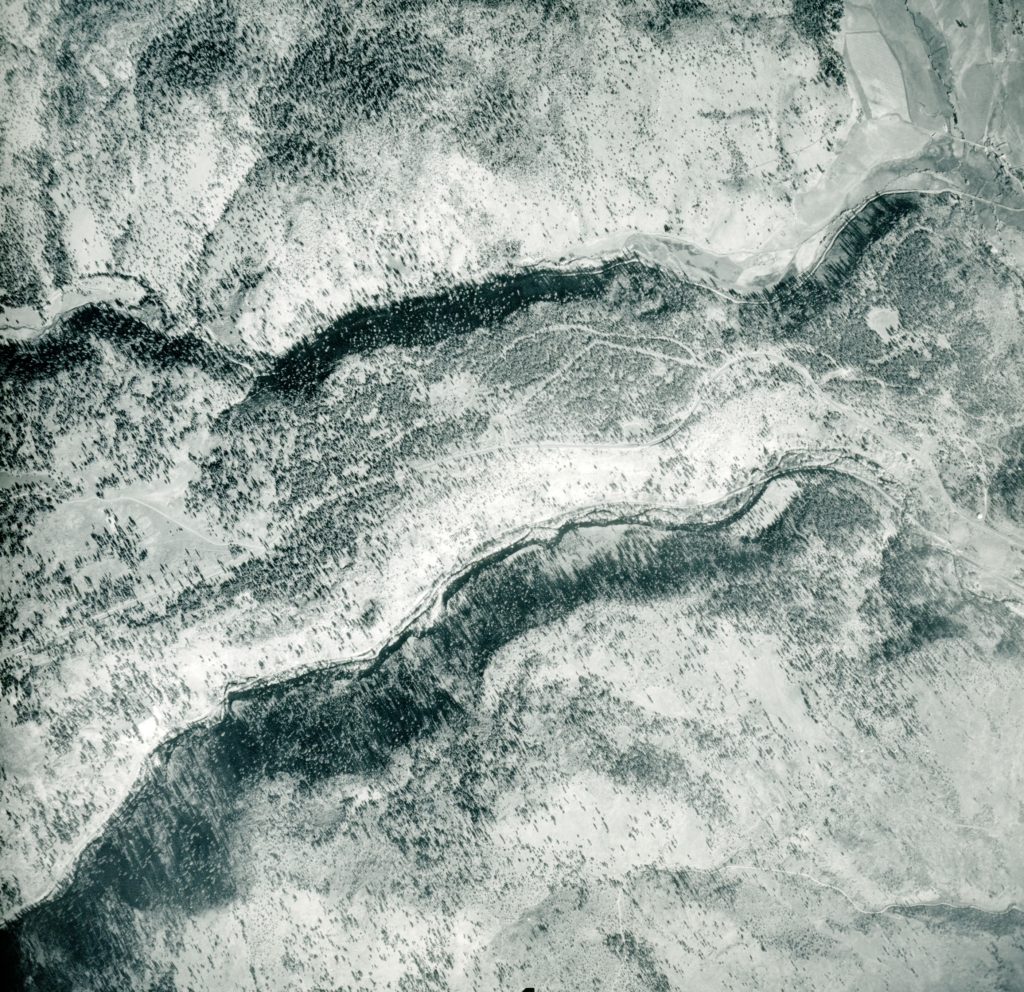
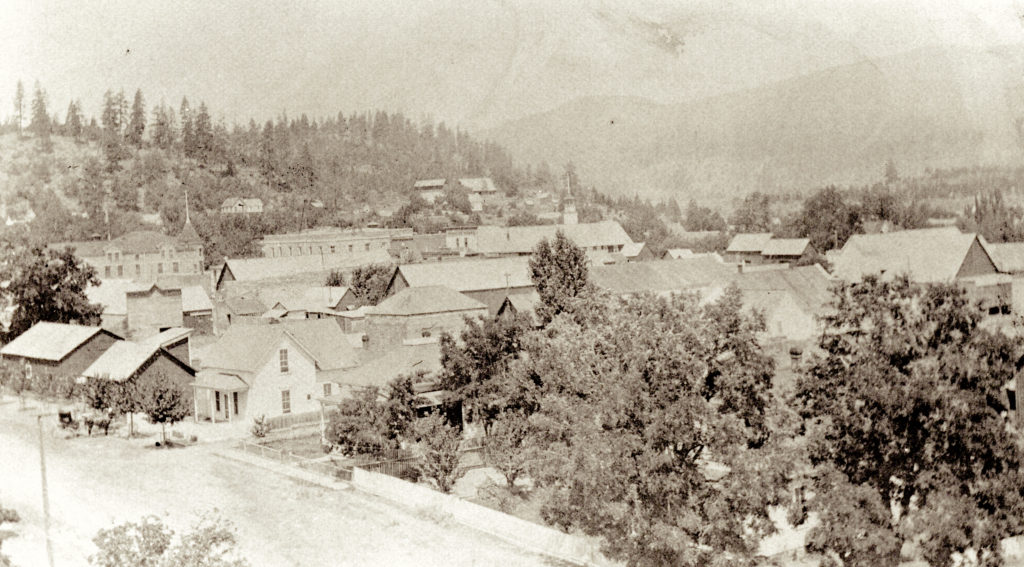
Piute Creek, upper, and Susan River, lower, just prior where the streams enter Susanville. Both canyon corridors had a railroad line at one time, though the Piute line was very brief. Personally, to me, it would have made better sense for the Southern Pacific Railroad to have selected to build its line to Westwood via Piute Creek. After all this would have eliminated the numerous trestles across the Susan River, plus two tunnels and would not had added any significant mileage increase.
Whatever the case may be, the two corridors today are popular with those who enjoy the scenery—whether by walking, running, biking, and horseback, or whatever means to explore nature.
View of Richmond Road January 1916 from Winchester Hill. Susanville looking towards McClellands.
Many may not realize that at one time there was a large commercial apple crop being produced in the Honey Lake Valley. Locally, the apple growers benefited when the Nevada-California-Oregon Railroad extended its line into the Honey Lake Valley, thus providing a better access to markets. One of those growers was W.M. McClelland. He estimated that during the 1891 season that 20,000 boxes of Honey Lake apples had been shipped to markets in Los Angeles, Sacramento and San Francisco. McClelland noted that the price received was one dollar for a fifty-pound box. In his opinion, the grower received one-half of that amount. That made for a nice tidy sum back then.
On a final note, in 1882 McClelland purchased sixty-five acres on the south side of the Susan River that was dissected by Richmond Road, the majority of which he planted an apple orchard.
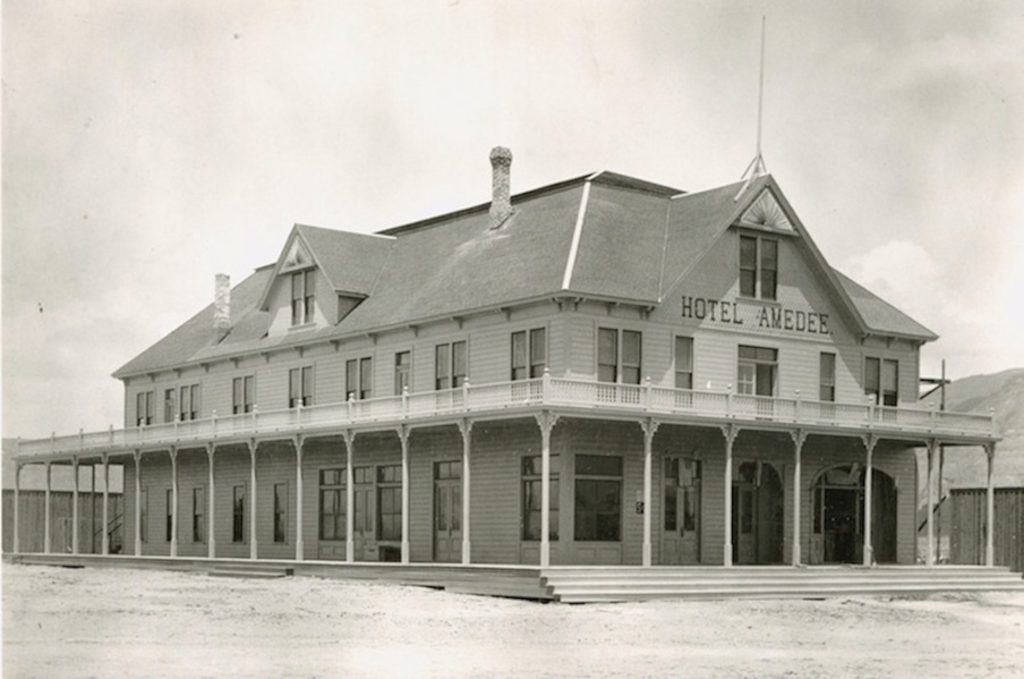
More changes were on the horizon. Amedee was receiving a great deal of press in the numerous west coast newspapers. Besides the railroad, Amedee became the focal point of numerous reclamation projects to reclaim the vast sagebrush plain of the eastern Honey Lake Valley into a major agricultural hub. The railroad, of course, saw the potential. In January 1892, the railroad’s general manager, Erasmus Gest made a deal with developer Silas N. Griffith. In the contract it was stipulated, that not only a town plot be subdivided, but a grand hotel be built within six months. Gest had only purchased the proposed townsite from Brubeck, a few days before meeting Griffith for a bargain price of $150. On June 3, 1892 a grand opening celebration of three-story Hotel Amedee was held. Once Griffith was relieved from his contract, he began his search for potential buyers of the hotel. He did have to look far, and in September 1892, Brubeck purchased the hotel that had many amenities including twenty-seven guest rooms. While the 1893 national financial crisis did put a damper on things at Amedee, it was the most important rail shipping point for Northeastern California.
The good times would not last forever. In 1898, the railroad made it known that it would extend its line north to the Madeline Plains. When that occurred Amedee would lose its prominence as the terminus and there would be an exodus. In June 1900 the extension was completed. During the town’s hey day in the early 1890s it boasted a population of between 300 to 400 inhabitants. The population of the town at the dawn of the new century had dwindled to 49. To back up a little. In 1898, Brubeck placed the hotel for sale, with an asking price of $2,000 cash. For the longest time there were no takers. In the fall of November 1900 Brubeck purchased a 1,700 acre ranch in Contra Costa County and moved his family there. It was not until April 1901 that Brubeck finally found a buyer, namely Arthur P. Holland of Oakland, California. The transaction included the entire Brubeck holdings of the Hotel Amedee, bath house, rights to the hot springs, and approximately 100 acres. Holland planned to make the place into health resort and for Brubeck, a chapter closed and a new one had begun.
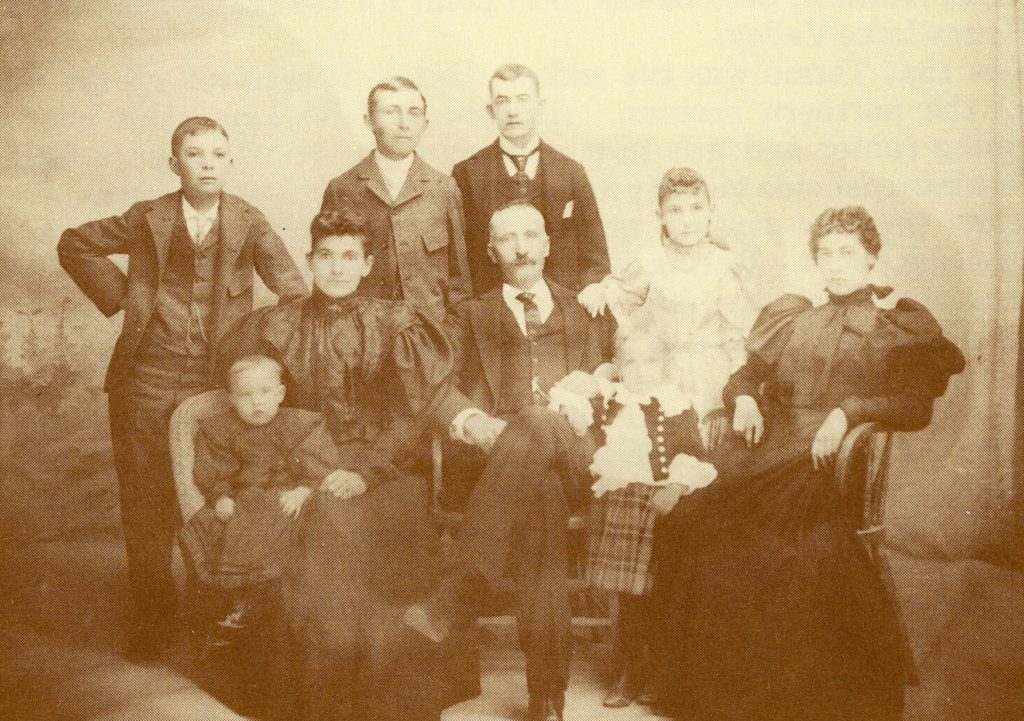
Lewis W. Brubeck Family. Standing (left to right) Pete, Phil and Will. Front Row (left to right) Edwin, Louisa, Lewis, Mabel and Edna. Courtesy of Leslie R. Brubeck
In 1873, at the age of twenty-one Philip Brubeck gave his son, Lewis a horse. Shortly afterwards, Lewis left his native Indiana and headed to California. His first stop was the Honey Lake Valley. He decided to stay for awhile and took up a homestead near the Mapes Ranch east of present day Litchfield. He became acquainted with his neighbors, especially the Grass household. On February 4, 1877 at Janesville Lewis married Louisa Grass, who was also a native of Indiana.
Like so many, Lewis was thinking the grass must be greener on the other side of the fence. In 1881, he purchased 151 acres from E.C. McKenney of Reno for $350. The property was located on the east shore of Honey Lake, and consisted what was designated at the time as Lower Hot Springs. No one had resided there since the Pearson Massacre of 1868. The first order of business was lumber for a house and fence posts for property improvements. This presented a challenge as the nearest sawmills were located a considerable distance away on the west side of the Honey Lake Valley. At Milford he had a raft constructed to float the lumber across Honey Lake to his new home.
Life was fairly uneventful there during the 1880s, though by the end of the decade Lewis and Louisa now had five children—William Andrew, Edna, Philip, Peter Howard and Mabel. In August 1890 the Brubeck family experienced a dramatic change in their lives. Located ten miles to the south was Leigan the terminus of the Nevada and California Railroad. Within a matter of months, the railroad extended its line north to Brubeck’s to become the new terminus named Amedee.
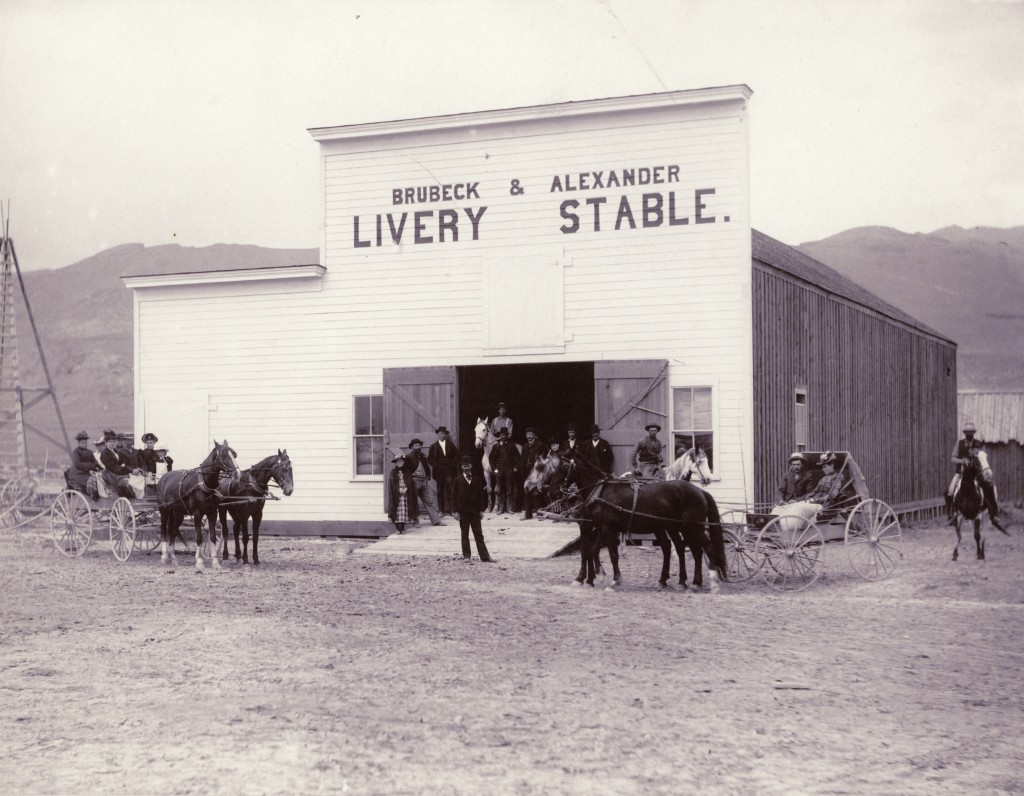
The first item of business for Brubeck was to move his house next to the railroad. Thus, he began the transition from rancher to an innkeeper. He was overwhelmed with business. In December 1890, Brubeck’s new Pioneer Hotel opened for business. The second floor contained eight guest rooms. On the first floor, there was a ladies parlor, two dining rooms, bar and the kitchen to feed the guests. He took advantage of the hot springs, and built a small bath house. Business was brisk. Brubeck expanded his horizons by opening a livery stable. Amedee was on the verge of becoming a “boom town.” Brubeck’s dining rooms were serving over 200 people day. He ended up using his livery stable as an overflow to his hotel.
This Amedee business partnership lasted less than a month. Courtesy of Tom Armstrong
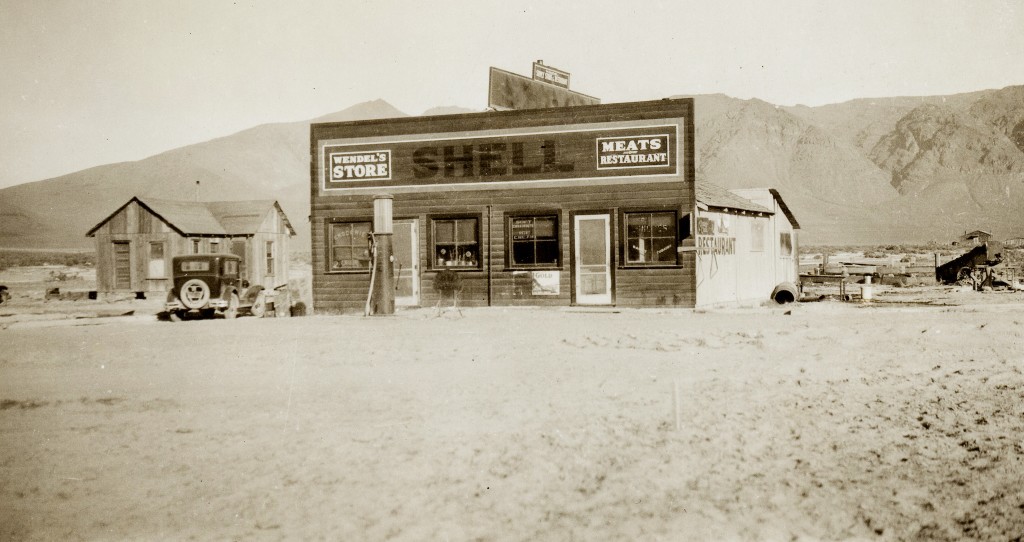
Wendel Store, circa 1925. Courtesy of Alda Riesenman
This was not your best criminal mind at work. At one o’clock in the morning of February 22, 1931, fifteen-year-old Paul Bryan entered Bill Lewis’ restaurant in Wendel. (It no doubt operated twenty-four hours day to accommodate the railroad workers.) He asked the night clerk for some onions. The clerk went into the store room to fetch the onions. When the clerk returned Bryan and the store’s slot machine were missing. In a short time Bryan returned for the onions. The clerk obliged with the onions and when Bryan left, the authorities immediately notified.
At daybreak, Sheriff Jim Leavitt spotted the young man in the railyards trying to board a freight train. He was arrested on the spot. About a mile from the restaurant the slot machine and bag onions were found. The slot machine had been chopped opened with an axe, the money all gone.
Chilcoot Tunnel, December 2, 1906. Courtesy of Marge Foster
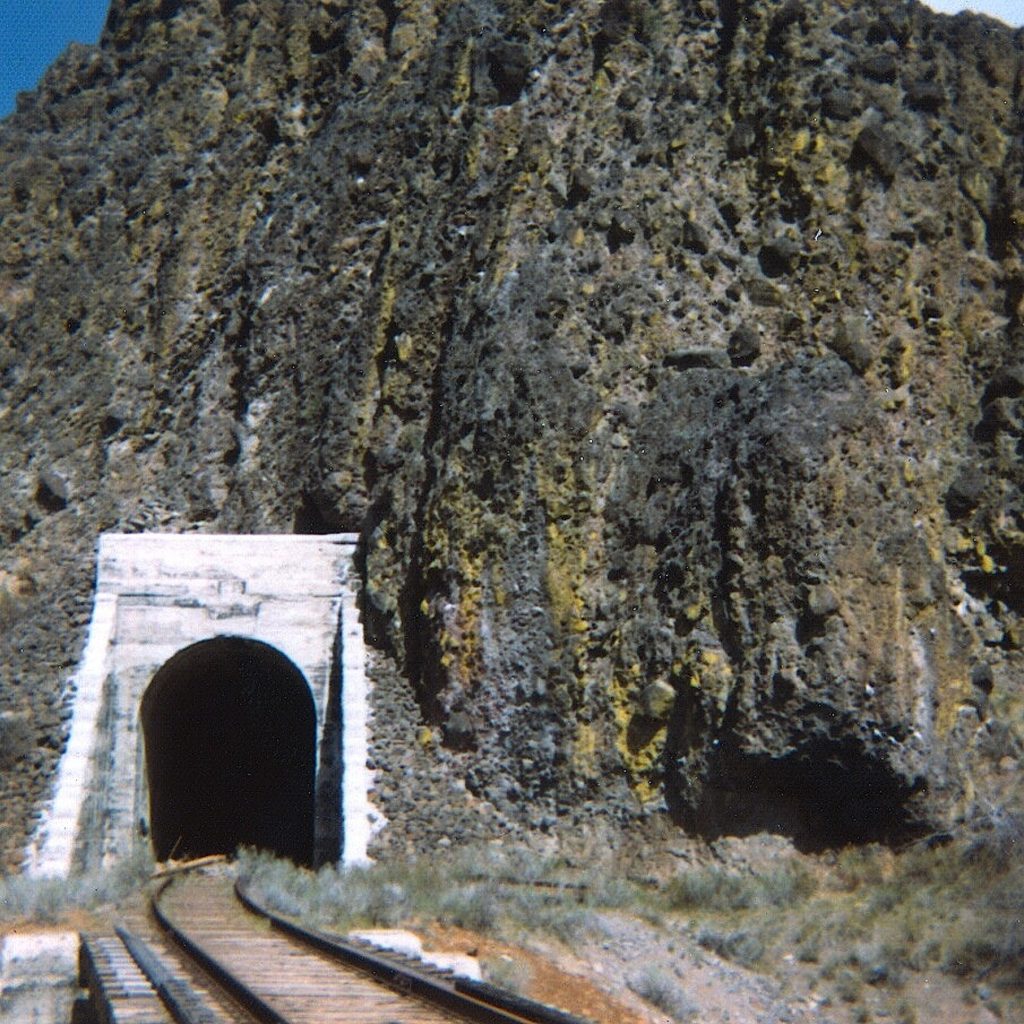
In the fall of 1903, Western Pacific Railroad surveyors invaded the Honey Lake Valley and the region west of Susanville. This led to speculations regarding a new route to bypass Beckwourth Pass. If that was the case, the railroad would not have to build the 6,002 foot-long Chilcoot Tunnel under Beckwourth Pass, but even an additional longer tunnel at Spring Garden towards Quincy. It was decided on the Beckwourth Pass route, though the Susanville route would later gain traction.
On May 28, 1912, a fire broke out on the west end of the Chilcoot Tunnel. The heat was so intense WP crews were unable to suppress it. Newspapers, both local and regional, were quick to attack the WP over the costly Chilcoot and Spring Garden tunnels. It would take nearly a year before the Chilcoot tunnel could be repaired. To keep the trains moving, an expensive shoo-fly (temporary track) was constructed over Beckwourth Pass.
The Susanville route, now referred to as “cut-off” was debated. On September 13, 1912, Susanville’s Lassen Advocate wrote: “The Chilcoot Tunnel is still too hot that men cannot work in it. That tunnel will yet make it so hot for the pocketbooks of the Western Pacific.” It took nearly a year and a half before the tunnel reopened.
One of popular local attractions is the Bizz Johnson Trail. It is a Rails to Trails Project to convert the abandoned railroad line between Susanville and Westwood. Like many projects it did not happen overnight. When it was first proposed in 1978, there was some local opposition.
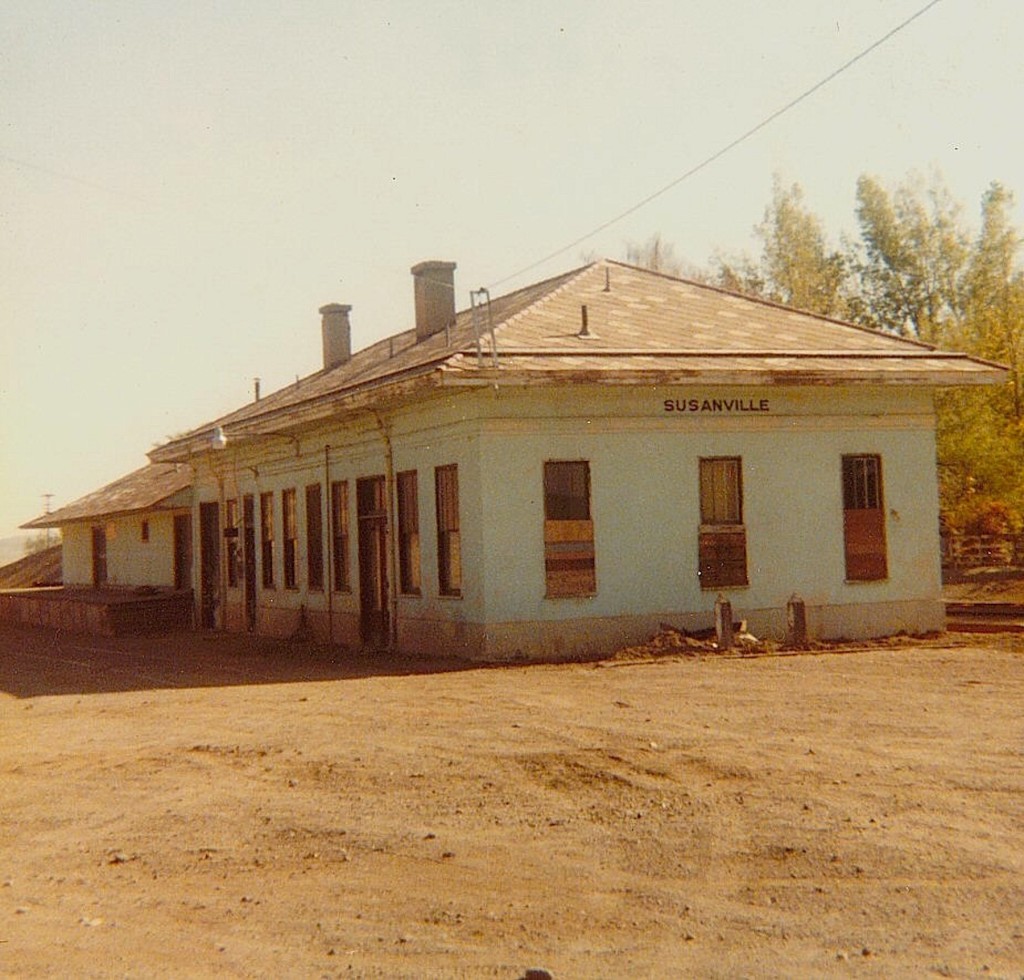
Anyhow, the project moved forward. There was a lot of work to be done to make the conversion a reality—like the removal of the rails and ties. In the summer/fall of 1981, Jim Dobbas of Truckee, a salvage operator had the job to remove the said rails and ties. For a time there was an impressive site of stacked rails and ties at the Susanville Depot. A portion of the re-usable rails were donated to the Virginia and Truckee Railroad.
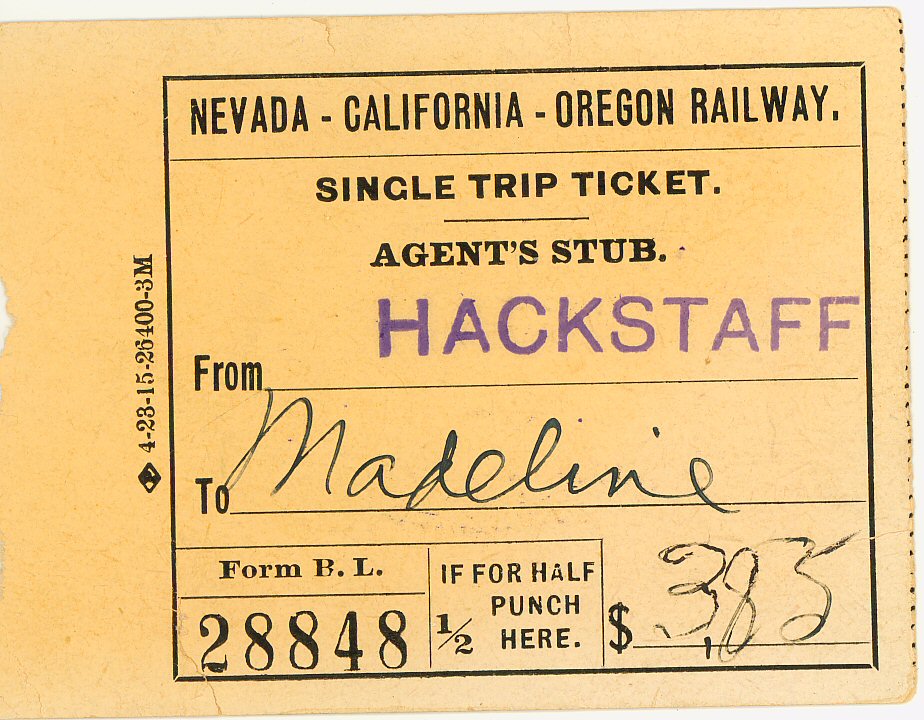
A November 22, 1915 NCO ticket stub. Courtesy of Dorothy Capezzoli
The Nevada-California-Oregon Railroad (NCO) was a stingy operation and because they had no competition for many years, took advantage of the situation with its freight and passenger rates.
However, in January 1892 the NCO offered a generous one thousand mile ticket good for the whole year for an entire family at $30. At that time, Amedee was the end of the line and was 80 miles north of Reno. A one way fare between the two places was $1.35. So if one was doing frequent travel it was a bargain. With Amedee a thriving boomtown, the NCO knew there were would be a lot of passenger traffic, hence the special offer.
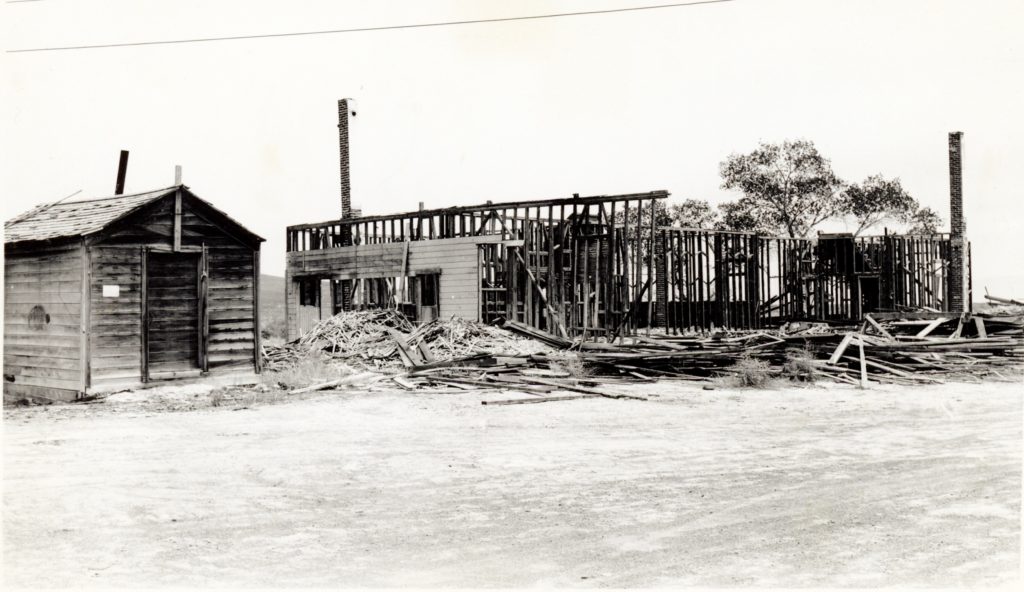
The remnants May 1950. Photograph taken by Harry Ryan
Amedee was the premier railroad boom town on the east side of Honey Lake. It was created in essence when the Nevada-California-Oregon Railroad (NCO) extended its line there in 1891. The following year witnessed lively times rivaling in population of Susanville. The town’s centerpiece was the majestic Amedee Hotel. In 1899, the NCO began work to extend its line north, and Amedee slipped a notch or two in importance. A revival of sorts began in 1910 with the Standish Water Company’s development of an elaborate irrigation system. In 1912. A second railroad, the Fernley & Lassen, added more excitement to region.
By 1917, Amedee’s decline had begun. In 1918, the NCO abandoned the segment of the railroad that serviced Amedee. At the same time the Standish Water Company’s project failed. Then with the advent of World War I a major segment of the east side of Honey Lake was de-populated. By the 1930s, the only occupants of the hotel was the town’s caretaker. By the 1940s the hotel was in a slow decay. In the spring of May 1950, Jack Humphrey who owned it had the hotel dismantled, since it was constructed with premium lumber. The lumber was then hauled to Jack’s residence near Milford, in which he intended to use it to construct a new home the following year. That September a forest fire destroyed the barn that the lumber was stored in.
A unique view of Susanville, 1905. Courtesy of Mary Dale Folsom
This was a very short-lived organization that existed during the month of January 1899. The lead instigator, was well known Susanville attorney, E.V. Spencer. At this time, The Nevada-California-Oregon Railroad (NCO) began work to extend its line north from Amedee to the Madeline Plains, again bypassing Susanville. Spencer and L.C. Stiles were appointed representatives of the Club to meet with NCO officials, in this case E. Gest, the manager. The duo reported the meeting was cordial, the NCO had no intent to construct a feeder line. Gest, is the people wanted to construct it, he estimated the cost at $100,000. The initiative floundered. It is interesting to note that Gest testified that summer to California Board of Equalization that the people of Susanville did not deserve a railroad.
There were some local critics that thought the Susanville Improvement Club could do a lot of other work than trying to be a railroad builder. Whatever the case may be, the improvement club morphed into the Susanville Town Hall Association a month later.