Tag Archives: Railroads

California Here We Come

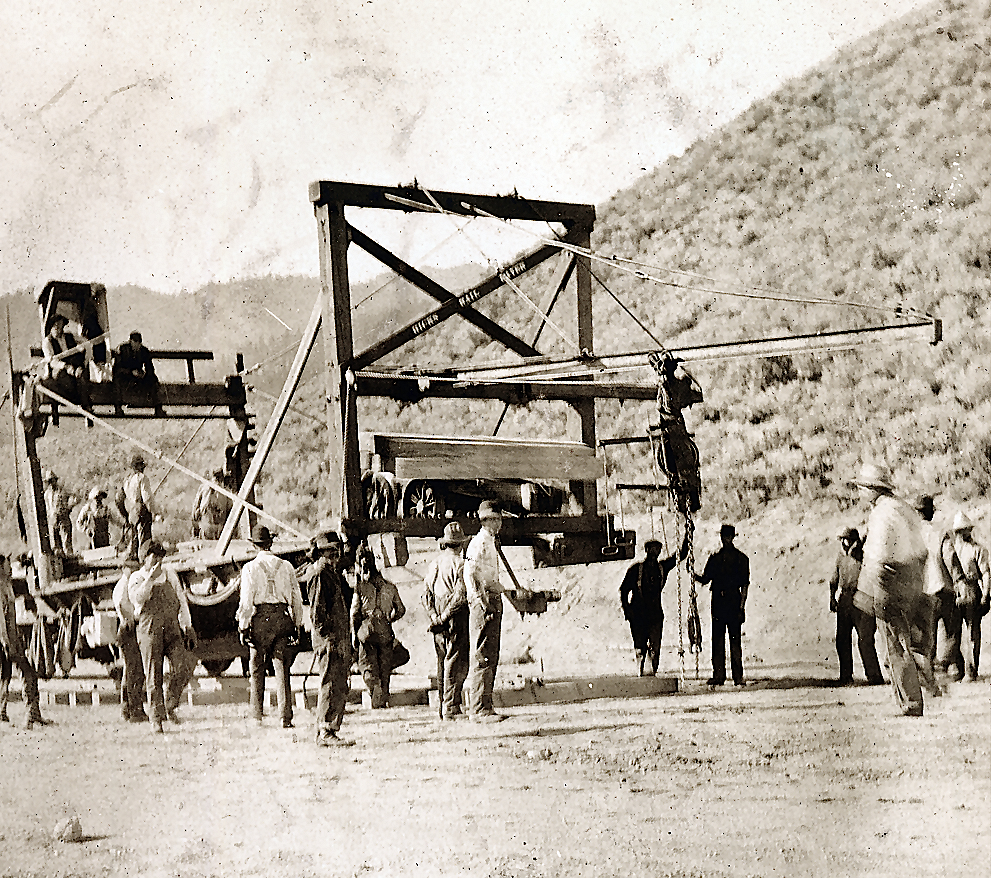
Great Northern’s Tracklayer entering Big Valley. Courtesy of Orville Watkins

In 1893, The Great Northern Railroad reached Seattle, Washington, from its origins in Minnesota. Its founder, James J. Hill, known as the “Empire Builder” wanted more. He wanted to extend his line south to tap into the lucrative California market. During the early 1900s over a half dozen railroad surveys were made in the Lassen-Modoc region.  Speculation was rampant. In 1909, it was rumored that the Great Northern would purchase the region’s NCO Railroad which would provide Hill a link into California. It never materialized, and Hill retired from the railroad in 1912, and passed away in 1917.

In the late 1920s, Hill’s dream would become a reality with the construction of the Inside Gateway, where a 200 mile railroad construction project would connect the Great Northern and Western Pacific Railroads. The Interstate Commerce Commission approved the project in 1929.The Great Northern would build an 88 mile rail line from Klamath Falls, Oregon to Bieber where it would connect with the Western Pacific, as they would extend a branch line from Keddie to Bieber.

Support

Halls Flat, Lassen County

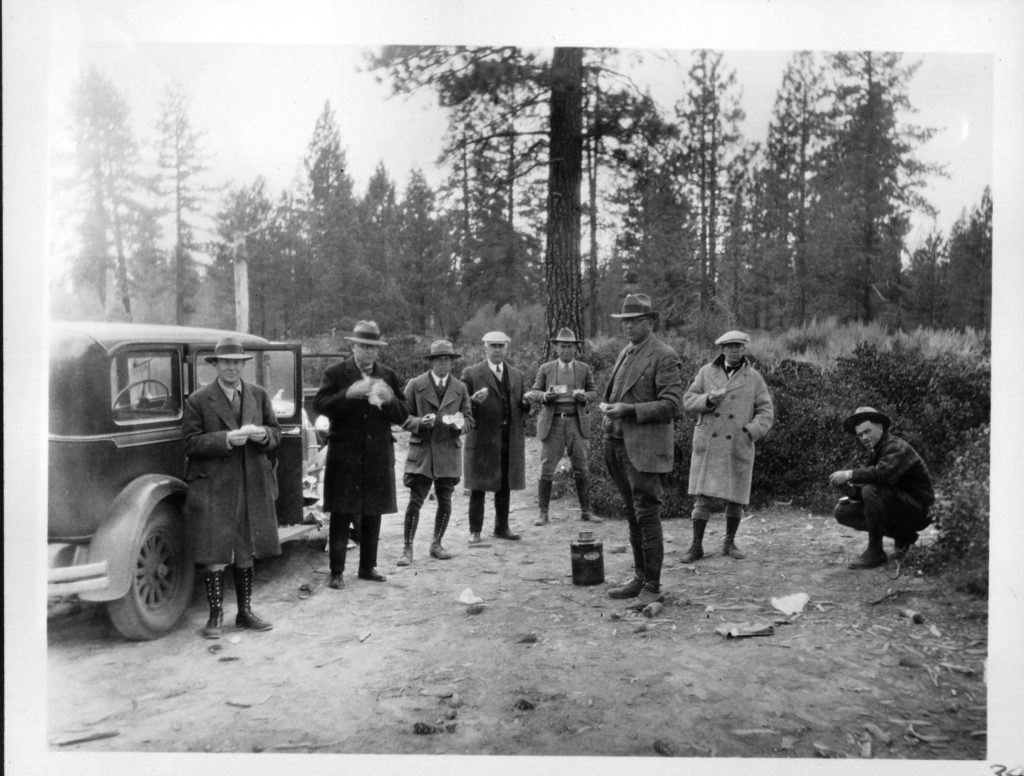
Lunch break of park and Western Pacific Railroad officials, 1930. Courtesy of the National Park Service

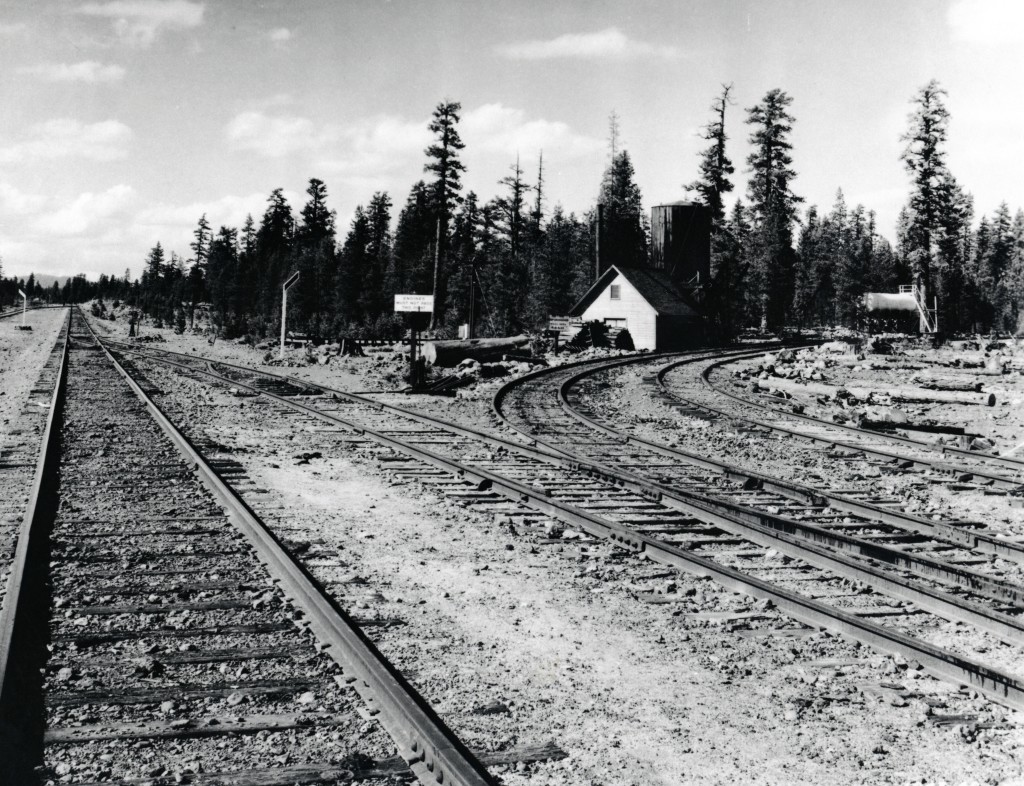
For the casual observer who decides to make a detour off Highway 44, near Poison Lake in western Lassen County, to travel the dirt road north to Pittville, one will see a variety of sights along the way. One of the first encounters is that of Halls Flat, a small non-descript sagebrush covered flat surrounded by pine trees. Nothing to get excited about, but like watching one of those late night infomercials, there is a lot more in store!

In the late 1910s, Tehama County rancher, Walter Davis Hall (1886-1960) used this area for summer grazing and on April 29, 1926, he was granted a 160-acre land patent—hence the name Halls Flat. Little did he know, that not to far in the distant future, this spot would be an amazing hub of activity.

It first began, in 1930, when the Interstate Commerce Commission approved what many refer to as the Highline or Inside Gateway that connected the Western Pacific Railroad from Keddie, California with the Great Northern Railroad at Klamath Falls, Oregon. This just happen to coincide with the development of Lassen Volcanic National Park and this future railroad line would come close to the park’s eastern boundary. Customary at the time, Lassen Park and Western Pacific had a courtship—the park seeking a concessionaire, while the railroad hopefully would see increased passenger service among other amenities.

This is where, Halls Flat could have played a pivotal role. Western Pacific would develop a resort at Manzanita Lake in the park. At Halls Flat, or maybe Poison Lake, where a railroad station would be built, there would a stop. At this point, passengers would disembark and be shuttled by bus through the northern section through the park to their destination at Manzanita Lake to spend days recreating. To build the lodge at Manzanita along with other amenities was estimated at $275,000. Due to outside legal issues, the Western Pacific had to suddenly withdraw from the proposal.

The stage was set, for different reasons, and Halls Flat became a major hub of activity during the 1930s and 1940s that we will explore in future installments.

Subscribe

Modoc Line – Horse Lake Siding

Horse Lake Station, 1915. Courtesy of Nevada Historical Society

In 1996, the Union Pacific Railroad received permission to abandon    an 85 mile segment of railroad from Wendel to Likely. Since then it has been converted into another “rails to trails.”  It should be duly it was the NCO Railroad that initialy constructed the line and in the 1920s it was acquired by the Southern Pacific  Railroad.

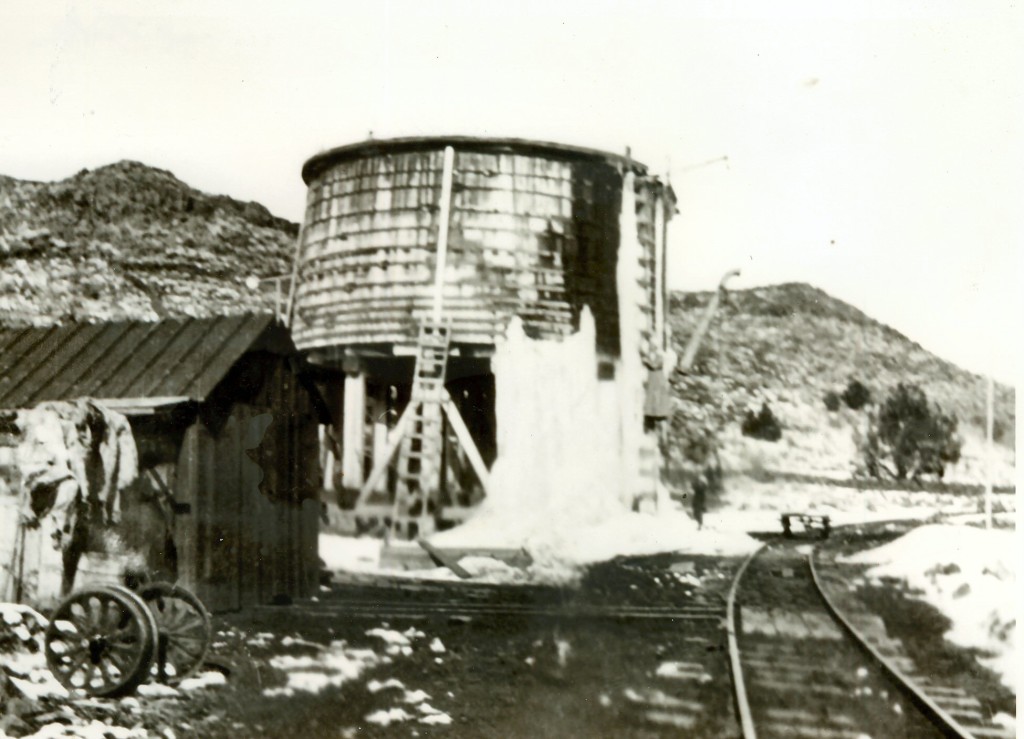
The Horse Lake Station later siding was established in the early 1900s by the NCO. It was so named after Horse Lake, located five miles to the west. An interesting footnote in its history. In 1913, the Shumway Post Office at Horse Lake was closed. In 1916, Horse Lake residents attempted to re-establish the post office and have a mail drop off at the NCO’s Horse Lake Siding. The postal authorities denied the request. They stated they did not need a mail drop off as there were only four permanent families residing in the area.  In addition, it was cited, the NCO was an unreliable operation, with irregular train service, and since there was no attendant there, there was no way the mail could be protected.  In 1961, the Southern Pacific abandoned the siding.

Foundation remains of the Horse Lake Siding, January 27, 2019. Courtesy of Anna Stewart

Subscribe

The B&T Railroad

Construction of the Western Pacific Railroad near Constantia. Courtesy of Marie H. Gould

In 1907 the Lassen Advocate provided some interesting statistics concerning the construction of the Western Pacific Railroad (WP). The paper’s editor/publisher, E.W. Hayden, was fascinated that there were to be 75 bridges, most of which were west of Wells, Nevada. The aggregate length of these bridges was estimated at three miles, that would require 20,000 tons of steel to construct.  Then there was the staggering amount of tunnels to be constructed. In a bit of tongue and cheek, Hayden suggested the WP should change its name to the B&T—Bridge and Tunnel Railroad.

Subscribe

January Snowstorms

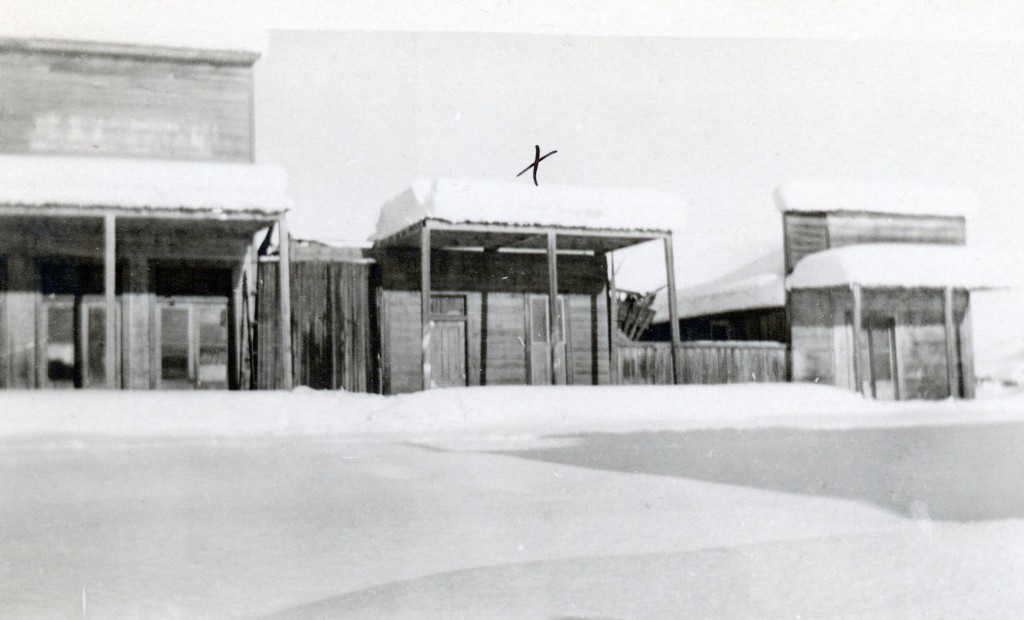
Amedee, January, 1911. The “x” indicates the town’s old dance hall. Courtesy of Madelyn Mapes Dahlstrom

According to the weather gurus, this week we may experience a decent storm. January, typically, is when some of the record breaking storms occur. Take for instance in 1911, when in one storm Susanville received eight feet of snow. What was truly remarkable was Amedee, on the desert east side of Honey Lake received the same amount. Johnstonville resident, Robert E. Trussell, who was fourteen at the time, recalled you could not see a single fence post in the valley.

Construction of the Fernley & Lassen Railroad, west of Susanville in eight feet of snow.

In January 1914, snow pummeled the region. This caught Southern Pacific Railroad officials off guard. Talk about panic mode, and they recruited  1,000 men to shovel eight feet of snow, so as to not hinder the construction of the railroad to Westwood, to honor the contract with the Red River Lumber Company.

North Pine Street, Susanville, January 1916

In January 1916, single storm dumped four feet of snow in Susanville. Westwood on the other hand had eight feet of snow. This storm was followed with bitter sub-zero temperatures. The snowstorm paralyzed the NCO railroad in eastern Lassen County that resulted in a twenty-one day blockade.

Subscribe

The Power of Water

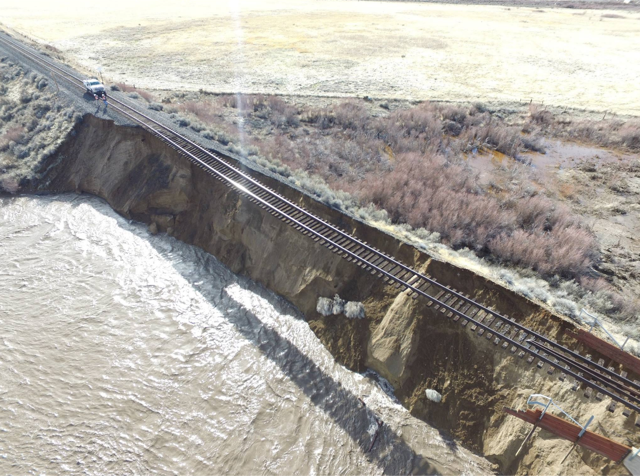
Long Valley Creek, January 2017

Any one who has ever been involved in a major water right battle that resulted in state intervention witnessed the production of an adjudication report. In the front of the report is a section called the “Duty of Water.”  In certain ways the foregoing is not entirely relevant to the topic at hand. However, state never makes reference to the “Power of Water,” and when it strikes, what to do about it.

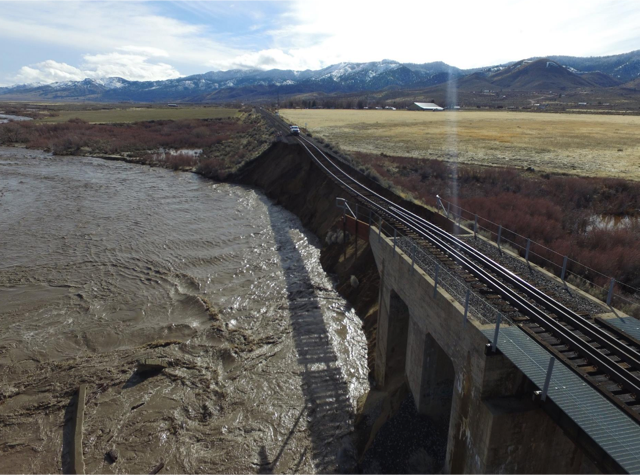
Long Valley Creek, January 2017

This post after all has a focus on Long Valley Creek, per a request of a flood during the early 1940s, though the particular date and/or other information is still being sought. For the most part it is hard to fathom that Long Valley Creek can be transformed into a raging torrent of water, when to the casual observer during the summer months, at time its flow can be a mere trickle. Yet, as one can see from the photographs shown, what kind of havoc this small stream is capable of. Tomorrow, we explore a proposed dam develop that was to harness the stream to provide water for irrigation.

Subscribe

Red River Rails

Westwood Junction

In the early 1930s, Red River Lumber Company was going through a refinancial organization process requiring an inventory of all assets and liabilities. Not an easy undertaking, with so much territory to cover. An item of interest to me was the inventory of rails used in its logging operations. It was duly noted that Red River owned 93.7 miles of rail.

However, when it came to the Piute Line, that went from Hog Flat to Susanville, those rails were leased from the Western Pacific Railroad. This, no doubt, added more fuel to the speculation that this particular railroad was destined to be a feeder line for Western Pacific’s nearby Highline. The report noted that the initial 1917 survey of the Piute was to begin north of Westwood Junction near McCoy Flat. However, those plans had to be scrapped when Fruit Growers logging railroad traversed there.

Subscribe

Nubieber, Lassen County

Nubieber, 1949

The town came into existence in 1931 when it became the connecting point of the Great Northern and Western Pacific Railroads.  The first name proposed was Big Valley City by Byron S. Greenwood, the promoter of the new town.  When the Postal Department received Greenwood’s petition for a post office for the town, they denied the name. The Department had adopted a policy against three word names.  The Great Northern designated their new station as Bieber, though the town of Bieber was located two miles northeast.  It was suggested to call it West Bieber, but that name did not find acceptance and finally the name Nubieber was chosen.  On July 4,1931, a patriotic celebration was held.   Mrs. A.W. Peterson, President of the Ladies Pioneer Club, gave a brief speech and then introduced Miss Vivian Goddard who christened the townsite of Nubieber by breaking a bottle of wine over the entrance sign.  Nubieber, like so many speculative railroad communities, never reached the expectations of its promoters. In 1940, Greenwood traded all his unsold lots, (the vast majority of the town that encompassed 250-acres), along with his adjoining 630-acre ranch, to E.L. Robertson of San Francisco, for a 60-room apartment building in San Francisco.

Donate

Westwood’s First Railroad Shipments

Construction train in the Susan River Canyon.

In February 1914, the Fernley & Lassen Railroad reached Westwood. This was welcomed news, since the newly founded community was cut-off from the rest of the world. The first rail shipment to Westwood was a carload of hay. Some today, may find that peculiar. However, the town heavily relied upon horses for most everything. While there were a handful automobiles there, with the heavy snows that winter, they were totally useless.  On the other hand, for the railroad’s return trip, 12 million board feet of high grade lumber awaited it. After all, that was the main purpose for the railroad to be constructed in the first place.

Subscribe

A Western Pacific Request

The Western Pacific Depot, Doyle, 1915. Courtesy of Suzanne Pratt

I recently request concerning the Western Pacific Railroad. “Do you have any photos or data about when Long Valley Creek roared and washed out the Western Pacific’s large culvert just north of Doyle during World War II? I remember when it happened, but not the year I remember the trestle built to keep the trains running, while the current structure was being built.” Can anyone help?

In a similar vein, does anyone have photographs of the tracks near Doyle when a portion of the railroad bed was washed away during the floods of January 2017?

Subscribe