Tag Archives: Fruit Growers Supply Company

Preparing for Winter – Log Decks

Red River's winter log deck near Camp 16
Red River’s winter log deck near Camp 16

The two largest mills, Fruit Growers and Red River maintained two type of winter log decks. Usually, normal logging operations ceased in November. Yet, to keep the mills operating throughout the winter, required to have a substantial amount of harvested timber. There was the log deck at millpond, and then a second one out in the woods.  The latter was not brought into the mill until spring, since the winter mill supply was nearly exhausted. The log decks in the woods provide enough logs during the transition, since it would take some time when the logging camps opened in the spring, to provide a steady supply to the mill.

It should be noted the decked logs in the woods, were protected with heavy snows, thus preventing checking or blue stain.
Never miss a story, click here.

Camp A – Fruit Growers Supply Company

Camp A
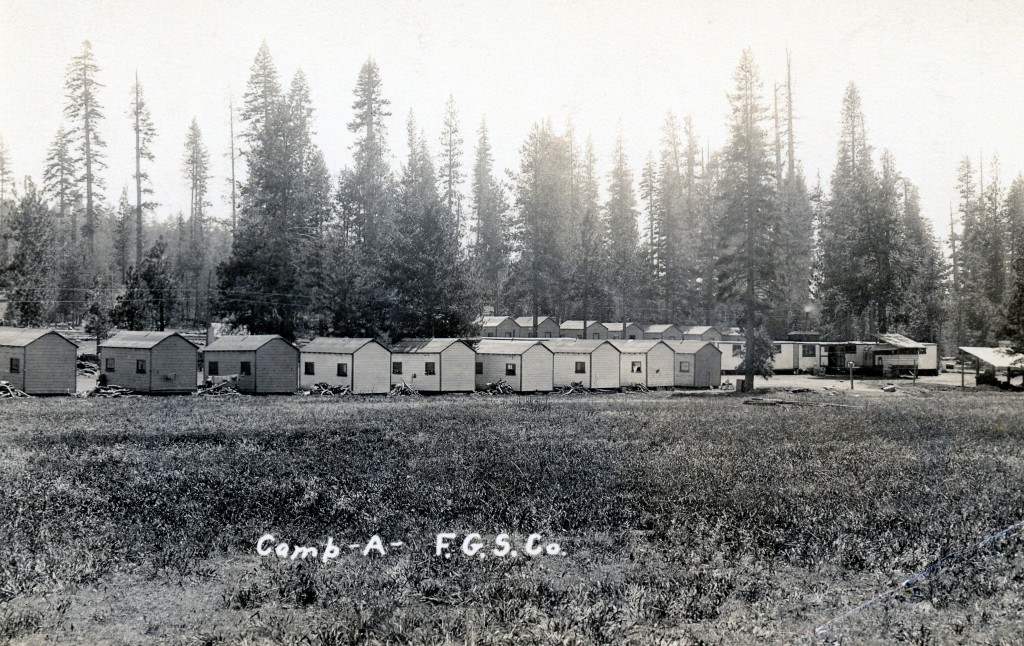
Camp A, Fruit Growers Supply Company, located just north of McCoy Flat Reservoir, 1921

In the summer of 1920, Fruit Growers started their logging operations near McCoy Flat Reservoir, while their Susanville mill was still under construction. Since logging then, was seasonal in nature, they wanted to make sure they would have a steady supply of logs ready when the new mill would be placed into operation in the spring of 1921.

Camp A was the first of ten railroad logging camps of Fruit Growers Lassen Operation. It opened on July 1, 1920. The operation was comparatively small, only logging 720 acres that season. On April 29, 1921 the first woods crews were dispatched by rail, where they encountered three foot of snow on the ground. The first item of business was to remove the snow from the railroad spurs, so that the timber fallers could start work. Within in a weeks’ time, logs were already being shipped to Susanville. In addition, a second camp, known as Camp B, opened three miles to the north of Camp A. Between the two camps, they housed over 600 men.

Support

Your Questions

Cross
This cross marks the graves of the soldier’s buried at Camp Smoke Creek

Two interesting questions were posed, which I will address in separate posts. The first is Fruit Growers Supply Company’s “Sunkist Lodge” on the south shore of Eagle Lake. It just happens to be for sale.

As to the military of the 1860s, is an interesting topic. I already have two posts scheduled. The military encampment at Smoke Creek served two purposes. An interesting facet of that operation was to prevent gold bullion from leaving the State of California, on the suspicion that it might be used aid the Confederacy. Of course, there is some interesting political drama with these military encampments. Stay tuned.

Tim

P.S.  I just realized I had done a lot of research on Camp McGarry, located at Summit Lake and Soldier Meadows in far northwestern Nevada.

Forty Years of Fruit Growers, 1907-1947

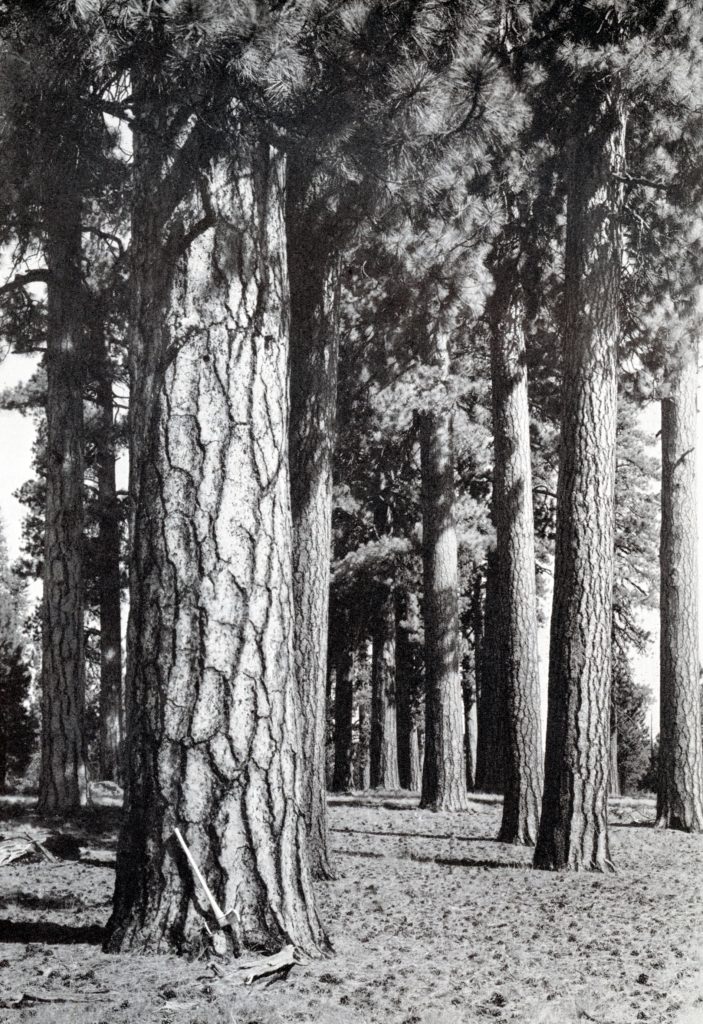
A stand of ponderosa pine of Fruit Growers

On October 7, 1907 citrus owners organized the Fruit Growers Supply Company, as a co-operative purchasing agent for the growers. This was due in part, as the growers were having a difficult time securing wooden boxes to ship citrus. Little did they know that within a few years they would be operating a sawmill and box factory at Hilt, Siskiyou County. This turned out to be beneficial. In 1919, with difficulty securing wooden boxes due in part of the conditions of World War I, they expanded and bought 41,000 acres of timberland in Lassen County and established a mill and box factory at Susanville.

In their 1947 annual Fruit Growers report they noted that Hilt had produced 896,824,000 board feet of lumber and the box factory consumed 729,445,000 board feet of lumber. At Susanville the total cut. was 1,597,990,000 feet of lumber and the box factory consumed a total of 902,128,000 feet of lumber.

An indicator of growth with their successful marketing of the Sunkist brand, in the first year they needed 6,628,000 boxes.  Forty years later the number of boxes had escalated for 40 million.

Tim

A $40,000 Investment Pays Big Returns

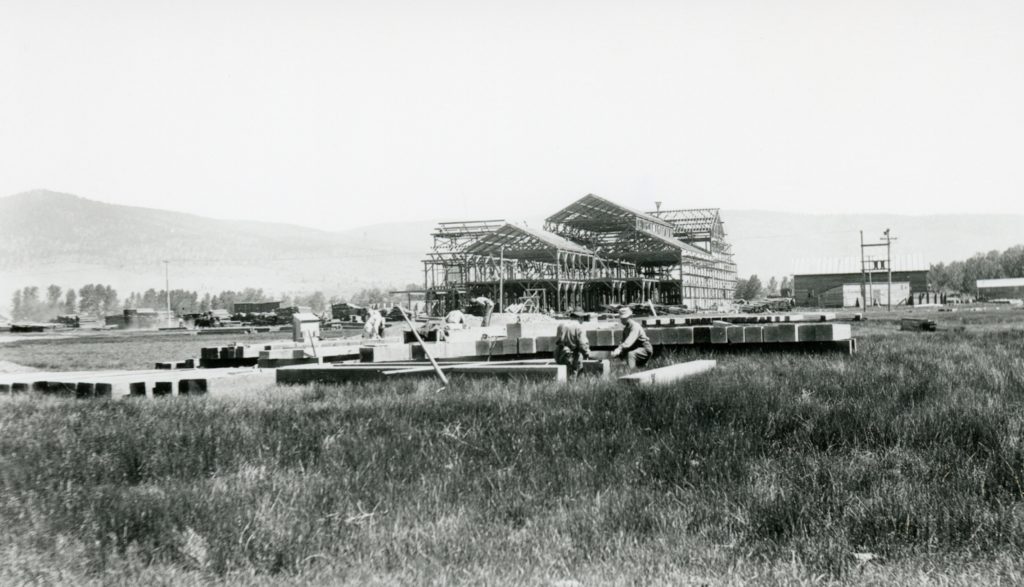
Construction of the FGSBox Factory, Susanville, 1920—Ed Standard

When Fruit Growers Supply Company decided to build a sawmill and box factory in Lassen County, they initially wanted to locate either in or adjacent to their timberlands. Fruit Growers Manager Frank Hutchens consulted with the Lassen National Forest which suggested two sites—Pine Creek, near Bogard Buttes and the Pine Creek estuary at Eagle Lake. There was a third alternative—Susanville.

Susanville’s business community  was eager to have Fruit Growers build their mill there. So much so, they offered a cash bonus. A total of $41,130 was pledged by 243 residents if the mill was located At Susanville. Hutchens was impressed. On August 13, 1919 Fruit Growers agreed to the location of the mill at Susanville.  In October, a check was for $40,070 was presented to Fruit Growers (a handful of individuals reneged on their pledges.

In 1920 construction began on the mill which with cost over runs exceeded over two million dollars. An additional $245,000 was spent to construct employee housing. When the mill opened on April 16, 1921 they initially employed 1,500 people. The initial monthly payroll exceeded $100,000. That $40,000 investment by the community far exceeded expectations!

Support

Logging Reload Stations

The reload station at Camp 10, 1950

Many may not be aware that truck and railroad logging worked in tandem. Just like transition from horse logging to motorized tractors would take time, it was the same with trucks to be incorporated into logging operations. One of the benefits was trucks could access terrain to difficult for railroad operations. To get the most mileage for buck was the reload station. Trucks were used to log difficult terrain and then instead of driving all the way to mill, the destination was to the railroad’s reload station. The trucks were unloaded, then the logs reloaded onto railroad flat cars, thus an economical way to move volume of logs from the woods to the mill.

Support

Skagit Speeders and Camp 10

Crummy
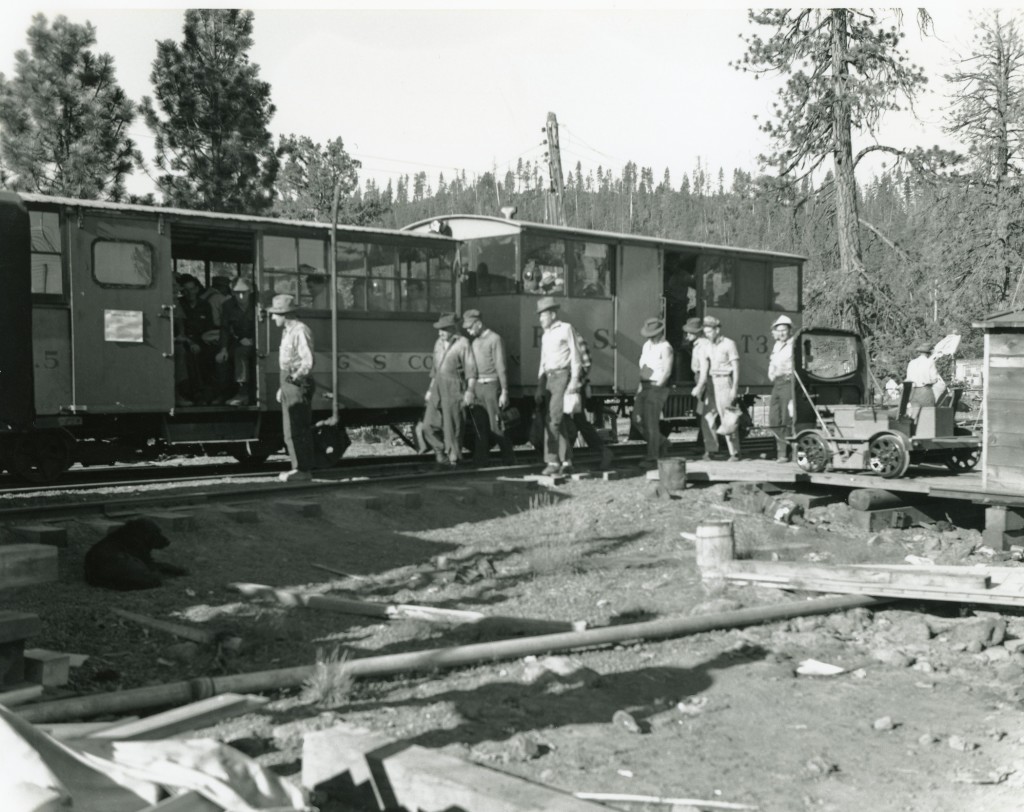
Speeders at Camp Harvey, 1947

In 1932, the Fruit Growers Supply Company purchased two Skagit speeders to be used in their railroad logging operations at Camp 10.   The speeders were an economical and easy way to transport loggers to the work site from the logging camp.

Herman Baumann, Fruit Growers woods superintendent best summed it as: “Our Skagit speeders permit us to maintain a permanent camp eliminate cost of frequent moving and provides cheap transportation to and from camp without interfering with logging trains.”

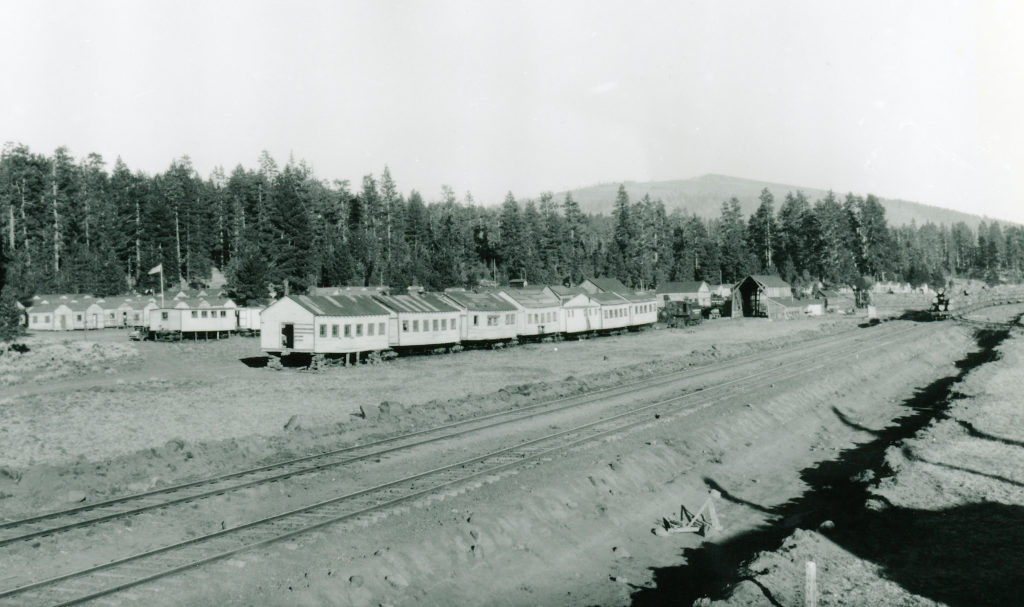
Fruit Growers Supply Company, Camp 10, Pine Creek Valley, 1932.

In 1928, Fruit Growers began preparing a new logging camp, designated Camp 10, located in the northeastern corner of Pine Creek Valley. Its layout would be largest of its preceding nine camps—with the unique distinction in a short time would be the company’s only logging camp. With the introduction of Skagit speeders converted Camp 10 one from a temporary status to a permanent one. Camp 10 operated through the logging season of  1952, the last railroad logging camp to operate in Lassen County.

Support

The Winchester Barn

FGS barn
The old Fruit Growers barn, June 2, 2015

Researching barns is a challenge, some times one finds documentation in newspapers and some times not. The old Fruit Growers barn near the east entrance of Susanville was a perfect example. It should be noted that the barn was destroyed by fire on June 16, 2015. At that time, I attributed it to be constructed by the Fruit Growers Supply Company who at one time owned the property, along with a large box factory and sawmill adjacent to the barn. When Fruit Growers started logging operations in 1921, they utilized horses, hence the necessity of the large barn.

New information has since surfaced, and the barn pre-dates Fruit Growers. According to Mary Eloise Sifford who was born in Susanville on November 20, 1892 and grew in the vicinity of the barn wrote in her memoir:

“The Big Barn. When I was about ten years old, our neighbor Lorenzo Winchester, started building a huge hay barn way across the field about one and one-half miles towards Richmond Road. He had a couple of men hired, and they hauled out big beams, etc for the barn. The Winchester’s daughter Maude  [who married Frank Wood] was several years older that I was. They had a gentle roan named Kate. I know Maude and I rode her up to where the men were working and took lunch to them. It took several months to finish the barn. It served as a hay barn for a good man years. It loomed up and could be seen for miles. It was later sold to the Fruit Growers Supply Company. They used it for hay and grain and as a horse barn for their logging horses.”

Support

Dairy History Tidbit

A view looking at the former Ridenour property with the Sella dairy in the foreground, which was located at the lower end of Gold Run, 1950s. Courtesy of Wendell V. Loughead

Of course, this was one of those scenarios where a week later after I posted about the dairy history, I came across an example of the material that can be found. It just takes a lot of sleuthing.

In a February 1926 Lassen Farm Bureau news report had this: “R.S. Raven of the cow testing association reports that the FGSCo had one cow this month that produced over 60 pounds of butterfat, another produced 50 pounds, five over 40 pounds and eight over 30 pounds for the month. Mr. O”Kelley states that these cows have been fed on silage and grain.”

In March 1926 Lassen Farm Bureau new report had this: “The Red River Lumber Company had 58 cows that produced over 30 pounds of butterfat this month. Fifteen of these produced over 40 pounds of fat, 5 produced over 50 and one cow 78 pounds. E.G. Scammon states the company is milking 175 cows at present.

Donate

Pine Creek Valley, Lassen County

Pine Creek Valley
Pine Creek Valley, June 18, 2015

Traveling across Highway 44, the Pine Creek Valley appears to be a desolate wind swept sagebrush flat, surrounded by pine trees. After all, the majority of human activity is concentrated at the Bogard Rest Station. By the way the area is named for John Jasper Bogard, a Tehama County stockman, who in the mid-1870s started using the area for summer grazing of sheep. Actually, the region was home to many sheep outfits, such as Champs, Cone, McCoy and Stanford, the latter as in Stanford University. These sheep outfits had a huge impact on western Lassen County, and so many of the natural features were named for them.  Continue reading Pine Creek Valley, Lassen County