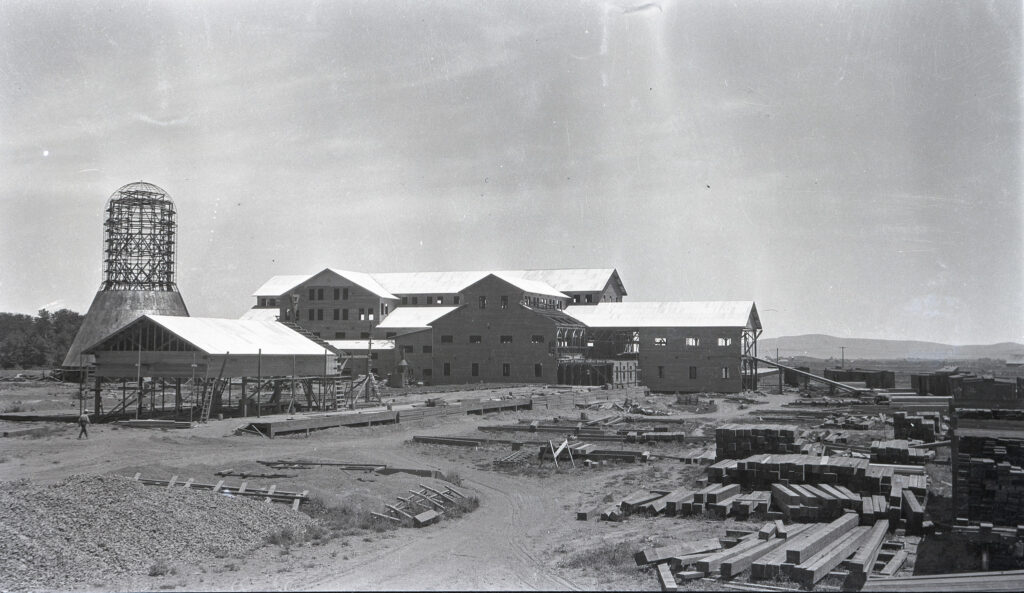
Fruit Growers Susanville plant under construction, 1920–Ed Standard
Saturday, April 16, 1921 was the dedication of Fruit Growers Supply Company’s new mill facility at Susanville. Of course, there was usual amount dignitaries on hand to celebrate the moment and give speeches. Thomas B. Dozier, a Fruit Growers’ attorney served as master of ceremonies. Dozier’s opening statement was simple, “We will supply the boxes from the Snowkist woods for shipment of Sunkist—all from California.” Dozier informed those assembled that the California Fruit Growers Exchange (renamed Sunkist in 1951) represented 10,500 growers, who produced three-quarters of the citrus in the United States.
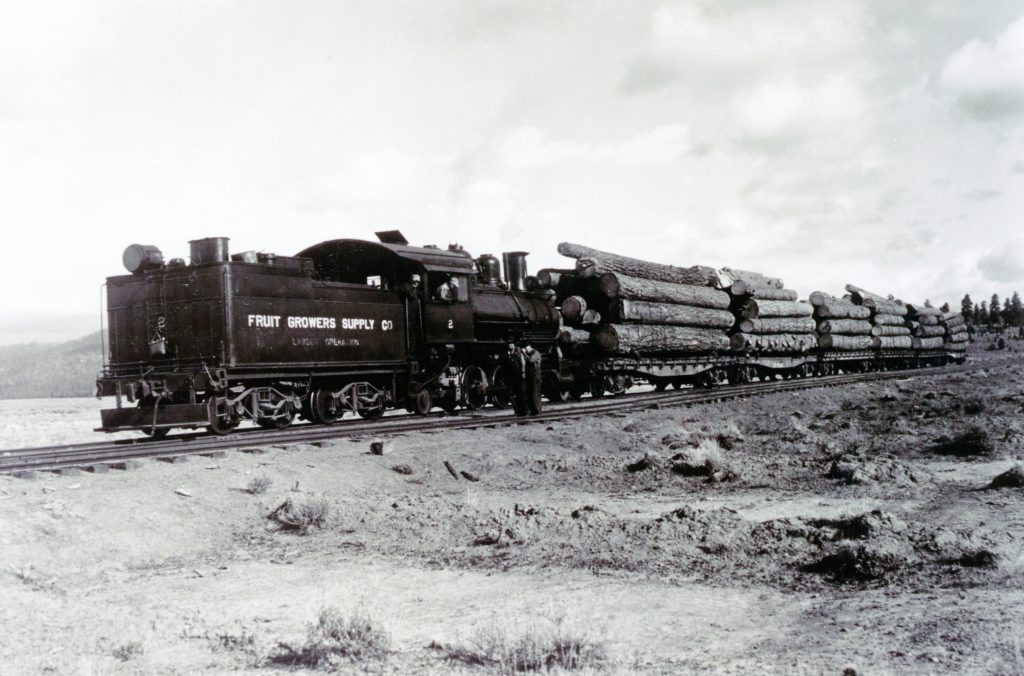
Fruit Growers logging train, Pine Creek Valley, 1940–Russell Gilbert
If you ever spent much time exploring the region west of Eagle Lake, you probably have encountered remnants of Fruit Growers logging railroad system. From 1920 through 1952 Fruit Growers railroad logged, and like many operations, finally converted to truck logging.However, it should be noted railroad and truck logging worked in tandem—transfer stations.
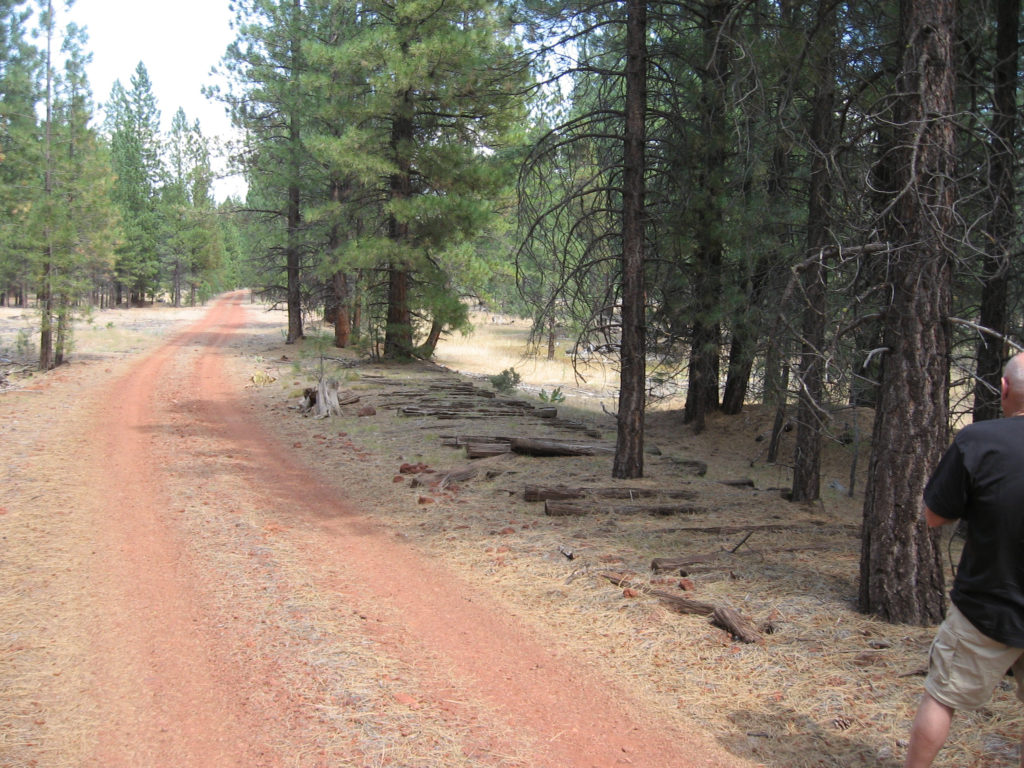
It was one of those days, that I had a lapse of better judgment should have, but did not take a picture of Shay’s Hole. However, about a mile down the road, we stopped to take pictures of these old railroad ties still in place, August 18, 2016.
In the future this will be a topic we will explore.
Dynamiting the Westwood millpond, January 27, 1949. Courtesy of Fruit Growers Supply Company
In January 1949, the temperatures plummeted to nearly thirty degrees below zero at Westwood. The millpond there froze. When Red River designed the facility, they placed piping from the powerhouse that forced steam air directly into the millpond near the sawmill. This system was no match for Mother Nature. To keep the mill operating it was necessary to use dynamite to blast loose the logs in the millpond. Continue reading It Was Cold in 1949→
This old water tank is the last remnant of Camp 8, Photo taken June 18, 2015
Fruit Growers operated a total of 11 logging camps, though Camp Y could hardly be classified a camp. The camps were designated with the first letters of the alphabet, i.e, Camp A. After Camp F closed, the next would be G, the seventh letter in the alphabet, but Fruit Growers switched to numbers when Camp 7 was opened at Bridge Creek.
Camp 8, had the unique distinction of being referred to as Summit Camp, it being on the Summit between Pine Creek Valley and Eagle Lake. Not a great deal is known about the activities at Camp 8. It was the first camp that a young Arthur Anderson went to work. What he remembered vividly was watching the death of his friend Daniel Dragovich, whose skull was crushed in a logging accident near the camp on July 2, 1928. For Anderson this served as a wake up for him, and he decided to change professions. He later became an attorney and in 1972 he was elected Lassen County Superior Court judge, serving one term.
Subscribe and support this site for as little as $4.17 a month.
Fruit Growers Supply Company is a non-profit purchasing agent co-operative of Sunkist. The latter is a marketing co-operative of citrus growers. There was a time when fruit and vegetables were shipped in wooden boxes, that is another story. Fruit Growers, as it is known entered the lumber business reluctantly to manufacture wooden boxes for their member owned citrus growers.
One of Fruit Growers earliest lessons learned was the value of employees. To retain a reliable/skilled workforce amenities were provided to prevent labor turnover. When Fruit Growers mill opened its Susanville mill in 1921, they were in hopes the town would provide such. Susanville had been so overwhelmed by its short term growth, that it was just too much.
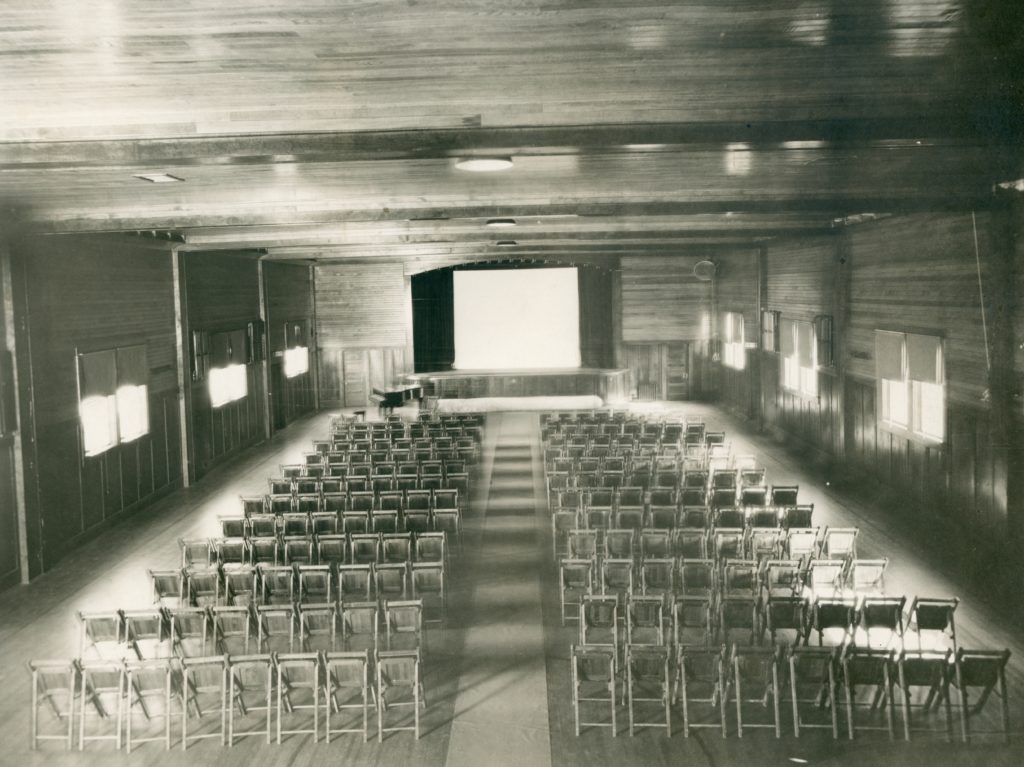
The movie theater in the Story Club, 1923. It was used by many religious denominations for services. Courtesy of Fruit Growers Supply Company.
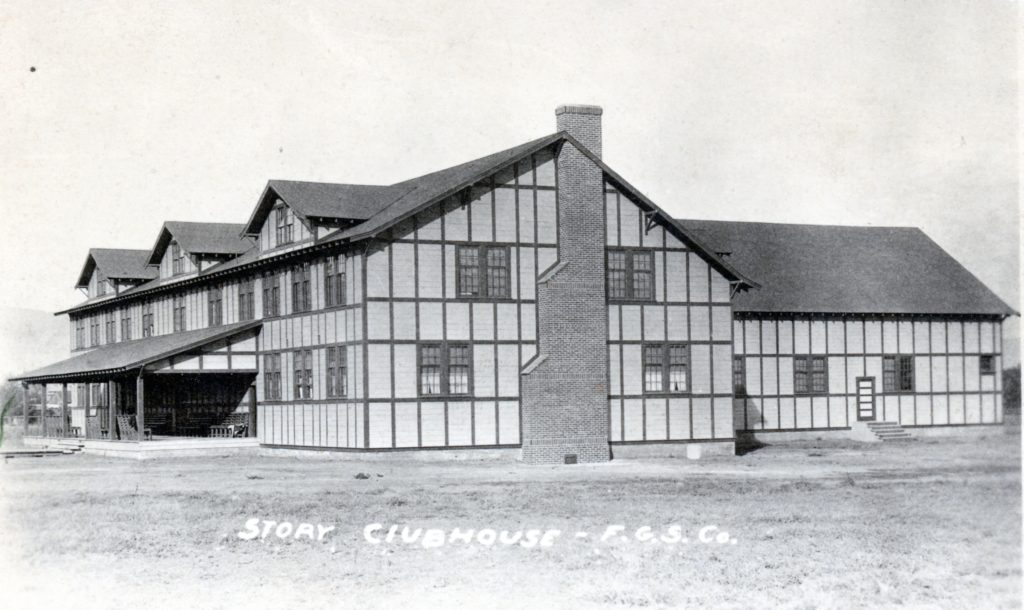
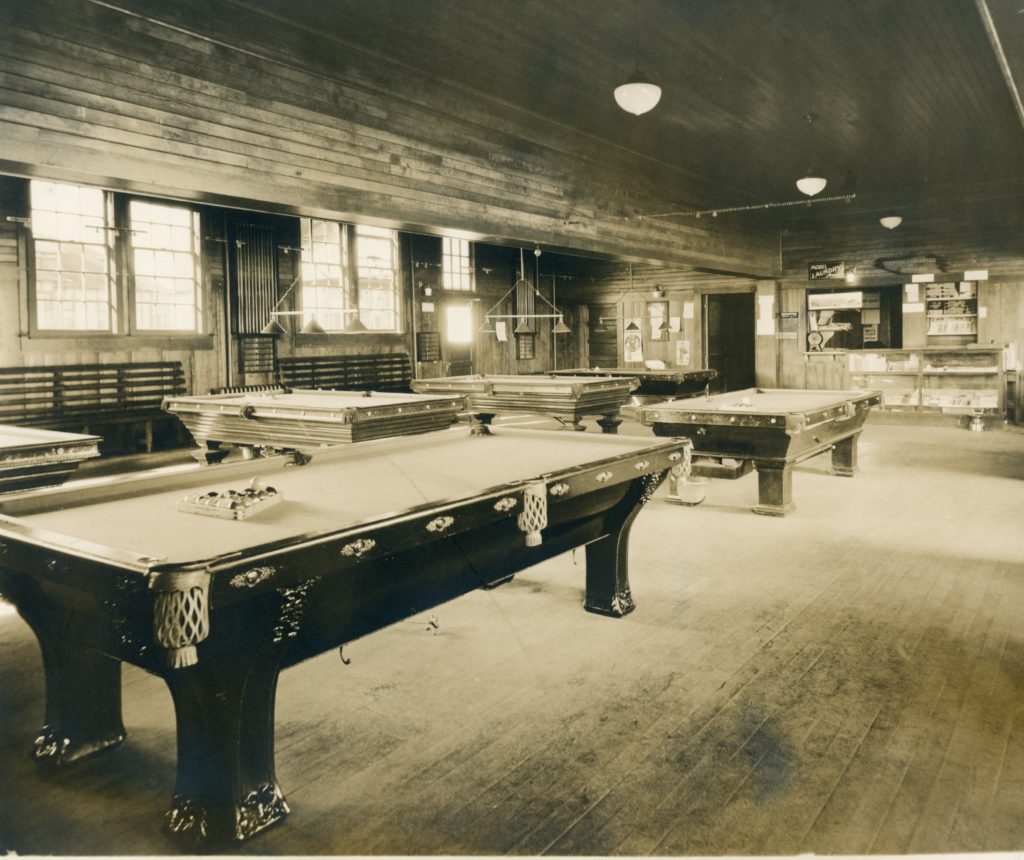
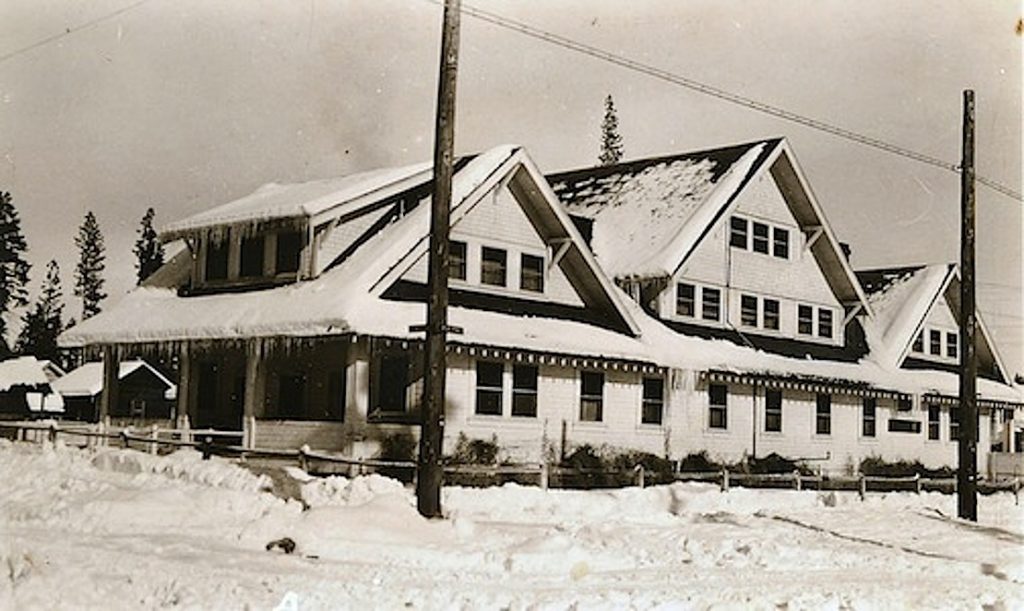
While Fruit Growers would provide housing and a hospital, that was not enough. In 1922, they had a three-story recreational building constructed on their premises. Susanville had never experienced a facility like this. Of the many attractions inside the building was a theater that could seat 450 people. It was a multi-purpose room that served as a ballroom and other forms of entertainment—including indoor baseball which I do not know how that operated. The place boasted a billiard room, a restaurant, soda fountain, and a library. The place was named the Story Club, after an influential member of Sunkist who donated the initial stock for the library.
The billiard room, Story Club, Susanville, 1923. Courtesy of the Fruit Growers Supply Company
On the north side of the building there was a children’s playground. The Story Club was destroyed by fire in 1944. Times had changed, and Fruit Growers converted the site into a park known as Riverside.
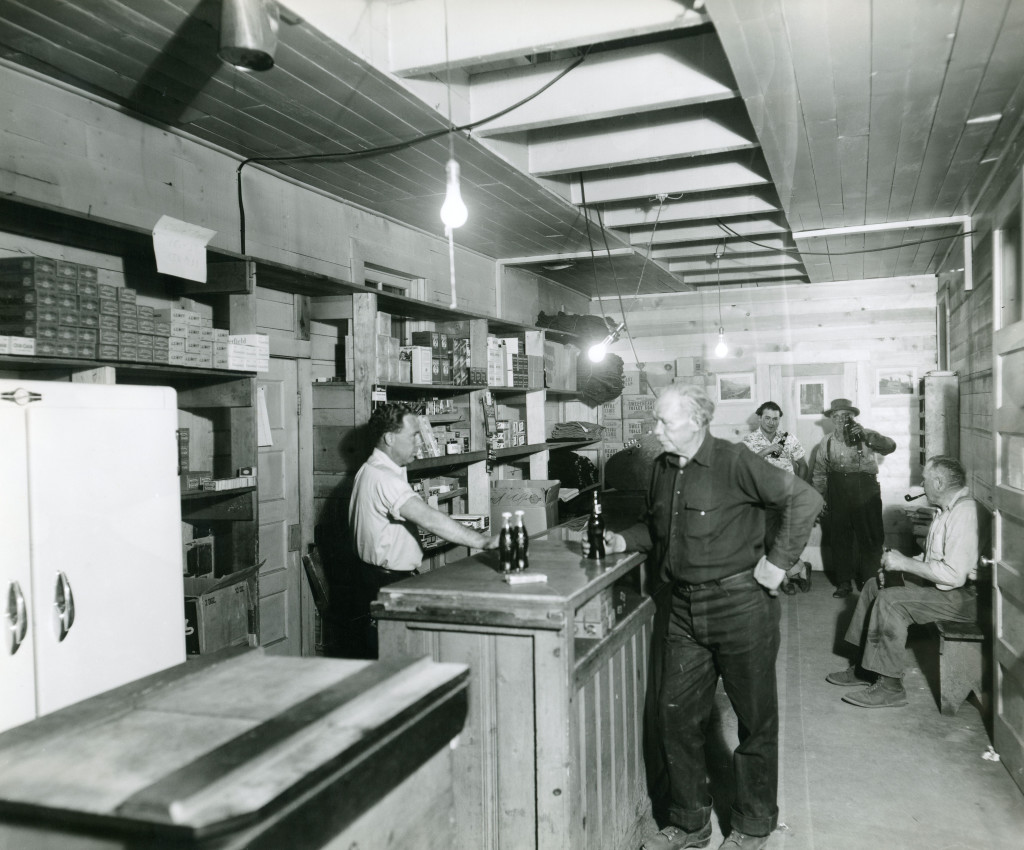
Fruit Growers Camp Harvey Commissary, 1947–FGS Company
While yesterday we explored Rev. Parsons’ attempt to make Susanville a “dry” town” the Fruit Growers Supply Company did something unusual in their logging camps after Prohibition. Fruit Growers in their logging camps did something radical—they served beer. However, since it was known many loggers over indulged in alcoholic beverages away from camp, Fruit Growers was well aware of that fact. However, Fruit Growers’ policy then understood the value of taking care of your employees, they reciprocated the same to their employer.. To prevent any kind of over indulgence, one could only have two beers. As a preventive measure, for some one to sneak passed that limit, one was served the two beers at the beginning. People who worked in those Fruit Growers logging camps that I interviewed stated there were no issues or associated problems with the beer. There were some that thought. it was a nice amenity and stated how well they were treated by the company.
In 1911, the California Legislature implemented a voluntary Workmen’s Compensation Act. It failed way short of its goals. In 1913, the introduced a new version, but this time it was mandatory. It initially affected large manufacturers. In yesterday’s column, T.B. Walker was not pleased with this legislation and with the construction of Westwood underway, there was no way to avoid it.
Companies had two options: 1) They could make payments to the State which set up a special account or 2) They could self insure.
Red River Lumber Company went the self-insured route. Each month one-dollar was deducted from employee’s salaries. This money would fund the Westwood Hospital. For employees it was a good deal. In turn, they received full medical coverage, and even for not work related injuries. As far as I am aware Red River continued with the self-insured route until they sold Westwood in 1944.
When Fruit Growers Supply arrived on the scene they, too, opted for self-insured, just as they did at Hilt. In 1942, Fruit Growers opted out of self-insured and money collected from employees were sent to the State. This was not so good for employees, because their insurance covered only accidents on the job. One of the side effects was hospital at Hilt was closed, but converted into a first aid clinic.
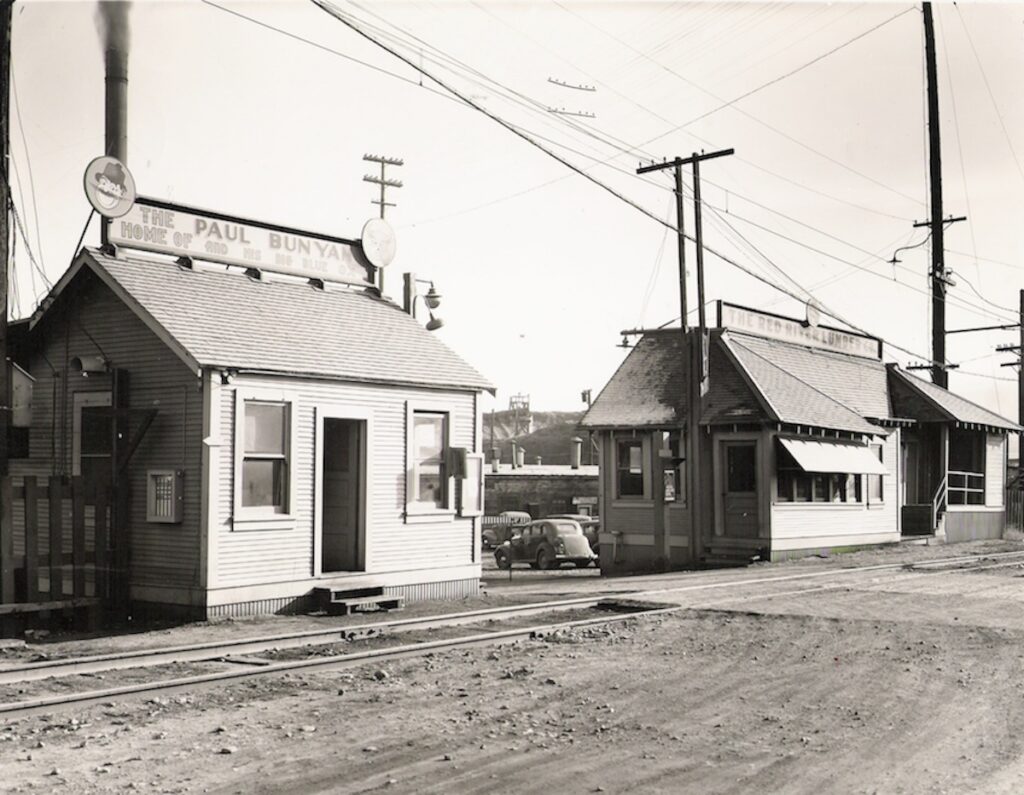
Employee entrance at Red River Lumber Company’s mill, Westwood
Since it is Labor Day, it is only fitting to have a topic about the labor movement. With the events leading up to World War I, demand for lumber soared. It was in the Pacific Northwest that two labor organizations—the Industrial Workers of the World (IWW) and the American Federation of Labor (AFL)—gained momentum in union organizing in the lumber industry.
The IWW had an image problem. It was considered radical in its
thinking for the time. Some considered it a communist organization. It gained notoriety for its strikes that were marred with violence. It
was from these and other factors, and with the emergence of the Loyal Legion of Loggers and Lumberman that hindered its movement.
After World War I the lumber market plummeted. This weakened labor’s leverage to organize unions. Yet, by the early 1920s, Fruit Growers Supply Company and the Lassen Lumber & Box Company established sawmills at Susanville. So these operations combined with Red River Lumber Company at Westwood, the IWW saw a lot of potential in Lassen County. IWW members worked very hard to recruit there, but with little success. It could be perilous duty and arrests and convictions of suspected organizers occurred. Case in point is the story of Charles Griswold, alias Thomas B. Miller. A Red River employee, Griswold worked the green chain at the mill. He was arrested and charged with the violation of the Busick Injunction for recruiting members for the IWW—the Busick Injunction deemed the IWW was a part of a communist syndicate. On March 25, 1925 Griswold was taken to Susanville and a short jury trial was held. The jury deliberated for ten minutes before they came back with a guilty verdict. Griswold was sentenced to six months in the Lassen County Jail. He could consider himself fortunate for many who were charged with the same offense never had a trial and were automatically sent to prison.
The biggest problem IWW faced in Lassen County was that all three
lumber companies paid the prevailing wage, if not above, and provided better housing than found in other regions on the west coast. The employees had few grievances, so there was no incentive to be a part of the labor movement. It was because of these conditions that Lassen County sawmills remained union free during the 1920s.
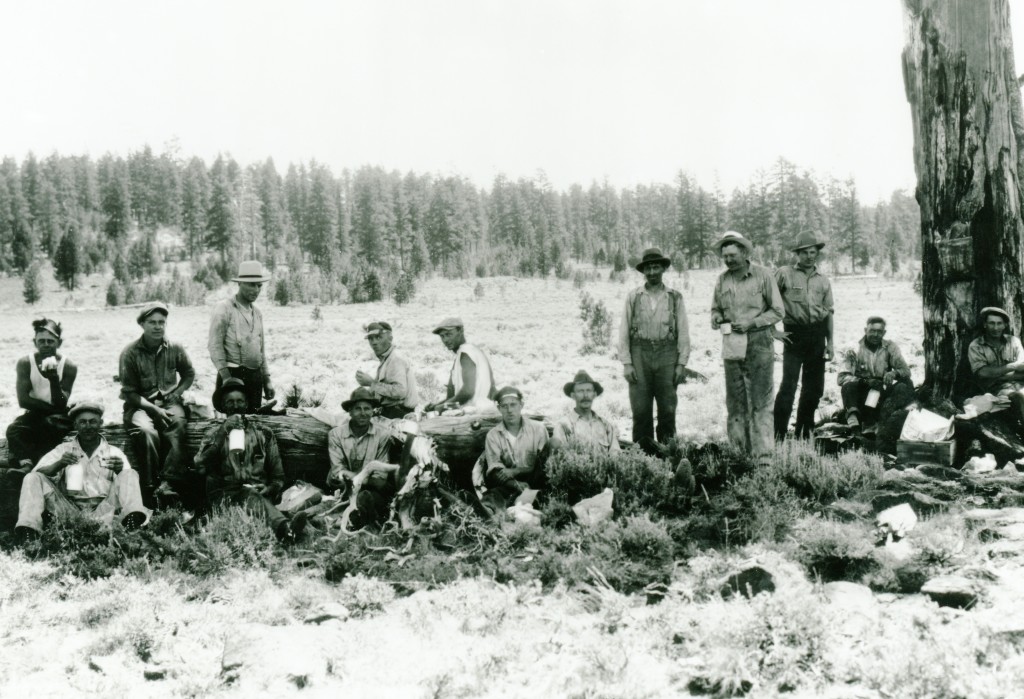
Loggers having lunch, 1932. Courtesy of the Fruit Growers Supply Company
The most important component to logging camps of yore was food. It could make or break a camp. After all, loggers worked long hours in a very labor intensive environment. Food was one item they looked forward. If it was not up to par, they quickly moved on to another logging camp. Breakfast and dinner were legendary. These meals were served in the logging camp dining hall.
What about lunch? It was not practical to bring the loggers back to camp to feed them lunch. Leonard Uhl, who worked at Fruit Growers Camp 10 in the 1940s, provided insight as how lunch worked. Just off the end of the main dining hall there were tables loaded with packaged food. After breakfast each man would get up and grab a brown bag (or two or three) and build his lunch to suit himself Uhl said.
”One table had three different kinds of sandwiches which were always excellent (with the exception of the ones with thin sliced bologna but you didn’t need to take them if didn’t want to). Another table had all kinds of pastry. made fresh by the camp baker, who was an artist at his trade. There were two or three different kinds of pie, fresh baked glazed or sugar doughnuts and cookies, cake etc. On the third table were different kind of appetizers and knickknacks such as pickles, olives, pickled peppers, bananas, oranges, apples and whatever fruit might be in season. There sure was no way a logger could go to the woods with a lunch he didn’t like without blaming himself” according to Uhl.
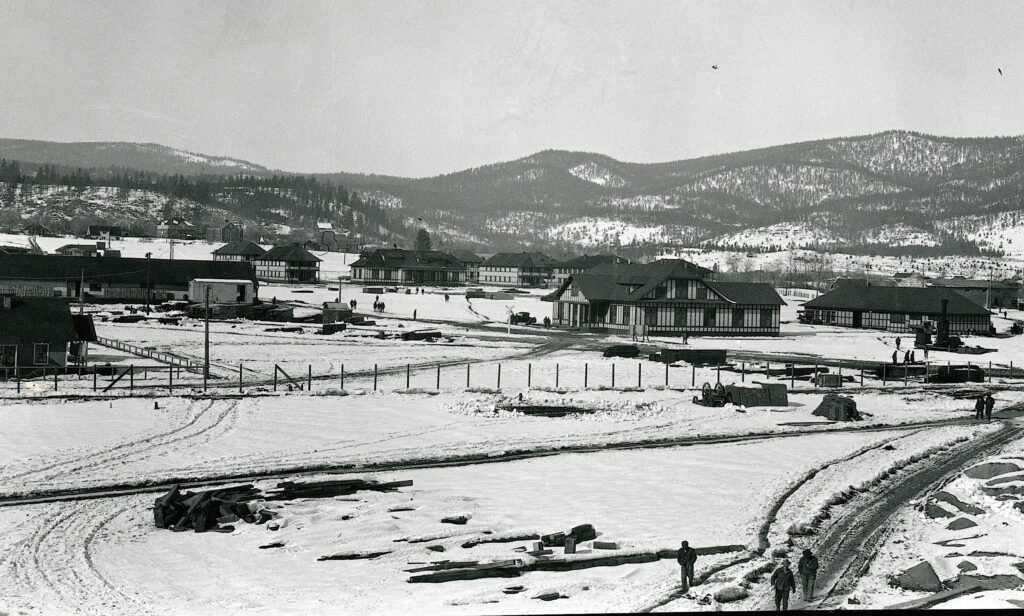
This is something a little bit on the lighter side. Personally, I happen to like this view of Fruit Growers Supply Company of its office/residential section, prior to the construction of its famed three-story Story Club. From the angle it was taken, and probably from the mill’s smokestacks, there is no indication in the background that Susanville exists. Today, the site is best known as Riverside Park.