
Subscribe!
Subscribe!

When the Fruit Growers Supply Company gave serious thought in locating a second mill in Lassen County they were initially perplexed as to where to locate it. The timber they examined was to the west of Eagle Lake. They wanted a mill in the center of the timber to reduce the freight costs. Continue reading Pine Creek Millsite?

When Fruit Growers established their Lassen Operation they purchased two billion board feet of timber to the west of Eagle Lake. In 1921, Fruit Growers established its second logging camp, designated as Camp B. Many of their camps were portable in nature, in that once an area was logged, the cabins and other buildings could be conveniently be put on railroad cars and moved to the next location.

Camp B was unique as it was a mixture of both portable and permanent buildings. It was one of their largest camps that could house over 300 men. While the camp closed by 1926, its concrete foundations for the commissary, along with other remnants can still be seen today. Fruit Growers had a reputation of taking good care of their employees. This was evident at Camp B whereby motion pictures were shown. In addition, the logging camps even had their own baseball teams. This is rather amazing since these men who worked ten to twelve hours a day, six days a week still had the energy left to play ball.

Camp Harvey was a railroad logging camp during the 1940s of the Red River Lumber Company and later Fruit Growers Supply Company and located approximately 20 miles east of Poison Lake.
The cookhouses in logging camps always operated at a loss. However, a cookhouse could make or a break a camp—poor food resulted in an exodus of loggers. In 1948, Fruit Growers raised the price of a meal to one dollar at Camps Harvey and Stanford, and the complaints were loud and clear. Fruit Growers instead of losing 36 cents per meal, they only lost 8 cents.
In 1949, Fruit Growers leased the cookhouses and commissaries at those two camps to H.S. Anderson Company for one dollar. Fruit Growers thought maybe an outside company could handle the operations for more efficiently. They would never find an answer.
By the end of May the cookhouse crews represented by Local 769 of the Bartenders and Culinary Workers Union walked off the job in a wage and hour dispute. Logging came to standstill. The two camps with a population of nearly 500 became ghost towns, with Robert Simons and Harry Beal remaining as caretakers. After the weeks went on and no end to the strike Fruit Growers closed down the camps permanently. In addition, they abandoned that railroad logging line.


The old English proverb necessity is the mother invention was widely adopted locally. For years Fruit Growers searched for an effective way to reduce grass around its millsite for fire protection. In 1937, someone came up with the brilliant idea to bring in a band sheep to graze the mill property. Problem solved and they called the new addition to their workforce “Lassen Lawnmowers.”

Well, can you believe it, it has been two years on Thursday that the old barn at the east entrance to Susanville was destroyed by a fire. It was built in 1920/21 for the Fruit Growers Supply Company, who were in the midst of constructing their new sawmill/box factory nearby. Continue reading A two year anniversary
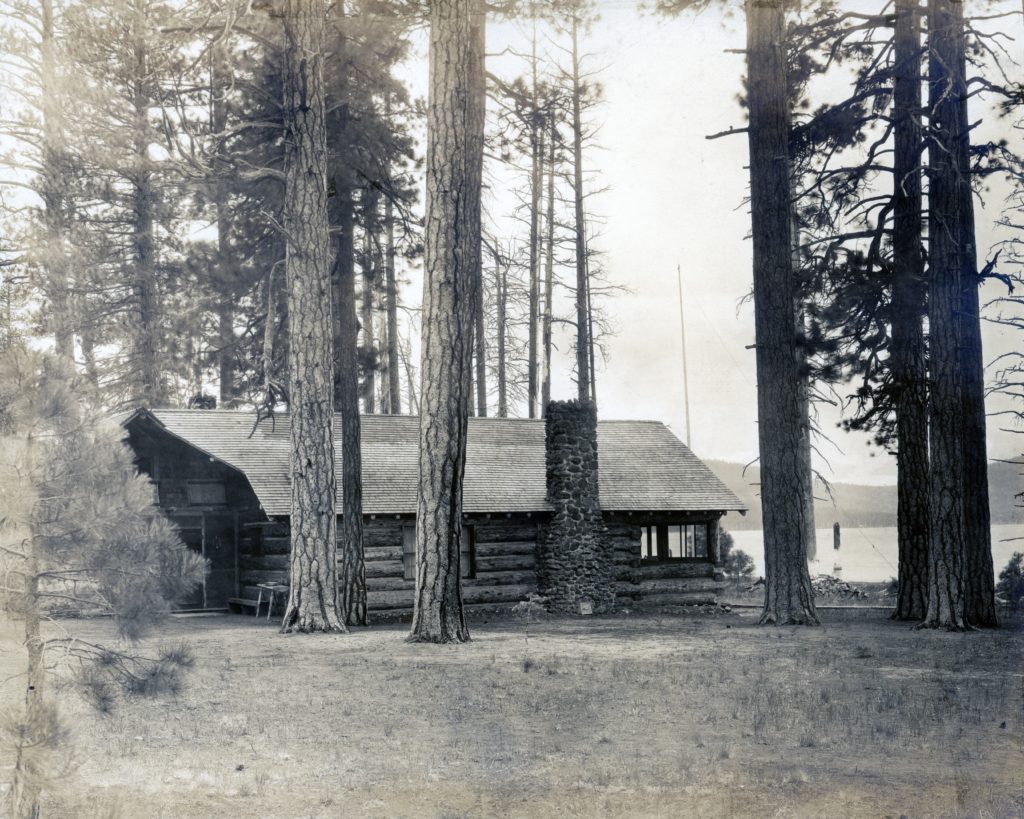
While I have focused a lot on the Gallatins, there were a few other cabins built at the south shore of Eagle Lake, on the handful parcels the Gallatins did not own. For the record, it should be duly noted that the Gallatins at one time gave consideration of providing cabin sites on a lease basis, but that never transpired. Continue reading Eagle Lake Cabins
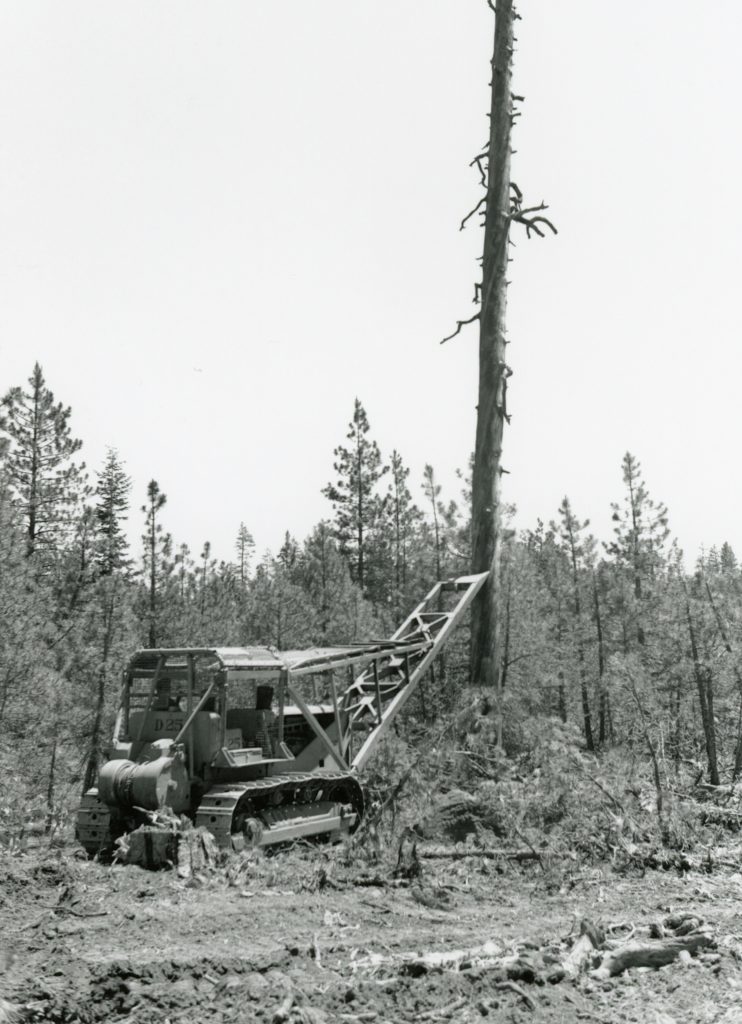
The machine shops of the three lumber companies Fruit Growers Supply, Lassen Lumber & Box and Red River Lumber were amazing operations. When these mills were established it was in a time of transition where within fifteen years logging operations would go from horses to traction engines. The sawmills themselves were caught in this phase as well.
Whether it was a mill foreman or a logger when a person had an idea, they went to the machinist who in their innovate ways came up with a new tool or machinery component. In the 1950s, Fruit Growers Westwood Operation developed a snag pusher to knock down dead trees deemed a hazard for use on the Lassen Operation (Susanville).
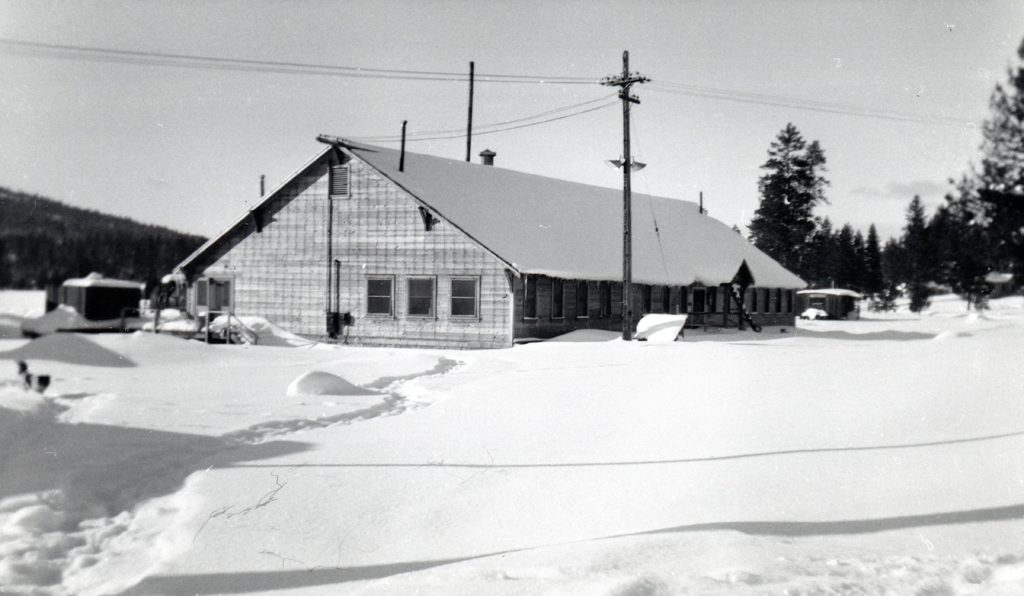
Recently, I sent a email to subscribers with the attachment of a photograph of the Fruit Growers Supply Company’s cookhouse at Camp 10, which is depicted above. Several people indicated they wanted to know more, so without further adieu . . .
Fruit Growers operated ten railroad logging camps in the region west of Eagle Lake. In 1928, Camp 10 was established at the northern end of Pine Creek Valley and was not only its largest camp, but also in length, for it remained in operation until the end of the logging season of 1952. In the summer, its population could swell to 200, and by winter reduced to one lone caretaker.
On August 29, 1950 at around 2:00 a.m. the camp was awakened by a fire–the cookhouse engulfed in flames. In addition, it spread to the commissary, warehouse, office and oil shed. Fortunately, there were no winds where the fire could spread further. When all was said and done, Camp 10 timekeeper, George Farris commented, “It was the most spectacular fire I had ever seen.”


