Tag Archives: Fruit Growers Supply Company

Old Time Power Saws

An electric saw powered by a D-2 cat. Courtesy of Fruit Growers Supply Company

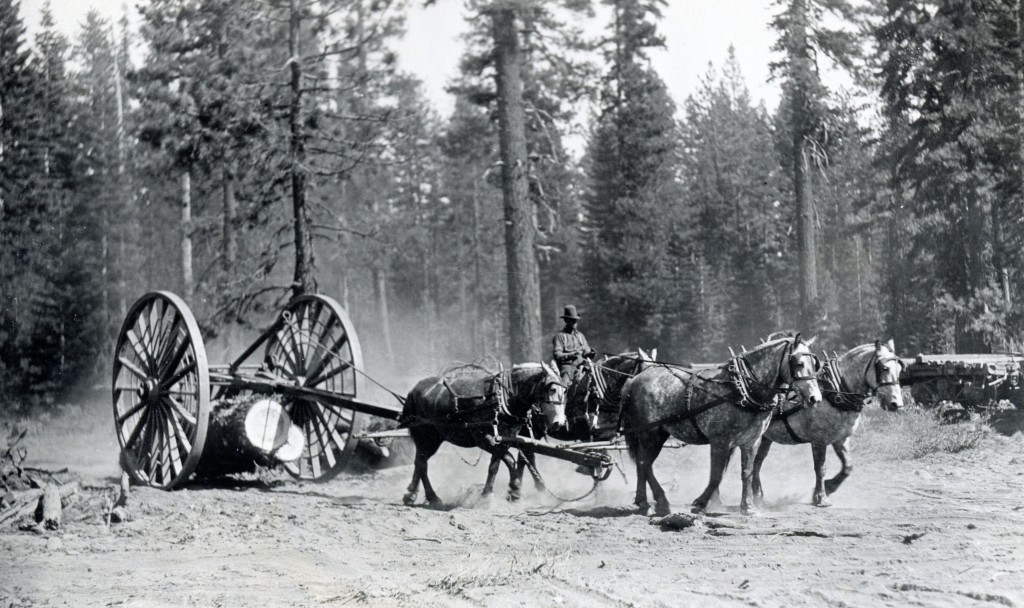
In the twentieth century one aspect of logging that was slow to modernize was timber falling. In the mid-1930s, Fruit Growers experimented with a Dow Low Stump Power Saw. It turned out to be too bulky and cumbersome and the fallers returned to falling timber manually. In 1943, Fruit Growers experimented with an electric saw power by a generator attached to a D-2 Caterpillar. To provide for mobility it was equipped with 400 feet of cable.  One of the drawbacks was it took three men to operate it one to operate the tractor and two to run the saw. It was not until the 1950s when a more advance line of lightweight saws were introduced that the traditional hand saws and axes were replaced by the power saw.

Subscribe

Hilt Picnic

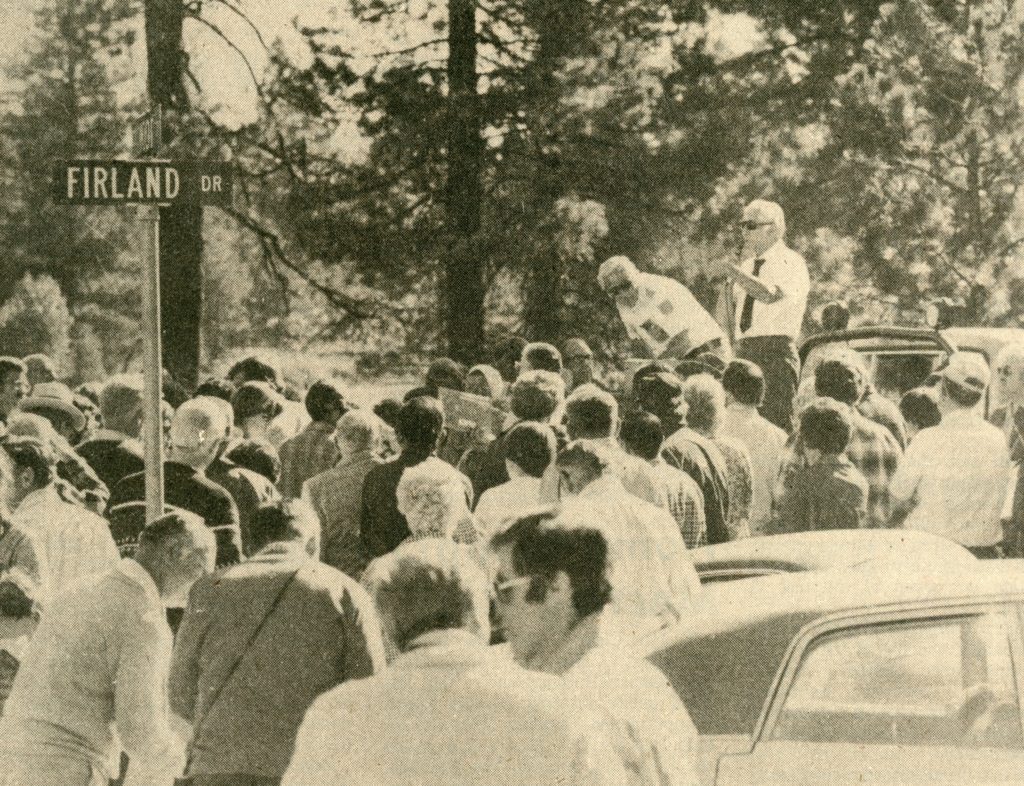
Hilt, California, 1972. Courtesy of Fruit Growers Supply Company

If there are any former Fruit Growers Supply Company folks out there, this Sunday, August 5 will be the last Hilt Reunion Picnic to be held in Medford, Oregon. Contact me for details.

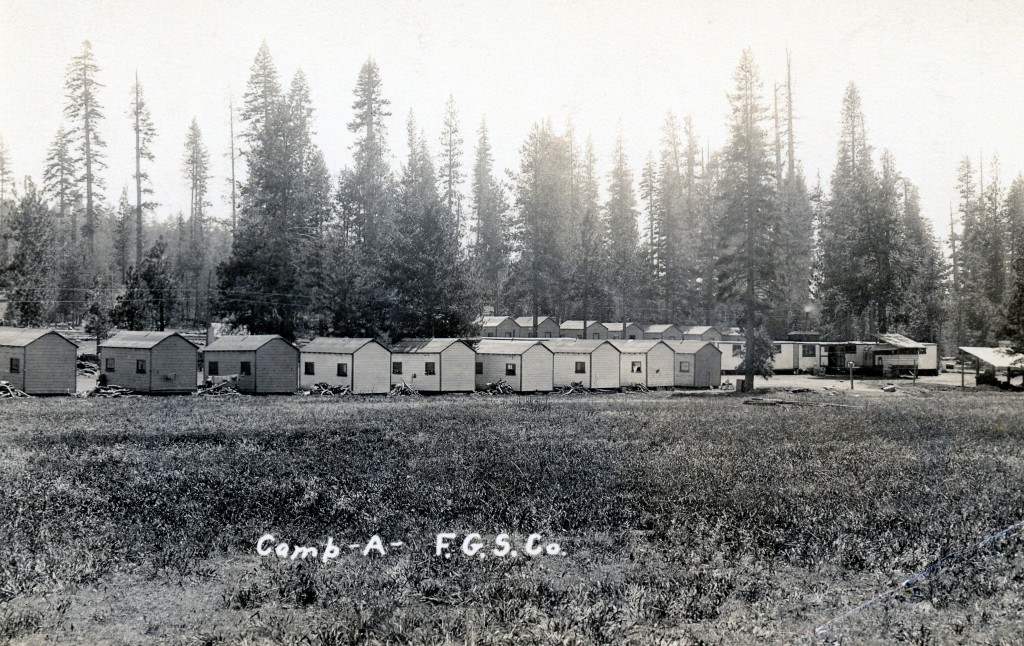
For those not familiar with Hilt, it was Fruit Growers Supply Company’s company in Siskiyou County, near the Oregon border. In 1933, Fruit Growers gave serious consideration to close the mills at Hilt and Susanville due to the challenging economic conditions. However, Fruit Growers understood the value of their employees and kept the mills open to retain their workforce. However, there were layoffs. A number of workers from Susanville were transferred to Hilt. There they established a conclave known as “Little Susanville.”

Subscribe

The 1924 Fire Season

The.aftermath of the fire at Camp D

The winter of 1923-24 was one of the driest on record for the State of California. Springs that had always flowed, dried up. With the tinder dry conditions of the summer of 1924, it became a volatile fire year, and the Lassen region was of no exception.

On Monday, July 28, 1924, sparks from a steam donkey engine operating near Fruit Growers Camp D, just west of Eagle Lake. In less than a hour the blaze turned into a firestorm, spreading over four miles and destroying three steam donkey engines, eight railroad flat cars, one water tank car and about three miles of railroad track. Nearly one thousand men fought the fire that destroyed over 7,000 acres. It cost Fruit Growers $34,378.20 in suppression cost.

Donate

That’s a lot of lumber

Fruit Growers Supply Company lumberyard, 1935.

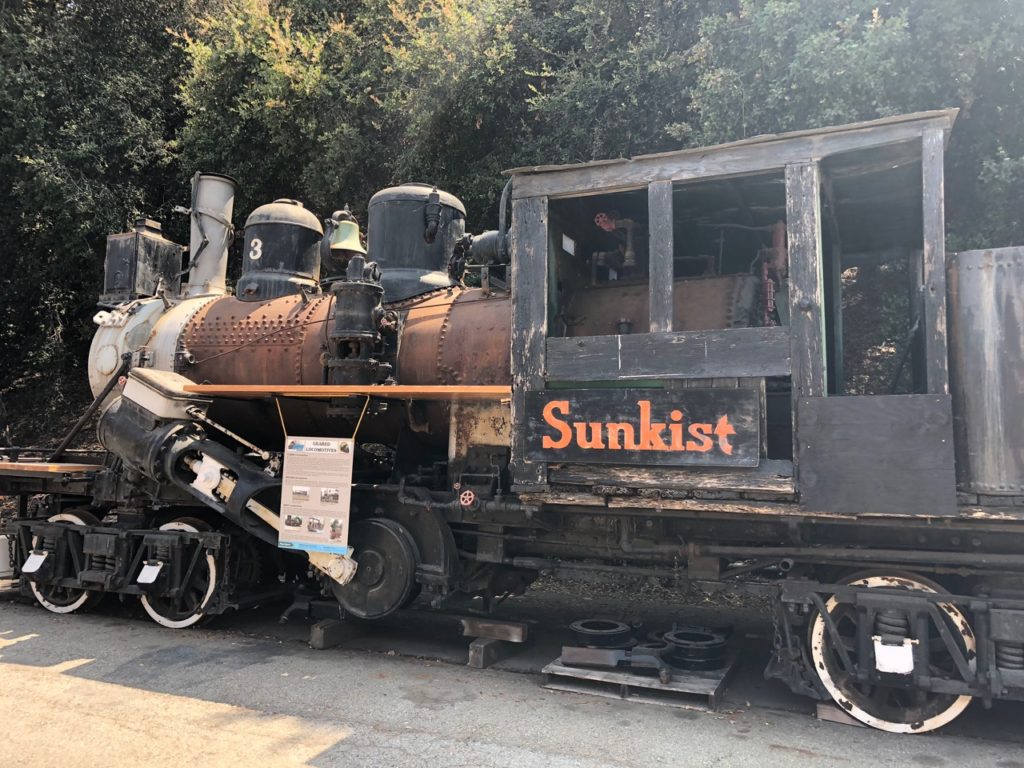
The compilation of the logging history of the Fruit Growers Supply Company was a very enjoyable project.  In their meticulous annual reports there was always some interesting fact. Take for instance of the above photograph that shows 54 million board feet of lumber. The reason why Fruit Growers was in the lumber business was for a supply of box shook, the components used to make a wooden box to ship citrus, since this was before cardboard. Anyhow, if the lumber depicted above was used for box shook, it would only meet one-third of the boxes needed by Sunkist for that year.

Subscribe or Donate

A logger’s lunch

Lunch time!

For what ever unknown reason, I have been intrigued by this photograph. It was taken in 1932, by well known photographer Clark Kinsey. The Fruit Growers Supply Company hired Kinsey to photograph their operations at Hilt and Susanville.  Fruit Growers it should be noted is the purchasing agent for the citrus growers marketing co-operative known today as Sunkist.  Photographs such as these, in addition to filming the operations were important tools to show the citrus growers how their money was being invested to provide them wooden boxes at a reasonable price to ship their fruit.

Donate or Subscribe

A million board feet

North Lumber Yard, Red River Lumber Company, 1923. Courtesy of R.S. Pershing

As we explore Lassen’s lumber industry’s past, there are references to the volume of a million board feet (mbf).  During the 1920s, the lumber mills of Lassen County had an average annual output of 250 million board feet of lumber.

George Cone, who worked in the Lumber Division of Fruit Growers provided this definition using that mill’s output for the 1922 season at 62 million board feet. If it was placed on a single freight train, that train would extend eighteen miles. And since it took 6,000 board feet of lumber to build an ordinary house in those days, Cone figured that the 1922 output could build 60,000 houses. According to Cone, with an average household consisting of five persons, this production could provide the housing needs of 300,000 people!

Subscribe

It can happen anywhere

Fruit Growers log train, Pine Creek Valley, 1940.

“Dishes rattled, stove pipes were disjointed, cabinets and beds danced to a merry tune Sunday night [March 9, 1930]” from an earthquake according to the reported call  of the caretaker at Camp 7 of the Fruit Growers Supply Company.   Camp 7, it should be duly noted was located at Bridge Creek Springs, located between McCoy Flat Reservoir and Pine Creek Valley.

The whole region is earthquake country, though not as volatile as other places, one never knows where they may occur.

Subscribe!

Used millpond for sale

Fruit Growers Supply Company, 1936

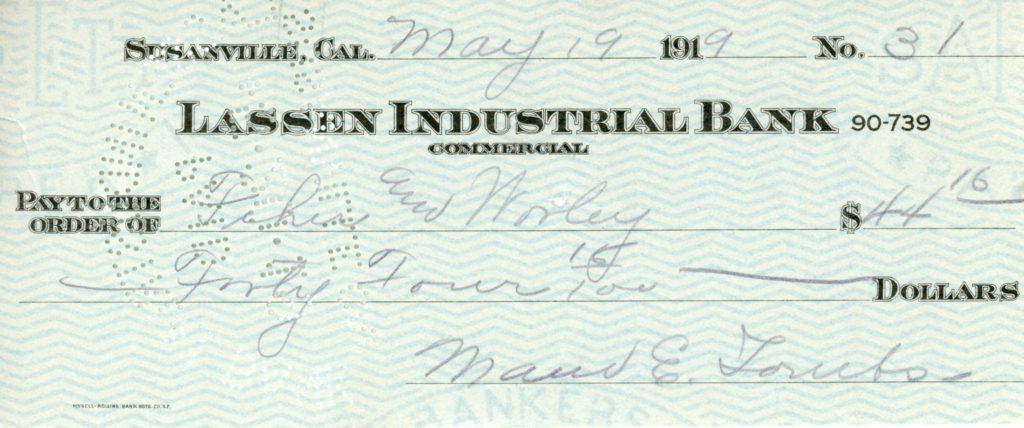
Smith Properties, a Susanville real estate firm, has a for sale sign at the former millpond of Fruit Growers/Sierra Pacific Industries located along Riverside Drive. Even though I do have an inquisitive mind, I have not been able to bring myself to place an inquiry. First of all, I am not even sure what can be done with the property. It should be noted that Fruit Growers purchased the twenty-acre millpond site in 1919 from George and Pearl Bassett for $9,500.

Donate or Subscribe

Sierra Pacific closes Susanville mill

Fruit Growers Supply Company, 1922. Forty-one years later it sold to Eagle Lake Lumber Company.

With little fanfare on May 3, 2004 Sierra Pacific Industries closed its Susanville mill. In a certain way it was a momentous event considering there had always been at least one sawmill in operation since 1857. This particular mill was constructed in 1921 by the Fruit Growers Supply Company to provide wooden boxes for its parent company, best known today as Sunkist. In 1963, Fruit Growers sold the mill to the Eagle Lake Lumber Company which would eventually evolve into Sierra Pacific Industries.

Donate

Riverside Park, Susanville

Story Club, 1924. Courtesy of Lola L. Tanner

The background behind Riverside Park is unique. Prior to the park’s creation, it was home to the Fruit Growers Supply Company’s Story Club, a recreational center for its employees. It was destroyed by fire in 1944. Instead of replacing the structure, Fruit Growers converted the parcel into a park for its employees, and the public, too.

In 1963, Fruit Growers sold its mill properties, which included the park, to Eagle Lake Lumber Company. The City of Susanville, it should be noted took care of the park’s maintenance.  In 1976, A.A. “Red” Emerson, president of Sierra Pacific Industries, of which the Eagle Lumber Company was a division, offered the park to the City for $23,000. It had recently been appraised at $45,000. The City accepted the offer and by end of the year the deal consummated.

Subscribe!