
Subscribe!
Subscribe!
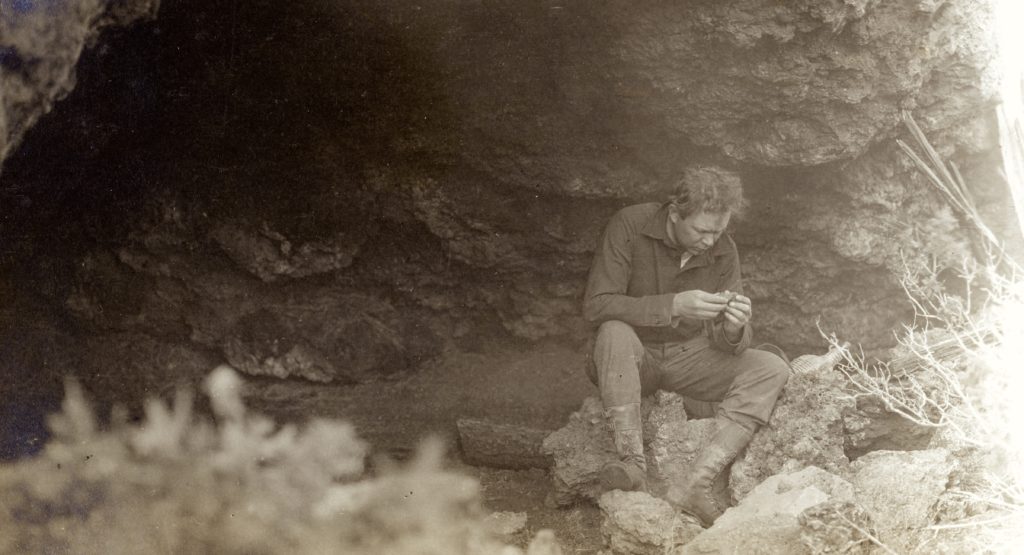
“To the west of Spalding lies what is known as the ‘Lava Bed county,” about seven miles long and three or four miles wide. This is the wildest region in this section, and excepting the vegetation, it is almost as when the lava first cooled. It is full of caverns, wells and cracks, one of the latter being five miles long and three to twenty feet wide. In one place it has been sounded to a depth of 160 feet and no bottom found. In this crack there is an ice cave where plenty of ice may be obtained any year until August and some years throughout the entire summer.”
Support!

When the Fruit Growers Supply Company gave serious thought in locating a second mill in Lassen County they were initially perplexed as to where to locate it. The timber they examined was to the west of Eagle Lake. They wanted a mill in the center of the timber to reduce the freight costs. Continue reading Pine Creek Millsite?
Support
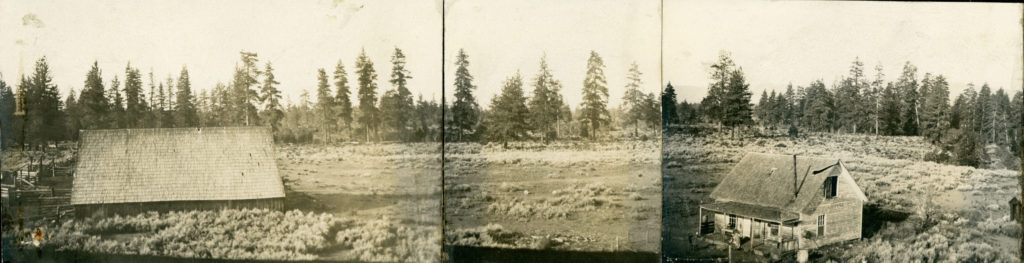
From time to time, people ask why Spaulding Tract is not spelled as Spalding after the John Spalding family who was the initial developer of the subdivision on Eagle Lake’s west side. It is more of a technical issue involving property title. In essence, there are two Spalding subdivisions. The 1914 subdivision was smaller in scale and never had any financial success, as only one was lot sold. A decade later, the current Spaulding Tract that we know, overlaps sections of the original one, thus the “u” was inserted into the Spalding name to distinguish the two.
Eagle Lake Nature Programs Presents “Snakes at the Lake with Dr. Amanda Sparkman,” Saturday, June 17, 7:00 p.m. Merrill Amphitheater, County Road A1, Eagle Lake, South Shore. (in the event of rain, event will be postponed or canceled).
Eagle Lake Nature Programs kicks off its 2017 Summer Programs with, “Snakes at the Lake with Dr. Amanda Sparkman.” Dr. Sparkman, of Westmont University in Santa Barbara, California, and currently doing field study at Eagle Lake, has been involved in researching Eagle Lake garter snakes since 2005, but the original study of these snakes began 40 years ago. “We’re interested in the ecology and evolution of these snakes, including how they’ve adapted their growth rates, reproduction, lifespan, and behavior to different habitats surrounding Eagle Lake, as well as how they are responding genetically, physiologically, and demographically to current environmental change.” This year it will be particularly interesting to see how or if the increased precipitation has affected the snakes at all. Continue reading Eagle Lake Nature Programs
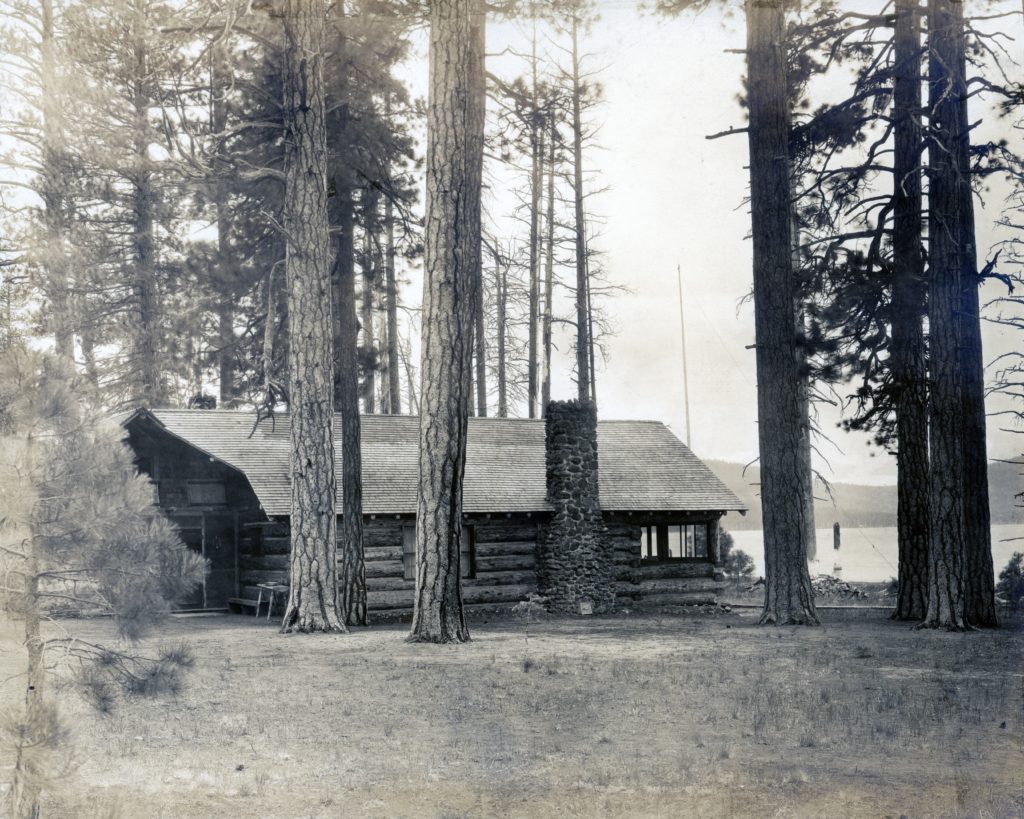
While I have focused a lot on the Gallatins, there were a few other cabins built at the south shore of Eagle Lake, on the handful parcels the Gallatins did not own. For the record, it should be duly noted that the Gallatins at one time gave consideration of providing cabin sites on a lease basis, but that never transpired. Continue reading Eagle Lake Cabins

Readers may recall back in January that I posed a question about Bly Tunnel and the geology. On the inlet side of the lake the tailing piles is a granitic type of sand, which is typical of Sierra Nevada. In April, I asked Michael Clynne of U.S.G.S. to explain some of the geology of the Eagle Lake basin. As it turns a portion of the basin is a spillover of Sierra Nevada. The Brockman Flat Lava flow occurred some 125,000 years ago, prior to the formation of the lake. It extended to what is the area of Bly Tunnel. In essence the lava flow capped over the Sierra Nevada, thus answering my question.

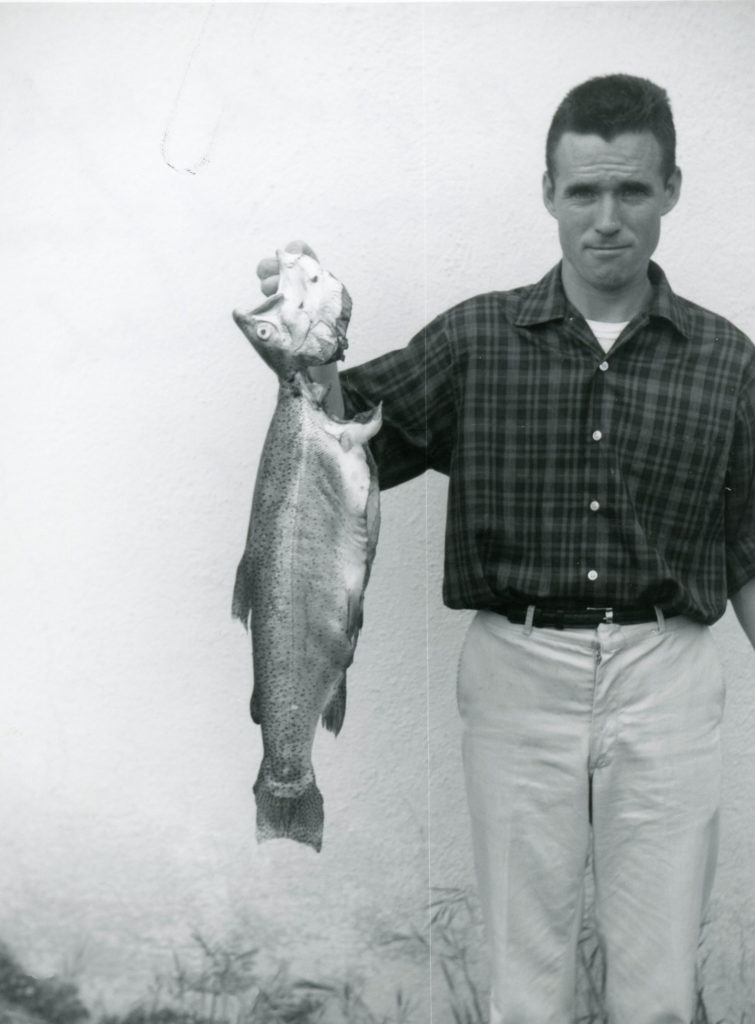
On May 2, 1961, California Department of Fish and Game personnel located an unusual female Eagle Lake trout, that they dubbed Our Lady of the Lake. One reason that it was unique was its age–eleven years! The fish had been trapped twice and taken to Crystal Lake Hatchery to be spawned. Another interesting antidote was Fish and Game reported that this fish had been reared and fed in captivity for seven years, and then it was able to adapt itself to the natural environment of the lake. When it was first caught the fish weighed one and one-half pounds and was 18 inches in length and when they released finally released the fish back into the lake, the fish measured 26 inches and weighed eight pounds.
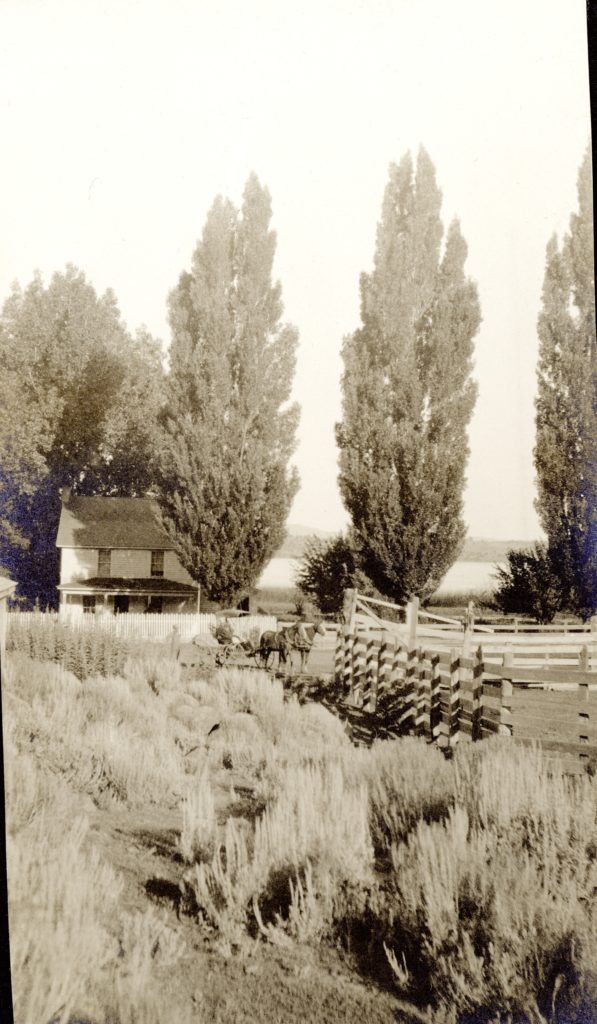
The Stone Ranch at Eagle Lake is one of the best known ranches in the basin. However, in a different era, it was better known as the Troxel Ranch. In the mid-1880s on the northeast side of the lake, featured a lot of new residents and area was dubbed the Butte Colony, as these folks came from Butte County, California. The Troxel family was a part of this enclave. On December 12, 1888, William H. Troxel purchased William S. Davis’ 430-acre ranch on the northeast shore of Eagle Lake for $3,000. In 1918, William and Rosanna Troxel, who where in their mid-sixties, opted for retirement and moved to San Diego. They subsequently leased the ranch and on February 15, 1926, they sold the ranch to Coit and Laura Stone.