Tag Archives: Eagle Lake

Eagle Lake, 1915 – Part II
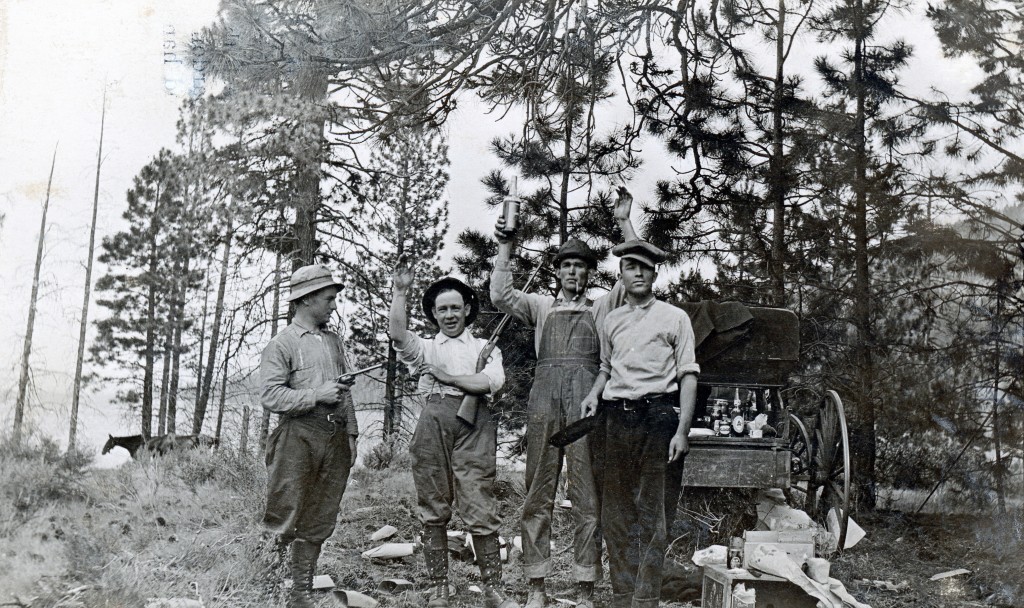
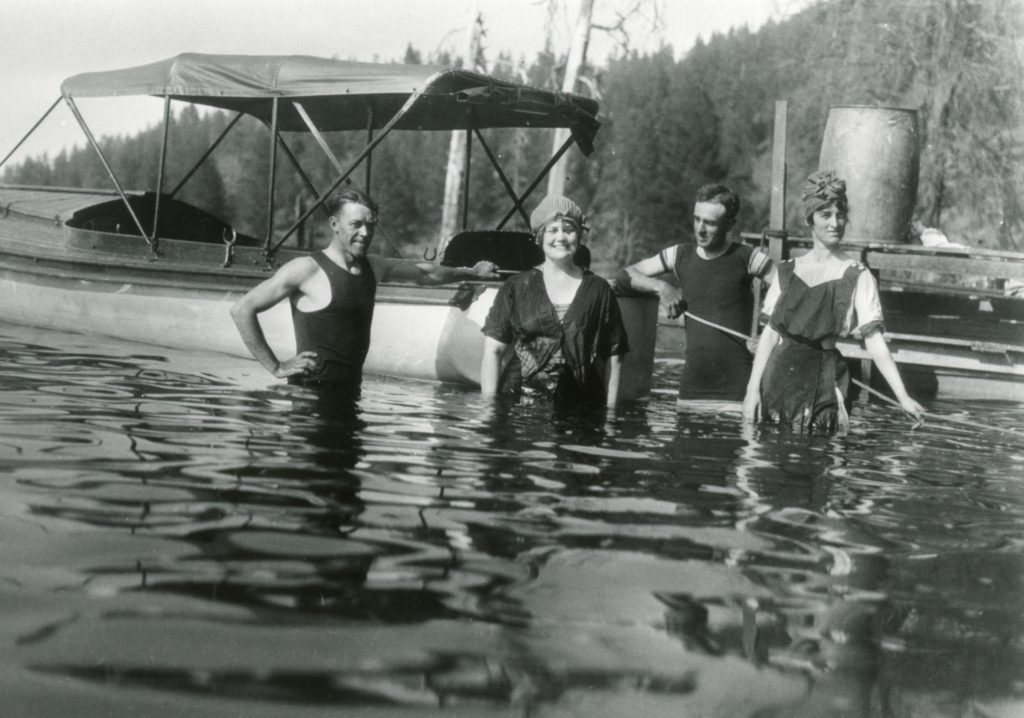
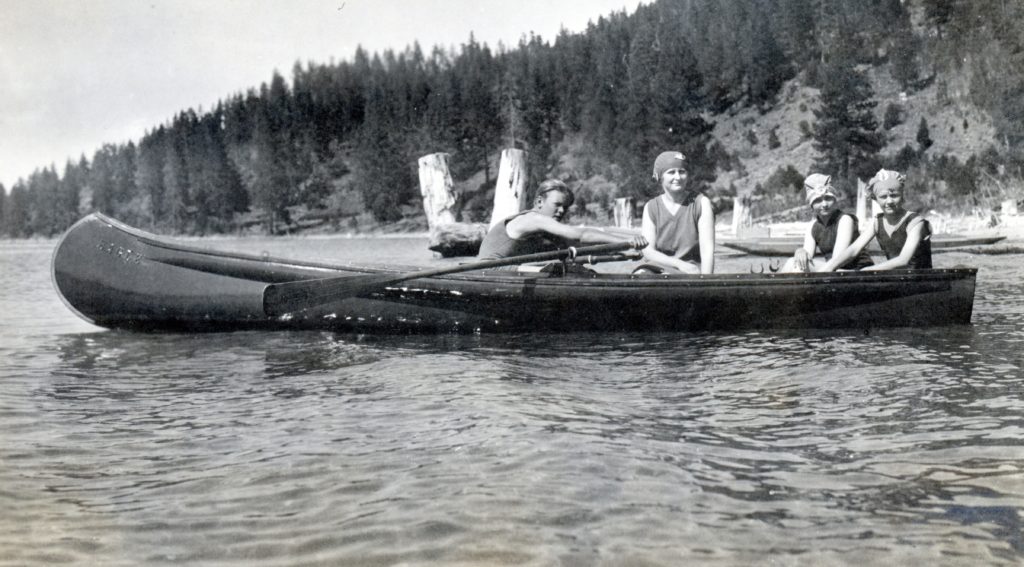
Happy campers at Eagle Lake, 1914.
This spring I wrote about the pamphlet entitled Lucky Land of Lassen that was produced and distributed at the Panama Pacific International Exposition that was held in San Francisco during 1915. In July, I published the first of two installments concerning Eagle Lake. The first account focused on the lava beds and ice caves.

“For years it has been a favorite camping place for the people of this county, and in this respect its attractions are many. It is an ideal place for camping, boating and fishing. During the summer months there is little or no rain to annoy the camper and the nights are cool during even the hottest weather. Its dry, pure air is mixed with the breath of fragrant pine, and gives to the tired mortal a new lease on life. At the southeast corner of the lake is a long stretch of swimming beach and there is another one at Spalding, a new town recently laid out on the west side of Eagle Lake, just south of where Pine Creek flows into it. Both this stream and the lake are full of black bass, cat fish, white fish and salmon trout of a kind unlike any other on the coast. It goes without saying, that on a deep lake like this, surrounded by timber and steep bluffs the boating is fine during the summer months.”

Subscribe!

Where is Merrillville?

Folsom Ranch, 1900. Courtesy of Mary Dale Folsom
Unlike many rural outposts there is usually some sort of a nucleus of buildings. There is always an exception to the rule, and Merrillville is one of them. In the early 1870s,the residents of Willow Creek Valley desired mail service. It was Willow Creek blacksmith, Orman Folsom who led the movement. On April 1, 1875 the Merrillville Post Office was established at the Folsom Ranch, (Willow Creek Wildlife Unit), with Orman Folsom as postmaster. Folsom named the post office after Captain Charles A. Merrill who had recently arrived on the scene to tap Eagle Lake for reclamation. Folsom and his successors never had any intent to establish a town. The post office location changed over the years and when it was discontinued, on November 30, 1928, it was located at the Stone Ranch, Eagle Lake.

Subscribe!

Eagle Lake Pumping Plant

Dodge’s Bay, Eagle Lake, 1916
Before there was a completed tunnel at Eagle Lake, there was one company, the Eagle Lake Land & Irrigation Company who successfully tapped the lake and sent water flowing all the way to the Honey Lake Valley at Amedee. They did this a Hooker Hydraulic pump that had the capacity to move 60,000 gallons of water per minute. In summer of 1892, it was installed on the eastshore at Dodge’s Bay. While it was being installed, twenty-one miles of irrigation canal was constructed. On September 15, 1892, it was tested and water was sent flowing to Amedee—a reality. The company considered it a temporary measure—one to raise funds while they would embark on their own tunnel near the same location as the pumping plant. The company was so far in debt that in 1894 it was shut down. In 1903, the machinery from the plant was hauled to the Wilson sawmill near Susanville.

Subscribe!

Gallatin’s Boat

Gallatin’s Boat at the south shore.
With the upcoming Labor Day Weekend soon upon us, and after its conclusion the amount of boaters on area lakes starts to wane with the forthcoming changing of the seasons. In the past I have wrote about Oscar Rankin’s boat The Pelican. Among the larger boats to ply the surface of Eagle Lake was one belonging to the Gallatin family. It was substantial in size and weighed some 3,500 pounds, with a gas engine for motor power and shipped by rail to Susanville in May 1914. It was then hauled to the north end of Eagle Lake for launching. Once placed in the lake, the boat made its journey to the south shore at Gallatin’s new summer home, where a boathouse was waiting its first occupant.

Support!

2018 Eagle Lake Calendar

The Gallatin clan setting off for an adventure, July 1920. Courtesy of Wyn Wachhorst
This year there will be a little deviation of calendars that I have produced in the past. First of all, there are two other local calendars now available for 2018, thus a crowded small market.

The calendar will be comprised of vintage Eagle Lake photographs from the 1910-30 era. It will be a very limited edition with an initial run of 25 calendars. More will be produced if demand warrants. Should you so desire to reserve a calendar, please let me know. A notice will appear when the calendars are ready, and they will be available on line for purchase, or locally at Margie’s Book Nook.

Pelicans
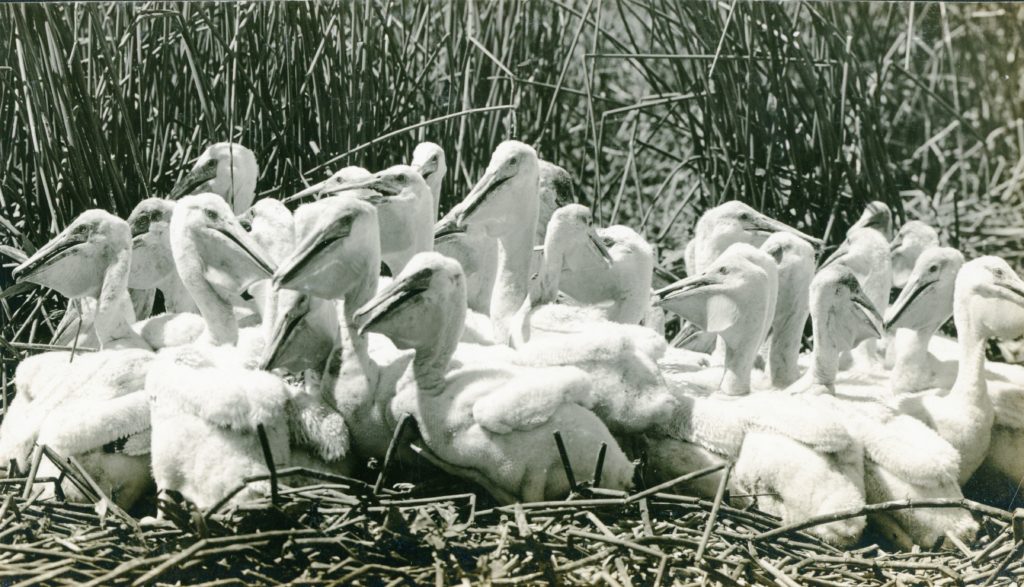
Pelicans at Eagle Lake, circa 1915. Courtesy of Wyn Wachhorst
Yesterday’s post concerned the abundance of wildlife, a sportsman’s dream of the conditions in 1915. Of course, that was promotional literature aimed at enticing visitors to the region. There was one creature hated by the fishermen—the pelicans. Many believe that pelicans and their appetite for fish are harmful to fisheries. By the 1880s, fishermen at Eagle Lake waged war with the pelicans, to slaughter as many as possible. In 1927, after the enlargement of Lake Almanor, pelicans gathered at that of body of water, too, and endured same hatred that occurred at Eagle Lake.

Fish & Game, 1915

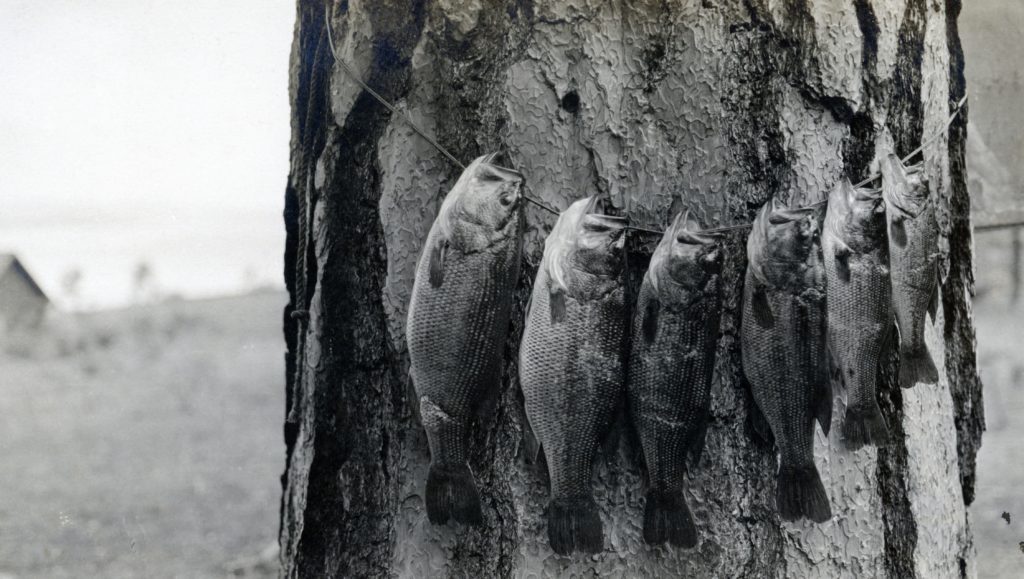
An Eagle Lake “catch,” 1916. Courtesy of Wyn Wachhorst
This is a continuation of excerpts from spring the pamphlet entitled Lucky Land of Lassen that was produced and distributed at the Panama Pacific International Exposition that was held in San Francisco during 1915.

“It is well known fact that Lassen County offers the sportsman the greatest hunting and fishing in the West today. In the mountains are to be found the mule-tail and black-tail deer, grouse, quail and an occasional black or brown bear. In the valleys are to be found the sage hen, quail, doves, ducks, geese, rabbits, etc., and in the mountain streams and lakes one may find ideal fishing, varying from brook trout to black bass, weighing as much as ten pounds.”

Support!

Gallatin Beach – Then & Now
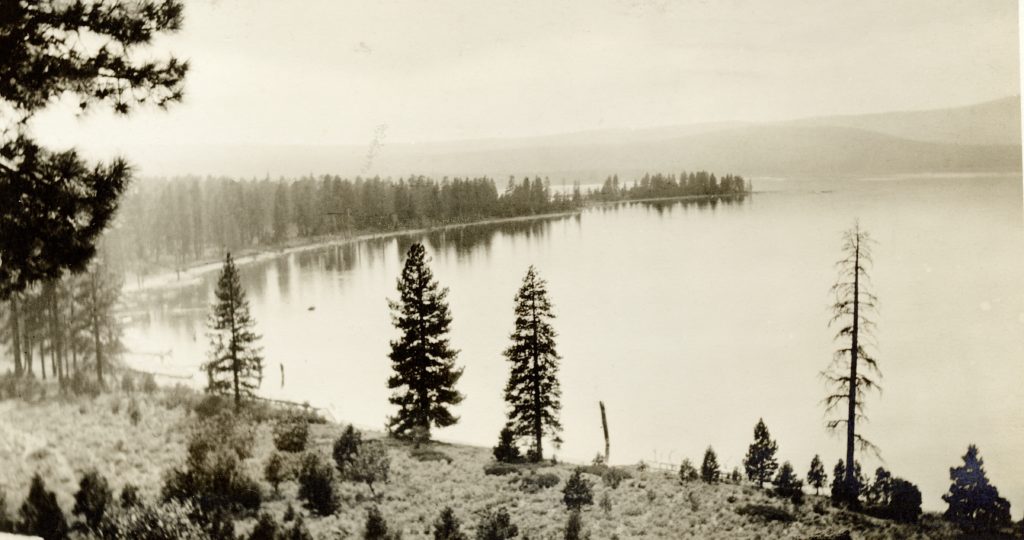
A view of Gallatin Beach circa 1918. Courtesy of Wyn Wachhorst
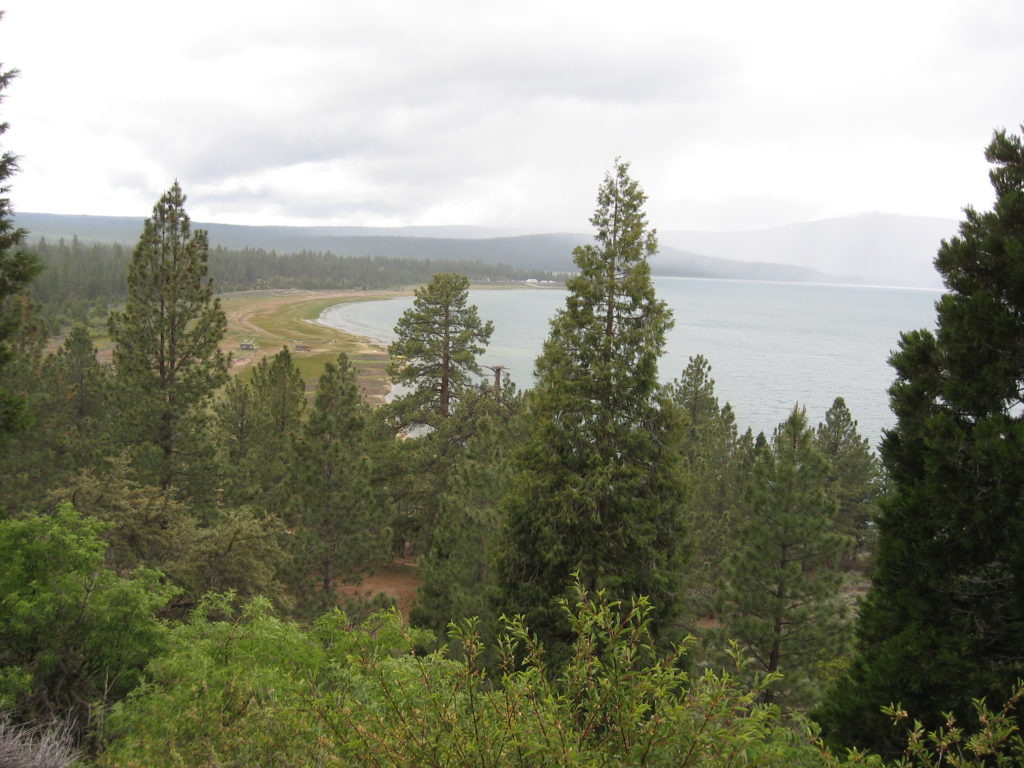
This was not an attempt to take a photograph from the exact area 100 years ago. It is just that one day in June, I was coming down Gallatin Peak, and there was a break in the trees to take a photograph. While the lake did come up several feet this winter, one can see it is no where near its all time high.

Support!

South shore, June 9, 2017

Pike’s Point – Eagle Lake

A view of Pike’s Point, Eagle Lake, circa 1917. Courtesy of Wyn Wachhorst
Thought many might enjoy this photograph of the south end of Eagle Lake during its high water mark of 1917-18. This is a part of the Gallatin/Wachhorst collection that I am slowly scanning. As to the origin of the name of Pike’s Point, is unknown to me, but documents indicate that it was so named prior to 1920. The 1979 Pikes Point Archaeological Report did not shed any light on the topic. Now is there any willing takers that want to locate approximately and take photograph of what the view looks like today?

Subscribe!