Category Archives: History

Some Confusing Railroad History

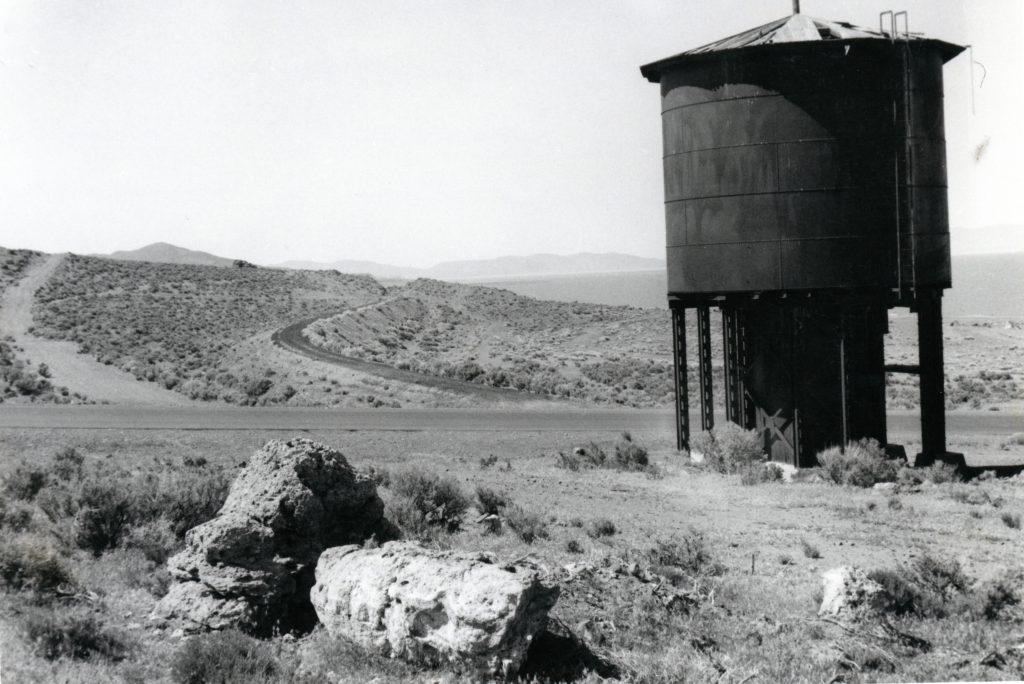
The abandoned line at Pyramid Lake., Nevada Historical Society 1971

This kind of boggles my mind, that so many railroad historians get something so incredibly wrong.  What I am referring to is the abandonment of the Southern Pacific’s Westwood Branch line between Fernley and Flanigan. First we start off with Jack Bowden whose book the Modoc Line states that the 60 mile segment of track was abandoned in 1963. David Myrick places the date of abandonment in 1962. Eric Moody, the author of a book on Flanigan has the date as 1972!
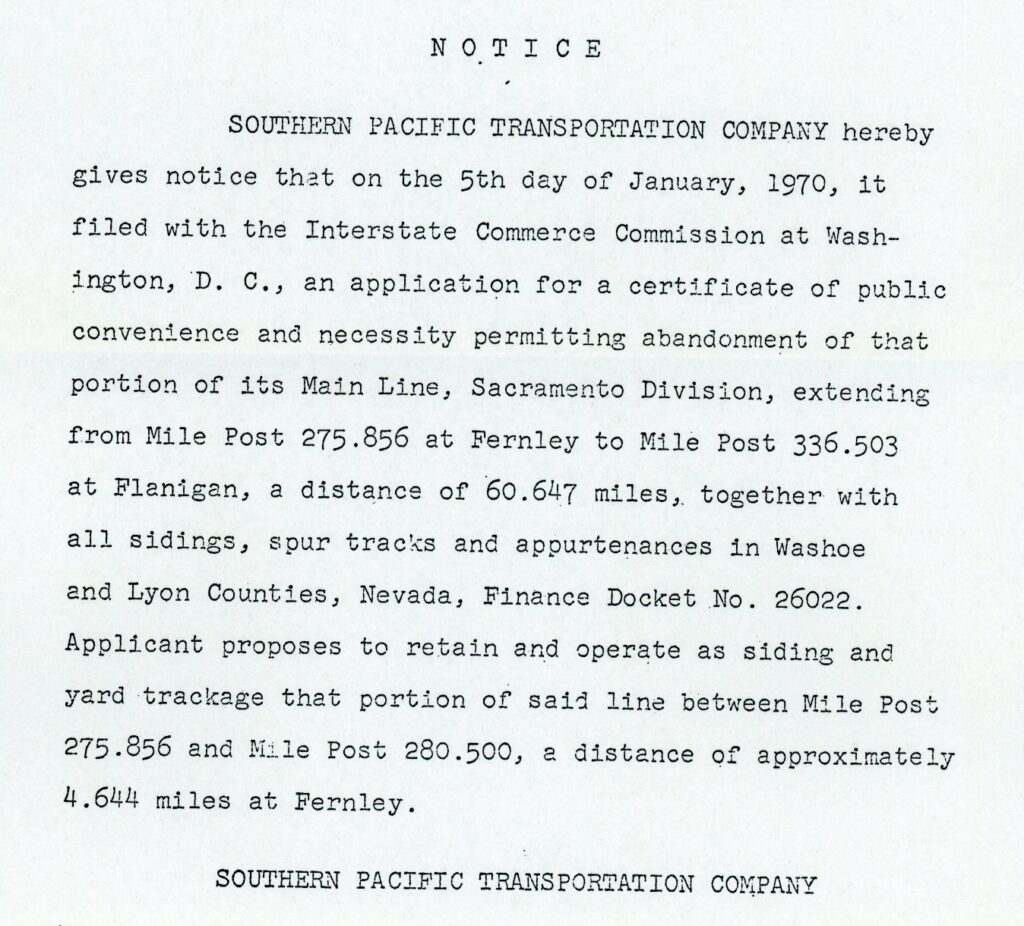
The 1970 abandonment notice—David Martin

John Signor wrote: “The SP line from Flanigan to Fernley continued to support a once-a-week local until it was discontinued in 1966. Work crews began taking up the line south of Flanigan along Pyramid Lake on October 7, 1970.”

David Martin on one of his forays to Flanigan came across notice of abandonment posted on an old pole, which clearly indicates that the segment was indeed abandoned in 1970 and shortly thereafter the tracks removed.
Support by subscribing.

Troubled by Inflation?

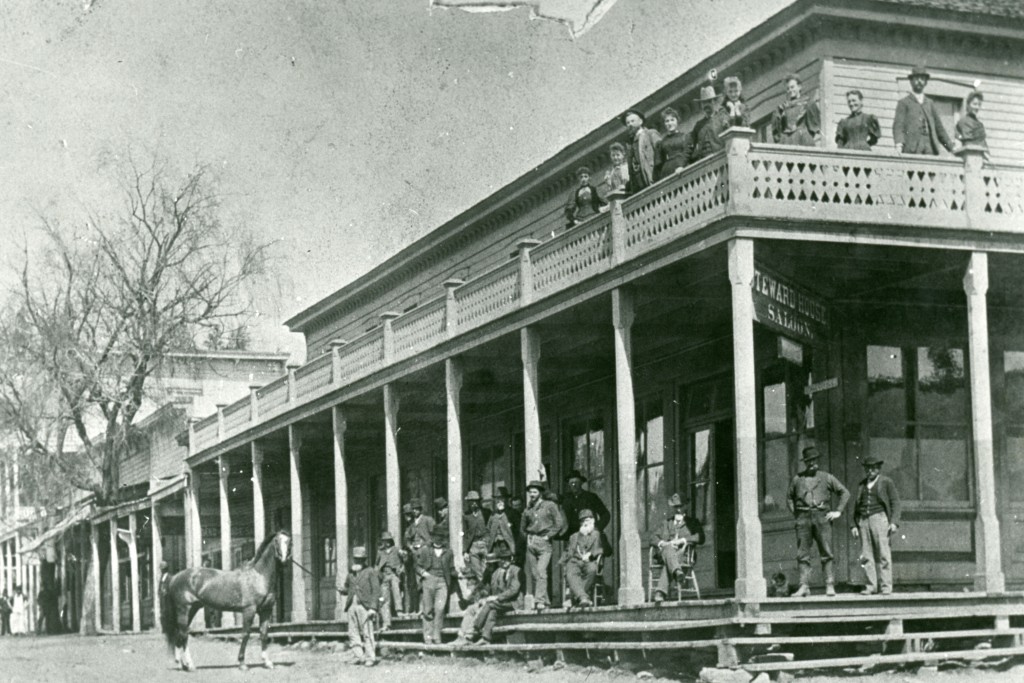
Stewart House
Susanville’s Stewart House, 1881. It sometimes was used as a hospital. Courtesy of Dallas & Joyce Snider

In 1993, I asked the now late local attorney James E. Pardee if he would write a foreword for my upcoming book Honey Lake Justice: The Neversweats of the 1860s. Jim, of course, obliged. Of course, that was thirty years ago. While recently reviewing what Jim wrote, a lot is still relevant.  The the following was Jim’s opening paragraph.

”We live in an age of excesses—and on occasion it is good to have these pointed out, directly or indirectly, so that we can endeavor to do better the next time around. I am sure that Mr. Purdy didn’t intend to preach or point a finger. However, when you read his book and are brought to realize that people brought suit to recover $63.65 for a month’s lodging , $51.50 for back wages and finally a bar bill for 23 drinks at 25 cents a drink for a total of $5.75; we can’t help but reason that inflation in today’s market has gone mad.”

Tim

“Three Sisters” and Turtle Mountain

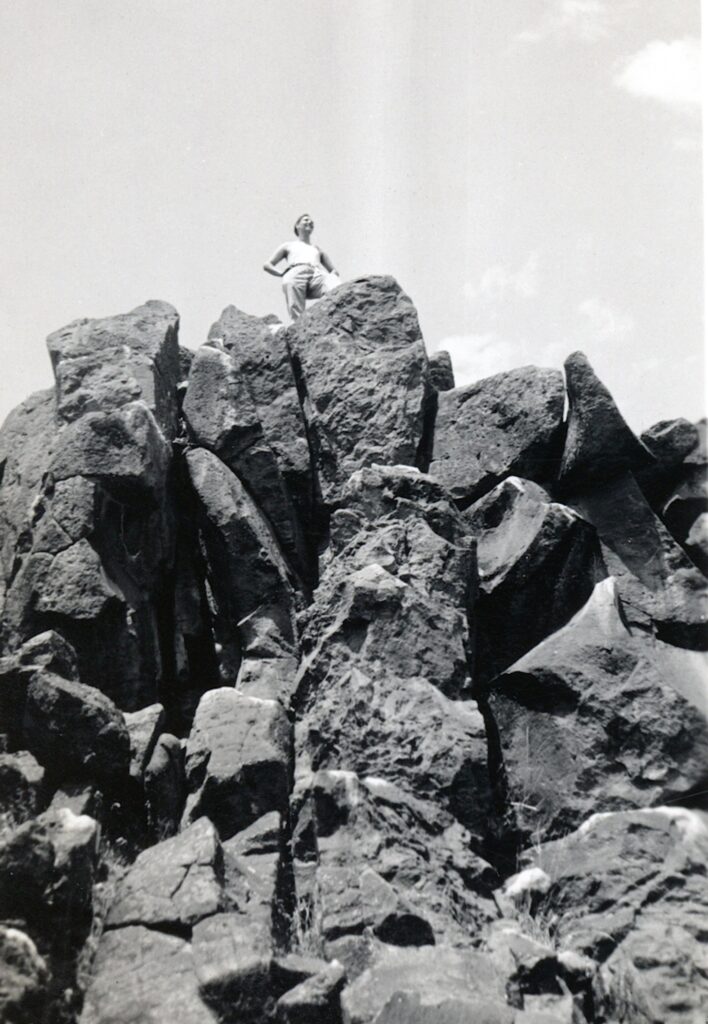
Secret Valley CCC Company Clerk on top of Three Sisters, August 1936—C.H. Bennett Collection

While you probably never heard of Shinn Peaks  referred to as the Three Sisters, the men stationed at the Secret Valley CCC camp gave it that name. After all these young men, were from the Midwest, so all the region was foreign to them, and Secret Valley so remote where there was not even a small village or outpost to glean local knowledge. Their view of Shinn Peaks shows three distinct peaks, hence the Three Sisters. Of course, some of the men were so intrigued by the mountain that they climbed to the top.

Another landmark Turtle Mountain, at the lower end of the Honey Lake Valley, which is a prominent extension to Fort Sage Mountain never had a name attached to it for many years. According to Philip Hall (1909-1996), who spent most of his life in nearby Long Valley stated it was “new comers” who arrived when the Sierra Army Depot at Herlong that was established in the early 1940s, when the point was named.

Tim

The Low Water Levels of Eagle Lake

Eagle Lake, 1937

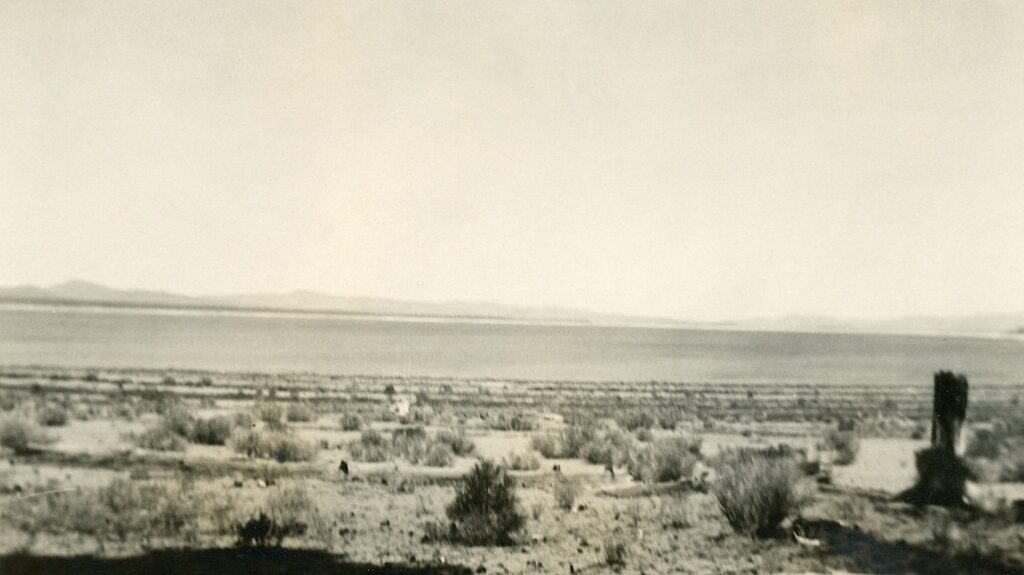
In 1937, twenty years after Eagle Lake reached its historic high of 5125 feet it witnessed its historic low of 5091. That low water level happened again in 1950. Then, many may not realize but in December 2015 the lake reached a new historic low of 5090.54 and was repeated again in December 2022. What is interesting in each of these instances they were followed extremely wet winters.

South shore Eagle Lake, August 7, 1936—C.H. Bennett Collection

Tim

The Odd Origin of the Madeline Cemetery

The grave of P.J. Bickford, Madeline Cemetery, November 6, 1979

This is a kind of strange, short tale., especially since the records are somewhat sketchy. Lassen County records indicate that plots were sold in the Madeline Cemetery on May 3, 1909. Yet it was not until passing of one year old Bobbie MacDonald, on May 11, 1911 who would become the first person buried there. On January 11, 1917 John Bigford donated the land to the county, but it does appear he even owned the property. It was accepted by the county, and which a cemetery map was prepared in 1918. The cemetery received very little use there being only fourteen graves. As far as I know the last person buried there was Chris Laras in 1962.

Tim

Eagle Lake Ice Caves

Ice Caves
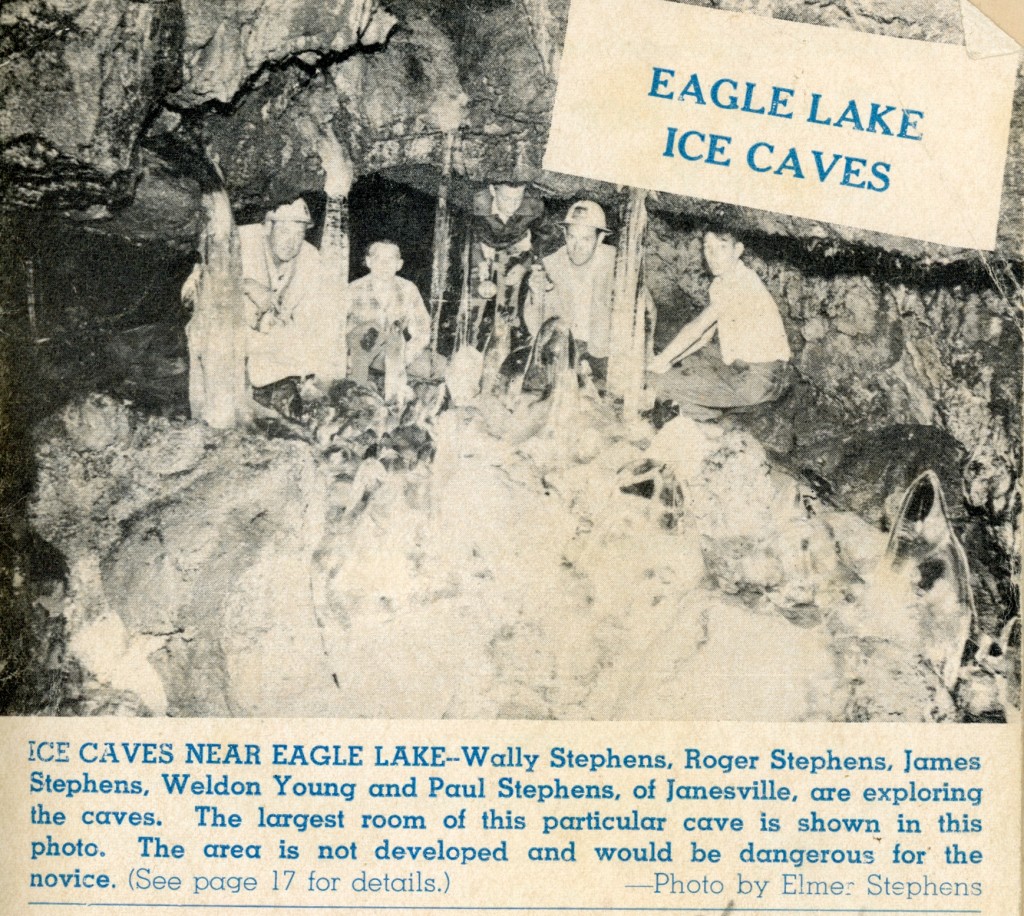
The ice caves was featured on the cover of Susanville’s weekly TV guide, August, 1965

Well, it is the middle of summer, and there have been a lot of searches about the ice caves at Eagle Lake. Without further ado, here is a prior post on that topic for your Tuesday Tidbit.

Exploring lava beds, which there is plenty around Northeastern California, there is no telling what a person might find. The Brockman Flat Lava Beds on the west side of Eagle Lake is no exception.

In the early 1950s the Chico State Biological field study set up operations at Spaulding Tract, Eagle Lake. It was in the summer of 1951, that several students explored the lava beds to the south of Spauldings and made their initial discovery of a ice/lava cave.

In 1954, John Wesley Noble penned an article in Collier’s Magazine, The Lake That Time Forgot. The article featured many peculiarities found at Eagle Lake. Noble wrote: A group of Chico graduate students were exploring a huge shore side cavern where Indian tribes hid from avenging white men. Suddenly the biologists’ flashlights flickered on a buff colored insect crawling over the icy black rocks. They captured it, but neither their biology professor nor local 0ld-timers could tell what it is.

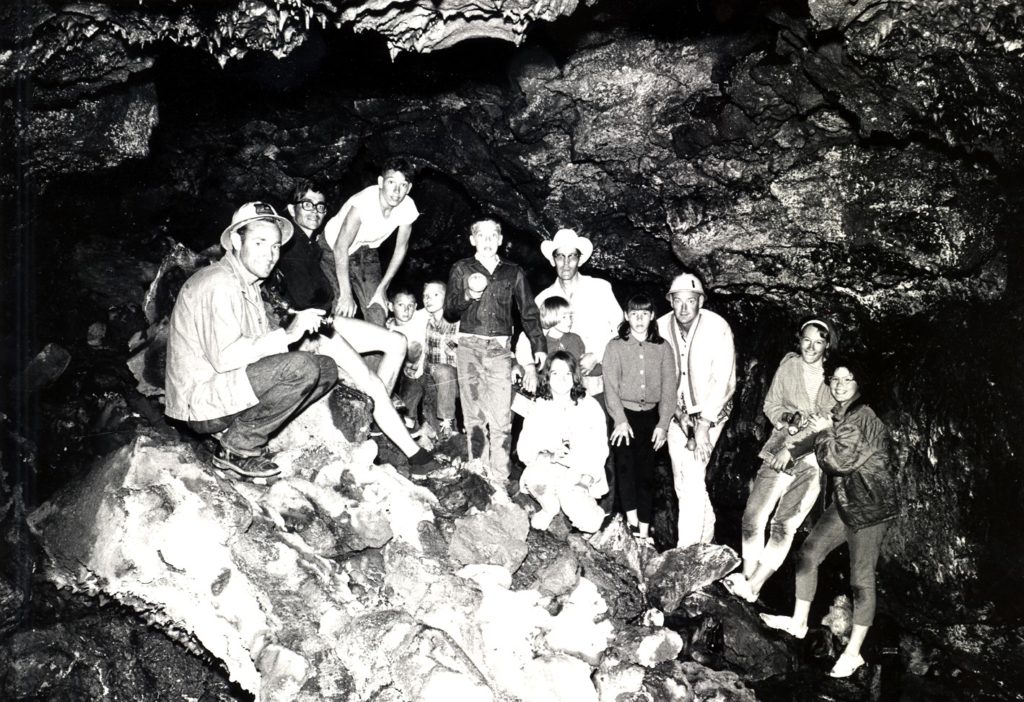
Interior view of an Eagle Lake ice cave, 1966.

“Weeks of research finally identified the insect a member of gryllobottoda, a rare ice age cricket-cockroach which lived in America when Pleistocene ice sheets covered more than half the continent. No one seems to know what the insects eat in the icy dark caverns. They should have been sensible and departed when the glaciers receded 20,000 years ago. But here they are, living their refrigerated lives in the caves near the lake.”

Tim

It Is Lassen County Fair Week

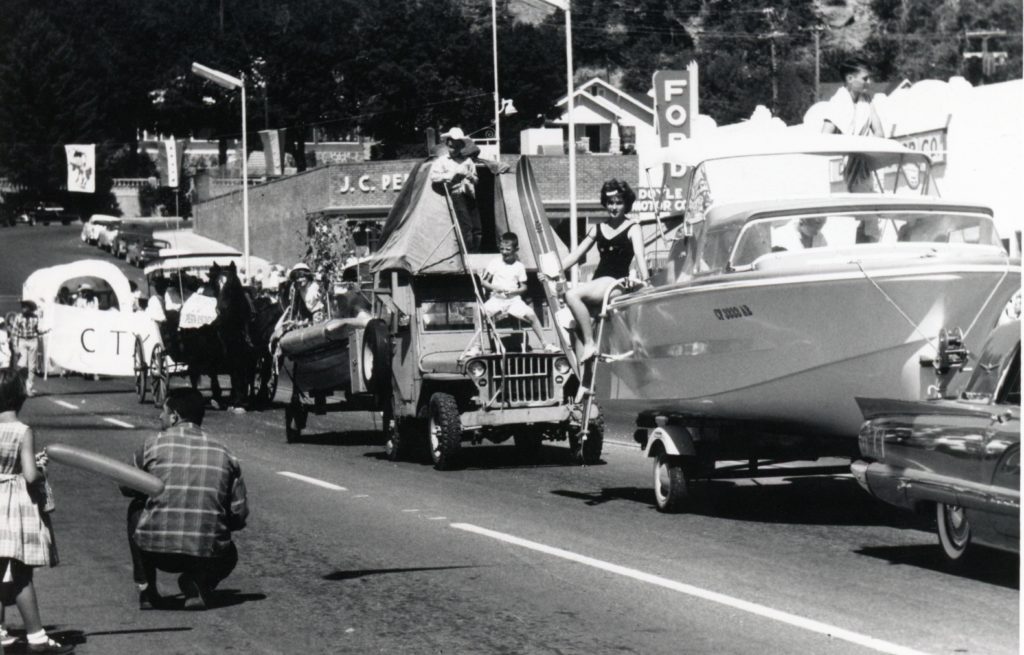
Lassen County Fair Parade, 1965

Quite honestly, I have never been a fan of the county fair when it was moved to the third week in July.  When the annual county fair was established in 1922, it was held in late September. By the 1930s, the date was moved up closer to Labor Day Weekend. After World War II, changes were on the horizon. Neighboring counties worked in a concerted effort on scheduling. Thus, Plumas County would hold their fair the second week in August, the third week would be Lassen and the fourth week would be Modoc. Plumas and Modoc still hold onto their traditional dates. Alas, due to non-agricultural influences, Lassen moved to the third week in July to appease those folks. While I am civic minded and support many events by attending, the annual fair has lost its appeal for me.  And that is my two cents worth.

Tim

Those Summer Cloudbursts

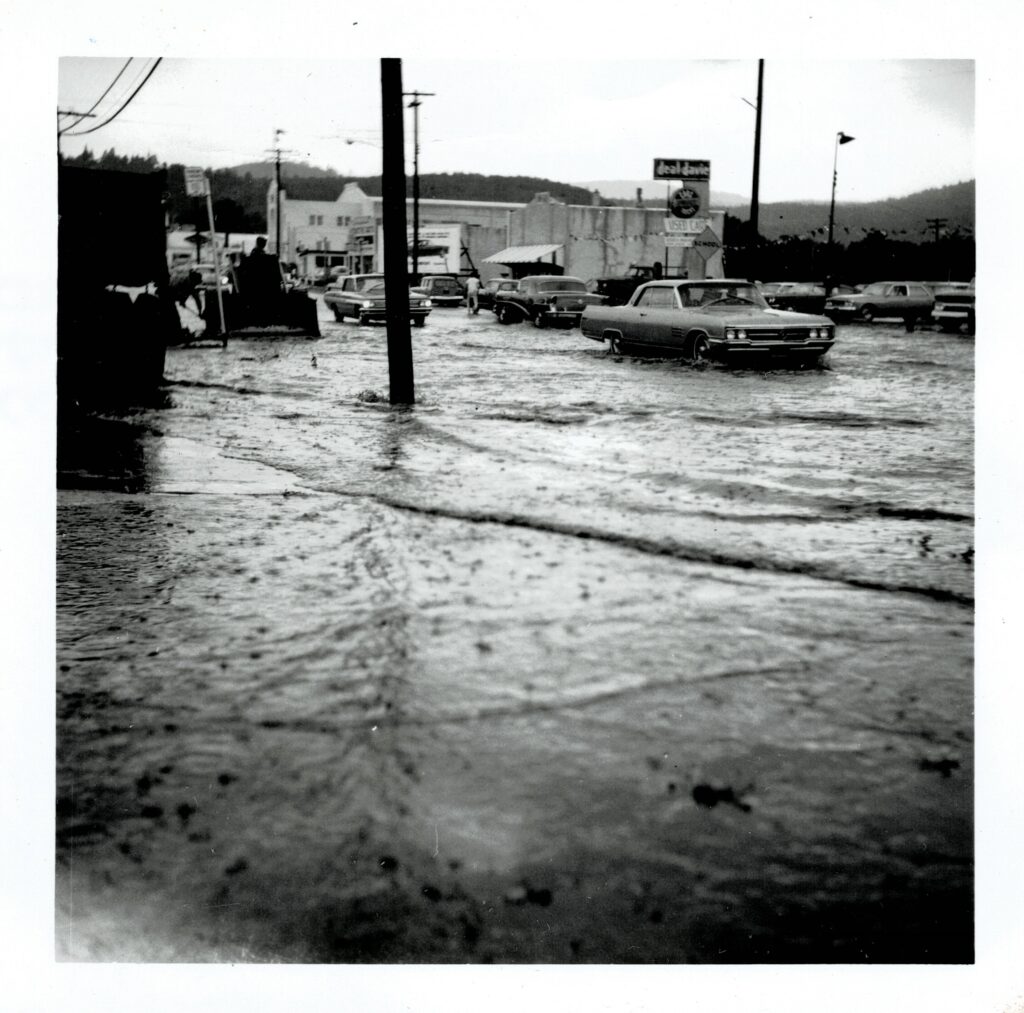
Main Street near Grand Avenue, Susanville, July 16, 1963—Calvin Farris

Some years these cloudbursts are more frequent than others, just like every winter is different. A particular cloudburst of July 16, 1963 was recorded by Susanville resident George Farris. On that afternoon, as Farris duly noted three inches of rain fell upon Susanville in a one hour period. Thankfully, George was a good record keeper. Up until 1969, weather records were duly noted, high, low and precipitation at the Lassen County Courthouse. When George’s son, Calvin, sent me the scanned photograph, I went to those weather county weather logs, only to find that whoever was on duty to record the same, there was a two week gap. However, on July 28, 1963, the Lassen Advocate newspaper reported George’s findings and published the above photogaph.

Tim

The Secret Valley CCC Boys and Willow Creek Valley

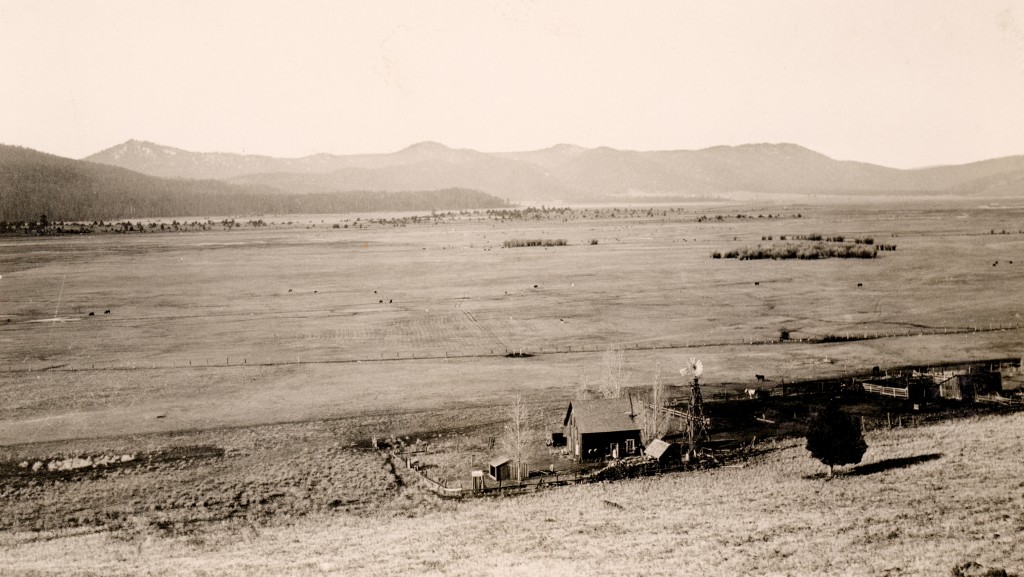
Lower portion of Willow Creek Valley, 1926. Courtesy of Lola L. Tanner

The Civilian Conservation Corp camps generally had a population of roughly 200 men. For some outposts, such as one of Secret Valley, they encompassed a lot of territory. It was not uncommon to establish a seasonal spike camp, comprising between 40-50 men. In In May, 1936, one of these spike camps was located in the Willow Creek Valley, some twelve miles north of Susanville.

This Willow Creek Camp had three main objectives—rebuild the existing telephone line, 20 miles road work and spring development. Work was done on three springs, Hagata, Morgan and Pete’s. They. noted that Hagata Spring had a flow of seven to ten gallons per minute. Of a somewhat interesting footnote, woodpeckers caused great damage to the telephone poles.

Tim

Another Forest Reserve Opinion

A stand of ponderosa pine.

Susanville, was not alone in their opposition of the forest reserves. In November, 1902 T.B. Walker of the Red River Lumber Company had in a few years acquired some 200,000 acres of timberland in Northern California and addressed some of those concerns. Walker stated:  “These lands could be handled to better advantage for the general interest through the agency of private ownership than to have them tied up in the department at Washington. From a general knowledge of the case I am sure that the people of Lassen, Modoc, Plumas, Shasta and Siskiyou counties will regard this reservation move as extremely detrimental to their interests. Private ownership will better protect the timber against destruction by fire, will handle the timber cutting to better advantage to the commonwealth, will make a more continuous or perpetual timber supply, and protect equally as well the water supply and rainfall. There are a few townships and only a few along the Lassen range and in the mountains on the west side of the Sacramento Valley, running perhaps into the upper Trinity mountain country, that might reasonably be put into a forest reserve. Beyond that I think it would be unfortunate to carry out the forest reserve project.”

Support by subscribing.