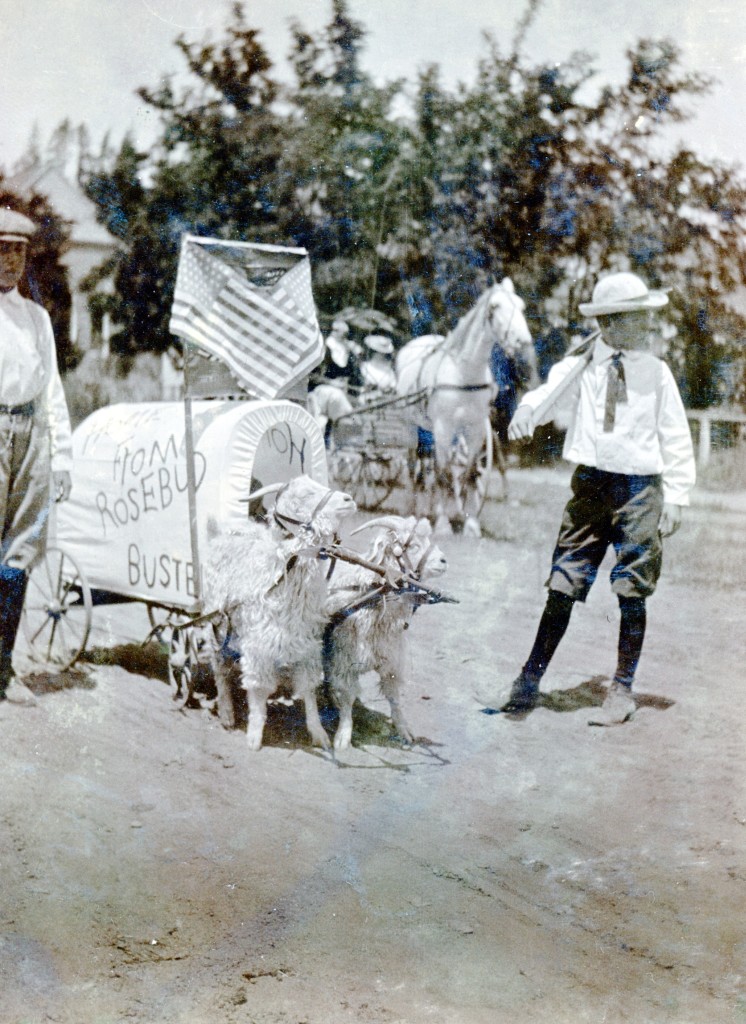
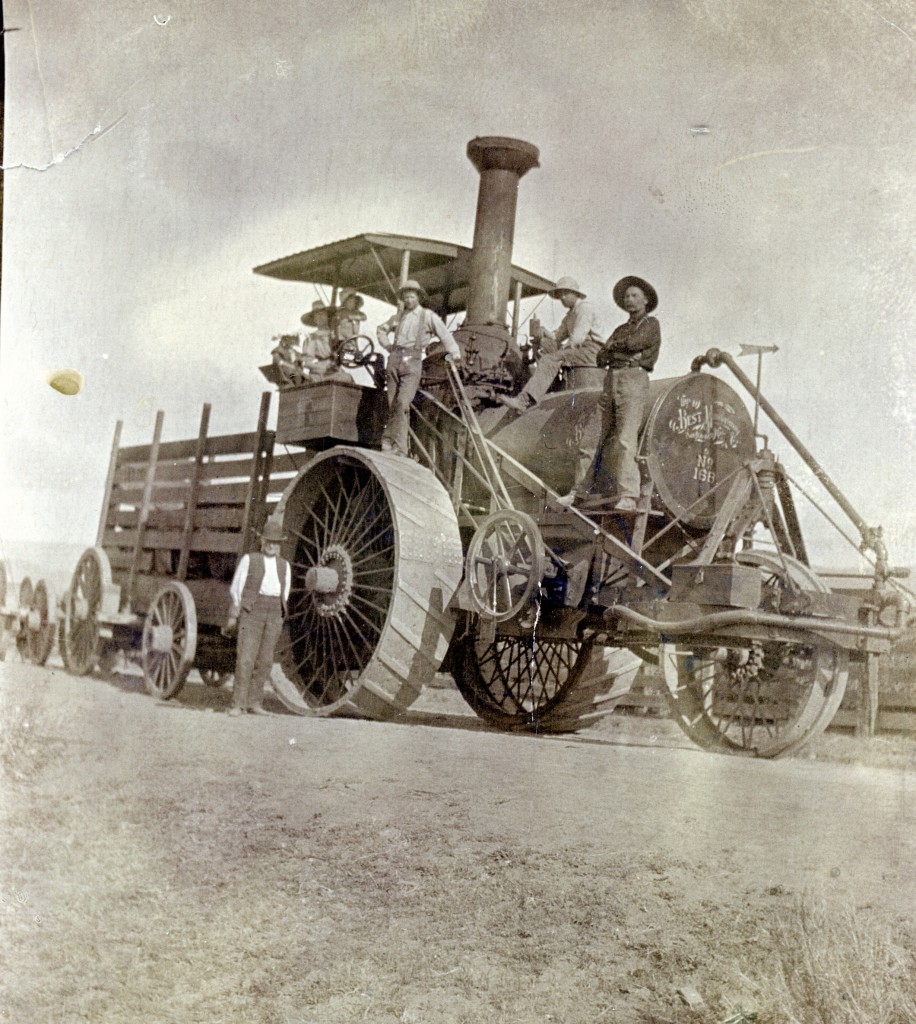
A 4th of July 1908 entry in the parade held in Susanville. Note the writing on wagon “Home from Rosebud Busted” Courtesy of Lola L. Tanner
In 1906, for the first time since the 1860s, Honey Lakers were excited about mining in Nevada. Of course, one Honey Laker, E.C. Brown had done very well in Goldfield. It was not the new mining discoveries of Goldfield and Tonopah, but one due east of the Honey Lake Valley on the eastern edge of the Black Rock Desert–Rosebud, in Pershing County.
It all began in August 1906 when three prospectors from Goldfield, Nevada discovered a gold vein in the Kamma Mountains that purportedly assays ranged from $1,500 to $30, 000 per ton. A mineral report issued from Humboldt County would later state: “This was followed by a senseless boom, in which, as usual, folly played eagerly into the hands of fraud.” Continue reading Rosebud, Nevada→
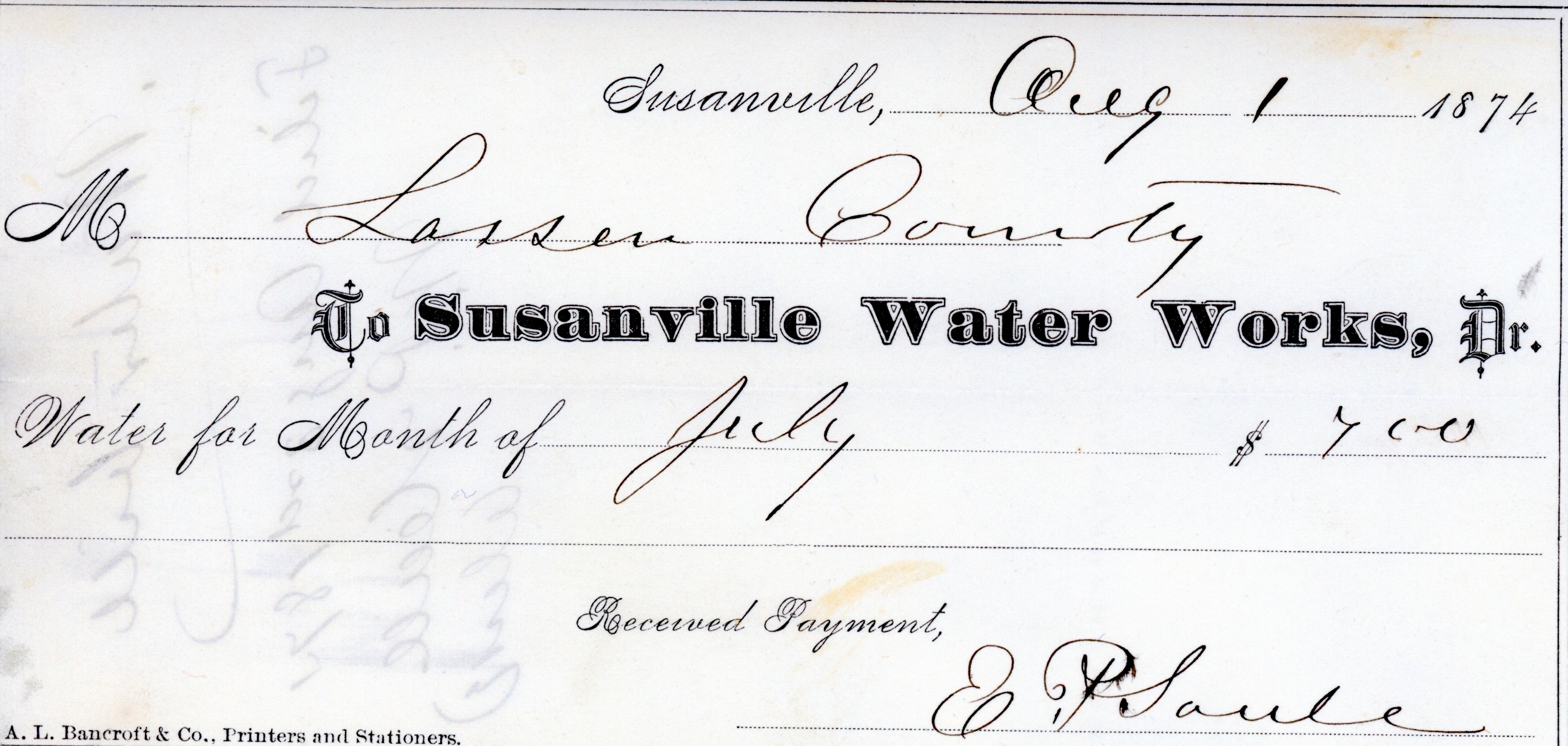
In 1928, it was announced that Minneapolis firm W.B. Foshay Company was in negotiations to by Susanville’s municipal water company. This, of course, brought up the usual debate that the City should own it. The town’s water supply was a hot topic. What is interesting, the Lassen Mail published an account on the origins of the water supply. The newspaper did not cite an author or source. However, I found it of interest, and thought others would too.
”The first attempt of supplying the settlement with water was made by Governor Roop, who constructed a rude system by laying pipes from Piute Creek to a tank located near the center of population. The ‘pipes’ were the trunks of trees bored out after the fashion then employed in the mining operations and in other settlements of the state. Those who needed the water went to to the tank and took what they needed. For this service they paid a small rental—when the governor thought about collecting it, or unless the user gave him a hard luck story and begged off.”
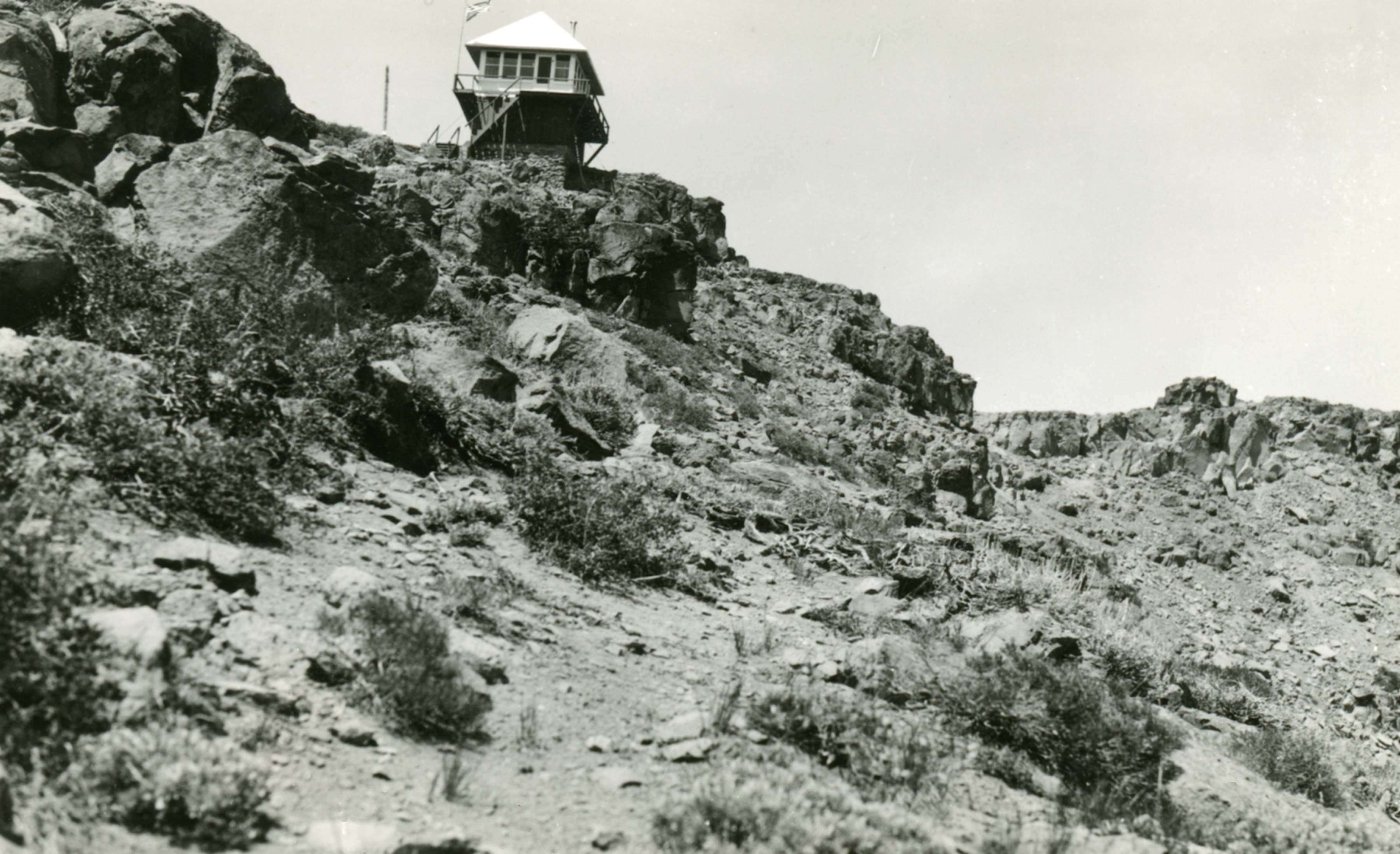
Thompson Peak, is a well known landmark of the Honey Lake Valley, which straddles the Lassen/Plumas County line. At an elevation of 7795’ it is the second highest point of the Diamond Mountain Range.
It was so named for Manly Thompson who located near the base of the mountain in December 1856, Thompson was one the first settlers in that locale. Thompson opted out for greener pastures and on October 27, 1875, sold his 276-acre ranch to James P. Sharp for $6,000 and moved to Elko, Nevada. The property is known today as Bailey Ranch near Buntingville.
Thompson Peak Fire Lookout, circa 1950–Courtesy of Margaret Purdy
Some may want to check out this most interesting website concerning Thompson Peak. It is worth the gander. For me it brought back some interesting memories when I contemplated climbing the peak.
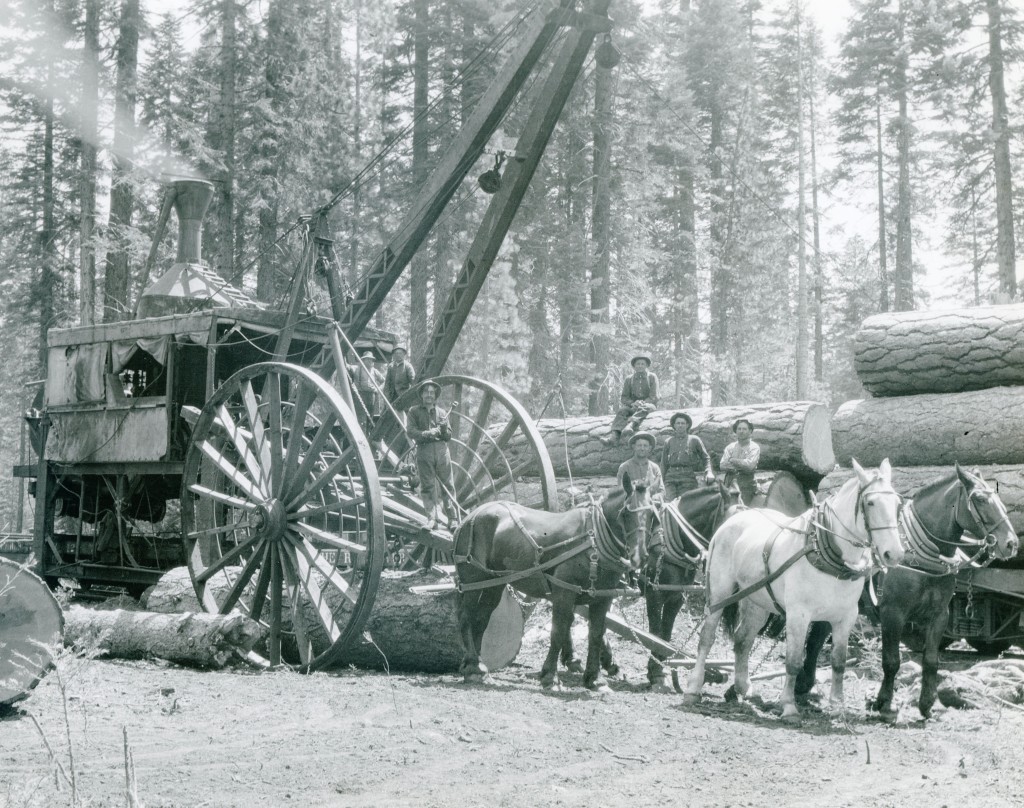
Red River Lumber Company, with Big Wheels and a McGiffert loader in the background. Courtesy of Hank Martinez
Logging operations of the early 1900s was extremely labor intensive. Motorized equipment was still in the experimental stages. One of the best advancements was the development of the Michigan Big Wheels, which everyone just called them big wheels. The wheels were a simple but efficient way to transport fallen logs to a landing, wherein they were then loaded onto railroad cars. The big wheels in time would become a key component in revolutionizing logging methods.
Horses provided the power to operate the big wheels. The name big wheels stems from their size ten to twelve feet in diameter. It was necessary for that size, in order to straddle a log and navigate moderate terrain. The logs were attached to a twelve foot tongue and with a lever, the driver could not only elevate a portion of a log in the front thereby making it easier to drag, but could loosen or tighten the cable, for braking purposes. One big drawback of big wheels was that it required a great deal of labor. Most big wheel logging camps employed as many as of 150 men. Two thirds of them worked as “swampers.” It was their job to remove brush, tree saplings, rocks and other debris that could injure a horse’s leg.
By the late 1920s, both Fruit Growers Supply Company and the Red River Lumber Company had replaced the big wheels with motorized “cats”.
Harrison’s “mighty beast.” Courtesy of Lola L. Tanner
1907 was a most interesting year. in certain circles. There was a national financial crisis, but California and Nevada were experiencing a building boom. For the Golden State it was still in the midst of rebuilding the San Francisco Bay region from the previous year’s earthquake. For the Silver State, a mining bonanza it had not experienced since the discovery of the Comstock. These two episodes created a lumber shortage. Lassen County’s timber resources had basically remained untapped due to the lack of a railroad infrastructure to develop it. Continue reading The 1907 Timber Bonanza→
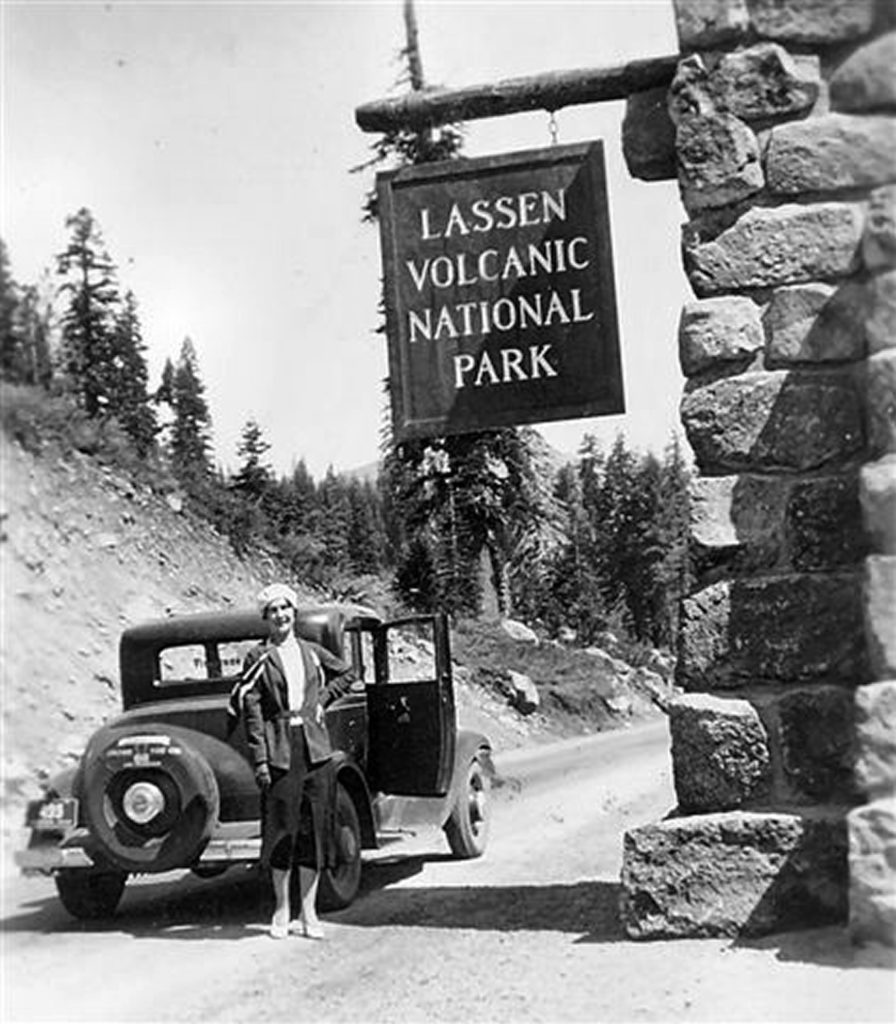
It is only fitting that to explore the story behind the creation of Lassen Volcanic National Park, since it was on August 9, 1916 when President Woodrow Wilson signed the necessary paperwork to establish the park. There were a lot hurdles to overcome before the paperwork made it to Wilson’s desk.
While the initial movement to create a Lassen Park began in 1904, it would take more than decade for it to gain traction. It would not be until the fall of 1910, when Modoc County Superior Court Judge, John E. Raker was elected to California’s First Congressional District seat, that the park movement was truly put into motion. One of the first bills Raker introduced called for the creation of a Redwood National Park, but it failed. On February 23, 1912, Raker introduced a bill, H.R. 19557, to establish Peter Lassen National Park. The proposed park encompassed 80,505 acres that included two national monuments–Lassen Peak and Cinder Cone that were designated as such in 1907. Since the lands were under the jurisdiction of the forest service, a report from that agency was required. The agency neither endorsed nor opposed the park. The bill never made it out of committee. Continue reading The Long Haul to Create Lassen Park→
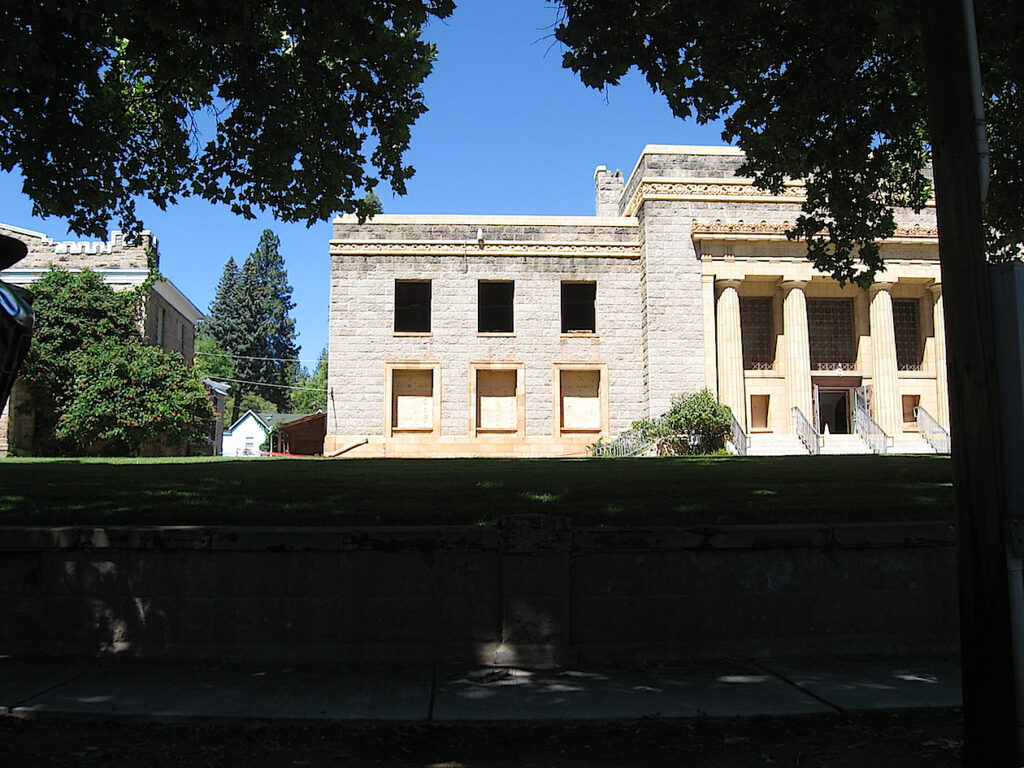
By happenstance recently, I was going by the Lassen County Courthouse that is still under renovation. It was rather striking seeing the windows being removed.
Lassen County Courthouse with the original windows, 1938
This will be third set of windows for the building. In September 1978 prison inmate Robert Clawson who was in the courtroom on pending kidnapping charge broke free from the bailiff and fled. He exited the courthouse by jumping out of the window on the second floor landing in the flower bed, From there he ran away, but was later apprehended. From this episode the original windows were replaced with smaller openings to prevent future escapes.
Excavation of the State Building, next to the Grand Cafe., May 1935. Courtesy of Helen Sargent
It was on August 7, 1993 when the Neversweats Chapter #1863, E Clampus Vitus had a plaque dedication of Susanville’s iconic Grand Cafe. While it has been shuttered for many years, rumor on the street that it will re-open later this year.
The plaque states: “Established in 1909, the Grand was first operated by Kwan Wong In 1912, the Grand moved to this location and in 1921 Sam Vucanovich and Steve Sargent became the new owners. The original building collapsed in 1934 from construction next door and the Grand reopened in this building in 1935 with Steve Sargent at the helm, accompanied by his wife Helen. For over seventy years the Sargent family has been dedicated to serving the public’s needs.”
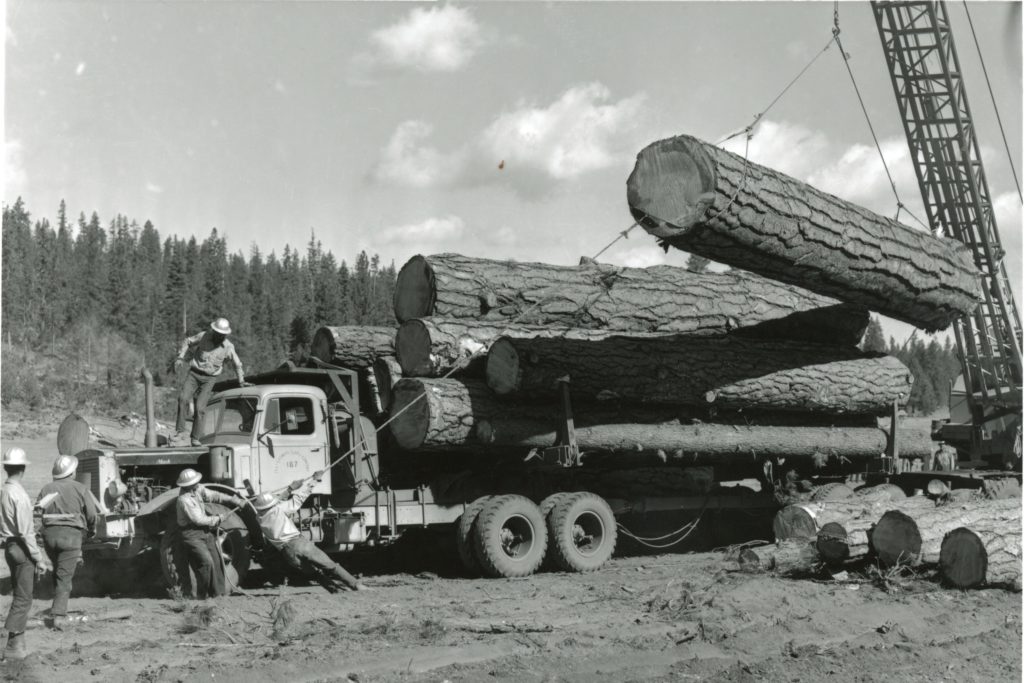
Log landing at Coyote Flat, August 21, 1953. Courtesy of Hank Martinez
It was not long ago when this was a common term issued by the forest service when in the summer months fire risk was high. What it entailed was the suspension of any activities that could spark a fire. First foremost, it applied to logging operations and equally important firewood cutters. On days declared hoot owl went into effect at 1:00 p.m. all such activity was curtailed. If you were a wood cutter while you were no longer able to use your chain saw, you could still have plenty time to load up the wood one had cut. Ditto, for log landings, if there were trucks present, they could be loaded, but all other operations were suspended.
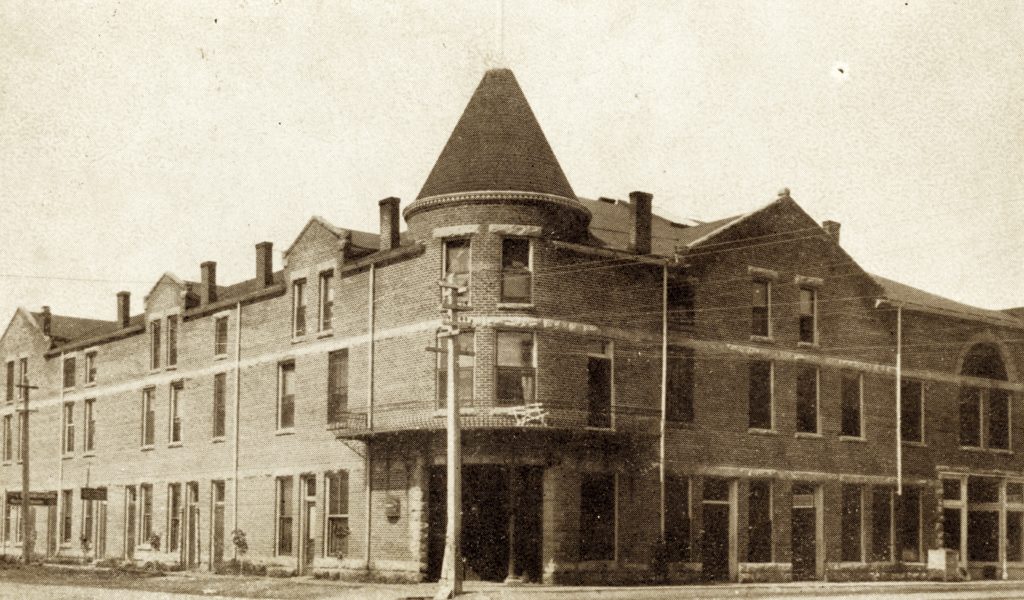
The Emerson Hotel located at Main & Lassen Streets, the current site of the Hotel Mt. Lassen.
Susanville native, Charles “Charlie” Emerson was born on August 5, 1868. He was one of the rags to riches story. A year after his birth, his father deserted his family. Slowly, but surely the budding entrepreneur ventured in the business world, and was doing quite well.
In 1900, Emerson announced he was going to build the town’s premiere commercial establishment—a three story brick hotel. Completed in 1901, it became the town’s social hub. In 1913, the hotel’s neighbor to the west, the Blue Goose Saloon caught fire. It should be noted the Blue Goose had the town’s first neon sign, which shorted out and caused the fire. The hotel received minimal damage. Emerson purchased the burned out lot, and built an annex to his hotel. There is an issue about the annex, but that will have to wait for another day.
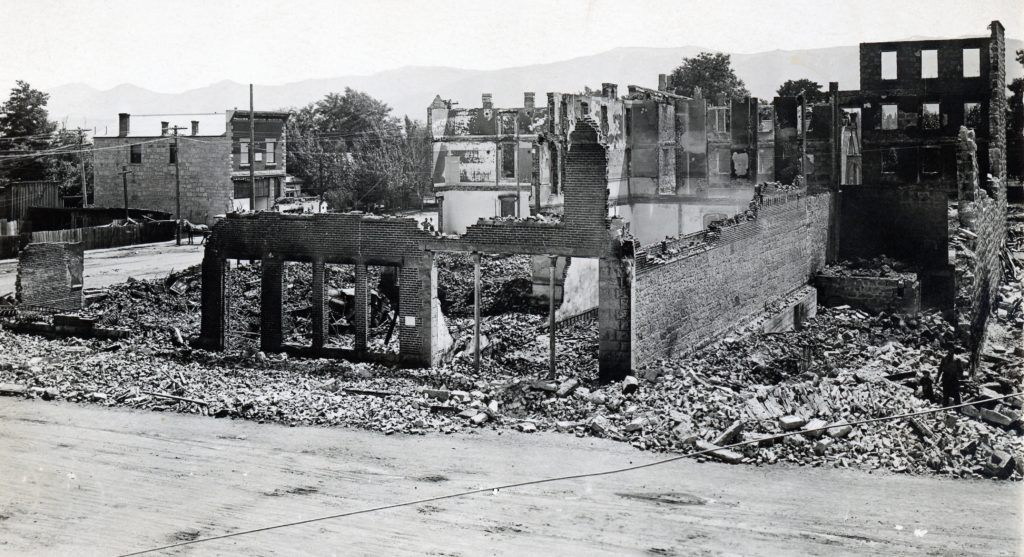
The Emerson Hotel ruins. Courtesy of Vivian Hansen
Back to Emerson’s birthday. Shortly after midnight on August 5, 1915, a fire was discovered in Emerson’s warehouse on Cottage Street, adjacent to the Methodist Church. The fire spread rapidly due to west winds, sending embers across the alley and igniting the Emerson Hotel, located on the corner of Main and South Lassen Streets. Two adjacent buildings facing on Lassen Street–the Hyer Hotel and the Methodist Church–also caught on fire. When it was realized that it was futile to try and save the buildings, all efforts were focused on keeping it contained. The losses were staggering, estimated at over $250,000. Emerson never fully recovered.
Years later, Emerson’s daughter Mae Ables, recalled the tragic event: “I was home for summer vacation from college when the hotel burned on my father’s birthday and stood with his arm around me in the middle of the street and watched it go with all our worldly possessions and Dad’s business records of years destroyed.”