Category Archives: History

Deer Hunting

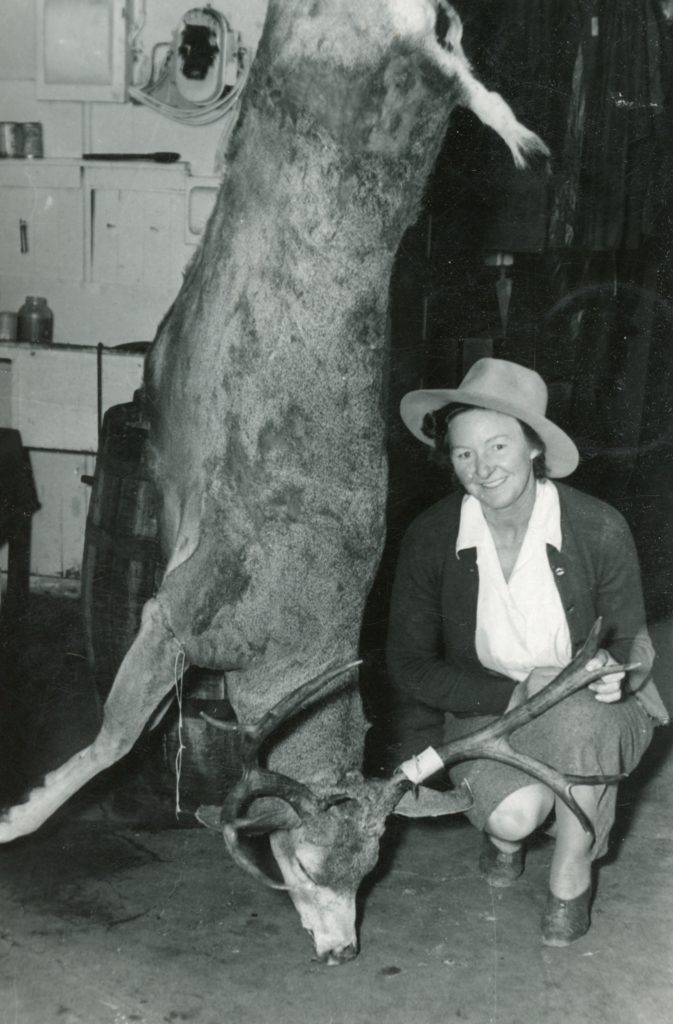
Margaret Purdy with her trophy buck 211 pounds dressed, September 24, 1947.

Once upon a time, a person was not confined to deer hunting in a particular zone. By the 1940s with significant improvements to highways and automobiles opened a lot of territory to hunters, once the domain of locals.

The Fruit Growers Supply Company operated lumber mills in Hilt, Susanville and Westwood. While researching its history, I always came across some interesting material. Fruit Growers’ Annual Reports are a wealth of information. Before you think I am losing my sanity writing first about deer hunting and then lumber mills, there is a common thread.

The following is a most interesting excerpt from Fruit Growers’ 1946 Annual Report:

“Much of the country in which Company timber is located is considered to have good deer hunting, and the deer season opens at a time when the woods are in the driest conditions and when the fire hazard is the greatest. The handling of the large influx of people into the general Northern California area during the deer hunting season constitutes a very serious problems to all owners and agencies interested in timberlands. In 1946, hunters and their parties were registered as they entered Lassen County area, and during one week’s time, close to 5,000 automobiles and 13,000 individuals registered as potential deer hunters. Thus more hunters were checked into Lassen County than its normal population. Despite this, the Company was fortunate in its 1946 experience with forest fires.”

Subscribe and support this site for little as $4.17 a month.

Lonkey Ranch

Lonkey Ranch, 1911. C.R. Caudle Collection

Some ranches retain their original name, after the owner is long gone. A perfect is the Bare Ranch in Surprise Valley. In 1864, Thomas Bare established the ranch, sold it in 1880, and it is still known over a century later as the Bare Ranch.

The Lonkey Ranch is not one of those ranches. It was originally known as the San Francisco Ranch, the owners from that city. Lonkey was in the middle, followed by Five Dot. For those not familiar, this ranch is located approximately twelve miles north of Susanville in the Willow Creek Valley. Continue reading Lonkey Ranch

Introducing Paul Bunyan

Intro
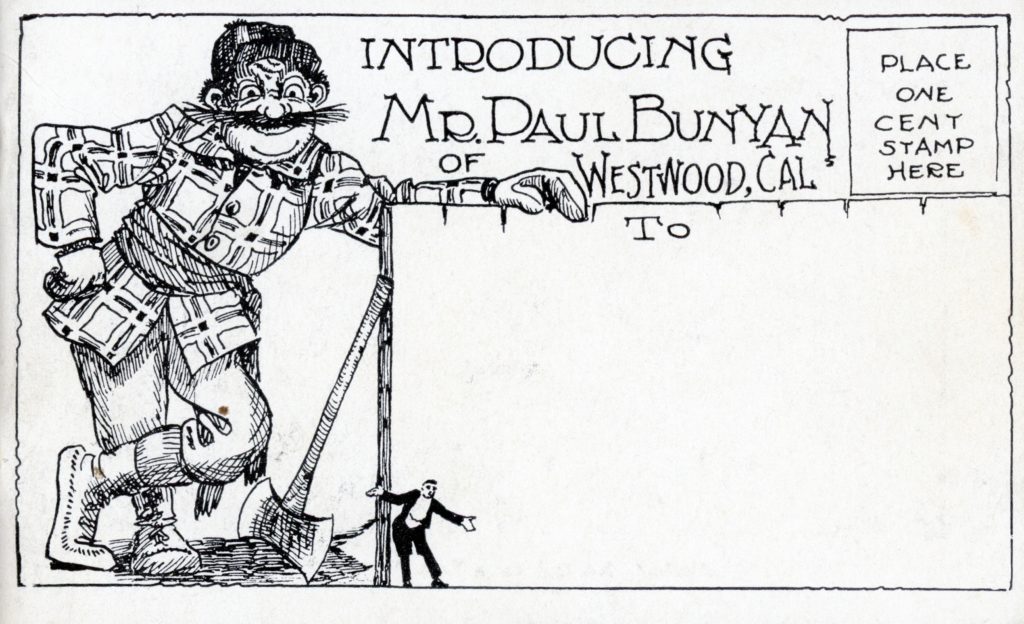
The cover of the pamphlet.

During Red River Lumber Company’s expansion to California, they had number of hurdles to overcome. Since they would be using a different species of pine, than what they had previously used in Minnesota, they had to monumental task to educate their customers. Part of the duty fell to Archie Walker in Minneapolis, and he contacted his cousin, W.B. “Bill” Laughead, who was doing some free-lance advertising work to assist him. At this time, Paul Bunyan was a little known folklore, associated with loggers.  The two came up with the idea of Paul Bunyan, and prior to this no one had rendered a drawing of the mythical logger. Continue reading Introducing Paul Bunyan

Lassen County – The other McCoy Flat

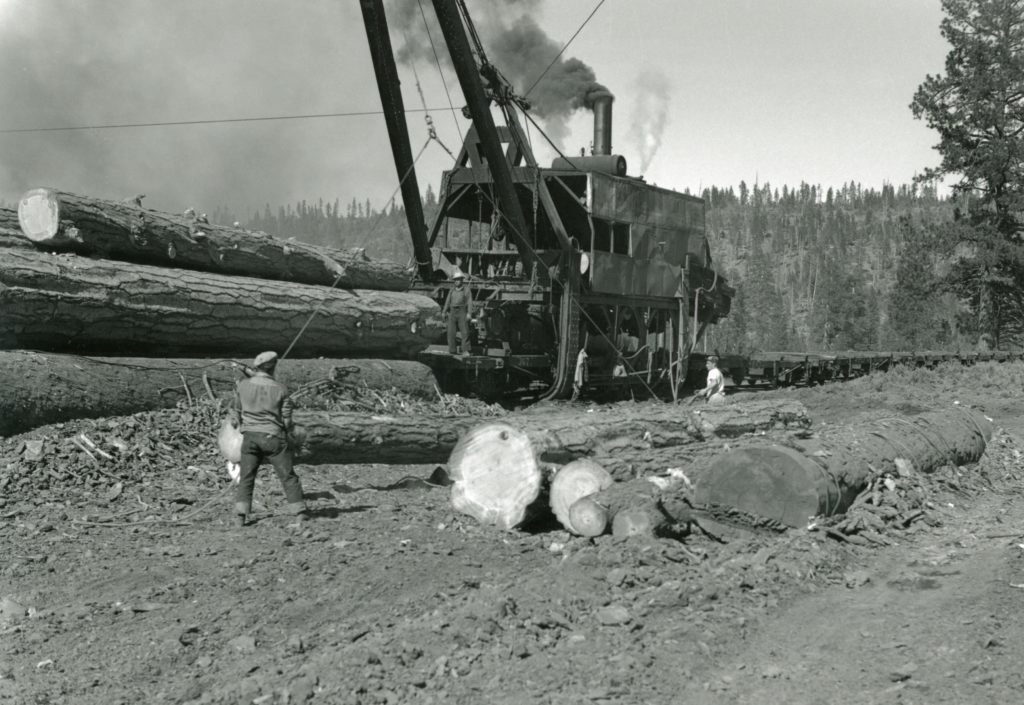
Loading logs with a McGiffert, at McCoy Flat, 1952.

While many are familiar with McCoy Flat Reservoir along Highway 44, there is another McCoy Flat in Lassen County, This too, was named for another Tehama rancher,  Leo Lewis McCoy (1850-1936) who used this area for summer pasture from 1874 to 1913. When he retired in 1913, he sold his ranch of 27,000 acres to Alden Anderson for $150,000.

For the record, this McCoy Flat is located along Pine Creek, just east of Eagle Lake.  In 1952, it was the scene of the last of the railroad logging operations of the Fruit Growers Supply Company.

Never miss a story, click here to subscribe.

1887 Brand Directory

Brand Cover553

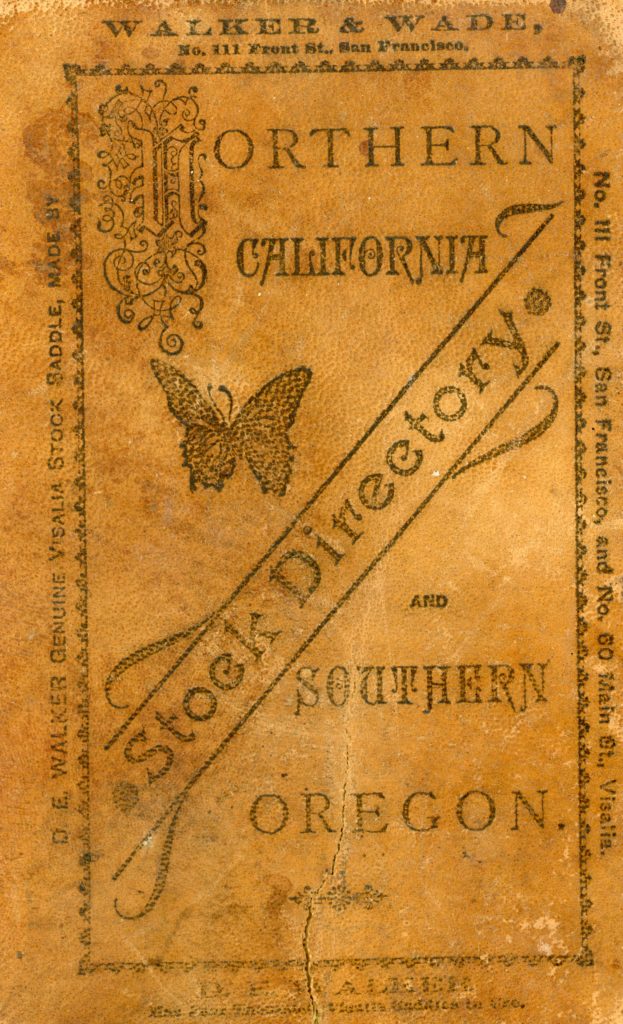
In 1887, two Modoc ranchers, Frank C. Dean and Wilson S. Bayley published a comprehensive 371-page brand directory entitled the Northern California and Southern Oregon Stock Directory. It was an admirable job and in the introduction, they wrote: “All Stockmen are aware that each winter, in every small section of the country, a number of stock remain unclaimed, and on the other hand a number are unfound. Continue reading 1887 Brand Directory

The Pine Tree Newspaper

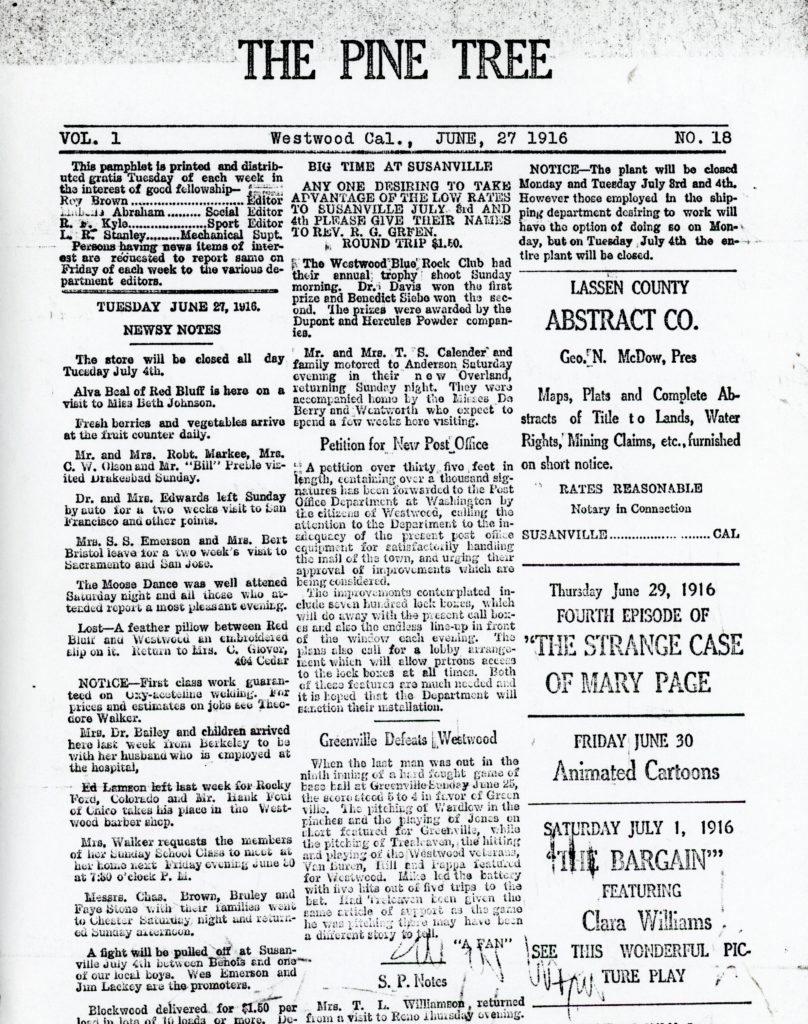
A portion of the front page, and only known copy that was found in the T.B. Walker papers at the Minnesota Historical Society
A portion of the front page, and only known copy that was found in the T.B. Walker papers at the Minnesota Historical Society. As a reminder, you can click to enlarge the image.

On March 21, 1916, Westwood’s first newspaper The Pine Tree made its debut.  It was a weekly paper that was distributed for free. Leon R. Stanley who was in charge of production, had a background with newspapers in Modoc County. Very little is known about the paper and when it ceased publication.

On August 17, 1917, The Westwood Independent succeeded The Pine Tree. This paper under the helm of G.B. Morrow, who also served as the justice of the peace remained in operation for three years. Stanley again was in the forefront when The Westwood Sugar Pine which eventually became known was Sugar Pine Press succeeded The Westwood Independent.

Never miss a story, click here to subscribe.

Boyd – Lassen County

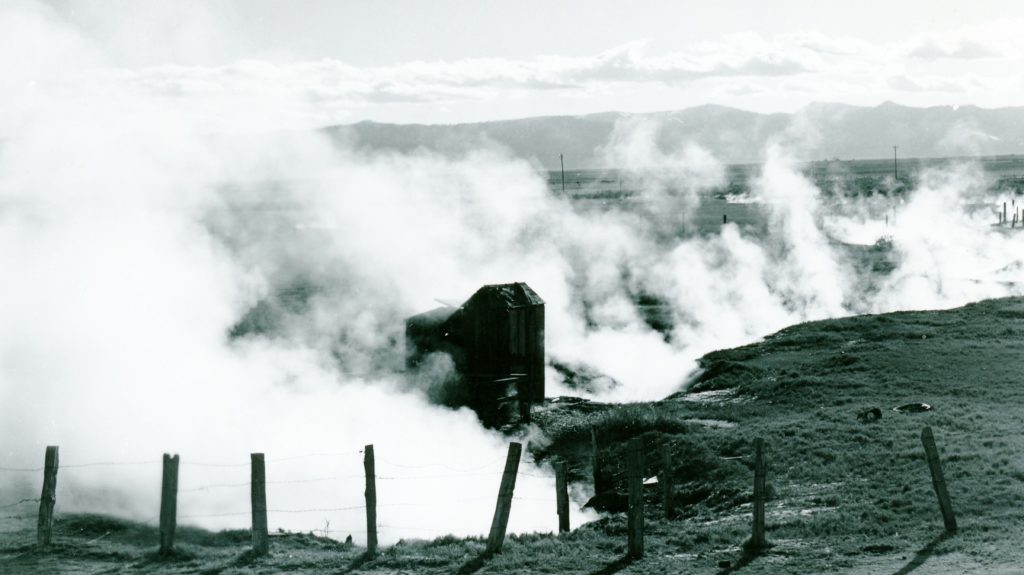
Wendel Hot Springs, circa 1940.

Wendel has had many names over the years. In the 1860s, it was referred to as Upper Hot Springs to distinguish from the Lower Hot Springs. In 1890, when the Nevada-California-Oregon Railroad (NCO) extended its line to Amedee, the Lower Hot Springs took on the name of town established next to it. Upper Hot Springs simply became known as Hot Springs. In 1899, the NCO extended its line further north and at Hot Springs established a new station named Boyd.  When T.F. Dunaway became General Manager of the NCO in 1900, he renamed the Boyd station to Smithon. Two months later, in January 1901, he again renamed it to Hot Springs. It would be another fourteen years before the place became known as Wendel.

Never miss a story, click here to subscribe.

Eagle Lake – Tunnel Bay

Tunnel Bay, Eagle Lake, 1917. Courtesy of Lola L. Tanner

While a lot of folks are familiar with the Bly Tunnel, some of the earlier tunnel attempts were north of that one. What was deemed Tunnel Bay was Captain C.A. Merrill’s preferred tunnel location. However, in the early 1880s, Merrill focused on the Willow Creek side of Eagle Lake with his tunnel construction.  In 1891-92, Susanville attorney and promoter, E. R. Dodge, formed the Eagle Lake Land & Irrigation Company and took over Merrill’s operation. Dodge had worked done at Eagle Lake with the construction of an inlet, and also limited tunnel excavation. Some people now referred to this as Dodge Bay. It was at this location, that a pumping plant was constructed. It was Dodge’s contention that this plant would provide water for irrigation in the Honey Lake Valley and in turn generate revenue until his tunnel was completed. Water was pumped from this location and transported by various ditches, along with Willow Creek being one of the conduits that Eagle Lake water flowed all the way to Amedee in the Honey Lake Valley in the fall of 1892, and a portion of 1893. However, the nation’s financial crisis of 1893, put a halt on everything at Eagle Lake, and eventually the pumping plant was sold off as part of a liquidation process.

Never miss a story, click here to subscribe.


Susanville – Union Street

Deforest028
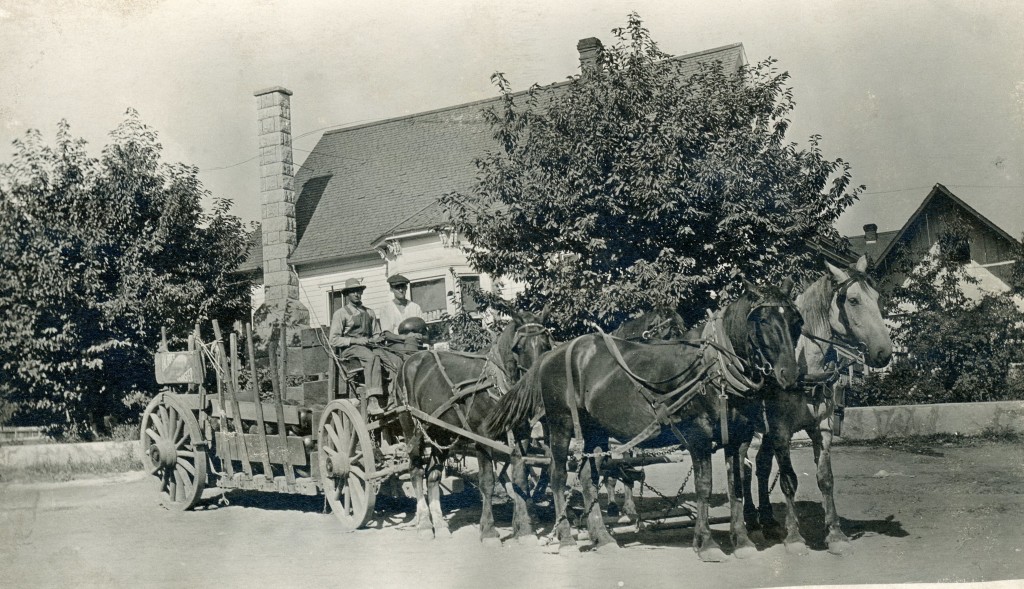
Talbott’s freight team, Union Street, near Cottage, 1914. Courtesy of Leona F. Byars

During the Civil War of the 1860s, communities in support of the North, applied Union to street names, squares, etc. Susanville was a perfect textbook example.

Typical of the era, map makers were one dimensional. Susanville’s original plat, shows Union Street extending beyond Cottage and connecting Weatherlow Street at the Richmond Road bridge.  There were two problems. First the proposed street would dissect the block that was home to the Susanville School District. The other was the physical restraint of the hillside for Union to connect with Weatherlow. During the messy title problems of the 1870s, caused by  the town’s founder, to rectify this particular situation, that segment of Union to Weatherlow was abandoned.

Never miss a story, click here to subscribe.