Category Archives: History

Eagle Lake – Pelican Point

United States Government Land Office survey map.
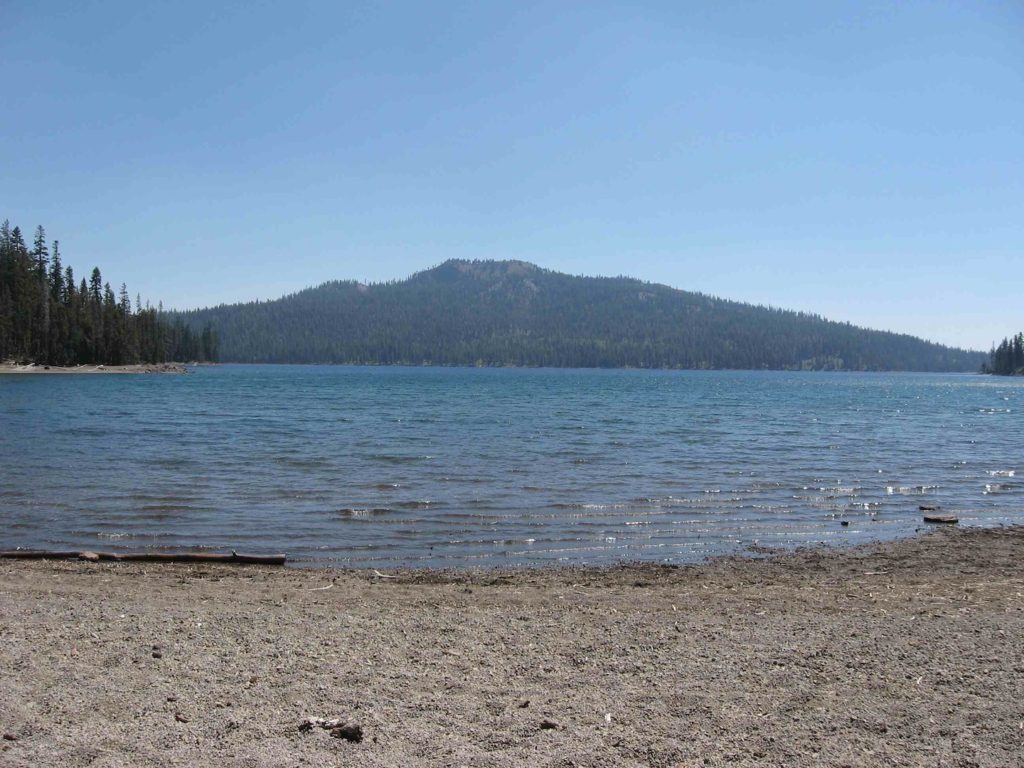
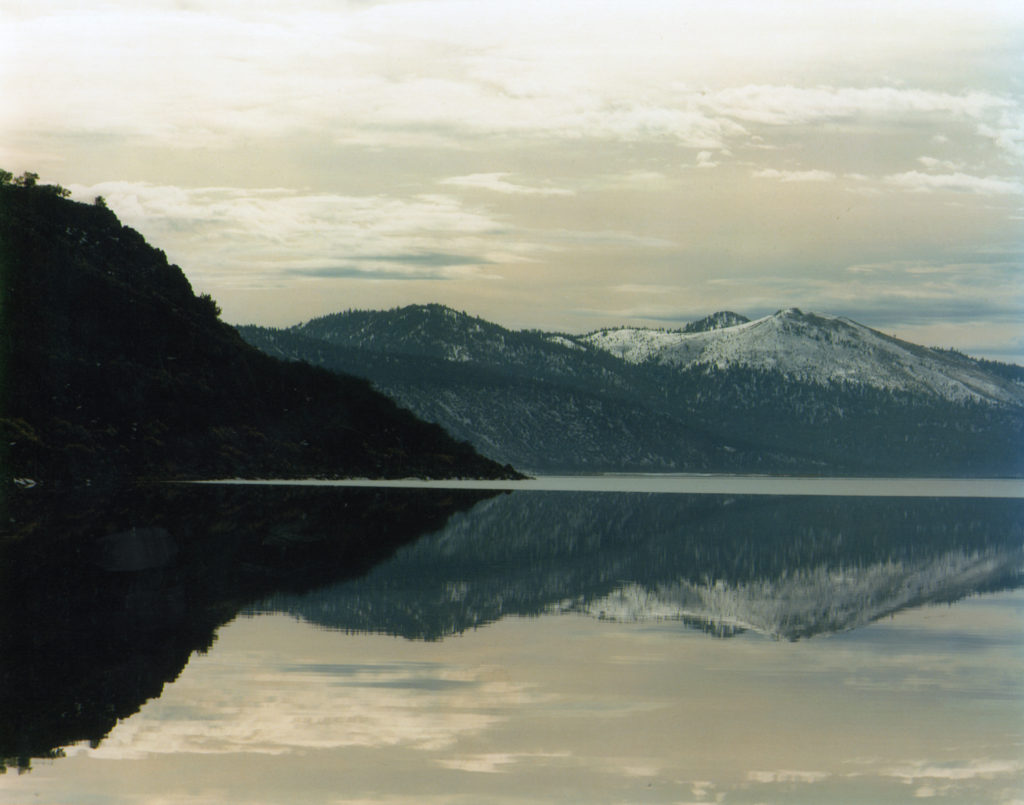
There are times when I am doing research I get sidetracked. In a particular instance recently resulted in an interesting revelation concerning Pelican Point at Eagle Lake. For a long time the point did not exist, though there was a Pelican Island of sorts. As you can see the above of the Government Land Office survey map of 1875, there is no Pelican Point. At that time the lake level as 5109. In 1917 began the twenty-year drought, combined with the Bly Tunnel, the lake level dropped dramatically, which resulted in the exposure of Pelican Point for the first time since Anglo settlement.

Subscribe!

John A. Hanson, Photographer

Hanson’s standard advertisement. Courtesy of Verna L. Haley
The itinerant professional photographer of the late 1800s was an interesting creature in the rural areas such as Lassen. Many were single young men. After all, one would have to ride “circuit.” Susanville at that time, with a population base of less than 500, it could not sustain a full time photography studio. They would travel to neighboring communities in search of business. After a few years, they would move to a new territory.

John Hanson came to Susanville and initially opened his photography studio in a tent. With that type of mobility, it appeared Hanson was just traveling through town. Yet, Hanson found romance in Susanville with a young lady, by the name of Fannie Streshley, who operated a millenery store a block from Hanson’s tent. The relationship turned serious and the two were married on October 31, 1883. The couple made Susanville their home until 1886, when they moved onto unknown greener pastures.

Subscribe!

Red River’s Snow Roller

Red River’s snow roller in action. Courtesy of Calvin Sharp
On January 2, 1916, it began to snow, and snow and snow for nearly three weeks. At Westwood it was reported that they fourteen feet of snow. Resident Manager, Fletcher Walker called it a “blue snow.” From this particular snowstorm, standard snow removal techniques of Westwood streets were no match to combat the deep snow. Someone came up with ingenuous idea to build a snow roller to compact the snow. The Westwood correspondent to the “Lassen Weekly Mail,” observed, “The immense snow roller is in successful operation on the streets. It leaves a compressed trail wide enough for teams to pass. Eight to twelve horses have been used to haul it through the streets and the affair makes an interesting ensemble.”

Subscribe!

Dodgeville – Lassen County

Ward Lake, October 26, 1969. Photo by D.B. Martin
This was the name of the construction camp of the Balls Canyon Reservoir Company. Established in 1889, when construction of a dam across the lower end of Secret Creek, near Belfast, to capture the spring floodwaters to create Ward Lake. It was named for Edmund R. Dodge was the President of the Company. Dodge, it should be noted wrote the Lassen County segment of Farris & Smith Illustrated History of Plumas, Lassen and Sierra Counties, 1882, among other things.

Subscribe!

Bonham School

Flanigan, 1976
Flanigan, 1976, courtesy of Christopher Moody
Established in 1887, it was originally located at the Bonham Ranch in the Smoke Creek Desert. The school closed in 1919 for lack of students. In 1929, it was resurrected at Flanigan in the Honey Lake Valley. It closed on June 20, 1969 and at that time it was the only remaining one-room school in Washoe County. Standish resident Ed Bass purchased the school and moved to his property.

Subscribe!

The Two M’s

Janesvlle Methodist Church, 1911. Courtesy of Marge Foster
From the early 1860s up until World War II the two dominant social institutions locally were the Masons and the Methodist, which were hand in hand. The majority of the Masons were Methodist, and vice versa. By the early 1900s the Methodist were so predominant in the Honey Lake Valley that they had churches at Janesville, Johnstonville, Standish and of course Susanville. The Masons on the other hand had lodges at Janesville and Susanville, which have since been combined.

Donate!

Lake Almanor Cloud Seeding

Lake Almanor, 1926.
From time to time discussions have been held whether the cloud seeding in the Lake Almanor Basin area by Pacific Gas & Electric Company affects the areas to the east. In 1979, Lassen County officials thought the cloud seeding was part of the drought problem in southern Lassen County. In October 1979, Henry LaPlante of PG&E stated that the company has been treating selected storm systems for more than 25 years. He said the intent of the seeding was to increase the high elevation snowpack. Furthermore, LaPlatnte wrote, “There is no scientific evidence which indicates that cloud seeding activities in our Almanor area reduces the amount of precipitation in any other area.

Donate!

Dayton, Lassen County

Thomas J. French. Courtesy of Elburna McClelland
This was a wide spot in the road better known as Mapes Ranch, near Litchfield. In 1868, Thomas French and Andrew Litch formed a partnership and purchased the Shaffer Brothers ranch, hence the origin of the name for a nearby school and mountain. On January 27, 1873 the Dayton Post Office opened Thomas French as the first and only postmaster. Litch at the same time opened a small store that the Shaffer’s had previously operated. The post office closed on January 18, 1875, but that was not the only change on the horizon. Later that year French and Litch dissolved their partnership.

Donate!

The Amedee Yacht Club

In 1987 an informal regatta was held on Honey Lake.
The early 1890s were lively times in the Honey Lake Valley. There were numerous enterprises constructing dams every where to create McCoy Flat reservoir, Hog Flat reservoir, Ward Lake, Skedaddle dam and Lake Greeno. Let us not forget the biggie, the tapping of Eagle Lake.

Adding to all this was Amedee an instant railroad boom located on the eastern shore of Honey Lake. In the spring of 1892, Charles Teague and H.B. Griffith formed the Amedee Yacht Club. S.N. “Mac” Sample had the first boat which received extensive use. On its maiden voyage in the spring of 1892 had a crew of of George Clark, captain; S.N. Griffith, commodore; E.C. Brown and L.W. Brubeck, mates and Jake Yanner, engineer.

The Amedee Yacht Club even had a backup plan should Honey Lake reach a point that if it got too low for the boats. The club cited with all the reservoirs being constructed that there would be times that the water from Eagle Lake would not be need for irrigation, and that water could be used fill up Honey Lake for sailing purposes.

Donate!

Smoke Creek Ranch

Smoke Creek Ranch, September 29, 1979

The Smoke Creek Ranch is one of the oldest ranches in Nevada, first settled by T.T. Kingsbury on May 30, 1857. It is also one that I have not had the best of luck finding information, so I am doing this post to see if anything surfaces. During the late 1800s it was owned by the Winters family of Washoe Valley. They even acquired the Shinn Ranch and George Winters planted the cottonwood grove there. One of the next owners were the Pon Brothers. I was recently in contact with some Pon descendants but they had no information. Then there was Patrick Flanigan and Rees T. Jenkins outfit among others. In 1949, Albert Freeman, then owner of the Smoke Creek Ranch, had the reservoir constructed. If anyone can enlighten me and others about this place, I would truly appreciate it.

Donate!