Category Archives: History

Lake Almanor Enlargement

Lake Almanor

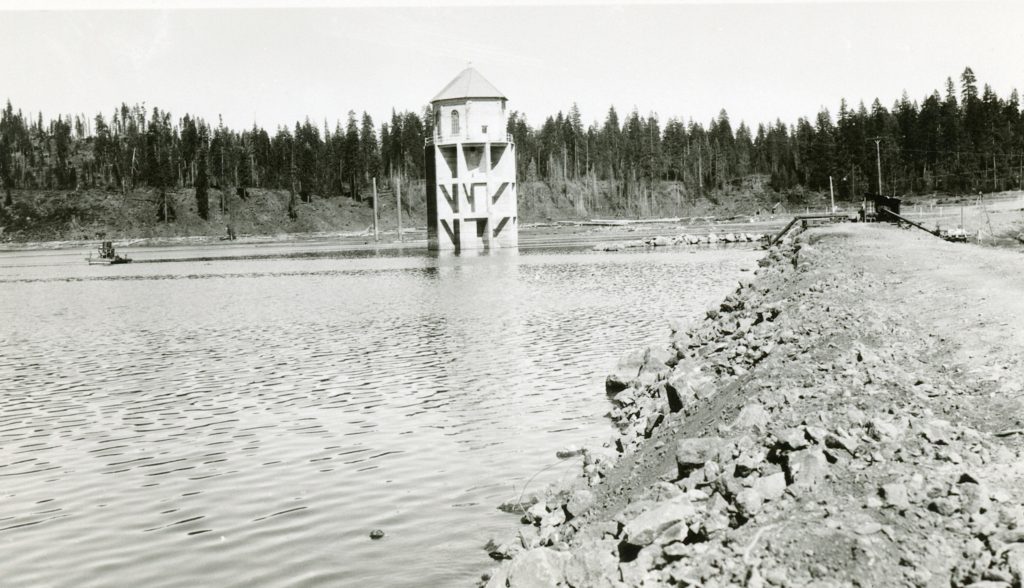
Well, I am stuck in the 1924 drought era. The drought placed a severe strain on Great Western Power’s  hydro-electric operations, though company officials assured its customers there would be no power outages. To maximize the water flow out of Lake Almanor, it was necessary to dredge channels in the lake to its outtake.

In December 1924 Great Western Power announced its intentions to raise the dam at Lake Almanor by forty-five feet. This would double the size of the lake, wherein once completed would be one of the largest reservoirs in North America at that time. The enlargement was necessary not only to protect it from future droughts, but to facilitate additional powerhouses.
Subscribe

Hilt Picnic

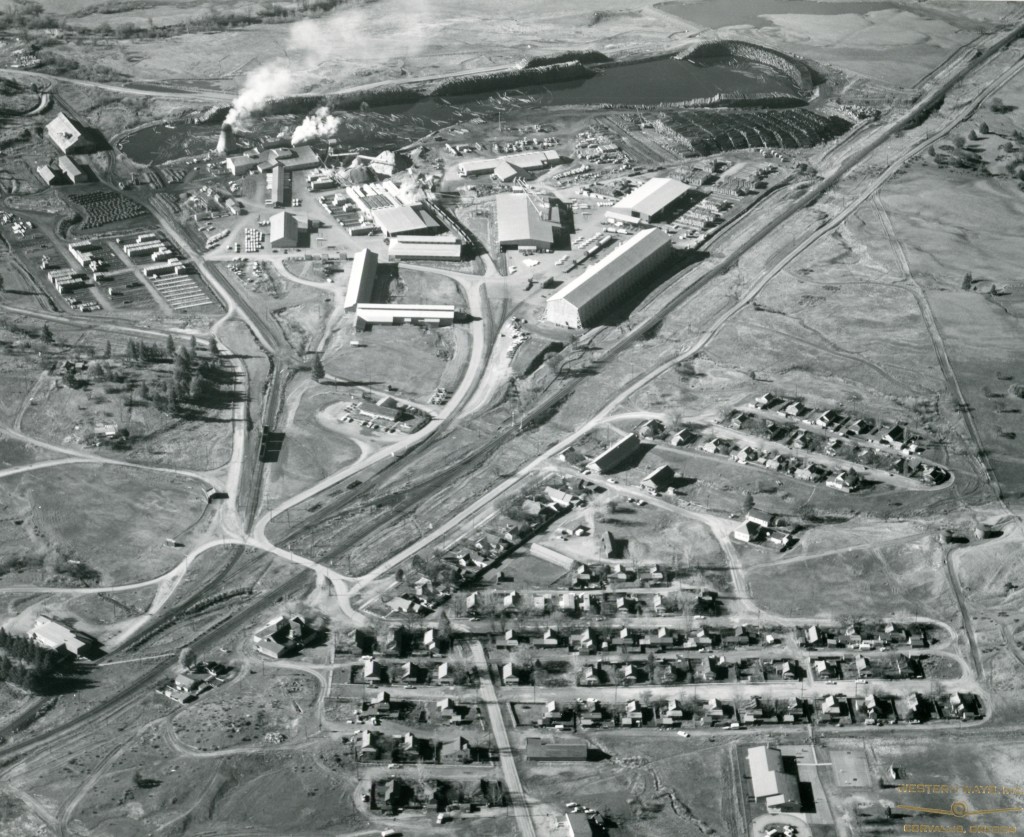
Hilt, California, 1972. Courtesy of Fruit Growers Supply Company

If there are any former Fruit Growers Supply Company folks out there, this Sunday, August 5 will be the last Hilt Reunion Picnic to be held in Medford, Oregon. Contact me for details.

For those not familiar with Hilt, it was Fruit Growers Supply Company’s company in Siskiyou County, near the Oregon border. In 1933, Fruit Growers gave serious consideration to close the mills at Hilt and Susanville due to the challenging economic conditions. However, Fruit Growers understood the value of their employees and kept the mills open to retain their workforce. However, there were layoffs. A number of workers from Susanville were transferred to Hilt. There they established a conclave known as “Little Susanville.”

Subscribe

When Westwood’s Water Supply Went Dry

The reservoir as it appeared in 1914. Minnesota Historical Society

The drought of 1924 caught many people off guard. Springs that had never gone dry, went dry. At Westwood the unthinkable happened when Duck Lake the main water source of Goodrich Creek went dry. Up until this time, it was Westwood’s water supply.  Red River’s resident manager, Fletcher Walker wrote on May 10, 1924: The water supply for the town is failing us quite rapidly and it is now a race to get water from Clint’s Camping Ground Spring [Clear Creek] before the Goodrich Ditch fails us. We are running the town on meal hours so every one can get water for their meals and then closing it off. To do this requires water taken from the millpond.” As Walter Luff, Jr. recalled they used millpond water to bathe with, and the water tasted like turpentine.

Subscribe

The 1924 Fire Season

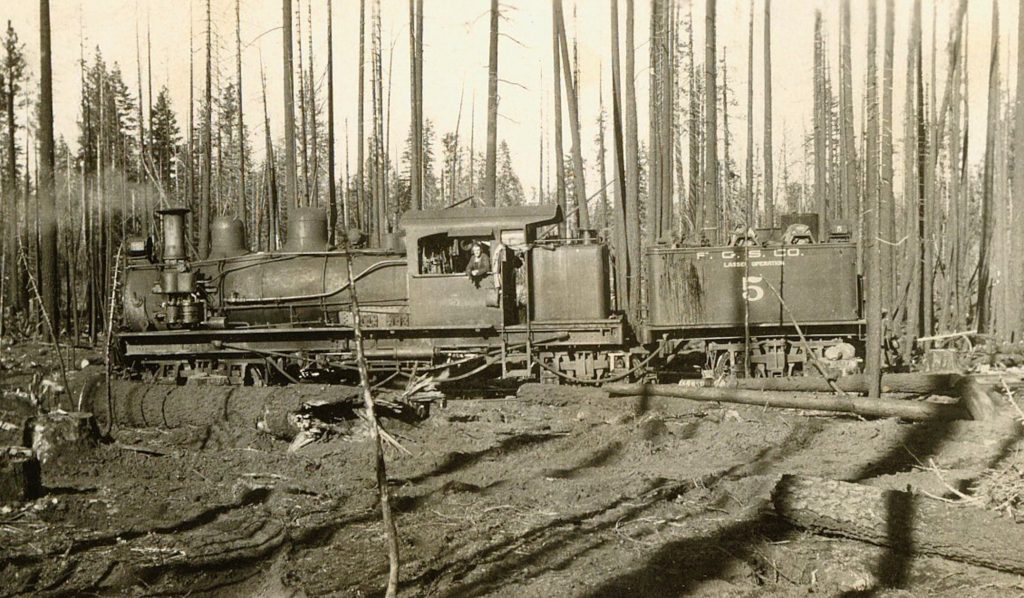
The.aftermath of the fire at Camp D

The winter of 1923-24 was one of the driest on record for the State of California. Springs that had always flowed, dried up. With the tinder dry conditions of the summer of 1924, it became a volatile fire year, and the Lassen region was of no exception.

On Monday, July 28, 1924, sparks from a steam donkey engine operating near Fruit Growers Camp D, just west of Eagle Lake. In less than a hour the blaze turned into a firestorm, spreading over four miles and destroying three steam donkey engines, eight railroad flat cars, one water tank car and about three miles of railroad track. Nearly one thousand men fought the fire that destroyed over 7,000 acres. It cost Fruit Growers $34,378.20 in suppression cost.

Donate

Constantia School

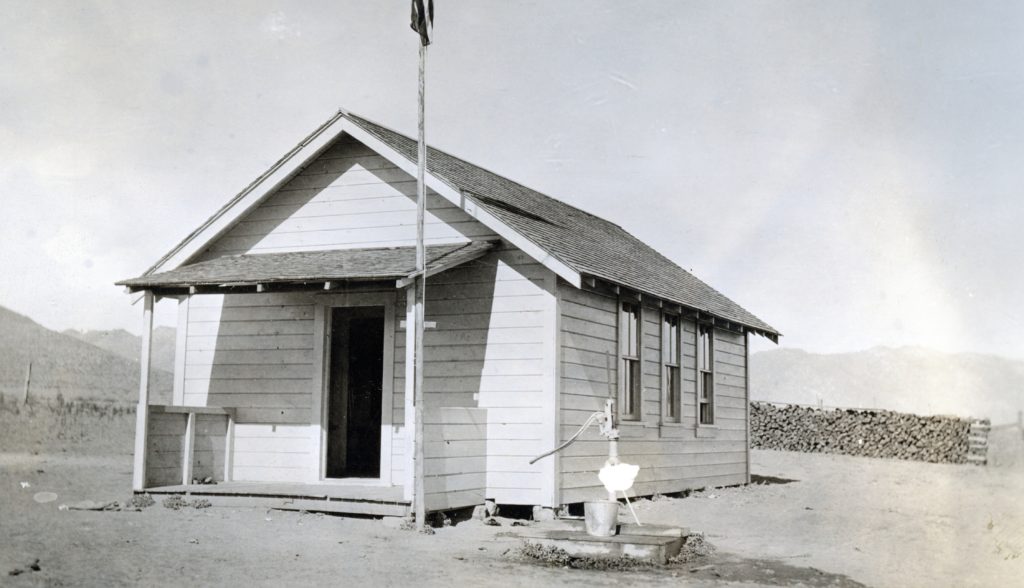
Constantia School, 1916. Notice the wood pile in the background.

In 1897 and 1898 the Warm Springs and Junction Schools were formally declared closed by the Superintendent of Schools.  Due to that circumstance, no school existed in the extreme southern portion of Lassen County. In 1904, F.C. McDiarmid petitioned the County Superintendent of Schools, J.F. Dixon, to form a new school district in the southernmost portion of Lassen County.  McDiarmid cited there were 21 school age children in the proposed district and that the majority of these children resided more than ten miles from the nearest schoolhouse.  McDiarmid’s petition was submitted on March 14th and required urgent attention.  State law required all new districts be formed before the 5th of April of any year.  Dixon urged the Board of Supervisors to approve the District and noted that the Board would need to hold a special meeting to meet the State deadline.  The Board of Supervisors held a special meeting on April 4th, with three members in attendance, and approved the formation of the Constantia School District.  The District boundaries included the Constantia Ranch and all the territory south to the Sierra County line.

In the fall of 1904, school commenced in the old Warm Springs schoolhouse near Red Rock Station.  In the summer of 1914, that schoolhouse was destroyed by fire.  The next year, the District held a special election to move the site of the school to the A. Wills homestead near Chat.  In 1944, the school closed and annexed Long Valley.

The Meadows Market

The Meadows Market advertisement in The Chipmunk

The Meadows Market was a short-lived grocery store, located in an unlikely location—Coppervale. It should be noted that a restaurant, bar and gas station had been established there. In 1939, Hubert Hill who operated a successful grocery store known as the Red & White, built a branch store next to the aforementioned complex that was known as The Meadows.  In 1941, Hill sold the store and the new owners changed it to Meadow Market. During the remainder of the 1940s ownership of the market would change hands several items.

In the summer of 1950, Rudolph B. Lemcke purchased the entire complex and had grandiose plans. It was intention to make the place a year-round resort. On the drawing board was a motel and swimming pool, the later could be converted into a ice-skating rink as part of the development of ski facility at Coppervale.  Lemcke stated, We will give Squaw Valley a run for its money.” Lemcke’s lofty goals never materialized for lack of funding and lack of clientele. In time, the Meadows complex was abandoned.

Donate

Ravendale Chamber of Commerce

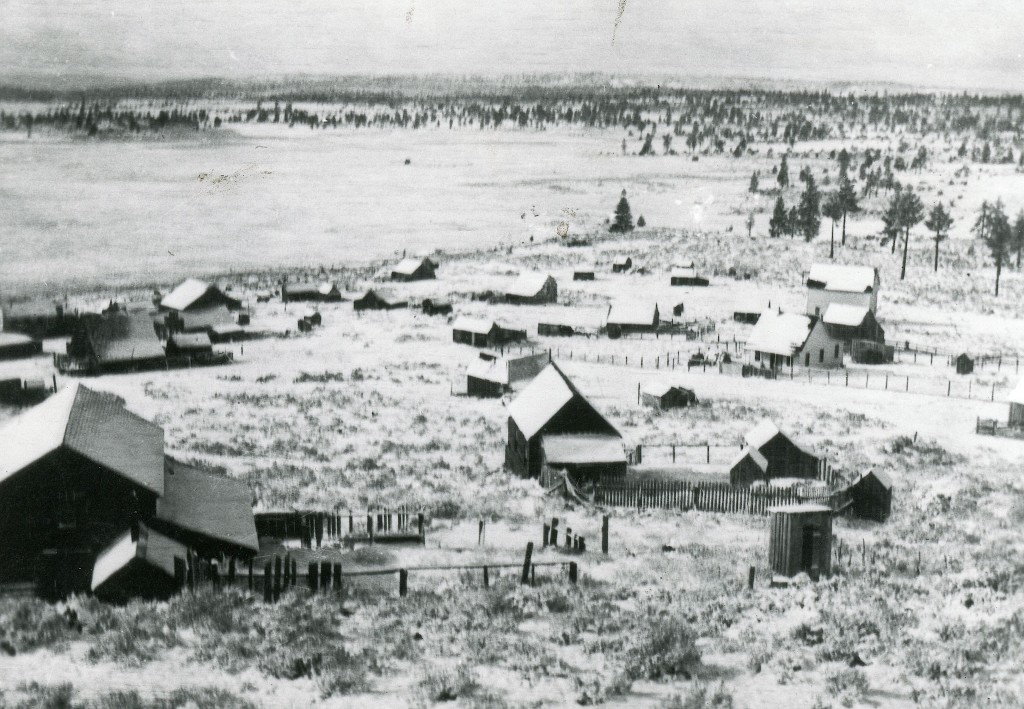
Ravendale, in better times.

While Ravendale appears these days as a wide spot one passes through the Madeline Plains, that was not case over one hundred years ago.  An interesting note is that it was a decade after the NCO Railroad built its line through there that a town came into existence. In the early 1910s, the town flourished. In 1914, it formed its own Chamber of Commerce. This was used as a vehicle to promote the town next year at the Panama Pacific Exposition in San Francisco. It met with little success, end of story.

Subscribe

Hayden Hill’s Other Mineral Deposit

Hayden Hill, 1909. Courtesy of Dallas & Joyce Snider

In the 1892 California Mineralogist report on Hayden Hill, it was duly noted that over $2,000,000 in gold had been extracted. It was noted there was a good quality kaolin deposit there as well. However, since it was so far removed from any rail transportation service, that the deposit was deemed worthless. Kaolin historically was used in porcelain, but the majority of it is used in paper manufacturing that gives the glossy paper its sheen.

 Subscribe

That’s a lot of lumber

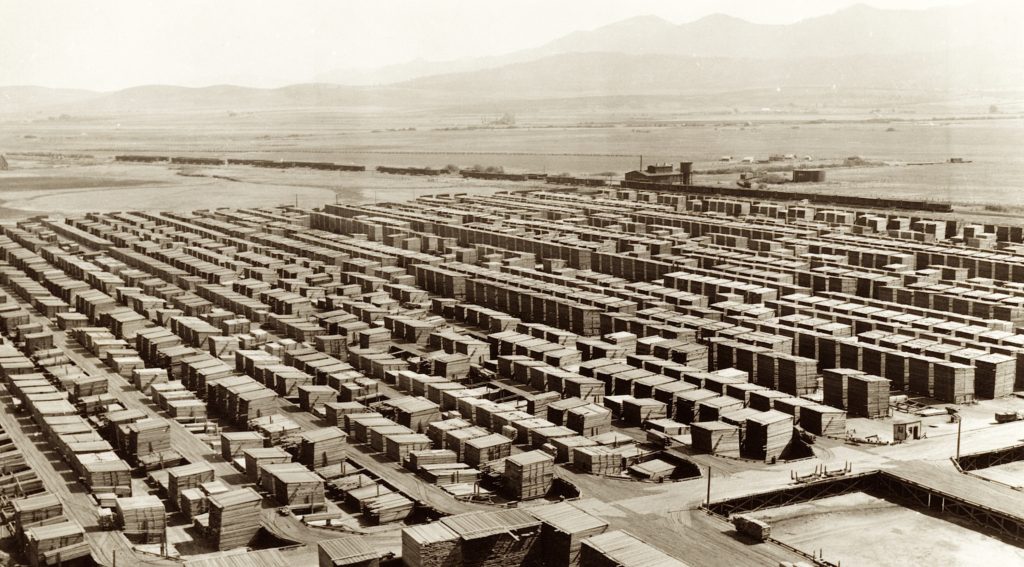
Fruit Growers Supply Company lumberyard, 1935.

The compilation of the logging history of the Fruit Growers Supply Company was a very enjoyable project.  In their meticulous annual reports there was always some interesting fact. Take for instance of the above photograph that shows 54 million board feet of lumber. The reason why Fruit Growers was in the lumber business was for a supply of box shook, the components used to make a wooden box to ship citrus, since this was before cardboard. Anyhow, if the lumber depicted above was used for box shook, it would only meet one-third of the boxes needed by Sunkist for that year.

Subscribe or Donate

Buffalo Meadows Salt Works

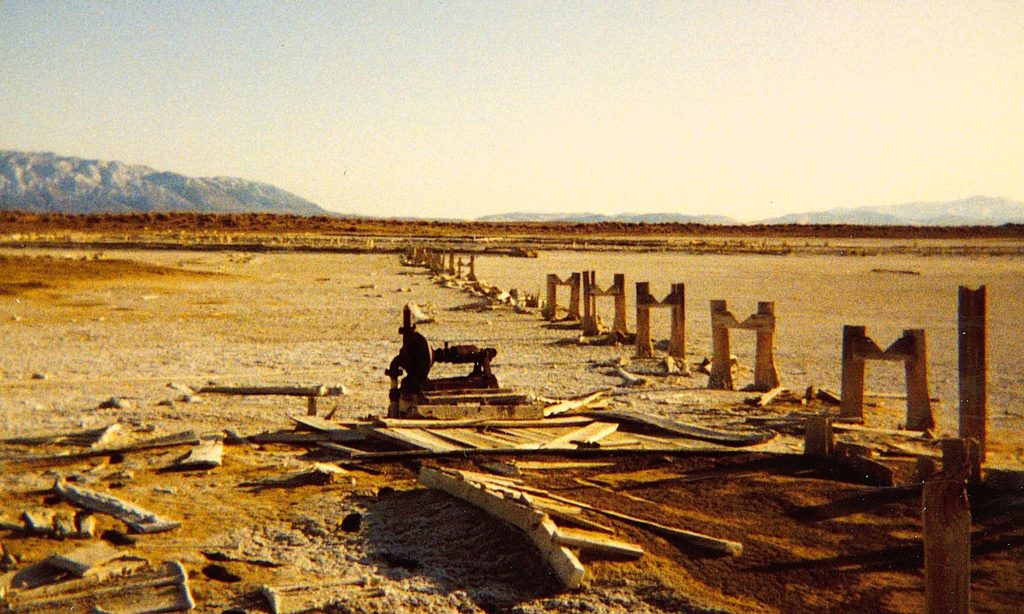
The salt works, January 1980.

One of the most interesting enterprises around the region was the Buffalo Salt Works in the Smoke Creek Desert. It is so easy today to take many things for granted, but back in the early days of settlement of the mid-1850s, those hardy souls did not have that luxury.

First of all, it boggles my mind, how B.F. “Frank” Murphy and Marion “Comanche George” Lawrence discovered and claimed the salt marsh in the summer of 1864. For most of its existence Murphy was the main operator of the Buffalo Salt Works. Two types of salt was produced. The first being table salt that 99.8% pure. A lesser grade was sold to mining operators with a smelting plant that utilized the salt.  The salt was obtained from wells, the brine pumped into vats, and left to dry.  In 1888, it was reported that 200 tons of salt was produced annually. Continue reading Buffalo Meadows Salt Works