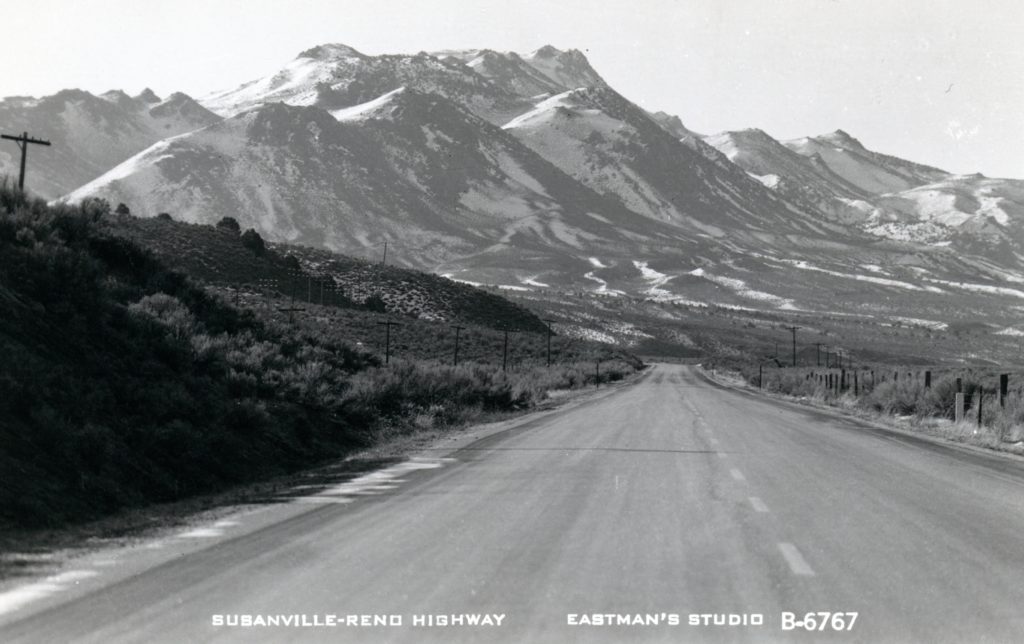
While you may have never heard of it, many has traveled it. Created in 1919, it was the forerunner of Highway 395 from Susanville to the Nevada Stateline. Sometimes it was referred to as the Purdy Highway, named for little outpost, known today as Bordertown.* Lassen County estimated it would cost $360,000 and sent their report to the California Highway Commission. The County agreed to pay for the survey, in return the State issued a $40,000 bond for the construction of this route, to be a State Highway. In the 1920s, its official designation was Route 29. Just as Highway 36 between Red Bluff and Susanville was constructed in segments, this too would be subjected to the same.
*Named for Solomon Purdy an early day resident of eastern Sierra County, and no relation of mine.
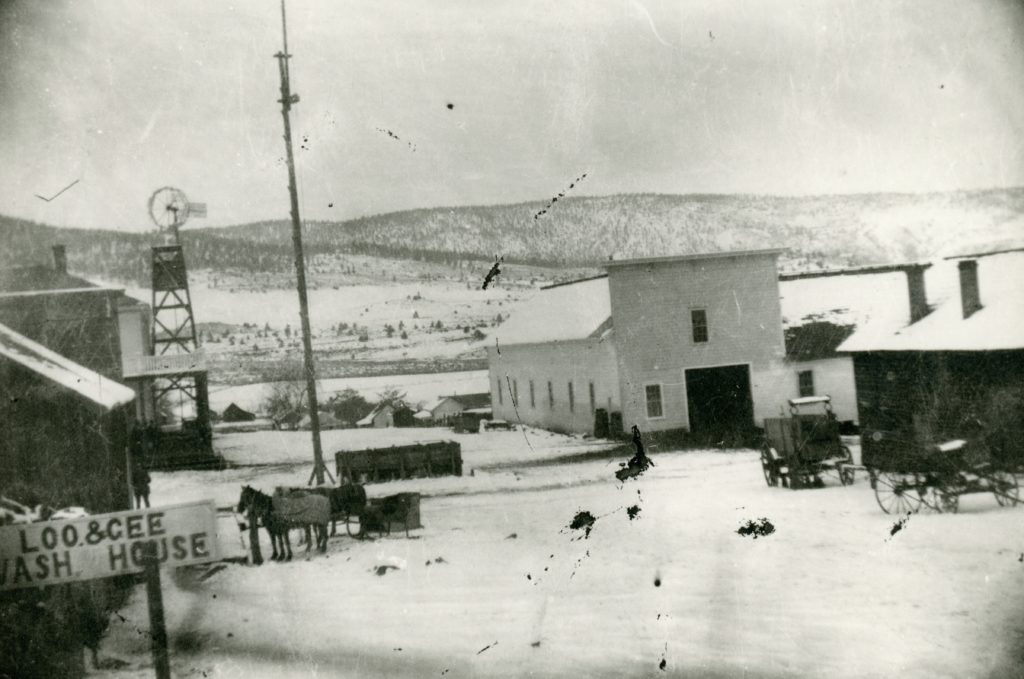
Gay Street, Susanville, looking north, 1864. Courtesy of Gilbert Morrill
While of late, I have had made references to logging camps, there were numerous military camps throughout the region in the 1860s. One of these was Camp Johns established near Susanville in June 1864, by Company D, 1st Nevada Territorial Cavalry from Fort Churchill, Nevada. In command was Captain Almond D. Wells. This was a mobile military unit that traveled the territory of Northeastern California and Northwestern Nevada in search of hostile Indians. On August 28, 1864, the camp closed, and the troops returned to Fort Churchill. The camp was named for Thomas Denton Johns, a Pennsylvanian who attended West Point. Johns served as commanding Captain of the Utah Brigade at Virginia City, Nevada in 1860. Camp Johns would be replaced with Camp Susan.
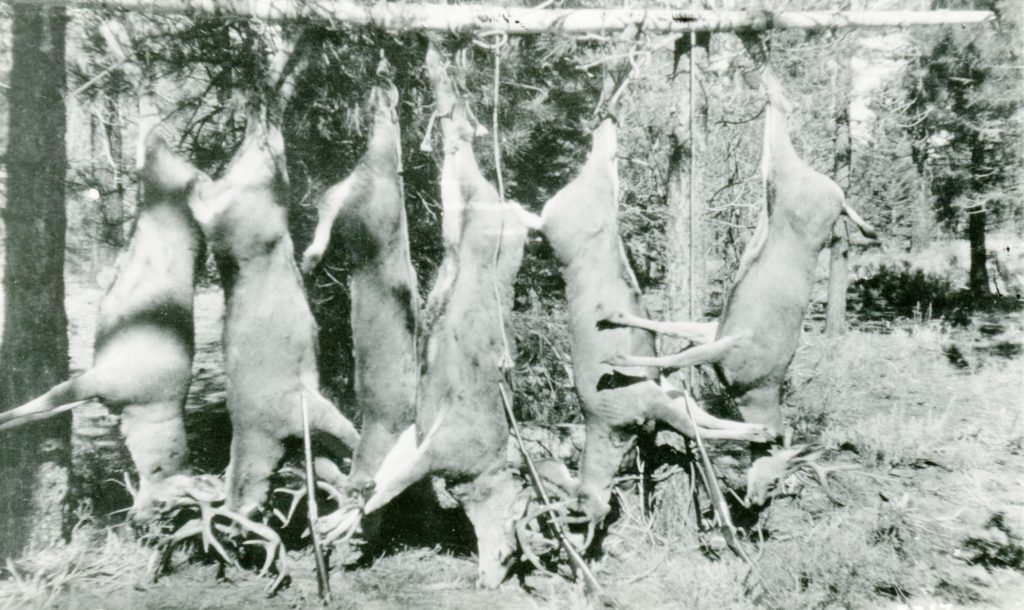
While outdoor recreation of this region has been promoted from nearly time immemorial, the kinds of activities has evolved over the years. One of those aspects highlighted was hunting—especially deer. This was after all prior to the late 1970s when the California Department of Fish & Game overhauled the hunting seasons, limits and zones. In a 1961, Lassen County pamphlet with the lead in “Lassen County – Where your vacation begins, but never ends.” One of the first sentences: “Hunting is a paradise in Lassen County, where a total of 5,348 deer were taken in 1959, more than any other county in the state.”
In a sign of changing times, while several decades ago it was a rarity to see deer inside the Susanville City Limits. Today, one sees more deer inside the City of Susanville, than to be found in the country side.
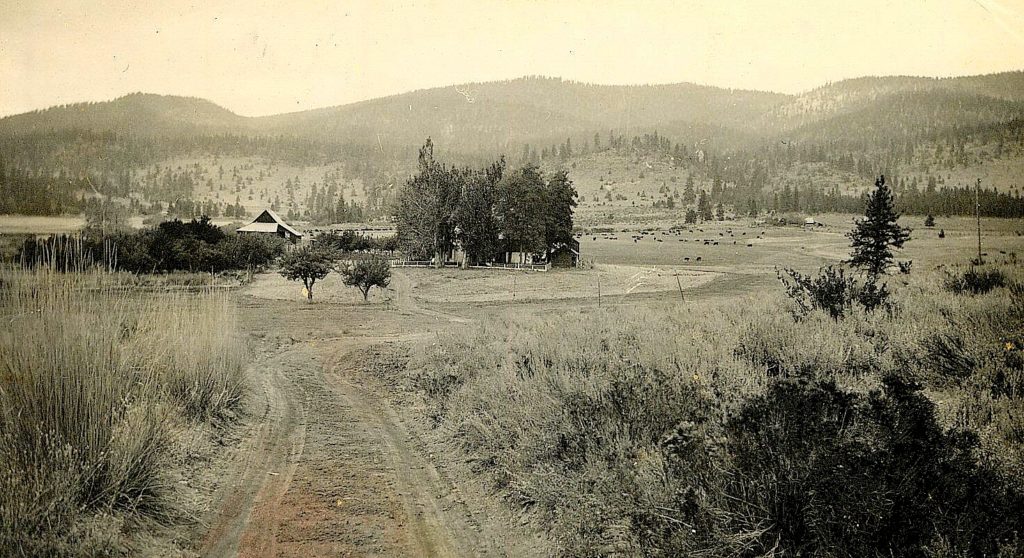
Known today as the Susanville Ranch Park, for many years it was the John T. Long Ranch.
In the spring of 1913 when the Red River Lumber Company was busy constructing the company town of Westwood, there was a lot of resistance to its location. As a matter of fact, Fletcher Walker was the only person that liked that site.
This, of course, greatly disturbed T.B. Walker, the family patriarch. After all, the California operation, was designed with the intent that it would be completely operated by his sons. In attempt to keep harmony in the family, T.B even scouted out several different locations while construction of Westwood was in full swing. One site in particular that caught his attention was the John T. Long Ranch just northwest of Susanville—known today as Susanville Ranch Park. One of the key componets for the site, was that it have an ample water supply. T.B was not sure if Piute Creek and nearby Bagwell Springs would be sufficient. With that in mind, in a memo dated March 17, 1913 T.B wrote: “Water could be pumped from Gold Run, a distance of probably not more than three or four milles to reach our mill site. This was can be piped underground in wooden pipes banded with steel bands, that costs much less than iron pipes and stand a still greater pressure.”
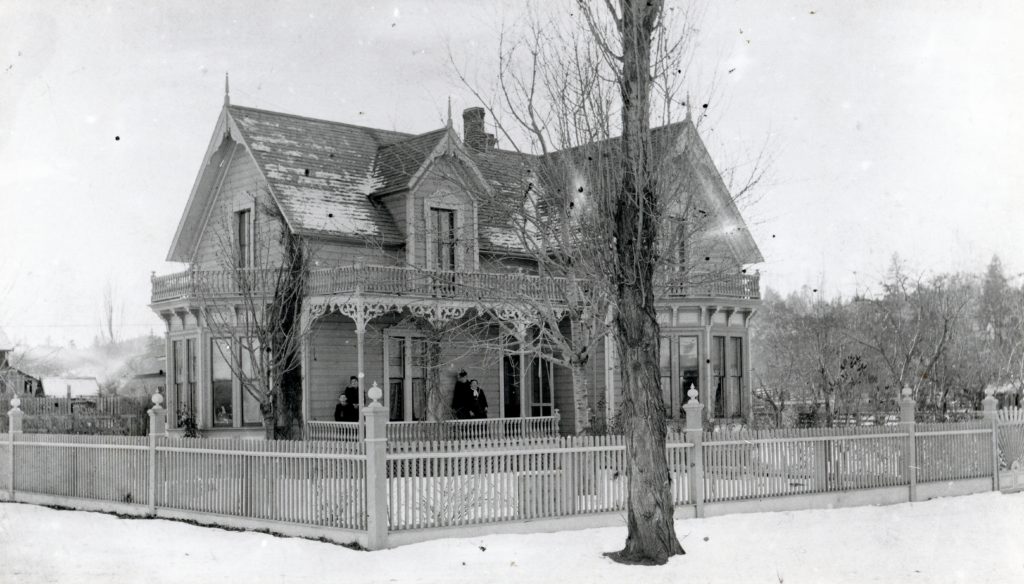
The William Greehn residence on Cottage Street, 1886.
It should be duly noted, that my perspective at times tend to be off the beaten path. Anyhow, prior to 1915, Susanville had a substantial Jewish population. They had a major influence on the community, since prior to 1900, nearly seventy percent of Susanville’s businesses were owned by members of the Jewish faith. A number of their homes and business buildings still exist. While this might one of the shorter strolls, it is nevertheless an interesting one. One of the stops will be the residence of Morris Asher on North Lassen Street that was built in 1885 (some may know this as the former home of Finn and Edith Barry). Morris Asher’s only child, Ephraim was born there in 1887. “Ephie” and his descendants have had a major influence in Hollywood. Ephie’s son, William Asher, as movie producer and television director, too, is an interesting case study. If you have a spare moment, you might want to do an internet search.
December 25, 2016
It should be noted, that William Greehn was a pioneer Jewish merchant who came to Susanville in 1864. His daughter, Fannie, married Morris Asher.
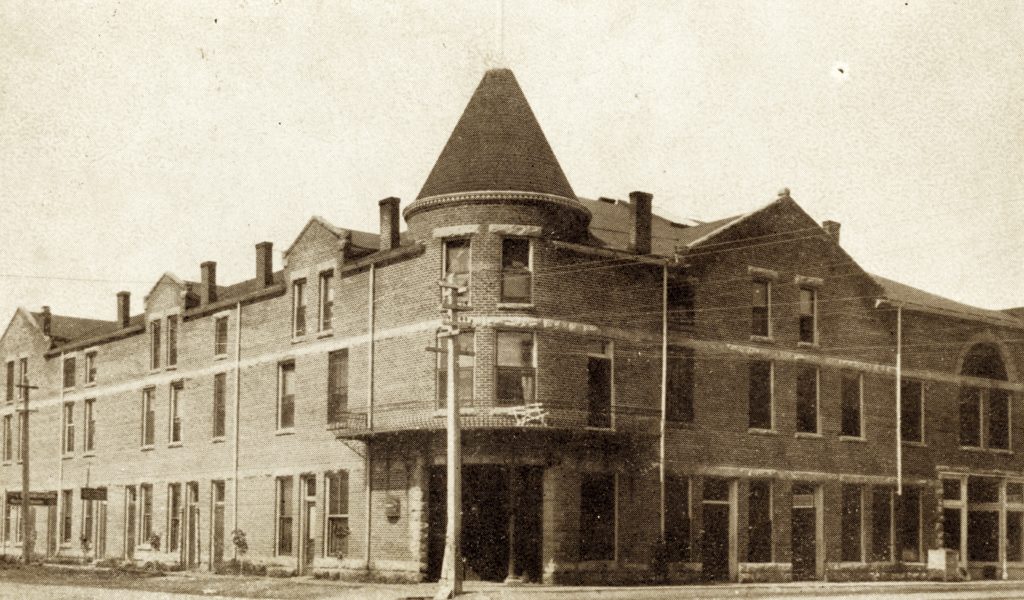
The Emerson Hotel located at Main & Lassen Streets, the current site of the Hotel Mt. Lassen.
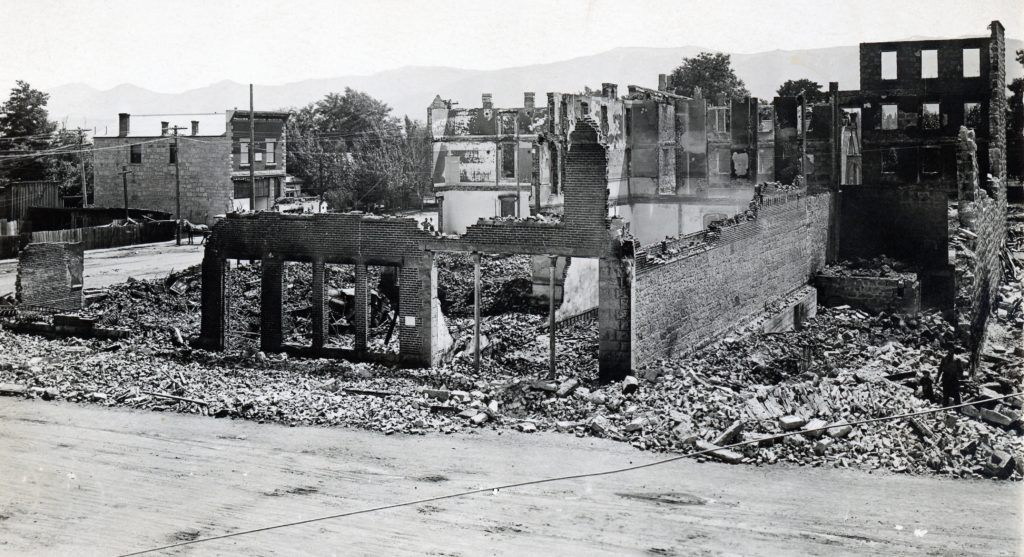
In August, 1915, the Susanville’s Emerson Hotel was destroyed by fire. This left a huge void for accommodations, especially with the town which was growing leaps and bounds with the arrival of the railroad two years earlier. Unfortnately, the Emerson would not be ressurrected like the proverbial phoenix due to inadequate insurance coverage.
The Emerson Hotel ruins. Courtesy of Vivian Hansen
For years, this prime location remained a vacant lot. While there was interest to build a new hotel there, the lack of funding doomed such proposals. Ironically, Susanville was in the midst of an unprecedented twenty years of expansive growth, so one would not think that financing would be such an obstacle.
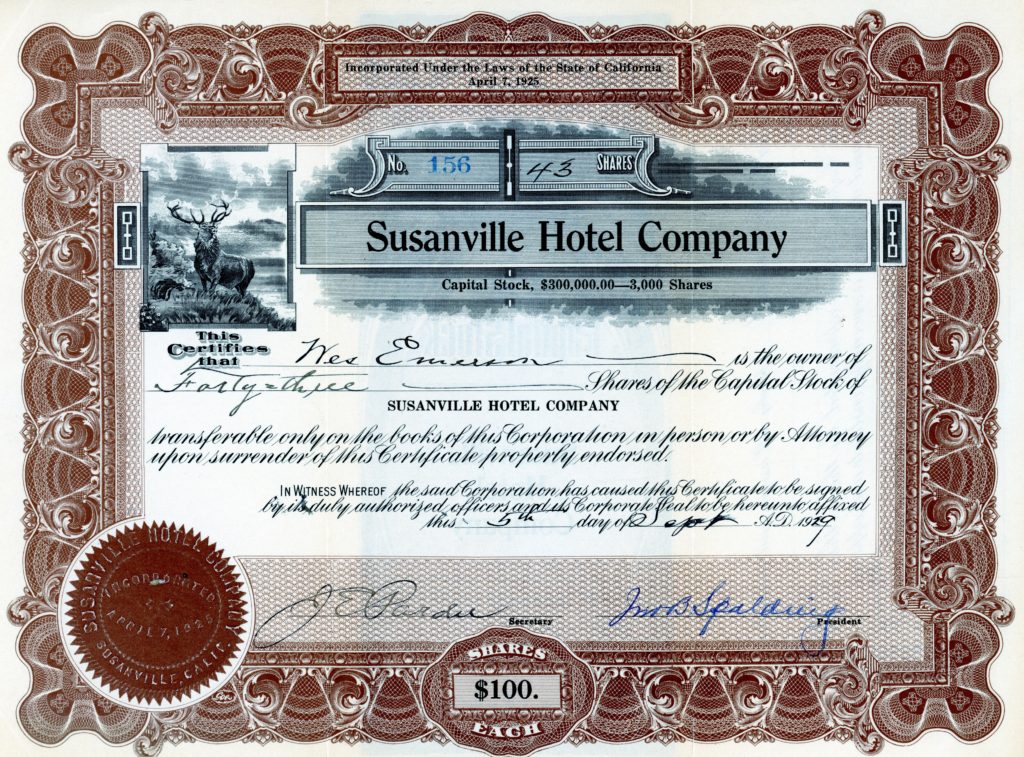
After ten years, something that was thought to be impossible, was on the verge of reality—the city’s bid to host the state American Legion Convention for 1926. Should Susanville be selected there was the issue of how to provide accommodations for 2,500 visitors. On April 7. 1925, a stock company, the Susanville Hotel Company was formed. It was their goal to riase $300,000 in stock to construct a three-story concrete hotel, to contain 70-rooms. Construction began in July, it was estimated the building would cost $155,000. With construction underway, the group had leased the hotel to Frank Coffin for ten years at an annual rate of $7,440. The new facility was named the Hotel Mt. Lassen and opened its doors on April 27, 1926.
The Hotel Mt. Lassen has been shuttered for quite some time now. Whether it will ever re-open remains to be seen.
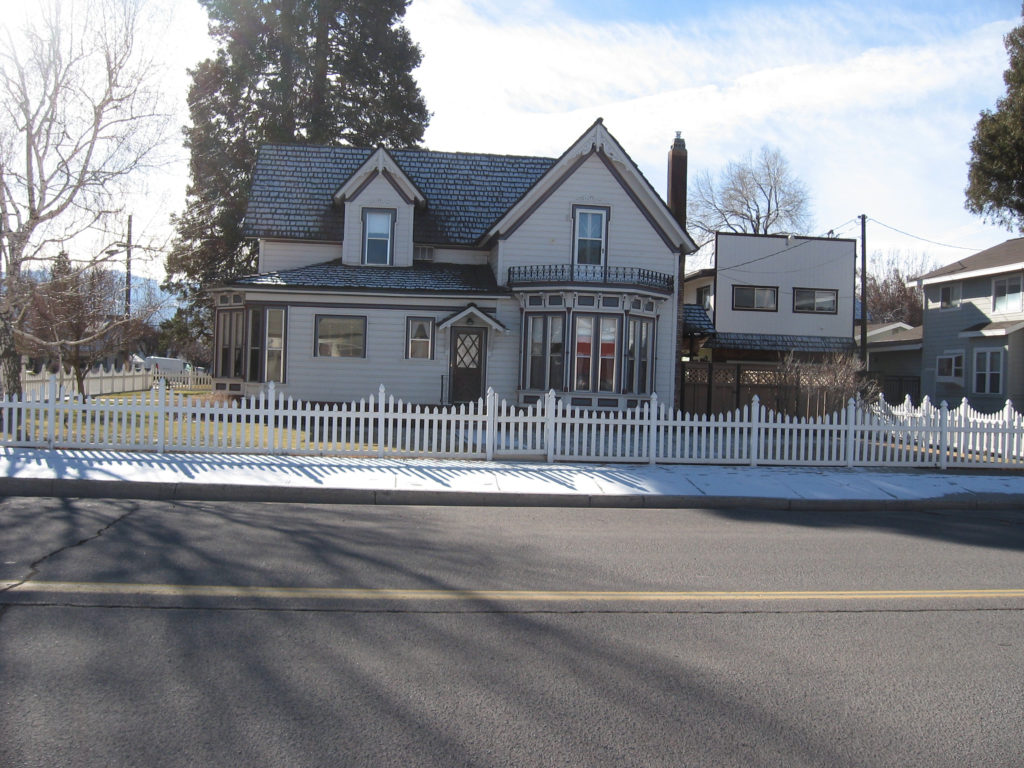
Susanville’s iconic Elk’s Lodge had an interesting history way before the Elks acquired it. Built in 1884/85 it was initially the home Dr. J.G. Leonard, a dentist. In 1890, hard times struck Leonard who filed for bankruptcy. Susanville merchant/investor William Greehn purchased the residence. For the next eighteen years it was rental. The monthly rent was ten dollars a month. It should also be duly noted during that time, portions of the house had never been completed, and would not occur until the Swains bought it.
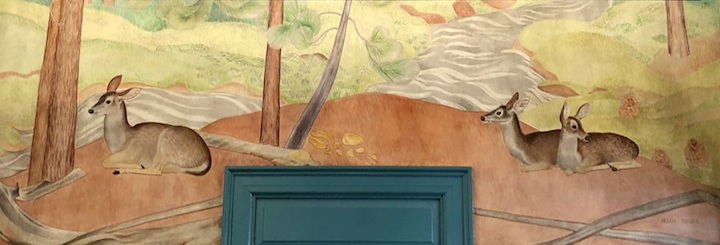
The Susanville Post Office on North Lassen Street adorns one of the older murals in town. While I am slowly working on the mural tour, this particular may not be included due to the hours of operation at the post office.
Construction of the Susanville Post Office began in 1937, and was one of the last Works Projects Administration (WPA) in the area. Another part of Roosevelt’s New Deal projects was Treasury of Fine Arts program. These funds were used to hire artists to adorn federal buildings. In 1939, San Francisco artist, Helen Katherine Forbes (1891-1945) was commissioned to do a mural in the Susanville Post Office entitled, “The Deer.”
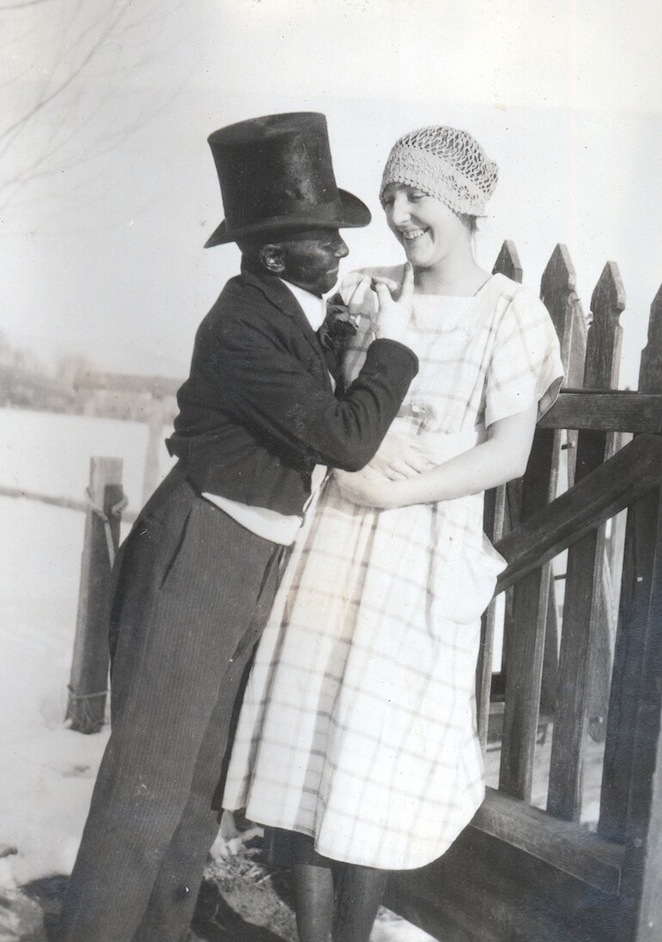
Susanville resident, Fred Brockman, dawning a black face for a 1918 event.
If you have been following the national news, then you aware of the Virginia governor linked to a “black face photograph” in his college yearbook.
So you maybe thinking, what does this have to do with Lassen County history. In the annals of its history, it is something that was part of the culture across the country over a century ago. Take for instance that on Thanksgiving Day 1900, the Milford Dramatic Club held its first entertainment—a Coon Dance. While attendees were not required to dawn a “black face,” those who wanted to participate in the “Cake Walk” were required. The cost for attendees was $2.00 that included a midnight supper, and to pay for Susanville’s Pastime Orchestra, who provided the music.
The recent snowstorm did not live up to my or the National Weather Service expectations. I do have to admit at my abode, its an ideal snow for skiing, etc. It would have been nice if Mother Nature was a bit more generous.
One of the annual challenges at Lassen Volcanic National Park each spring is snow removal on the park’s highway. The 1941 road opening provides a glimpse of the work involved. On May 19, work started on the snow removal where the crew literally worked around the clock until the job was completed. In this instance, due to heavy snows, the job was not done until July 9. During those eight weeks, 21 million cubic feet of snow was moved.