Category Archives: History
All Those Horses

The livestock industry has always played prominent role in the region’s economy. However, with time, everything evolves, horses and sheep no longer play a prominent role as they did in the past.
Recently, I came across an interesting statistic. During World War I eight million horses perished in the variety of the conflicts—1.8 were German horses! A staggering figure. It was after all a transitory time, motorized equipment was still in its infancy stage. The Caterpillar tractor company made so many experimental changes during the war, that locally, after the war would revolutionize logging methods.
An interesting Lassen County landmark was constructed in Little Valley tucked away in the northwest section of Lassen County. In 1916, R.L. “Bob” Johnson constructed what became known as the “Round Barn.” Johnson needed a structure where he could train horses during the winter months, as they were in great demand in World War I. Over the years, the elements, etc., took a toll on the building. By 2004, the Fort Crook Historical Society had started a movement to relocate the barn to their museum complex at Fall River Mills. It was a slow process, but they succeeded, and is now restored to its glory.
Town of Spalding, 1914-1924
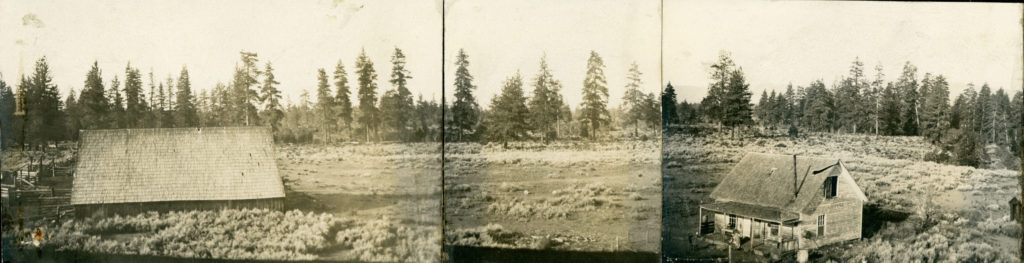
On July 6, 1914, the Lassen County Board of Supervisors approved John S. Spalding’s subdivision for the Town of Spalding, on the west side of Eagle Lake. It was Spalding’s intent to develop a summer resort. The Susanville newspapers had extolled wonderful praise for the project.
Yet, momentum was difficult. First, there was competition of other developments taking place—the volcanic eruptions of Lassen Peak, the construction of Lake Almanor and the newly built company town of Westwood. Yet, one of Spalding’s biggest obstacles was access, or in this case, lack thereof. Even since 1900, considerable pressure was applied to the Lassen County Board of Supervisors to make road improvements to Eagle Lake, though very little materialized. The resort town was a failure. Only one lot was sold, of note it was a purchase by a retired Lassen County school teacher, Asa M. Fairfield.
In September 1924 the Spalding family petitioned the Lassen County Superior Court to dissolve the townsite and was granted.
Westwood’s CIO Building
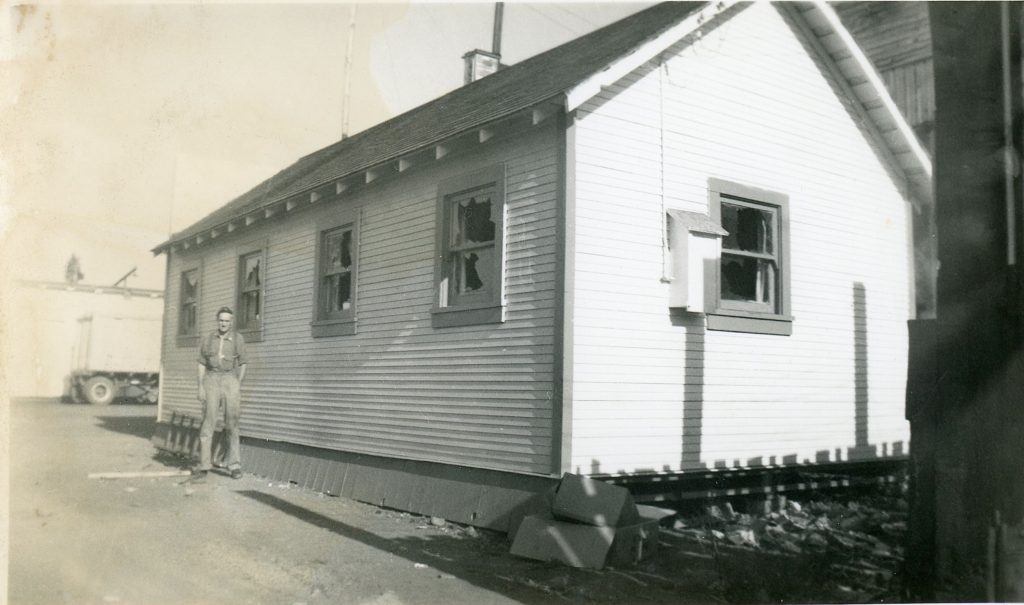
After the rioting broke out from the court hearing a small group of CIO sought shelter in their building, (it being a small structure measuring 16 by 24 feet). It was only a matter of time that angry mob would descend. Aid arrived in the nick of time before matters got completely out of control with Lassen County Sheriff Olin Johnson and his deputies. Johnson had Jack Granger, a respected AFL member, be his spokesman. Granger’s is plea to the angry mob stated: “Fellows I ask you on behalf of Sheriff Johnson and those women and children in the building to open way and let them be taken out of here. We are aware of the hysteria that got us all and there is no thought of fear. Let’s play ball with the Sheriff.” The mob obliged and all those inside—29 to be exact—were escorted unmolested from the structure by the sheriff deputies. It was still a harrowing experience as the crowd had slashed the car tires of the sheriff deputies and they had to drive away on the rims!
The AFL resented the CIO headquarters; many considered it a symbol of the labor problems of Westwood. Exactly what the AFL’s intention were was anyone’s guess. Once the evacuees were escorted out of the building, the mood of the crowd changed and then someone yelled, “Let’s do something.” Within in moments, the American flag on top of the building was lowered. Then in a wild frenzy the mob began dismantling the building. Within thirty minutes it had been reduced to rubble.
Tensions between the two labor groups would continue for years. Even after the AFL in a 1941 special election to become the sole union to represent Red River Lumber Company employees, resentment lingered with many CIO’s for decades.
The Westwood Riot
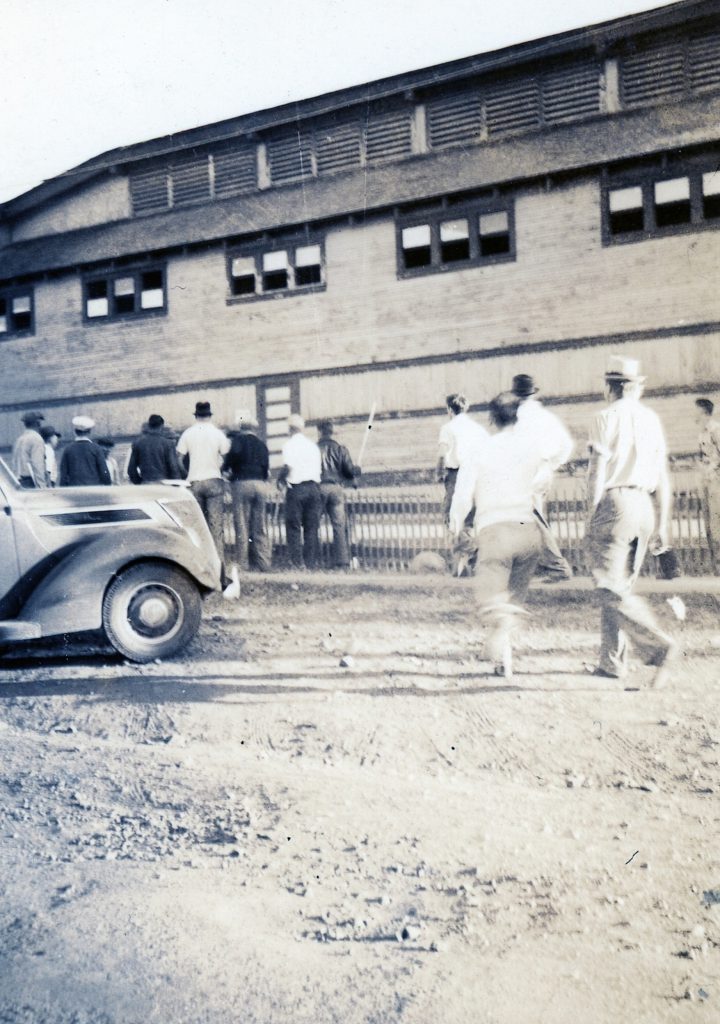
The Red River Lumber Company faced many issues during the 1930s at its Westwood operation. Two major factors were finances and labor. Two labor unions were involved, first the Congress of Industrial Organizations (CIO) followed by the American Federation of Labor (AFL). Initially, the two groups appeared to be on the same page in demanding wage increases. By 1939, that was no longer the case, as there were friction between the two groups.
The anxiety between the two, especially the AFL, worsened while the men grew impatient from being idle during the weeks passing in February during a strike and blamed the whole situation on the CIO. It was just a matter of time when the situation would once again become volatile. What ignited the spark is not clear, though one account stated it started with an encounter between Marjorie Scott, wife of a CIO and Earlton Shannon, the business agent for the local AFL. Scott, according to one account, made some insult to Shannon in front of the post office and Shannon retaliated with some extreme vile and abusive language. He also advised her to get into the car with her companions for her well-being. So incendiary were his remarks that it warranted his arrest.
On March 2, 1939, a preliminary hearing concerning Shannon’s behavior was held in the Westwood Justice Court to determine whether there was sufficient evidence bind him over to the Superior Court for additional charges. After Judge J. M. Lamson adjourned the hearing is when the chaos began. The courtroom was crowded with spectators. After the adjournment, a fight broke out between Ben Nissen (CIO) and Riley McComas (AFL). From this other fights erupted; some fifty or more were reported and the crowd slowly worked their way down Ash Street, to the CIO headquarters next to the Westwood laundry.
To be continued tomorrow.
Where are we – the answer
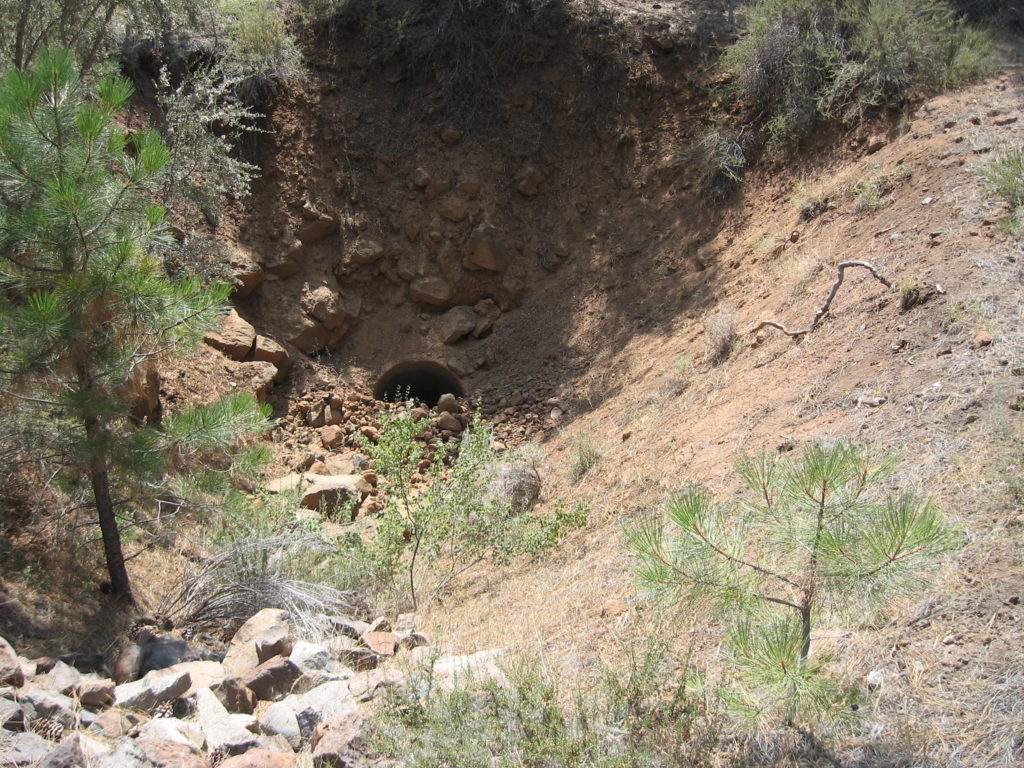
This is a portal midway through Bly Tunnel near Eagle Lake. The fenced off enclosure is easily seen from the road going up to the Eagle Lake Youth Camp. There are still numerous ditches, cement diversions of the canal system, extending all the way to the Sunnyside District near Janesville to past Wendel in another direction from the failed Tule & Baxter Creek Irrigation District’s Bly Tunnel project.

Subscribe
The Hilke Piler

In 1925, Fruit Growers Supply Company at its Lassen (Susanville) operation were always looking at innovative ways for efficiency and reduce labor costs at the same time. This year, they installed a Hilke Lumber Piler, the contraption had been invented in 1915 by Seattleite Henry Hilke. The piler was a very efficient means of stacking lumber outdoors. Not only did it reduce the aisle width for stacking of conventional lumber, but the machine allowed to make higher stacks. While a four man crew was involved, the piler could handle up to 10,000 board feet per hour. As one local observer noted: “To those who had never seen the new stacker in action, it is a most interesting and educational sight.”
Subscribe
Lassen Boulevard Funding
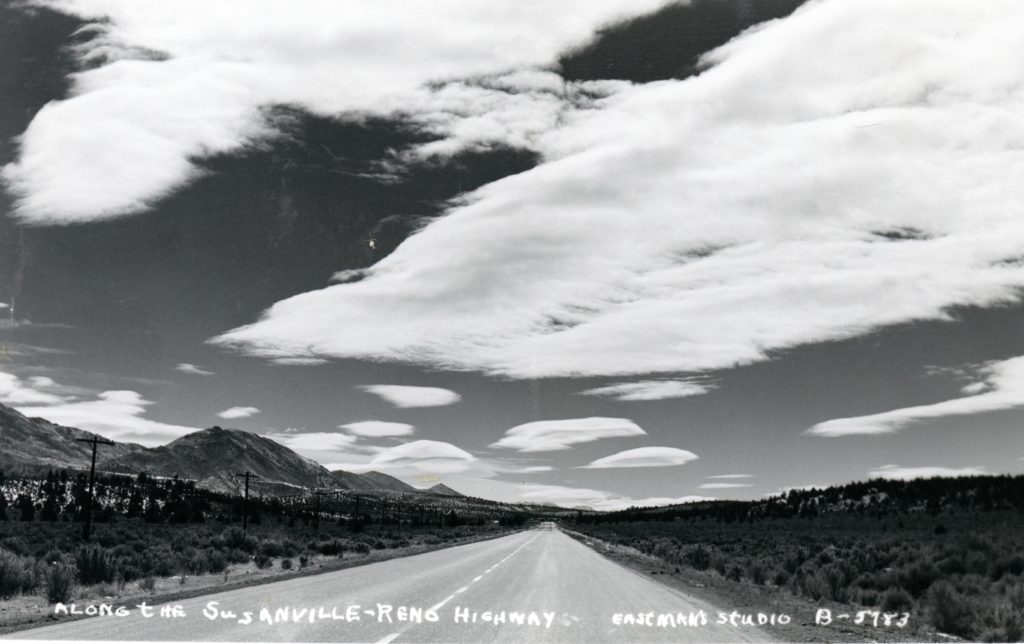
Earlier this month the topic of Lassen Boulevard was discussed, i.e., the forerunner of Highway 395 between Susanville and the Nevada State Line. In 1924, Nevada officials had paved the route north of Reno to the stateline. Lassen County Board of Supervisors were anxious to make more road improvements on the California side. After all, they had already mounted a campaign declaring Susanville the eastern gateway entrance to Lassen Volcanic National Park. Before long, Susanville would host the state American Legion Convention, so good roads were essential.
On July 8, 1925 the Lassen County Board of Supervisors approved $5,000 to make road improvements on the highway segment between Constantia and Purdy (stateline). It was their intent that the State Highway Commission would match the county’s expenditure. They did. However, it would be many years before the highway was paved and redesignated as 395.
Subscribe
Secret Valley School

For some reason I have been stuck in a Secret Valley mode of thought, with Biscar Reservoir and Petroglyph Humor. For those not familiar, Secret Valley is a long straight stretch along Highway 395 North, approximately thirty miles from Susanville.
Like so many places throughout the region, in a bygone era, lively times were had there. In addition, like so many rural outposts it had its own school district, that was established in 1890. Rural schools then, were not confined to a strict schedule that occurs today. The Secret Valley School during the 1920s and 1930s operated during the summer months and was closed from November to February. The school closed in 1938. The last graduating class consisted of Emelia Diaz and Ida Nye. In 1940, the school was annexed to Soldier Bridge, known today as Shaffer.
On a footnote, this is one of handful of Lassen County schools that I do not possess a photograph of. The late Faye Laver, thought she possessed one, but could never find it.
Subscribe
Pennies from heaven?
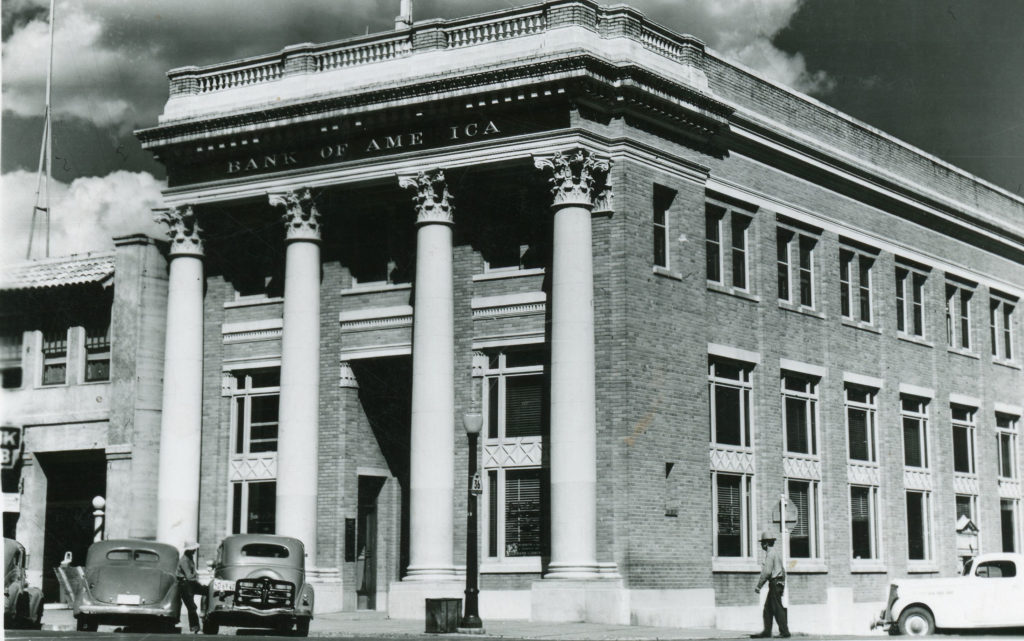
In 1933, Lassen County residents and their counterparts throughout the Golden State witnessed something in their shopping routine. California had instituted a sales tax. This, of course, saw an increase of pennies in circulation. As matter of fact, Charlie Bridges, then assistant manager of the local Bank of America, that in August 1933, 1,000 pennies every day were put in circulation in Susanville for a period of ten days. Bridges speculated that some of these pennies were going into piggy banks of local children.