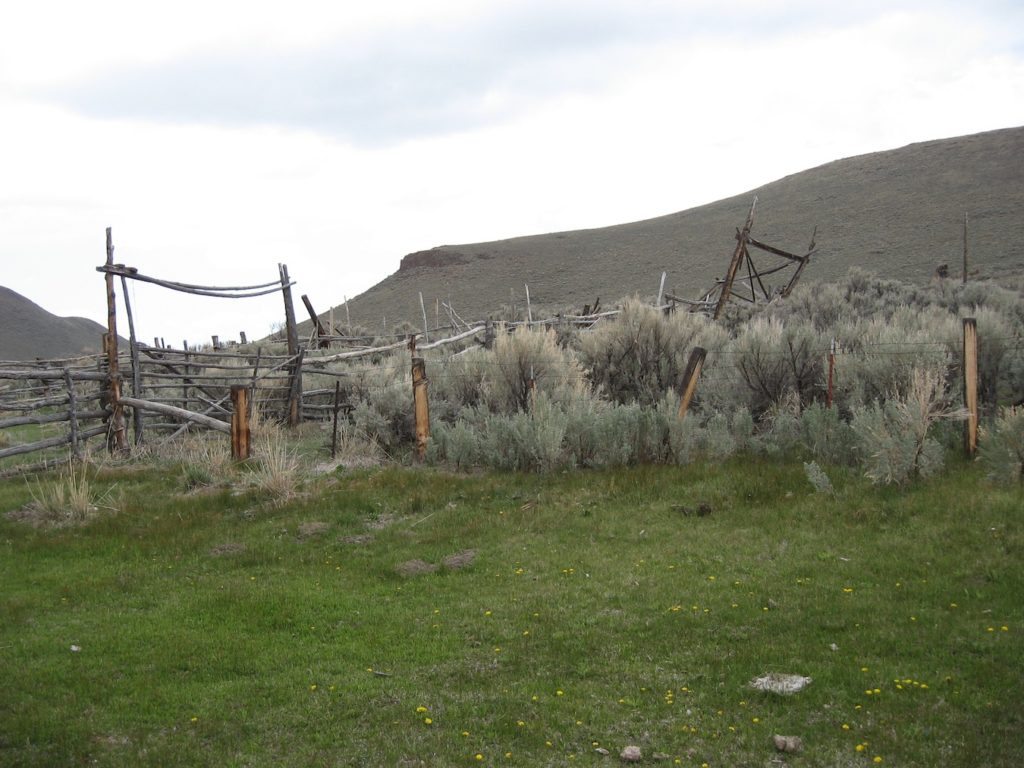
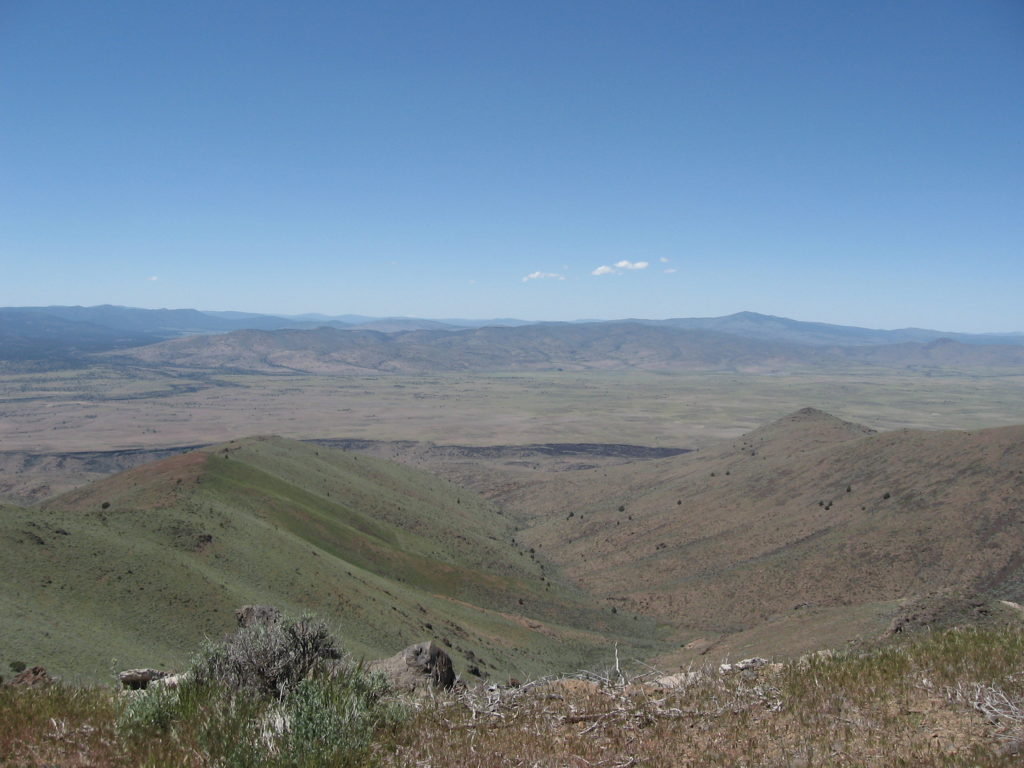
Summit Camp is an old livestock camp, located near the headwaters of Mahogany Creek, that is the stream that feeds Summit Lake—May 10, 2008
In May 2008, my dear friends, Derek and Pat Anderson invited me to partake in an expedition through Smoke Creek/Black Rock Deserts with a goal of High Rock Canyon. One day we spent exploring the Summit Lake area. It should be noted we made a base camp at Soldier Meadows Guest Ranch. Our departure was to be through High Rock Canyon, but due to certain difficulties, that was abandoned. To make a long story, even longer, I did research on Camp McGarry to give the owners at Soldier Meadows additional information to share with future guests.
Camp McGarry was so remote that it relied on the Susanville business community for all of its supplies. The following are excerpts from the Sage Brush newspaper, forerunner to the Lassen Advocate about the coming and goings out in that district. Its lengthy, so if you have no interest, feel free to skip. Continue reading More Camp McGarry→
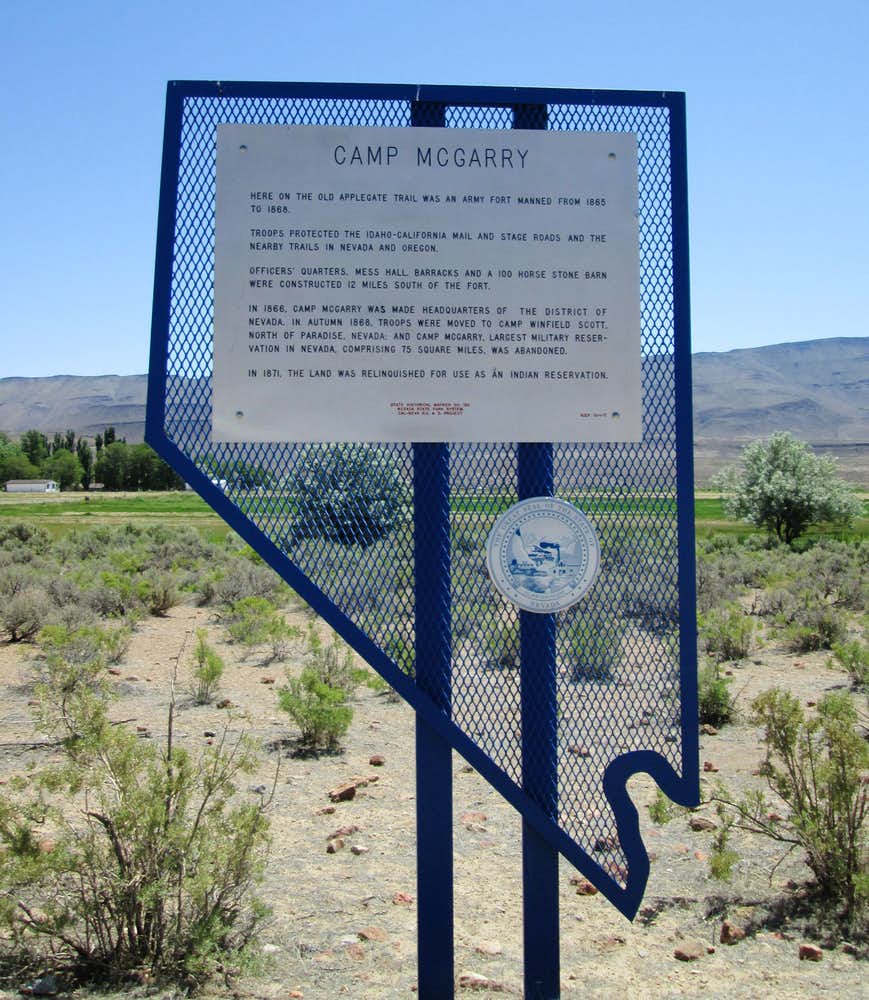
Nevada State Landmark, Camp McGarry at Soldier Meadows
Camp McGarry was a military outpost in remote far northwestern Nevada at Summit Lake. It was established on November 23, 1865 by the California Calvary. It has some unique attributes. It was named for Civil War hero, Brevet Brigadier General Edward
McGarry.
Contrary to popular belief that it was established for the protection emigrants of Lassen-Appelgate Trail, that was not the case at all. Its location was far removed from the Trail. It was for the protection of the mail route. The fastest way from San Francisco to the Idaho mines, was via Susanville, to Smoke Creek and Black Rock Deserts, then headed north via Summit Lake. On October 14, 1865, the Idaho-California Stage and Fast Freight was incorporated with its headquarters in Susanville. The incorporation papers states that the sole purpose was “to operate stage and fast freight from Chico, California via Puebla Valley to Ruby City and Boise, Idaho.” The Company was able to obtain the government’s lucrative tri-weekly mail route contract from Chico to Ruby City at $45,000 a year. The initial 427-mile trip from Chico to Idaho took three and a half days. It would be a short-lived operation. In 1868 the Central Pacific Railroad tracks were laid into Nevada reaching Winnemucca, and that reduced travel by half. On December 18, 1868 Camp McGarry was abandoned, the troops transferred to Camp Winfield Scott, at Paradise Valley, Nevada. On March 25, 1871 the military relinquished the Summit Lake territory and it was transferred to the U.S. Department of Interior. Today, a portion of it, is part of the Summit Lake Indian Reservation.
Camp McGarry was the largest Nevada military reserve with land comprising seventy-five square miles. An unusual feature there was the use of underground passages connecting the barn, mess hall, and barracks .
Another unusual trait, it had a summer and winter location. The harsh winter conditions at Summit Lake forced the camp to move to what become known as Soldier Meadows, just north of the Black Rock Desert. Remnants exist at both locations. However, Summit Lake site is not accessible to the public it being a part of the Summit Lake Indian Reservation. The southern encampment is now the headquarters of the Soldier Meadows Guest Ranch.
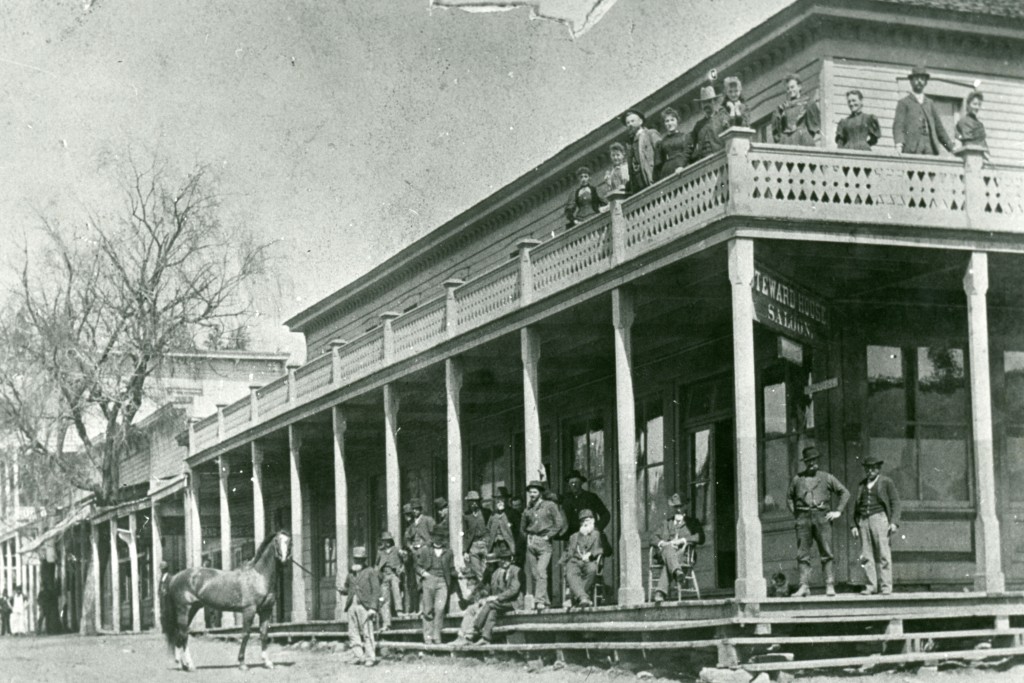
Susanville’s Stewart House, 1881. Courtesy of Dallas & Joyce Snider
In the spring of 1881, Alex Arnold, owner of the Susanville Water Works, made an offer to the business community for fire suppression. He proposed to install a six-inch pipeline from his holding tank at the west end of town run the entire length of the town’s Main Street at that time (Pine to Weatherlow). In addition, four or five fire hydrants would be installed. The estimated cost was $1,000. Arnold asked the businessmen to purchase it. In return, he would provide free labor to install the pipe and hydrants. In doing so, this would reduce insurance rates and they could quickly recover the costs. They bickered about the costs, and nothing was done.
Fast forward to 1884, after three disastrous fires, the Arnold pipeline proposal was resurrected. Even with the pipeline there was another fire suppression cost—equipment. A hand engine (hose cart), hose and cisterns would cost $800. In April 1884, a petition was submitted to the Lassen County Board of Supervisors to form a fire district for the Susanville Township. On May 6, 1884, the Susanville Fire District was formed.
One of the first order of business was a special election for a proposed tax assessment. That was held on May 24, 1884, and it was approved 67 to 9. By late fall, with money in hand, the Arnold pipeline proposal was in earnest. On January 5, 1885, was a historic day in the history of fire suppression for Susanville. The fire hydrants were in place and the hose cart arrived. It was time to test the new system. It worked. The water pressure from the pipeline allowed the volunteer firemen to shoot water over the two-story Steward House Hotel, the town’s tallest building.
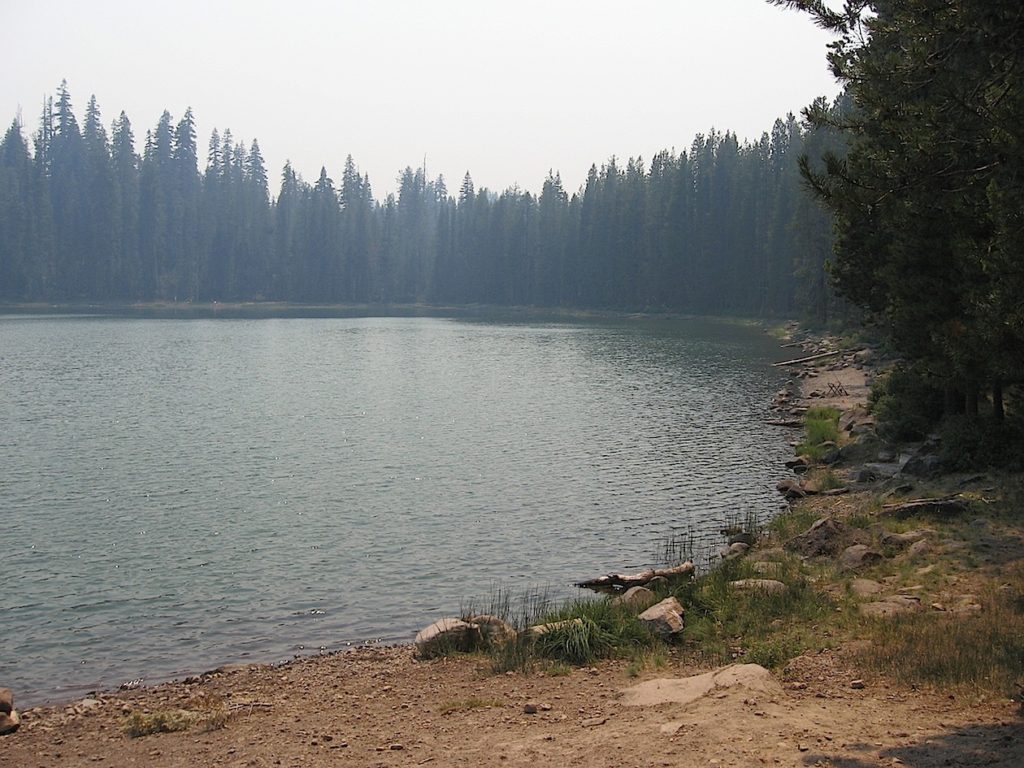
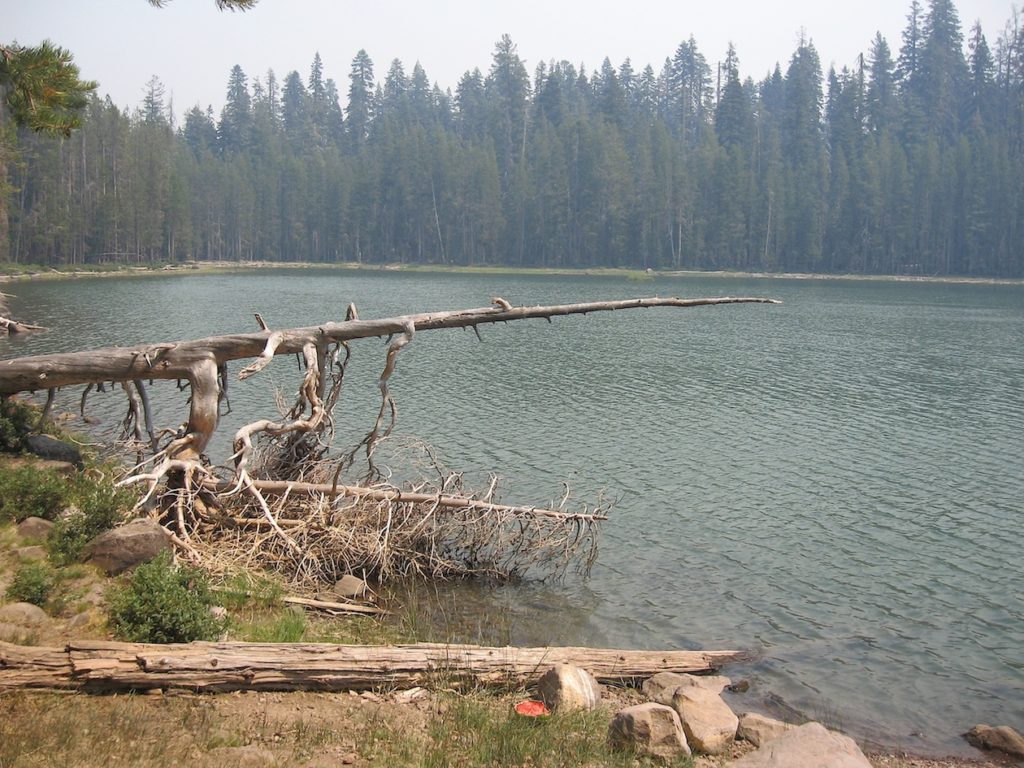
At an elevation of 6524’ Shotoverin Lake has such a whimsical name, though the origins of that appellation in unknown. There is one primitive camp site. The lake is about two miles from the larger and more popular Silver Lake.
A view of the Tablelands in the distance from Shaffer Peak.June 13, 2018
Susanville and the Nevada-California-Oregon Railroad (NCO) had an awkward relationship since the railroad’s inception. At first it was idyllic as the initial railroad survey would enter Susanville. Then things deteriorated when in 1887, the NCO decided to bypass the west side of the Honey Lake Valley, to the remote east side of the valley.
The strained relationship never improved. In 1899, when NCO extended its line north to Hot Springs Station (Wendel) Susanville residents reached out to the NCO with a proposal. They tried to persuade NCO officials to build a feeder to line Susanville. They cited the potential to tap the vast timber resources to the west. The answer was no. However, if the residents wanted to finance it at a cost of $100,000 the railroad would be agreeable. That was not going to happen, since the community could not even raise $500 to build a town hall.
Fast forward twenty-one years later. The NCO was in financial shambles. In 1917, it sold the southern segment of its line from Hackstaff (Herlong) to Reno. In 1921 the NCO petitioned the Interstate Railroad Commission to abandon its line, due to substantial operating losses. After several public hearings the commission denied the request. It said the railroad could reduce its costs by operating a tri-weekly service instead of daily, eliminate the president’s $10,000 a year salary and close its New York office.
Ironically, Susanville once again courted the Morans, owners of the NCO. This time it was Russell Brownell of the Lassen County Chamber of Commerce who spearheaded the movement. He wanted the NCO to reroute its line from Snowstorm across the Tablelands to Belfast thence to Susanville as the terminus. This would provide Susanville with an alternate railroad to serve the northern sectors. The plan received wide spread support, and the Fruit Growers Supply Company donated its services and surveyed the proposed route. However, the NCO’s president, Charles Moran balked at the idea. Brownell informed Moran that if Susanville was the terminus it could double that line’s tonnage, and save the financially troubled railroad. Brownell died suddenly in January 1923, and with his death the proposal also died. In February 1923, Moran changed his mind and said he would like Susanville to be terminus, but the railroad could not finance it. It was a costly delay on Moran’s part, since the old offer was no longer valid.
In 1925, the NCO entered into an agreement to sell the beleaguered line to the Southern Pacific. In 1926, Lassen County officials approached Southern Pacific with Brownell’s proposal, though it went nowhere.
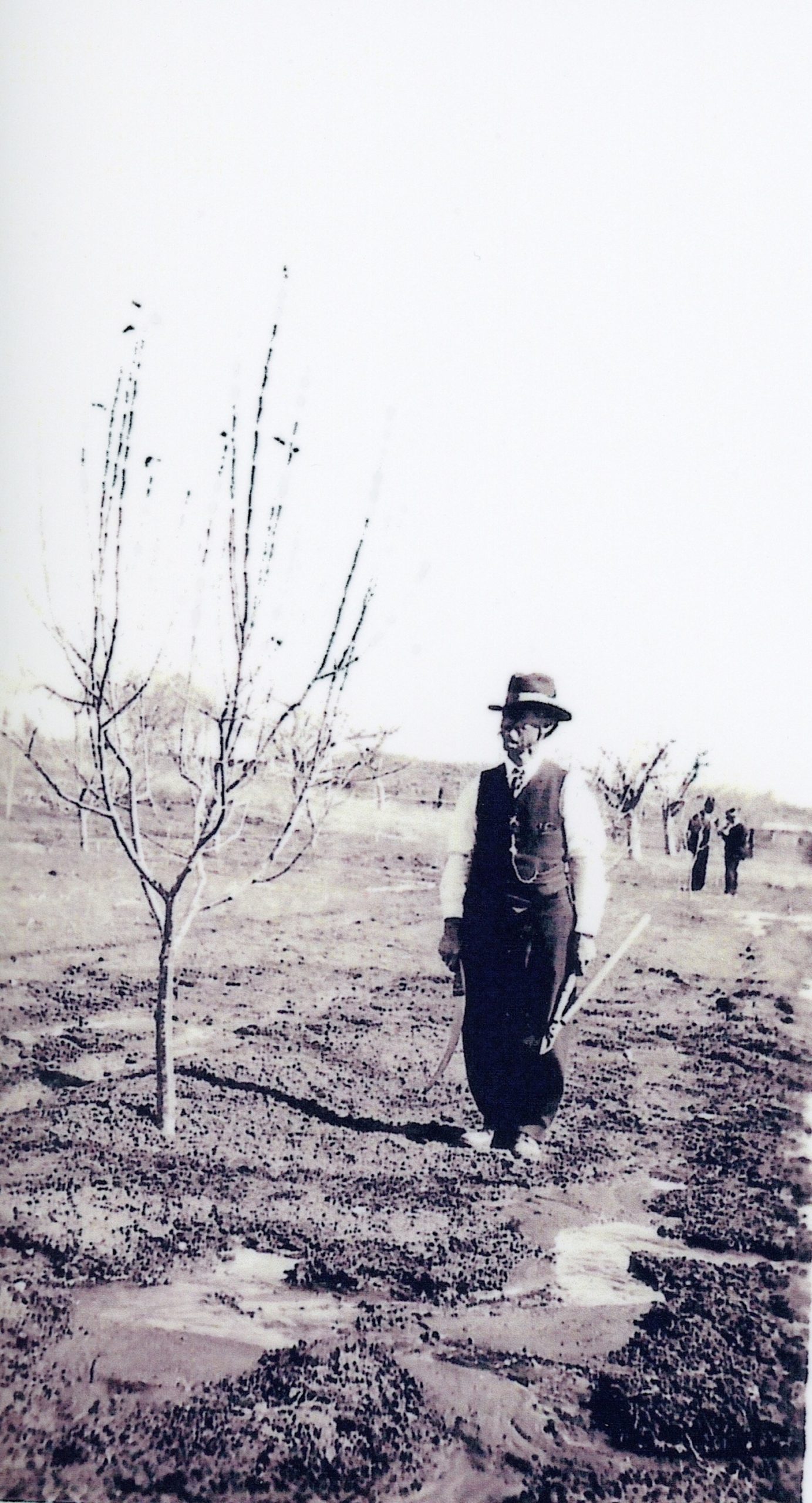
A.H. Taylor at his orchard on North Weatherlow Street, Susanville, circa 1914
Recently, a reader contacted me about a variety of subjects. Thus, I was alerted to the Felix Gillet Institute.It is an interesting organization propagating heirloom fruit and nut trees dating back to the Gold Rush era in Nevada, Placer and Yuba Counties by grafting stock from old orchards, abandoned homesteads, etc before they become obliterated.
In 1861, Zenus J. Brown is credited with the planting of the first apple and peach orchard in Susanville. It did not take long before the Honey Lake Valley was dotted with apple orchards. By the1880s, apples from the region were being sold in the Sacramento Valley. In 1906, Lassen County reported to the State of California that there were 10,000 fruit bearing apple trees in the county. The trees produced 770,000 pounds of apples valued at $8,000.
There are a lot knowledgable readers, some of whom might enlighten us as to what historic varieties of the fruit trees of the area, before they disappear. If I am correct, there was an old orchard near Janesville that was destroyed in the 2021 Dixie Fire.
In 1891, California passed a bounty on coyotes at five dollars each. During that decade, in the Lassen region, that bounty was nearly successful in eradicating the coyote population. In turn, that created another problem—jack rabbits. These critters flourished, since the coyote was its primary predator. For the farmers the jack rabbits created more problems than the coyotes.
In 1920, the residents of the Madeline Plains requested aid from their Congressman John E. Raker, to help them with the jack rabbit problem. A study sent to Raker reported: “As son as the crops are up and making good progress the rabbits begin work on them. The heaviest damage is done in August. One rancher reported losing 100 acres of wheat last summer. They take this crop in preference to oats and rye. It was reported that 70 tons of rabbit meat [to make tamales] had been shipped to the San Francisco market. It appears that the animals cannot be killed fast enough in this region to furnish relief to the ranches.”
One method deployed to eradicate the rabbits—were rabbit drives. As the name infers volunteers were either clubs or guns would work a large swath of area killing thousands of rabbits. Rabbit drives in the region were common during the 1920s and 1930s. Even after the coyote bounty law repealed it took years before a balance in nature was corrected.
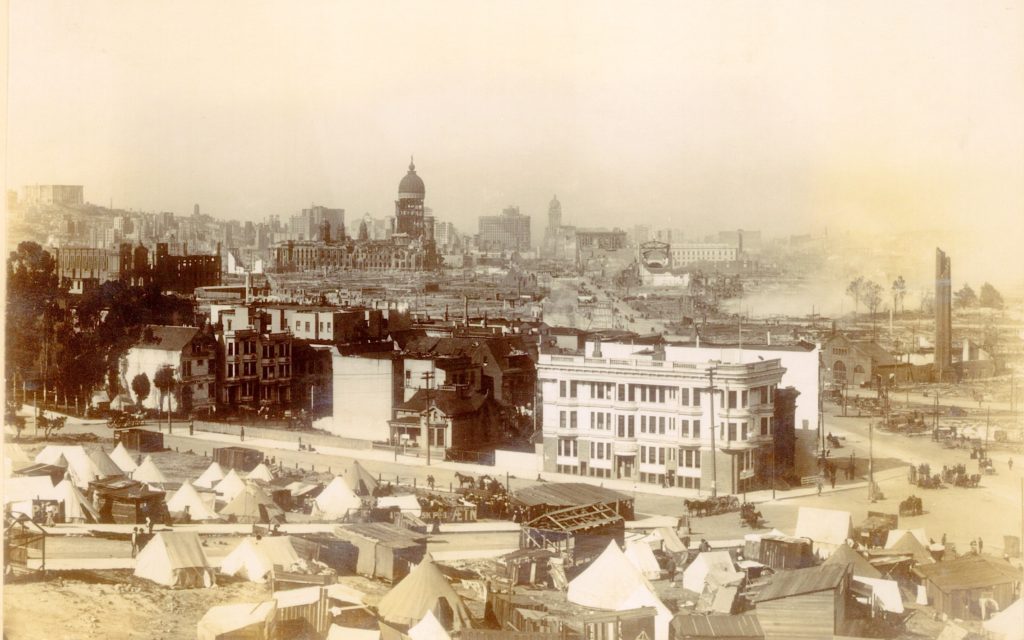
On April 18, 1906, news of the great San Francisco Fire and Earthquake spread rapidly. In the Honey Lake Valley there were numerous concerns. First, at any given time there were usually a dozen of local residents visiting San Francisco and it came as a great sigh of relief when news reached those individuals were not harmed.
On April 20, 1906 a relief committee was formed to provide aid to all those in the bay area affected by the devastation. At the initial meeting held in Susanville, $600 was immediately raised. A clothing. drive was held and within three days wagon loads of clothes were hauled to the Hot Springs Station (Wendel) to be shipped on the NCO Railroad. The residents of Amedee raised $75, which many considered substantial, since the community’s saw sharp decline in population and now only had 16 registered voters. Initially, over a $1,000 was raised for the relief effort.
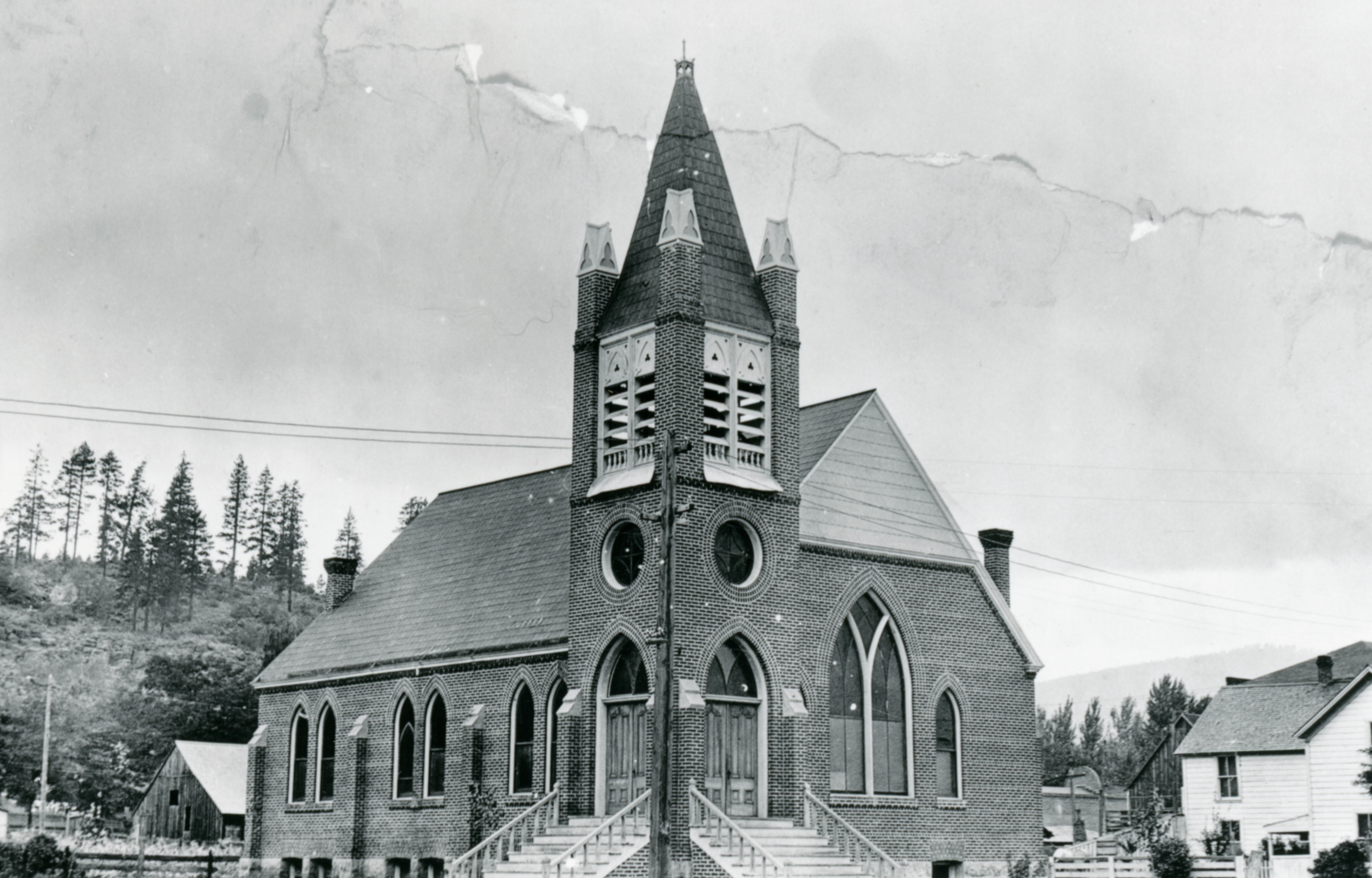
It being Easter Sunday, I thought it would only be appropriate to provide some of the history of religion in our region. The Methodist Church had a profound influence on the Honey Lake Valley. In 1860, this church held their first service in Susanville. By 1905, there were Methodist Churches in Janesville, Johnstonville, Standish and, of course, Susanville, more than any other denomination. Continue reading Easter Sunday→