Susanville’s St. Francis Hotel

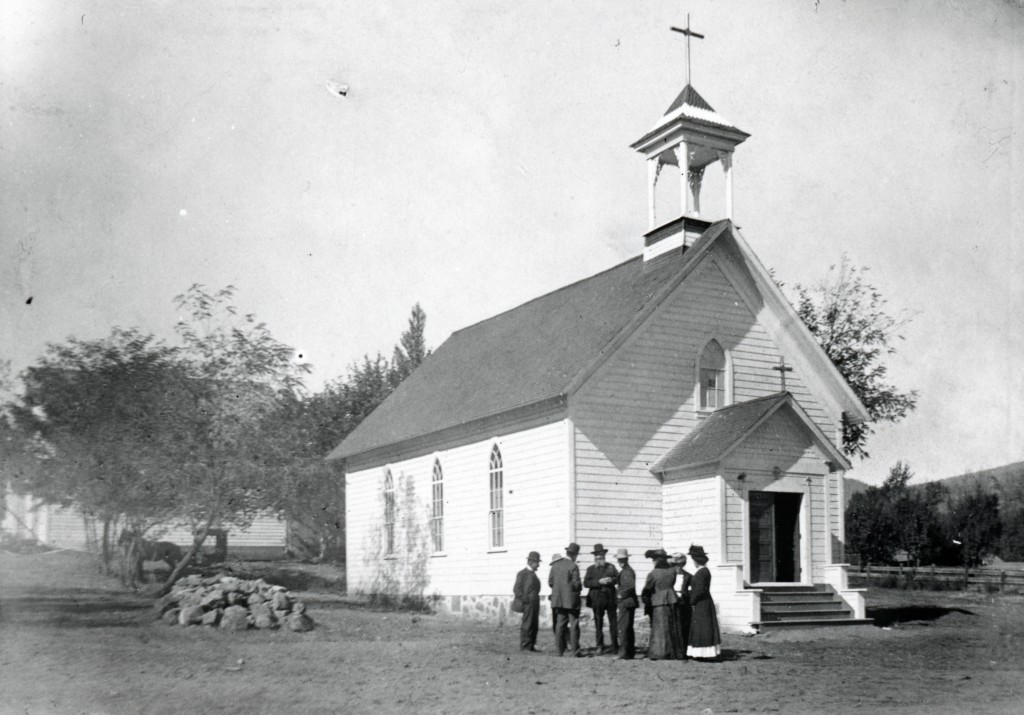
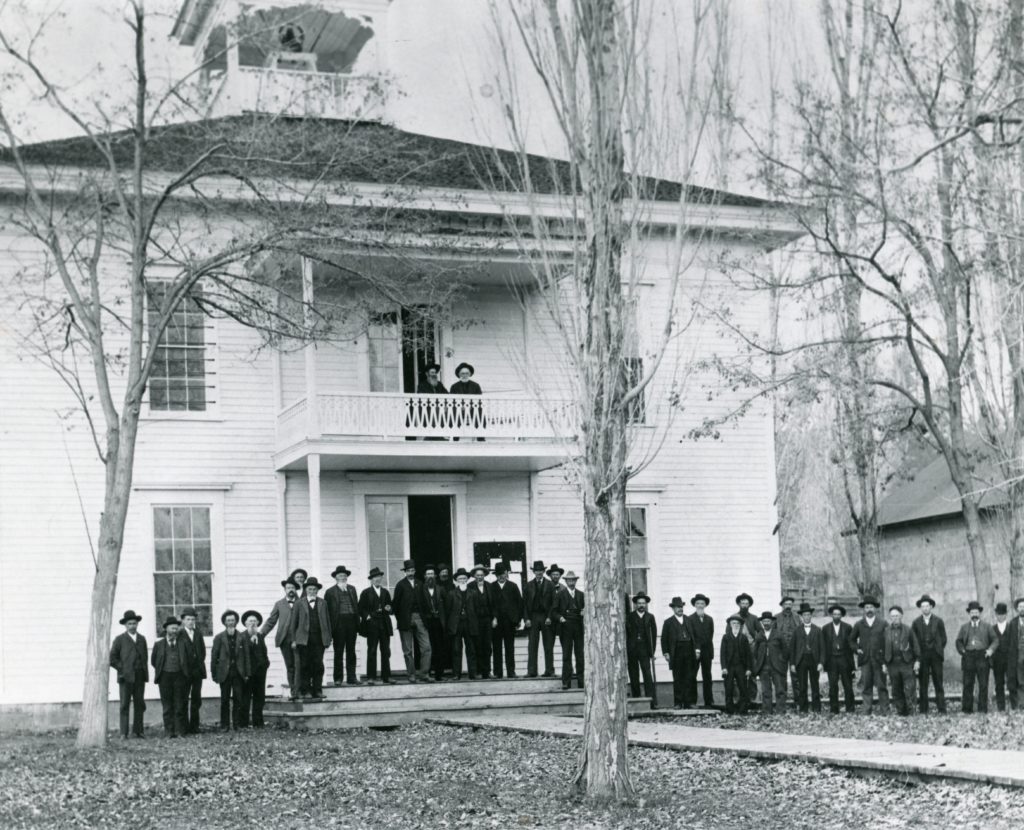
St. Francis Hotel, circa 1919. Courtesy of Art Almeda

Unfortunately, this historic hotel has been shuttered for a number of years. Who knows what its future fate may be. This about the origins of the hotel.

In 1907, Franceska Murrer Neuhaus, with her husband, Ben, retired from their Willow Creek Valley ranch and moved to Susanville. Not to be idle, she  kept busy investing in several commercial enterprises. In 1913, flush with money from the sale of the ranch, to her son, Edward Murrer, she had one more venture to undertake.  At this time, she hired Nevada architect Frederick deLongchamps to design a hotel at corner of Main and Union Streets.* She named her new enterprise the St. Francis Hotel.  Franceska was well versed in the innkeeping business. For years, the Neuhaus home in Willow Creek was well known for its hospitality to accommodate travelers. Her daughter, Rose Bagin, operated hotels at Hayden Hill and Susanville. Rose’s home in Susanville happened to be conveniently located behind the St. Francis, and her elaborate flower garden complimented the hotel. When the St. Francis opened its doors in 1914, Franceska’s son and daughter-in-law, Bill and Flora Neuhaus managed it.

*deLongchamps first Susanville building was the Lassen County Jail completed in 1911.

Subscribe

Susanville’s First City Hall

The July 4, 1906 parade with the city/fire hall in the background—Lola L. Tanner

In 1884, the Lassen County Board of Supervisors created the Susanville Fire District—it had authority to levy tax assessment for fire protection.  In the course of time, the district needed a home to not only store its various equipment—hose cart and hoses—but a place to meet and for the volunteers to train. In the fall of 1891 the district advertised for proposals for a fire hall and received three bids. On November 19, 1891, the district accepted James P. Keener’s offer of a lot and to build a hall on North Lassen Street. To adorn the fire hall, Keener constructed a 50-foot-bell tower. It was now the town’s tallest landmark. Keener specifically constructed it that way, so when the bell was rung it could be heard throughout the town.

In 1900, when the City of Susanville incorporated, it became the town’s combination city/fire hall. It is rather ironic the building was destroyed by fire in 1921. On a final note, I have never been able to locate a good photograph of the building.

Subscribe

The Sunkist Brand

A 1937 Lassen County Fair Parade Entry, featuring an oversized wooden box.

While the California Fruit Growers Exchange over came many challenges there were more hurdles to conquer. Their marketing  efforts were effective, there was a problem, as non-citrus grower members benefited at no cost.

Francis Q. Story, a transplanted Boston wool merchant was elected as the Exchange’s president in 1904. Story understood the power of advertising, and it was advertising that transformed citrus from a luxury item into a household staple.

Fruit Growers Story Club, Susanville, 1924. Courtesy of Lola L. Tanner

What the Exchange needed to do was how to distinguish its fruit from that of its competitors—competitors who were benefiting from the Exchange’s advertising at no cost to them. A trademark or brand name was the answer.

In July 1907, R.C. Brandon of the Exchange’s Los Angeles advertising agency Lord & Thomas suggested the name SUNKISSED. On August 30th, an Exchange agent in Chicago, taking a bit of poetic license, changed the name to Sunkist. At the Exchange’s April 1908 meeting the board adopted Sunkist as its trademark, mandating that only the highest-grade oranges would bear the Sunkist name.

The next problem was how to mark them. Initially oranges were individually wrapped, the tissue paper for the highest-grade oranges was printed with the Sunkist name. In 1926, a machine was developed to stamp the name directly onto the fruit. Today, its placed there on a sticker.

These very successful advertising campaigns were also very expensive. From 1908 to 1951 the California Fruit Growers Exchange spent $61 million to advertise the Sunkist brand. The cost, however, was worth it. So successful were the campaigns that the name Sunkist became synonymous with citrus. On February 8, 1951 the California Fruit Growers Exchange officially changed its name to Sunkist Growers to reflect the famous trademark.

Donate

Did Old Man Winter Retire?

Ice Harvesting on the Susan River, early 1900s—Philip S. Hall

Yesterday’s post was about the Westwood frozen millpond when temperatures dropped to -30. Below zero temperatures used to occur on a regular basis during the winter months in this part of California. Over a century ago, it was an important fact of life, as the frigid temperatures were needed. The following is from an old post that explains why:

Ice Harvesting
Ice harvesting at Adin, 1911

Way before the day of refrigeration, in colder climates ice was harvested, whether from a stream, pond or lake. Though by the 1920s, the practice slowly began to fade away with the advent of refrigeration.  Locally, ice was harvested from the Susan River, and two focal points were the Bremner dam in the Susan River canyon and the other at Dawson dam near Johnstonville that provided power for the Lassen Flour Mill. Roy Sifford, born in 1893 and raised in Susanville, recounts in his memoirs that in 1910: “I hauled ice from the ponds at Johnstonville to the stores and bars in Susanville–$2.00 a load delivered. In twelve hours I could haul four loads receiving $8.00 a day, paid in cash!”

Tim

It Was Cold in 1949

Dynamiting the Westwood millpond, January 27, 1949. Courtesy of Fruit Growers Supply Company

In January 1949, the temperatures plummeted to nearly thirty degrees below zero at Westwood. The millpond there froze. When Red River designed the facility, they placed piping from the powerhouse that forced steam air directly into the millpond near the sawmill. This system was no match for Mother Nature. To keep the mill operating it was necessary to use dynamite to blast loose the logs in the millpond. Continue reading It Was Cold in 1949

A Great Question

Skedaddle Dam, 1992. Courtesy of Ginger Martinez

In the Ask Tim segment earlier this month, this question was posed:

“My question to you would be what is the most interesting thing you have discovered in all your years of historical research and/or being a lifelong resident of the area.”

Before I elaborate any further, let me state one item. While we live dramatically different from our ancestors of 150 years ago, human behavior has not changed.

The salt works, January 1980.

At this time I will focus on  physical historical sites. That alone is a challenge. So here are some runner ups. The remnants of Skedaddle Dam is a sight to behold. It is impressive, considering the dam washed away in 1892. Buffalo Salt Works in the Smoke Creek Desert, that dates back to 1864, is unique. What give its special appeal is how the salt over the years transformed the foundation of the wooden vats into somewhat mystical gnarly forms. Very special.

Sunrise Chamber, 2015, Belfast

Then, of course, is the sunrise chamber on the summer solstice at Belfast.

The site I have in mind, is of course exceptional and had no idea what to expect, until I saw it. It is a combination prehistoric/historic site, with a unique water feature that is so obscure that it does not appear on USGS maps. I have never photographed it, so a spring expedition is in the works before the reveal, but not its location.

 Tim


Sierra Yacht Club

From High Sierra Magazine

While examining the 1972 summer issue of High Sierra magazine it had a short feature entitled “Sails on Eagle Lake.” Tom Boyer, Vice Commodore of the Sierra Yacht Club of Reno had visited Eagle Lake in 1971 and was impressed what he saw. The Sierra Yacht Club at that time had sixty members and they would normally race on Washoe Lake south of Reno. On June 24, 1972 six sail boats from the Sierra Yacht Club graced the waters of Eagle Lake. According to the High Sierra it was the first time an organized sailing unit was held at Eagle Lake. It certainly would not be last. A few years later, local residents formed the Eagle Lake Sailing Association also known as ELSA. For a time it was a very active group. In addition, for awhile Lassen Community College even sponsored summer sailing classes.

Tim

Susanville’s City Hall Centennial

Susanville city/fire hall.

On January 6, 1924, Susanville’s new city hall was dedicated. It was estimated that nearly a quarter of the town’s population turned out for the occasion.

The original city/fire hall was destroyed by fire on November 7, 1921. More about the history of that structure later. The City Trustees (today referred to as Council) had many pressing issues to contend with and decided to take their time with the construction of a new city hall. In the spring of 1923, they hired noted Nevada architect Frederick DeLongchamps to design a new building. (Some local buildings designed by DeLongchamps include the Del Mar, St. Francis Hotel and the Lassen County Jail).

In October 1922, voter’s approved a $20,000 bond measure to pay for a new combination city/fire hall. Alas, DeLongchamps’ plan carried a $30,000 price tag, along with an additional $5,000 to furnish it. The Trustees’ were reluctant to go back to the voters to approve an additional $15,000 bond measure, but had no other choice. On June 26, 1923 voters approved the additional funding 146 to 14.  On August 18, 1923 Woodward & Grebe were awarded the contract to construct the two-story concrete building.

City hall has undergone numerous changes in the past 100 years. The most notable occurred in 2000., during the City’s Centennial. Not only did the building go through a complete retrofitting, but 3,250 square feet was added to the structure. The integrity of the historic facade was kept intact. It was an expensive proposition that cost $1,323,752.

On  a final footnote, in late January 1924, the City thanked the Lassen County Board of Supervisors for useage of the County Courthouse that allowed them to hold meetings for the last two years.

Subscribe


Lassen County Farmer

A partial copy of the Farmer, found in a long ago Lassen County Courthouse dumpster dive

In the mid-1870s, Susanville was still a one horse town with less than 300 inhabitants. Yet, for a time two newspapers were published there. The first to compete with the Lassen Advocate was the Lassen County Journal that operated from 1874-1875. It was succeeded by the Lassen County Farmer.

This newspaper made its debut on January 1, 1876. The Farmer was published by two experienced newspaper men from Reno—J.G. Law and William Lewis. The paper provided the best local news coverage the area had ever experienced. Making a living was another story. By December, Law had departed leaving Lewis behind. Lewis, too, would soon depart and return to Reno. He noted, “Running an opposition paper in one of these mountain counties is about as neat and easy a way to starve to death as can be imagined.”

Thomas Henry Dawson—Marge Hansen

However, Lewis was able to find a successor in Susanville resident Thomas H. Dawson. However, Dawson would soon learn how difficult it was to make a living and after six months the newspaper folded. The Modoc Independent newspaper of Alturas relayed the fate of Dawson’s plight: “The editor’s wail is pitiful. He says that during the six months which he has run the paper only twelve subscribers paid their subscriptions.”

On a personal note, I can relate to the above. Some times I have pondered that I made it this long, but I manage some how to cover the costs.

Support

Exploring Lassen County's Past