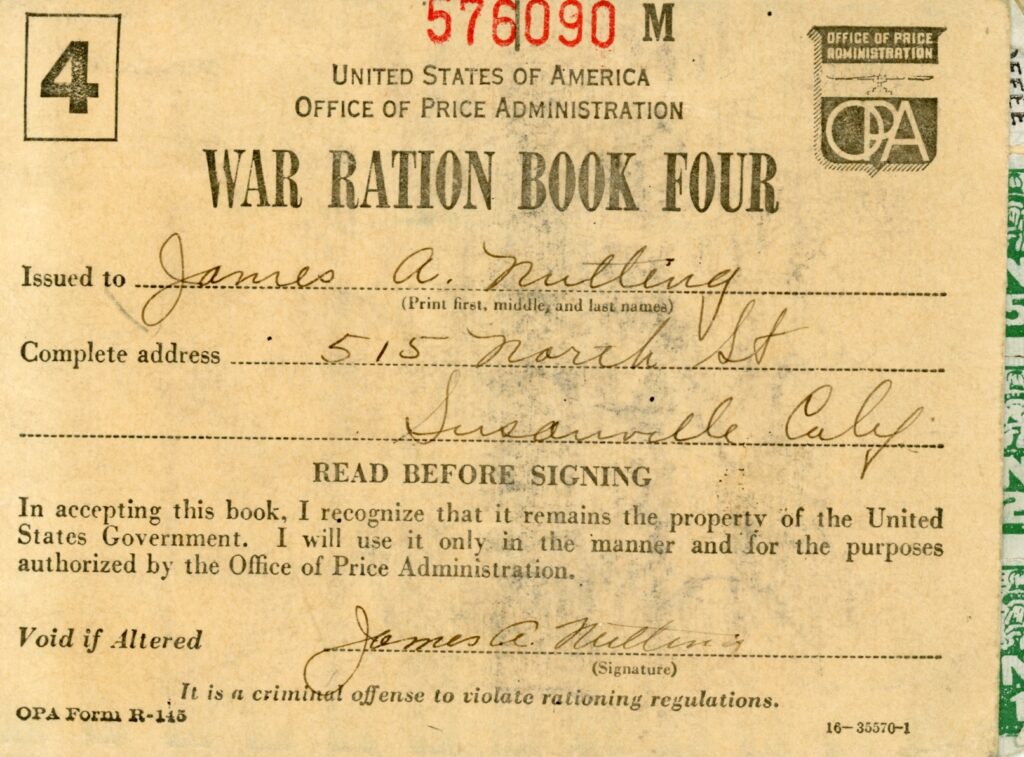
This is a brief, yet contemplative post. During World War I and II, rationing whether clothing, food, gas etc was a way of life. in the United States. Equally impressive how citizens overwhelming purchased Liberty or War Bonds. So here is a point to ponder. Given how society has changed would such rationing work today?
Back Cover
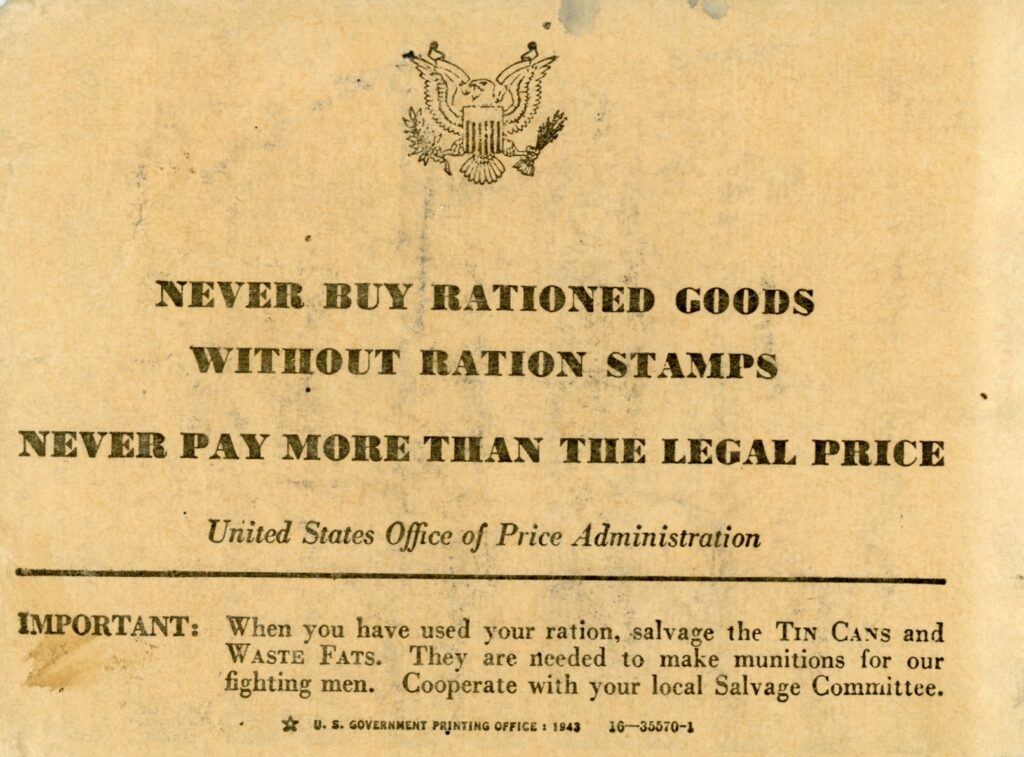
Notice how one was instructed was to save their tin cans and waste fats for the war effort.
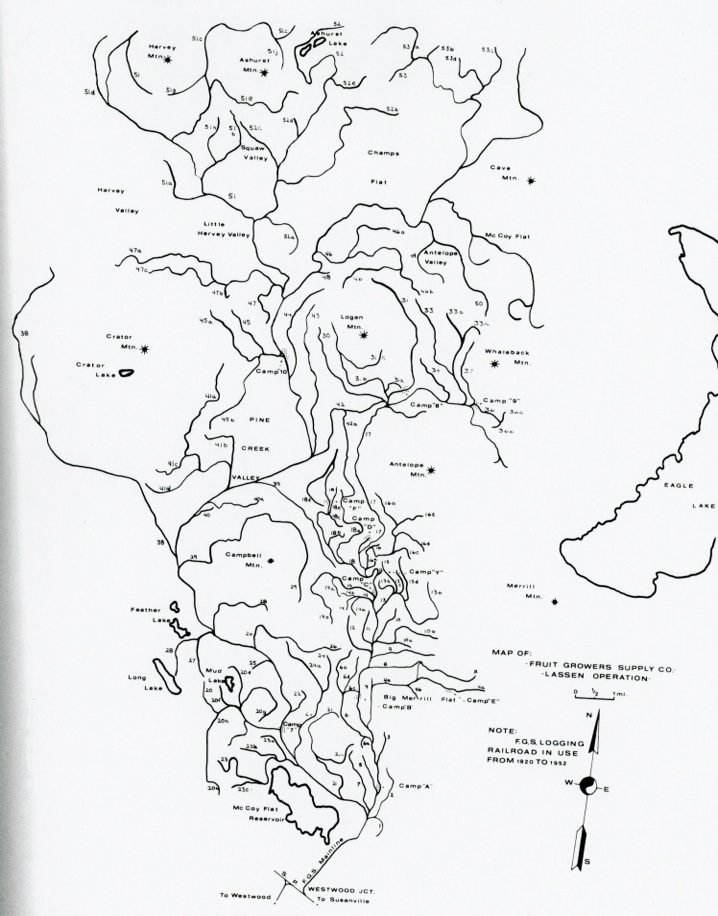
After the logging season of 1952 ended, Fruit Growers discontinued railroad logging. In the Hazard Reduction of the Pine Creek Unit timber sale with the forest service in 1936, stated that all existing railroad grades be converted into roads, once the steel and ties were removed. In 1952 Fruit Growers had 48 miles of railroad line. A total conversion would be excessive. To rectify the difference Fruit Growers and the Forest Service conducted a joint field survey–the parties agreed upon the conversion of fifteen miles instead of the original 48. Fruit Growers agreed to maintain the roads for ten years after the timber sale.
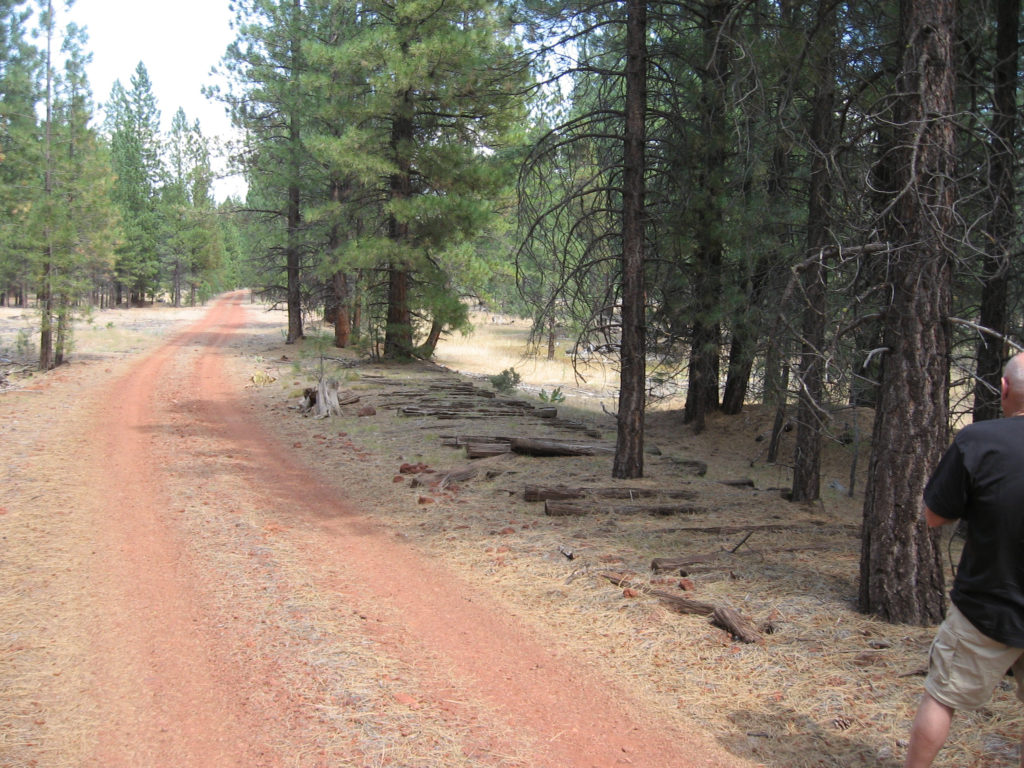
It was one of those days, that I had a lapse of better judgment should have, but did not take a picture of Shay’s Hole. However, about a mile down the road, we stopped to take pictures of these old railroad ties still in place.
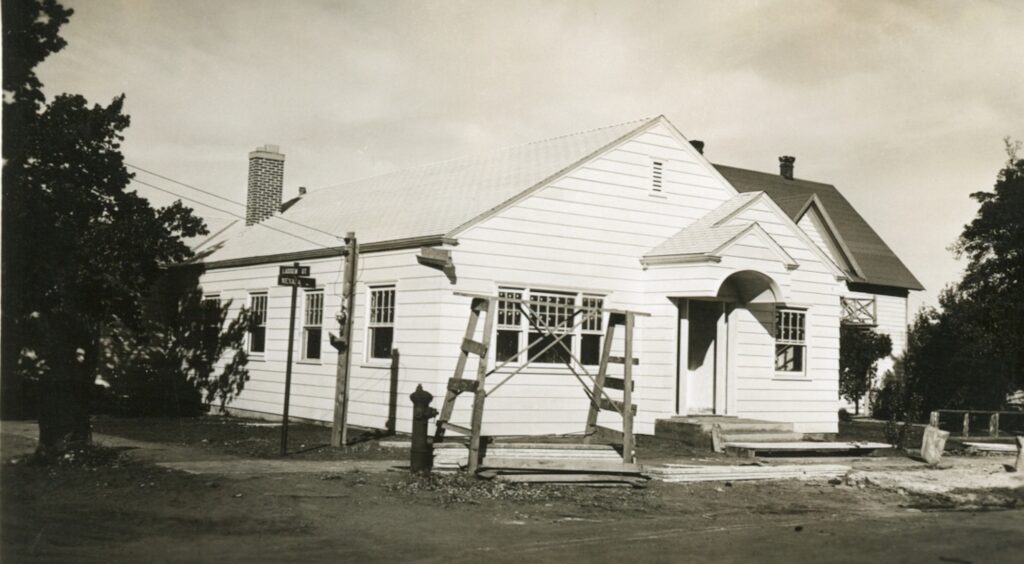
701 Nevada Street, Susanville, October 7, 1939–H. Frodsham photograph
In 1912, the Great Western Power Company was in the midst of the construction of Nevis Dam to create Lake Almanor. The company hired Dr. Fred J. Davis to provide medical care for the construction workers. In September 1913, Red River Lumber Company hired Dr. Davis to provide medical care to its newly constructed company town of Westwood. Dr. Davis would remain in charge of the Westwood Hospital until 1939. Dr. Davis, along with son, Dr. Fred J. Davis, Jr., moved to Susanville to open their private practice. At 701 Nevada Street, Susanville they had an office constructed. In 1965 Dr. Davis Sr. retired. In 1974, Dr. Fred J. Davis Jr. retired and he sold the office to Dr. Jay Beams. In 2022. Beams closed the office, which now sits vacant.
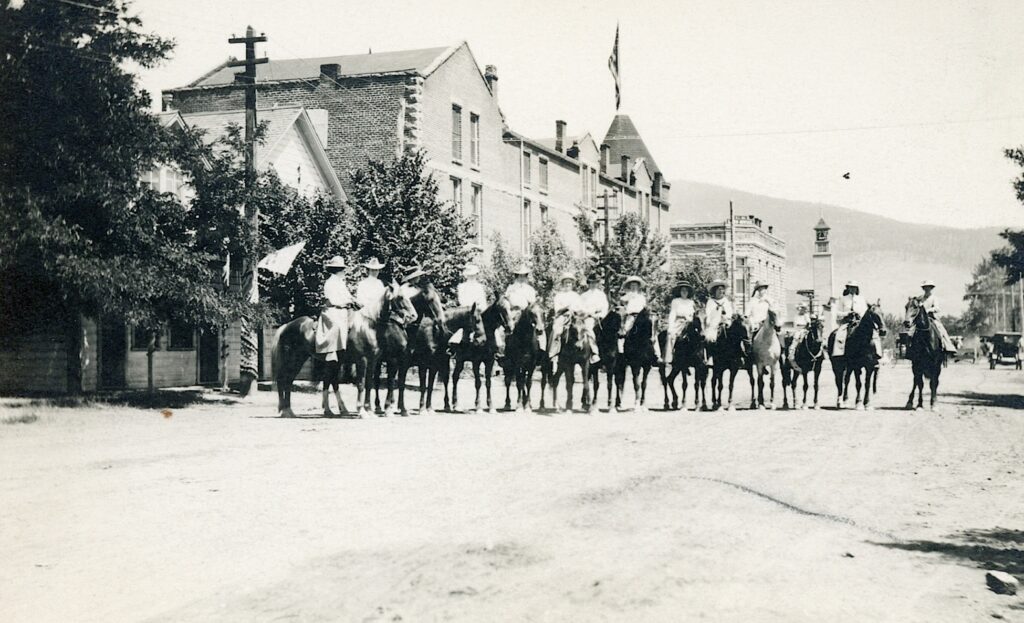
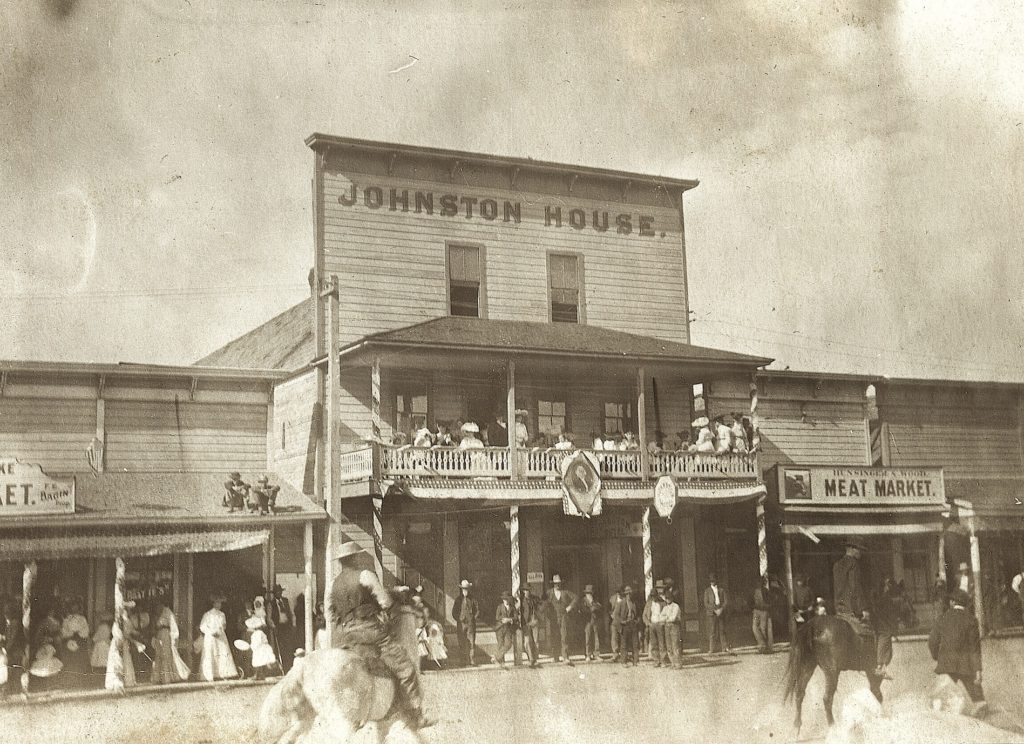
Here is a bit of worthless trivia about the early 1900s 4th of July parade route in Susanville. It was a short one. Entrants gathered at the corner of Cottage and South Gay Streets. From there the parade proceeded north on Gay and then turned left onto Main Street. Then the parade went one block west to Lassen Street, where the route took a left onto Lassen Street, which concluded at the intersection of Lassen and Cottage Street, basically a nearly one block loop.
The Johnston House, July 4, 1909. Courtesy of Betty Barry Deal
Tim
P.S. Any one who is a long time reader, know that I a firm believer on a ban of fireworks. This is an excerpt from yesterday’s New York Times:
Fireworks sparked 916 wildfires in the state in 2021, the most recent year for which full data is available, and those fires caused more than $3.2 million in property damage, according to CalFire. The year before that, in the state’s worst fire season on record, fireworks caused more than 2,000 fires and $8 million in property damage, along with injuries to 11 people and one death.
It is not just a California phenomenon. A study published last year in the journal PLoS One found that more than 11,000 wildfires nationwide were caused by fireworks between 1980 and 2016 — and that two-thirds of those blazes occurred in the two-week period around July 4.
In fact, more fires began on July 4 than on any other day of the year, it found.
The “L” as it appeared on the mountainside in 1947. In the foreground is the Paul Bunyan Lumber Mill, now the area of WalMart, etc. Courtesy of Fred Lendman
On February 18, 1928 the Lassen High Block L Society formed, that was the boy’s athletic organization. One of their first activities was the painting of the “L” on Susanville Peak. In 2008, Betty Jo Buckles Coplen provided me with this behind the scene account: “In 1924, my father, Maynard Robert “Billy” Buckles accepted a position teaching at Lassen Union High School, and we moved to Susanville. Four years later, members of the new Block L Society came to my Dad. They asked him to help them plan a Block L for them to lay out on the hillside. He helped them to design a letter L with the proper classic proportions (200 yards long). He also warned them that a letter of that size would be difficult to keep whitewashed. The Block L boys persevered and constructed the letter on the hill, moving rocks into the outline to be painted white. For decades as planned the freshman boys painted the letter each year, but eventually that practice died out.”
While the Block L Society no longer exists, the Lassen High Alumni Association has from time to time maintained it, the last time was done in 2008.
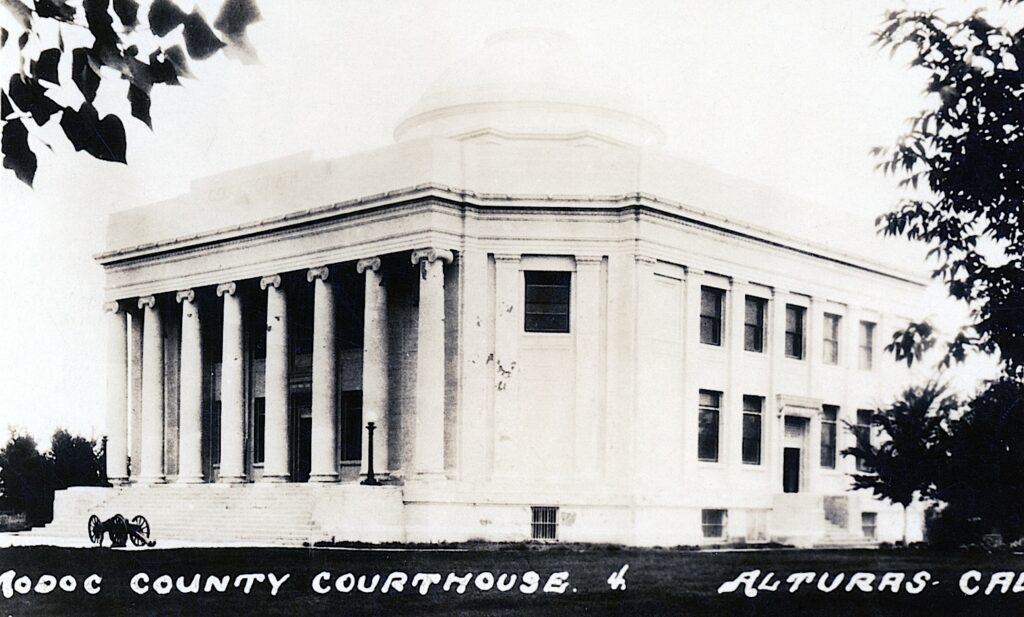
On February 17, 1874 the County of Modoc was created from the eastern section of Siskiyou County. It should be noted that in 1864, Lassen County laid claim to Surprise Valley, that is a story for another time.
On Saturday, July 6, is Fandango Days in Alturas, and they plan on celebrating Modoc County’s 150th birthday. I was delighted to hear this years’ Grand Marshall is Maxine Madison. Maxine and I go way back, and I first met her, she was working as Superior Court Clerk. When Iris Turner retired Modoc County Clerk, Maxine ran for that office and won! There was a time when I made numerous research trips to Modoc, and most of that time was spent in the Modoc County Clerk’s Office. Of course, Maxine and I had many an entertaining discussions whether it was the board of supervisors, elections or the courts. So congratulations to Maxine and Modoc County.
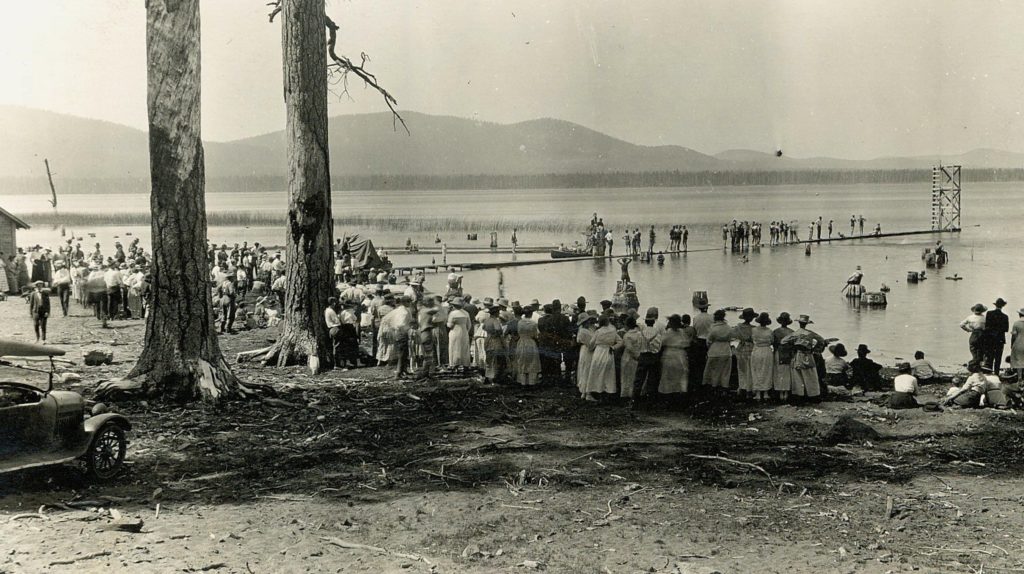
This facility was not opened to the public. Its name a bit of a misnomer. It was built circa 1918 by the Red River Lumber Company at the south. shore of Eagle Lake near present day Merrill Campground. It was used by those in the company’s management positions. Unfortunately, I do not have that much information on it, due to the nature of how Red River operated. However, It was the location of water carnivals during1921-23.
The water carnival at Eagle Lodge, 1921. Courtesy of Ed Standard
The Electrical Department, Westwood, 1939–Calvin Sharp
In one sense this is kind of personal. My dear friend the late Hak Martinez would always for years make references to the “Ham and
Eggers.” What is peculiar is when the Ham & Egg movement was strong, Hank was a small child. No doubt he was probably influenced by his father.
Originally known as the Ham & Egg movement, the latter half of the name evolved into”Eggers.” It was a Southern California movement wherein people over 50 years old would receive a pension of $30. Some thought these residents, when they received that check would splurge on “ham and eggs” for breakfast, hence the name.
In 1938, it appeared on the California Ballot as Proposition 25. It was narrowly defeated. The movement’s idea lingered on, as my friend was a testament. Such initiatives of the late1930s, had an unforeseen challenge in World War II where everything went by the wayside and what was started in the late1930s was abandoned and forgotten by 1946, when life had some sense normalcy. Past initiatives were either no longer relevant or were forgotten.
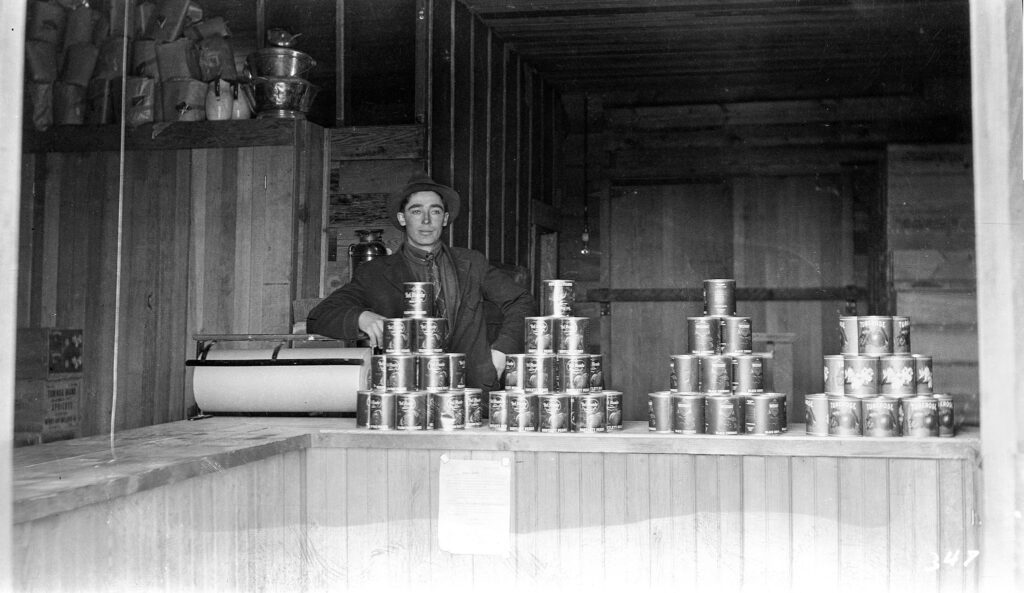
This is just a test, as a person has been having difficulties receiving the daily notice. Hopefully, the problem is fixed. More about Fruit Growers Commissary in August.
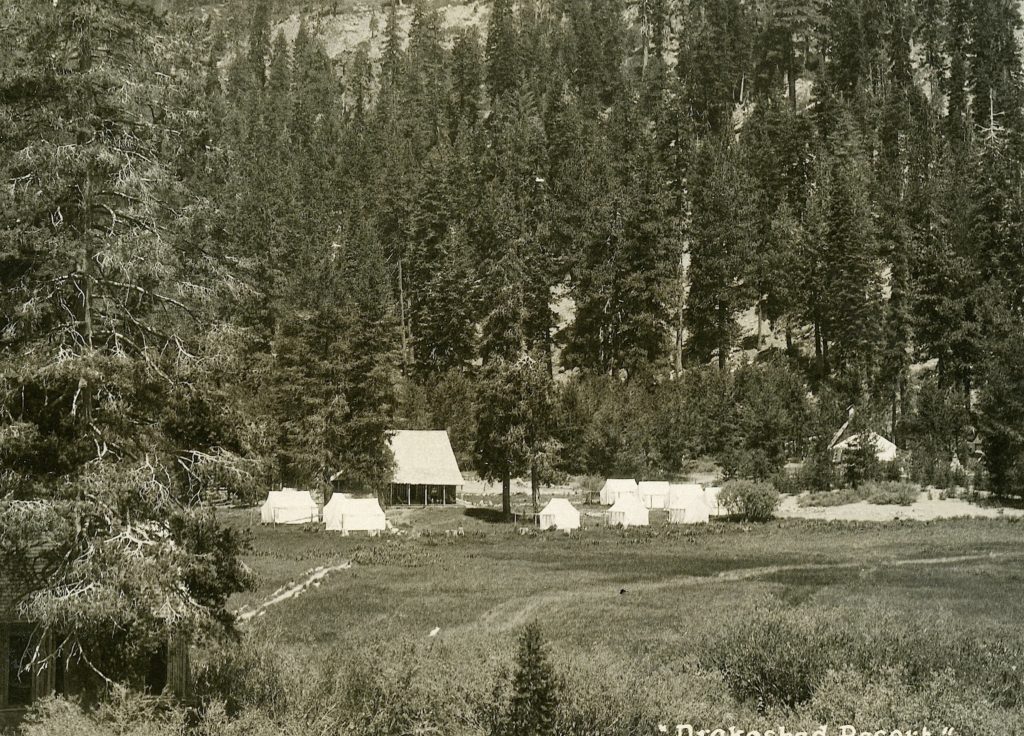
Drakesbad, circa 1930. Courtesy of the Sifford Collection
For those that have never been there, this is a hidden gem inside Lassen Volcanic National Park. It was Susanville resident, Alexander Sifford (1861-1957) who was key figure into transforming the place into a resort. However, in 1874, Thomas Malgin first settled in the upper end of the Warner Valley, and built a bath house to take advantage of Hot Springs Creek. Malgin focused more on raising sheep, than operating a remote tourist attraction.
Malgin was succeeded by Edward Drake, who in 1890 built the first lodge. His operation was simply known as Drake’s Spring. In June 1900, Susanville school teacher Alex Sifford arrived with his family as friends suggested the springs might help his ailments. Sifford was so taken away, that he negotiated to buy the place from Drake for $6,000. In 1914, for marketing purposes, the name was changed to Drakesbad. The Sifford family continued with operations until the 1950s when the last of their holdings was sold to Lassen Volcanic National Park. You can learn more by reading Roy Sifford’s memoirs Sixty Years of Siffords: Drakesbad directly from this site.
It should be noted the region received damage from the Dixie fire (2021) which I have not seen. This just in, I understand Drakesbad will remind closed this season while still doing recovery work from the Dixie Fire.