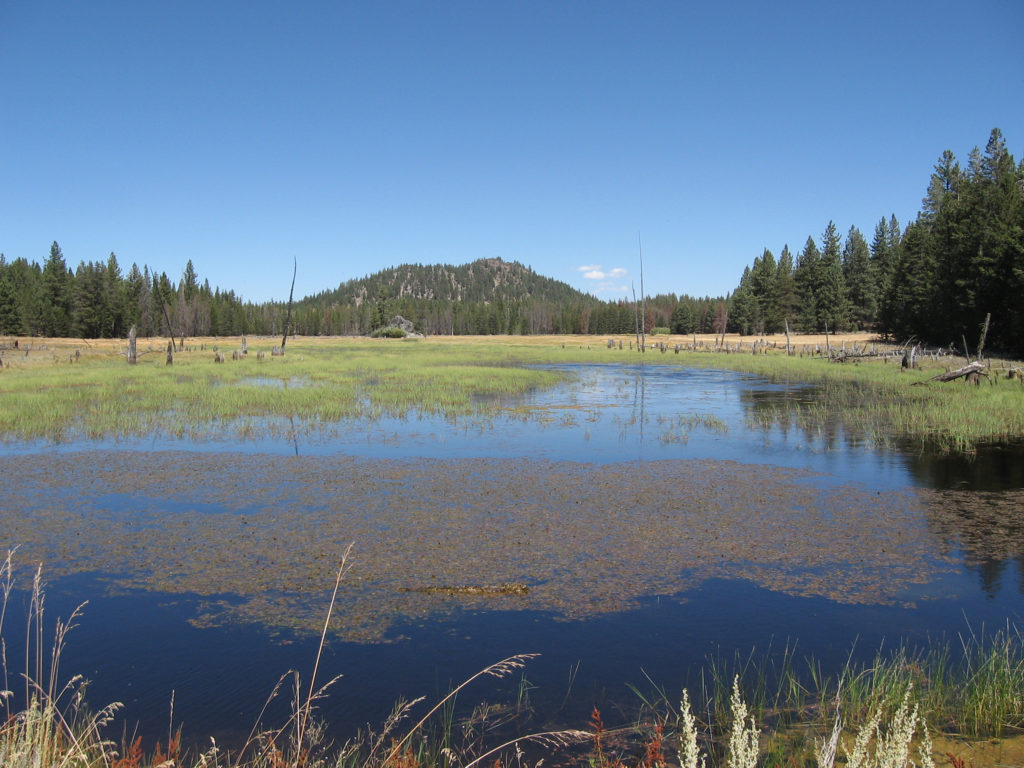
It was in September 1924 when the Lassen National Forest announced that they had subdivided summer home sites at Silver Lake in far western Lassen County and the headwaters of Susan River. The Lassen Mail newspaper reported on September 5, 1924: “Forest Service Offers Homes on Silver Lake. The United States Forest Service has laid out a number of lots on Silver Lake which will be offered for lease to people who wish to establish a summer camp or home. The forest service is building a good road to the lake which will make it easily accessible.” Susanville’s other newspaper, the Lassen Advocate never published any account on the topic.
Information on the early day cabins is sketchy due to the fact since the lease records were filed with the forest service. The Lassen Mail of June 28, 1929 reports, “New Cottages at Silver Lake. Marble Burch, owner of the resort at Silver Lake was in Susanville the first of the week purchasing supplies and making preparaions for the opening season. He is superintending the erection of two new cottages at the lake for Chico residents.”
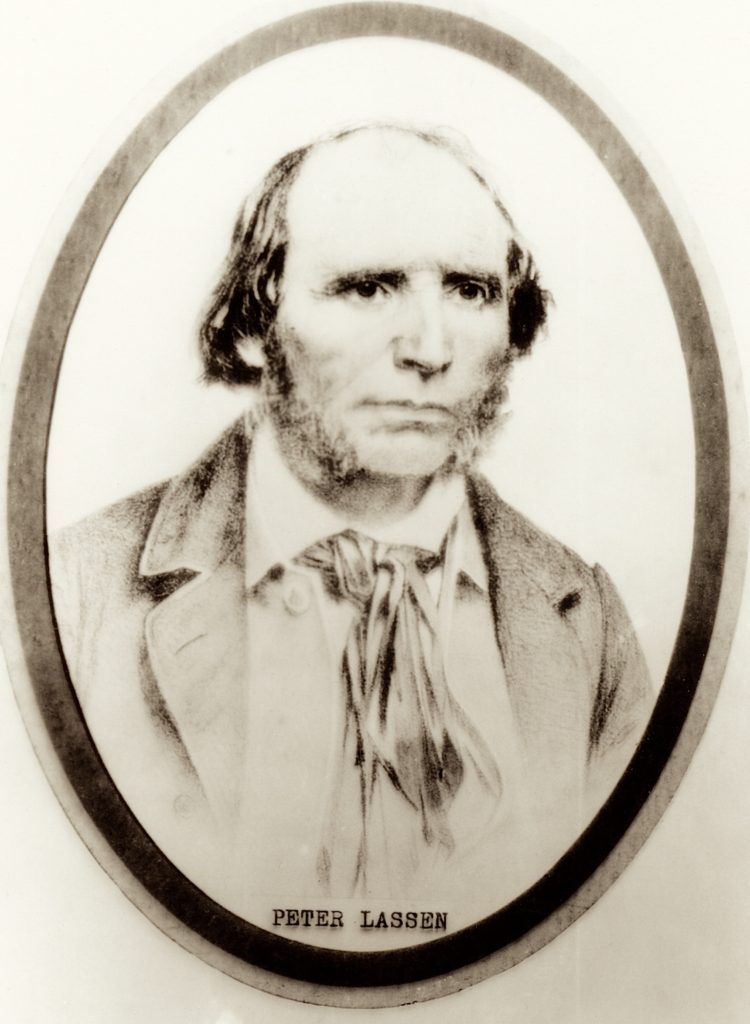
The infamous Peter Lassen, a name well known throughout Northern California
It was interesting question posed shortly after Peter Lassen and Edward Clapper’s death on the morning of April 29, 1859 in the Black Rock Desert. Their prospecting companion, Lemircus Wyatt escaped riding a horse without a saddle or reins some 120 miles back to Susanville to relay the news.
A little background. In late April 1859 a prospecting party from the Honey Lake Valley set off for the Black Rock Desert. The first group consisted of William Weatherlow, Joseph Kitts, George Lathrop and a man named Jameson. The second group consisted of Peter Lassen, Edward Clapper and Lemircus Wyatt. They agreed to rendezvous at Black Rock Springs, which did not happen according to plan, though the two parties were in close proximity of each other.
When Wyatt relayed the news in Susanville, a posse of twenty men was formed to bury Clapper and Lassen. The posse found the encampment and noticed something odd–it had not been disturbed. Among the items they found were two sacks of flour, some dried beef, blankets and part of a keg of whiskey.
Weatherlow’s headstone, 1978
During this same time period the U.S. Government appointed Major Frederick Dodge, the first U.S. Indian Agent for the West to oversee the welfare and future reservations for Paiute and Washo tribes. Dodge consulted with Paiute Chief Winnemucca. The Honey Lakers had a peace treaty with the Paiutes, and there had not been any problems. Winnemucca informed Dodge that the Paiutes had nothing to do with Lassen’s death.
In May 1859, Major Dodge had his findings of Lassen’s death published in the Sacramento Union newspaper. It was Dodge’s opinion, especially that the Lassen camp was not ransacked by Indians, concluded the dastardly deed was done by four white men, i.e. Weatherlow and Company.
Clapper Canyon/Creek, Black Rock Desert. Courtesy of D. Dickerson
In a strange turn of events, Weatherlow waited a year to deny Dodge’s allegations. In his statement Weatherlow asked Dodge to make public retraction, though it does not appear Dodge did. By the 1880s there was still some of a certain mindset that Lassen was not killed by the Indians. In 1917, when a second Lassen Monument was dedicated, the issue was still being debated. It should be noted that the two Lassen Monuments have carved in stone “killed by Indians”.
Wyatt, who was the only eye-witness died two years later in Susanville at the age of sixty-two. Weatherlow died in 1864. Kitts, Lathrop and Jameson eventually left the region to parts unknown.
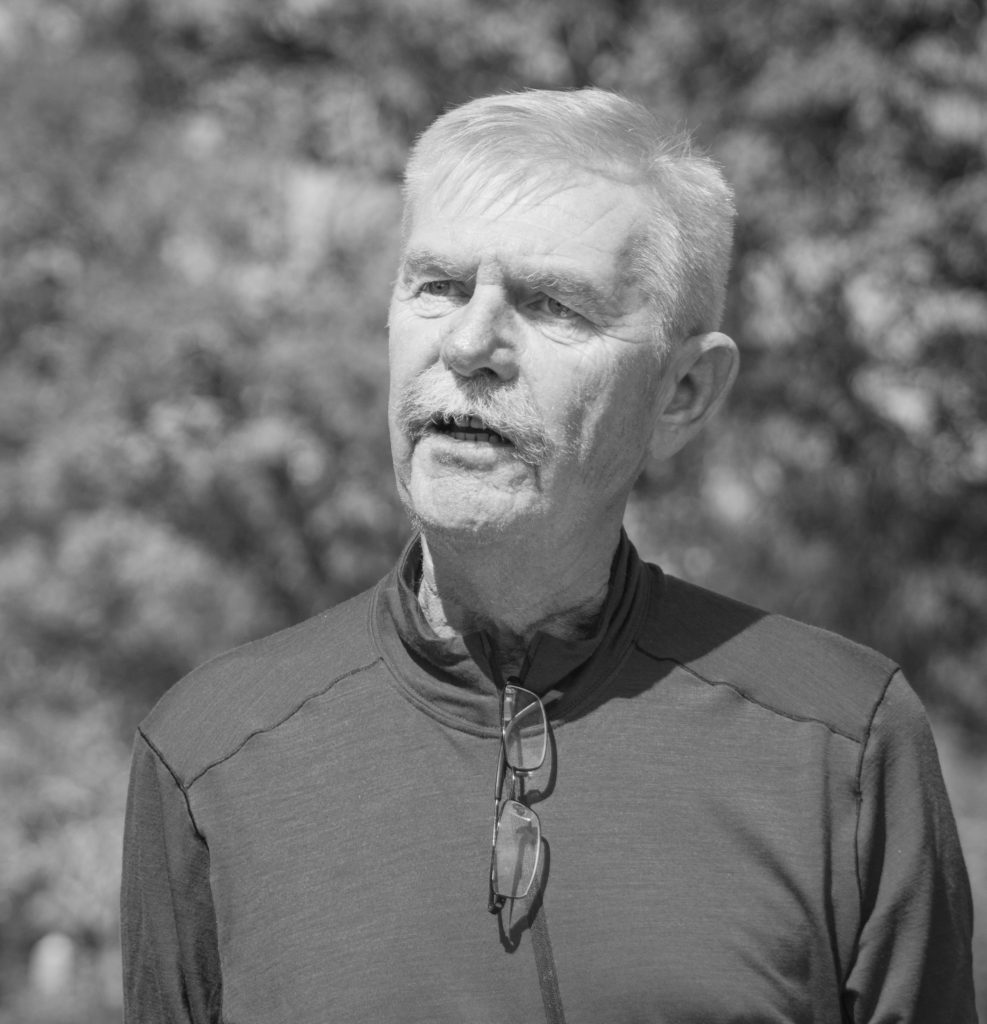
Yours truly at the Courthouse Centennial Cemetery Tour, September 16, 2017. Photograph by Susan Tangeman
It is Labor Day. Yours truly has been working very laborious this year learning new technology. Not an easy task, but I am getting there. I have that slow learner disorder with new devices.
This year I have had an unusual amount of research request. The inquirers all seem to share a familiar trait. By the time I respond, I receive a reply back, that they found everything on the internet. Truth be known, in a lot of those cases, the documents that I have in those particular files are not available on the internet. An example is correspondence with their long lost relatives. That is their loss, not mine. While there is a wealth information to be found online (some of which is questionable) and there is a wealth of material that is not. I will continue to do the hard work of hands on the ground, examining original documents versus questionable online sources, so I guess that makes me a relic of the past.
In the meantime, enjoy this special holiday. I am going to toil away for a part of the day working on the 2025 Calendars.
To see an actual jackalope in the wild, is rare–like spotting Big Foot. Yet, evidence of their existence during the 1950s through 1980s could be found at any roadhouse, i.e. bar/restaurant gas station such as the original Hallelujah Junction. However, those establishments are a vanishing breed, too.
The Jackalope, for those not familiar with the species is a cross between a jack rabbit and antelope. In the 1930s, Douglas Herrick of Wyoming is attributed to be the first to discover the mythological creature. Herrick, as an amateur taxidermist, made the first mounting. In time, others did too, but used small deer horns instead. Over the next few decades the appearance of the mounted Jackalope was widespread in the Intermountain West.
This small man-made lake is located approximately two miles east of the Eagle Lake Summit. In the late 1940s, the Paul Bunyan Lumber Company began logging operations in the region including Gallatin Peak and Round Valley. One of the company’s employees, Jim Coleman constructed a small dam on Piute Creek, near its headwaters. The small lake supplied the water used to wet down the logging roads, controlling the dust. It should be noted some maps have it spelled as Colman Lake.
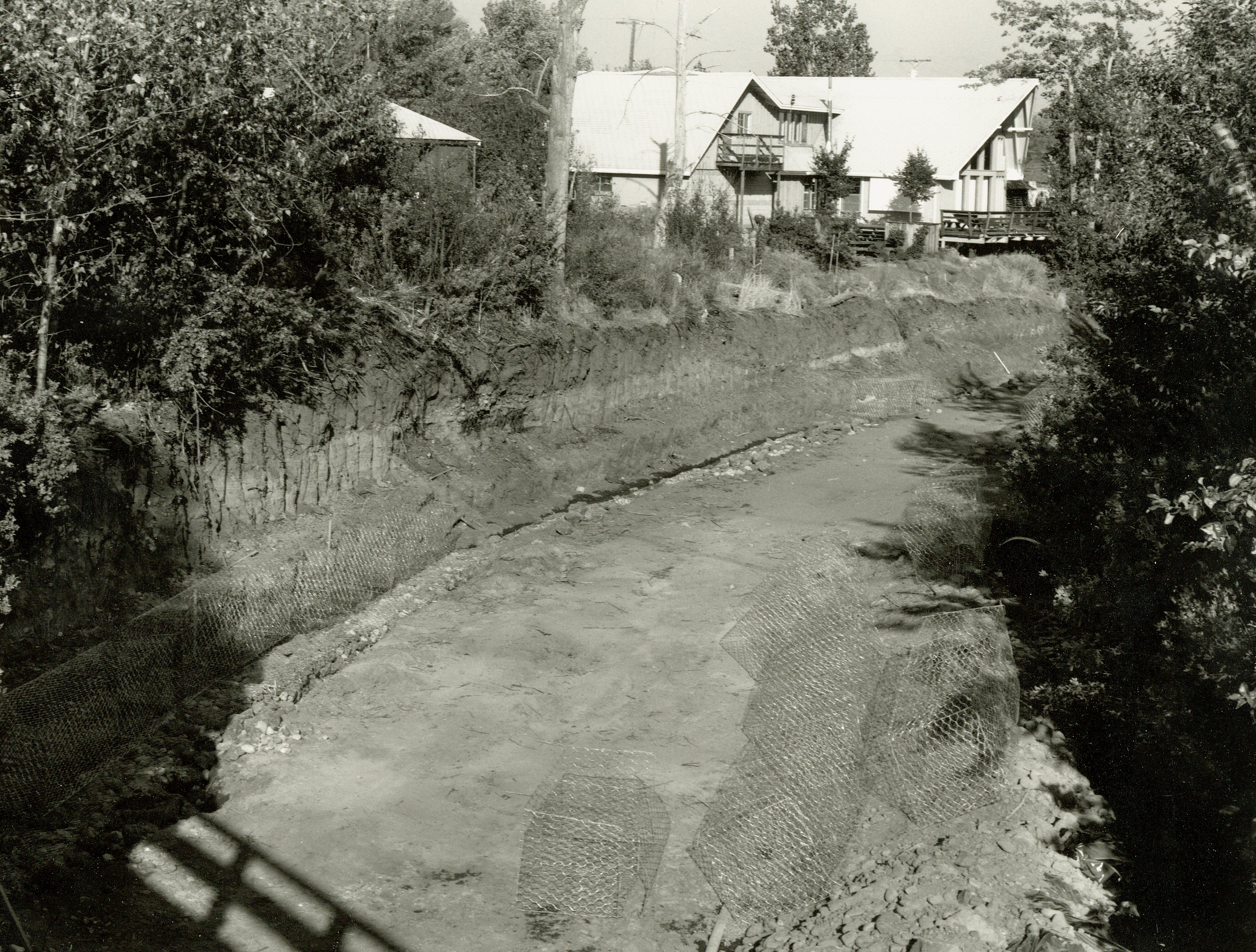
Susan River from the Carroll Street Bridge, 1981. Courtesy of Jim Cooper
While going through a photograph transfer file, in search of a particular photograph that I thought had been scanned, I came across this one of interest. By the way, for those inquiring minds, I never did find what I was looking for.
In the summer of 1981, gabions were installed along the north bank of Susan River just below the Carroll Street bridge to prevent further erosion of the bank. As one can easily see, there was not much water in the river to divert during the project.
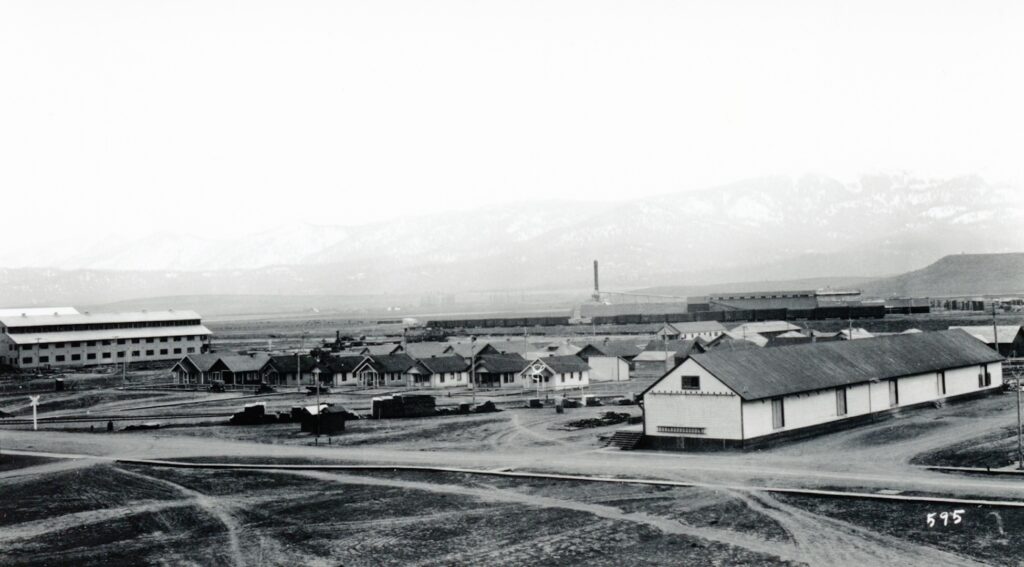
Fruit Growers Supply Company had another issue besides the housing shortage when they opened their Susanville plant in 1921. Inflation had a been issue not just locally, but nationally. However, Susanville’s prices were higher than elsewhere. There were accusations that the local merchants were gouging consumers to take advantage of the tremendous population growth.
Fruit Growers employees complained. Did they ever. Fruit Growers even hired an undercover detective to investigate. It turned that yes, Susanville prices were high, but the local merchants were not gouging any one.
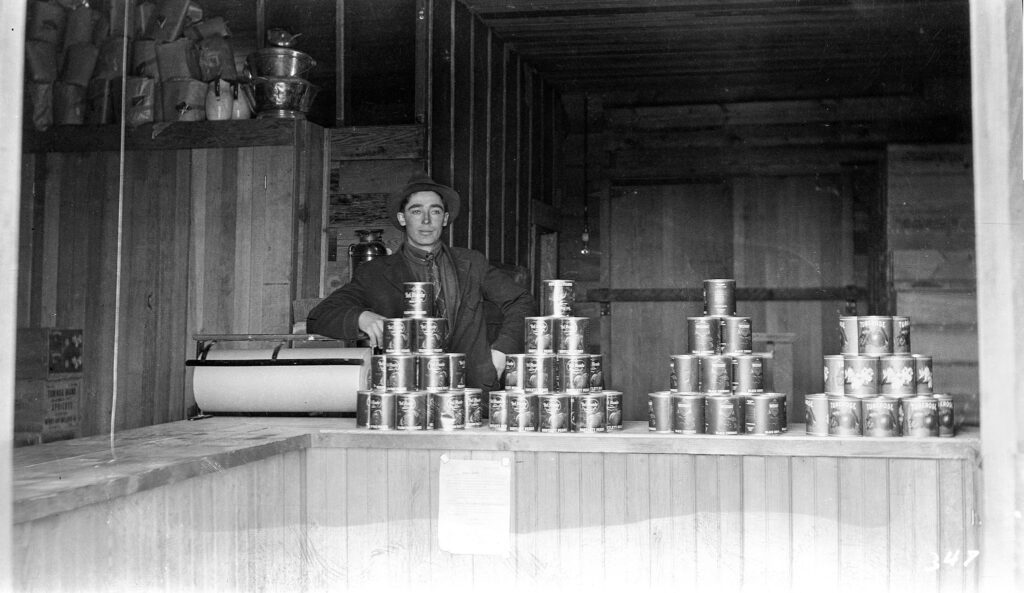
Fruit Growers Commissary, 1921–Ed Standard
Fruit Growers solution, they opened a commissary. It ws nothing fancy and carried the necessary staple items. The commissary opened on December 12, 1920 and the discount store was only available to Fruit Growers employees. Local Fruit Growers manager, S.M. Bump wrote in a memo “Merchants can exploit all they want.”
Over the ensuing years the commissary evolved and would eventually be open to the public. Its name became Sunkist Grocery. While the store no longer longer exists, the building does. It is now the Lassen Senior Center at 1700 Sunkist, Susanville.
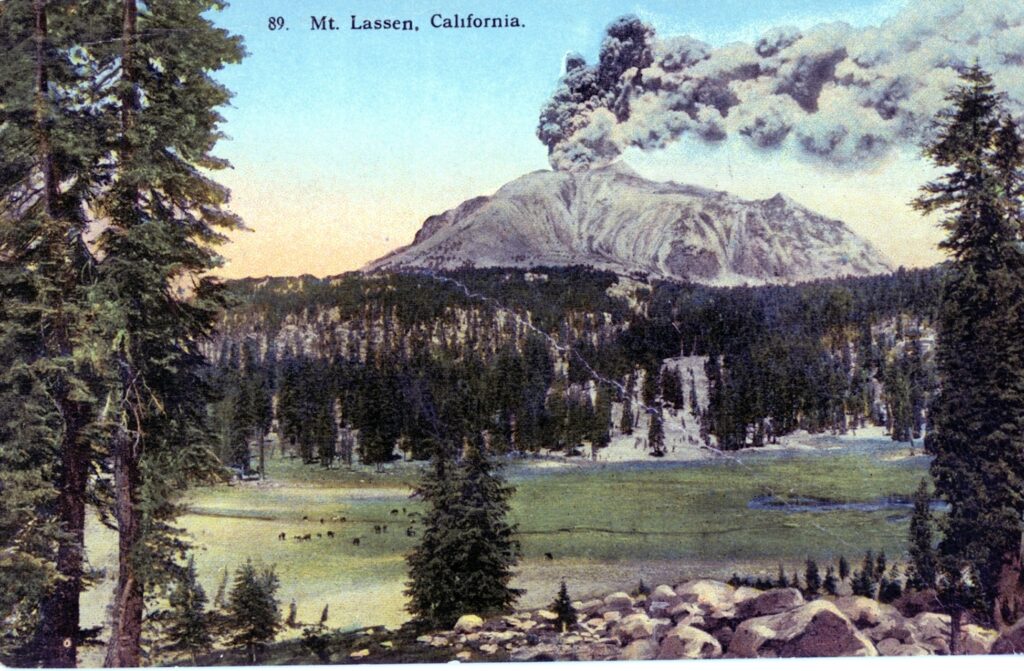
After years of speculation Lassen Peak finally erupted on May 30, 1914. As forest service ranger Harvey Abbey wrote in his diary, “Only one look and I could plainly see there was something going on at the top of the old mountain. We all were a little frightened. We did not what might follow the outburst. Much to my surprise there was what looked like black smoke and steam, ascending to a height of two or three hundred feet from the top of the mountain.”
For the next several days the eruptions continued with increased violence and duration. On Sunday, June 14, three eruptions occurred, one which sent an ashen plume of smoke some 2500 feet above the summit.
Lassen kept performing, with 110 eruptions recorded by the end of the year. One thing that observers and scientists alike found perplexing was the lack of lava of other incendiary evidence. That would all change with the great eruption of May 22, 1915.
With Labor Day Weekend approaching, some may have short attention spans. Thus, this 1976 photograph of Ravendale, basically depicts a wide spot in the road of Highway 395. Nothing to get excited about, but its here for posterity.
Ravendale, in better times.
On the other hand, a view of Ravenalde, during better times.