Eagle Lake – Pelican Point

Pelican Island, 1916, D.m. Durst

Depending upon the water level of Eagle Lake, it can be an island. The pelicans at the lake were a popular early day attraction, though others perceived them and the cormorants (sometimes referred to as shags) detrimental to the lake’s fishery. At sundry times the birds were slaughtered, their nests and eggs destroyed. A prime example is found in the columns of the Lassen Weekly Mail of June 11, 1892: “In Eagle Lake there are two islands (Pelican and Shag) on which large numbers of fowl, known as Pelican and Shag, build their nests and rear their young. The consequences are that vast numbers of fish from the lake are destroyed each year for food for the young birds. Recently a party visited these islands and killed the young birds and a good many of the old ones, hoping by means, if continued persistently for a number of years, to prevent the yearly destruction of the fish of the lake.”

Shag Island, 1916. D.M. Durst

P.S. Some may be interested in the May issue of the Northern California Traveler is my story about the Eagle Lake Bass.

Never miss a story, click here.

Inspiration Point Tour

Inspiration Point
Inspiration Point, 1930s.

The long delayed tour of Susanville’s first park is scheduled for Wednesday, May 18, so save the date!For those wishing to attend, please leave a comment below or contact me.  Details about time, etc. will be emailed to the attendees. If there is enough interest, a second tour could be scheduled during the summer on a Saturday morning.

Yours truly conducting a preliminary tour at Inspiration Point, April 1, 2016. Photograph courtesy of Annie Henriques Blank

Inspiration Point provides a great vista to discuss the region’s natural history ranging from Lake Lahontan to the region’s earthquake past which had affects of mining on Diamond Mountain to the local stone quarry.  Of course, let us not forget about the city park movement, though at one time back in the 1940s the city gave consideration to subdivide Inspiration Point for homesites.

Never miss a story, click here.

Red River Lumber Company Correspondence

The Big Store, Westwood.

The Red River Lumber Company was headquartered in Minneapolis, Minnesota. With its westward expansion to California and the establishment of its company town there, required extensive communications back and forth. For a historian, it was wonderful due to the paper trail. What is truly amazing is how much has been preserved at the Minnesota Historical Society.

The various members of the Walker family, the owners of Red River, were prolific letter writers.  Fletcher Walker, who was the resident manager at Westwood had to write in great detail about the conditions in California, since everything operated so differently than in Minnesota.

The letters, of course, also contained happenings around Westwood. Whether it was the political scene, or what their competitors were doing. With that in mind, I share a letter that Fletcher wrote to his father, T.B. Walker, exactly one hundred years to the date. You will note the letter is addressed to T.B. Walker in New York and not Minnesota. T.B. Walker then was spending a lot of time in New York wheeling and dealing as part of a re-finance bond sale for the Westwood operations.

Fletcher Walker’s Letter

Never miss a story, click here.


May Preview

Hayden Hill School, 1918. B. Dorsey Collection
 Book of the Month: Red River – End of an Era  5/1/16
Knoch Building’s Third Story 5/2/16
Lassen County’s Livestock Brand 5/3/16
Red River Lumber Co. Correspondence 5/4/16
Inspiration Point Tour 5/5/16
 Eagle Lake’s Pelican Point 5/6/16
 William R. Harrison, Esquire 5/7/16
 Ravendale 5/8/16
 Ward Lake 5/9/16
The original Shoe Tree 5/10/16
 Honey Lake City 5/11/16
Standish School 5/12/16
Potter’s Then and Now 5/13/16
Lonely Graves – Jacob Murrer 5/14/16
 Michigan Big Wheels 5/15/16
Skedaddle Dam Revived 5/16/16
Pittville and the Right Hand of God 5/17/16
 Where are we? 5/18/16
 Susanville Circus 5/19/16
 Upper Smoke Creek 5/20/16
Susanville – Shasta Street 5/21/16
Nothing 5/22/16
 Diamond Mountain Mining 5/23/16
Tanner Ranch Brand 5/24/16
Susanville Country Club 5/25/16
 The Saga of Griffin Logan 5/26/16
 Hallelujah Junction 5/27/16
 Dan McClane, Hayden Hill Miner 5/28/16
Thomas Tucker 5/29/16
Memorial Day 5/30/16
June Preview 5/31/16

Never miss a story, click here.

Skedaddle Dam

The dam site, 1916. Courtesy of Betty Barry Deal

The remnants of this dam straddle the California-Nevada border, and it is an impressive historical site. On May 25, 1889, William A. Clark filed a claim to all the water of Skedaddle Creek to irrigate the sagebrush lands of eastern Honey Lake Valley. To accomplish this, Clark proposed to dam the creek at the “narrows.” The dam would span the canyon some two hundred feet and be 126 feet in height. To fund the project, Clark formed the Honey Lake Water Company, and it was incorporated on June 17, 1889. It was estimated that the dam would cost $30,000. Construction of the dam began in October 1889, and it was anticipated that the dam would be complete by the following spring. In November, Company Engineer, Alexander Center, reported that construction had progressed better than expected and that the dam’s height would be raised an additional fourteen feet. It was during that month of November that one of the severest winters on record began. The November and December snows made work difficult and by January work came to a complete halt. Blizzards blanketed the countryside and then followed bitter cold temperatures that sent the thermometer to –30  degrees. Snowstorms continued and by the end of January it was estimated that on the higher slopes of Skedaddle, the snow depths surpassed ten feet! (Normal annual precipitation at the dam site is 7 inches a year, in 1889-90 it received 22 inches). Continue reading Skedaddle Dam

Brands and Blogs

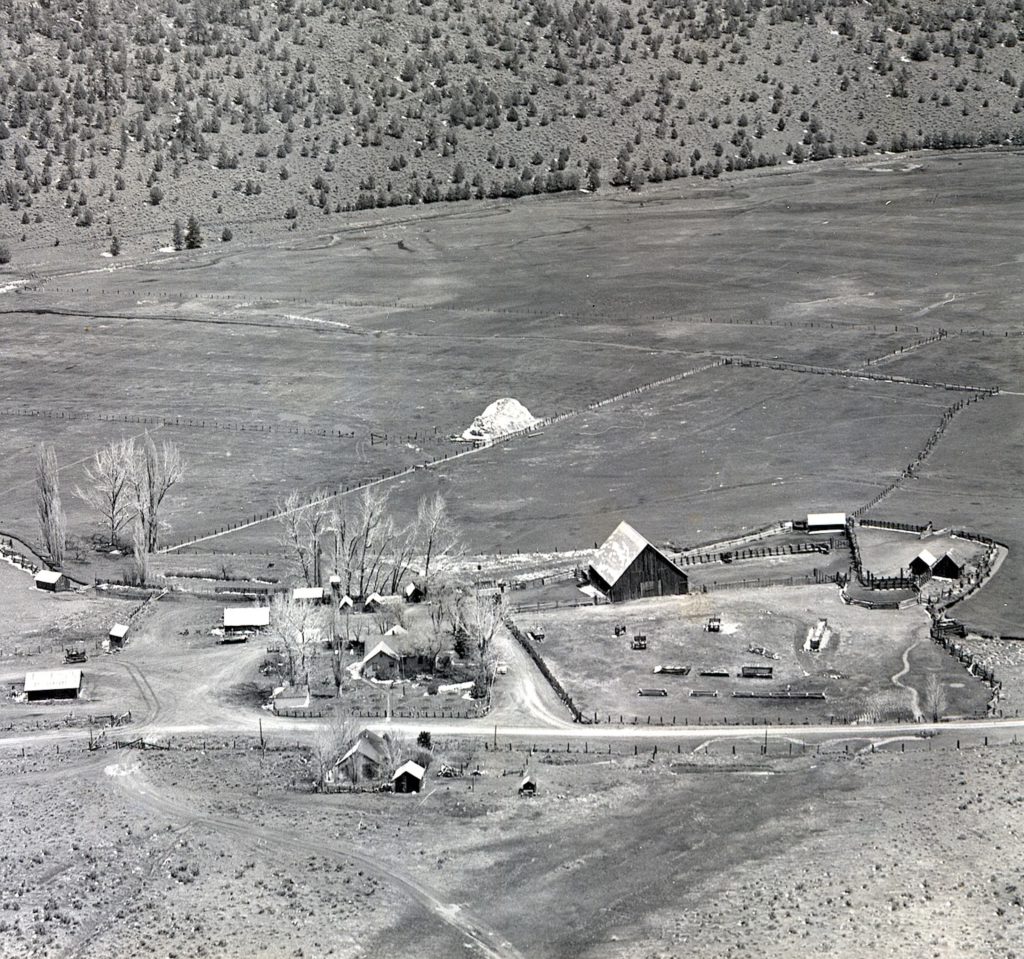
Tanner Ranch, 1934.
Tanner Ranch, 1934.

After I scheduled this post into the calendar, I knew what my intention was. Then I moved onto other topics, before jotting it down.

That spurt of creative genius has not returned. Progress is being made on the Pioneer Brands. It was discussed during the St. Patrick’s Cemetery Tour. In the forthcoming months, I will post some drafts of those brands and some brands from way back when that never adorned the wall of the Pioneer.  Case example was the Red River Lumber Company’s brand.

Never miss a story, click here.

Susanville Country Club Preview

Stock Certificate issued to Wes Emerson

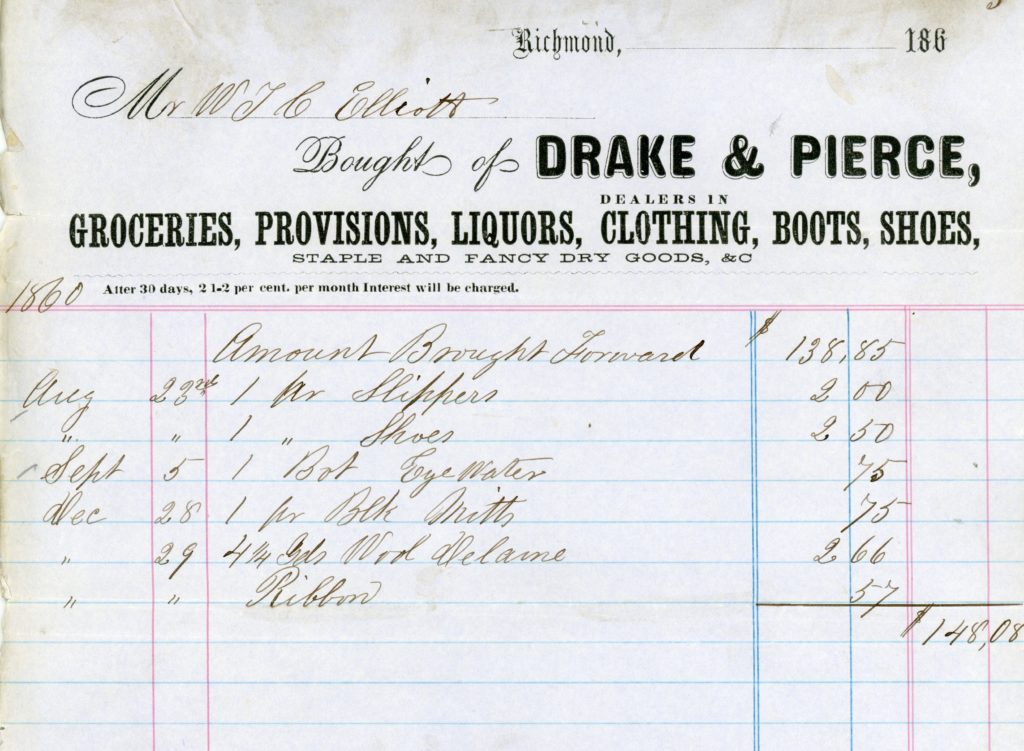
Thought I would pass along the above stock certificate. During the early 1900s numerous local businesses and organizations incorporated. By doing so it allowed them to sale stock, as an avenue to raise funds.

Hopefully, in about a month’s time I will have the history of the Susanville Country Club ready to be put on line.

Lassen County Reclamation Projects

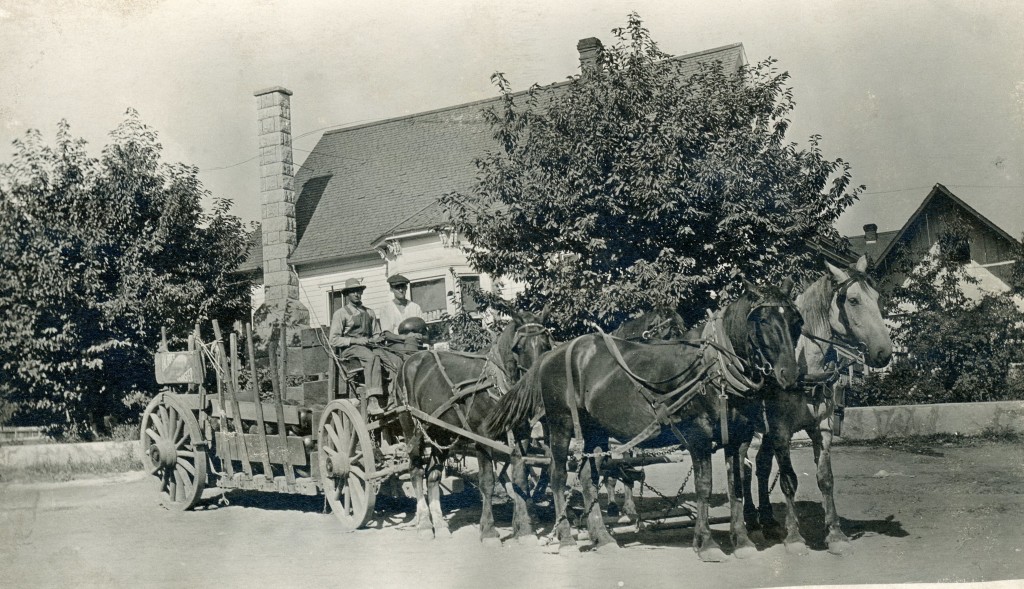
Caudle Brothers well drilling outfit, eastern Honey Lake Valley, 1910.

By the early 1880s, the hot topic that would remain for several decades was reclamation, that was eventually replaced by the lumber industry. When the NCO Railroad inched its way into the Honey Lake Valley only added momentum for the formation of a myriad of schemes. We will explore a number of these, some were successful and some were not.

On a smaller scale, improvements with well-drilling was starting revolutionize irrigation in the Honey Lake Valley. In 1888, Lassen County allocated a $1,000 for the promotion and advertisement of the benefits of well drilling to entice people to settle there. Thus, the Lassen County Chamber of Commerce was formed.

Never miss a story, click here.

Exploring Lassen County's Past