A view from the southern end of Grasshopper Valley, August 4, 2016.
Once you pass Eagle Lake north on Highway 139, the next broad expanse you see to your right is Grasshopper Valley. When intrepid explorer J. Goldsborough Bruff in 1850 noted it was lake, who later in 1876 stated it had to be what was later Eagle Lake. In wet years, the lower portion of the valley is flooded, and back in Bruff’s day especially so, since there were no dams at Said Valley or Slate Creek, so even a greater flow of water in the basin. Continue reading Grasshopper Valley→
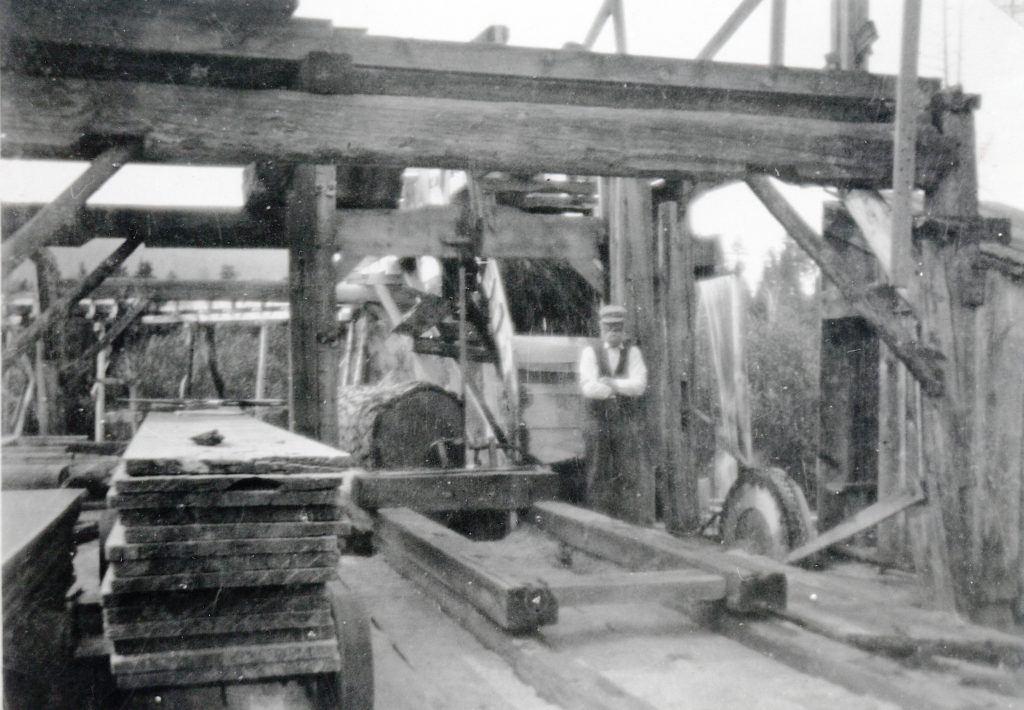
In 1872, Adam Jakobs saw the potential for the lumber market and built a sawmill along Willow Creek, two miles upstream from the Neuhaus Ranch. In 1878, Jakobs sold the mill to P.D. Hurlbut and Jakobs returned to his ranching activities in Willow Creek. Continue reading Hurlbut Sawmill→
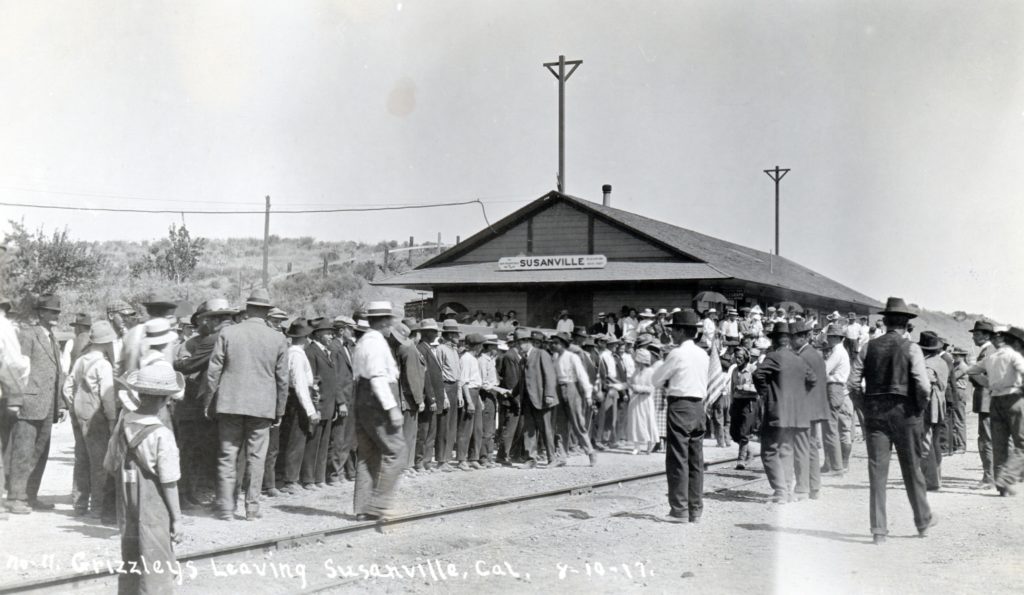
The send off at the Susanville Depot of the first volunteers from Lassen, Modoc and Plumas Counties, August 10, 1917.. Courtesy of Lola L. Tanner
This being Veteran’s Day it is only fitting to acknowledge the fallen soldiers of Lassen County from World War I. Initially, a monument was to be placed at Inspiration Point, but that never materialized. In 1922, the highway entrance into Susanville’s west end was constructed, saw the placement of a bronze plaque with the names of Lassen County men who perished in World War I. In 1966, the highway was realigned and the plaque removed. Continue reading A Remembrance→
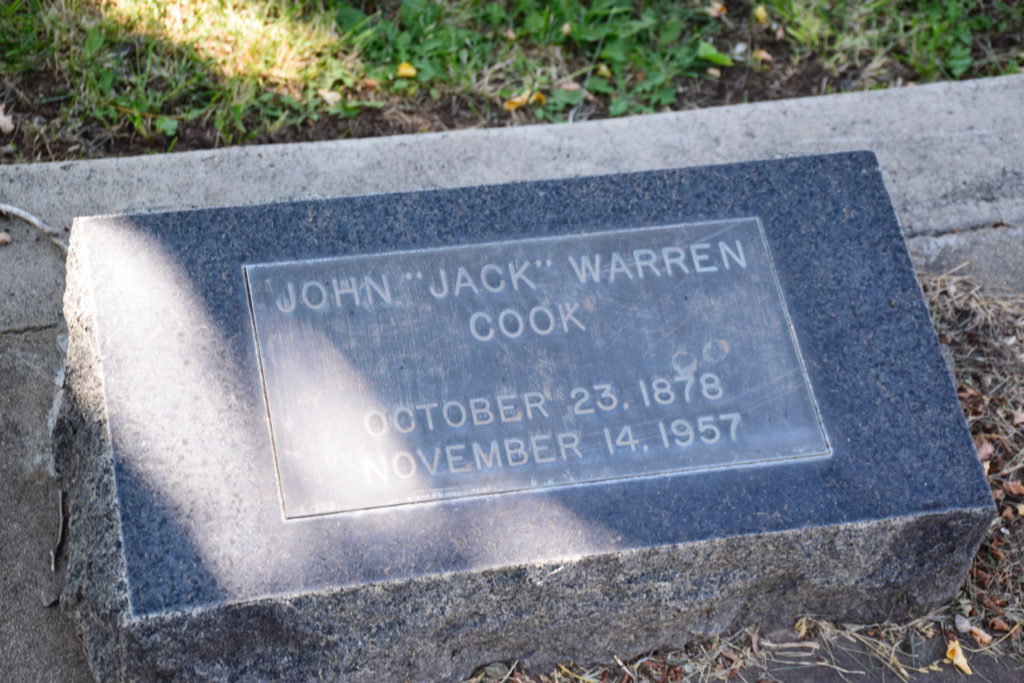
Jack Cook’s grave, Lassen Cemetery, July 29, 2016. Photograph by Annie Henriques Blank
While many of the city street names have links to families from the pioneer era–Alexander, Brashear, Lassen, etc.–that is not the case with Cook Street in the Inspiration Point neighborhood. Continue reading Susanville – Cook Street→
It is indeed election day, and a sigh of relief that we will not have endure any more campaign rhetoric, etc. I am keeping today’s post short and brief, just as a friendly reminder to encourage everyone to vote today. In 1976, I worked elections for the Lassen County Clerk for the first time and have done so for many years since, even working this year’s primary. However, for this election I will be absent as an official, since my name is on the ballot for Lassen College Trustee Area #1.
More importantly, the average citizen is unaware of just how much work is involved to hold the election. With that in mind, please, please go vote, it will bring smiles to faces of all the precinct workers, who we should be so grateful for all the work and the long hours they do on this special day.
Spread the word, and encourage a friend to subscribe.
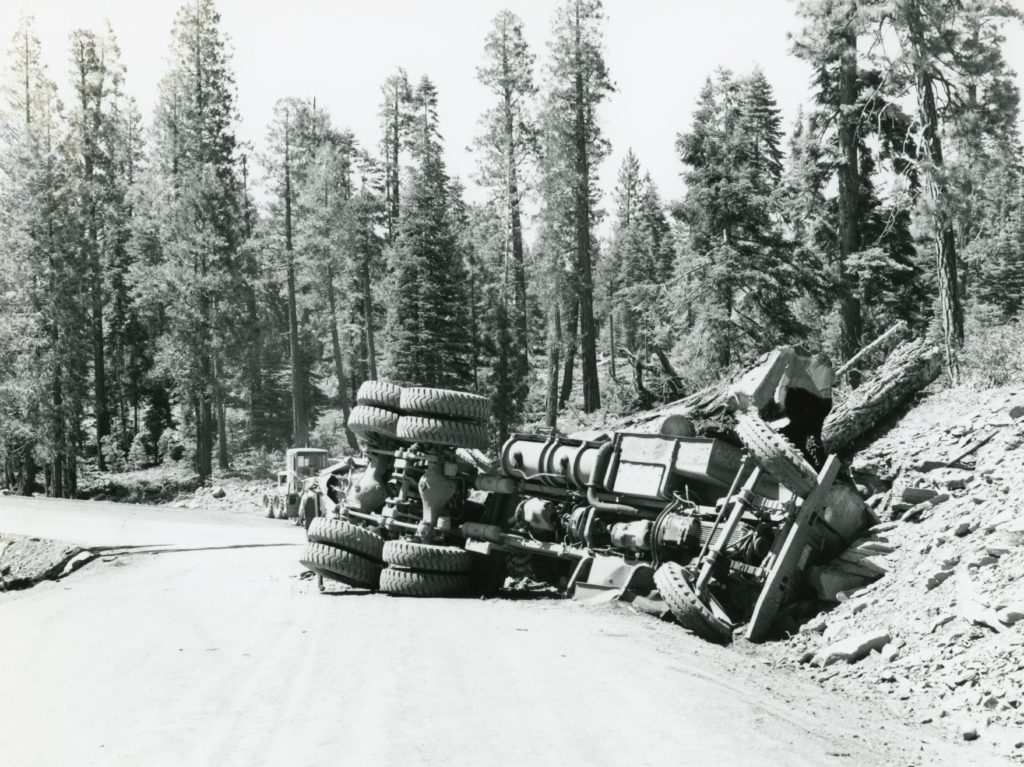
I think it is safe to say, my day turned out much better than the driver of this Paul Bunyan Logging Truck.
It was bound to happen sooner or later, that I would make a mistake in scheduling articles. On occasions I do reschedule articles, usually once I completed a Your Topic request, or because something timely occurs, like when the old barn on the east edge of Susanville burned down in 2015.
The Westwood Grammer and High Schools. Courtesy of Hank Martinez
For nearly twenty years, the Red River Lumber Company’s town of Westwood operated differently than other communities. Even the public Westwood School District was an unusual creature in the beginning. Under normal circumstances a school district would issue bonds to finance school construction. Not so in Westwood. Red River built the schools, and leased them to the Lassen County Superintendent of Schools at a nominal cost. Continue reading Westwood’s First High School→
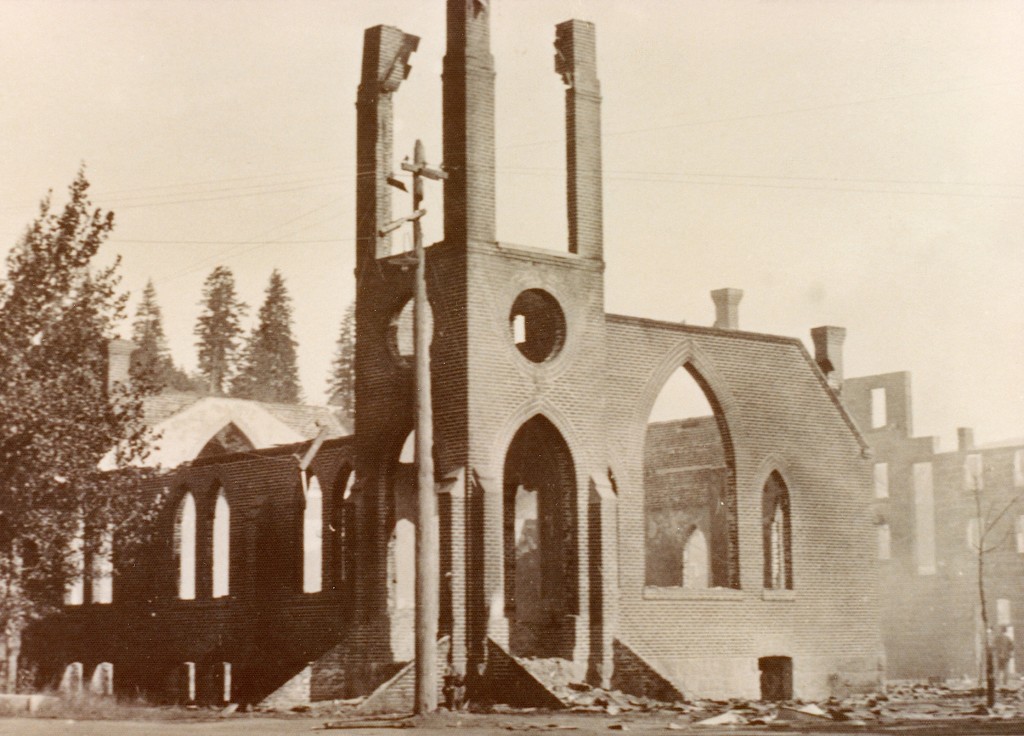
One of the more disastrous fires in Susanville occurred in August 1915, when a large portion of the block containing the Emerson Hotel, the Hyer House Hotel and the Methodist Church were destroyed. The losses were heavy, none of the buildings were fully covered by insurance.
Members of the Methodist Church were determined to rebuild their church that was constructed in 1901. The skeletal walls were deemed fit for re-use. While insurance covered a large percentage of costs to rebuild, more funds were needed. It was decided to hold a Kirmess Festival. Those not familiar with the term, is of Dutch origins. While it has several meanings one is that it involves an outdoor fair/festival for charitable causes, usually affiliated with a church.
In early March 1916, members of the church announced a four day Kirmess festival to raise funds to rebuild their church. The kirmess was scheduled for March 28-31. On the first day, it took on air of Mardi Gras with a parade that included the majority of the community. Entertainment was held every night at the Orpheum Theater. On Thursday night Guy P. Johnson won the election and was crowned Kirmess King. A good time was had by all and nearly $1,000 was raised for the Methodist Church.
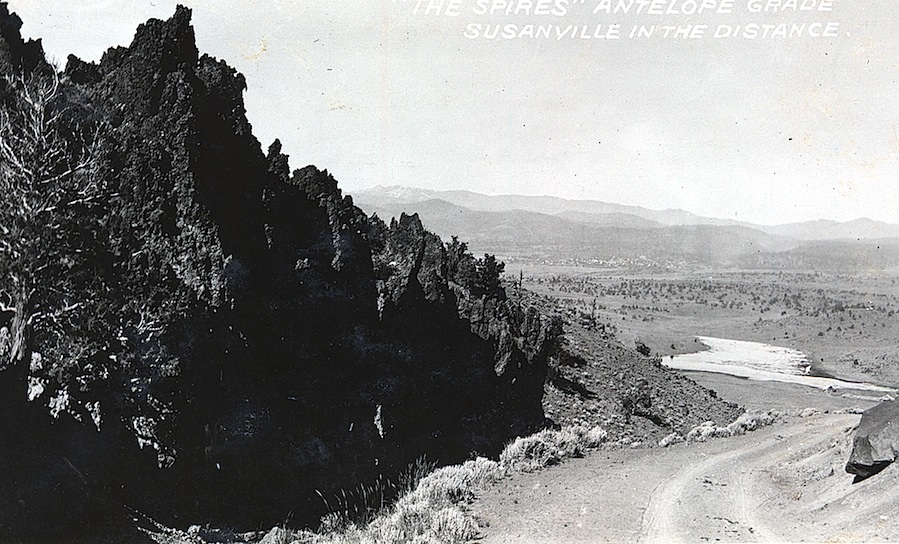
The Spires, Antelope Grade. In 1947 when Highway 139 was constructed it bypassed this feature.
While the bulk of mining was south of Susanville, along Diamond Mountain, there was a bit of mining activity to the town’s north. Some of you may recall the piece about Grabel’s hole that appeared back in September.
For some odd reason, by the 1890s considerable prospecting was done on Antelope Mountain. If one looks closely on Highway 139, one can see small mine tailing piles. At a place call “the spires” there is a small spring. It was a popular rest stop back in the horse and buggy days, to stop and give the horses a rest. Charley Carpenter thought it was the perfect place to call home, and built a small cabin there, while he was search of the next mother lode. He had a nearby counterpart, Sandy Crawford, better known as Round Valley Red, who staked out claims in nearby Round Valley. By the mid-1930s, the two old bachelors, were getting along in age and finally abandoned mining in the area.
Spread the word, and encourage a friend to subscribe.