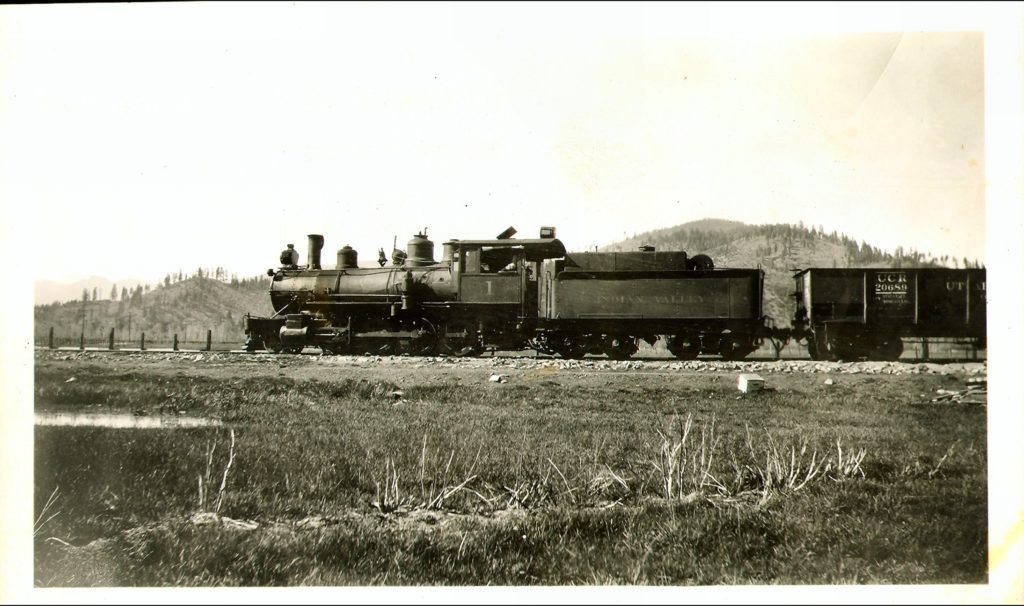
Indian Valley Railroad

Indian Valley Railroad. Courtesy of the Plumas County Museum

One of the biggest issues T.B. Walker had against the Red River Lumber Company’s location at Westwood, was it lacked a railroad link directly to California.  For a time there was a glimmer hope with the Indian Valley Railroad.

On June 30, 1916, the Indian Valley Railroad (IVR) was incorporated to build a line from Paxton on the Western Pacific Railroad to the Engel Copper Mine near Taylorsville–a distance of 21 miles. Sixteen months later the rail line was completed. It should be noted, that it was originally proposed as a narrow gauge line, but Willis Walker of the Red River Lumber Company objected. After all, Walker was keen enough to see the possibilities for a link to Westwood, and with that would force the Southern Pacific Railroad to be more competitive in their rates.

Early on the IVR had its sights on Westwood. In 1918 a survey to extend the line to Westwood was conducted, There was speculation that the IVR would extend its line to Westwood, and in 1918 the IVR did survey a line to that place. With Red River’s main branch railroad logging extending along the east shore of Lake Almanor to Canyon Dam, there was not much territory separating the two lines. In 1927 a request was sent to the Interstate Commerce Commission to put in this proposed line to be known as the Northern California Railroad. It was rejected. However, in the works was the Western Pacific and Great Northern Railroads to connect their respective lines with a new railroad from Keddie, Plumas County to Klamath Falls, Oregon. This was approved in 1930, and Red River Lumber Company would finally have a second railroad connection it had always sought.
Never miss a story, click here to subscribe.

Isaac Roop Highway

The Association's letterhead.
The Association’s letterhead.

In essence this is one of those instances where history repeats itself. During the 1850s Congress passed several bills for a transcontinental railroad and wagon road to connect California to the Union. Numerous routes were surveyed, though most ended at California’s eastern border, with the assumption the State of California would decide the best route. The Honey Lake-Fredonyer-Deer Creek route was deemed one the best, since there was no high elevation summits to cross, thereby reducing  the problems associated with winter, i.e., Donner. In 1859, with the discovery of the Comstock Lode in Nevada was a game changer. Politics and the influence of money the Donner Pass route was selected, a costly one at that.

Fast forward a hundred years later. In June 1956 Congress approved the Federal Highway Act, also known as President Eisenhower’s Interstate and Defense Highways. In 1957, Susanville resident F.W. Loosley saw an opportunity and proposed the Isaac Roop Low Pass All Weather Highway, as a viable alternative to Donner Pass. One of the most obvious was it would reduce construction costs and even more importantly annual maintenance, especially where snow removal was a concern. The proposed Roop Highway would go from Winnemucca, Nevada to Viewland, Lassen County, California via Gerlach. There it would merge initially with U.S. Highway 395 to Johnstonville and then connect with State Highway 36 over Fredonyer to Red Bluff. (This should not be confused with the Winnemucca to the Sea Highway.) It received widespread support in California and Nevada. The wheels of commerce, those along the then Highway 40 put pressure because the proposed interstate would bypass them, and they won.

Never miss a story, click here to subscribe.

A Gift

1940
1940

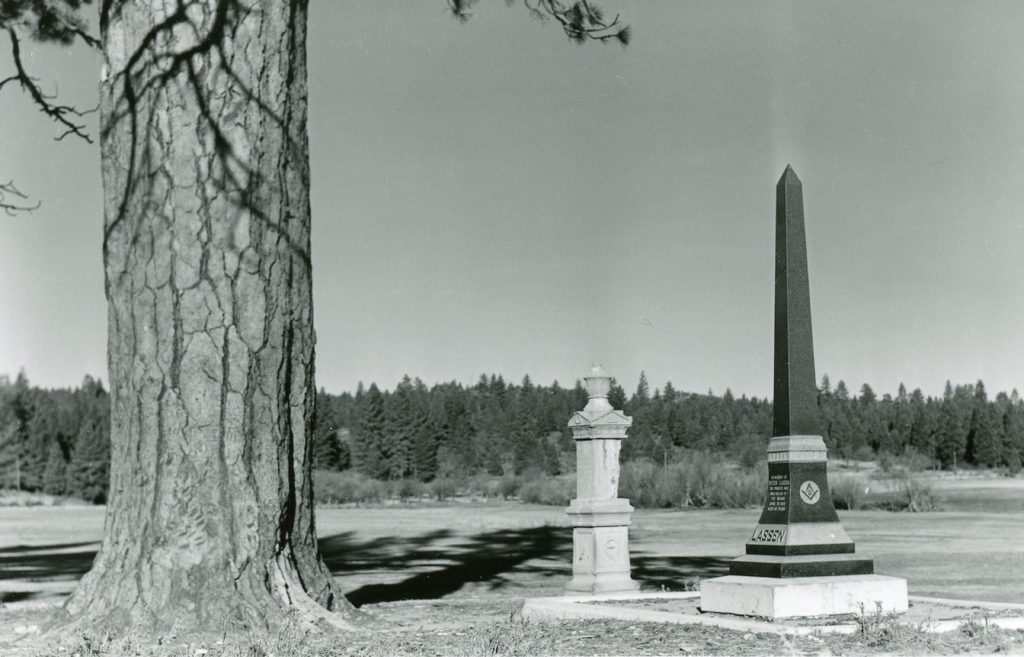
In April 1952, Hannah Hulsman gave a unique gift to the community, though it would several months later when it became publicly known.  Without further adieu, the following is the editorial from the Lassen Advocate of July 17, 1952:  Lassen’s Grave.  “A long-time hope of many people of the area has been achieved with assurance of preservation of Peter Lassen’s grave for posterity.

“The entire community owes Miss Hannah Hulsman a genuine vote of thanks for her generosity on donating this historic spot to the Native Daughters of the Golden West. It is a public spirited move for which she will long be remembered.

“The Native Daughters are an appropriate organization to assume charge of the beautiful and history laden spot. It is a scene of beauty–the old and new monuments beneath the thriving pines, green meadows before and dark mountain range behind. Although the giant ponderosa pine on the property is dying and apparently must come down, the smaller pines around will still have a beautiful setting.

“The Native Daughters no doubt will have community cooperation if they need it, in helping make this grave site into an attractive picnic area. The Masons have a particular affection for the memory of Peter Lassen, because he started the first Masonic lodge in California. The monuments were erected by them. And the entire community is interested in such a memorable service project.

“Again many thanks to Miss Hulsman and the Native Daughters for making history continue by preserving one of its major California shrines.”

Never miss a story, click here to subscribe.

Susanville, 1916

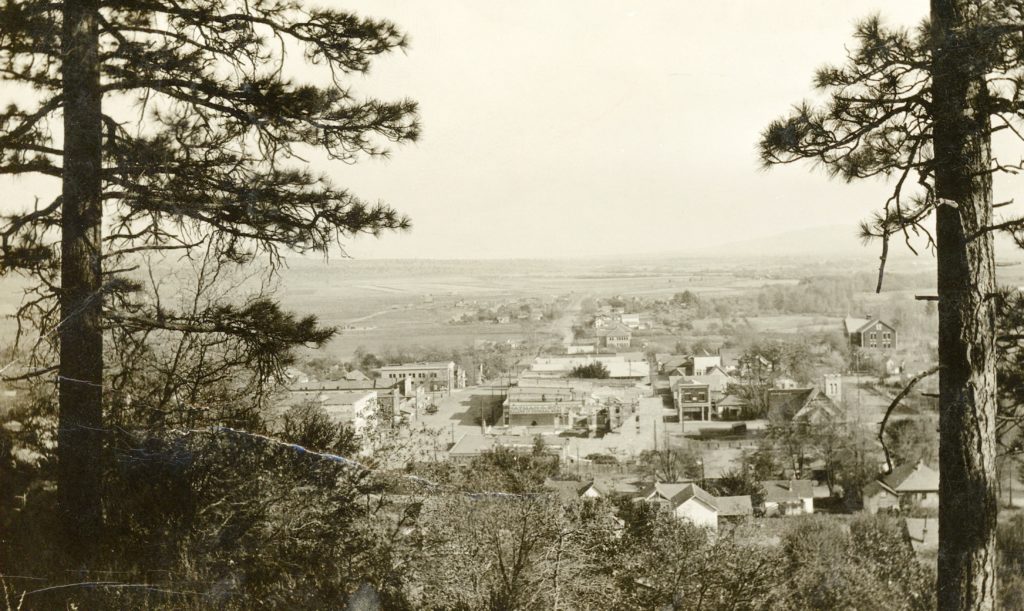
Susanville view, 1916. Courtesy of Hazel Moller

In January the region was hit a big snowstorm and cold temperatures.  Over four feet of snow fell in Susanville, and to get an idea how cold a storm system it was, Sacramento had three inches of snow. The Susanville residents took the storm in stride, as they had been used to such storms every year since 1907. What they would not be prepared for, was this was the last major snowstorm for the next twenty-one years.

When spring arrived, the big news was Leon Bly announced to the world his Eagle Lake project. He assured everyone this time it would be different than the previous twenty attempts. In addition, to Bly the other big news was the first work on a state highway that would connect Red Bluff and Susanville, though it take until 1929 before it was completed.

The Fourth of July was a big celebration that the town had not had for a couple of years. In 1914 and 1915, Westwood was the host to celebrate the nation’s birthday. This time it was Susanville to be the host, and a good time was had by all. By this time a good nature rivalry between the two communities had developed and in the wild, wacky baseball game, Westwood beat Susanville 10-4.

In the fall, Jules Alexander launched a campaign for the preservation of Peter Lassen’s grave, which a campaign fund soon began to erect a new monument. It would take nearly year, but in the fall of 1917, a new monument was installed and dedicated in conjunction with the dedication of the new Lassen County Courthouse.

Just as the year had begun, it ended in much the same way. On Christmas Day Susanville was coated with four inches of snow.

Never miss a story, click here to subscribe.


Cows with Guns

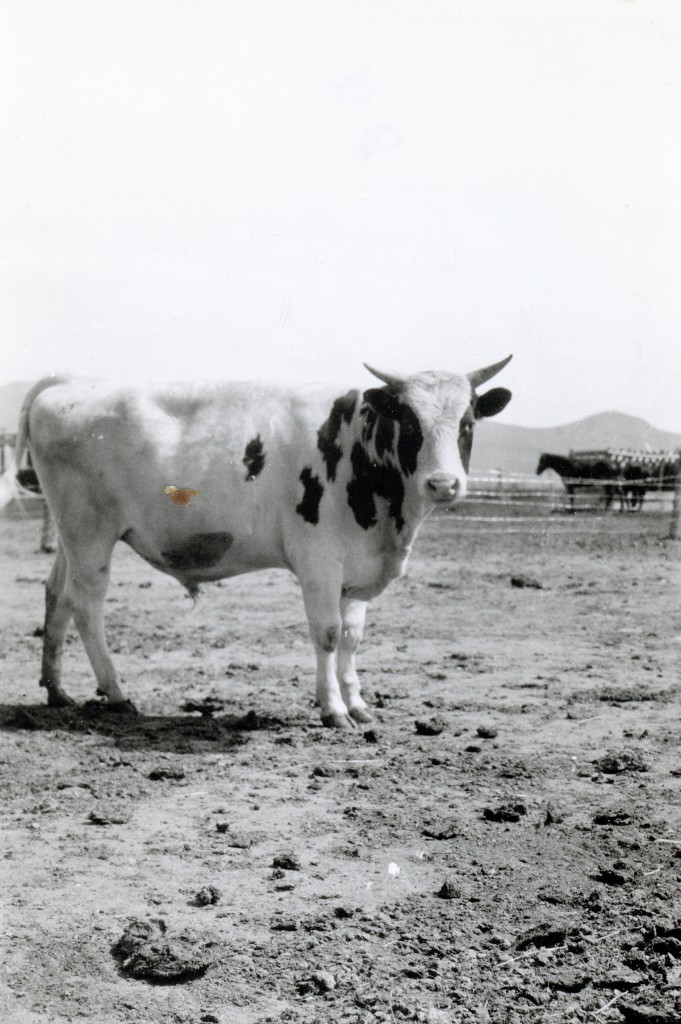
Tanner Ranch, 1934.
Tanner Ranch, 1934.

Some people know I have a special affinity for New Zealand. Of course there are a variety of Lassen connections with the land of the kiwis. One of the best photographers of the Lassen region of the 1870s, Herman Brince died in Auckland in 1881. Then there is case of Dr. J.G. Leonard, hardly a household name here or there. It should be noted that in 1884 Leonard had constructed one of Susanville’s most iconic buildings, known today as the Elk’s Lodge. Leonard’s descendants reside in New Zealand. The Asher family were among the prominent Jewish families of Susanville, though they later left that town to help establish Hollywood and Asher descendants, too, reside in New Zealand. In addition, even a Shinn descendant is a New Zealand resident.

So what does this bizarre topic with Cows with Guns have to do with New Zealand. Not only do I read the New Zealand Herald, but I listen to a New Zealand radio station. Recently, that station played a medley by Dana Lyons  entitled Cows with Guns. It is on youtube and click here to listen.  The lyrics with the puns are great, and I am sure Lassen County’s ranching community will enjoy. With that in mind, enjoy your Labor Day weekend.

Never miss a story, click here to subscribe.

The Cattleman

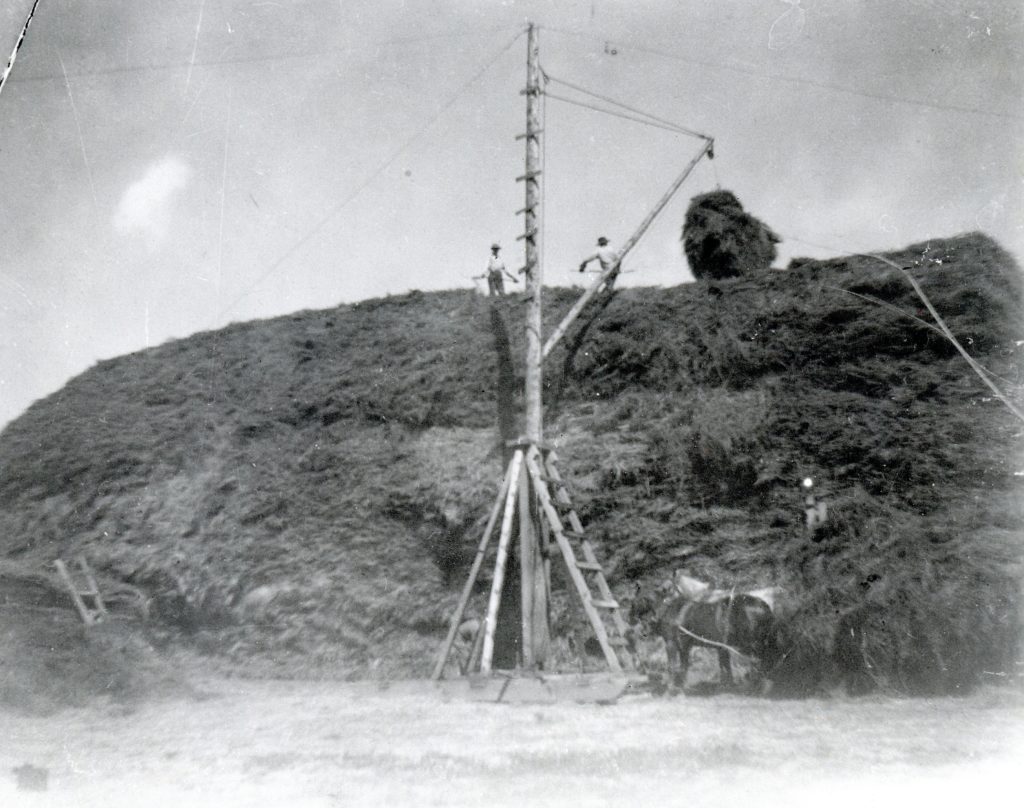
The film includes a scene of the hay derrick (above) in action. This photograph is the hay stacking at the Titherington Ranch, near Standish, 1908. Courtesy of Betty Gorbet

Lately, I have been working on my technical skills, which is always an interesting experience for me. Sometimes I succeed, and well on  other occasions I have new challenges.  My goal is put online a historic video, though viewing would only be for paid subscribers.  So if you are experiencing some technical difficulties, the culprit is probably me and working on this feature.

The particular film that I refer to is a short feature of the entire operations of the Vic Christensen ranch near Likely. It was done in 1939 as part of Encyclopedia Britannica’s educational films of the era.  Unlike the 1925 Fruit Growers Supply Company’s film, this one is narrated. Stay tuned.

Never miss a story, click here to subscribe.

Lassen County at 150

LC Cover022

In February, I inaugurated  a book-of-the-month, that featured Sagebrush Reflections. After all proceeds from book sales not only help support operations, but help finance future publications, in this case the stories behind the brands of the Pioneer.

April 1, 2014 marked Lassen County’s 150th anniversary. My sesquicentennial gift to the county is a quirky, entertaining look of the past 150 years. As Jane Baxton Little of the Sacramento Bee observed: “Purdy, Lassen’s self-appointed historian, juxtaposes the rural area’s colorful history with its not-so-distant past. He pairs a 1910 sighting of the Honey Lake serpent with the Army’s efforts in 2003 to get rid of the lake and its new monster, reportedly oodles of explosive debris from decades of Army operations. Honey Lake eventually was sold to the state for $8.6 million, a figure Purdy reports was redacted in public documents.

“His sardonic account of the cycles of history does not flatter the democratic process. In 1915 voters approved a $125,000 bond to build a new county courthouse. Its $39 million replacement was completed in 2012 without voter approval.”

For more information about the book and to order click here.

September Preview

The Round Barn, Little Valley, Lassen County, prior to it being moved to Fall River Mills. Courtesy of Tom Glunt

As usual, a little bit of everything!

Lassen County at 150 9/1/16
The Cattleman 9/2/16
Cows with Guns 9/3/16
Susanville, 1916 9/4/16
A Gift 9/5/16
Isaac Roop Highway 9/6/16
Indian Valley Railroad 9/7/16
Lucerne School 9/8/16
Westwood American Legion 9/9/16
Octoberfest Cemetery Tour 9/10/16
Lassen Lumber & Box Company 9/11/16
Desmond Meadows 9/12/16
The Harvest Festival 9/13/16
Early Postal Problems 9/14/16
Plumas County – Longville 9/15/16
Lassen College Gunsmithing 9/16/16
Susanville – Union Street 9/17/16
Eagle Lake – Tunnel Bay 9/18/16
Brand Project Update 9/19/16
Pine Tree Newspaper 9/20/16
Boyd – Lassen County 9/21/16
Susanville Airport 9/22/16
Janesville Then & Now 9/23/16
1887 Brand Directory 9/24/16
Self Guided Tours 9/25/16
Lassen County – the other McCoy Flat 9/26/16
Grabel’s Hole 9/27/16
Introducing Mr. Paul Bunyan 9/28/16
Lonkey Ranch 9/29/16
October Preview 9/30/16

Never miss a story, click here to subscribe, for as little as five dollars a month.

Eagle Lake’s Gallatin Peak

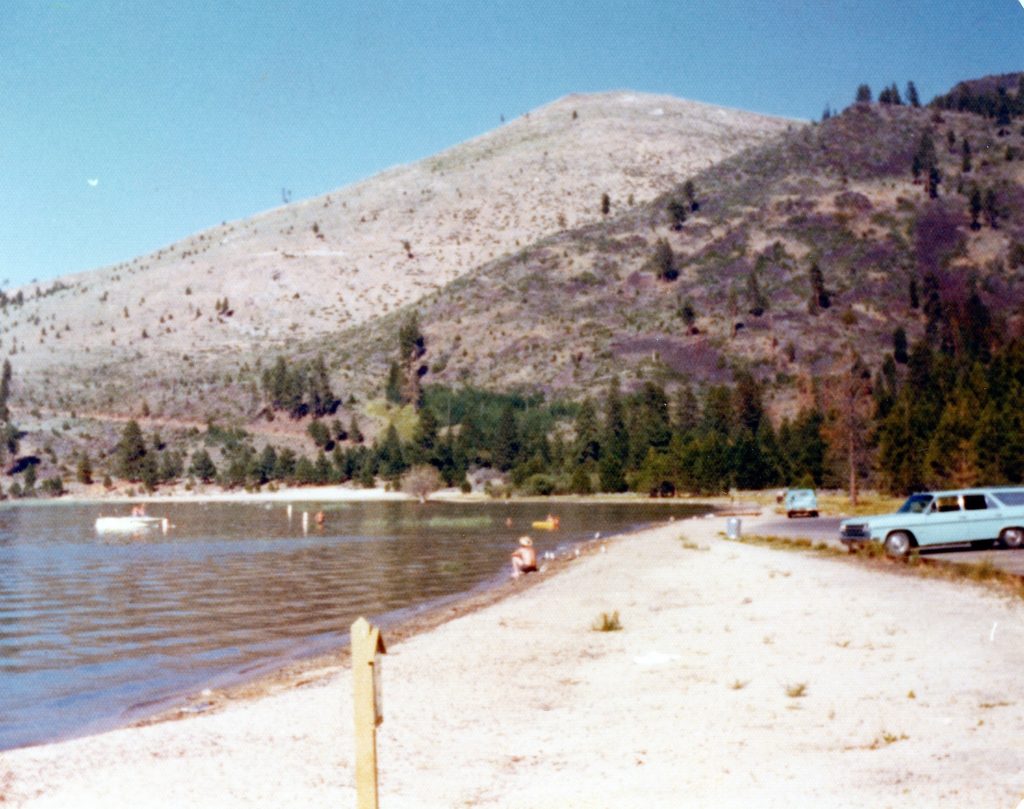
Gallatin Beach and Peak, July 22, 1974.

Gallatin Peak, with an elevation just shy of 7,000 feet is one of the most prominent features at the south end of Eagle Lake. It is interesting that it is of granite composition, while the surrounding mountains are basalt.  Actually, the peak’s original name was Granite, and it was not until the early 1900s that it began to be referred to as Gallatin, after the largest property owner at Eagle Lake.

For those who attended the Inspiration Point Tour, or received the narrative thereof, a geology lesson was given.  Four major land masses converge in the Susanville region–Cascade, Great Basin, Modoc Plateau and the Sierra Nevada.  This influence at the southeast corner of Eagle Lake is evident.

Because of granite and quartz composition of Gallatin Peak and extending over to nearby Round Valley, caught the interest of gold seekers.  From the 1870s until 1942, when President Roosevelt by executive order halted gold mining during World War II, there was considerable gold mining in this isolated pocket.

Never miss a story, click here to subscribe.

Fruit Growers – Camp 11

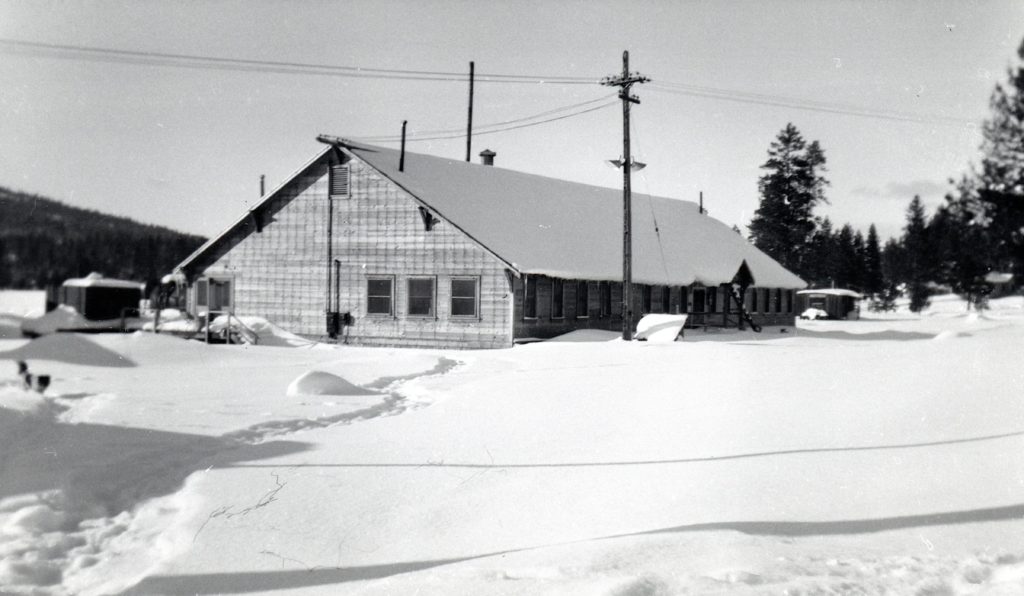
Camp 10, Cookhouse
Camp 10, Cookhouse, December 15, 1951. Courtesy of the Fruit Growers Supply Company.

In 1929, Fruit Growers Supply Company consolidated all of its logging camps into one larger camp, known as Camp 10. It was located thirty-eight miles northwest of Susanville near the banks of Pine Creek. Ten years later, Fruit Growers considered leaving Camp 10 to establish Camp 11 on the east end of Champs Flat, about ten miles northeast. In the spring of 1940 that plan was put on hold.

In the early 1940s, Fruit Growers was awaiting a very important government decision on the Wage and Hour Law–whether or not an employee would be paid for travel time to the actual work site. Travel time between Camp 10 and the logging site was 1 to 1 1/2 hours each day. If the government mandated paid travel time, Camp 11 would be established, but not necessarily at Champs Flat. It would not be until 1948 when the government ruled that employees were not entitled to paid travel time, and the need for a new logging camp disappeared.

Never miss a story, click here to subscribe.

Exploring Lassen County's Past