Wild Horses

Wild Gatheres
In 1978, the Sierra Club published The Wild Horse Gatherers. It is an illustrated story of BLM’s wild horse round-up locally.

Note: Margie’s Book Nook has received a couple copies of The Wild Horse Gatherers. First come, first serve. There are some other out of print books that the store has recently received.

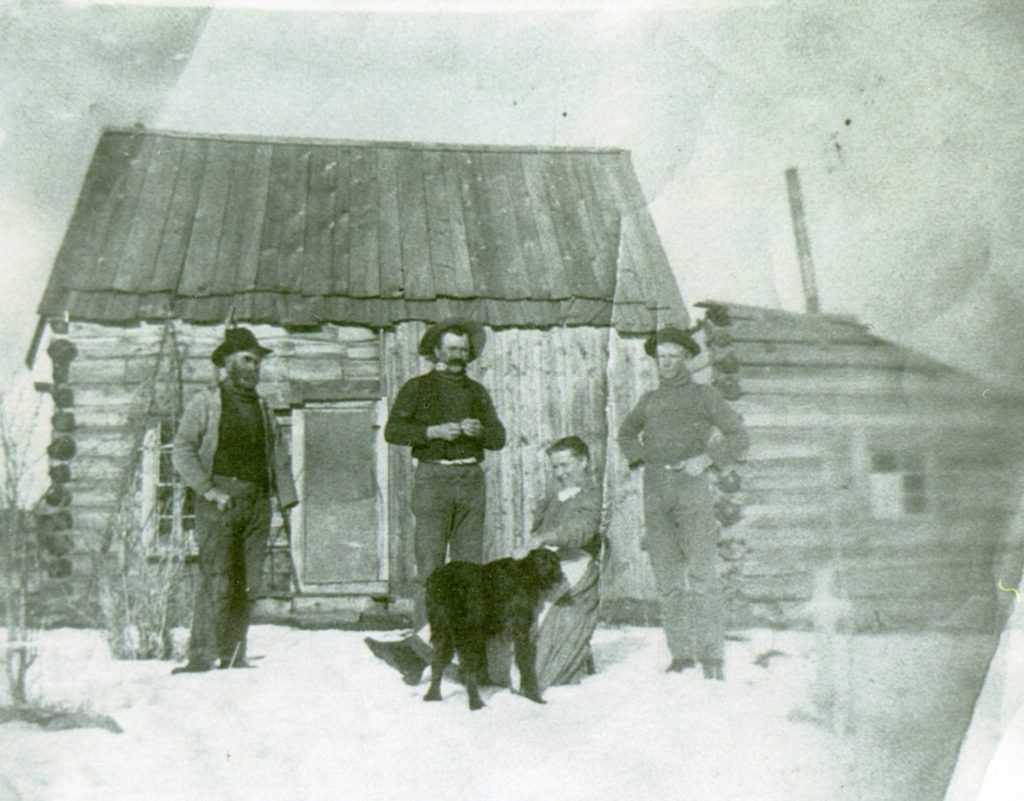
A hundred years ago, the wild horse population was kept under control by out of work wranglers. During the winter months, it was not unusual for ranches to let go extra help, especially single men. A number of these men, would take a 160 acre desert homestead to make a home, especially properties with unclaimed springs. To make some extra money, they would catch wild horses and break them. By spring they would sell the horses, and pocket the money. Continue reading Wild Horses
McKissick Cattle Company

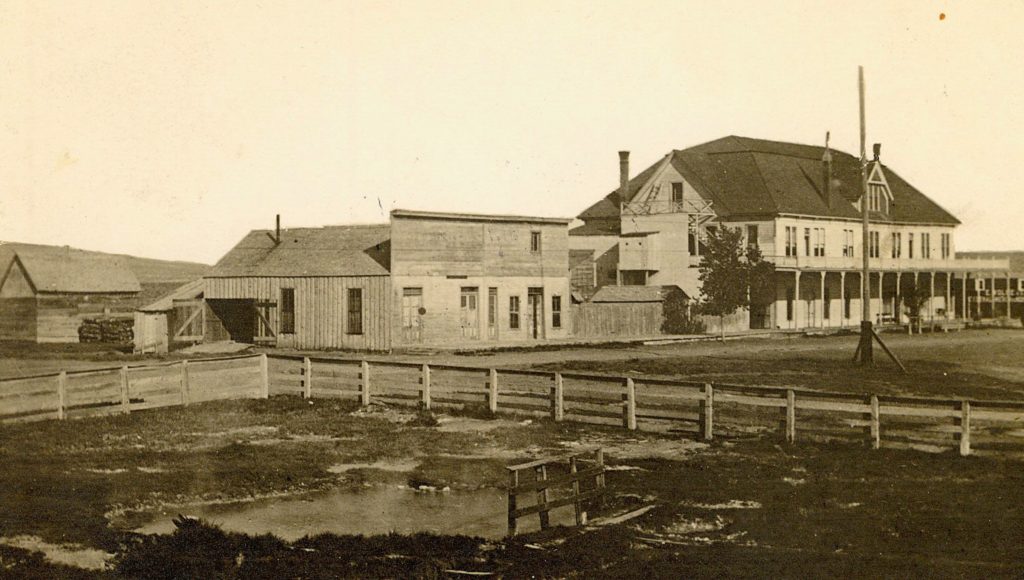
On April 3, 1916, the McKissick Cattle Company purchased the holdings of George Callahan at Amedee, which included the hotel, hot springs and several hundred acres of land. Courtesy of Marie H. Gould.

Long Valley pioneer, Jacob McKissick created a large ranching empire in Lassen and Washoe counties. It would all come crashing down with his death in 1900. McKissick was a life-long bachelor, so there was a lot of speculation as to who would receive what. The bulk of his estate he left to his nephew, Benjamin Howard McKissick, who had a spent the greater portion of his life working for his uncle. Of course, this did not set well with other family members, and lawsuits were filed to contest the will. In 1903, Benjamin Howard McKissick could no longer handle the stress of these conflicts and committed suicide in a most painful way, by swallowing carbolic acid.

This event, of course, created even more estate litigation. After nearly ten years, issues were resolved and Jacob McKissick’s vast holdings were sold to H.G. Humphrey, W.H. Moffat and J.L. Humphrey. On February 4, 1914, these men incorporated this enterprise as the McKissick Cattle Company. In the future, we will explore more about the McKissick operations, and this family was the catalyst for my research work in the region’s history.

Subscribe!

The Eagle Lake Cut

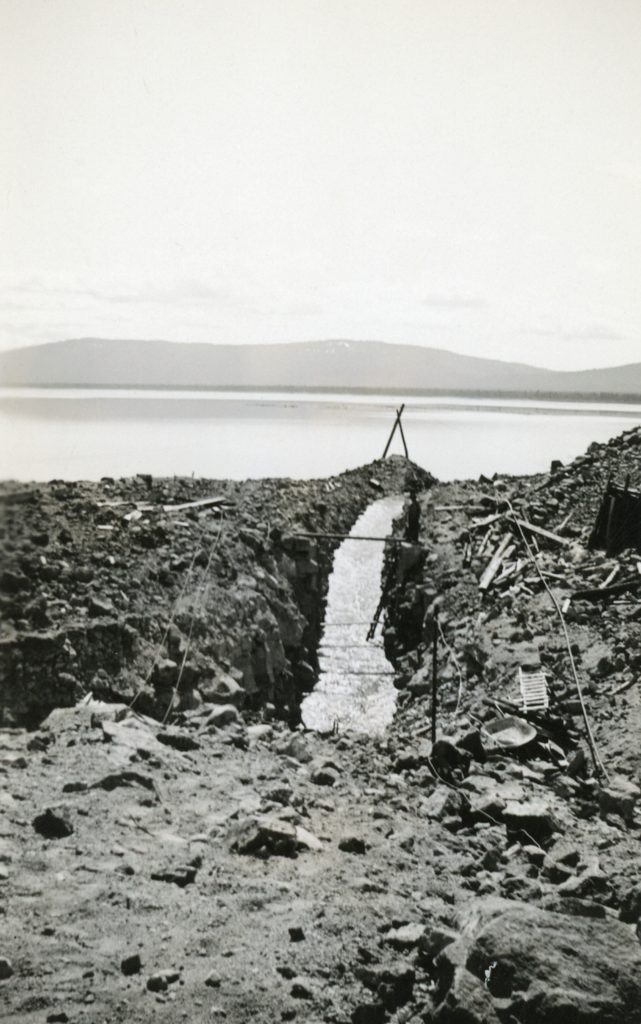
The first of many of deepening the intake to the Bly Tunnel.
The first of many of deepening the intake channel  to the Bly Tunnel.

One of the problems associated with Leon Bly’s tunnel at Eagle Lake concerned the construction. The original plans stated that the tunnel would tap the lake eight to nine feet below the surface. It was not until 1924, that it was revealed that the contractor, Grant Smith & Company had only had a cut three feet below the surface, and in that same year, one of the driest on record, that the water flow through the tunnel was inadequate.

In the fall of 1924, Edward Whaley was hired by the irrigation districts to make a cut five feet below the surface to correct the problem. Whaley, like Grant Smith, would not fulfill his contract either. The problem was blasting through solid rock. Each year the districts took it upon themselves to extend the channel further out into the lake. In 1932 the last work was done, but between the drought and water taken out, the lake had dropped by twenty-four feet.

Support by subscribing.

Golden Eagle Mine – Hayden Hill

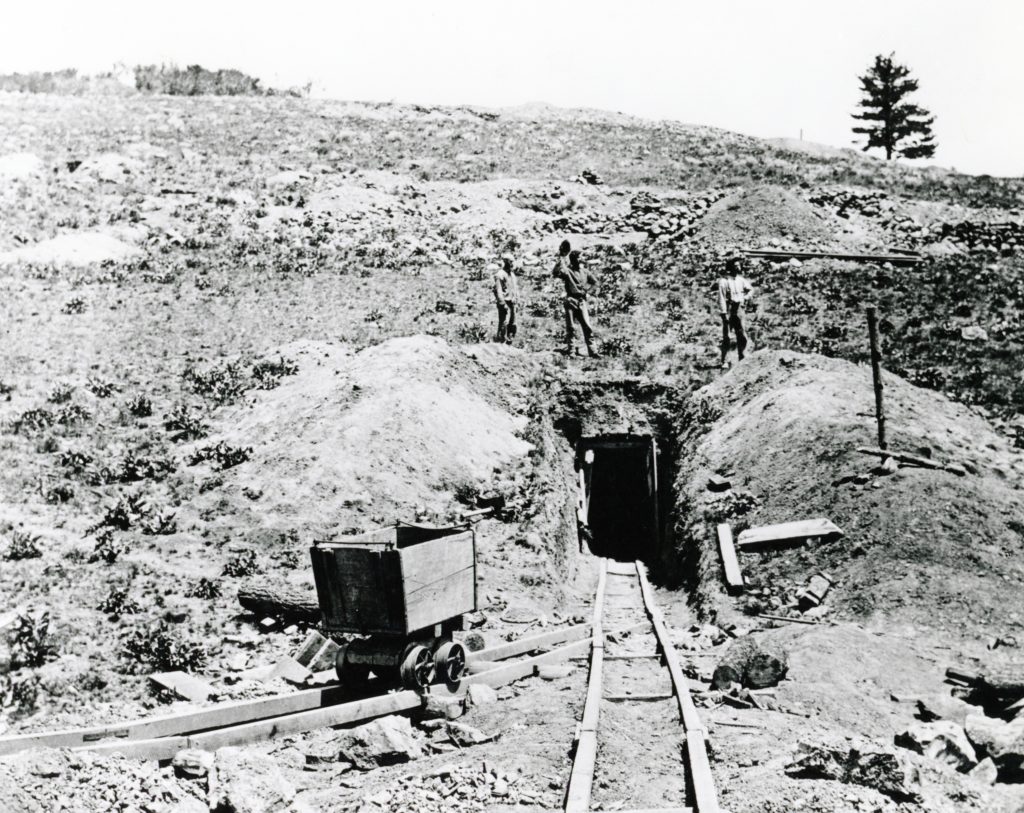
Golden Eagle Mine,Hayden Hill circa 1890. Courtesy of Donna Howell

This is an interesting photograph in more ways than one. Alexander Howell, was a photographer. For a brief time in the 1880s, his brother Oscar Howell, was a one-time renter of Papoose Meadows at Eagle Lake.

In 1979, I obtained a copy of the above print from Alexander Howell’s granddaughter. She thought it was tunnel at Eagle Lake. Well, it is  obvious that indeed it is a tunnel, just not the original tunnel at Eagle Lake. It is actually, the tunnel entrance of the Golden Eagle Mine at Hayden Hill, the largest and most productive mine there. In the 1990s, Lassen Gold Mining revived operations at Hayden Hill, which most of the place was obliterated. However, as a Lassen County Planning Commissioner, I made an inspection of Hayden Hill, as part of the reclamation process. What caught my attention, probably no one else is aware, amazingly the tunnel entrance is still intact.

There will be a feature article on Hayden Hill in the Northern California Traveler March/April issue.

Subscribe!

Westwood’s Opera House

Westwood’s Opera House. Courtesy of David Zoller

If there was ever a great misnomer for a building it was one of Red River Lumber Company’s first public buildings in Westwood was dubbed the Opera House. It should be noted that when Westwood was being built in 1912-14, it was remote. There were no highways, and in the winter the only access by train. It was designed this way on purpose to keep undesirable elements, including unions out of the community. However, Red River would need to provide entertainment venues for its employees, if they wanted to recruit and retain. Continue reading Westwood’s Opera House

A Little Love . . .

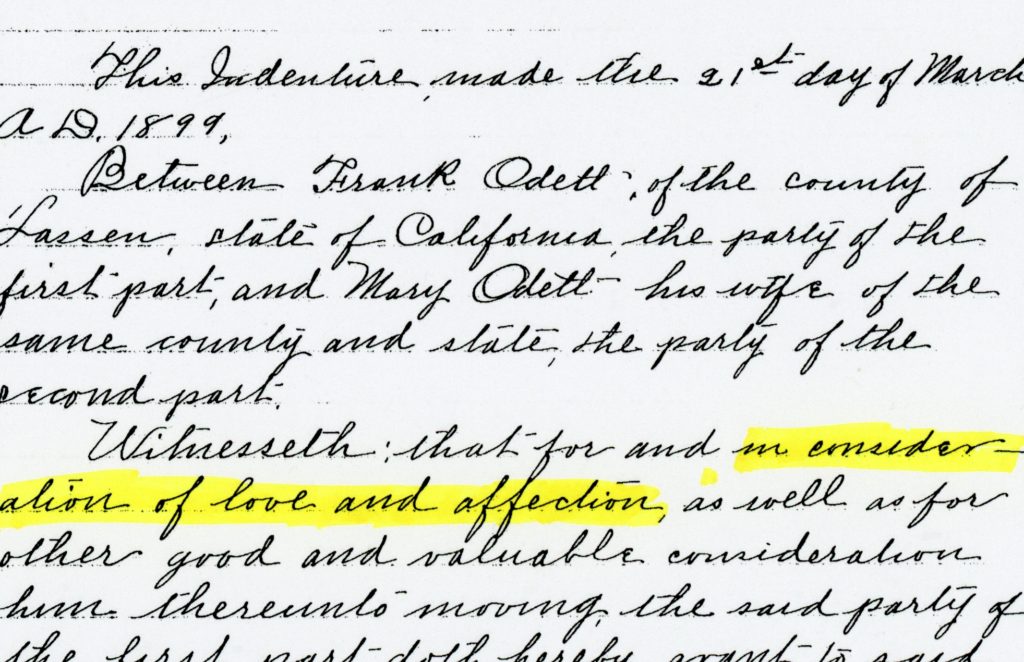
It being Valentine’s Day, I thought I share something a bit different. In the way back yonder, how real property was exchanged, was done in a variety of ways.  During the late 1890s and through the early 1900s, transactions between spouses carried the clause “in consideration of love and affection,” to deed real property, which in most instances was the title to the family residence, as seen in the illustration above.

There is the case, of property being sold for one-dollar. That  signals a red flag to indicate that a mortgage was recorded. For years, deeds and mortgages were recorded in separate volumes. It was not until the 1920s, that the transition began to consolidate all recordings into one volume, that we know today as Official Records.

Subscribe!

Lassen County – Conklin Sawmill

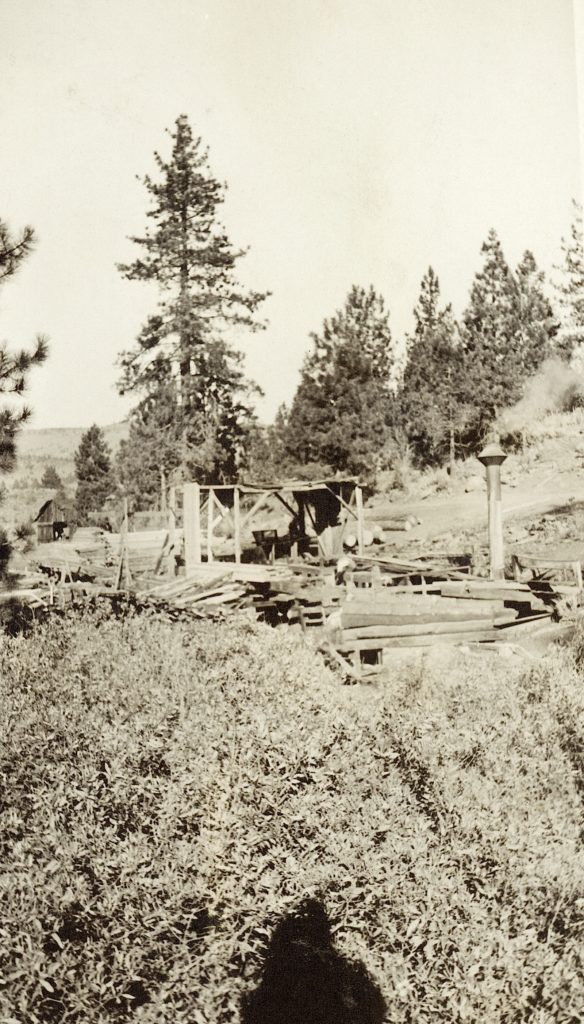
Conklin mill, circa 1918. Courtesy of Lola L. Tanner

In 1889, Albert J. Conklin purchased 338 acres consisting of the territory known as Jacks Valley, located between Susanville and Willow Creek Valley.  In1907, demand for lumber approached record levels. The rebuilding of the San Francisco Bay area from the devastating 1906 earthquake, along with a new mining bonanza in Nevada were contributing factors. In the spring of 1907, to meet the local lumber needs, Conklin built a sawmill. The mill had a maximum daily capacity of manufacturing 15,000 board feet. Conklin continued with this enterprise until 1920, when he sold to W.J. Johnson. In 1923, after only three years of operation, Johnson sold out to the Red River Lumber Company who closed the mill and removed the machinery.

Never miss a story, click here to subscribe.

Heath Reservoir – Lassen County

heath-resvr

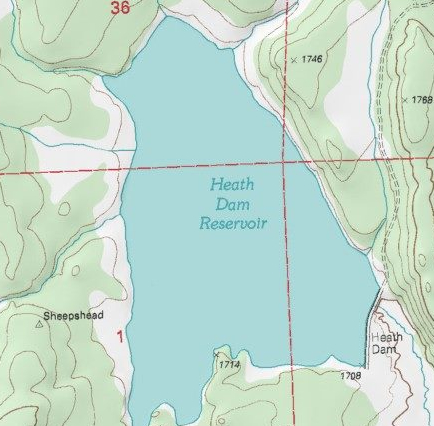
In the fall of 1905, Anton Gerig with a crew of eleven men, constructed the reservoir on Slate Creek, west of Grasshopper Valley and north of Eagle Lake. On April 12, 1934, Lena A. Soldate sold the Slate Creek Reservoir, along with considerable acreage in Grasshopper Valley, to George R. Heath for $26,000. On either May 7th or 8th 1938, spring floods caused the collapse of the dam at Slate Creek. California Department of Water Resources had repeatedly informed Heath that the Slate Creek Reservoir required a spillway, but their warning was ignored. During the aftermath of the dam failure, the State Engineer stated that had an adequate spillway been constructed at an estimated cost of $5,100 the dam would have withstood the spring flood. The dam was subsequently rebuilt and became known as Heath Reservoir.

Spread the word, encourage a friend to subscribe.

Lassen County Military History

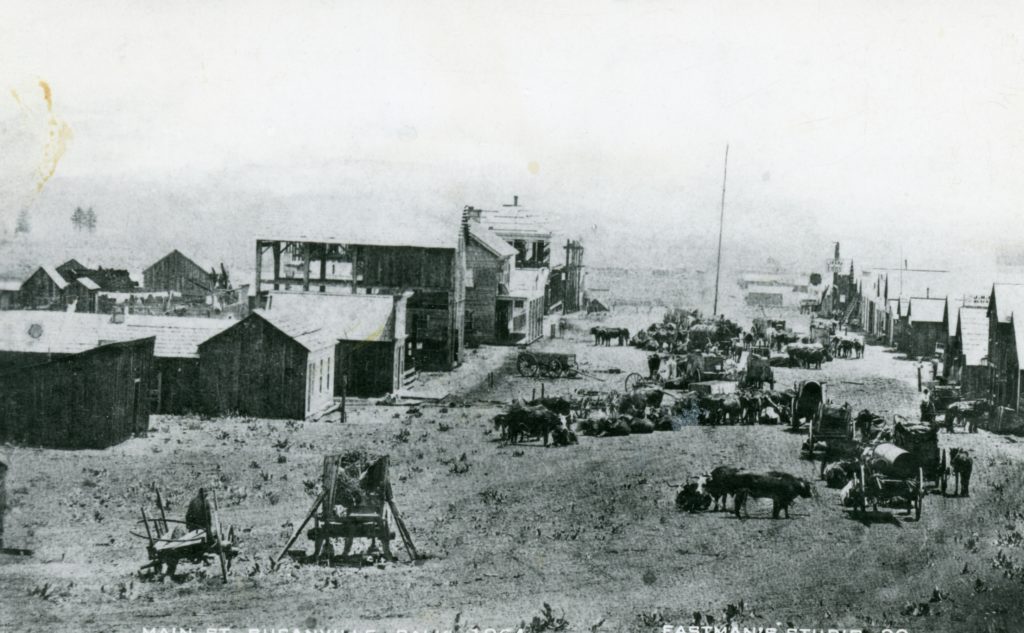
Main Street, Susanville, 1864.

In the 1850s, the Anglo settlers of the Honey Lake Valley routinely petitioned the U.S. Military for aide and protection. Many of those pleas went ignored. The Civil War changed that. In the future we will explore the various encampments, and some non-military sites such as Fort Janesville.

Today, we examine Camp Susan, the nearest appearance of a military encampment the town would experience.   In late August 1864, the 1st Nevada Territorial Infantry, a mobile military unit from Fort Churchill, under the command of Malachi R. Hassett, established a base camp near Susanville. Their mission was to scout the territory from Susanville, north to Surprise Valley and east to the Humboldt mines. In October 1864, the unit was ordered back to Fort Churchill. On September 12, 1864, Private Ebenezer Williams died at Camp Susan. Williams, a native of Wales, had just enlisted in February 1864.

Subscribe!

Exploring Lassen County's Past