Doyle & Crowder Mill

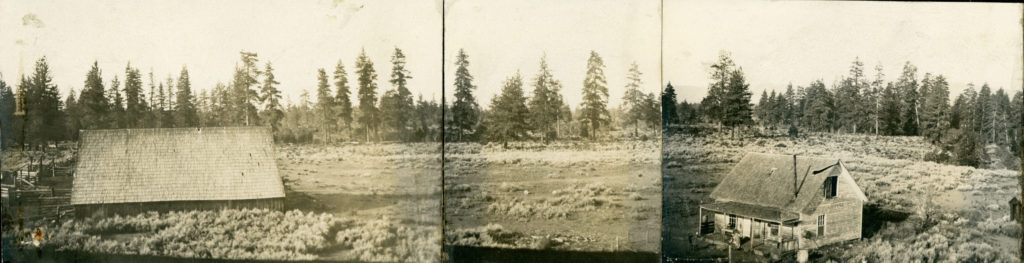
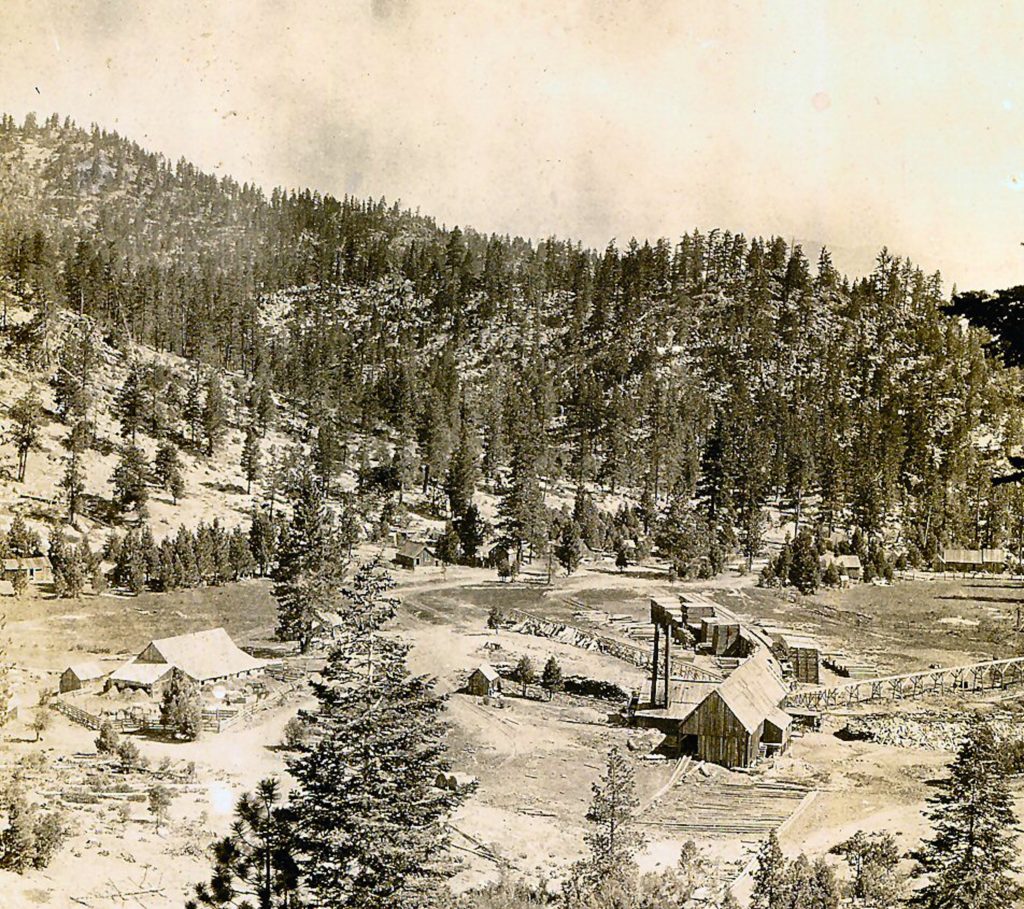
Doyle & Crowder Mill. Courtesy of Marie Herring Gould

First of all, I disclose that I do not know a lot about this sawmill, but I am working on it. The mill built around 1903, was located in what was referred to as Cannon field near the top of Doyle Grade.  It had one major customer, the Western Pacific Railroad to provide them with railroad ties while the railroad was being constructed through the region.  In 1918, due to the scarcity of machinery brought on by World War I, the Lassen Lumber & Box Company of Susanville purchased and dismantled it to build their new mill in Susanville.  In the 1950s, some people going through the old sawdust pile found several gold coins.
Support!

4th of July

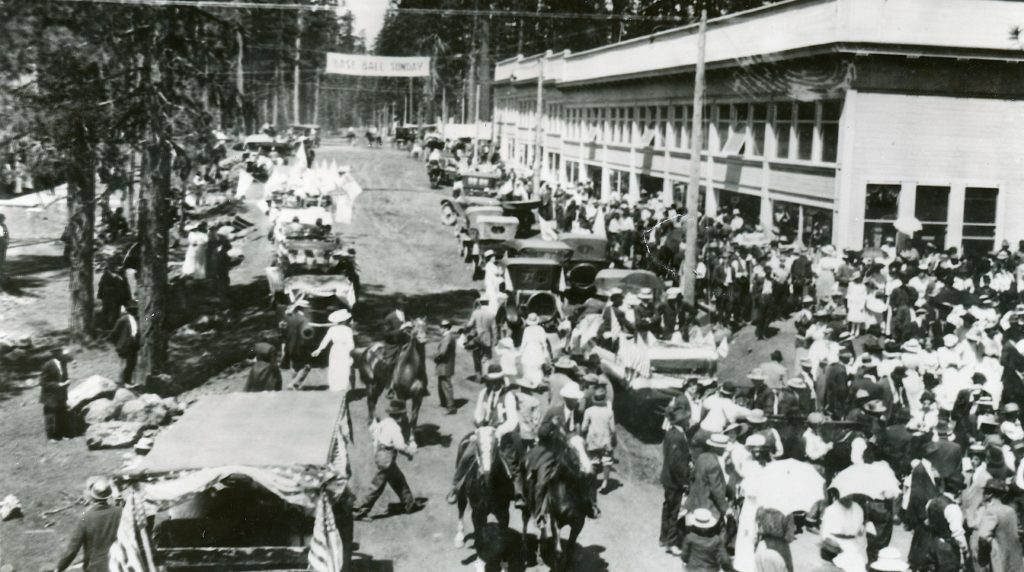
4th of July 1915 celebration at Westwood. Courtesy of the Nevada Historical Society.

A happy fourth of July to all. Remember to use common sense over the holiday week and if you must use fireworks please use carefully. This is not a time for injuries, or setting off a fire.

Support!

Roop County, Nevada

Roop Siding
Roop Siding on the Fernely & Lassen Railroad just north of Pyramid Lake, April 1966. Courtesy of Gil Morrill

After nearly 100 years after Lassen County was created in 1864, some historians thought it really should have been named Roop County. However, that would have been problematic, since across the stateline in Nevada was Roop County. Nevada officials were critical of the Roop name, J. Wells Kelly, who compiled the First Directory of Nevada Territory  questioned the choice of the name and stated that it should have been named Lassen County. Kelly wrote: “Every dictate of gratitude and propriety, suggested the name of Peter Lassen—the noble old pioneer who, the first to enter, finally lost his life in exploring these wild regions—as that which should have been bestowed upon the county.” The after effects of the Sagebrush War reduced Roop County to a long narrow strip of land from Pyramid Lake to the Oregon border. Since it was a sparsely settled territory, with no town, the Nevada Legislature, on February 18, 1864, attached it to Washoe County for judicial and revenue purposes. On January 16, 1883, it was officially abolished and made a part of Washoe County

Spalding vs. Spaulding

John S. Spalding’s second homestead at Eagle Lake, circa 1919. Courtesy of Wyn Wachhorst

From time to time, people ask why Spaulding Tract is not spelled as Spalding after the John Spalding family who was the initial developer of the subdivision on Eagle Lake’s west side. It is more of a technical issue involving property title. In essence, there are two Spalding subdivisions. The 1914 subdivision was smaller in scale and never had any financial success, as only one was lot sold. A decade later, the current Spaulding Tract that we know, overlaps sections of the original one, thus the “u” was inserted into the Spalding name to distinguish the two.

Support!


Japanese Internment Camp for Lassen County?

Madeline Plains
In early 1942, the U.S. Government was frantically evaluating possible sites for internment camps for Japanese citizens in the western states. Tulelake was considered as a site due to the potential for agricultural production using internee labor. In April, 1942, civic organizations in Tulelake, Malin, Merrill, and Klamath Falls objected to locating a camp at Tulelake and instead suggested it be located on the Madeline Plains. However, the government decided on Tulelake, and the possibility of an internment camp on the Madeline Plains was ended.

Information from Forced Farming in America, Agriculture at the Tule Lake Relocation Center, 1942 – 1946, by Michael David Schmidli. Copies available at Margie’s Book Nook

500 Cottage Street – Susanville

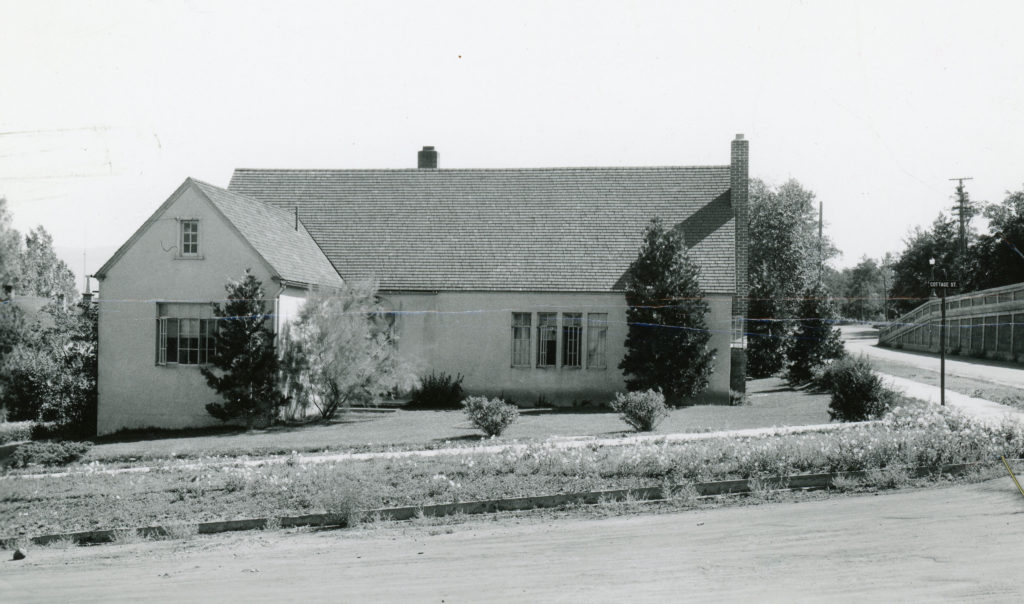
500 Cottage Street, Susanville, California
Okay, I am posting a shameless plug, but I do want to get the word out that the old Purdy home at 500 Cottage Street, is on the market. For details contact Linda White at 530-310-2930 or realtychicks@gmail.com

On the other hand, I will still provide some historical material related to the property, since there have only been two structures located there. Susanville first’s church, the Congregational Church was built there in the mid-1870s. In 1906, Susanville merchant, Charlie Emerson purchased the abandoned church, and moved it to 607 Cottage Street where he converted into a warehouse. In August 1915, that building caught fire and destroyed most of that block. In 1929, Wes Emerson built the house on the old church lot.

Support!

A PBS Plea

Part of the troops on the Summer Solstice 2017 trip. Thank you Margaret for the photograph.

First of all, I truly appreciate those who subscribe and/or donate to help “keep the lights on” so to speak. There is a bit of irony that is the non-subscribers who post the most comments about any daily topic.  In addition, many non-subscribers inform me how much they enjoy the daily posts.

Of course, there are associated costs such as web host and domain fees, which are given. Then there are those hidden surprises, such as in when Scott Lawson of the Plumas County Museum and Susanville resident Susan Wannebo alerted about a classified ad in the Plumas papers concerning an old trunk in the bay area with a collection of photographs of the Susanville.  I made contact with the party and while the trunk was free, shipping was not, but it was a $100 well spent.

I know this may get lost with the upcoming 4th of July holiday, but even if one person steps up to donate and/or subscribe, that is still better than none.

Support!


Lassen’s Volcanic Ash

June 1914 Eruption

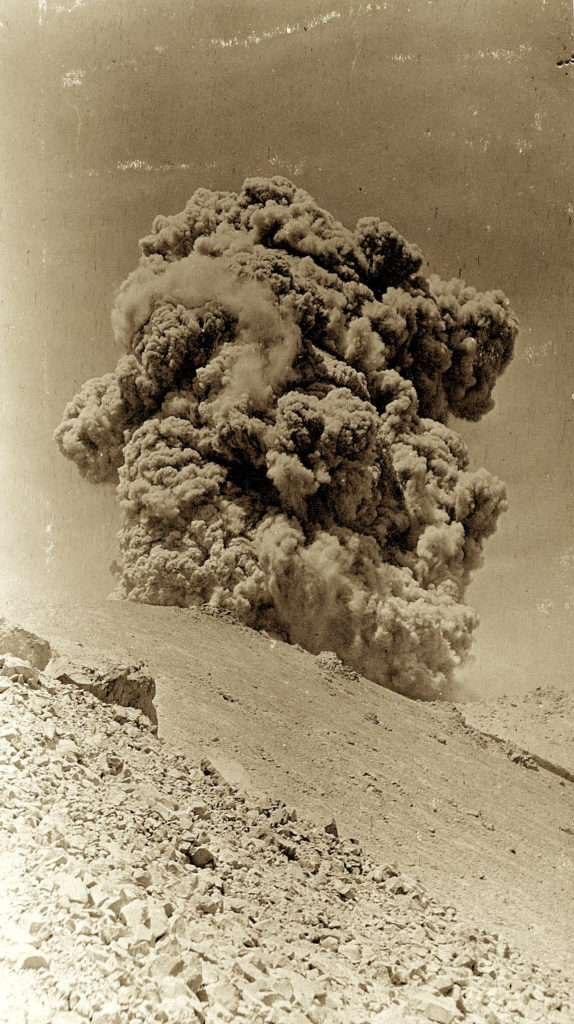
When Lassen Peak came to life in 1914,  those residing to the east due to prevailing winds had to contend with the volcanic ash fallout. On the morning of May 22 1915, the most dramatic eruption occurred. The mountain was reported to be in a continual state of eruption. At 4:30 p.m. Lassen burst forth in a spectacular display, spewing forth a mushroom cloud of volcanic ash some four miles into the atmosphere. The eruption, recorded as number 174, lasted nearly an hour, dropping ash from the sky all the way east to Winnemucca, Nevada, nearly 300 miles distant. After the big eruption, activity greatly subsided, and for the remainder of the year there were only thirty-four eruptions cited.

Susanville resident, Med Arnold, happened to be fishing at Eagle Lake at the time of the eruption. Arnold stated the whole region was covered with volcanic ash, giving the appearance that it was coated with alkali dust. Arnold further noted enough ash fell from the sky to muddy the lake’s water. Janesville resident Gordon Rice, was optimistic about the situation, stated, “Lassen Peak is good to Lassen County; volcanic ash is a splendid fertilizer.”

Subscribe!

A Lake Almanor Conspiracy

Lake Almanor, 1926.

I enjoy a good folklore story, as well the conspiracy theories. Believe me through the years, I have heard many a tall tale. Those residing in the region in what became Lake Almanor held on to their firm belief that the Lassen Peak eruptions were caused by the filling of the newly created reservoir. As John Kelley of Warner Valley recalled: “Hell, there ain’t nothing funny about that old mountain blowing up. Those power people filled that Lake Almanor down there, the water seeped back through them cracks and hit them hot rocks. That caused a lot of steam, and that old mountain just had to blow.”

Subscribe!

101 Nite Club

The 101 Nite Club was perhaps the liveliest of the four roadhouses between Susanville and Westwood. It is also the least documented, providing a challenge to unearth its story. The club took its name from the 101 Ranch and was located directly across from the ranch house. The operators leased the property from the McKenzie family, owners of the 101, but what the arrangements were is open to speculation, since those documents were never recorded.

101 1941
The 101 as it appeared in 1941. Courtesy of Dina Matteucci

The 101 was established in late 1937 or early 1938 by Old Town resident Steve Actis. It was a large structure containing a bar and dance floor and live music was a part of the routine operation. In addition, there was a separate gas station and restaurant and a number of cabins behind the club. The cabins were rented out to loggers, but also provided housing for the musicians who performed there. Continue reading 101 Nite Club

Exploring Lassen County's Past