Moon Valley, Lassen County

Moon Valley
Cover of the Moon Valley brochure

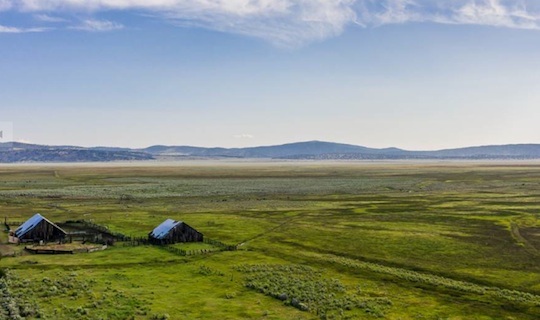
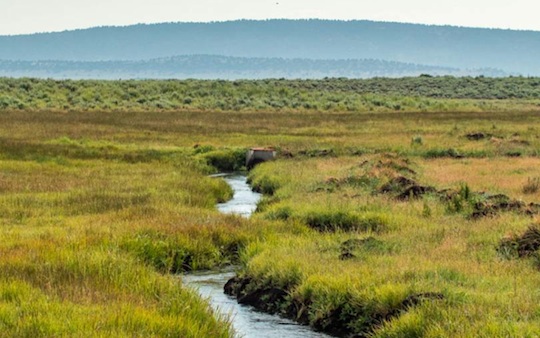
In 1968, the Occidental Petroleum Company purchased a large portion of the lands owned by the Rees T. Jenkins Land & Livestock Company. On the west side of the Madeline Plains, they subdivided thousands of acres into 20-acre parcels they named Moon Valley Ranch. The first unit was recorded on July 12, 1968. The Company’s advertising of the region made it too good to be true. “Now you get it all at Moon Valley Ranch: prime recreation land, within 4 miles of a 2,500 acre lake, in Northern California, the next recreational capital of the West and profitable investment property almost certain to appreciate as California’s recreation-hungry population continues to explode . . .And what a price now you can buy 20-acre parcels for less than $199 an acre–$150 down, $29 monthly.” Their portfolio expands on all the nearby wonderful recreational areas, such as skiing and golfing at Westwood, though they did not mention that Westwood was some seventy miles away. Also they did not disclose the fact that the golf course at Westwood was only proposed. The Company was correct in their advertisement that is was “The magnificent, away-from-it-all Moon Valley Ranch” to “land-that-time-forgot.”  Moon Valley Ranch is a perfect example why there are disclosure laws in the real estate industry today. Numerous folks still invest in that property, purchasing parcels site unseen, only to realize that they bought a lot on a sagebrush plain or a rocky hillside covered with juniper trees.

Support

Pioneer Mercantile Company

Pio advt.
A 1920s advertisement for the Pioneer. It had to change its ways during prohibition.

In 1920, Grass Valley business man W.H. Tuttle purchased the Pioneer Saloon, Susanville’s oldest business. For many this was something a deranged person might do, since the nation’s prohibition of alcohol had just been implemented. Not only that, Tuttle announced he was going to replace the old wooden structure with a two-story concrete one.

To make up for the lost revenue from the sale of alcoholic beverages Tuttle branched out into the wholesale mercantile trade. In a very short time this enterprise turned out to be very lucrative, he specialized as a distributor of tobacco products and candy. In 1929, he sold the Pioneer Mercantile Company to John Solari and M.A. Griffin. After the repeal of prohibition the mercantile aspect continued until the late 1970s.

Subscribe

A Blue Lake State Park?

Blue Lake, 1936

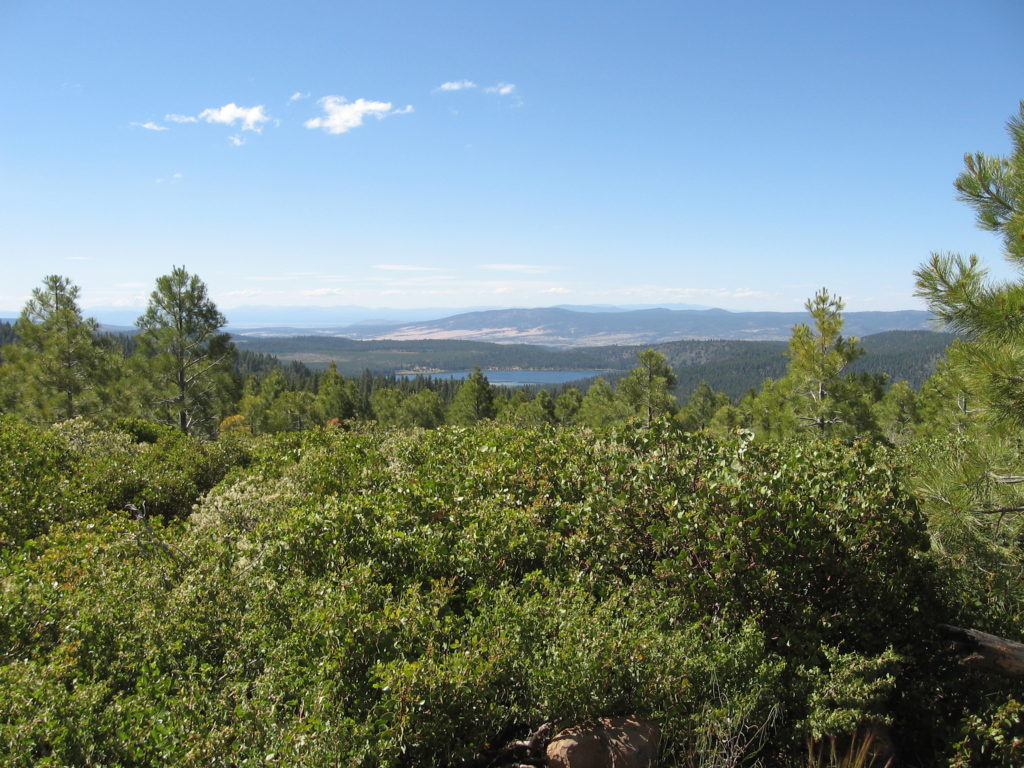
Blue Lake located in the very far northeastern part of Lassen County, is one of the many hidden gems around these parts. In 1929, the Lassen County Chamber of Commerce sent a petition that it should be included in the state park system. It did not fare well, due to the fact the property surrounding the lake was privately owned. Of course, things change with time. In 1932, R.C. Turrittin attempted to cash in on the California State Park Bond Fund.  He offered to sell the property surrounding Blue Lake to make it a State Park, though the title was not in his name.  The California Division of Parks liked the proposal and deemed it an important addition to the State Park System.  Turrittin requested $12,000 cash–$8,000 from the State and $2,000 in matching grants each from Lassen and Modoc Counties.  There was a problem with the deal.While Turrittin negotiated with the State and Modoc County, he failed to include Lassen County, where the lake is located, though it was frequented more by Modoc residents due to its proximity to that county.  Lassen County politely stated that since they had never received the proposal and that their budget had been adopted, they could not consider the proposal until the next fiscal year.  The proposal was tabled and that was the end of it.

On a final note, in 1941 the Modoc National Forest acquired the Blue Lake property through a timberland exchange.

Subscribe 

Griffin’s Variety Store

From the Caravan, Lassen College Yearbook, 1942

Seasoned residents will remember this store located at 711 Main Street which is currently occupied by Iron Horse Gym. M.A. Griffin came to Susanville in 1912 from Loyalton. In 1920, at this location he operated a men’s clothing store. Griffin along with O.C. Watts revamped the men’s store into a five and dime variety store, and it opened on March 7, 1936. It was affiliated with the Ben Franklin stores. Griffins closed down in the 1960s and was replaced with Super 88, a similar type of store.

Support

Johnstonville Post Office

Johnstonville Post Office cancel

Johnstonville’s close proximity to Susanville hampered its development. Initially, for many years there were only two institutions that existed a school and flour mill. When the Diamond Mountain Creamery was established there, it was an impetuous start for the development of a community. Soon to open was Aaron Hooks blacksmith ship. This was followed by Andrew Spoon’s general store. On November 15, 1902, Spoon had established the Johnstonville Post Office. After a few years Spoon sold out to W.T. Stark in search of new opportunities. On March 3, 1936, Stark’s store, home and along with the post office was destroyed by fire from an overheated chimney. Once reimbursed by insurance all was rebuilt. The post office closed on October 27, 1943. 

Johnstonville Blacksmith Shop

Subscribe

B.F. Loomis and his museum

Loomis Museum, circa 1940

Prior to the volcanic eruptions, it should be noted, a movement had begun to make Lassen Peak and its many hydrothermal features a national park. The eruptions brought the area out of obscurity and in 1916 Lassen became a national park. Loomis with a handful of others were the park’s most ardent supporters. The park needed all the assistance it could get. One of the biggest problems was Congress never provided adequate funding. By the mid-1920s, a portion of the funding hurdle was resolved.

One of Loomis’ lobbying efforts was to have the park headquarters located somewhere in the Manzanita Lake vicinity. This was problematic on several accounts. First and foremost the original park boundaries did not include that territory. Nevertheless, Loomis persisted. Loomis had spotted a 40-acre parcel at Reflection Lake, not far from Manzanita Lake. Loomis informed the park he would purchase it and donate it to the park to be used for “administrative purposes.” In 1926, he bought the parcel for $1,000. The following year park officials announced that Mineral would be the site for the headquarters. 

Loomis forged ahead and in 1927, he built a museum of native stone and reinforced concrete near Reflection Lake.  The museum served two purposes. One, it allowed him to showcase his famed photographic collection of the Lassen Peak eruptions, previously on display at his hotel at nearby Viola. The second reason was it served as a memorial to his only child, Louise Mae, who died in 1920.

In 1929, a park expansion bill was approved by Congress that would include the territory of Manzanita and Reflection Lakes. Loomis true to his word, in 1929 deeded his property to the park. Later that year, the park in consideration of the donation, granted Loomis a life estate to five acres that allowed him to continue with the museum and gave him the privilege to build a residence and photography studio. B.F. Loomis died in 1935, and his wife Estella in 1953.

Yet, the story does not end there. In the early 1970s, two geologists considered Chaos Crags a hazard, that a rock avalanche could threaten the facilities at Manzanita Lake and the Loomis Museum. As a result the park shut down those operations and eventually removed the buildings. Somehow, Loomis Museum was granted a reprieve. In 1993 the museum was fully rehabilitated and now operates on a seasonal basis.

Subscribe

B.F. Loomis and a story of jury duty

One of the many photographs Loomis took in June 1914

We are fortunate to have a bounty of museums in our region. Each one unique in their own special way. Equally important, all of them are worthy of a visit. Since this is July, there is no better time like the present to check them out.

One of the oldest museums is Loomis, located near the northern entrance of Lassen Volcanic National Park. Its founder, B.F. Loomis had an interesting association with the region. Actually, how the museum came to be is as intriguing as Loomis.

Initially, Loomis’ origins were rather typical of the era. He was born in Illinois and came to California as a child with his parents who settled in Tehama County. In 1874, Loomis had his first exposure in the area later to be destined Lassen Park. It was a camping trip to Manzanita Lake. The region suited him well and took up residence in nearby Viola. He made a living making wooden shakes, commonly used as roofing material. As he prospered he established a hotel at Viola.

In 1897, an event dramatically transformed his life—jury duty. Off to Redding Loomis went and there he met fellow jurist Leander V. Loomis. While the two men were not related, they both shared an interest in phrenology and astronomy. During a trial recess, Leander invited B.F. to his home. During his stay met Leander’s daughter, Estella. A romance ensued and they were married that fall. Leander had another child that influenced B.F.—Arthur who was a commercial photographer. Arthur introduced B.F. to the world of photography and years later B.F.’s photographs became widely known.

The next life changing event for B.F. Loomis came on June 14, 1914 after one of the volcanic eruptions of Lassen Peak. With camera in tow Loomis, as did other photographers captured the event on film. It should be noted the initial eruption occurred on May 30 and word spread like wildfire. Multiple news organizations were dispatched to report on the first active volcano in the continental United States. Loomis’ timing was impeccable and various news outlets used his images and Loomis gained a certain notoriety.

Subscribe

Answers to Some Questions

Amedee Hotel, 1910. Courtesy of Betty B.Deal

By coincidence I am working on feature article of the Amedee and Madeline Hotels for the Northern California Traveller. As to the Brubeck family, I am able to provide some insight, as years ago I corresponded with Leslie Brubeck, who was born at Amedee in 1900. In addition, a subscriber is going to make a journey to Brubeck Spring, so I will ask for a photograph to include in a future post.

As to the natural history of the flora fauna conditions prior to the settlement, that can be done in several installments. In the 1990s, I conducted extensive research of the vegetation of eastern Lassen County prior to extensive grazing of cattle and sheep. An interesting source were the field notes of the Government Land Office surveyors who included descriptions of what they observed during the initial surveys of the 1870s. Another example was when in 1854 Lt. E.G. Beckwith explored the region for a possible transcontinental railroad route. Members of his expedition studied and documented the flora and fauna they found.

Subscribe

Early forest fire origins

Prattville Fire burn, 1925

In the fall of 1899 various Northern California newspapers pondered the question of the causes of forest fires, especially during fall. The San Jose Mercury News blamed it on hunters. The Oroville Register stated it was the cattlemen who set the fires every fall. Susanville’s Lassen Advocate chimed in with this response: “Over this way it is the custom to charge the sheepmen with the forest fires. Some of the fires are doubtless due these different agencies, but not all of them. An old hunter “a man who has lived long in the mountains” tells us many fires are set by Indians. He says that in seasons when deer are numerous, as they have been in this season, they may be found in numbers where the underbrush has been burned off, disporting in the soft warm ashes and fall easy victims to the Indian hunters.”

Subscribe

Whaleback Fire Revisited

Whaleback Fire courtesy of InciWeb

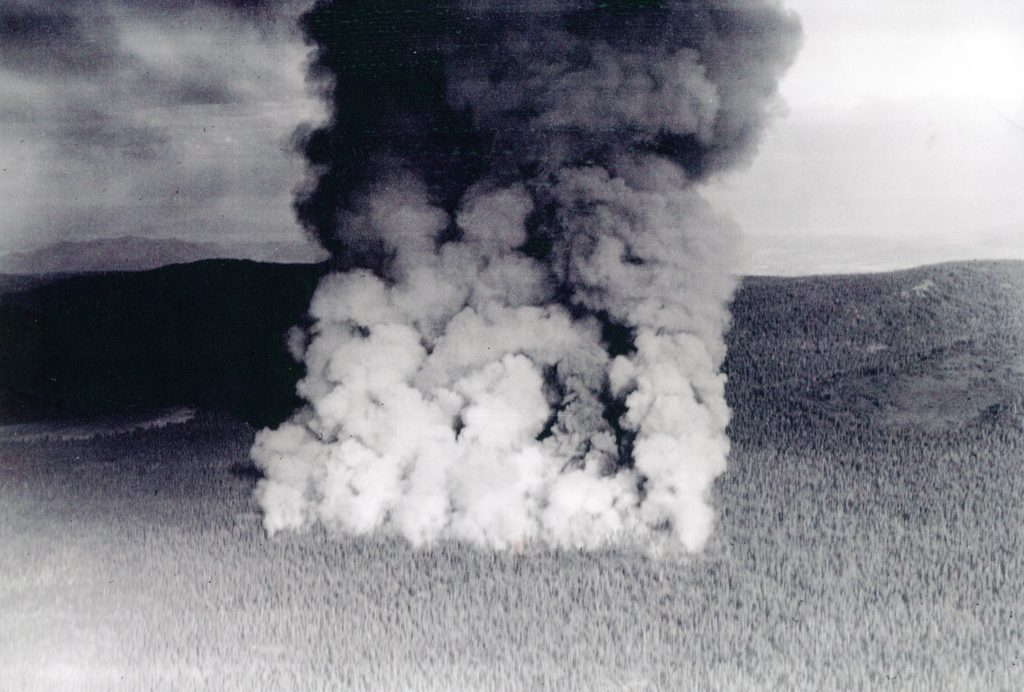
It was a year ago, on July 27, 2018 that in the early afternoon a fire was spotted on Whaleback Mountain, just west of Eagle Lake. During its peak Spaulding Tract, Aspen Grove, Christie and Merrill campgrounds, along with the marina and Camp Ronald McDonald were evacuated. A voluntary notice was provided to Buck’s Bay and the Stones-Bengard subdivision. On August 8, 2018, the fire that destroyed 18,703 acres was fully contained. The origin of the fire was never determined or if it has not fully disclosed to the public.

Subscribe

Exploring Lassen County's Past