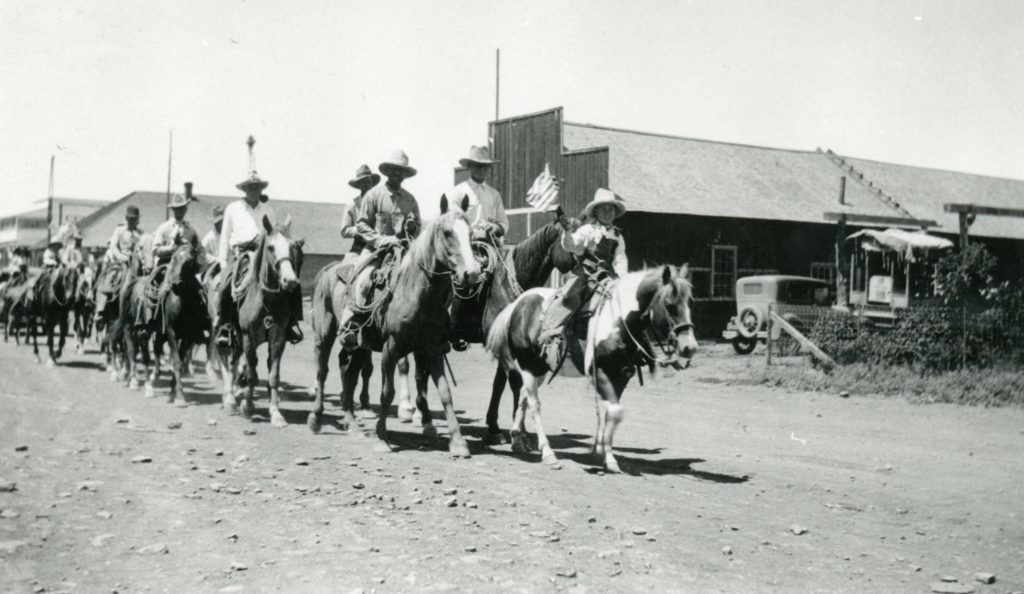
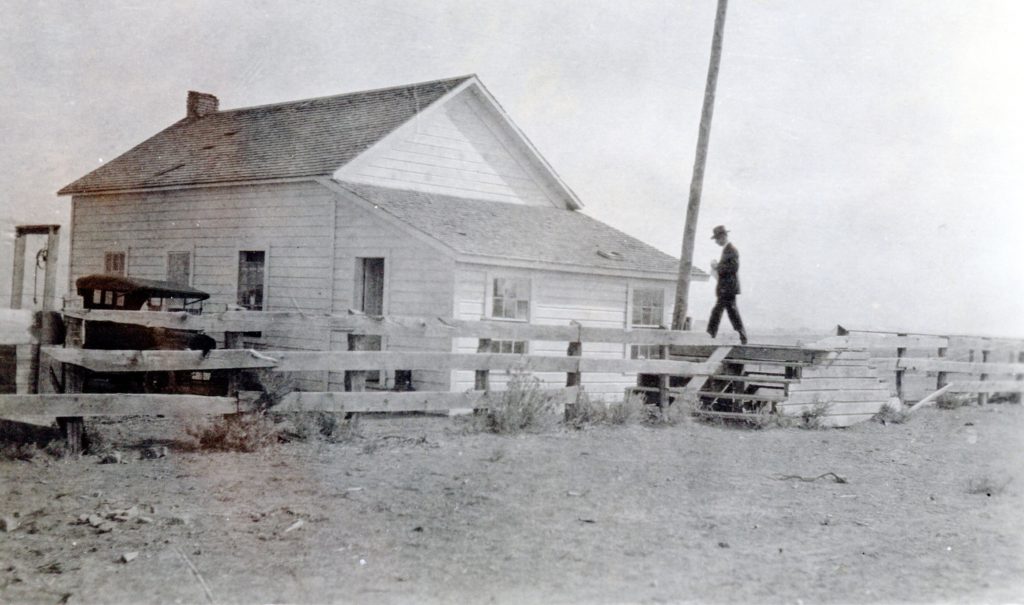
North Roop Street, Susanville, 1931. Courtesy of B.R. Zimmerman Collection
While we do have the tendecy to think that winter is behind with the official start of summer, weather wise in these parts anything can and does happen. After all, many have encountered snowstorms over Memorial Day during the opening of fishing season at Eagle Lake. As a general rule of thumb, that is usually the last snow of the season. However, freak snowstorms can occur in the region during June, like 1907 and 1931.
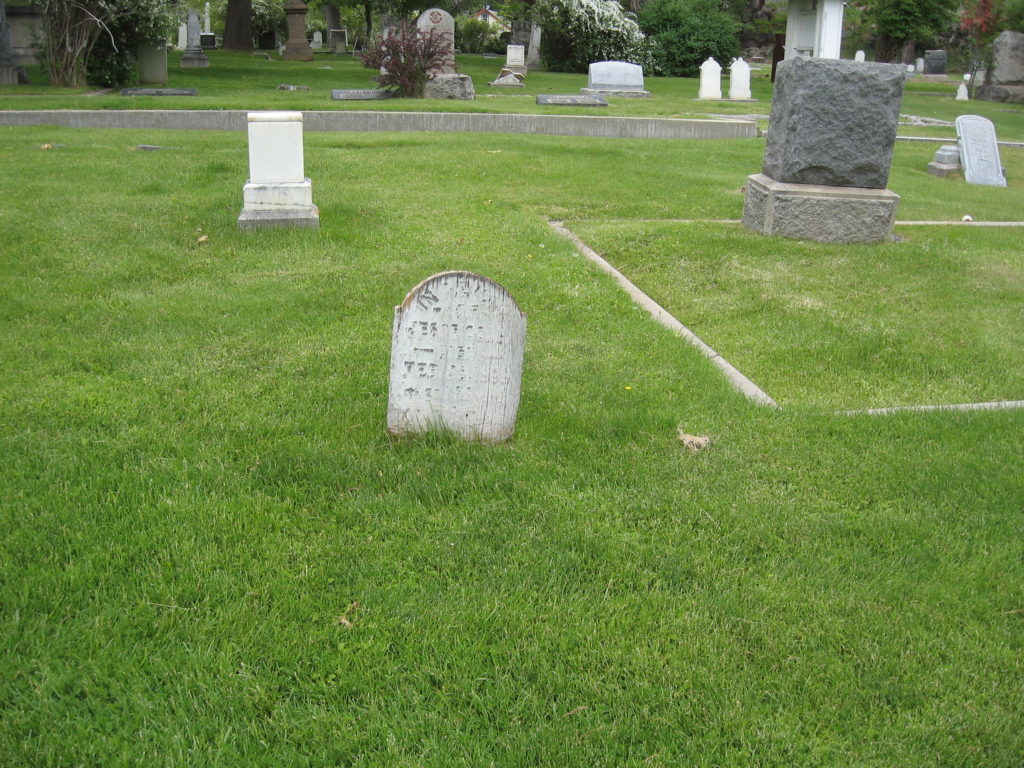
The wooden marker for Jesse Cole, Susanville Cemetery, November 1977.
When Susanville resident Jesse Cole died in 1898, it marked the last time when a wooden marker was placed in the Susanville Cemetery. The elements has taken its toll, and soon it will be obliterated.
Jesse Cole settled at Milford in 1862 from his native Missouri. During the late 1860s he moved to Napa, California. In the early 1880s he moved to Susanville. As for a occupation he spent his life a day laborer, working different jobs on a regular basis. Prior to his death, he was serving as Justice of the Peace, Township No. 1.
The wooden marker for Jesse Cole, Susanville Cemetery, May 18, 2019
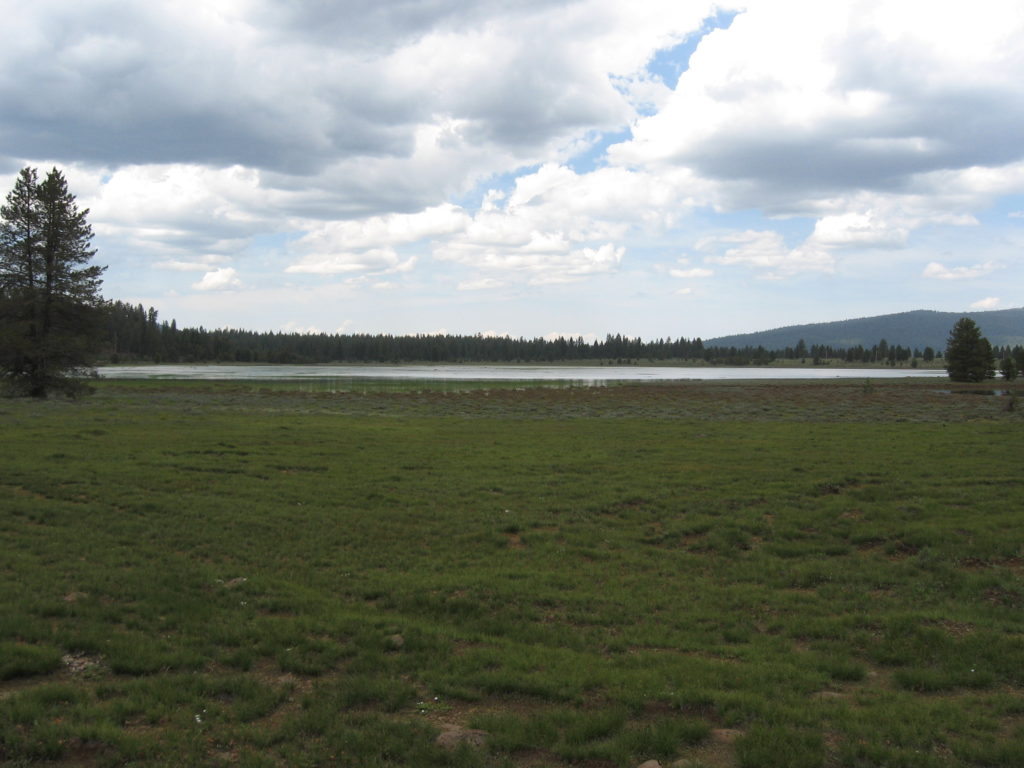
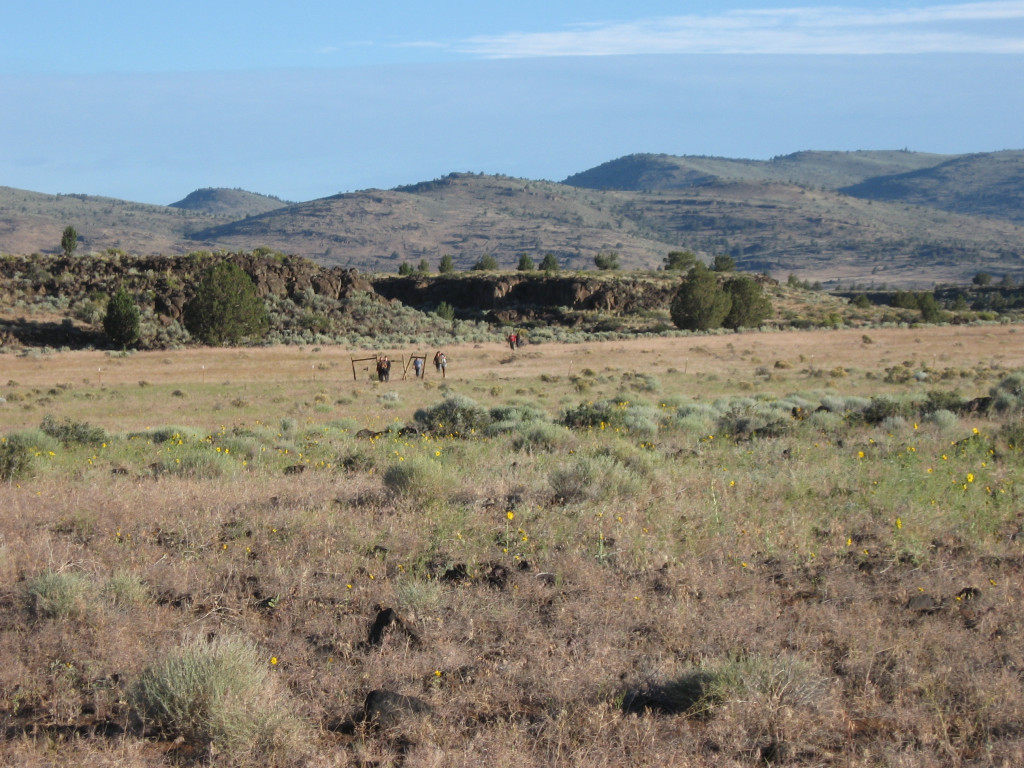
This is a perfect time to get out in the woods to do some exploring. There is water every where and the meadows are as green as can be. The one drawback is the mosquitos. This small body of water is along Highway 44, but it is not what you think it is.
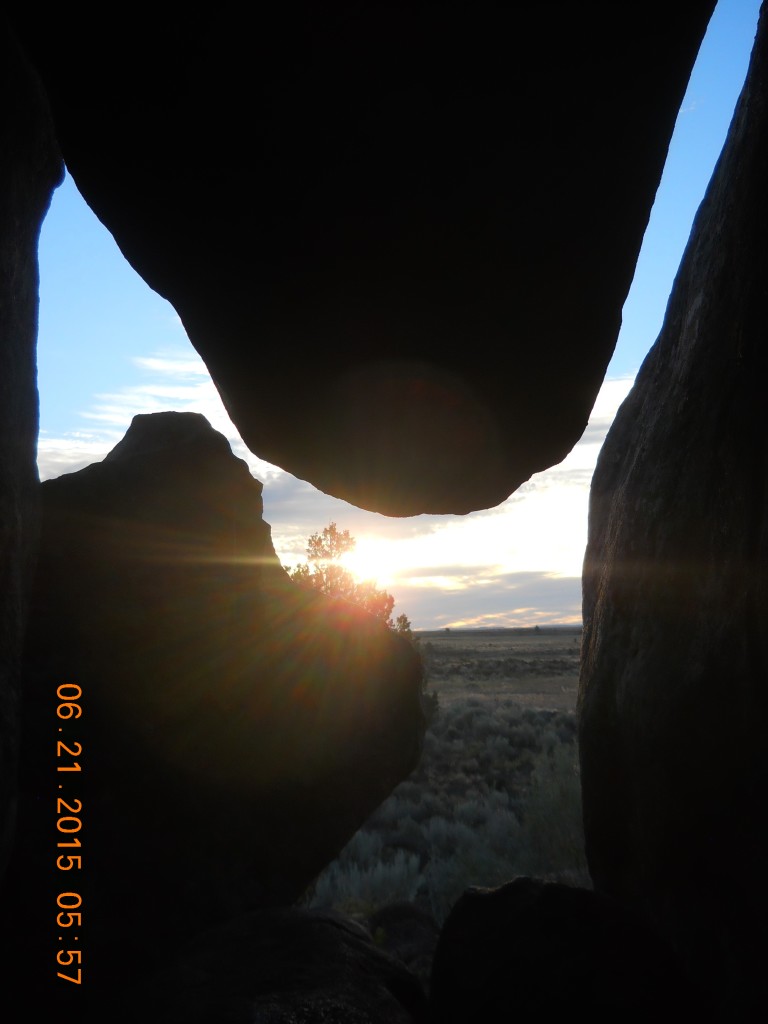
The site looking towards the sunrise chamber, June 2, 2015
Due to unforseen circumstances, I will not be leading a trek to Belfast on Friday. Those folks who have attended in the past are more than welcome to make the journey since they know their way there and have also had Rudolph’s paper on the topic for needed literature on the topic.
In Susanville’s early years as an incorporated city, it was remarkable what the council did. One of their actions, I still support today, and that is the prohibition of fireworks. The first time they banned fireworks was in 1906, following the aftermath of the San Francisco earthquake and fire. It was also a nod to the insurance companies who suffered tremendous loss from that event. It was their belief, as well as many other communities, that this preventive measure would reduce the risk of fires.
In 1912, the City once again banned fireworks. The Lassen Advocate applauded the city and wrote: 21 June 1912 – “No Fireworks on the Fourth. We desire to congratulate our Board of Town Trustees on their action in placing the ban on all kinds of fireworks on July 2, 3, and 4. This action has been taken by large and progressive cities for years past, and we are greatly pleased to note that the smaller places are falling into line. Fireworks do no good and may do a world of harm. Fires may be started that will blot out blocks of cities or towns; little boys and girls all over the United States have lost fingers, hands eyes and in many instances, their lives from the dangerous pinwheel and firecrackers. Let them yell all they will, let them spend their money for ice cream, candy—anything on earth but the fireworks.”
In a very belated follow up on the history of Halls Flat. For a refresher for those new to the area, Halls Flat is located in western Lassen County, north of Poison Lake, which some times is a lake that Highway 44 skirts around the south shore.
Anyhow, Halls Flat came to life in a big way starting in August 1941 when the Red River Lumber Company established Camp Bunyan. This was a new experience for company. Its timber was no longer tributary to its Westwood mill—as a fact the camp alone was thirty-five miles to the north. The bottom line, this is where the timber was. Camp Bunyan was unique from other Red River logging camps. Not only did this camp have a name and not a number, it was their largest camp that consisted of both temporary and permanent buildings. At its peak time, it was the home to some 350 loggers, making it one of the largest seasonal communities in Lassen County. However, it got off to a rough start when not long after the loggers went on strike over wages and poor living conditions. Once those issues were resolved everything went smoothly. From Camp Bunyan a railroad logging line was constructed to the east in the company’s Blacks and Harvey Mountains tracts. In 1943, a second logging camp named Camp Harvey was established. At the end of the following of year, a major change happened when Red River sold to the Fruit Growers Supply Company. At the end of the 1946 logging season Camp Bunyan had served its intended purpose and was shut down. Its location remained a hub of activity since the log trains from Camp Harvey went to the Camp Bunyan site to connect with the Western Pacific Railroad that relayed the loaded log cars to the Westwood mill.
In the spring of 1948, though the hustle and bustle of the connections of the Harvey railroad line connecting with the Western Pacific at Halls Flat came to a sudden halt. In essence, it was similar to the opening of Camp Bunyan. This time, however, it was the cookhouse employees at Camps Harvey and Stanford that went on strike over wages. With no end in sight Fruit Growers permanently closed down those logging camps and the railroad logging line.
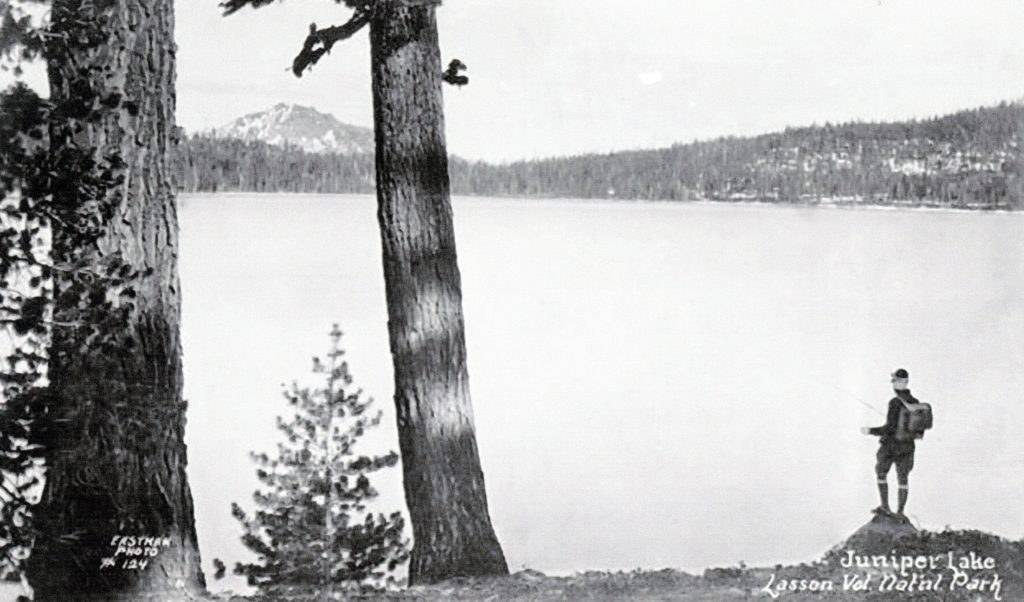
One of the gems of Lassen County, is Juniper Lake tucked away high in the mountains of Lassen Volcanic National Park. Due to its remoteness, it is just not on a lot of people’s radar to visit. It should be duly noted ever since the Anglo settlement there was always some one to figure out how to utilize the natural resources and Juniper Lake was of no exception.
In the early 1900s hydroelectric power was playing a prominent role in the Feather River watershed. One of those developments witnessed the creation of Lake Almanor as part of Great Western Power Company’s hydro-power system. In two separate instances in 1908 and 1909 two individuals claimed the water rights to Juniper Lake for hydro-electric power purposes. On paper it looked fine, especially the sharp drop of elevation from the lake’s outlet. However, there was one crucial element missing. For it to succeed, a sufficient flow of water needed to come into lake, as needed to sustain the flow leaving the lake to generate power. Juniper Lake receives spring run-off and that was not enough. Interest quickly faded, and the proposed project abandoned.
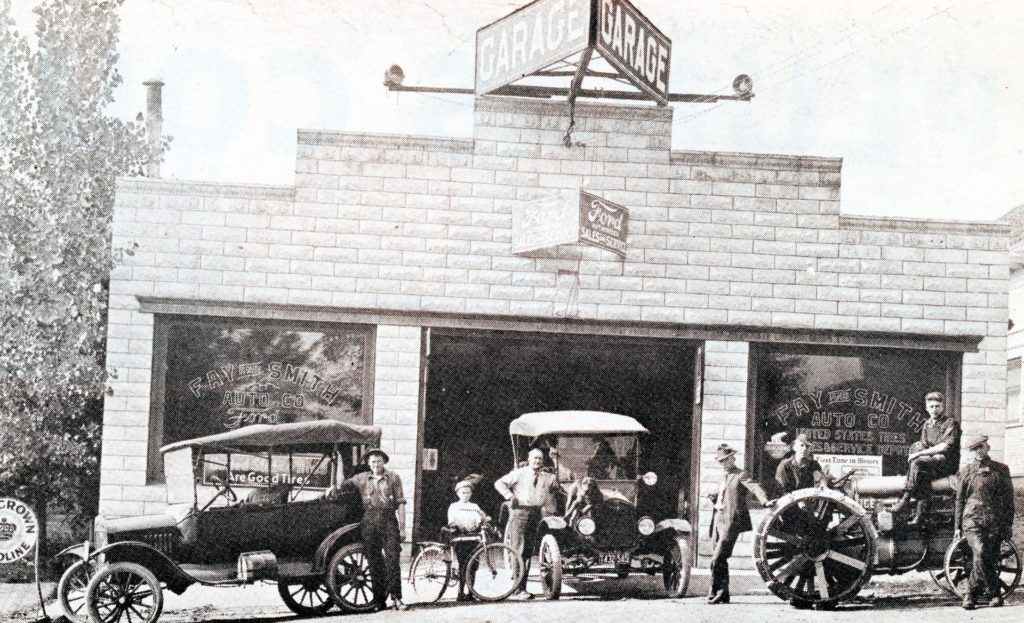
In the early 1900s when the automobile was slowly making its debut in Lassen County, it was part novelty and somewhat of a luxury. There were two obstacles that needed to overcome the locals acceptance of this new method of transportation. A major one was there were no mechanics to service the automobile. In March 1910, Susanville’s first combination automobile garage and car dealership opened for business. It was named the Empire Auto Livery Company owned by Otto Wiencke and John Zimmerman. It was soon followed by J.S. Tremain’s garage. The other contributing factor were roads, but soon this would change. In 1916, California began an ambitious campaign to build a state highway system which would connect every county seat.
In 1917, Tremain put his business on the market for $7,000. Big Valley resident, Ernest “Ernie” Smith was interested. Smith was able to raise $6,000 from financial backers, but was short of the remaining $1,000. Another Big Valley resident, James Fay was looking for a business opportunity, and this venture appealed to him. On August 1, 1917, Tremain sold to new firm of Fay & Smith Auto Company. Shortly, thereafter they became the town’s first Ford dealership. After six years in business, Fay wanted out to move to Sacramento. In 1924, Smith obliged and renamed his new enterprise the Smith Auto Company.
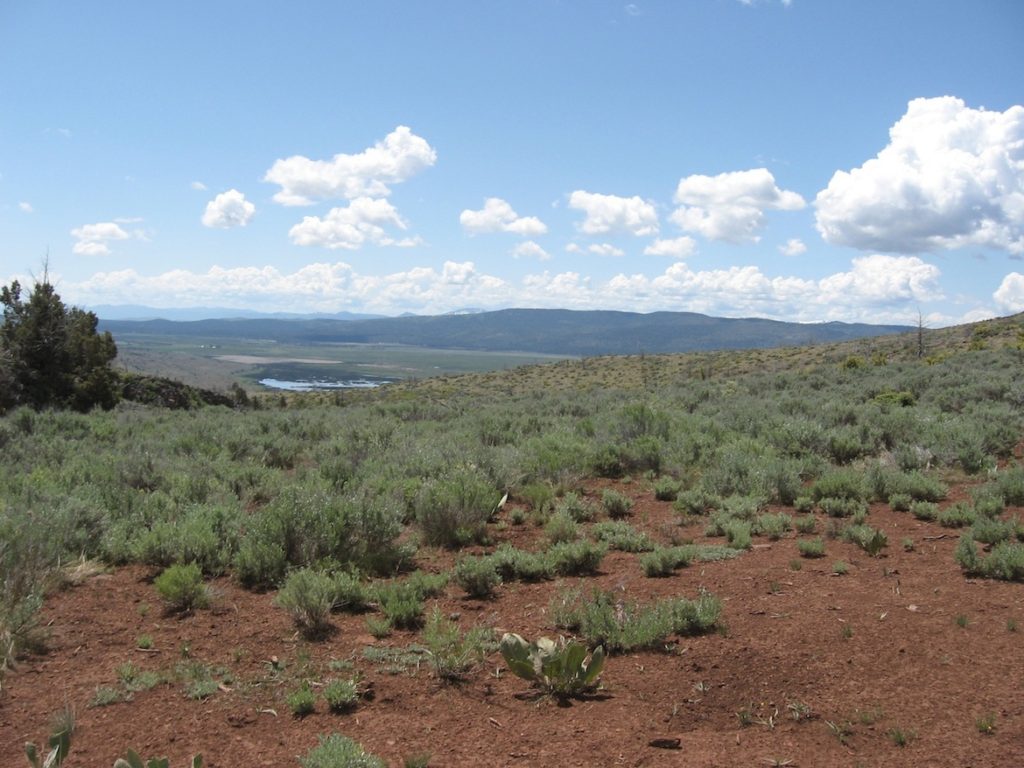
Willow Creek Valley as seen from the Fredonyer Peak Road. Better views can be found further up the road, at the lookout itself, but the latter was not on our destination. However, it could be a future destination, one never knows where I might end up.
In 1871, the residents of Big Valley on the Lassen County side, petitioned the Lassen County Board of Supervisors for a school district there. While there was a public school in Adin, that was under the jurisdiction of Siskiyou County, as Modoc County had not yet been created. The Big Valley residents were included the Willow Creek Valley School District and that school house was nearly forty miles away. With that thought in mind, the petition stated, “It is frequently impossible for their children to attend school on account of high water, deep snows muddy roads, etc.” The petition was signed by seventeen residents and combined they had twenty children eligible for school. The Board obliged and created the Providence School District on November 10, 1871. A school house was built two miles south of Adin. In 1953, the school was annexed to the Adin Joint Unified District. The school house then became the property of the Providence Farm Bureau.