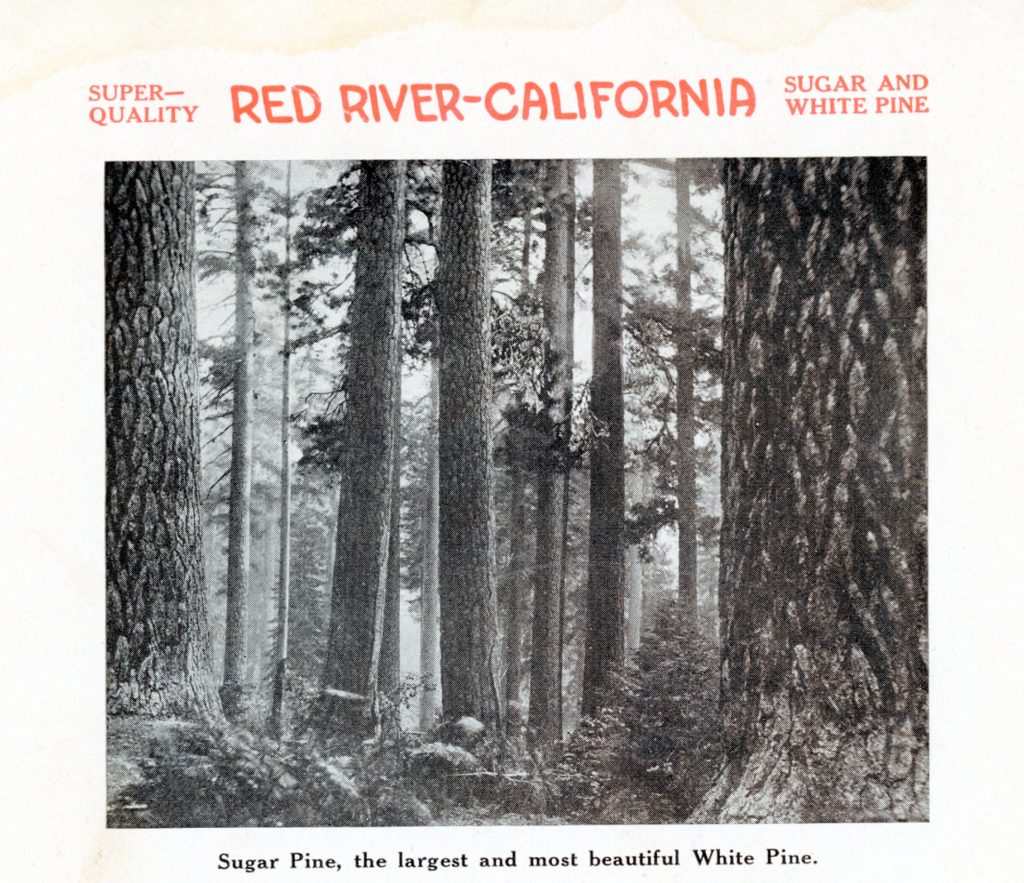
Every pine buyer wants to know , “What do I get for my money?” And “What does Red River-California offer that I can get nowhere else?” We submit herewith a few facts concerning Red River-California Sugar Pine and White Pine and the plant at Westwood, California, that produces it and delivers it to all parts of America. This service, more than any other gives you:
QUALITY: “Old-fashioned White Pine, “scientifically manufactured.
UNIFORMITY: Full specified thickness and width, thoroughly seasoned.
ECONOMY: Reduces your working-up cost. Gives you a superior product.
SECURITY FROM SUBSTITUTION: As manufacturers, we ship nothing but genuine Red River-California. Unlimited forest resources assure this uniform supply of many years to come.
RELIABLE DELIVERY: Plant runs the year ‘round. Westwood lies east of the Sierra Nevada snowsheds, on a direct line to eastern points and near a great transcontinental empty-car center.
The Red River Lumber Company’s westward expansion had many obstacles to over come. While many were obvious, there was in general that those on the west coast were not aware of.
The biggest problem that faced Red River was its final product. While in time, they would break into the west coast market. Red River was concerned about its customers in the Midwest and South. Their customers were used to white pine, but they would have to educate them that were was no difference between white pine and ponderosa or sugar pine.
In 1916, Red River developed a major marketing campaign. They produced two publications Facts and Introducing Paul Bunyan. The results were mixed. The Facts booklet is an interesting piece of literature, which excerpts will be presented in future posts.
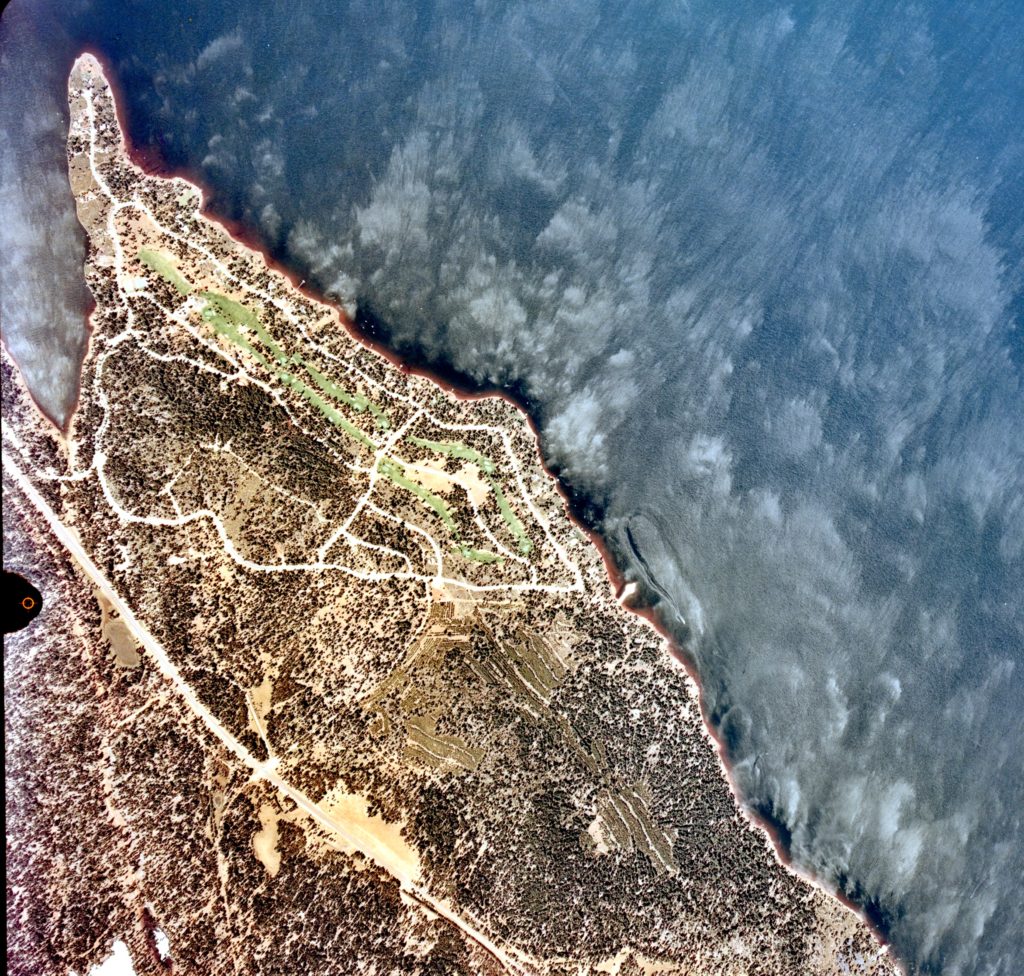
In 1950, Ed Clifford and others purchased large tracts of lakeshore property at Lake Almanor from the Red River Lumber Company. They initially focused on the Lake Almanor Peninsula that later evolved into the Lake Almanor Country Club. Thus, the one tract they owned on the west shore of Lake Almanor remained idled. That changed in the early 1970s with the proposed development of Lake Almanor West. In 1974 the first lots were placed on the market of the 615 acre subdivision.
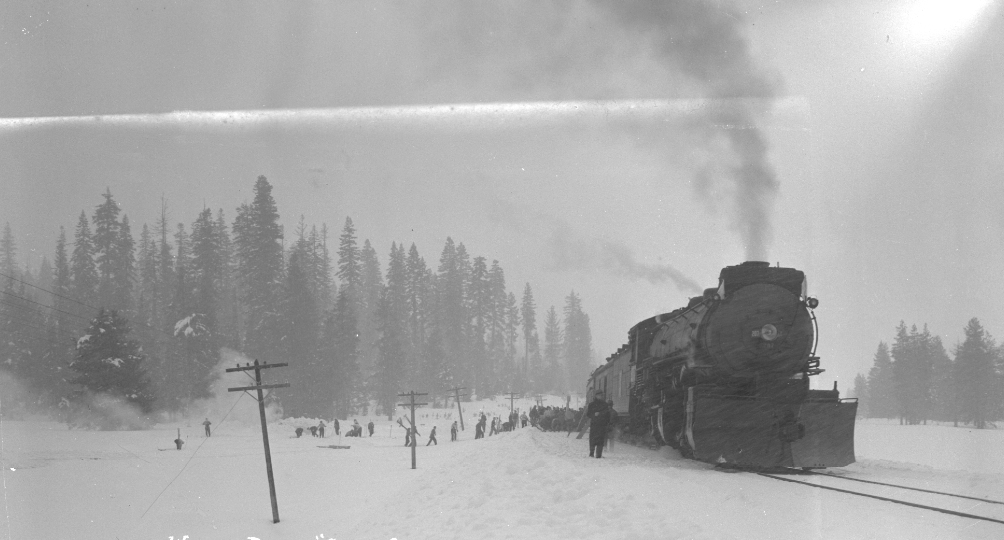
The Susanville progressives of the late 1930s were an active bunch. By February 1938 major progress had been made with ski runs at Coppervale and Willards. Then, the Western Pacific Railroad started running a special “Snow Ball Express Train” from Oakland, picking up passengers on various stops with the final destination at Norvell, just north Westwood. The passengers then embarked and spent the day frolicking in the snow.
Then Eric Hebbe and Leslie Mastolier* set their sites on developing a ski area on Diamond Mountain, just south of Susanville. With tremendous snowfall that winter, a number of ski enthusiasts would spend five hours hiking to the summit of Diamond, to ski down in less then two hours. However, no development occurred, though over the years, the topic surfaces.
*Mastolier was best known as the founder of Susanville’s Leslie Jewelry. During the 1930s and 1940s he made films of these episodes. His son, Gary, years later offered to me, but it never materialized.
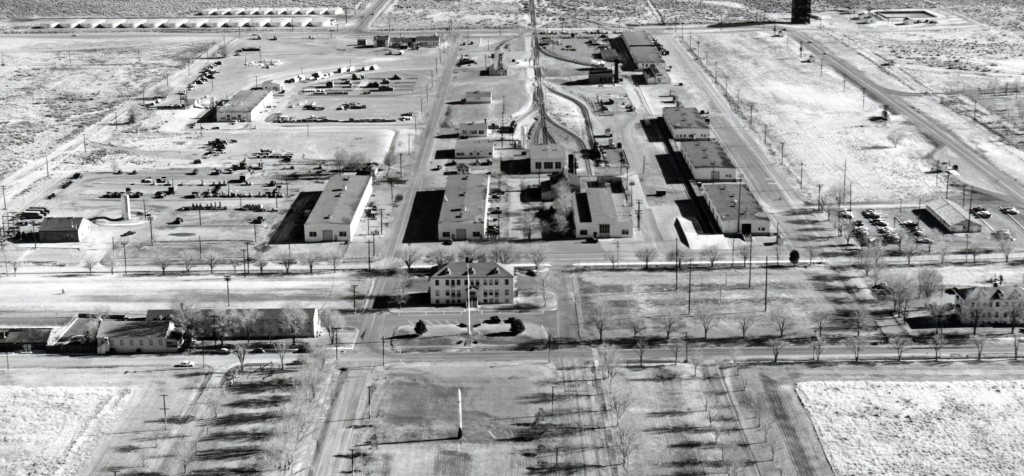
This is an excerpt of Harold Gilliam’s small booklet Sierra Shangri-La. This is a quite unique observation that one does not normally see in print. Gilliam noted that there was some anxiety/hostility towards the new residents of Herlong when the Depot was established in 1942.
“One Lassen controversy which for a time threatened to erupt into an intra-county feud has to a large extent been resolved by diligent effort on the part of community leaders.
“Out beyond Honey Lake in the southeastern corner of the county are long rows of concrete ‘igloos’ stretching for miles across the gently rolling plain—storage places for the big Sierra Ordnance Depot. In the nearby government housing which comprises the war-born town of Herlong live depot employees and their families, some 4000-5000 people altogether.
“Herlong is a complete community in itself, second only to Susanville in population, with 40 business establishments, churches, clubs, schools, a library, a weekly newspaper, a well-equipped hospital and a movie theater. The depot has storage facilities for all types of ordnance equipment, including anything from cotter pins to complete vehicles and from .22 ammunition to blockblusters.
“The sudden mushrooming of a town of such size in a county less than 20,000 could not avoid having considerable impact. The big political question which arose was whether or Herlong’s people, living on a government reservation and paying no county taxes, were to be considered an integral part of the county, with the right to vote and participate in county affairs.
“Legal authorities ultimately ruled that Herlong people could vote in the county and considerable heat was generated in the 1950 election, in which Herlong’s candidate was chosen as one of the County Supervisors.
“Since that time, due partly to an astute public relations program carried on by the depot’s former commanding officer, Colonel H.E. Hopping, the dispute has subsided and the people are no longer regarded as ‘foreigners’ by most Lassenites.”
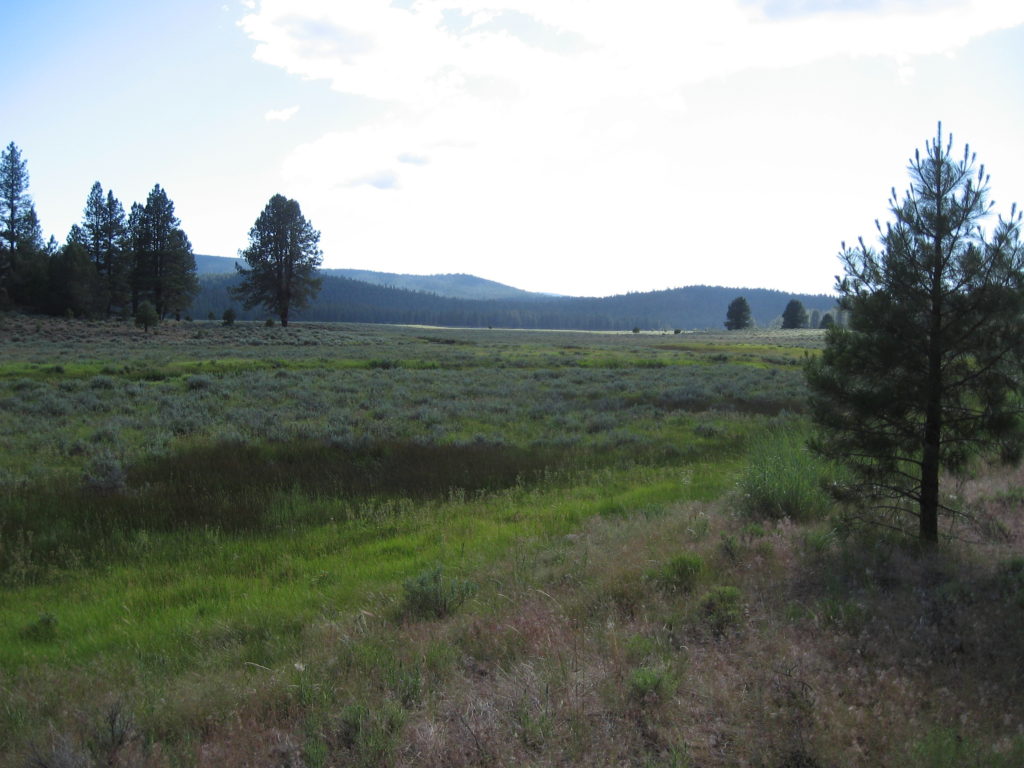
There are three McCoy Flats in Lassen County. Today’s feature is the McCoy Flat located approximately three miles west of Spalding Tract. It was named for Tehama County rancher Leo Lewis McCoy who used this area for summer pasture from 1874 to 1913.
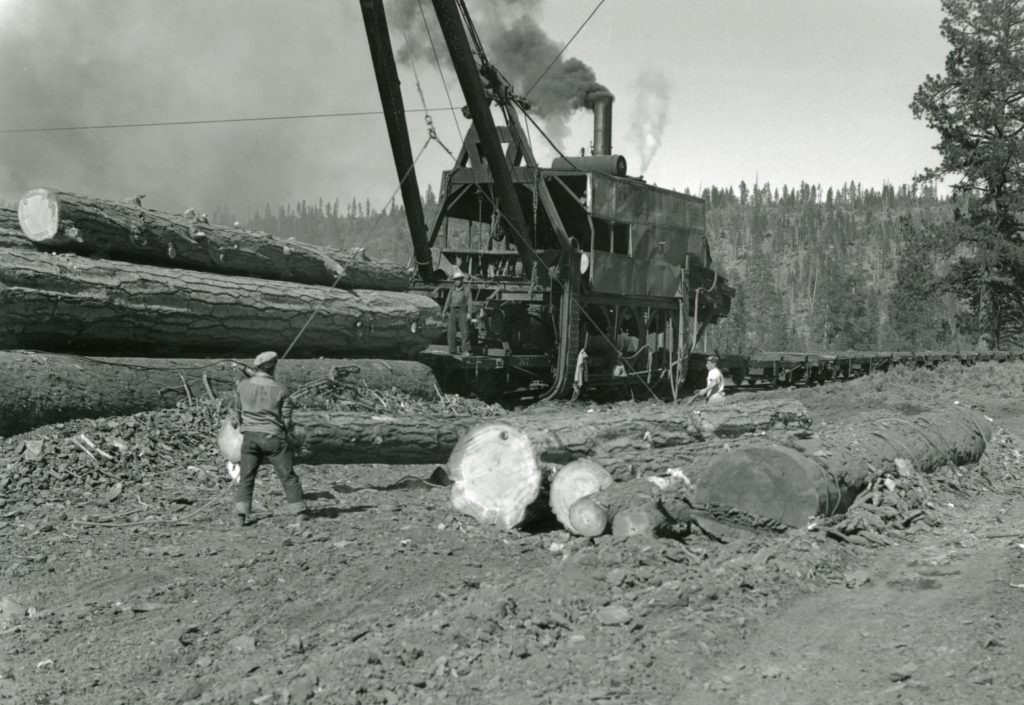
In 1951, there was a lot of activity at McCoy Flat when the Fruit Growers Supply Company logged the region.
Log landing at McCoy Flat, 1951. Courtesy of the Fruit Growers Supply Company
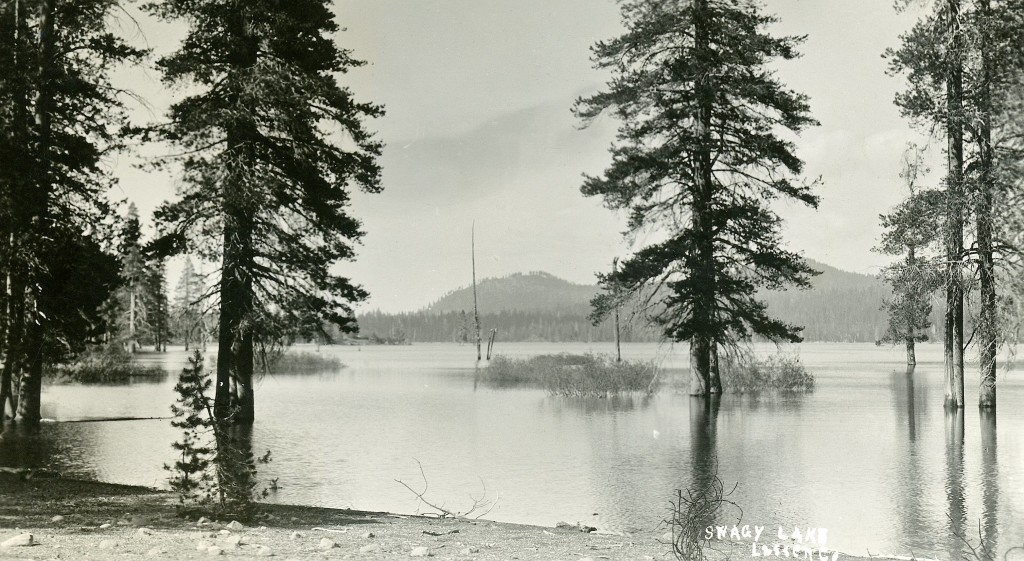
Snag Lake located in the eastern portion of Lassen Volcanic National Park, was originally called Snaggy Lake, and over the years its named shortened to Snag. The lake was formed 200 years ago from the lava flows that created the Fantastic Lava Beds. Trapped in the lake, after it was created, were a number of pine trees that died and are commonly referred to as “snags.”
The lake is only accessed by hiking or horseback. However, those who make the trek agree its worth it. I made the trek in the early 1980s, traversing most of the eastern half of the park.
A bassinet from the Westwood Hospital—Courtesy of David Zoller.
Awhile back, a visitor to the site came across a post about the Westwood Hospital. It was a topic, near and dear to him, since he was born there. Of course, the Maternity Ward of the Westwood Hospital was a very busy place back in Westwood’s heydays. This created a small chain reaction, wherein someone sent a photograph of one of the bassinets used in the Westwood Hospital where the newborns were placed. Thus, thank you David Zoller for sharing the same. I am sure when others are doing research about the Westwood Hospital where they were born will appreciate this.
This was a unique 1953 publication put together by Harold Gilliam, and most of material originally appeared in This World segment of the San Francisco Chronicle. Gilliam later became one of the earliest environmental journalist and had a lengthy career with the San Francisco Chronicle.
Gilliam’s prose and unique perpspective differs from a lot of promotional material. From time to time excerpts will be featured. The following are the opening paragraphs:
“Susanville comes as a surprise. You drive for hours through the Northern Sierra—up deep gorges, along roaring streams, through high mountain forests, beneath jagged peaks sheathed in ice this time of year—and suddenly there below you at the head of a wide valley is an attractive city, with homes, businesses, railroads and factories.
“This mountain city is the capital of the region that is legally part of California but in most ways is as different from the rest of the State as was James Hilton’s mythical Valley of the Blue Moon from the region which surrounded it.
“Here in this isolated valley men once fought a frontier war to maintain their independence from California. Here in 1952, serenely indifferent to threats of civilization’s atomic destruction, men work confidently on a project which will have no practical results for 150 years.”