Red River Facts Follow Up

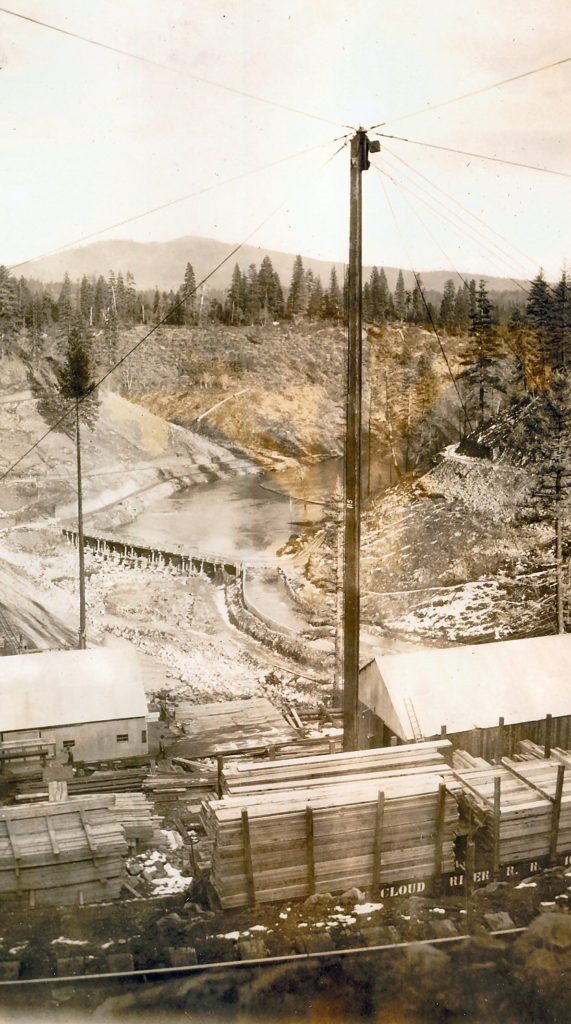
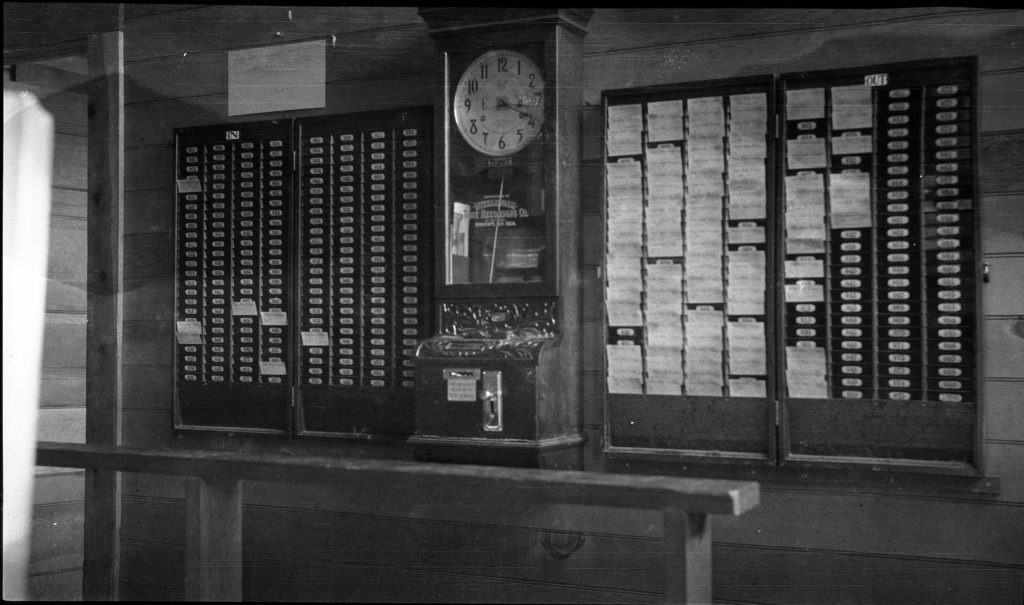
The final product being shipped out.

This post nearly slipped through the proverbial crack. Some may recall the initial piece on Red River Facts. Those two articles were done prior to my fall from grace so to speak and and thus some things were sidelined.

As some may recall, the 1916 publication extolled the many virtues of Red River Lumber Company’s plant at Westwood. In the end not only did it inform the perspective customer that they would receive a superior product at the lowest cost. Satisfaction guaranteed. One statement that caught my attention: “Special items can be cut to order at Westwood with unusual promptness. Even should it be necessary to fell trees and cut logs, every operation from stump to car moves without friction or delay.”

Support

1405 Main Street, Susanville

1405 Main Street, Susanville—Courtesy of George Sargent

In July 1925, Harry Riddell began construction of a home on the northeast corner of Main and Grand. The first item of business was a curved retaining wall. Instead of hiring a contractor, Riddell used day laborers to construct the house in various phases.

In August 1938 Steve and Helen Sargent, proprietors of the Grand Cafe purchased the Riddell home. After some minor remodeling the family moved in on September 1, 1938. The home still remains in the Sargent family.

Support

A Preview

Adin 1879
Adin, 1879

While it is Tuesday, at least I am providing a historical photograph, plus some insights as to future posts. First, is the relationship between the communities of Adin and Hayden Hill. While some years back I wrote an introduction about Congressman John E. Raker, though I never did any follow up accounts about him, whether it be his role in the Lookout Lynchings or the establishment of Lassen Volcanic National Park. Of course there is the topic how government timberlands ended being owned by large lumber companies, and how years later the government reclaimed some of those lands. Plus, I still have to answer some inquiries that I have received, and while I may be a bit slow, I will get the job done.

Hayden Hill
Hayden Hill, 1894

Tim

Who Was Herlong?

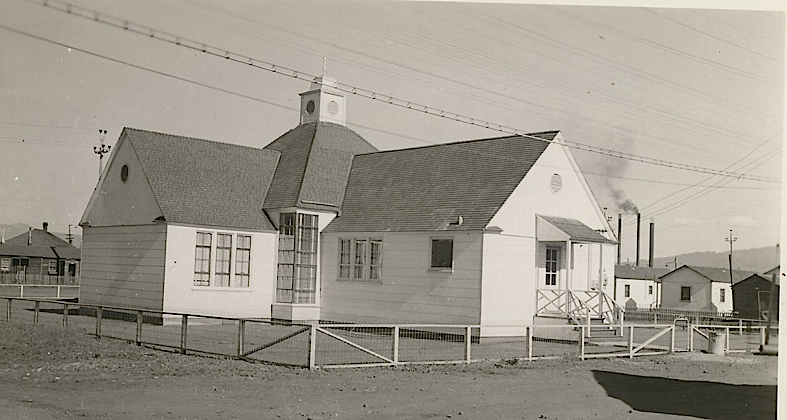
Herlong Post Chapel. Courtesy of Cindy LoBuglio

In 1942, the U.S. War Department changed the Western Pacific Railroad’s station from Hackstaff to Herlong, the location of its new Sierra Ordnance Depot. It was done so to honor the first ordnance officer to lose his life in World War II. In 1943, Lt. Col. E.A. Cryne commanding officer at Sierra Ordnance Depot supplied the following information to G.I. Martin, Western Pacific’s agent at Reno as to who was Herlong.

“Capt. Henry W. Herlong, Ordnance Department was born in Florida, August 27, 1911. He graduated from the U.S. Military Academy at West Point in 1933, at which time he was commissioned a second lieutenant. In September 1936, he was transferred from infantry to field artillery and was detailed to the ordnance department December 27, 1939.

“After pursuing a four months’ course in aviation ordnance at Aberdeen Proving Ground, Maryland early in 1940, Capt. Herlong was assigned as a student to the 51st Ordnance Proving Ground at Langley Filed, Virginia, where he remained until October 1940. At this time he was transferred to Savannah, Georgia for duty with the 5th Air Base Group.

“While stationed at Savannah, Captain Herlong was killed in the line duty at LaGrange, Georgia, June 22, 1941.”

Support

Where Are We—Wendel

January 26, 2020

Wendel, like its counterpart, Amedee to the south, owed its primary existence to the railroads. The buildings featured above were moved to this location from Amedee. The building to the left housed the Wendel Post Office when it closed in 1993.

Amedee, January, 1911. The “x” indicates the town’s old dance hall. Courtesy of Madelyn Mapes Dahlstrom

The building to the far right in Amedee, before it was moved to Wendel where it found its last use as a post office.

Spread the word, and encourage a friend to subscribe.

George Olsen Remembers Chester, continued

Chester Market, circa 1915. Courtesy of Hazel York Moller

“The worst snow was in 1895 and 1896. On January 4, 1896 it snowed four feet in 24 hours, with a total depth of18 feet for the month of January. Up until March there were 11 feet of snow on the level on the streets of Chester. On an earlier occasion in 1880, the winter was extremely mild until April when during that month it snowed six feet.

“In 1900 the first logging company arrived, which was known as the Sierra Flume and Lumber Company. Then in 1910 “Hi” Browne working for the Red River Lumber Company arrived to survey the surrounding country, but it was not until 1914 that operations for this company commenced.

“In 1910, also, the Great Western Power Company started buying land in this vicinity which ultimately led to the construction of Butt Lake and Lake Almanor. The first water was stored in these two lakes in 1915. Many local people were of the opinion that this rise in the water was cause of the eruption of Mt. Lassen on May 22, 1915. Science, however, discredits this theory.

“There were no fires or other damage in the vicinity of Chester as a result of the eruption, although smoke rose five miles high and the noise was tremendous.

“Chester has grown in fame as a resort town. Surrounded with good deer hunting country, with Lake Almanor in the foreground and with many trout fishing streams and lakes at nearby distances the Chester community has continued to thrive.”

Support

George Olsen Remembers Chester

Chester, California, 1914. Courtesy of Dolores Gasperoni

In 1943, George Olsen, who was born in 1871 at Big Meadows, now Lake Almanor provided a presentation to the Chester Lions Club about the history of the area. I thought some might enjoy.

“The first people to arrive in the Big Meadows country were Pete Olsen, Rube Stover and Thad Stover, about 1850, looking for better summer range land. Native grasses was found in the valley belly deep to a horse. These lands were used during the summer months for four years and in 1854 they settled down and built their homes in the valley. Previously they had been commuting from Oroville via Humbug Valley.

“Their means of livelhood was sheep, cattle and dairy products which were sold in Chico, Oroville, Susanville and later Westwood.

“I was born in the valley in the vicinity of Chester in 1871 and have lived there ever since. About the time of my birth the valley commenced to grow. Several families from the Sacramento Valley moved in, including Bert Johnson. Johnson was responsible for the naming of Chester which was named for a small town of the same name in Missouri.

“The Chester post office was opened in 1896 and was located at the north end of the causeway, near the present fish traps. Johnson was the first postmaster.

“From the beginning Chester was considered a resort town, depending almost entirely upon tourists and sportsmen for its livelihood. It was even considered a resort by the Indians who came there in bands of 300 and 400 to hold their powwows and to play Indian football. The local Indians in this valley were known as the Big Meadows Indians. Their most frequent visitors were the Hat Creeks from across the mountain.”

To be continued tomorrow.

Support

Where Are We?

January 26, 2020

In keeping with this week’s theme of Go Exploring, for some this might be easy and others not so. That latter group needs to get out more. I provide two hints—one of the structures was used by a federal agency—two, both buildings came from another location.

Spread the word, and encourage a friend to subscribe.

Roseberry House Redux

The old George & Annie Bailey residence, January 25, 2020

Actually, “redux” is not exactly the word I had in mind. Many are familiar with the Roseberry House , 609 North Street, Susanville, which the historic home is a Bed & Breakfast. The house was built by local contractor Charles Odette in 1903 for T.A and Viola Roseberry. Many people, however, are not familiar that in that same year, Odette built a duplicate of the Roseberry House for George and Annie Bailey in the Tule District near Standish. However, the Bailey house is not visible from the County Road, since it sits back about a quarter of a mile.

Roseberry House, April 27, 2020

Subscribe

Constantia, No more

The site of the store, April 28, 2020–Kim Dieter

Some time last month the old Constantia store, bunkhouse and the original manager’s house were burned down. Not many details as to why. Thus, the carriage house is now the only remaining building left of Constantia.

The old Constantia Store, 1975. .

Tim

Exploring Lassen County's Past