Lassen County has many times displayed its “can do spirit.” An interesting example occurred in the fall of 1929 with its exhibit at the Los Angeles County Fair. Lassen County had a two pronged exhibit. What generated considerable interest among fair attendants was a very large relief map depicting the various landmarks of the eastern portion of Lassen Volcanic National Park, located in Lassen County. The judges took notice and the exhibit won a silver medal.
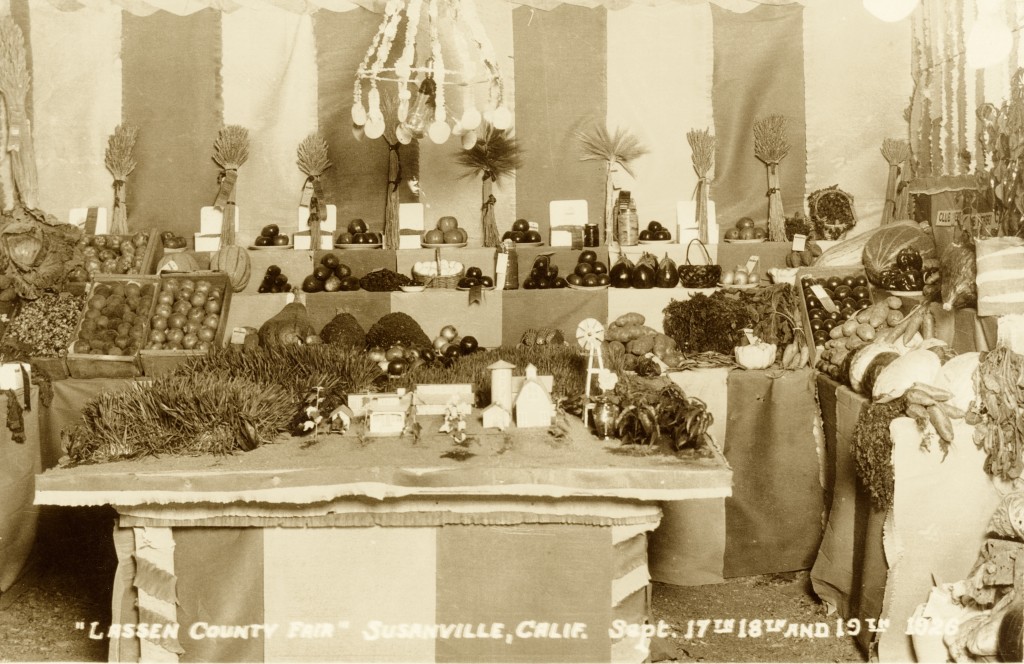
Produce exhibit Lassen County Fair, 1926.
The other half of the display featured a wide variety of produce from the Honey Lake Valley. The crops displayed came from the following farmers: T.D. Woodham (Litchfield), George Bigelow (Litchfield), Mark Stewart (Standish), Charles January (Janesville), Will Dill (Wendel), Clark Bros. (Susanville), J.H. Lambert (Standish) and J.H. McClelland, (Standish).
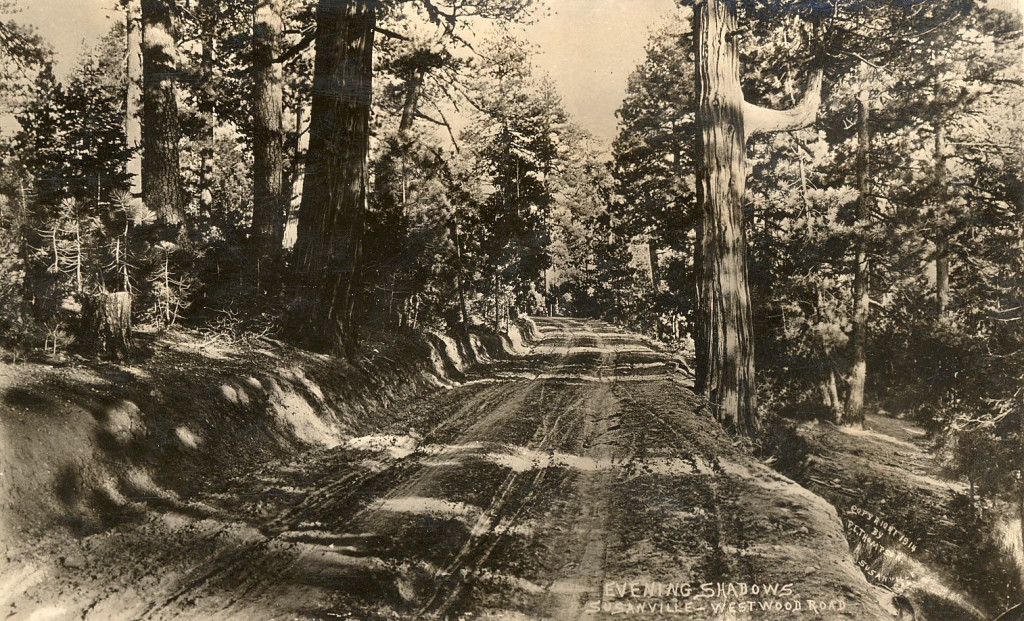
In the spring of 1916, California State Highway Commissioner, H.S. Cromley, announced that convict labor from Folsom State Prison would be used for the initial construction of a state highway between Susanville and Red Bluff. Cromley made it clear the inmate labor was not forced and those who wanted to do such work was voluntarily. In the meantime, Lassen County officials lobbied hard that initial construction be done to connect the communities of Susanville and Westwood. They were successful.
On August 25, 1916, 54 convicts (the term used then) from Folsom State Prison set up a camp just west of Susanville, it being. the site of today’s California Division of Forestry headquarters for the region. When not working the inmates were allowed to roam freely, such as hiking down the canyon to the Susan River to swim. They were, however, prohibited, to go into Susanville.
The inmates worked two eight hour shifts. The main focus was work on the entrance into Susanville, a new survey route would enter the town connecting with South Pine Street, versus the old route of Prattville Road and North Pine Street. One other accomplishment was the survey of a new route over Fredonyer Summit. The camp remained opened longer than usual, due to weather conditions, and shut down on December 15, 1916.
Spread the word, and encourage a friend to subscribe
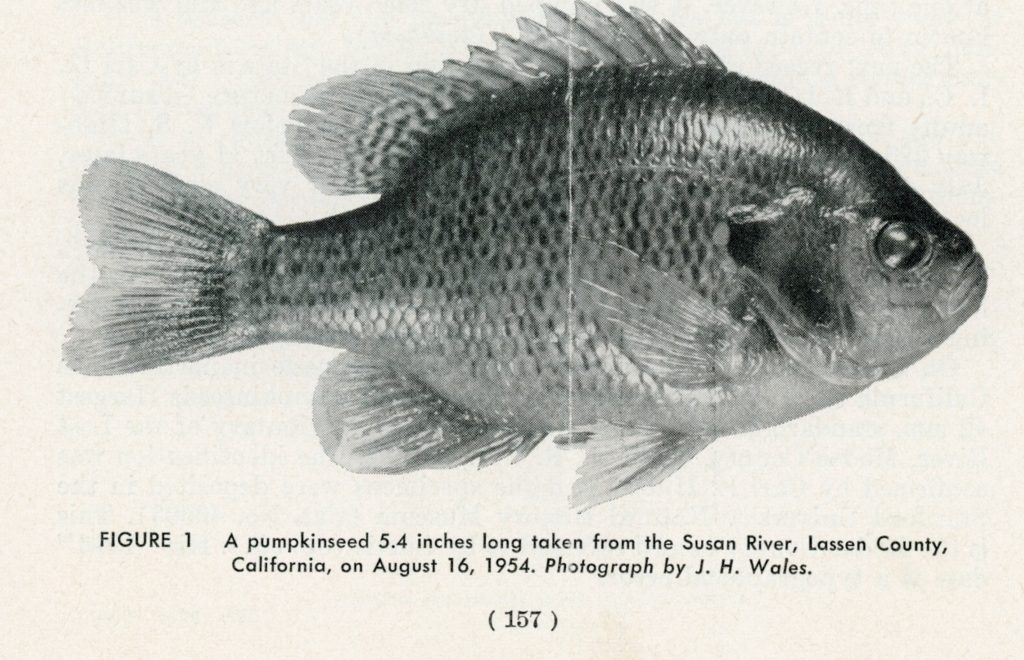
Local anglers may find this is of interest. The sunfish is a non-native species of California. In certain ways, introduced late. The first one found was in a private reservoir in Mecca, Riverside County in 1939. Its origins were believed was introduced by a Mr. Sheets who obtained the fish from the East Coast. What came next baffled fishery biologist. The next catch occurred on July 4, 1942 when members of the Tubbs family caught seven in the Susan River near Litchfield. From that time forward the fish slowly were found in other waters of California.
Spread the word, and encourage a friend to subscribe
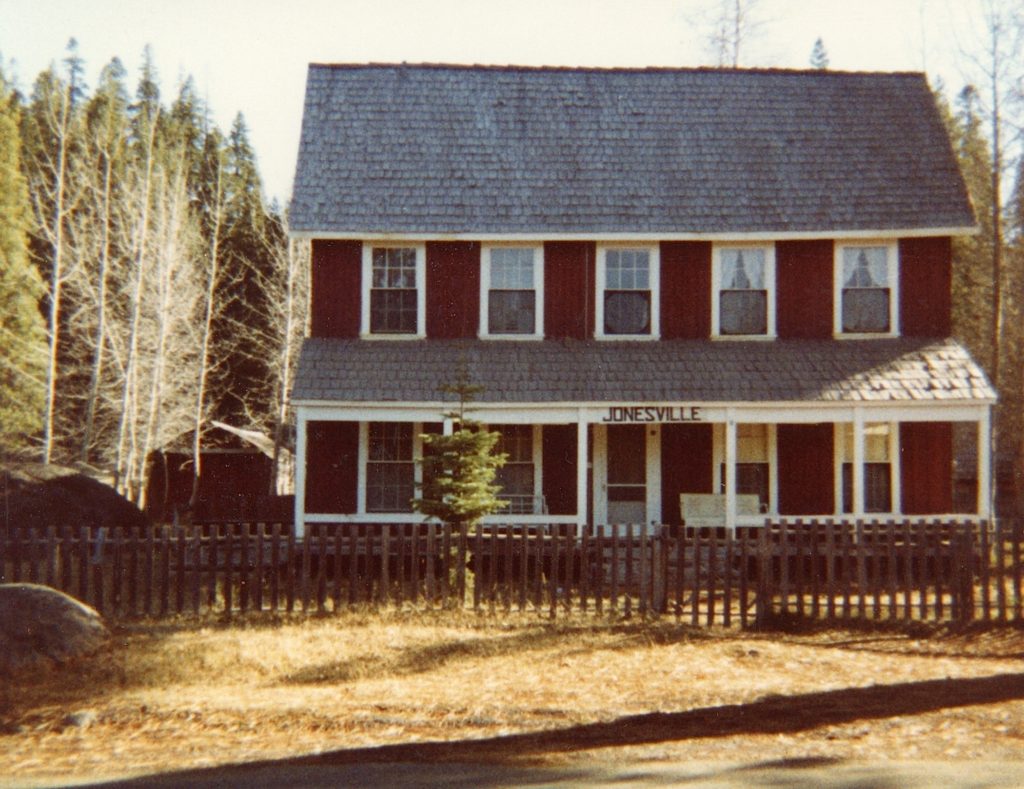
Fall is a great time of year, if you can or the conditions permit to get out and about. A worthwhile sightseeing trip is Jonesville on the old Humboldt Wagon Road. One of its unique distinction is that it is the only intact stage-stop on that road. The Humboldt Road came into existence in the early 1860s. It originated in Chico, then to Big Meadows (Lake Almanor) to Susanville with a final destination of the Humboldt mines of Northwestern Nevada. The line later extended to the mines of Southwestern Idaho.
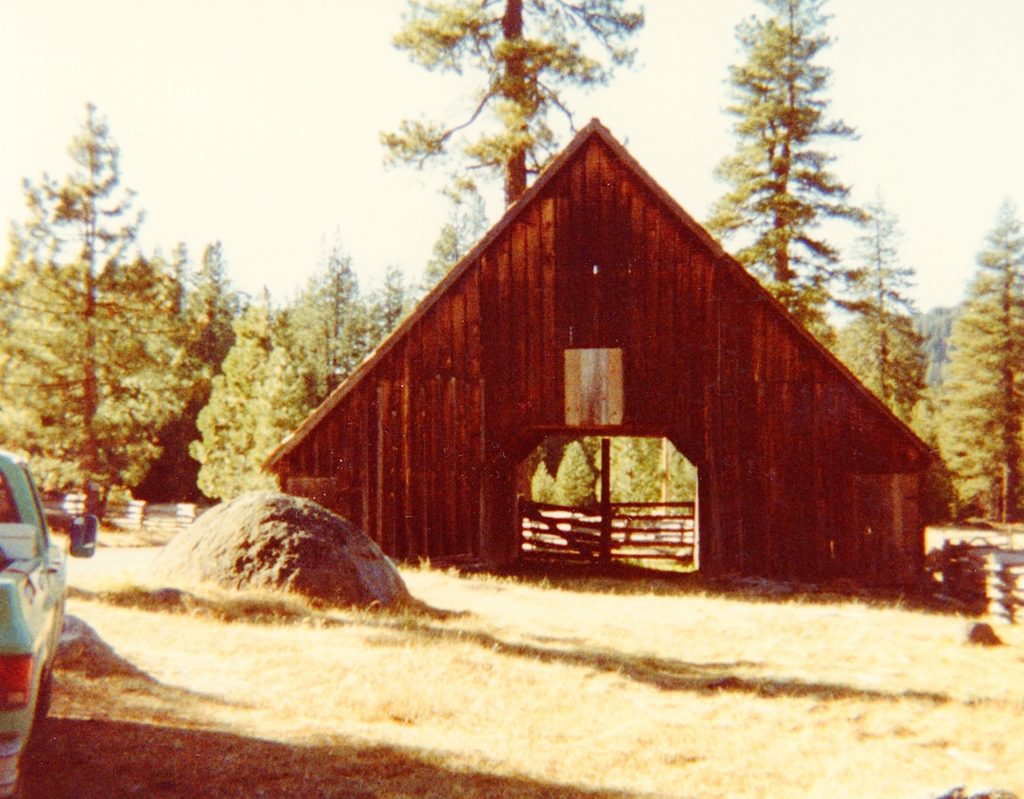
The Jonesville Barn, November 25, 1980
To make the jaunt take a forest service road west of Lake Almanor which will take you to Jonesville. From there the next destination is Butte Meadows which you can connect to Highway 32 and make a loop. Enjoy!
Yesterday, marked the 2,000th historical post on this site. There are now 122 pages that make up Tim’s Blog that go back to February 2015. Remember if you go to the front page, there is a magnifying glass symbol in the upper right hand corner, which you search just by typing in a key word or two. Personally, it comes in handy for me when researching a topic to assist others. Enjoy.
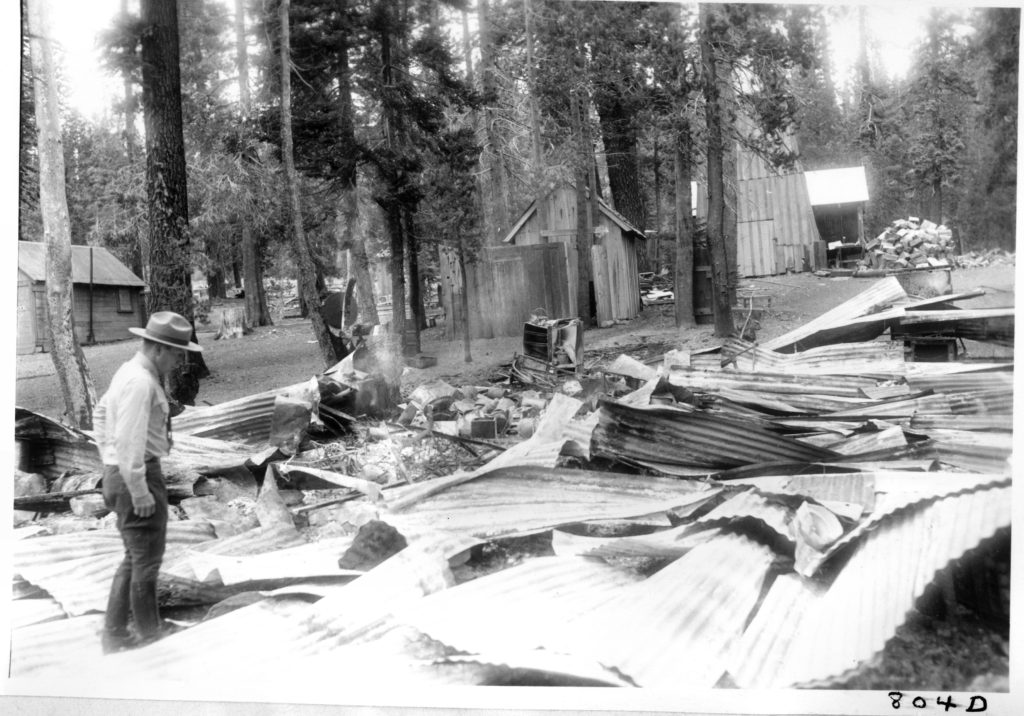
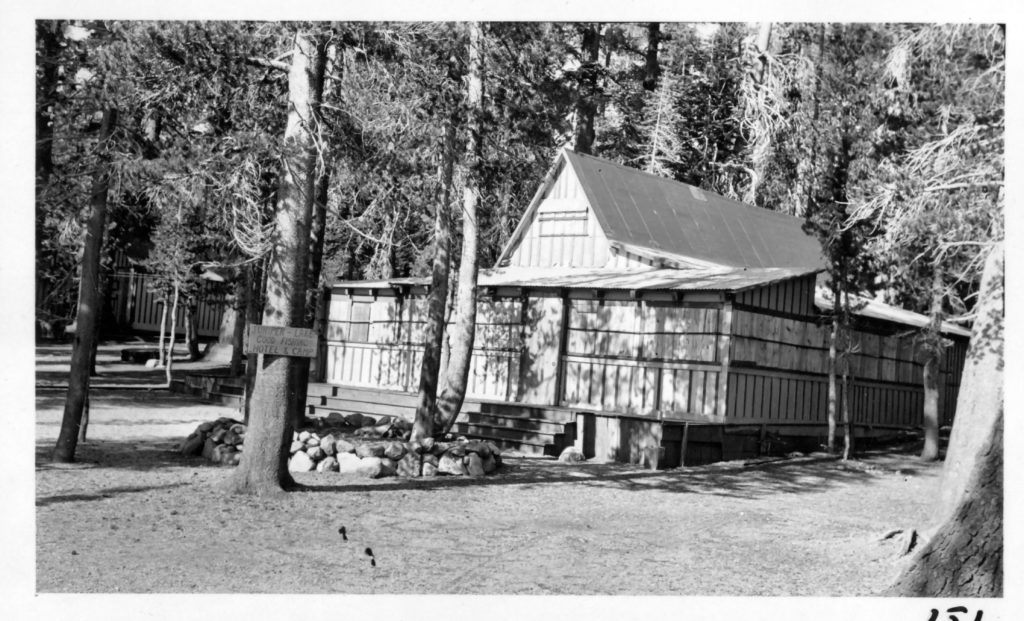
Inspecting the lodge remnants—National Park Service
By mid-September 1937, C.P. and Cora Snell closed the Juniper Lake Lodge for the season to return their home in San Francisco. In mid-October 1937, Park Ranger Barton went on a routine inspection of Juniper Lake. What he had found was Snell’s lodge had been destroyed by fire. The area had recently received an electrical storm that was probably the cause of the fire. The lodge had a galvanized iron roof and it was believed lightning struck it, igniting the fire. In the aftermath, the lodge was reduced to ash and rubble.
Not to be undaunted the Snell’s built another. There was a major change in the operation, as the Snells leased it. This remained the status quo for a long time. In 1950, the Snell’s granddaughter, Leslie, along with her husband, Ray Hanson decided to “rejuvenate the resort.”As Leslie recalled, “We had eight cabins and a small store. We rented boats and campsites and quite a few of the vacationeers returned year after year.”
The Hanson’s stint of being operators would be short-lived. In 1955, the National Park Service filed a “friendly” condemnation suit against the Snell family to acquire some 400 acres of private property inside the park. At that time the Hanson’s closed the lodge and in 1957 the park acquired ownership of the property.
In the early 1920s, C.P. Snell constructed a modest lodge at Juniper Lake, inside Lassen Volcanic National Park. It was a venue for him with his Juniper Lake Resort, as a sales feature for a 1500-lot subdivision there. His wife, Cora was in charge of the lodge, and she hired a cook and supervised the kitchen and dining room. Cora’s many duties were to run the store, along with cabin rentals and campsites. C.P.Snell busied himself with the sale of lots, road improvements and made regular trips to Westwood for supplies. An outgoing man he would greet visitors and ask them to sign a guest register.
The sale of lots never materialized to the degree that Snell desired. The remoteness of Juniper Lake and the fact that it is only accessible for about four months of the year, did not help. While the lots did sell, the buyers rarely built on them. During the 1920s, Snell sold an average of six lots a year.
Tomorrow: The demise of the lodge.
Spread the word, and encourage a friend to subscribe
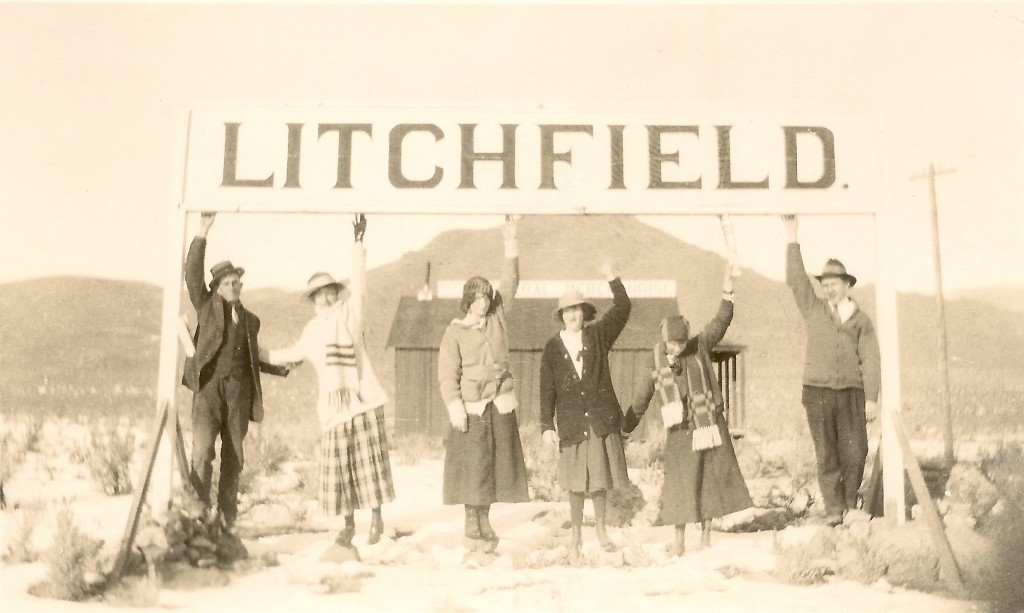
A town is born, Litchfield. Courtesy of John M. Gibson
In early 1912, when the news, survey and construction began on the Fernley & Lassen Railroad that would traverse the Honey Lake Valley with its ultimate destination of the new lumber town of Westwood, spread like wildfire through the investment community. Land speculation was rampant. It was none other than the DeWitt Postmaster, W.B. DeWitt, of the Standish-Tule District became a tour guide of bankers from Southern California willing to invest in the region. It was this particular district that had an appeal that could be a major agricultural shipping point. The established community of Standish had been ruled out, it being three miles from the railroad. Two sites were in the running—the B.F. Gibson ranch and the Purser ranch, the latter a few miles west of Wendel. It was the Gibson ranch that appealed to the investors, and thus the foundation was laid for a new town Litchfield—named in honor of Gibson’s father-in-law, Andrew Litch.
Spread the word, and encourage a friend to subscribe
A October 1931 Susanville Rotary Club meeting turned out to be an unusual affair. As one observer noted that these meetings usually are neither serious or gloomy.
The meeting began with local banker Charlie Bridges about the serious problems facing the banking industry. Local attorney, J.E. Pardee went on about oppressing taxes—but then this person did not believe in higher education, either.
The main speaker, was A.J. Mathews of the local telephone. A little bit of background on Mathews (1886-1950). Mathews came to Susanville in 1910 from his native San Francisco, with a handful of others to form the telephone company, which they were successful. Mathews became very involved in cvic affairs, even was a California Assemblyman, and served as House Speaker.
Anyhow, to our story. Mathews read, what some considered a weird tale regarding the world wide depression and an attempted solution as a comparison.
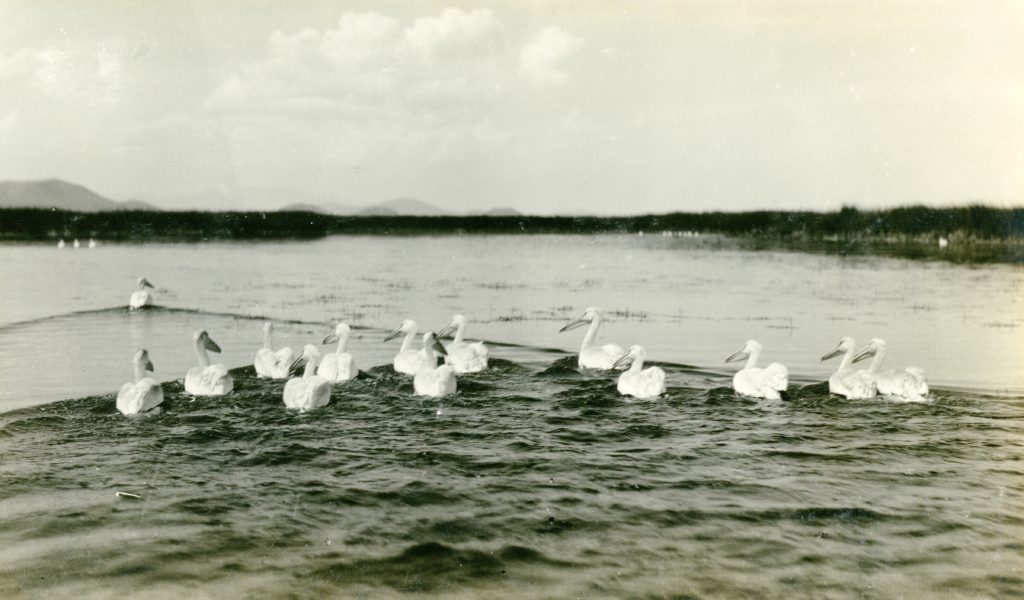
According to Mathews, a number of pelicans had been bred and brought up to depend upon stale fish dumped into the San Francisco bay by fish dealers. When the slump came, there was no longer any fish to throw away and the pelicans were slowly but surely starving to death.
The humane society in an attempt to solve the problem, imported a number of live, bustling birds that had never heard of a fish line or fish kitchen, or whatever it is that pelicans call free food, and turned them loose with the native flock. When it came time to dine, the strangers dived into the sea and hustled a dinner. The natives looked on in wonder, but eventually they took the courage and began rustling for a living, and a colony of starving pelicans became over night a thriving prosperous community of well fed birds.
That is how Mathews ended the story without any type of moral of the story, and left a few befuddled how this would solve the unemployment problem from the financial depression.
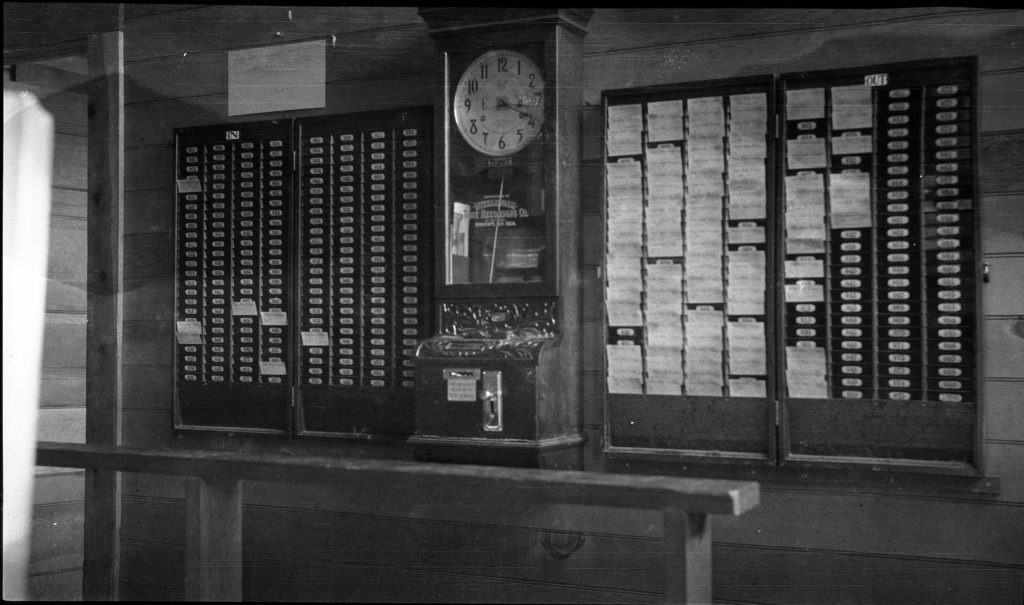
The Red River Lumber Company’s Time Clock, 1915—Otto Kratz Collection
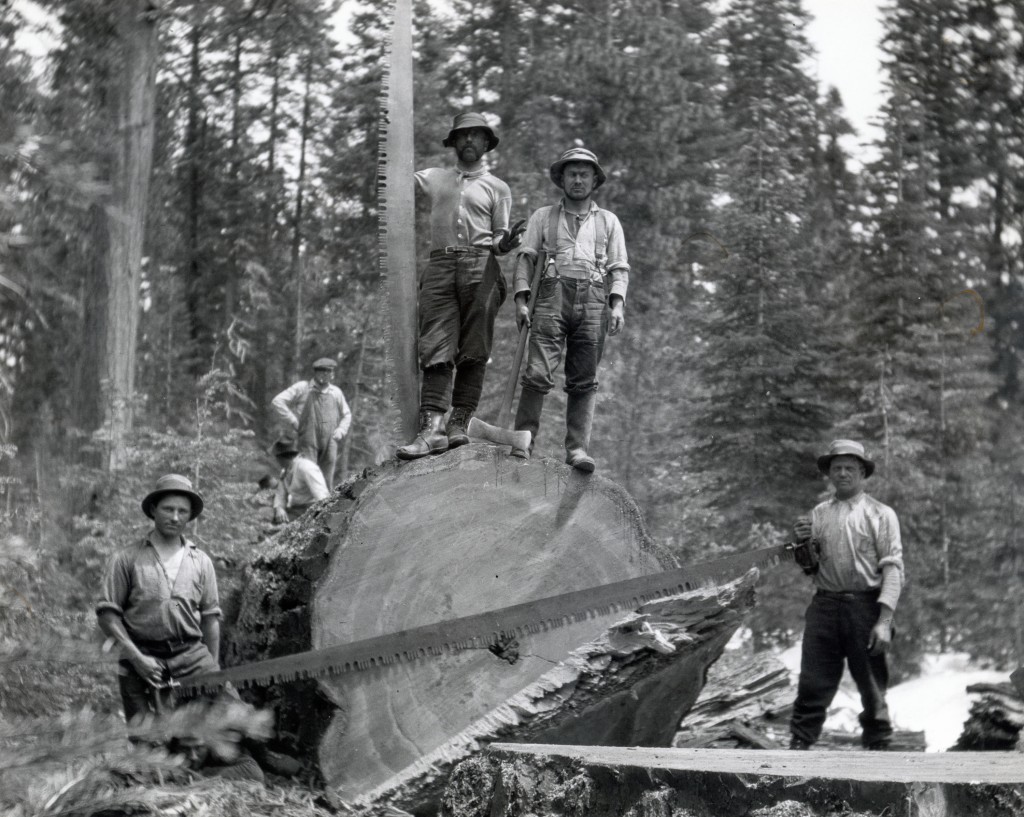
The Loyal Legion of Loggers and Lumbermen, also known as the 4Ls was a unique government intervention to get sawmill operators and their workers to work together during World War I. This unique labor organization was created due to a lumber strike of the Pacific Northwest that crippled the production of spruce lumber. This commodity was essential for its strength and flexibility in airplane construction and the government was in dire need of the aircraft.
When the War Department intervened it was able to get both the mill operators and lumber workers to work together as a patriotic association. Concessions were made by mill operators to provide for an eight-hour day and better working and living conditions. In return the employees were required to sign a loyalty pledge. Those who refused to sign the pledge were not hired. In essence, the 4Ls was a government sponsored union.
After the War the 4Ls reorganized and it remained a regional organization of the Pacific Northwest. It was the American Federation of Labor that was the main rival of the 4Ls. It had problems competing with the 4Ls since the latter was a de facto “company union.” The company’s management were members of the 4Ls and basically dictated the organization. This had great appeal to Red River Lumber Company. In July 1933 Red River joined the 4Ls, and Ted Walker, a member of Red River’s management served on its Board of Directors. It was short-lived when Congress approved the Wagner Act that allowed the labor movement and union formation more clout.
Spread the word, and encourage a friend to subscribe