Old Lucy

Old Lucy
Old Lucy

On September 29, 1929 Old Lucy a colorful character on the streets of Susanville passed away, purportedly at the age of 125. While she best known as Old Lucy, she also had another Anglo name, Sally Norman. Dubbed a “picturesque” Native American of the era, she was a familiar sight as she ambled about Susanville, bundled up in numerous clothes, walking with the aid of a stick. People who knew her back in the 1870s considered her old back then. While her age was exaggerated when she died, documents placed her age at around 100.

She had a son Billy. Billy Norman who died in 1948 and there is a spring on the Susanville Indian Rancheria known as Billy Norman Spring.

Support

Lassen County Pioneer Society

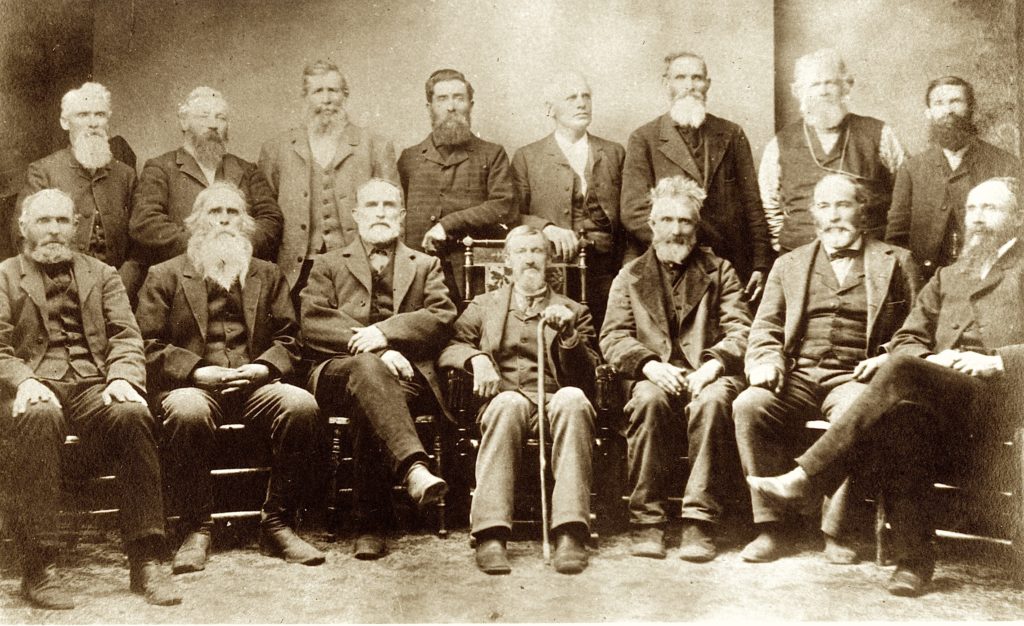
Seated Left to Right: Robert Johnston, Loyal Woodstock, Frank S. Strong, William H. Jenison, Frank Thomas, Alexander T. Arnold and Eber G. Bangham.

Standing Left to Right: John Garrett, Wright P. Hall, John Davis, Abraham L. Tunison, Ephraim V. Spencer, William B. Long, Thomas Montgomery and Dr. R.F. Moody.  Photograph circa 1892.

This was a very short lived organization. In 1882 brought an awareness of the area’s early history with the publication of History of Plumas, Lassen & Sierra Counties, California. On February 14, 1882 a group of gentlemen gathered at the Johnston & Wood Hall in Susanville. The purpose of the gathering was the formation of a pioneer society. Twenty-four of the earliest settlers of the Honey Lake Valley attended. Dr. H.S. Borrette who gave the opening statement stated the purpose of a pioneer society was to perpetuate and cement the friendships of the long-ago.

At the conclusion of the meeting, E.V.  Spencer, W.H. Crane and Marcus Chamberlain were selected to organize the society. On March 4, 1882, the first meeting of the Lassen County Pioneer Society was held. Membership was open to any male citizen who was born or settled within the territory now comprising Lassen County prior to July 1, 1860. Annual dues were set at $2.50. The Society had a total of forty-five charter members. It was the intent to hold an annual meeting on the first day of June at Susanville.  That never happened.

It is not known why the above photograph was taken. All but two featured would have been eligible to join the Society. Those two were John Garrett who came in 1862 and Dr. R.F. Moody who arrived in 1861.

Donate


The Sage Brush Press

The Sage Brush
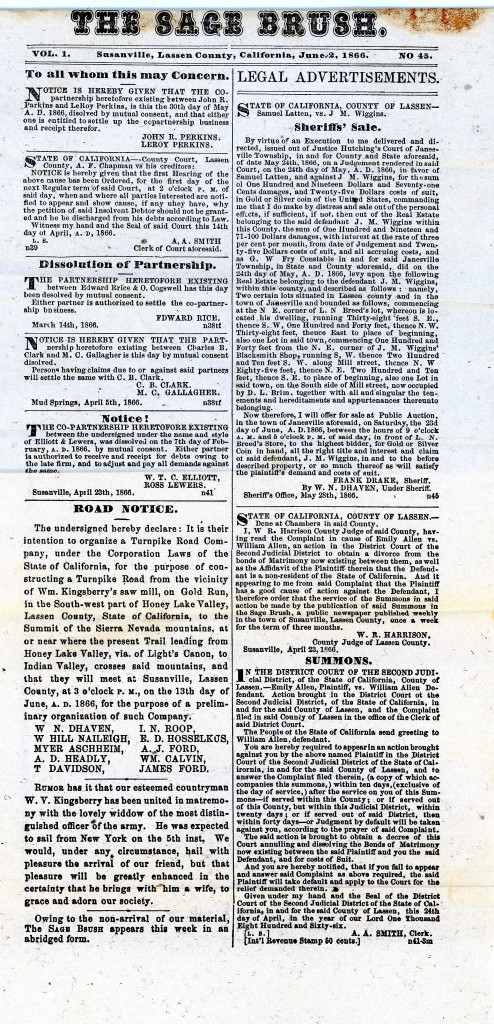
The June 2, 1866 issue of The Sage Brush measured only 6 inches by 12 inches and was printed only on one side.

In my opinion, which does not seem hold much weight, I was rather impressed by the fact that in 1892 four newspapers were published in Lassen County. Lassen County only had a population of 4,400, so there were more jack rabbits than people. Those four newspapers were: Amedee Geyser at Amedee, Mountain Tribune in Bieber and the Lassen Advocate and Lassen Weekly Mail both published in Susanville. However, it was short-lived as the Amedee Geyser went bankrupt in 1893.

This would occur a second time after the establishment of Westwood. The four newspapers co-existed until 1939, when the Lassen Advocate purchased the Lassen Mail. The general populace was well informed then. Sadly, today there are no newspapers.

Subscribe

Red River’s 1917 Logging Season

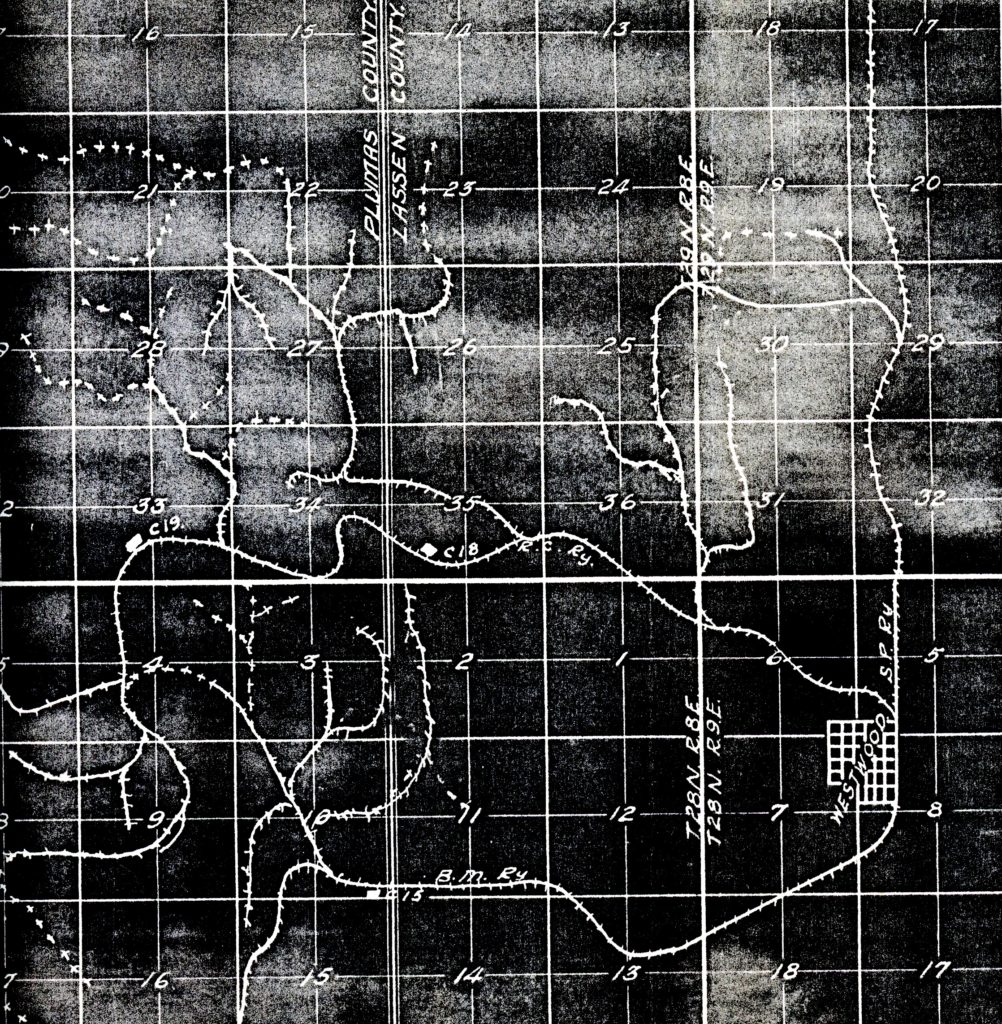
This map was recorded in official records of Lassen County indicating where Red River would log in 1917.

The 1917 logging season for the Red River Lumber Company was somewhat different than previous years. After all, it should be duly noted the majority of its logging was focused on its contract with the Great Western Power Company to log and clear Big Meadows of timber to make way for its new reservoir Lake Almanor.

Now with that obligation out of the way, Red River began logging its timber just adjacent to Westwood. Red River planned to increase its output by logging 150 million board feet in 1917 versus that of 137 million the previous year. This, of course, reflected the demand for lumber with wars ravaging Europe and elsewhere. This undertaking required operating five logging camps and building some twenty-five miles of railroad spur lines.

Donate

A Surprise Tuesday Tidbit

On the way to the mill.

Actually, I had something ready to go , but due to some unforeseen  circumstances I had to pull it for a later date.

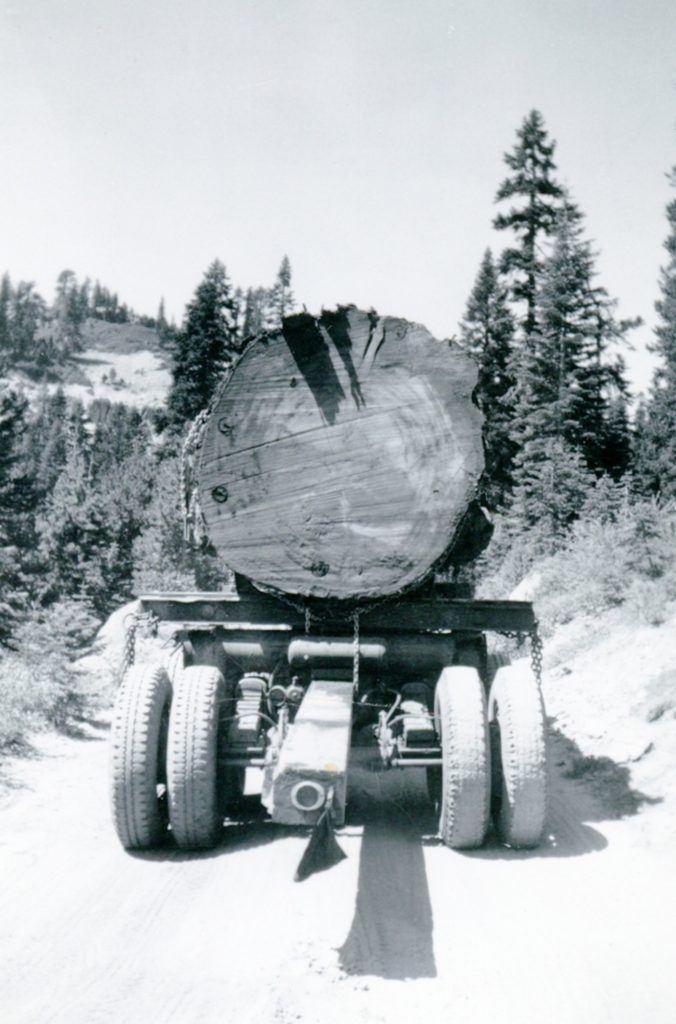
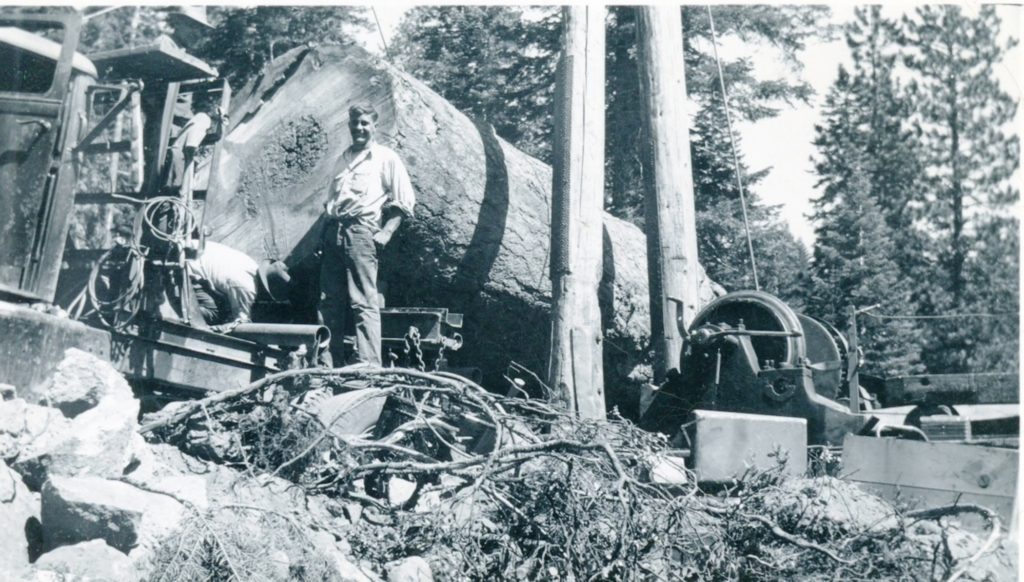
In a conversation on Sunday about the Purdy Brothers logging episode and the one log load. I happen to witness my Dad’s last one log load. It was a huge sugar pine located near Poison Lake, i.e. Swains Hole. For those who knew my father, lets just say this was a very colorful episode. One party that was not pleased was the Sierra Pacific’s mill in Susanville. They no longer had the sawing capacity to handle such a large log and had to dynamite it in to two pieces.

Swains Hole, October 22, 2019

Tim

P.S. – A piece of evidence was found many years later in Dawson Arnold’s basement!

Postcards of the Past

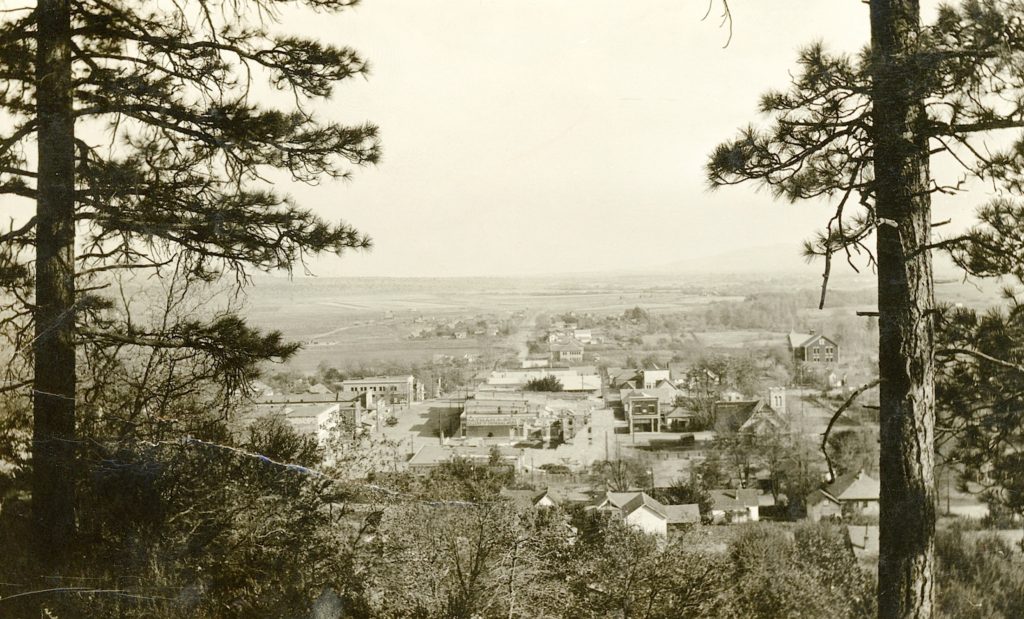
Susanville, 1916—Hazel Moller

A century ago, sending a postcard was a quick, convenient way to send someone a note, whether to let know relatives they made it to their destination safely, etc. Something akin to today’s email.  What made a lot of postcards of the past were the image could be quite unique. When one had their film developed, they could have their images printed on postcard size stock, ready to send. The above photograph is a perfect example. It was not a professional postcard, just a picture someone took to send to their friend.

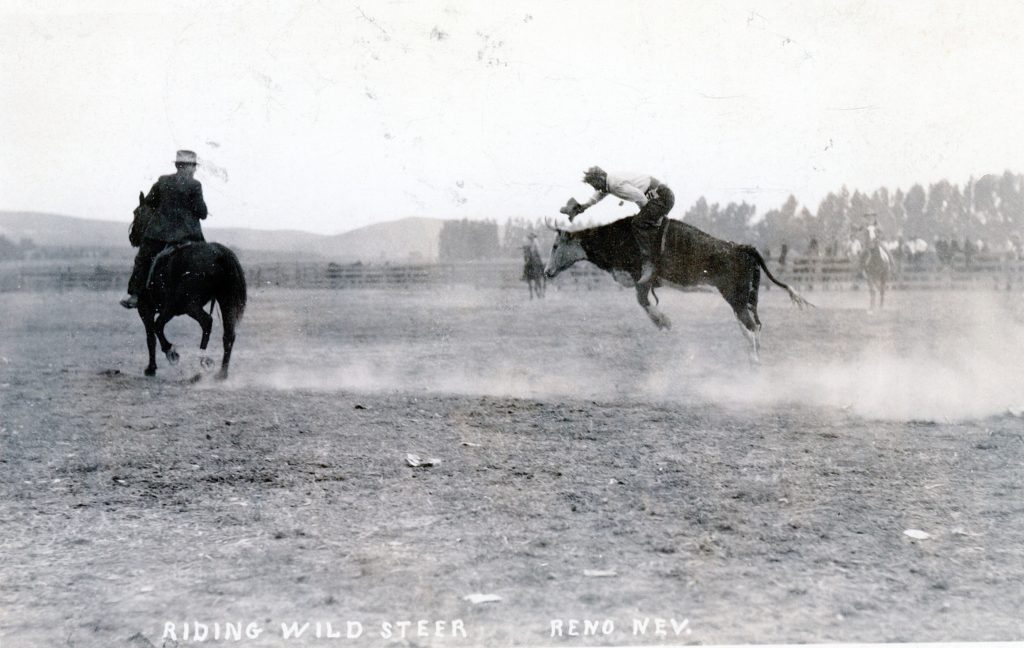
Reno Rodeo, 1926

The above professional postcard of the Reno Rodeo, is a family treasure of sorts. It was sent in April 1926 by my grandfather, Ira Purdy, to his wife, Margaret in Sacramento. Ira wrote, “leaving Reno for Susanville to look for work.” When Ira arrived in Susanville, he found employment as a mechanic for Doyle-Hunsinger Ford dealership and where they spent the rest of their lives. It was one of the few paper trails they left.

Donate/Support

An Early Purdy Brothers Logging Episode

Frank Phelps at Soda Springs with a one log load, 1949—Leroy Purdy

In 1948, James and Leroy Purdy formed Purdy Brothers Logging Company. During their early years of operation they did extensive logging around theTruckee region. Since today, marks my father’s birthday (Leroy) I just waned to share two pictures taken in 1949 while they were logging at Soda Springs. After all, one does not see that many photographs of one log loads!

On the way to the mill.

Tim

Where Are We—Bailey (Bayley) Creek

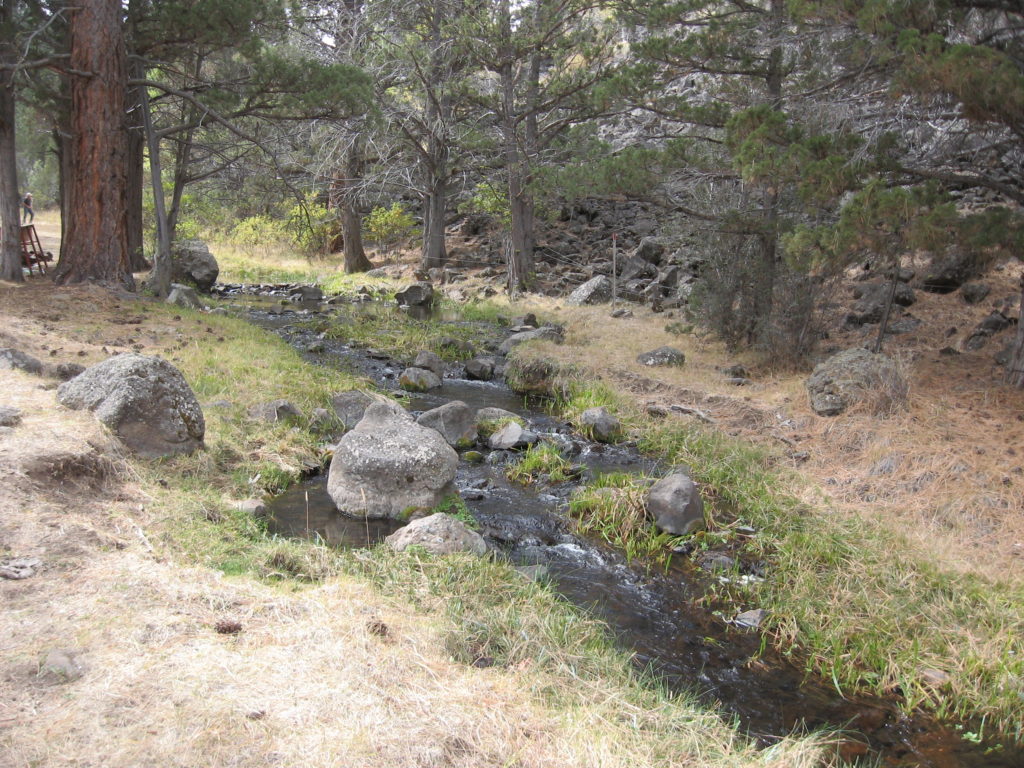
Bailey Creek at the popular picnic area of yore, October 8, 2020

Bailey Creek is located on the north flank of Fredonyer Mountain and flows out into the Madeline Plains. It was originally known as Bayley Creek, for George H. Bayley, a stockman of the Likely region of Modoc County. For a number of decades it was the location of the Old Timers Picnic, which consisted mainly of past and present residents of the Madeline Plains.

In 1899, George Bayley constructed a reservoir upstream. That was original intention for the visit there last fall, but a new locked gate prevented us from going there. It just so happens the reservoir along with 280 acres is for sale.

Support


George Wingfield’s Meadowbrook Ranch

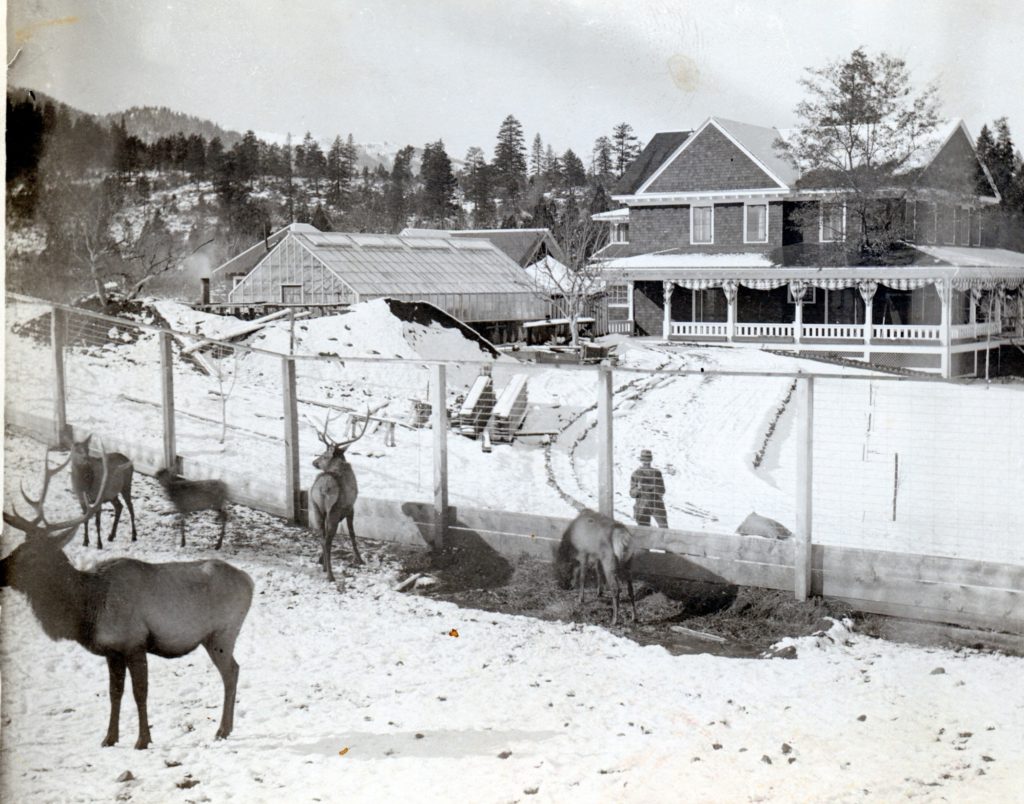
Wingfield’s Meadowbrook Ranch—-Betty B. Deal

George Wingfield (1876-1959) for whom Wingfield Road is named for, was very prominent in the affairs of Nevada. He made his fortune in the early 1900s in the Goldfield, Nevada mines. By 1907 he had an estimated worth of $25 million. What distinguish Wingfield from his counterparts who met with incredible wealth from Nevada mines, is Wingfield remained in Nevada and made considerable investments in the state. He was also a formidable power player in Nevada politics. Wingfield also established a banking empire in Nevada, though he would nearly loose everything in the Great Depression. Wingfield would make a second comeback with the Getchell mine near Winnemucca.

In 1910, Wingfield purchased the Clint DeForest property at the base of Diamond Mountain for a summer home. It is known today as Mountain Meadows Ranch. It was an elaborate estate complete with a wildlife preserve. What is interesting when one considers the amount of money spent developing the property, and enormous cost of yearly maintenance, he did not spend that much time there.  In 1923, Wingfield sold the property to the Lassen Lumber & Box Company.

Support

Susanville’s Richmond Road, 1905

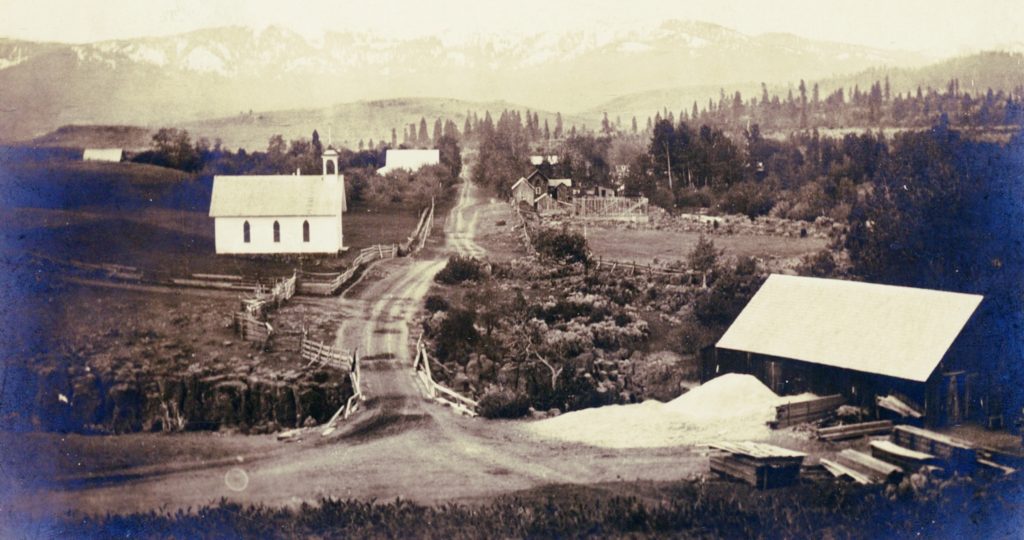
Richmond Road, Susanville, 1905

This particular photograph for some reason I have a fondness for. The right foreground is the Arnold Planing Mill that was destroyed by fire in 1914. Further down the road to the left is Sacred Heart Church, built in 1892. The church was moved in 1909 to the corner of Nevada and Union Streets.  When the church was built there was some local criticism about the location, especially, though not seen in this picture, but to the far right was Chinatown. It is interesting to note, when the church was moved, it was located in Susanville’s original town of the 1870s.

Support

Exploring Lassen County's Past