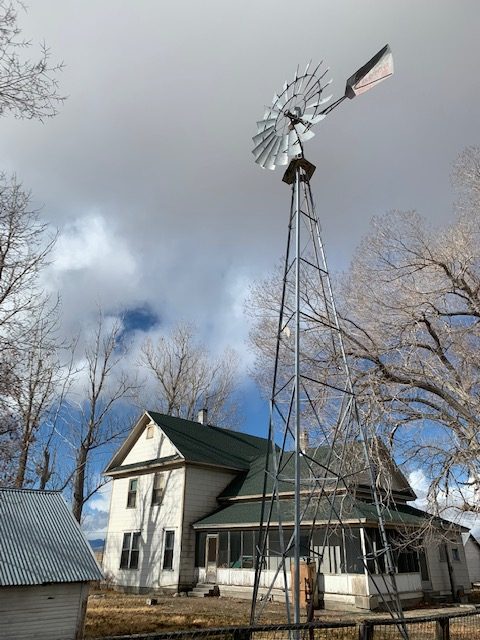
Bringing electricity to the Honey Lake Valley was a long, slow process that began in the 1920s. When power finally did arrive, it brought about the slow demise of the windmill. Phil Hall (1909-1996) and a native of Long Valley, commented that there were at least fifty windmills between Susanville and Doyle. Hall’s statement came from a 1989 conversation with another old time rancher, Claude Harwood. In response to Phil’s comment, Claude stated that they did not have power from Buntingville to Milford until 1938. Claude continued after that, people stopped using them. Phil added the abandoned windmills also became victims of wind, blowing them down.
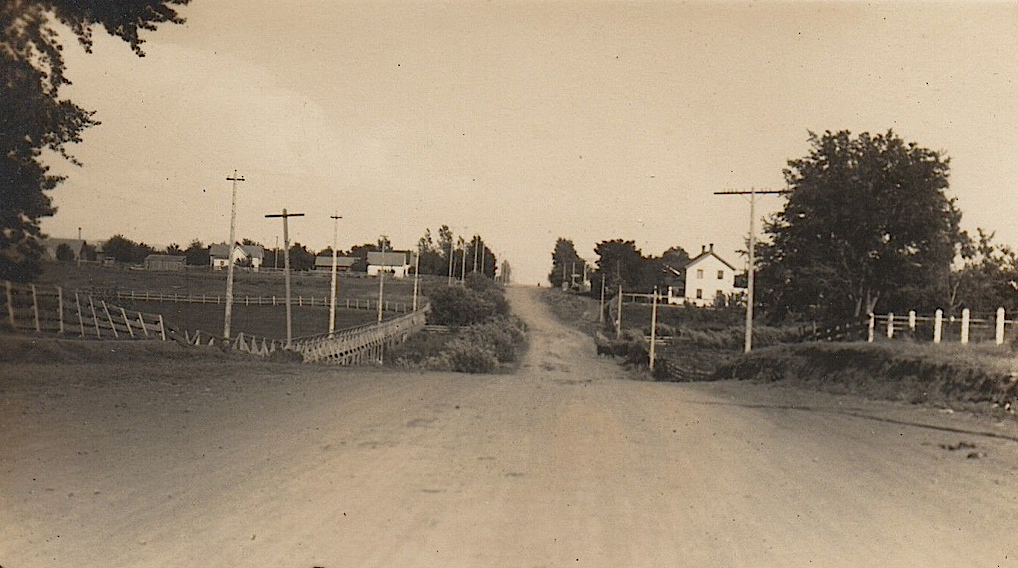
Looking east on Main Street, from Lassen High School, 1908.
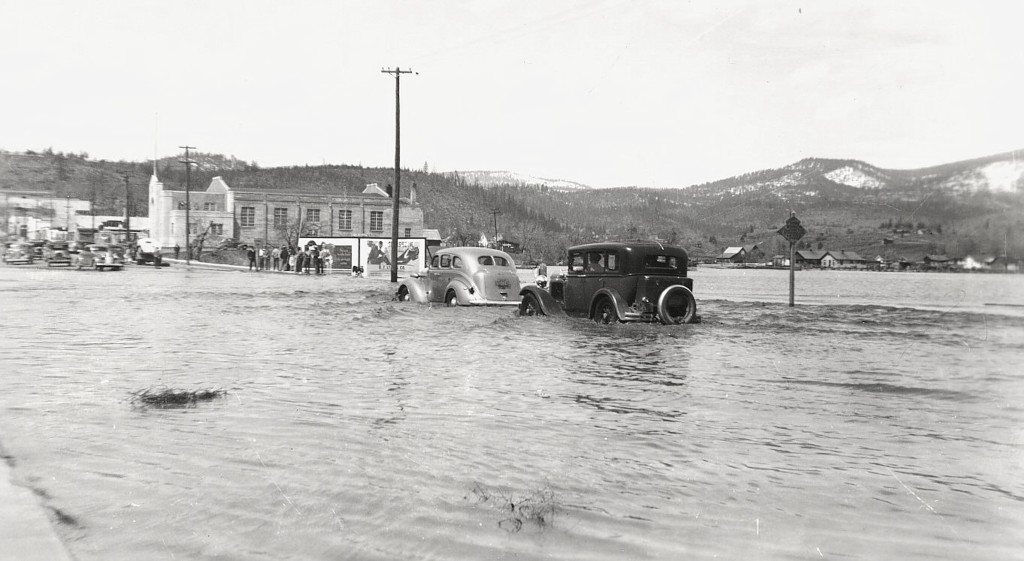
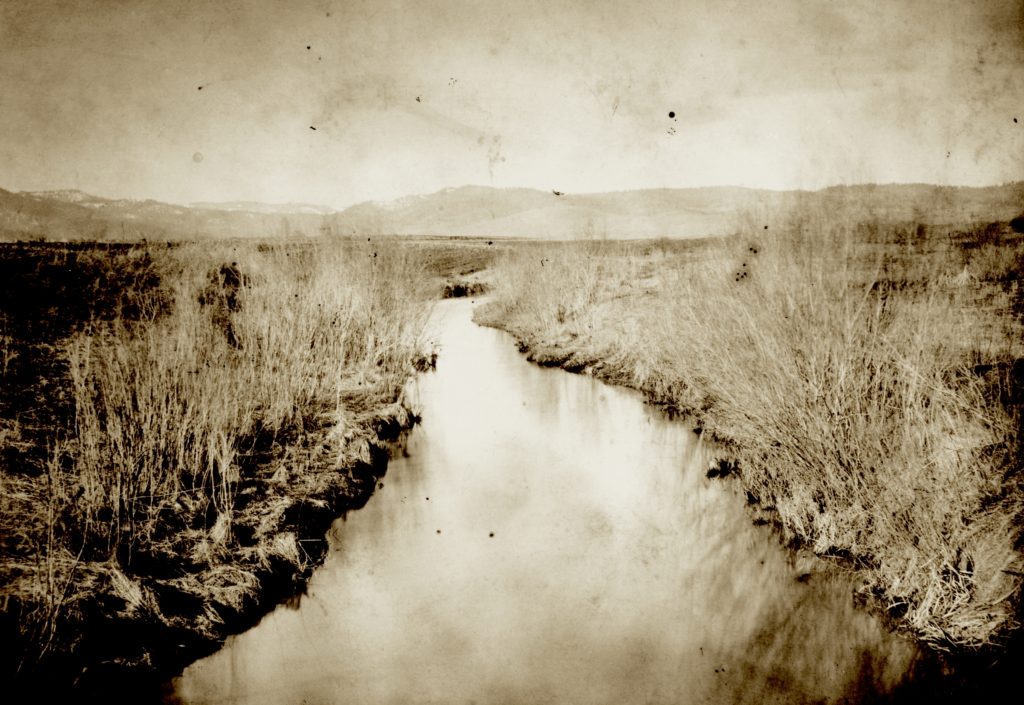
Since time immemorial the lower end of Piute Creek naturally flooded. Where today’s Memorial Park is located there were two channels of the creek. In 1920s, this area was purposely flooded in the winter to allow for ice-skating. With the construction of Lassen High School, fill was brought in to start filling the low lying bottom areas near the creek. As more development continued in that area, saw more fill, thus obstructing the natural flow of the creek. When Memorial Park was created in 1947, it eliminated one of the natural channels of the creek.
Piute Creek flood of April 9, 1938. Courtesy of Margaret A. Purdy
In 1916 the bridge across Piute Creek on Main Creek was replaced with a culvert. During the winter and spring time. when the water was high debris would find its way down the creek and block the culvert, thus flooding the area of Memorial Park and vicinity. It was not until 1998 that the culvert issue modified and no more flooding.
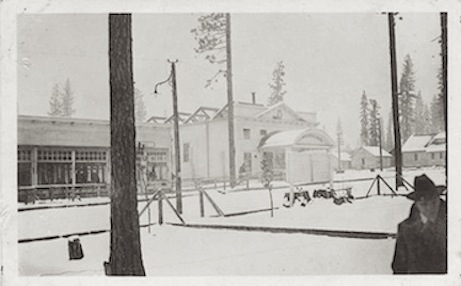
Westwood’s Opera House under construction—David Zoller
One of the daunting task when Red River Lumber Company built its company town of Westwood, during 1912-14, was they would need to provide recreational outlets for their employees. One of Red River’s first entertainment venues for its employees was dubbed the Opera House. It was a multi-purpose facility, though it never showcased an opera. The Opera House had a seating capacity of 600 and was the initial hub of social gatherings. It was regularly used as a movie theater and the scene of special events such as boxing matches. It was also the home for church services for several years until the People’s Church was built. In time, the Opera House was just too small as the town’s population continued to increase. In 1925, a new theater was constructed with a seating capacity of 1,100. The Opera House was converted into a store and made part of the adjoining facility known as the Westwood Club.
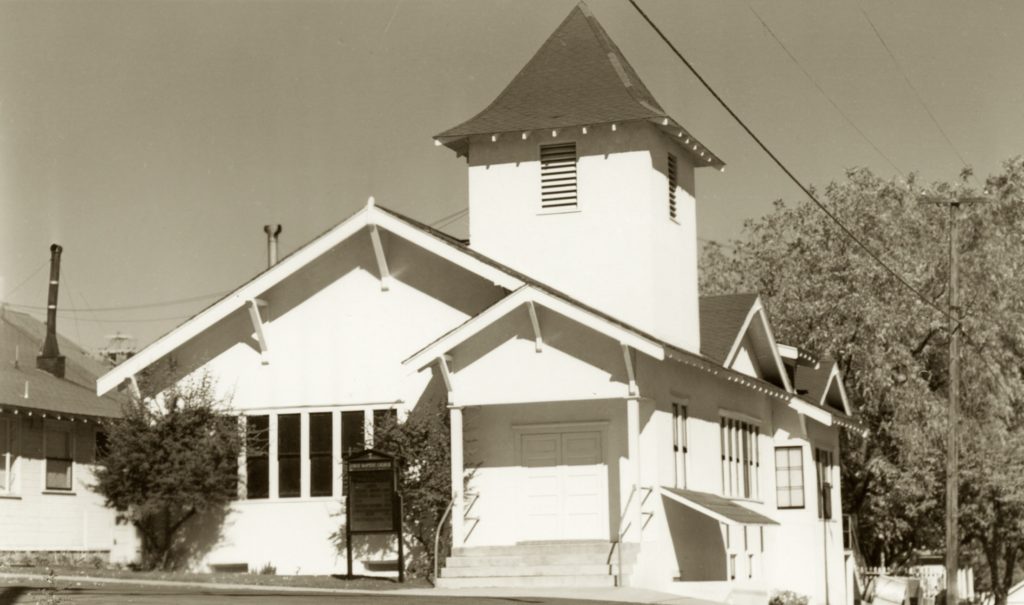
First Baptist Church, Nevada & Gay Streets, Susanville
On October 14, 1905 the Baptists held their first service at the home of the Reverend J.C. Long. The Baptists had been holding services in the Honey Lake Valley since 1873, and built a church in Johnstonville in 1889. Initially the Susanville services were held in someone’s home. As the congregation grew in 1913 they purchased a lot on the northwest corner of Nevada and Gay Streets. Shortly thereafter work began on the construction of a church and on February 20, 1914 a open public house was held.
In 1984 the congregation voted to leave the American Baptist denomination and joined the Evangelical Free Churches of America. At that time it was renamed the Community Evangelical Church of Susanville.
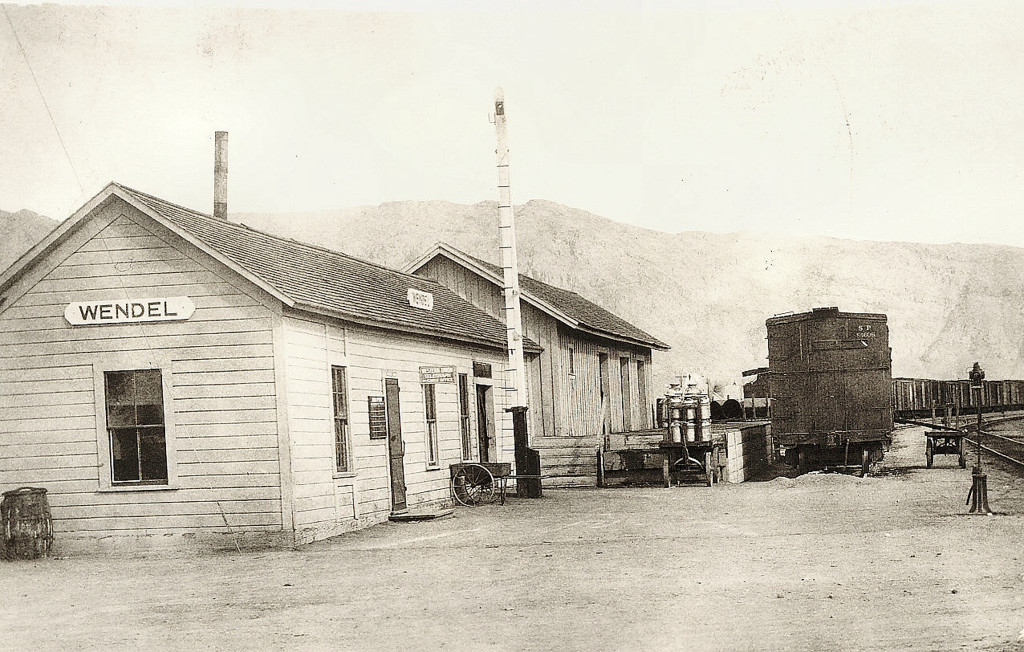
There were actually two stations on the Nevada-California-Oregon Railroad (NCO) named Wendel. The first Wendel station came about in 1911 and was located between New Pine Creek and Lakeview, Oregon. It was a very short-lived operation.
Wendel in Lassen County was not designated until 1915. For years the NCO referred to that place as Hot Springs. Yet, the post office there established in 1902, was named Purser, after Edward T. Purser a nearby rancher who developed Ward Lake to irrigate this property.
In 1912-13 with the construction of the Southern Pacific’s Fernley & Lassen Railroad, they named their station there as Caloreta. This created a great deal of confusion. The NCO designation of Hot Springs, the postal authorities as Purser and the Southern Pacific as Caloreta. In 1915, all three entities agreed to name it Wendel. It was so named after Charles deWendel, who was not only an investor in the NCO, but friends with the Moran family who owned the NCO.
Placer mining in the Honey Lake Valley was short-lived and mainly confined to the 1850s. It should be noted that the gold discoveries of the 1850s were of placer nature—gold nuggets found in streams and ravines. When Peter Lassen and Company discovered gold in Hills Creek in 1855, they constructed a ditch to assist in their efforts. By the end of June they had to abandon their work when the creek went dry. By 1856 with a major influx of miners in the region, they would experience the same, and placer mining was a spring time occupation.
In August 1858, Quincy’s Plumas Argus reported on this condition. “We are informed that everything is quiet at Honey Lake. A silver mine is being opened there. Several companies are at work on the vein, which has been known to exist for several years, although nothing definite is yet known as to the extent or richness. Placer diggings have been discovered near the lake that are known to be good. If they had water on them they would pay from ten to twenty dollars per day to the hand, but there is no capital there to invest in ditch property.”
By 1859, placer mining in the area had ended as quickly as it began., since the easy pickings had been done. The focus would turn to lode operations, i.e., hard rock extraction.
Spread the word, and encourage a friend to subscribe
This was a short-lived station on the Nobles Emigrant Trail. It was located a few miles east of present day Gerlach, Nevada. During the 1850s, stations/trading post along Nobles were few and far between. This was particularly the case through the Smoke Creek and Black Rock Deserts. A lot of this was attributed to hostilities between the Indians and Anglos, which culminated into the Pyramid Lake War of 1860.
This changed in the early 1860s with the discovery of the Humboldt mines that created such towns as Star City and Unionville. With the increased traffic on the route, Lucius Arcularius and Andrew Litch saw a lucrative opportunity to establish an outpost at Granite Creek in 1862.
In early March 1865, Arcularius left Granite Creek for a trip to Susanville. He did not make it very far, being ambushed by Indians only several miles to west of Granite Creek. When he was a no show in Susanville, a posse went in search and found his body covered by brush, his clothing removed. Arcularius’ body was brought back to Susanville for burial.
A few weeks later, Litch needed to leave the Granite Creek Station to handle some of his late partner’s affairs. Litch recruited A.J. Curry, Cyrus Creele and Al Simmons. Some time around April 1, 1865 witnessed what was referred to as the “Granite Creek Butchery”. All three men stationed at Granite Creek were slain by the Indians and the station burned down. A complete account can be found in Asa Fairfield’s Pioneer History of Lassen County. Litch would relocate in the Honey Lake Valley, where he remained until 1883, when he moved to Reno, though he retained his ranch, where his daughter and son-in-law Clara and B.F. Gibson would reside.
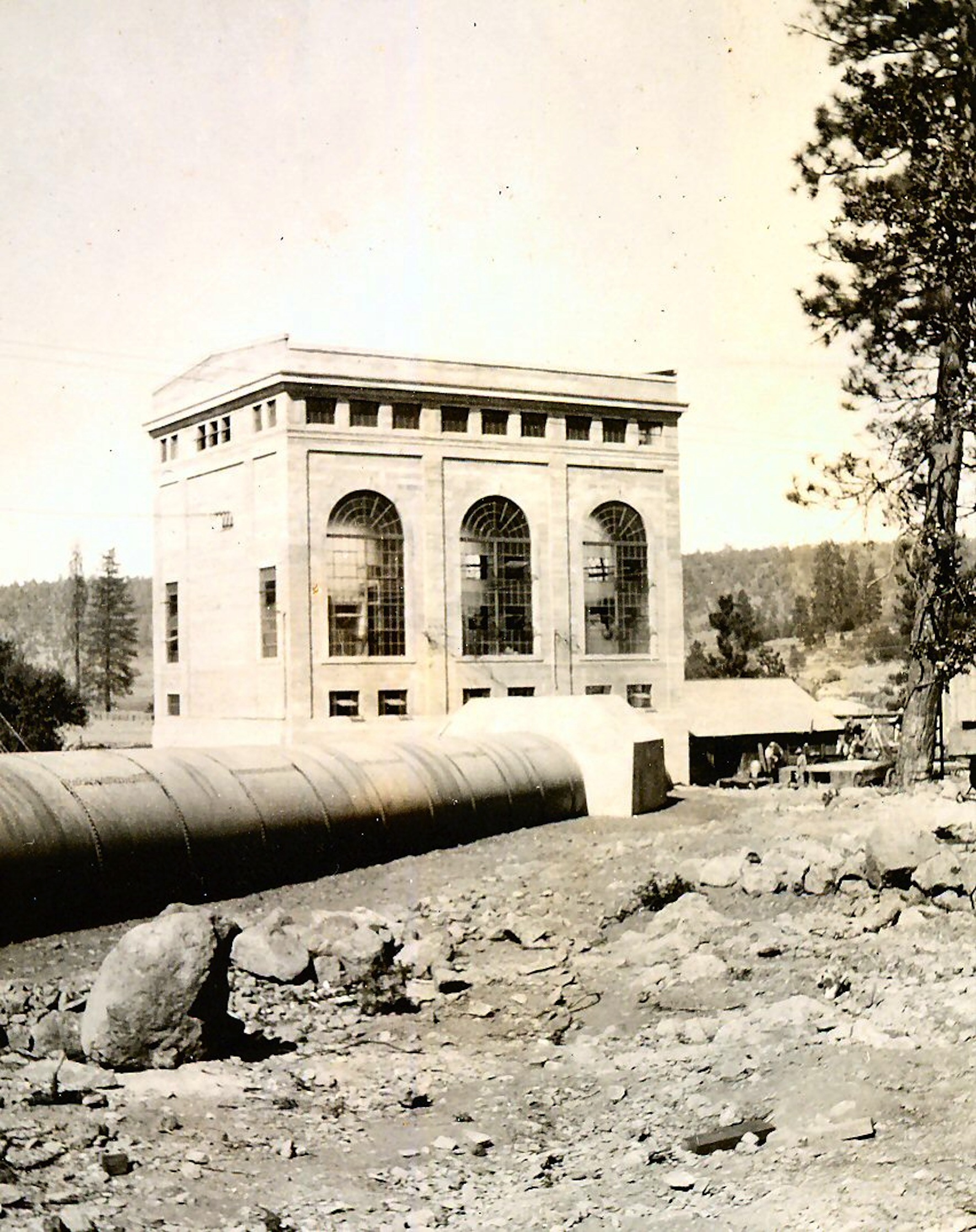
Hat Creek Powerhouse No. 1, 1921. Courtesy of Lola L. Tanner
The Red River Lumber Company operated many enterprises and it still as an influence concerning electricity to many residents of the region. From time to time when the Susanville area has a power outage, many times there will be a reference to the Hat Creek line. So you may ponder how did Hat Creek come to be? Continue reading Hat Creek Power→
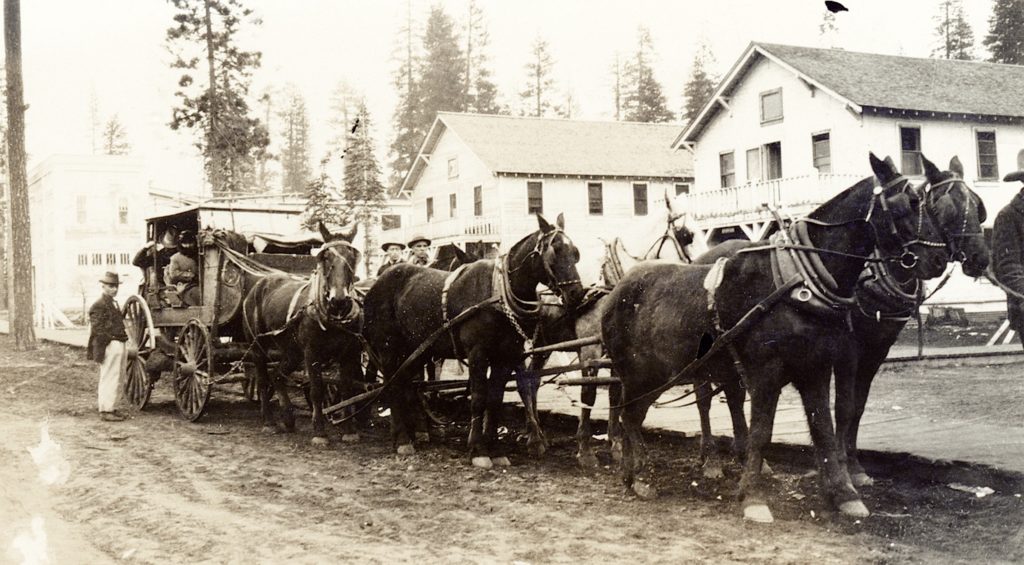
The old fashioned iconic symbol of the American West, the stagecoach would soon suddenly disappear during the time Red River constructed its company town of Westwood, that took an initial two year to build from 1912-14. It was truly a remarkable era with the automobile overtaking the horse and buggy era. Westwood evoked the modern era. A new town with electricity, sewer system and a department store, that would take decades for the neighboring communities to implement such “modern day conveniences.”
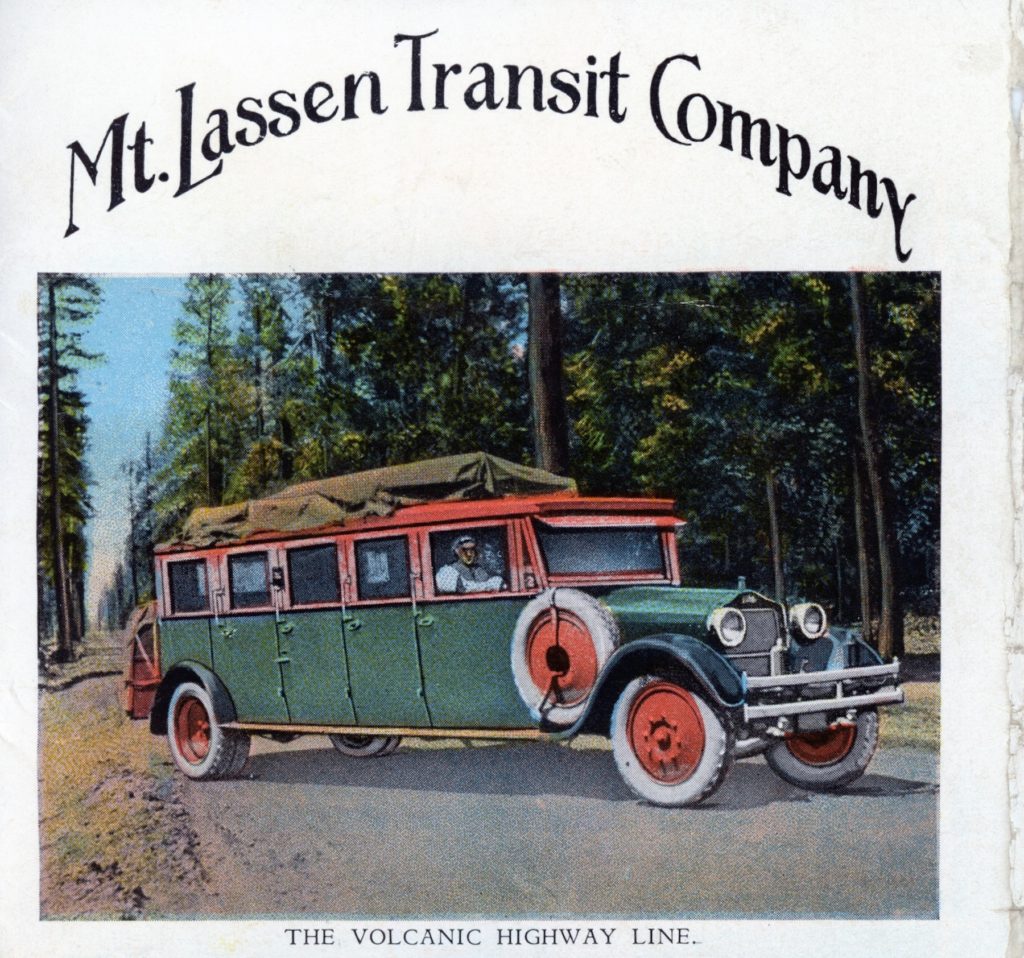
A year after the above photograph was taken, the horse drawn stagecoach was replaced with the “auto-stage” a large touring car. In 1916, the voters of California passed a $16 million bond measure to begin the construction of a state highway system.
Brochure of the Mt. Lassen Transit Company, Red Bluff, circa 1920. Courtesy of Margaret A. Purdy
From time to time, I am asked about the Sagebrush War. While there are various accounts that go into great detail—even one person wrote a thesis about it—I will provide a simple version. The conflict also known as the Boundary War which was the result of John C. Fremont’s selection in 1850 of the 120th Meridian for California’s eastern boundary. The problem was no one knew where that was, and assumed it followed the crest of the Sierra Nevada Mountains. In the late 1850s, with the settlement of the Honey Lake Valley, officials of both California and the Nevada Territory, saw the uncollected tax dollars waiting to be had. Tensions escalated wherein an armed conflict on February 15, 1863 from the two states took place at Roop’s old trading post, in Susanville, which became dubbed as Roop’s Fort, but also known as Fort Defiance. In the end a truce was called when both sides agreed to conduct a boundary line survey to locate the 120th Meridian, in which it was determined the majority of the Honey Lake Valley was located in California. The outcome for the Honey Lakers was a draw, while they failed to become a part of Nevada, they at least prevailed with the creation of Lassen County.