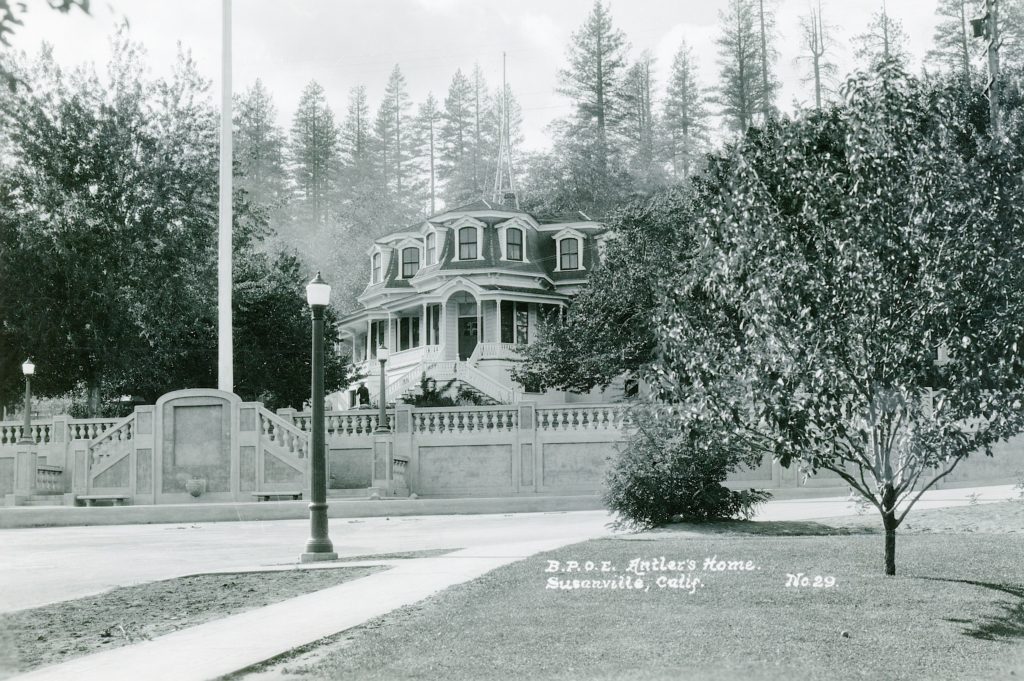
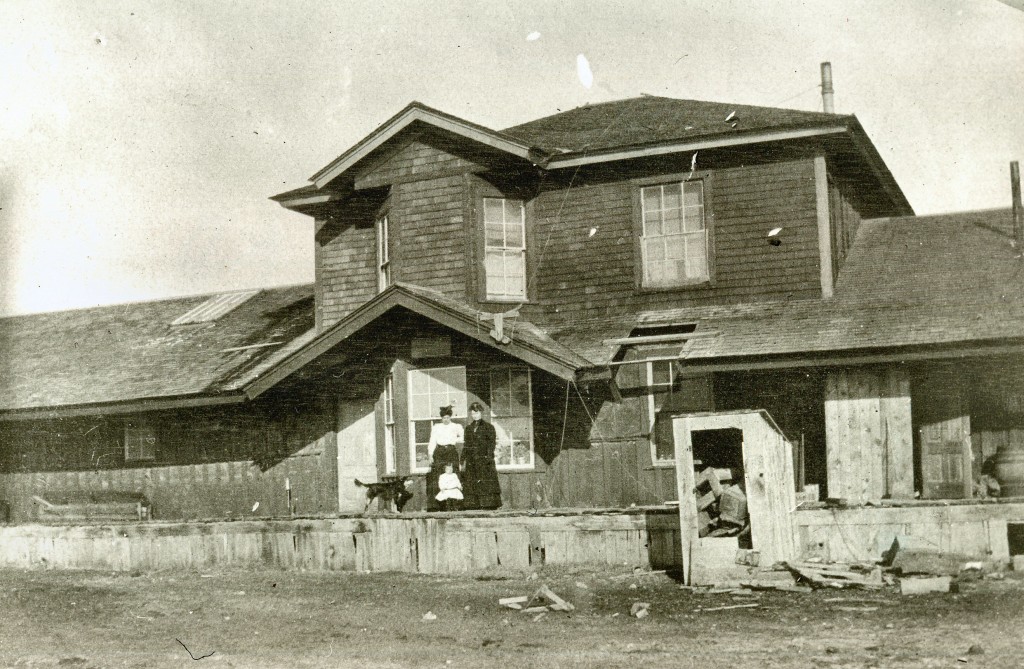
In the fall of 1926, the Elks did a major renovation to the main floor of the building. Instead of six rooms, it was converted into one large room for use a lodge and also lounge for other occasions. On the lower floor what was referred to as hot air heating system was installed. While all of this may not sound dramatic, it was. This remodel project cost nearly $26,000–twice the amount of the purchase price. For even a better comprehension of this expenditure, the American Legion Memorial Building was under construction that year with a price tag of $23,000.
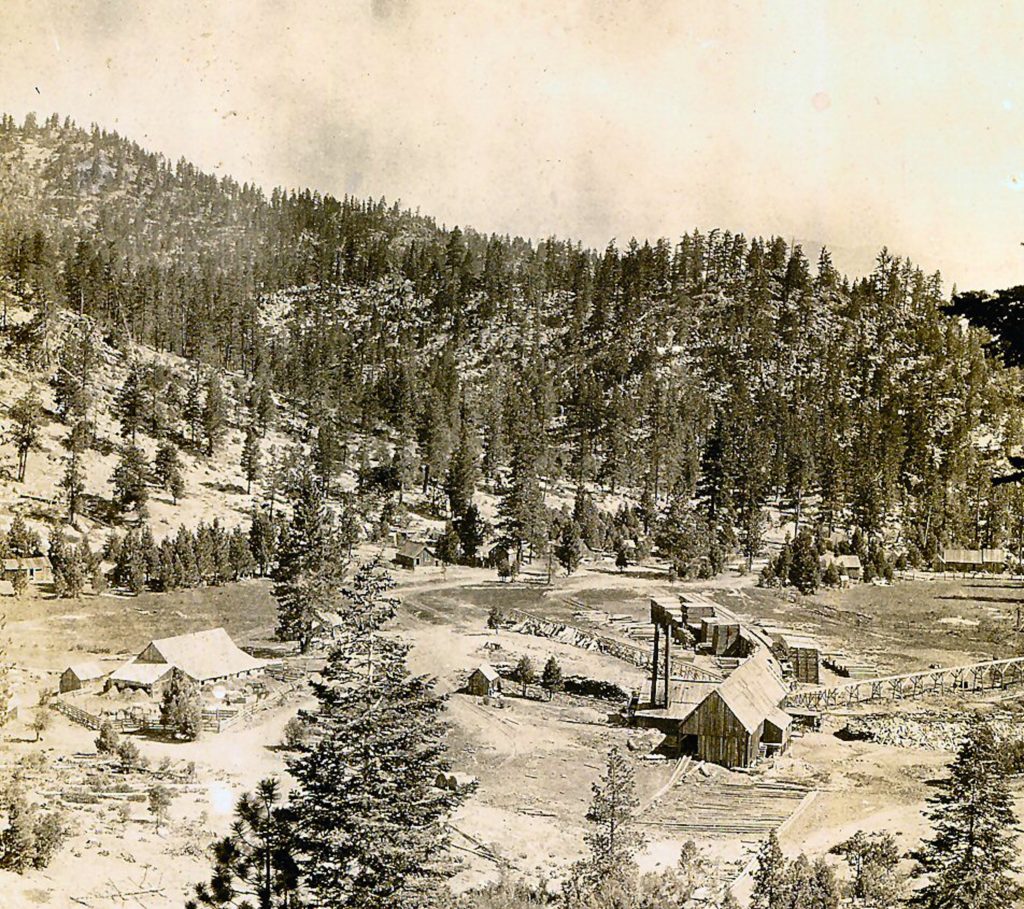
Traveling across Highway 44, the Pine Creek Valley appears to be a desolate wind swept sagebrush flat, surrounded by pine trees. After all, the majority of human activity is concentrated at the Bogard Rest Station. By the way the area is named for John Jasper Bogard, a Tehama County stockman, who in the mid-1870s started using the area for summer grazing of sheep. Actually, the region was home to many sheep outfits, such as Champs, Cone, McCoy and Stanford, the latter as in Stanford University. These sheep outfits had a huge impact on western Lassen County, and so many of the natural features were named for them. Continue reading Pine Creek Valley, Lassen County→
With Memorial Day weekend approaching, Eagle Lake opening day of fishing season will be here in a few days. There will be, without a doubt, plenty of boating activity on the lake.
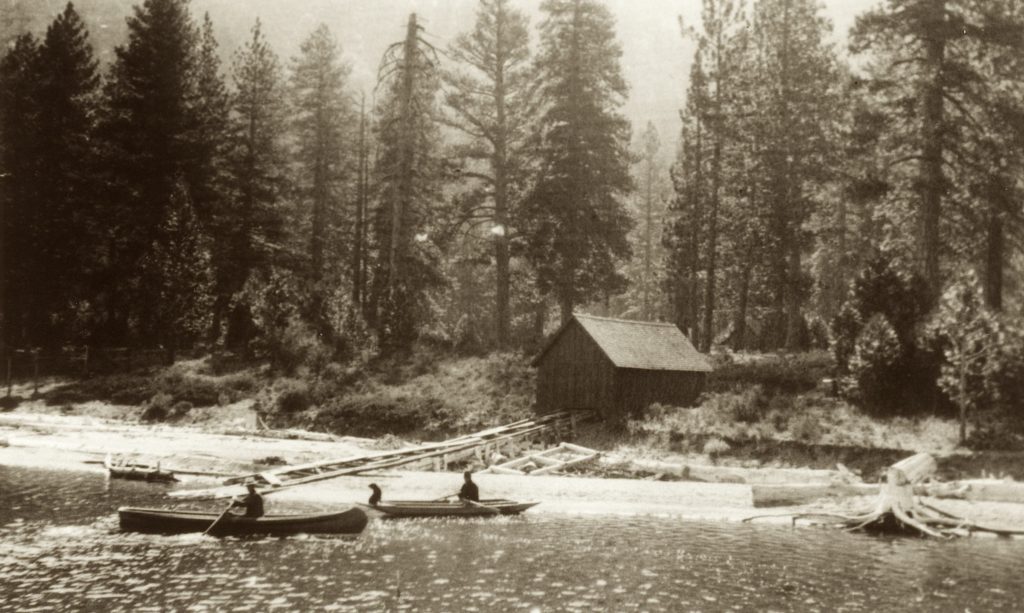
Gallatin Boat House—Wyn Wachhorst
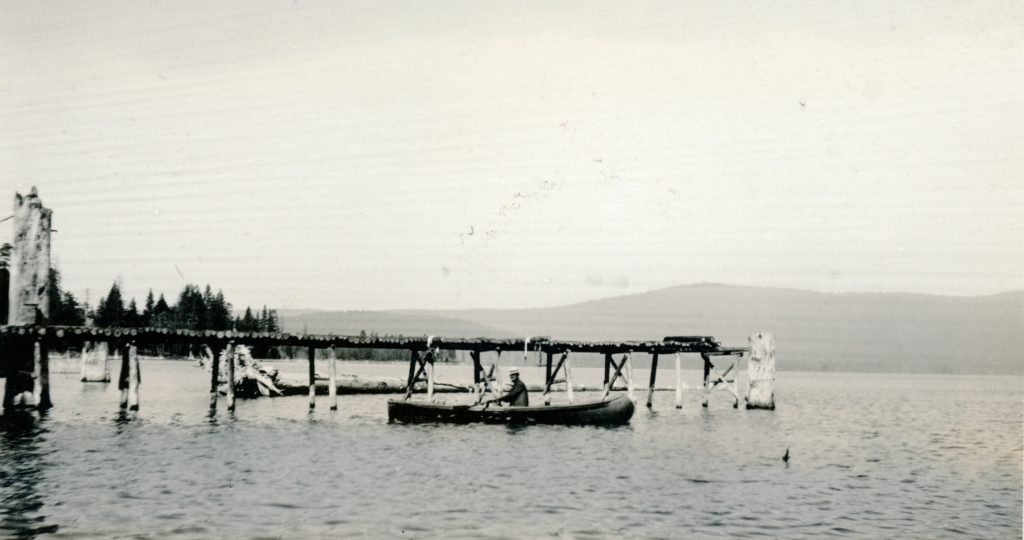
In the summer of 1913, Malvena Gallatin built a summer home on the southeast corner of Eagle Lake. For about the next nine years the extended Gallatin clan spent a lot of time recreating at the lake.
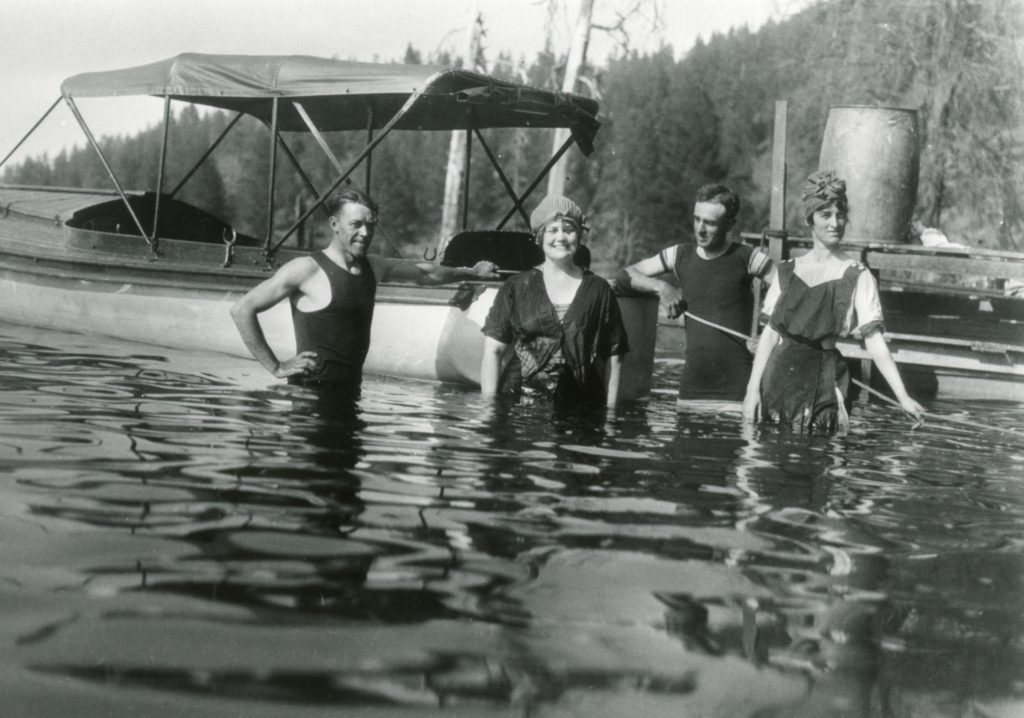
A Gallatin boating scene—Wyn Wachhorst
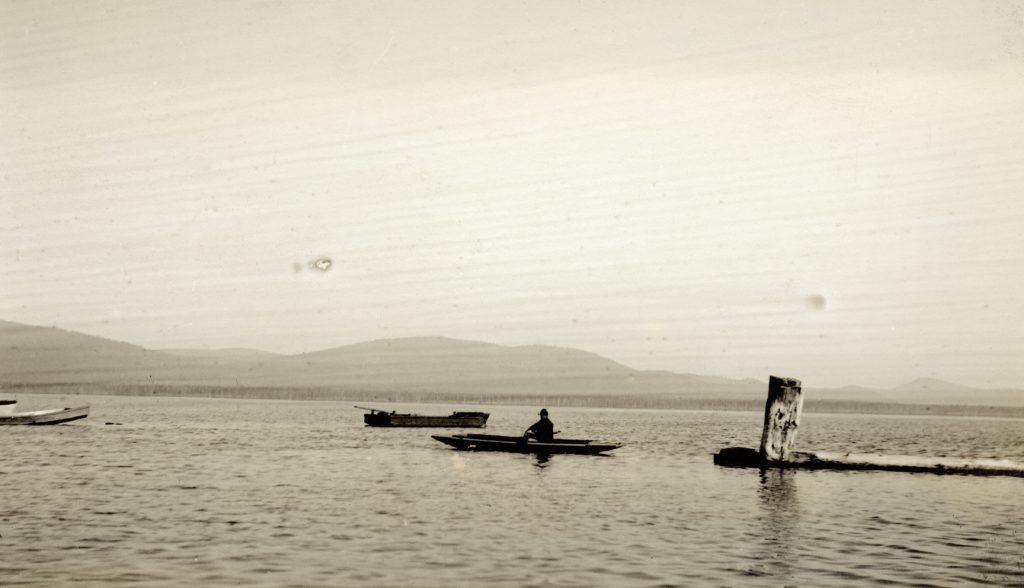
While there is not much written record about the Gallatin’s recreational activities at the lake, they did leave behind a photographic one. I am very thankful to Wyn Wachhorst, Melvana’s great grandson for sharing them.
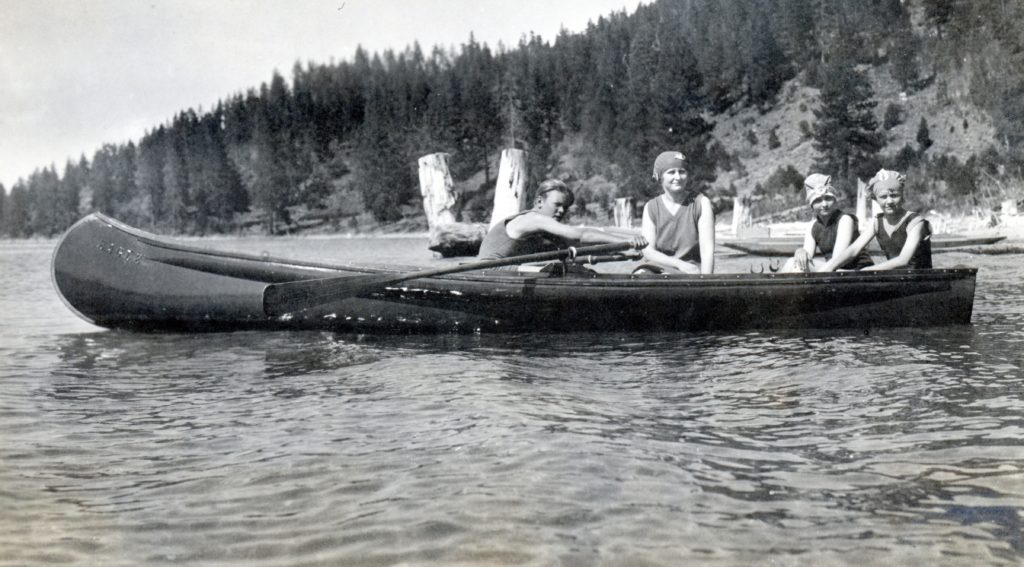
Part of the Gallatin boating fleet at Eagle Lake, 1918. Courtesy of Wyn Wachhorst
The person rowing the boat depicted above is Gallatin Powers. He would go on to establish a well known restaurant in Monterey named Gallatin’s.
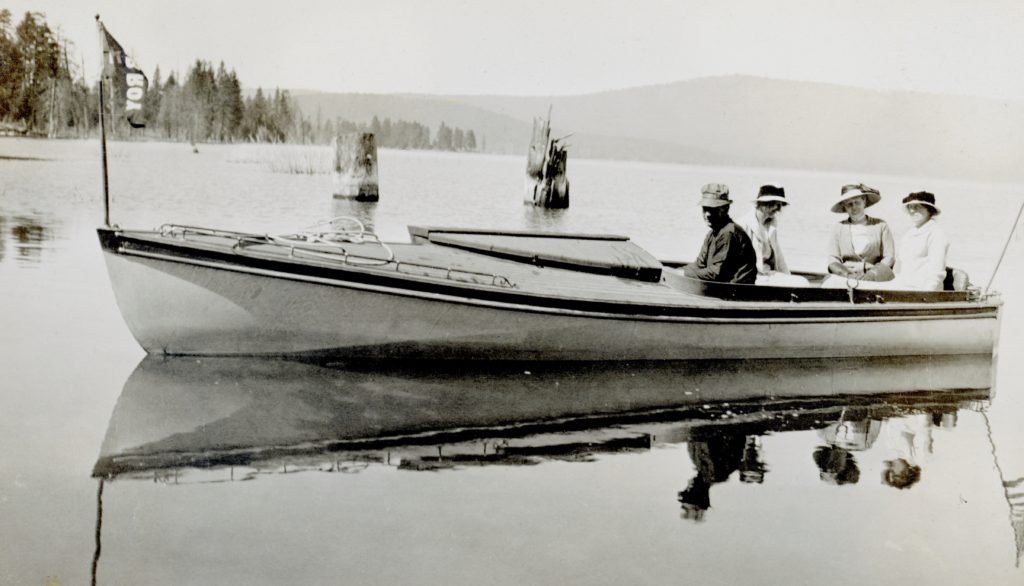
Gallatin’s Boat at the south shore.
Enjoy the long holiday weekend and be careful out there. I will probably being staying close to home doing my usual cemetery routines.
In the early 1900s, saw the creation of the national forest reserves, that became the national forest. Each national forest had wide authority on regulating forest use. A classic example occurred in 1920 between the Lassen and Plumas National Forests. In the spring of 1920, the Plumas National Forest made camp fire permits mandatory, while the Lassen did not. The Plumas National Forest issued the following statement:
”The camp fire permit requirement is one move in an intensive campaign conducted by the forest service for the prevention, detection and suppression of fires during the coming summer. Following a succession of years in which the precipitation has been deficient, this season finds the forest service on highly flammable condition and the greatest possible care is imperative in the use of fire in the woods.”
First of all, I want to thank those who took the time to respond about the Skedaddle Creek photograph. It will appear in next year’s calendar.
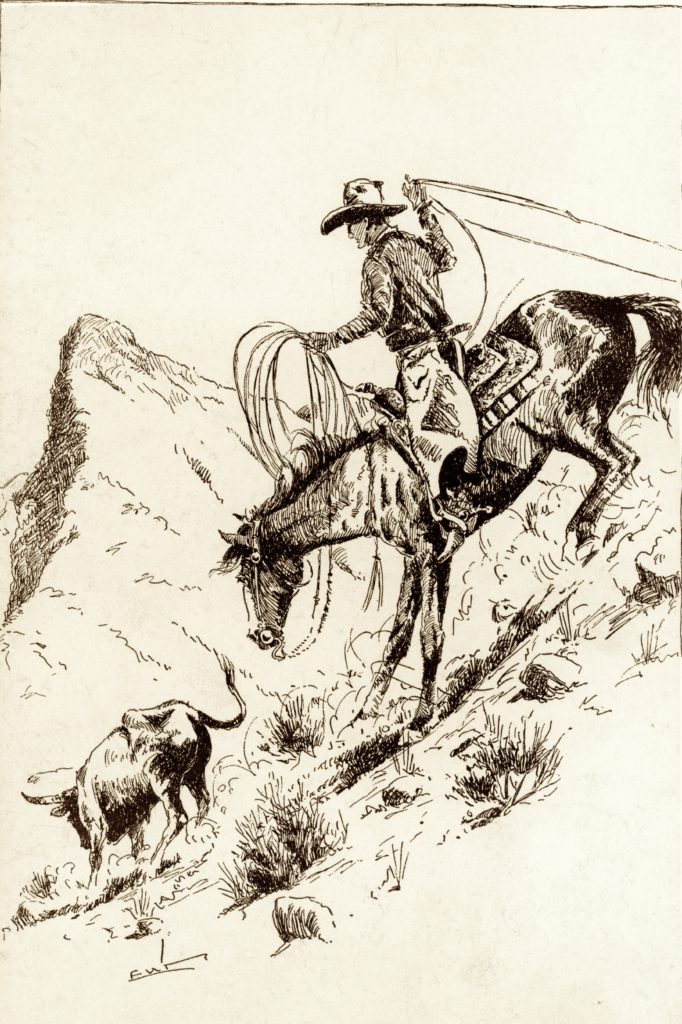
Believe it or not the sketch above would have been the replacement, if the consensus was not to include Skedaddle Creek. Why the sketch? My Mother gave me four different sketches years ago, hoping I would either frame them or use them in some way. If nothing else, this was a venue to fulfill her wishes. They are 8 x 10 in size if anyone wants them. First come, first served.
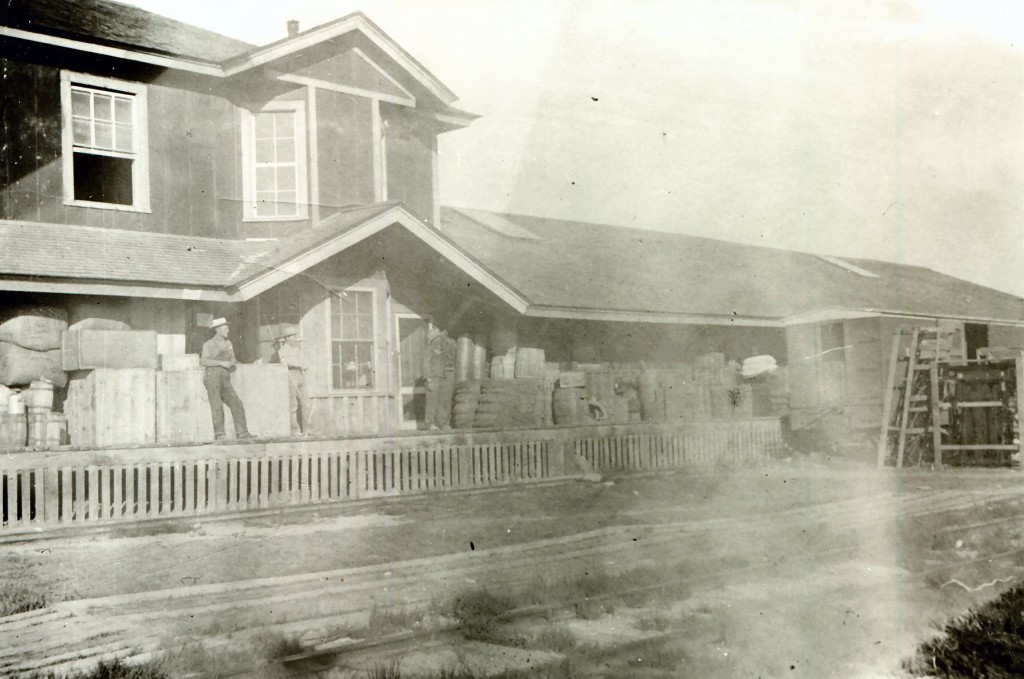
In August 1890, the Nevada-California-Oregon Railroad (NCO) extended its line northward from Onieda, near the Nevada state line for some fifty miles to Lower Hot Springs, later to be renamed Amedee. The region was stunned as the railroad abandoned its original survey on the west side of Honey Lake, to the east side nearly barren of inhabitants. That is a long story, for another time.
What was also stunning was the size of the depot built there. The two-story structure was 168 feet in length, making it one of the largest buildings in Lassen County. The second story provided lodging for railroad employees. The south side was offices and the remainder of the building was for freight storage.
N-C-O Depot at Amedee, circa 1906. Courtesy of Marie Herring Gould
In its early years, it was a busy place. A quarter mile away the NCO constructed stock years. To understand the activity, during a two week period in April 1891 nearly 30,000 head to sheep were at the corrals. After shearing the sheep, 160,000 pounds of wool was shipped, along with forty carloads of cattle.
In 1900, when the railroad extended its line north to the Madeline Plains, Amedee lost its status as a major shipping point. On July 1, 1909 the depot was destroyed by fire, origin unknown.
Doyle & Crowder Mill. Courtesy of Marie Herring Gould
The Long Valley Lumber Company was a perfect example how the lumber industry locally evolved. Instead of meeting local demands, which it did, the production was focused on outside markets.
The company established in 1906, was also known by its owners name Doyle & Crowder. They located their mill in a location known as Cannon Field, near the top of Doyle Grade. On a side note, local folklore had it that the name of Cannon Field was attributed to where John C. Fremont in his 1844 expedition discarded cannon balls, and would eventually at some unknown location abandon a howitzer. In all actuality, it was so named after William Cannon who lived there during the 1870s.
Anyhow, back to the topic at hand. The mill owed its existence to the Western Pacific Railway to supply ties for the construction of that railroad. Once the railroad no longer needed ties, the mill closed in 1910. In December 1917 the mill was sold to the Lassen Lumber & Box Company. That company moved the mill to Susanville, where it was used cut the lumber and timbers for a much larger mill there.
An interesting tidbit. At an Easter picnic in 1946 at the old millsite, Betty Richens found a 1906 $10 gold piece in the old sawdust pile.
In 1921, a group of Susanville businessmen wanted to form a local Elks Lodge. While they were an enthusiastic group, they had a formidable challenge. One of the requirements from Elks’ organization that a community must have a population greater than 5,000 inhabitants. While Susanville in the last several years witnessed tremendous growth, the City of Susanville’s boundaries did not include where the growth occurred. The confines of the city was rather small the area from Pine Street to the west to Weatherlow Street as the eastern border.
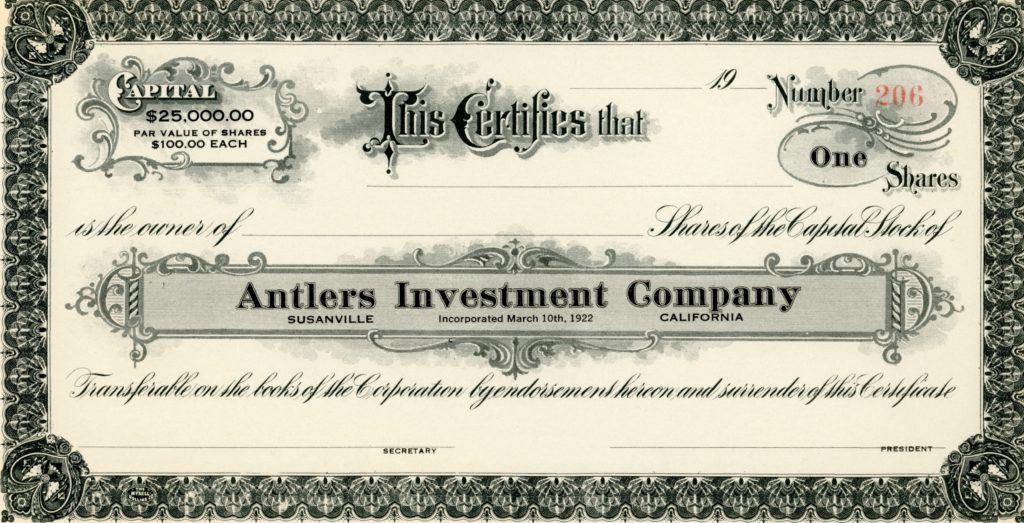
Not to be undaunted, these men formed an Antlers Club, a first step towards a subsequent Elks Lodge in the future. They were an ambitious lot. On February 23, 1922 they formed a stock company—the Antlers Investment Company. There goal was to raise $25,000 with each share at a par value $100. The next order of business to purchase a clubhouse for the future lodge. They set their sights on the Swain residence at the west end of Main Street that overlooks that boulevard. In 1922, they reached an agreement with Annie Swain, the owner, to purchase it. She sold it to Antlers Investment Company for $13,000. However, she retained a parcel adjoining to the south in which she would build a new home.
With everything in place, it would still be a few years before a local Elks Lodge would become a reality.
The dairy of Fruit Growers/Lassen Dairy ranch as it appeared in 1922,. Today the property is known as Susanville Ranch Park.
There are two distinct eras of the dairy industry. The first is more or less prior to the lumber mills entering the region. A great many Honey Lake farmers manufactured large quantities of butter, in which Virginia City was a lucrative market. Willow Creek Valley resident, A.L. Tunison, in his diaries of the 1870s provides a glimpse, as he also made his own wooden butter kegs to transport the butter.
With the arrival of the large lumber mills, swelled the local population, thus providing a ready local market. There was a proliferation of dairies. Unfortunately, very little has been done to document them, though material exists. In my archives are the regular Milk Producers Reports.
Today, I will attempt to highlight one particular dairy—Lassen. When Fruit Growers came to Susanville they purchased the John T. Long north Susanville. The main reason for this was the water rights to Bagwell Springs located on that property. Long story short, they did not need it. From their Hilt operations, they brought Frank O’Kelly to operate a dairy for their Susanville Operation. Within two years, they leased the whole affair to O’Kelly who formed Lassen Dairy. The O’Kelly’s operated it for decades, when it finally morphed into Morning Glory Dairy. It has only been in the last couple of years that the O’Kelly family sold Morning Glory.
One final note, I have an extensive collection of local milk bottles. One of my Mother’s favorite pastimes was going to yard sales, where she did quite well.
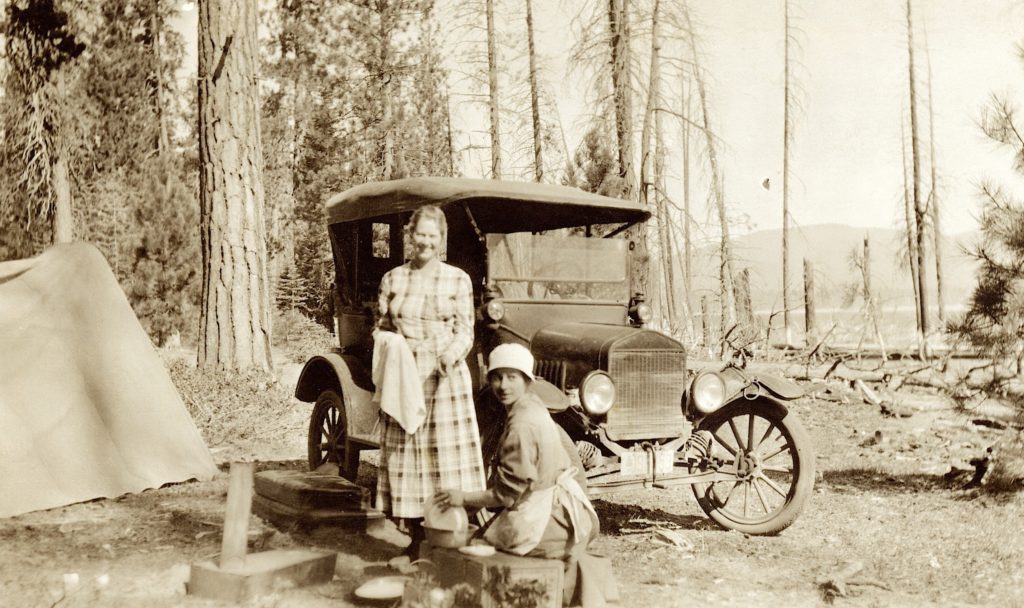
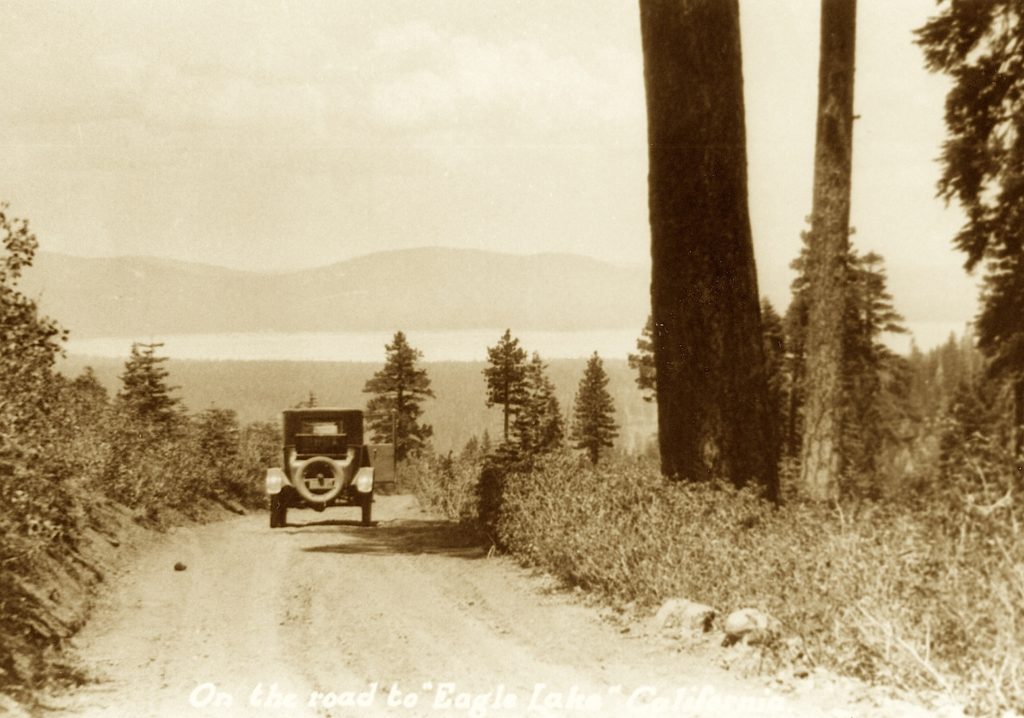
Eagle Lake Summit, 1923. Courtesy of Dick & Helen Harrison
It may sound quaint in this day and age, but when mountain road summit opened in the spring time it was big news. After all snow plows for road maintenance were non-existent. Regions like this were shut off from the rest of the world.
On Sunday, May 21, 1916 Lassen County Supervisor, L.R. Cady reported he had made the trek over the Eagle Lake Summit. Cady reported there were no serious difficulty encountered. This, of course, was good news for “Burt” Christie, owner and operator of the Eagle Lake Resort on the southwest corner of Eagle Lake. During the winter months, Christie would take his boat and go up to the northeast corner of the lake, and dock at the Fritter Ranch, where he kept his automobile. Christie would then make the journey to Susanville to obtain necessary supplies and take care of business affairs and return back in the same manner.