Susanville Street Signs & Mail Delivery

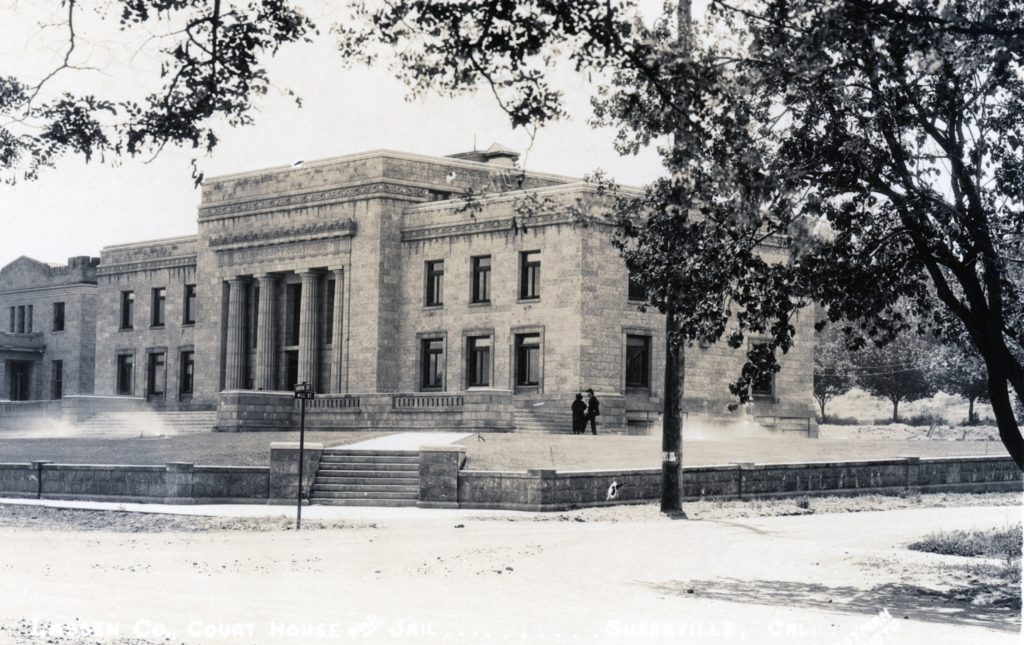
Lassen County Courthouse, 1926

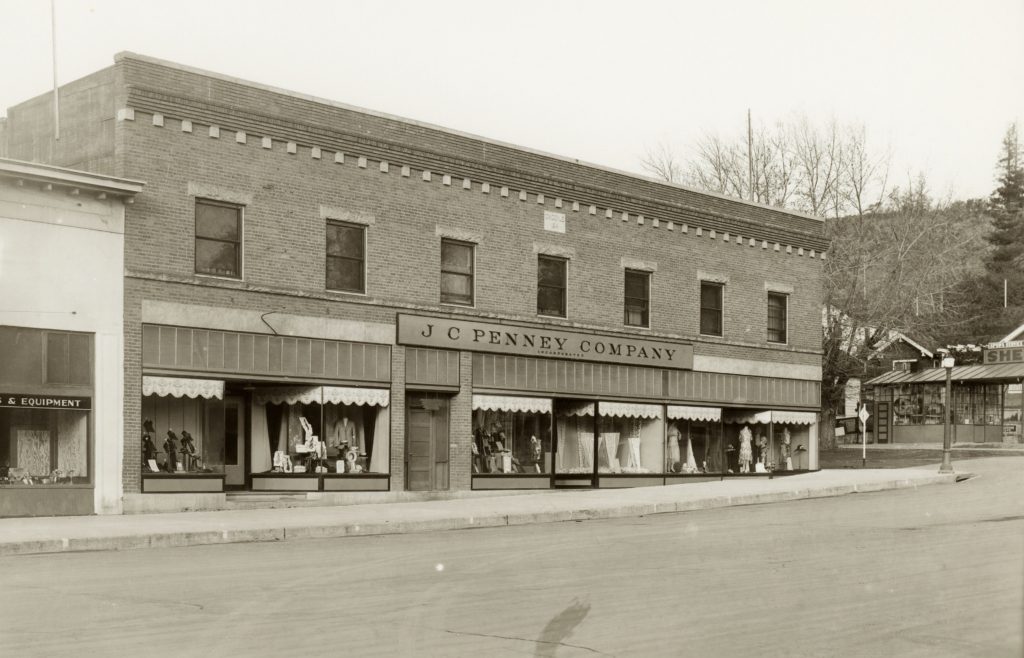
While I have addressed this topic before, it will be new to others. However, I recently acquired the above photograph and this earliest dated photograph where a street sign appears at the intersection of Lassen and Mill Streets.

By the early 1920s, with a tremendous increase in population, the Susanville Post Office had a lot of work to do. There being no home delivery of mail, the post office would get swamped for people picking up their mail. To institute home mail delivery was not as simple as it seemed.

On April 16, 1923 the Susanville City Council passed an ordinance for the numbering of houses and businesses, too. This was the first step towards residential mail delivery. It was a slow process, that took two years. In November 1925, Postmaster C.D. Mathews ordered street signs to be installed to assist the mail carriers. For many residents it was not only a novelty, but not everyone knew of the name of the street they resided on.

On December 1, 1925, residential mail delivery was instituted with three carriers for the greater Susanville area.

Subscribe
 

An Interesting Observation—Merrill’s Enterprise

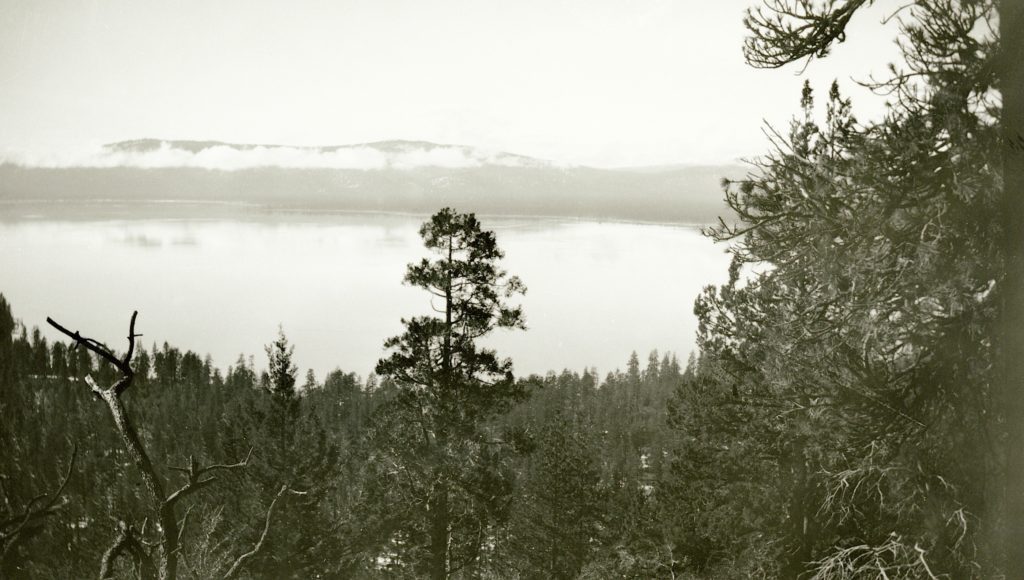
A partial view of Eagle Lake, 1921—Lola L. Tanner

The following appeared in the Candelaria, Nevada newspaper about Capt. C.A. Merrill’s undertaking at Eagle Lake. (For those not familiar with Candelaria  was a mining town between Hawthorne and Tonopah.

Not only did Merrill plan to tap Eagle Lake for irrigation, but he planned for a major manufacturing city at Belfast. With the tunnel, along flumes, it was the intent to log the timber at Eagle Lake, float it across to the tunnel, where eventually using Willow Creek and a series of flumes, the logs would then be manufactured at Belfast. The enterprise was widely followed by the press in California and Nevada.

True Fissure, March 25, 1882:  “The Eagle Lake Tunnel. The tunnel to tap Eagle Lake is being advanced at the of thirty-five feet per week. It will be about a mile and half long, and it is expected that it will be completed next fall. It will furnish water power for running several sawmills and finally will irrigate a great area of now barren sagebrush land in Honey Lake Valley. The tapping of the lake is an experiment that is being watched with great interest everywhere on the coast. Should it prove as successful as is anticipated, it will be followed by a similar tapping of many lakes on both sides of the Sierra for mining, timbering and other purposes.”

Finally, a big thank you to Bill Johnson for sending along this article.

Donate

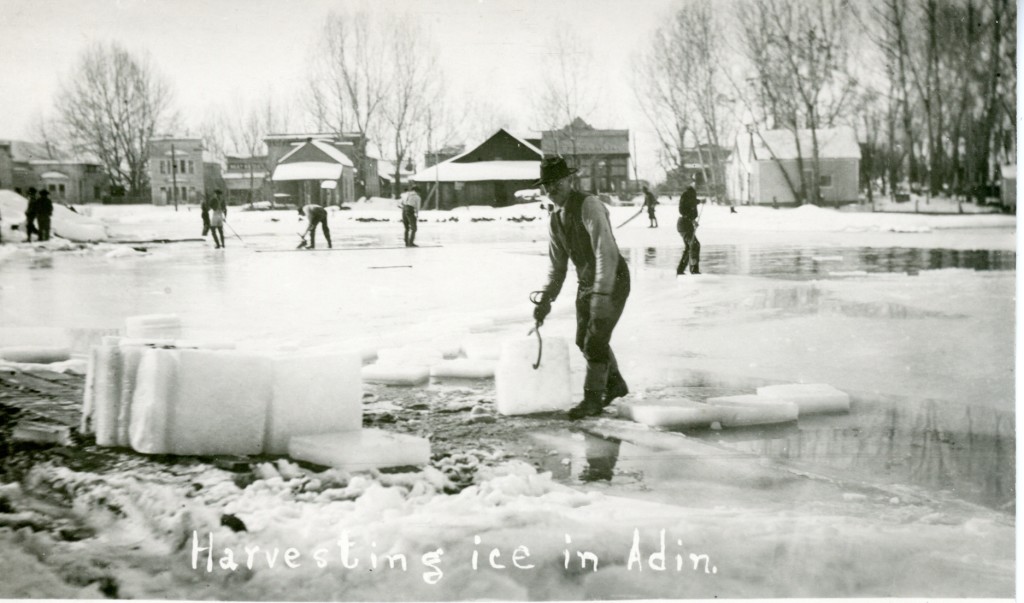
A Tuesday Tidbit – Ice Harvesting

Ice Harvesting
Ice harvesting at Adin, 1911

In what may be considered a small world, especially with the internet, a number of people check out this site while researching something. Two months ago, a reader from Amsterdam came across my 2017 post on Ice Harvesting.  This person requested permission to use the above photograph in an essay. I was more than happy to oblige, as I am a firm believer in sharing history.

Tim

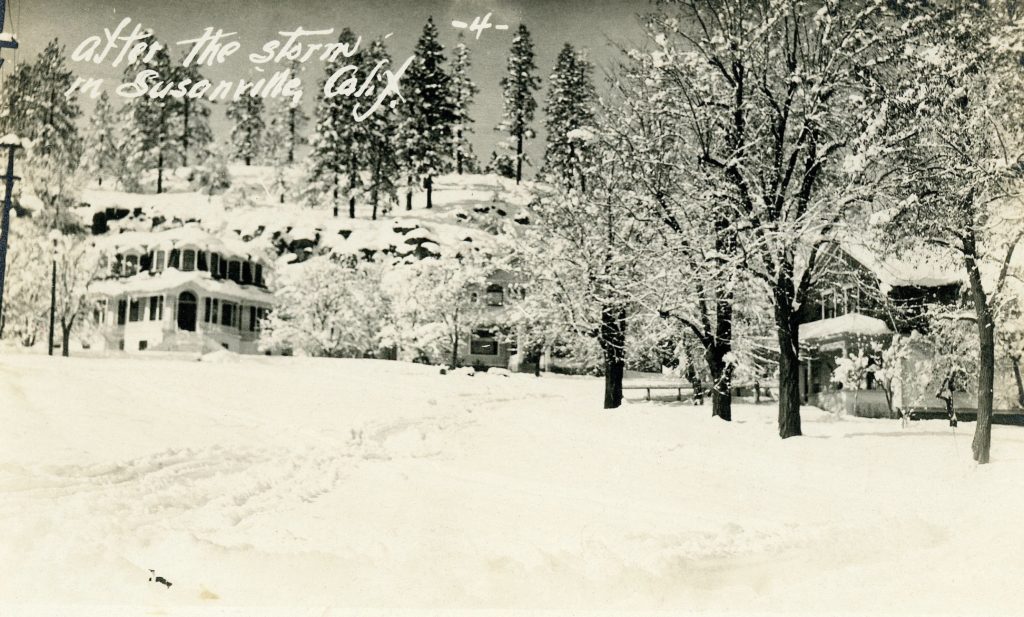
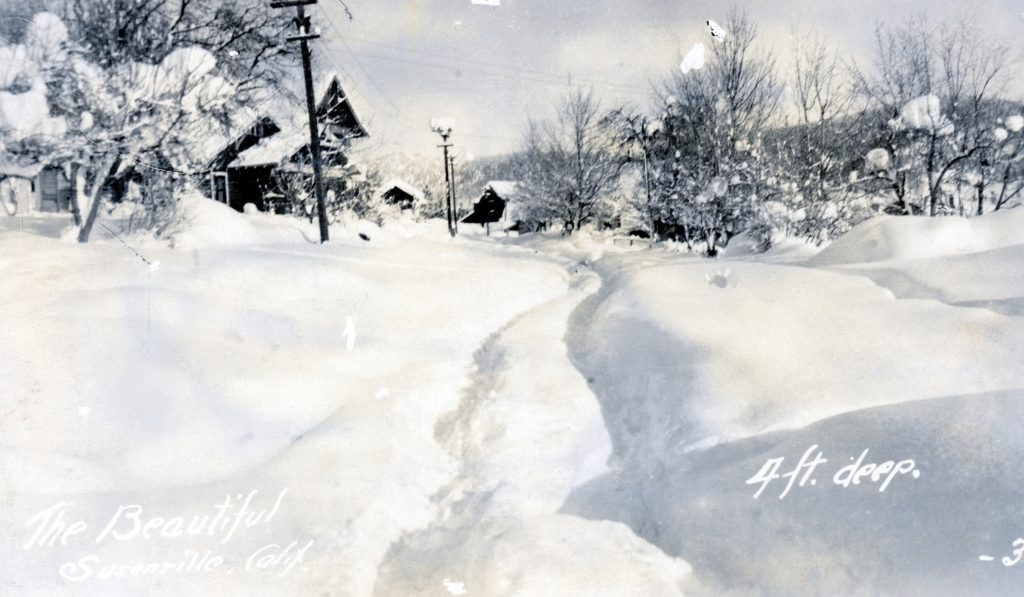
January 1916 Weather Report

The 500 block of Main Street, Susanville, 1916

While in the past I have noted the January 1916 snowstorm, followed by a very cold spell. For the record here are the statistics for that month observed at the Susanville station.

North Pine Street, January 1916. Courtesy of Dolores Gasperoni

The average maximum temperature was 35 degrees and the average low of 12. On January 23, the record high for the month was 50 degrees and on January 30 saw a record low of -14 below zero. It was a snowy month with 104 inches and on January 2 the greatest amount of snow in one day was 32 inches.

Tim

How Bits of History Are Saved

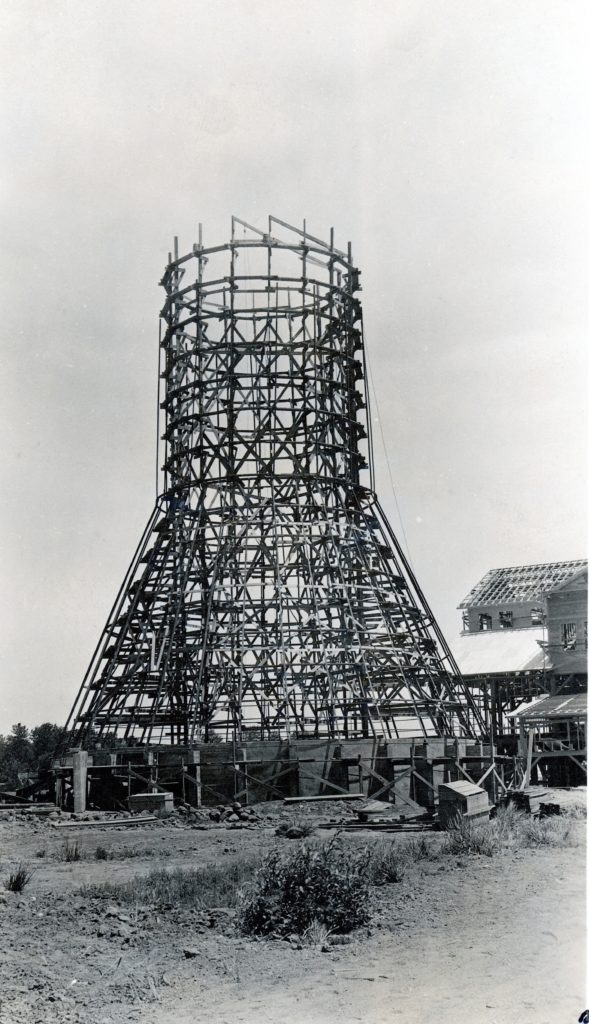
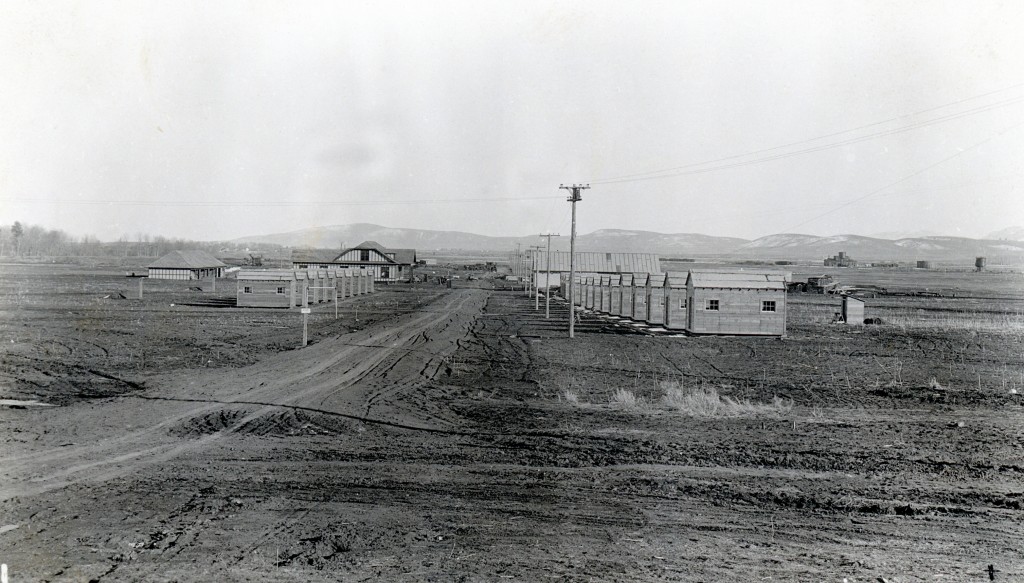
The FGS Burner under construction at the Susanville Plant, 1920–Ed Standard

The tossing of old documents takes on many forms. Believe me I witnessed a lot over the years and became an expert “dumpster diver.”

Recently, Susanville native, Edward Standard (1930-2021) passed away. Sometimes, what was intentionally destined to be destroyed gets a last minute reprieve. Ed was working for Fruit Growers Supply Company at the time the mill was being closed in Susanville back in 1964. He was assigned the task to take a number of records from the office to be disposed in the company’s burner. He carried out most of his duty, except for one packet. What he saved was about 600 commercial negatives of O.O. Winn who photographed the construction of the mill in 1920-21. He never said anything about it.

Construction of Fruit Growers housing, 1920–Ed Standard

Fast forward to the fall of 1998. It was common knowledge that I was working on the logging operations of Fruit Growers. In September I had an opportunity to go to Cornwall, England to meet my grandfather John Tanner’s only living first cousin. While I was away brought the negatives by and placed them between the screen and front door. It was quite the surprise when I returned home.

Tim

The Eagle Lake You Have Never Seen Before

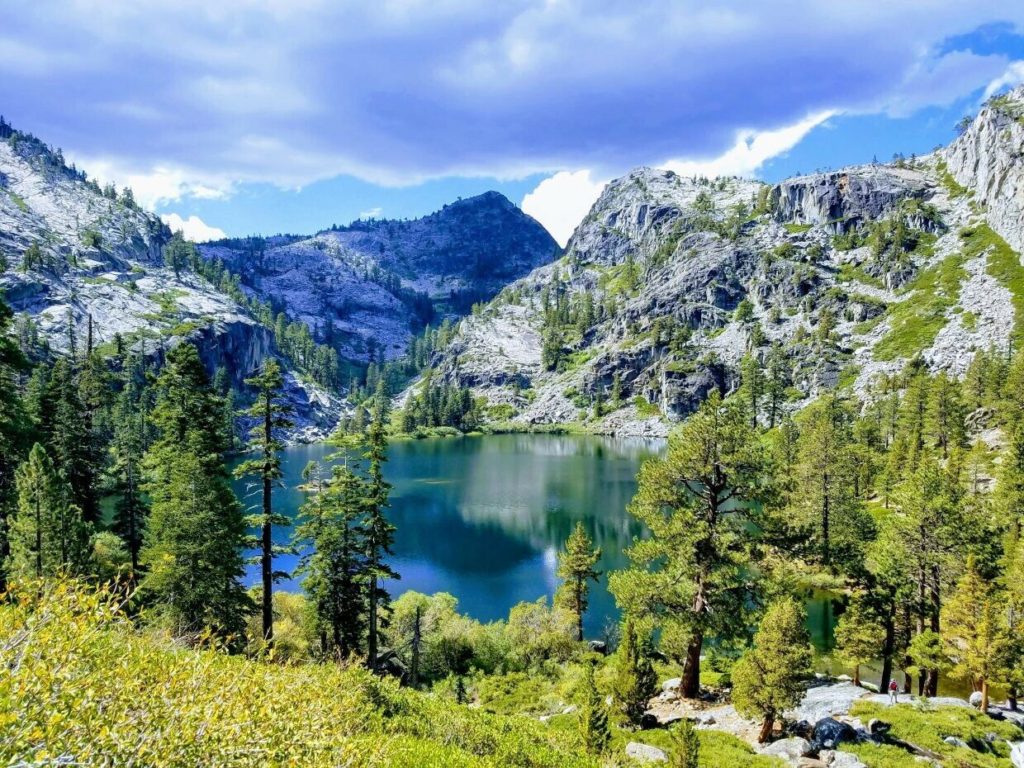
Not familiar with this Eagle Lake, even though the real estate listing purports to be in Lassen County.

This idyllic alpine lake photograph is dubbed as Eagle Lake, located near Termo. It is the featured photograph to the many wonders of the region, specifically, as the the seller points out to entice a buyer of a 20-acre ranch on the Madeline Plains. Asking price for the parcel is $18,000. The seller will even owner finance at 9% interest. So many interesting real estate offers to be found on the internet.

A number of years ago, while doing research in the Lassen County Assessor’s an interesting, yet not uncommon episode occurred. A man walked into the office, having flown all the way from London, England, to examine a parcel of land his uncle bequeathed him. Thus, the gentleman suffered from illusions of grandeur, for surely, California property must be worth gold! The staff at the Assessor’s Office attempted to explain that he inherited a twenty acre parcel on the Madeline Plains. Let’s just say the poor Brit spent more on making the overseas trip than what the property was worth.

Tim

Cheney versus China Creek versus Williams Creek, Lassen County

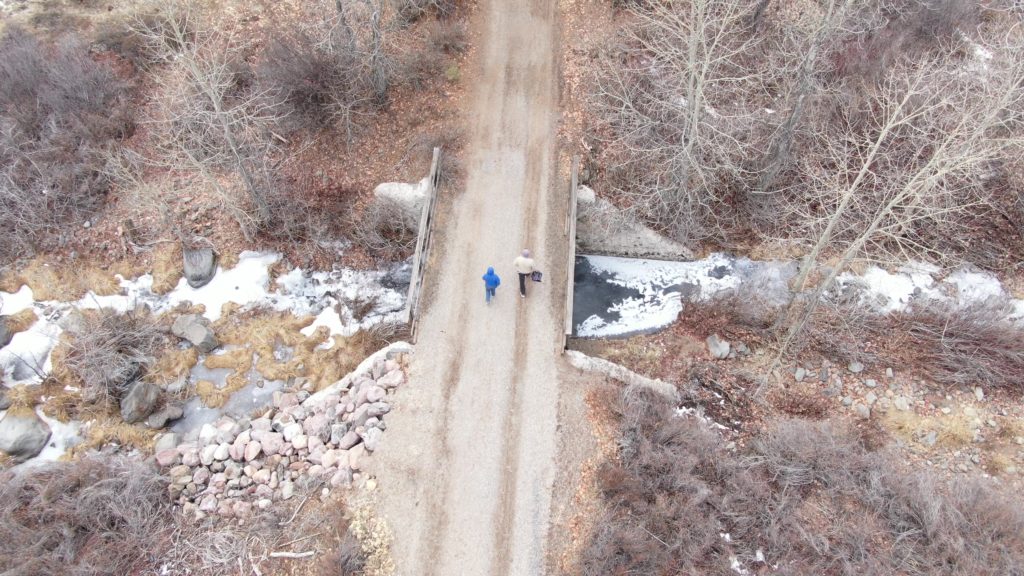
The crossing of Cheney Creek along the Bizz Johnson.Trail—David Bricker

Cheney Creek, which old maps referred to as China Creek, is a small tributary of the Susan River, and flows into that stream just below Devils Corral. About midway along the length of Cheney Creek is a small meadow, though Asa Fairfield referred to it as Cheney Valley. Fairfield stated it was named for E.M. Cheney who in  October 1860, filed a claim of 58 acres on the south side of the Susan River, near present day Hobo Camp, some five miles away. Not much is known about Cheney’s short tenure in the region, though he did serve on Lassen County’s first Grand Jury.

By the mid-1860s, Susanville had its own Chinatown. The population had its ebb and flow. On June 10, 1871, Quong Wong and 39 other Chinese filed mining claims along this creek which they named it the Yankee Company. Their activity was not ignored.

The Lassen Advocate reported on September 9, 1871: “There are some forty Chinese mining the vicinity of Stockton’s mill on the Susan River, about nine miles from here. They are making, they say from $1.50 to $2.50 per day to the hand. There are unquestionably good mines in that locality, provided water could be secured to them without too much trouble. Parties are anticipating the construction of a ditch to these mines next spring.”

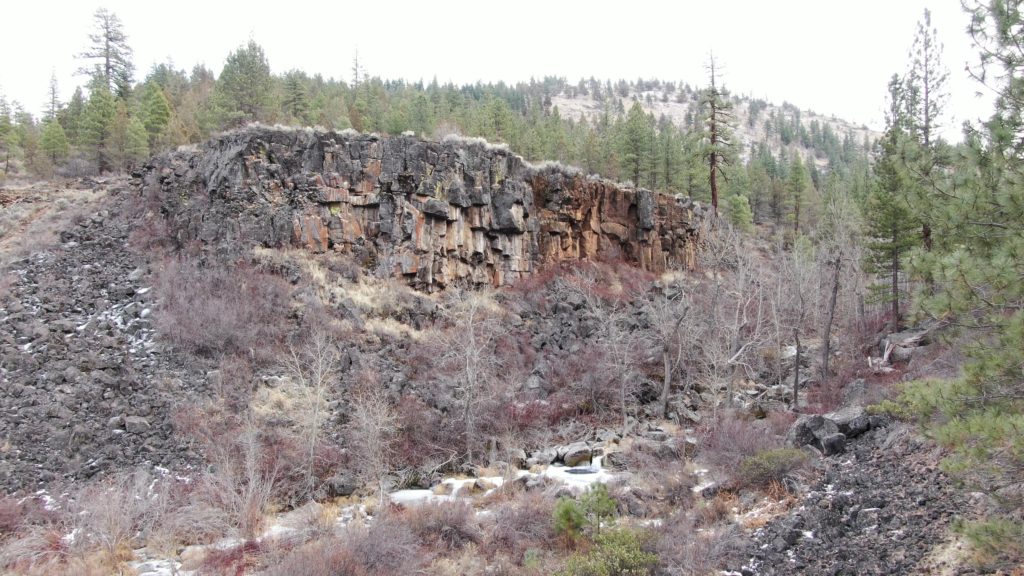
Cheney Creek shortly before it enters into the Susan River—David Bricker

According to mining claim it is a dry gulch. As the newspaper reported it was near Stockton’s, known today as Bunnells. Where Cheney Creek flows into the Susan River, is a rocky bluff, while where Williams Creek flows into the Susan River at Devils Corral, would be conducive for a ditch.

Whatever the case may be, as late as 1958 Metzker’s Atlas of Lassen County designates Cheney (China) Creek.

Subscribe

The Del Mar Building

The Del Mar Building, 1937—Jere Baker

While working on a self guided mural walking tour, one item that I want to incorporate is to highlight something about the building they adorn. On the west facing side of the building is the ranching mural.

In 1914, O.M.Doyle constructed a two-story brick building on the southeast corner of Main and Roop Streets, to be known as the Del Mar. It was designed by well known Nevada architect F.J. Delongchamps. It should be noted Delongchamps had previously designed the Lassen County Jail in 1911 and at the same time of the Del Mar Building he also designed the St. Francis Hotel and the Star Hotel.  There were several commercial buildings constructed that year, all which had basements. The problem arose what do with all this dirt. Some clever person, we may never know the identity, came with an interesting solution. The area where Piute Creek crossed Main Street was very low, and prone to flooding in the winter. The dirt from the excavated basements used to fill in some of that area.

Subscribe

The Boat Docks of Honey Lake

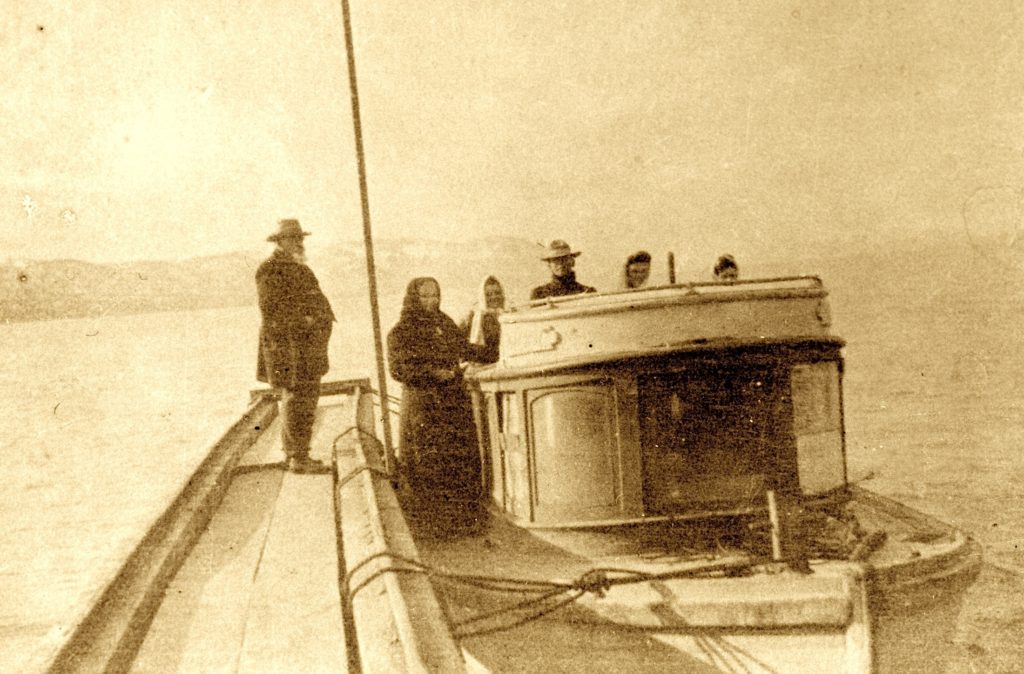
E.C. Brown’s tugboat docked at Amedee—Claude Wemple

While recreational boating on Honey Lake dates back to 1856, commercial boating did not occur until the early 1890s with the establishment of Amedee on the east side of the lake, as the terminus of the N-C-O-Railroad.

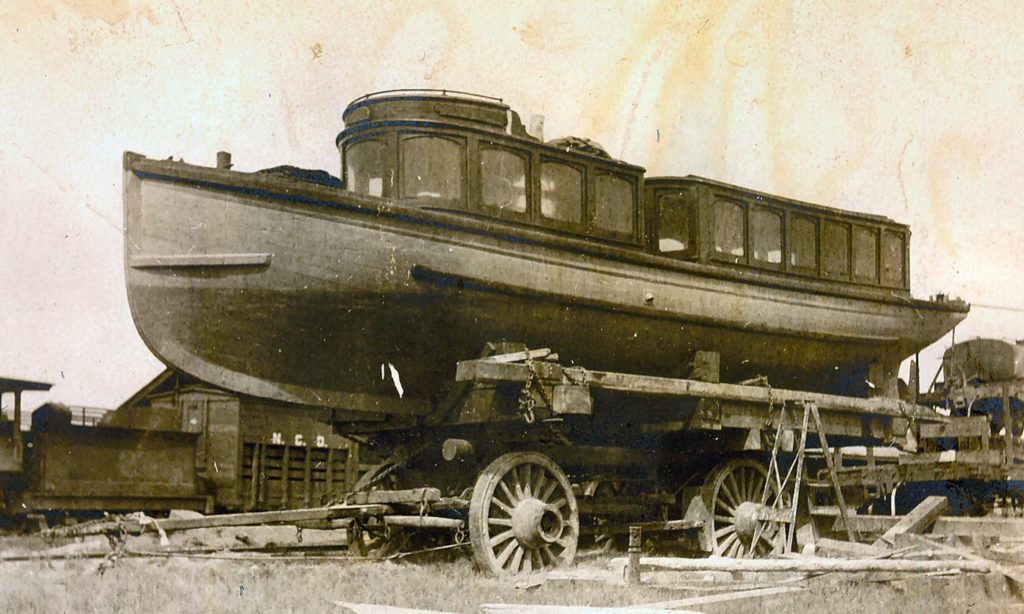
The E.C. Brown’s tugboat at Amedee before being launched, 1907. Courtesy of Marie H. Gould

There were a total of four boat docks. Two on the west shore on the ranches of Decious and Clark. The Barham dock on the northwest corner near where Baxter Creek enters the lake. Of course, the other was at Amedee. Material on them are scarce. In September 1907,  E. C. Brown launched his tugboat at Amedee. In 1915, his son, Asa docked the boat for the last time at Barhams. The last time I inspected the remnants of Brown’s boat, there was nothing to indicate a dock along the shore. The same was true when attempting to locate the site of the Amedee boat dock, there was no evidence of a dock. Though unrelated, it is real interesting what washes ashore on the east side of Honey Lake.

Support

Exploring Lassen County's Past