Susanville ignores the Volstead Act

Main Street, Susanville, 1918.

In the 1920s, Prohibition may have been the law of the land, enforcing it in Susanville or in Lassen County—as in most other places was quite a different matter. There was, of course, that local authorities had no arresting powers—bootlegging was a federal offense. To compound matters the region was in an economic boom time, where in less than twenty years the population had tripled.

To understand just how widespread the problem with bootleg joints was, it was summed up by one observer in 1923. Using the nickname “Friendly George” he wrote: “This man’s town has become a beautiful city and as to bootleggers, I just over there a stranger on the Fourth of July. I asked a taxi driver to take me to one. Well, he said, I know 34 places but I don’t known ‘em all. Quite an improvement from four saloons. Yes, it is Prohibition, but hard to convince me it is Temperance.”

Donate

Where Are We?

July 11, 2022

The lake was named after mining activity in British Columbia of the late 1850s. It was first tapped for irrigation in 1883. In 1905, Harry Cain, well-known Susanville resident drowned there. Cain was best known as a co-owner of the Susanville WaterWorks and his messy divorce with the former Stella Stiles.

Tim

Piano Player Not Needed

The Gem Saloon, Susanville, 1908. B.R. Zimmerman Collection

Susanville’s Gem Saloon, operated by B.R. Zimmerman was always in search of the latest innovative gadgets to entertain his customers. In the fall of 1907, he installed his latest attraction, which as predicted would garner a lof ot public interest—a electric piano. The Lassen Advocate provided the following description:

”It is of the regulation upright piano size and any performer can perform upon it the same as an ordinary instrument. But should there be no pianist available you only have to ‘push the button’ the electric motor starts and you have only. to look pleasant and listen to a brilliant rendition of the very. latest and best music. The instrument is a beauty and should prove a winner in public favor.”

Tim

Before Hetch Hetchy

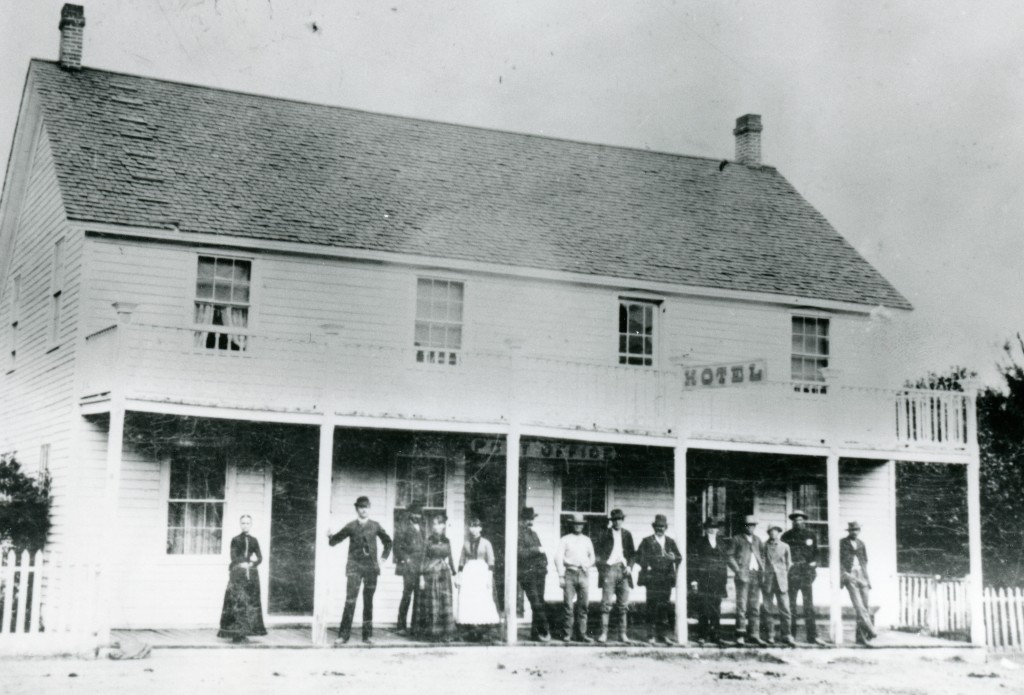
Prattville Hotel, 1899. Mary Dale Folsom

Long before Hetch Hetchy and Lake Almanor, too, there was an episode to use the abundant water resources of northern Plumas County to supply San Francisco with its water. That resource specifically was the numerous springs of Big Meadows, now a part of. Lake Almanor.

The Plumas National newspaper of Quincy on March 1, 1882 contained an article “Lively Times for Prattville.”  An excerpt states “For some time past San Francisco capitalist have been making investigations on Feather River with a view, it is said of taking water from that stream to the city. The sources of the river being enormous springs in and near Big Meadows, it is always clear and pure. The character of the country is such that there is no fear of the water ever being injured by mining above Bidwell’s Bridge (located near present day Canyon Dam). These considerations have led to the scheme of starting a ditch in the canyon below the bridge, the ditch is to be thirty feet wide and six feet deep. This would be continued to some suitable point where piping would be begun for carrying the water to the city. Dam and reservoirs would be unnecessary, the volume of water in the river nearly the same at all seasons. This would be an immense undertaking, but it is said that money enough can be had to carry it through. How the projectors will get the water across the bay to San Francisco has not yet been heard.”

Subscribe

Rural Free Delivery System

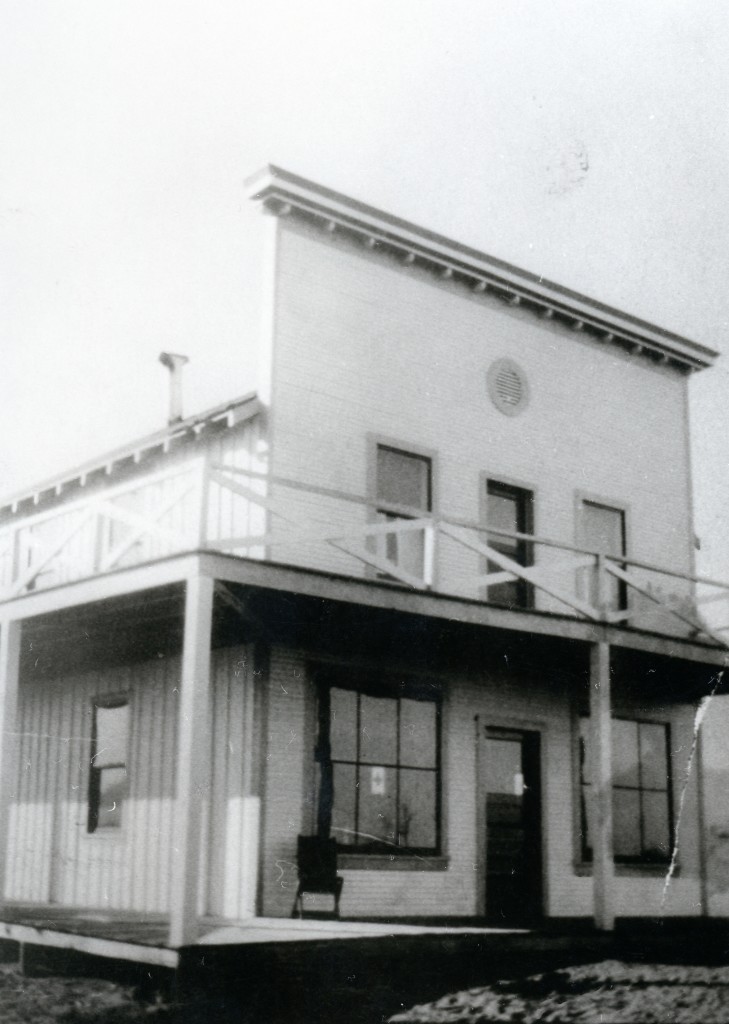
Janesville Masonic Hall, circa 1912. The first floor was a combination store and post office.

The Rural Free Delivery system was slow to implement. The whole purpose was to provide mail to those in rural areas, so one would not have to travel miles to obtain their mail at the nearest post office. While approved by Congress in 1896, it was slow in adoption..

Rural Fred Delivery did not reach Lassen County until 1918. When the Edgemont Post Office (located four miles east of Janesville) closed in that year the residents of that region were first to receive Rural Free Delivery. Within twelve years many of the small rural post offices in Lassen County were closed and replaced with Rural Free Delivery.

A number of the rural post offices were either in a store and/or at someone’s one home. The Merrillville Post Office, located some 15 miles north of Susanville in Willow Creek Valley is an interesting example. Established in 1875, it was located at the Folsom Ranch (now Willow Creek Wildlife Area). It would later be relocated to the Hurlbut Ranch, then to Murrer’s and then to the Stone Ranch at Eagle Lake when it was discontinued on November 30, 1928.

Subscribe

The NCO’s Lakeview Car

The Lakeview—-Marie Herring Gould

This Tuesday tidbit will be albeit brief. The NCO Railroad had two private cars the Esmeralda and the Lakeview. While the above photograph is hardly the best, some of the rail fans on this site will enjoy it nevertheless. I thought I had some handy notes on the Lakeview, but alas they are not so handy when I need them. When they do surface, I can always update the post, and if someone out there has information to share about the Lakeview that would be appreciated as well.

Tim

Remembering Lola

Lola Murrer, 1924

Today, marks the fiftieth anniversary of the passing of Lola Lillie Murrer Tanner, my grandmother. She was born on September 11, 1899 at Willow Creek Valley, the eldest and only daughter of Edward and Mary (Knoch) Murrer. She had two brothers, Leo, born 1906, and Alfred born 1914.

Lola while growing up enjoyed the outdoors and exploring her “backyard” the east side of Eagle Lake. One of her early passions was photography. Because of her, she captured Eagle Lake at is highest level, but equally important the construction of Bly Tunnel.

Fun times at the north shore of Eagle Lake, Lola to the far left, 1923

In 1927, she married John Tanner and the following year they acquired the present Tanner Ranch, now sandwiched between the Dakin and Fleming Units of the State Wildlife Refuge, and still owned by the family. In 1945, she was widowed having to deal with raising three daughters and operating the ranch, yet with all those and many other challenges, she never complained.

While she did not have a high profile life, to me her legacy has been her photographs that I share with you the reader—priceless.

Tim

Lola, January 1925

Oh that flume from the other week!

Willow Creek Flume, 1925—Lola Tanner

Eight Years and Counting

Downtown Amedee, 1982.

Well, I now have eight years experience going digital. It has been an interesting journey so far. Of course, it has pitfalls from day to day operations, just with any endeavor—it goes with the territory.

One of the nice features with an online format is the ability to reach a far wider audience, especially since I keep the content free—no paywall.

Next year will be a critical one with the renewal of the host server. Hopefully, the rates will be reasonable.

Tim

Hamilton Park, Lake Almanor

Hamilton Park aka Big Springs, 1937

Long before Lake Almanor was conceived Big Springs and Hamilton Branch were popular camping/fishing spots at the then Big Meadows. A portion of that would change in the early 1900s when Great Western Power Company began land acquisition there. The company issued a statement that all camping and/or recreational activities were prohibited on their land, though initially permits could be obtained That is a story for another time.

When the first phase of the construction of Lake Almanor was completed in 1914, a great deal of the activity was logging by the Red River Lumber Company who had a contract to remove the standing timber from the reservoir. One of Red River’s earliest and best known logging camps, was Camp 14 located near Hamilton Branch.

In 1923, J.N. Boshoff contacted Red River officials about converting a portion of abandoned Camp 32 at Hamilton Branch into a little resort. Red River agreed, seeing it as an opportunity to provide recreational opportunities for its employees and their families. Boshoff then converted some of the cabins at Camp 32 into bath houses for changing and others into overnight sleeping accommodations. He dubbed his new enterprise Hamilton Park. Boshoff leased the property from Red River for the next fourteen years. Hamilton Park eventually became known as Lassen View Resort.

Subscribe

The Demolition of Wendel

Wendel, January 26, 2020

The railroad giveth and the railroad taketh could easily describe Wendel. In 1996, the Union Pacific Railroad received permission to abandon an 85-mile segment of the railroad from Wendel to Likely. The railroad implemented a plan to demolish most of the buildings it owned there. Among the first buildings demolished were a two-story railroad section house and the foreman’s house. Also torn dorn was a local favorite, the 24-hour cafe known as the Milepost Inn, which provided meals and housing for railroad crews laying over between trips, but was open to the public.

Tim

Exploring Lassen County's Past