Alfred Montgomery, the Farmer Artist

Nowhere
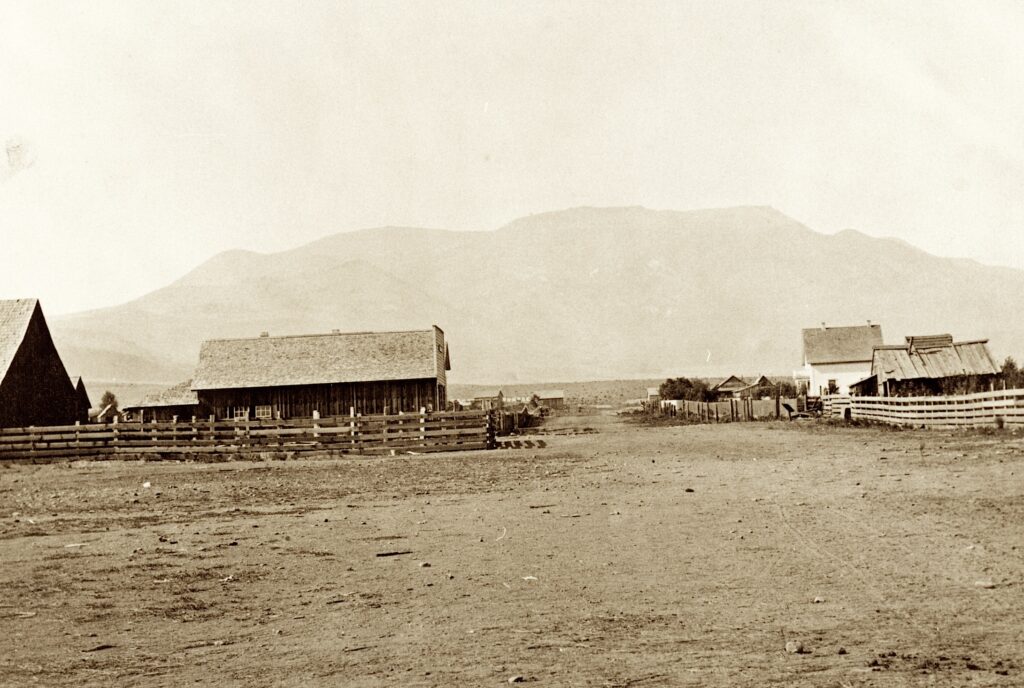
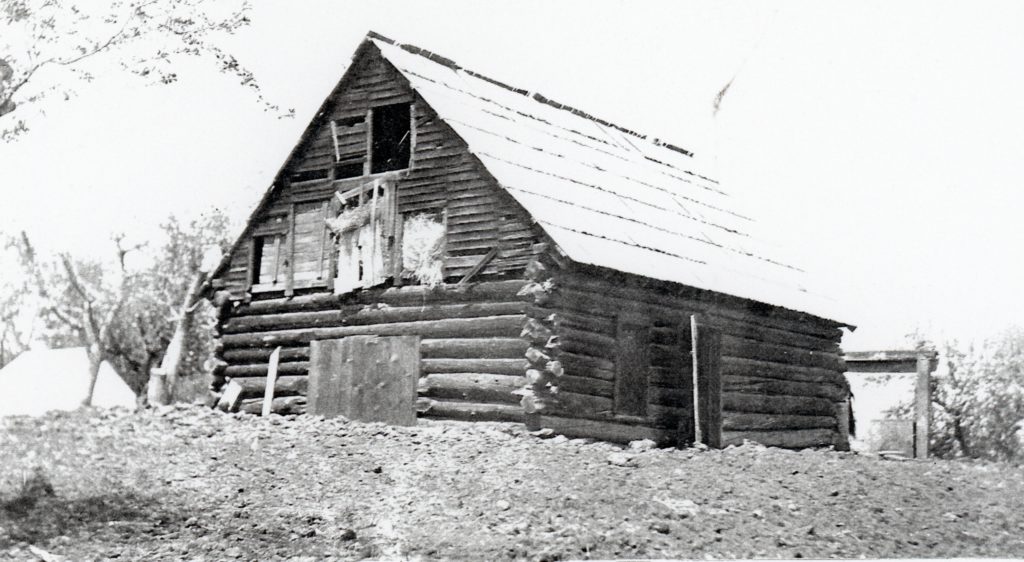
The abandoned Montgomery homestead, eastern Honey Lake Valley, 1983

Every region throughout time has various colorful characters—some passing through, others become part of a community’s fabric. One such notable was the famed Midwest Farmer Artist, Alfred Montgomery (1857-1922). According to folklore, it was attributed that Montgomery’s painting of corn was so realistic that birds would swoop down and peck at his canvass.

In the Midwest, Montgomery, like many a struggling artist, travelled around a lot. In 1911, when traveling back home to his family in Illinois, he was accompanied by a lady friend. His. wife, not pleased with the surprised guest, filed for divorce. All of sudden, Montgomery packed his bags and relocated to Los Angeles. Before he was settled in Southern California, he was looking at a homesite on the east side of Honey Lake. In the fall of 1911, Montgomery did two things in Lassen County—he located a desert land claim south of Amedee, and he held a lecture series at Lassen High School, which he had display of paintings worth $10,000 as part of an exhibit. There was a twenty-five cent admission, with all the proceeds going to the school  to establish an art department.

Another view.

In the spring of 1912, Montgomery hired local contractor Fred Rummel to construct a home on his place he dubbed Nowhere. Montgomery, like in his days in the Midwest, would come and go as he saw fit. However, on June 6, 1919, the Lassen Mail reported: “A. Montgomery, ‘the painter who farms and the farmer who paints’ arrived recently from Los Angeles and will spend the summer at his claim south of Amedee. He is now conducting a series of experiments to determine the kind of vegetables best adapted to the soil in that locality.  He is firmly convinced that peas, brans, Soudan grass, pumpkins and barley will prove successful, but admits with regret. that is old favorite, pie plant, cannot be raised there on the amount of the mineral salts in the soil.”

After this there is no record of Montgomery returning. When he passed away in 1922, a number of accounts referred to his place at death at Nowhere, which confused a lot of people, when in fact he died in Los Angeles.

Subscribe

A Polish Colony for Grasshopper?

The former Gerig Ranch, Grasshopper Valley—California Outdoor Properties, 2019

In early November 1928, the major daily newspapers in Sacramento,  San Francisco and elsewhere reported on a proposed plan of a grand colonization scheme for Grasshopper Valley on the old Gerig Ranch. It would a Polish settlement of some 5,000 people. The primary occupation would be dairy farming and that it would include a cheese factory. Some of the reports were sketchy but it was noted there would a be five churches established there. Lassen County residents found the whole matter absurd.

Because of the extensive news coverage, it alerted the State Colonization Bureau to investigate. This state agency’s primary duties was to inspect all colony proposals to make sure that they were not fraudulent land schemes to bilk immigrants.

On December 26, 1928, 210 Polish colonists arrived in California, but instead of inspecting Grasshopper their itinerary was Stanislaus, Tulare and Merced counties. The Grasshopper project was abandoned.

Subscribe

A Susanville Critique

Main Street, Susanville, 1926.

In the spring of 1928, the newly formed Susanville Businessmen’s Association first undertaking was to review the City of Susanville’s finances. It was in their opinion, operating the city was just too costly. A committee of five—L.R. Cady, B.F. Lyle, Hardin Barry, A.J. Mathews, J.A. Pardee—were appointed to investigate the matter.

In their report, they wrote: “There has been a general idea that the cost of our city government is excessive. Your committee secured comparative figures from towns of somewhat similar characteristics, such as Alturas, Yreka, Nevada City and Lakeview, Oregon. In each instance although the cost of city government in these towns was materially lower than the cost of the administration of affairs of Susanville, in the brief time at our disposal it was impossible to make an intelligent comparison in as much as it appears that possibly Susanville is receiving a service such as the other towns in question do not apply. Whether or not we are getting the value received for the money expended is difficult to determine without a more thorough investigation, therefore we would respectfully recommend to the incoming board of trustees that they give this matter such necessary attention as will permit them to arrive at an intelligent conclusion with reference to the cost of government in Susanville.”

In the end, they had a hidden agenda. They did not like the special property assessment for the paving of streets and for sidewalks. However, in time, they realized having paved streets and sidewalks was a worthwhile investment.

Subscribe

1928-A Pivotal Year for Eagle Lake

Grant Smith’s tunnel works, Eagle Lake, 1922–Courtesy of Lola L. Tanner

Each week for the month of March will bring to light a number issues concerning Eagle Lake. In 1928, Susanville’s two newspapers—Lassen Advocate and Lassen Mail—vigorously reported on the status  of the Bly Tunnel and related topics. There is the account of a well known Virginia City, Nevada mining engineer who inspected the tunnel. There was after the engineer’s recommendations how to finance the corrective measures. Then, the issue of the lake’s water alkalinity content was a major concern, that the University of California, Berkeley examined. There was a lot of hope riding among the members of the irrigation districts who struggled with the bond payments, but burdened without an adequate supply of water from the lake to sustain their farms.

Tim

An NCO Passenger Car

An NCO passenger car at Wendel being prepared to move, 1974—Tom
Armstrong

If you recall a Tuesday tidbit of two weeks ago, I wrote about the
NCO private car the Lakeview. In this instance, like the earlier, the handy notes are not handy on this railroad car . In November 1974 Tom Armstrong took this photograph. The defacto mayor of Wendel for many decades was the grand dame, Aldah Reisenman. Aldah had many rentals in Wendel and for a time this old NCO passenger car, was one, which she sold and was being hauled away when Tom captured the moment.

I have received some new information about the Lakeview which I will post in an update in the near future.

Tim


Susanville, 1939

Susanville, 1939

This Eastman postcard I purchased awhile back on Ebay, the price in my range of $5.79. There were several items after reviewing allowed me to figure out when it was taken. The Christian Science Church on the corner of Mill and South Lassen Streets was constructed in 1938. Also built that year, was the Purity Grocery Store on South Lassen Street across from the Methodist Church. Both buildings, by the way, still exist, just under different ownership.

On South Roop Street, where the current Lassen Municipal Utility District building is located, appears as a vacant lot. Work on the construction of that building started in the fall of 1939. It should be noted that building was originally constructed for Safeway.

Tim

Jacks Valley Monument

Jacks Valley Monument, 1984’

This year will mark the 40th anniversary of the placement of this monument, located ten miles north of Susanville along Highway 139.    In past I have had posts about the the history of Jacks Valley, but this is a tale about how the monument came to be. By 1980, the fraternal organization known as E Clampus Vitus was having a influence among some rag-tag population of the Honey Lake Valley. They were an ambitious lot, and lo and behold began the process to form a chapter for Lassen-Modoc, which territory was under control of Las Plumas Del Oro, Chapter No. 8 somewhat headquartered in Quincy. To make a long story short, they succeeded with the formation of the Sagebrush Posse, a provisional step to become a full-fledged chapter to be known as the Never Sweats.

A major undertaking of the Sagebrush Posse was to recognize a historical landmark with a plaque/monument. The site selected was a cement water trough north of Susanville that was constructed in 1913 to aid travelers whether by horse or an automobile, especially those traveling from the north provided a respite after traversing the Antelope Grade.

It was a learning experience for the posse. Researching the history of the site revealed a rich, but hardly known history. With knowledge in hand, it was decided to register it through the State of California Point of Historical Interest program. It was an interesting hurdle, but accomplished and became the first Lassen County landmark registered. Next step the monument. Caltrans refused the proposed monument location in there right-of-way citing proposed plans for a four lane highway. This baffled the posse, after all this was in 1983!

Not to be undeterred, a strange loop hole was found. Adjacent to the trough was a four-acre plot that the highway dissected, that belonged to the Lassen-Modoc Joint Highway District No. 14. That district formed in 1929 was responsible for the construction of Highway139, which was finally completed in 1959.  To appease Caltrans, the posse needed to get permission from the special highway dormant district. Fortunately, one of few living board members of district, and long time Lassen County Board of Supervisor, Pete Gerig signed a letter of permission.

For posterity a photograph before the monument.

The moment of truth to construct the monument. When it was nearly complete it was time to install the brass plaque. Opps! It turns out the foundry made a typo and a new plaque had to be remade. When all was said and done a plaque dedication was held on July 9, 1983.

Donate

Chester’s Transformation—Collins Pine

Collins Pine, Chester

One of the most dramatic transformation for Chester came in 1941 with the announcement by the Collins Pine Company that it intend to construct a mill at Chester. This was going to be a radical departure for Chester from its peaceful existence as a summer getaway, and in the fall hunters briefly replaced the summer visitors.  Once winter approached, many of Chester’s citizens boarded up their homes and moved to warmer climates, then to return in the spring.

Collins Pine changed all that, providing an industry to stabilize a year-round community. It should be noted Collins Pine was not a stranger to the region. As a matter of fact, in 1902 the company had purchased 18,000 acres of timberland in the region. In 1940, the nearby Red River Lumber Company at Westwood offered to rent their mill. Collins was not interested. However, Collins in 1941 purchased the millsite near Chester and thirteen miles of railroad from Chester to Clear Creek Junction from Red River.  It was a slow process for the  construction of Collins mill due to World War II and the scarcity of machinery. Even with those adversities, on March 31, 1943 the first board was sawed at the new mill.

Subscribe

Early Day Fire Trails

Among the pines, circa 1925

In the fall of 1928, Lassen National Forest Supervisor W.G. Durbin came up with an ingenious plan for fire trails. He spent considerable examining old livestock trails and abandoned early day roads which could be put to another use as fire trails. Work began making improvements to these old routes that Durbin thought would be ideal in transporting fire fighters and equipment. There was the added benefit once the trails were cleared they would also act as fire breaks.

Subscribe


Standish Methodist Church

Standish Methodist Church, 1910—Prentice Holmes

During the early years of Standish religious services were held in Pringle Hall, By 1903, the Methodist wanted a church for Standish. Frankie Coffin remembers her mother, Mrs. Eva (Hartson) Cain and Mrs.H.R.T. Coffin went to house to house in that part of the valley to raise money for the church.By September 1903 enough subscriptions had been raised to build the church. It was constructed by James Pringle and John Hamilton and completed in the spring of 1904.

On June 12, 1904, dedication ceremonies were held for the new Methodist Church at Standish. A sermon was given by Rev. E.W. VanDeventer, Superintendent of the Nevada Mission. A fund raiser was held afterwards and raised enough to money pay all debts associated with the construction and extra $30 paid for chairs for the church. The Rev. C.G. Lucas was the first pastor, who was stationed at Janesville. He would do a circuit holding services at Standish, Milford and Doyle.

By the late 1920s, church membership declined and for a number of years no services were held. In 1938, saw revival and the Methodist Church at Standish was back in operation. How much longer it remained I do not know. Today, it is known as the Standish Bible Church.

Donate

Exploring Lassen County's Past